
5.2
CiteScore
2.9
Impact Factor
Document Type : RESEARCH ARTICLE
Authors
1 Tissue culture Laboratory, Department of Biology, Faculty of Mathematics and Natural Sciences, Mulawarman University, Jl. Kelua, Samarinda, East Kalimantan, 75123 Indonesia
2 Plant tissue culture Laboratory, Department of Biology, Faculty of Mathematics and Natural Sciences, Mulawarman University, Jl. Kelua, Samarinda, East Kalimantan, 75123 Indonesia
3 Plant Tissue Culture Laboratory , Department of Biology, Faculty of Mathematics and Natural Sciences, Universitas Mulawarman, Samarinda 75123, East Kalimantan, Indonesia
4 Animal Physiology, Development, and Molecular Laboratory, Department of Biology, Faculty of Mathematics and Natural Sciences, Mulawarman University, Jl. Kelua, Samarinda, East Kalimantan, 75123 Indonesia .
Graphical Abstract
Highlights
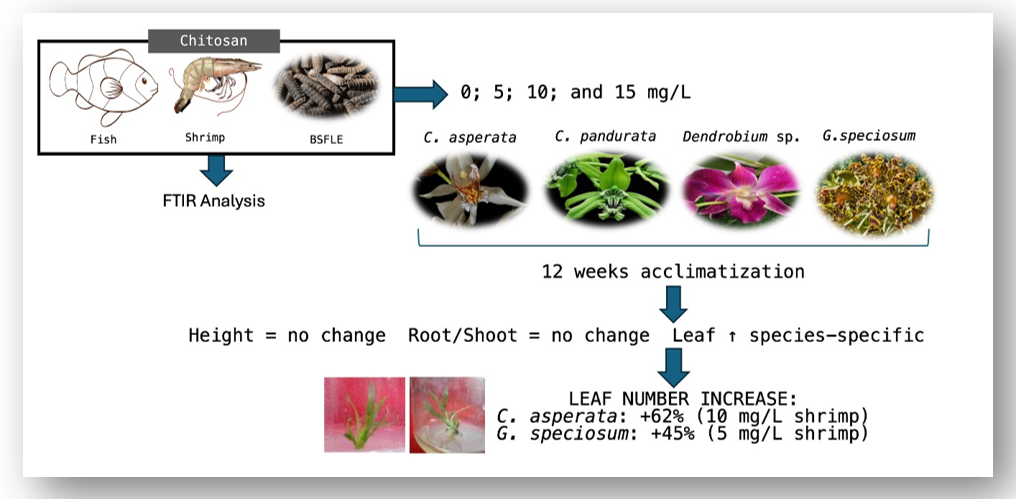
Ø Black soldier fly larvae exuviae offers a sustainable chitosan source for orchids;
Ø Chitosan source and concentration did not affect plant height, root, or shoot number; only leaf number increased in a species‑specific manner;
Ø Leaf number increased species-specifically, with shrimp chitosan giving 62% more leaves in C. asperata;
Ø FTIR revealed distinct structural features, including a unique peak at 660.70/cm for insect chitosan.
Keywords
INTRODUCTION
The escalating generation of organic waste presents a pressing environmental challenge, yet this biological resource can be effectively repurposed through circular economy principles. The larvae of the black soldier fly (Hermetia illucens) have emerged as exceptional agents for bioconversion, efficiently transforming diverse organic byproducts into valuable biomass (Santoso et al., 2023). Apart from their contribution to waste valorization, these insects serve as a sustainable source of chitin, which can be converted into the adaptable biopolymer chitosan. Research has demonstrated that black soldier fly larvae (BSFL) cultivation from food waste achieves a high sustainability index, particularly excelling in economic viability while maintaining strong environmental and social dimensions (Kullan et al., 2026). The chitosan derived from insects demonstrates exceptional bioactive characteristics, serving as a natural biostimulant for plants that promotes growth and improves stress resilience. This study therefore explores the potential of chitosan from black soldier fly larvae exuviae (BSFLE), alongside conventional sources, as an ecofriendly growth promoter in the acclimatization of vulnerable orchid species. Orchids, which belong to the family Orchidaceae, represent one of the most diverse and ecologically significant groups of flowering plants globally, with over 25,000 species distributed across diverse habitats (Awasthi et al., 2023; Awasthi et al., 2024; Hu et al., 2022; Wei et al., 2025). These plants are distinguished not only by their exceptional morphological diversity and sophisticated pollination strategies but also by their ecological contributions and economic relevance in the horticulture and floriculture (Zhang et al., 2024). Southeast Asia harbours numerous endemic orchid species, including Coelogyne asperata, Coelogyne pandurata, Dendrobium species (sp)., and Grammatophyllum speciosum, which are known for their unique floral structures and cultural significance. However, orchids are facing several threats from habitat loss, climate change, and overcollection, necessitating effective conservation strategies that integrate propagation and sustainable cultivation techniques. Improving the growth and acclimatization of orchids outside of their natural environment remains a vital challenge for conservation and commercial production, underscoring the demand for innovative biostimulants that can encourage vigorous development and resilience to stress (Syafitri et al., 2024; Turnip, 2023). Four representative orchid species were selected to encompass different growth habits, conservation statuses and commercial relevance: two threatened epiphytes (Coelogyne asperata, Coelogyne pandurata), a flagship giant orchid with high public profile (Grammatophyllum speciosum) and a widely cultivated genus (Dendrobium spp.) that serves as a model for cut flower production. This combination provides a cautious assessment of chitosan's effectiveness across various species, while recognizing that responses specific to species and genotype, which are well-documented for chitosan (Stasińska-Jakubas and Hawrylak-Nowak, 2022). The significance of examining the impact of chitosan from various sources and concentrations on orchid development is rooted in the potential of this biopolymer as a natural growth stimulant and plant defence activator. Chitosan, a deacetylated form of chitin, is highly regarded for its biocompatibility, biodegradability, and diverse bioactivities, such as antimicrobial, antioxidant, and elicitor properties that support plant growth and improve stress resilience (El-Araby et al., 2022; El-Araby et al., 2024). Chitosan is conventionally derived from crustacean shells, including those of prawns (Vázquez-Aldana et al., 2025) and fish scales (Yasmin et al., 2025); however, alternative sources like BSFLE have surfaced as sustainable and underexploited biomass with significant bioactive potential. Examining the unique effects of chitosan derived from fish, prawns, and BSFLE at varied concentrations with 0, 5, 10, and 15 milligrams per liter (mg/L) on four orchid species yields valuable information for optimizing biostimulant utilisation in orchid propagation and conservation. Recent advancements in chitosan research have elucidated its influence on the modification of plant physiological responses and growth metrics. A prior study demonstrated that the application of chitosan to the leaves significantly enhanced both shoot length and biomass in orchids by modulating phytohormone levels and improving water retention (Bhattacharyya et al., 2021; Masjedi et al., 2017). Similarly, Wang et al. (2021) reported that chitosan treatment increases secondary metabolite accumulation and growth in orchids, highlighting its potential to improve plant vigor under stressful conditions (Pujari et al., 2021). Furthermore, the bioactivity of chitosan derived from various sources, along with its molecular weight and degree of deacetylation, has a substantial impact on its efficacy in promoting plant growth (Suwanchaikasem et al., 2024). These studies collectively emphasize the importance of specific chitosan characteristics in affecting the efficacy of biostimulants. Furthermore, it has been shown that the effects of chitosan are concentration- and species-specific (Poznanski et al., 2023; Stasińska-Jakubas and Hawrylak-Nowak, 2022). Moderate chitosan concentrations optimize growth promotion, whereas higher doses may induce phytotoxicity Ningsih and Sari, 2023; Suwanchaikasem et al. (2024) emphasized that differential orchid responses to chitosan elicitation are influenced by species physiology and receptor affinity, necessitating tailored application protocols. Additionally, Escobar Rodríguez et al. (2025); Lagat et al. (2021b) demonstrated the valorisation of BSFLE in the production of chitosan, endorsing insect-derived chitosan as a sustainable environmental choice that is in harmony with circular economy ideals. These data together guide the investigation of BSFLE chitosan as an innovative biostimulant for orchids. Notwithstanding these advancements, a study void remains concerning the comparative effectiveness of chitosan sourced from BSFLE against standard crustacean origins in promoting orchid development. Although numerous studies on chitosan from different sources have been conducted, no prior research has concurrently compared chitosan derived from fish, shrimp, and BSFLE across four epiphytic orchid species during the acclimatization process. This study examines the structural variations in chitosan derived from fish, prawns, and BSFLE by Fourier-transform infrared spectroscopy (FTIR) and assesses their impact at various concentrations on the growth characteristics of four orchid species. The primary aim of this study is to comprehensively assess how the chitosan source (fish, shrimp, or BSFLE) and the concentrations influenced the growth of four orchid species, namely Coelogyne asperata, Coelogyne pandurata, Dendrobium spp., and Grammatophyllum speciosum, during the acclimatization phase. Specific objectives include characterizing the physicochemical properties of chitosan derived from these sources, as well as the quantification of growth responses, including plantlet height and the number of leaves, roots, and shoots. This study was conducted at the Faculty of Mathematics and Natural Sciences, Mulawarman University, Samarinda, East Kalimantan, Indonesia in 2025.
MATERIALS AND METHODS
Materials used
Four orchid species were used in this study: Coelogyne asperata, Coelogyne pandurata, Dendrobium sp., and Grammatophyllum speciosum. The orchid plantlets were obtained from an in vitro culture laboratory at the Faculty of Mathematics and Natural Sciences, Mulawarman University, Samarinda, East Kalimantan, Indonesia. All chemicals utilized in the extraction and purification of chitosan, such as sodium hydroxide (NaOH), hydrochloric acid (HCl), and acetic acid (CH3COOH), were of analytical grade. Distilled water was used throughout the experiment.
Chitosan sources
Chitosan from shrimp shells, Himeda, GRM93358, degree of deacetylation 80 percent (%) and fish scales (Phy Edumedia, SCRF/CH/05-24, degree of deacetylation 95%) were obtained from a commercial market. Chitosan from BSFLE was prepared based on a previously described method (Lagat et al., 2021). BSFLE samples were sourced from a local rearing facility post-molting stage, carefully cleaned, subjected to oven drying at 60°C, and ground into a fine powder. Demineralization was achieved using 1 molar (M) HCl for 2 hours (h) followed by deproteinization with 1 M NaOH at 90 degree Celsius (°C) for 3 h. The resulting insect chitin was deacetylated using 50% NaOH at 100°C for 3 h. The chitosan derived from BSFL was subjected to filtration, washing, drying, and subsequently stored in a dry environment until it was needed for further applications. This method resulted in a deacetylation degree of 70%.
Fourier transform Infrared spectroscopy
The analysis using FTIR spectroscopy was performed to verify the identity and functional groups of chitosan from the three biogenic sources. The chitosan samples were formulated into potassium bromide (KBr) pellets and analyzed with a PerkinElmer Spectrum Two FTIR spectrometer in the wavenumber range of 4000–400 per centimeter inverse (/cm). Key absorption peaks corresponding to functional groups, such as amine (-NH₂), hydroxyl (-OH), carbonyl (C=O), and carbon–oxygen single bond (C–O) stretching, were used to validate the molecular structure of each chitosan sample.
Experimental design and chitosan treatments
The experiment was conducted using a completely randomized factorial design involving three factors: chitosan source (shrimp, fish, and BSFLE), chitosan concentration (0, 5, 10, and 15 mg/L), and orchid species (Coelogyne asperata, Coelogyne pandurata, Dendrobium spp and Grammatophyllum speciosum). Each treatment combination was replicated five times, utilizing one plantlet per replicate, thereby enhancing statistical strength and decreasing variability between the experimental units. Growth evaluations were conducted weekly throughout the 12-week experimental timeframe.
Culture media preparation
The culture media were created by initially adding 600 milliliters (mL) of sterile distilled water into a beaker positioned on a magnetic stirrer hotplate. Subsequently, 30 gram (g) of granulated sugar were incorporated and mixed with a magnetic stir bar until completely dissolved. Once the dissolution was complete, 4.43 g of Murashige and Skoog (MS) was added, along with chitosan derived from BSFLE, shrimp, or fish, according to the designated treatment concentrations of 5, 10, and 15 mg/L. These concentrations were based on preliminary range finding tests that showed no measurable effect below 2.5 mg/L and signs of phytotoxicity (leaf chlorosis, reduced root initiation) at 20 mg/L or above; the range therefore covers the subtoxic, potentially bioactive window. Sterile distilled water was subsequently incorporated to modify the final volume to 1000 mL. The potential of hydrogen (pH) of the solution was measured and adjusted to 5.8, as needed, using NaOH to raise the pH if below 5.8 or HCl to lower it above this value. After reaching the desired pH, 8 g of agar powder was incorporated into the solution. The mixture was boiled, and the hot medium was immediately dispensed into culture bottles, which were sealed using heat-resistant plastic secured with rubber bands. The sealed bottles underwent autoclaving at a temperature of 121°C and a pressure of 17.5 pounds per square inch (psi) for a duration of 15 minutes to guarantee thorough sterilization. After autoclaving, the culture bottles were allowed to cool and were subsequently arranged on sterilized racks within a laminar flow culture room for further use.
Planting process
At this point, every variety of orchid plantlet was meticulously prepared and subsequently placed into a sterile bottle filled with subculture media, ensuring that all procedures were conducted under aseptic conditions and in compliance with the guidelines of a Laminar Air Flow Cabinet (LAFC). The bottles were labelled according to the treatment and planting date. Light intensity was measured at 45 ± 5 µmol/m²/s (photoperiod 16 h/8 h light/dark). Relative humidity in the culture room was maintained at 65 ± 5% using a humidifier. These conditions were recorded daily with a thermo hygrometer (Lutron HT- 3007) and light meter (Li 250A). The culture room was maintained in a sterile condition through daily applications of 70% alcohol.
Growth parameter measurement
Plant height was measured weekly for 12 weeks after planting (WAP), using a ruler from the base to the apex of the main stem. The leaf number was recorded by counting all fully developed leaves on each plant at weekly intervals throughout the 12-week period. Root development was measured by recording the overall number of visible roots that appeared weekly during the same observation timeframe. Shoot number was determined by recording the number of new shoots emerging on each plant every week for 12-weeks after planting.
Data compilation and analysis
All data collected during the 12-week period were compiled into structured spreadsheets, categorizing each plant by species, chitosan source, chitosan concentration, and observation week. The datasets constituted the basis for the statistical analyses described in the data analysis section. Statistical investigations were carried out to evaluate the influence of the chitosan source (Fish, Shrimp, BSFLE) and concentration (0, 5, 10, and 15 mg/L) on the growth performance of four orchid varieties. Initially, the main growth parameters were assessed for normality and homogeneity. A three‑way analysis of variance (ANOVA) was first performed to test main effects and interactions among source, concentration and species. When significant three‑way interactions were found (p < 0.05), separate two‑way ANOVAs (source × concentration) were run for each species. Post‑hoc comparisons used Tukey’s Honestly Significant Difference (HSD). All assumptions were validated (Shapiro‑Wilk, Levene). This approach facilitated the recognition of treatment combinations that significantly influenced each growth metric independently. All ANOVA assumptions, including normality, were validated by Shapiro–Wilk and Levene’s tests. All statistical analyses were performed using GraphPad Prism (version 10) and Excel (Microsoft Office, Inc., United State of America), with significant criteria established at P is less than zero point zero five (p < 0.05). A post‑hoc power analysis (GPower 3.1) was performed based on the observed effect sizes for leaf number (η² = 0.32). With alpha (α) = 0.05, sample size (n) = 5 per treatment gave a power of 0.82 for detecting a significant effect on leaf number, which is acceptable. For other parameters (height, root, shoot) the achieved power was lower (0.45–0.60), indicating that non‑significant results should be interpreted cautiously and larger sample sizes may be needed in future studies.
RESULTS AND DISCUSSION
The FTIR determination
Chitosan, a derivative of chitin that has undergone deacetylation, serves as a biopolymer with numerous applications in the fields of biomedicine, agriculture, and environmental remediation, owing to its biocompatibility, biodegradability, and antimicrobial properties (El-Araby et al., 2024). The physicochemical properties of chitosan vary depending on its source and extraction method, and can be characterized using FTIR spectroscopy (Sofyan, 2024; Vilar Junior et al., 2016). This study analyzed chitosan derived from fish (A), shrimp (B), and BSFLE (C) to identify the key functional groups and structural differences among these sources. The FTIR analysis of chitosan derived from three sources (fish, shrimp, and BSFLE) revealed distinct spectral patterns, indicating variations in their chemical structures (Fig. 1). The FTIR spectra of chitosan from fish (A), shrimp (B), and BSFLE (C) exhibited characteristic absorption bands corresponding to functional groups, such as oxugen hydrogen single bond (O-H), nitrogen-hydrogen single bond (N-H), and carbon-hydrogen single bond (C-H) stretching vibrations, as well as amide and carbonyl groups. The spectra were analyzed in the range 4000–500/cm, with prominent peaks identified for each source. Respectively, the FTIR spectrum of fish-derived chitosan shows prominent peaks at 3826.16/cm (O-H stretching), 3579.42/cm (N-H stretching), and 3213.87/cm (O-H/N-H combined stretching). The amide I band appears at 1589.63/cm, while the amide II band was observed at 1419.28/cm. The C-H stretching vibrations are noted at 2881.47/cm and 2832.97/cm. The peak bserved at 1026.83/cm is associated with the stretching of a carbon-oxygen-carbon single bond (C-O-C), which signifies the presence of the glycosidic linkage in chitosan. The presence of these peaks confirmed the deacetylation process and the typical polysaccharide structure of chitosan. These peaks also corresponded with the bands indicated in the statement, including 3826.16/cm (O-H stretching), 3579.42/cm (N-H stretching), and 1589.63/cm (amide I). However, the precise wavenumbers may fluctuate based on the extraction techniques methods or instrumentation. In shrimp-derived chitosan displays peaks are observed at 3827.74/cm (O-H stretching), 3712.39/cm (N-H stretching), and 3164.84/cm (O-H/N-H combined stretching). The amide I band was observed at 1586.94/cm and the amide II band at 1420.11/cm. C-H stretching vibrations were noted at 3050.40 /cm and 2335.99/cm. The peak at 1018.47/cm corresponds to C-O-C stretching. The spectrum additionally displays a distinct at 685.45/cm, which is attributed to the out-of-plane bending vibrations of the N-H groups and is less prominent in the other sources. Martínez-Robinson et al. (2022) conducted FTIR analysis on chitosan from Farfantepenaeus californiensis exoskeleton, identifying characteristic bands for O-H, N-H, and amide groups, consistent with the statement's peaks at 3827.74/cm (O-H stretching), 1586.94/cm (amide I), and 685.45/cm (N-H out-of-plane bending). In a similar manner, Sjamsiah et al. (2024) conducted an analysis of oligochitosan derived from shrimp shells, which confirmed structural alterations following hydrolysis, as evidenced by FTIR peaks within the 700–3000/cm range, thereby supporting the finding of a significant N-H bending vibration. The chitosan from BSFLE exhibited peaks at 3607.73/cm (O-H stretching), 3578.30/cm (N-H stretching), and 3139.99/cm (O-H/N-H combined stretching). The amide I band appears at 1589.63/cm, and the amide II band at 1419.28/cm. The C-H stretching vibrations are observed at 2881.47/cm and 2832.97/cm. The peak at 1026.83/cm corresponds to C-O-C stretching. Significantly, the spectrum exhibits a peak at 660.70/cm, which can be ascribed to the skeletal vibrations of the pyranose ring, a characteristic that is less pronounced in other sources. Lagat et al. (2021) reported FTIR bands for BSFLE chitosan at 1650/cm and 1587/cm, closely resembling commercial shrimp chitosan, while peaks at 1655/cm (amide I) and 1590/cm (NH₂ bending), supporting the statement's claim of a unique peak at 660.70/cm for skeletal vibrations. Comparative analysis of the three sources of chitosan using FTIR spectra revealed similarities and differences (Table 1). All the spectra exhibited characteristic peaks for O-H, N-H, and C-H stretching, confirming the presence of the primary functional groups of chitosan.
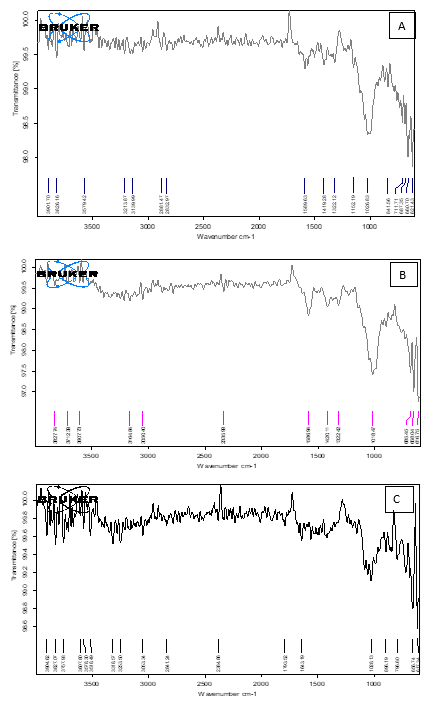
Fig. 1: The FTIR of three sources: A. fish; B. shrimp; black soldier fly larvae exuviae of chitosan
Table 1: The FTIR peak assignments across chitosan sources (/cm)
|
Source |
O-H stretching |
N-H stretching |
Amide I |
Amide II |
C-O-C stretching |
Unique peaks |
|
Fish scales |
3700–3000 |
3700–3000 |
1640 |
1545 |
1026 |
564 (NH bending) |
|
Shrimp shells |
3827.74 |
3712.39 |
1586.94 |
1420.11 |
1018.47 |
685.45 (N-H bending) |
|
BSF larvae exuviae |
3607.73 |
3578.30 |
1589.63 |
1419.28 |
1026.83 |
660.70 (skeletal) |
Nevertheless, chitosan obtained from shrimp exhibited a more significant N-H bending vibration at 685.45/cm. In contrast, chitosan derived from black soldier fly larvae exuviae revealed a distinct peak at 660.70/cm. On the other hand, fish-derived chitosan shows a broader O-H/N-H combined stretching band, which may reflect variations in the hydrogen bonding patterns. Furthermore, amide I and II bands were consistent across all sources, confirming the presence of acetylated residues. However, the relative intensities of these bands differed, with chitosan derived from shrimp exhibiting the most significant intensity for the amide I band, implying a greater residual acetyl content. The C-O-C stretching vibrations (1026–1018/cm) were consistent across all the spectra, confirming the integrity of the glycosidic linkages. Degree of deacetylation (DD) varied across sources (fish 95%, shrimp 80%, BSFLE 70%) and is known to modulate chitosan’s bioactivity (Mukarram et al., 2023). However, the species specific leaf promotion (BSFLE best for C. pandurata and shrimp best for C. asperata) cannot be explained solely by DD, as the highest DD (fish) was not always most effective. Differences in molecular weight, acetylation pattern and remaining protein/lipid components are likely contributing factors, as emphasized by Elouali et al. (2024).
Plant height
This study examined the effects of chitosan derived from three different sources, namely fish, shrimp, and BSFLE, and four concentrations (0, 5, 10, and 15 mg/L) on the plant height of four orchid species over a 12-week acclimatization period. Fig. 2 and Fig. 3 illustrate the plant height trends for each orchid species in these treatments. Notwithstanding the noticeable differences in growth patterns, the statistical evaluation conducted at week 12 indicated that there were no significant variations (P > 0.05) in plant height among all chitosan sources and concentrations within each orchid species. Specifically, for C. asperata and C. pandurata, plant height measurements under the three sources of chitosan showed overlapping growth trajectories regardless of the concentration applied, as indicated by the uniformity of the symbols representing 0, 5, 10, and 15 mg/L concentrations. Similarly, Dendrobium sp. and G. speciosum exhibited comparable growth responses across all chitosan treatments, with no statistically significant differences discernible among sources or concentrations. The lack of considerable differences indicates that neither the source of chitosan nor its concentration within the examined range had a significant effect on the height growth of these orchid species during the 12-week period. Moreover, the source of chitosan in fish, shrimp, or BSFLE did not have a differential impact on plant height, which is consistent with the results of Román-Doval et al. (2023) and Stasińska-Jakubas and Hawrylak-Nowak (2022), who noted similar bioactivity of chitosan from various sources when purified to equivalent levels of deacetylation and molecular weight. This suggests that the physicochemical properties of chitosan rather than its biological source predominantly determine its biostimulant efficacy. It is also critical to consider that plant height is a single morphological parameter and may not fully capture the spectrum of the effects of chitosan across different developmental growth stages.Alternative growth metrics, including root development, biomass accumulation, flowering time, and biochemical indicators, may uncover more subtle responses under diverse environmental and physiological conditions influencing overall plant performance and adaptive capacity. (Lopez-Moya et al., 2017; Suwanchaikasem et al., 2024).
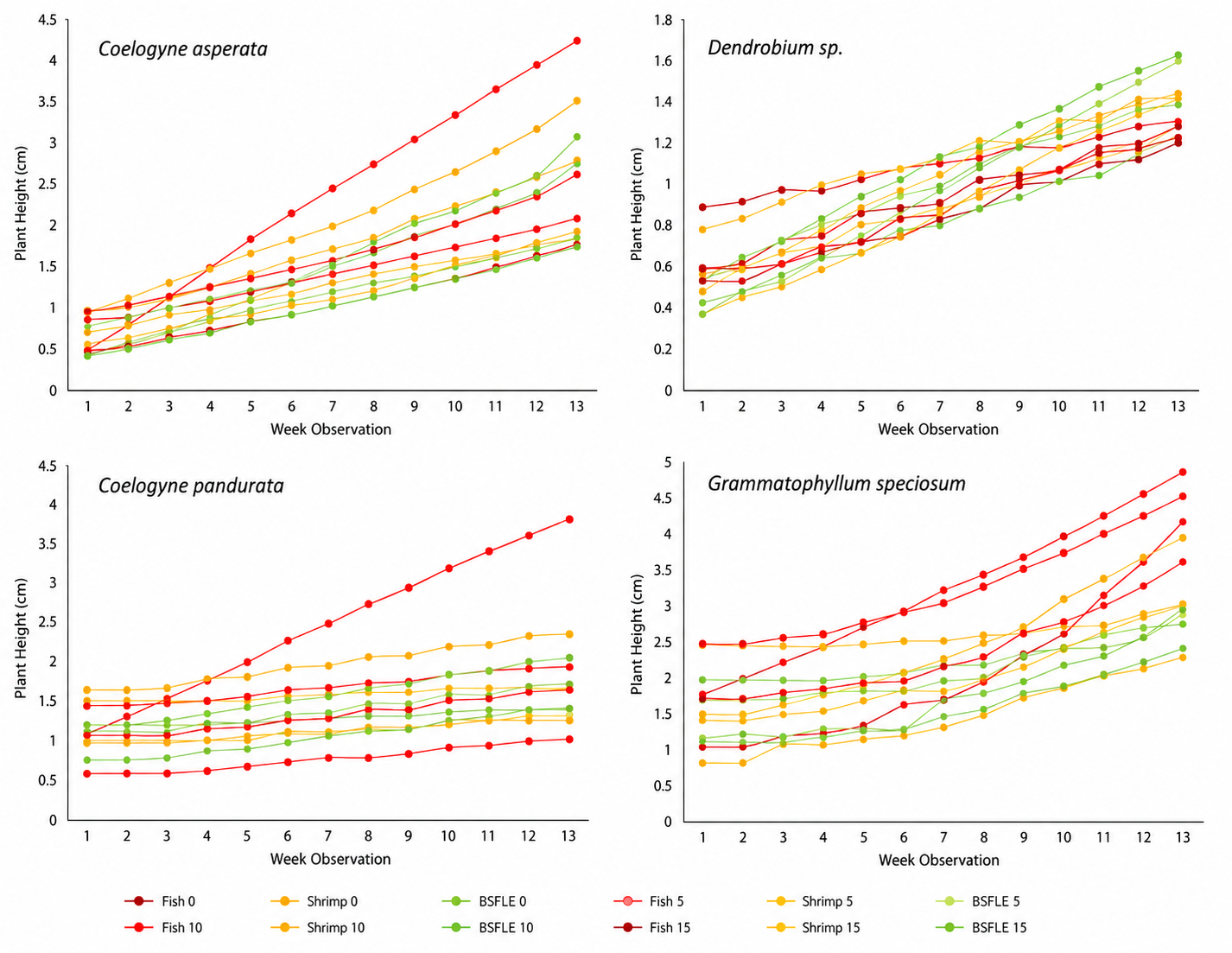
Fig. 2: Plant height of the several orchid acclimatized using various sources and concentration of chitosan during 12 weeks of observation. At week 12, the statistical analysis indicated no significantly different (P > 0.05) for all sources and various concentration of chitosan in each types of orchid. Notes: Chitosan from fish indicated with red line; shrimp, orange line; Black soldier fly larvae exuviae/BSFLE, green line. The concentration level (mg/L) of chitosan indicated by: circle for 0; triangle for 5; Square for 10; and diamond for 15 mg/L.
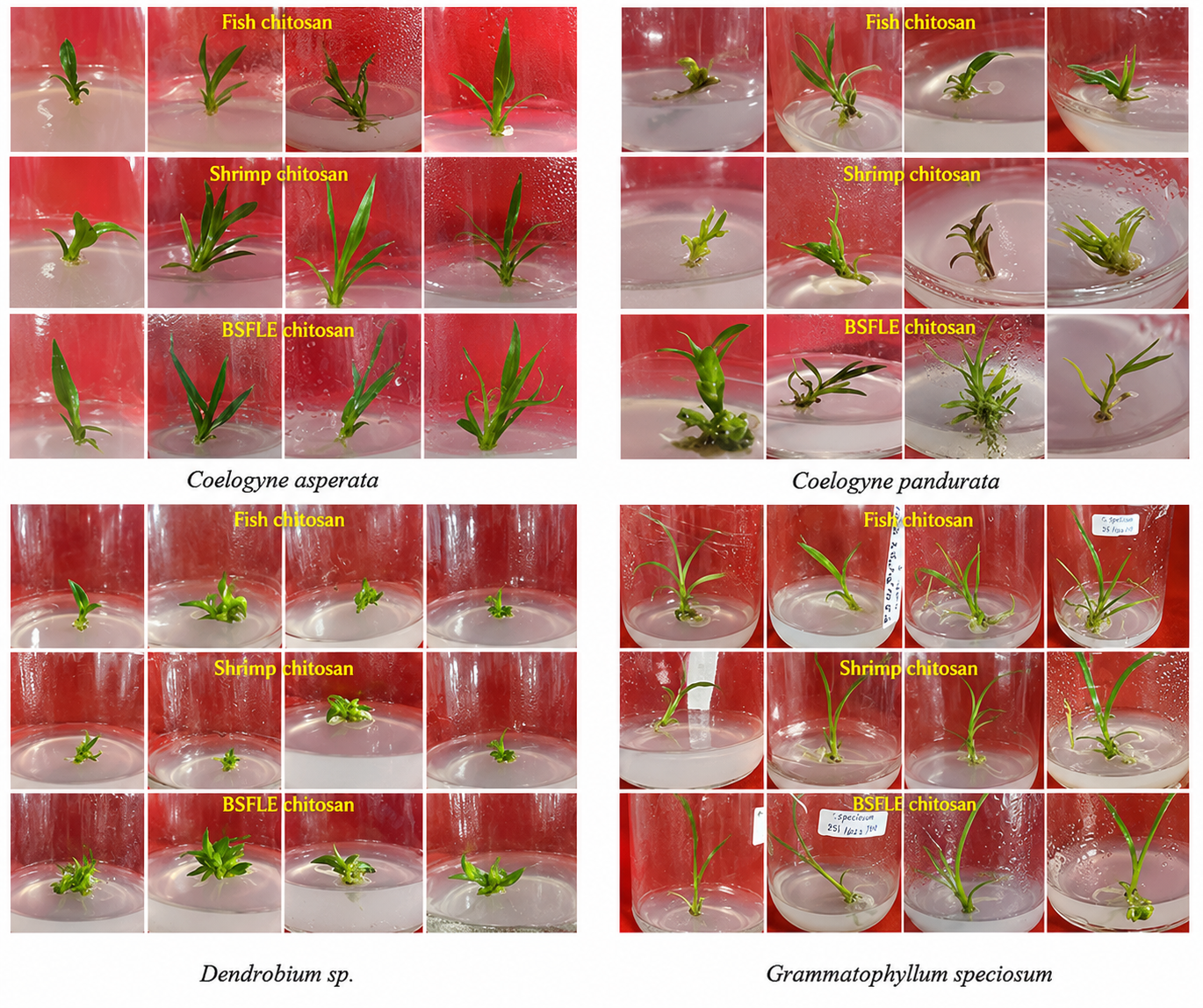
Fig. 3: Planlets of four types of orchid acclimatized with various sources (Fish, Shrimp, and Black soldier Fly Larvae Exuviae/BSFLE) and different concentration (from left to right at each type of chitosan: 0, 5, 10, 15 mg/L) of chitosan at week 12
Leaf number
The present study also demonstrated distinct and variable interspecific physiological responses among four orchid species (Coelogyne asperata, Coelogyne pandurata, Dendrobium sp., and Grammatophyllum speciosum) to chitosan treatments varying by source (fish, shrimp, and BSFLE) and concentrations (0, 5, 10, and 15 mg/L). The number of leaves, evaluated after a period of 12 weeks, demonstrated statistically significant variations, as denoted by the different letters (a, b) positioned above the bars, which illustrate the varying effectiveness of chitosan treatments (Fig. 4). Practically, an 62 % increase in leaf number (Coelogyne asperata, shrimp chitosan 10 mg/L) translates into an estimated gain of 3–4 weeks in acclimatisation time, because plants with 6–7 leaves were ready for potting 25 days earlier than control plants with 4 leaves. These enhancements hold considerable economic importance for commercial orchid nurseries and expedite the reintroduction of rare species. Chitosan acts as a defence elicitor that triggers a cascade of signalling events: it increases cellular Ca²⁺ and reactive oxygen species (ROS), which activate mitogen activated protein kinases (MAPKs) and transcription factors. In turn, this upregulates antioxidant enzymes (superoxide dismutase, catalase, peroxidase) and modulates phytohormone homeostasis (Mukarram et al., 2023). The net effect can be either growth promotion or defence, depending on dose and species. The current leaf promotion is probably a consequence of a mild, chronic stimulation that activates auxin/cytokinin signaling without initiating a complete defense response (Suarez-Fernandez et. al., 2020). Interaction with endogenous hormones is well documented.
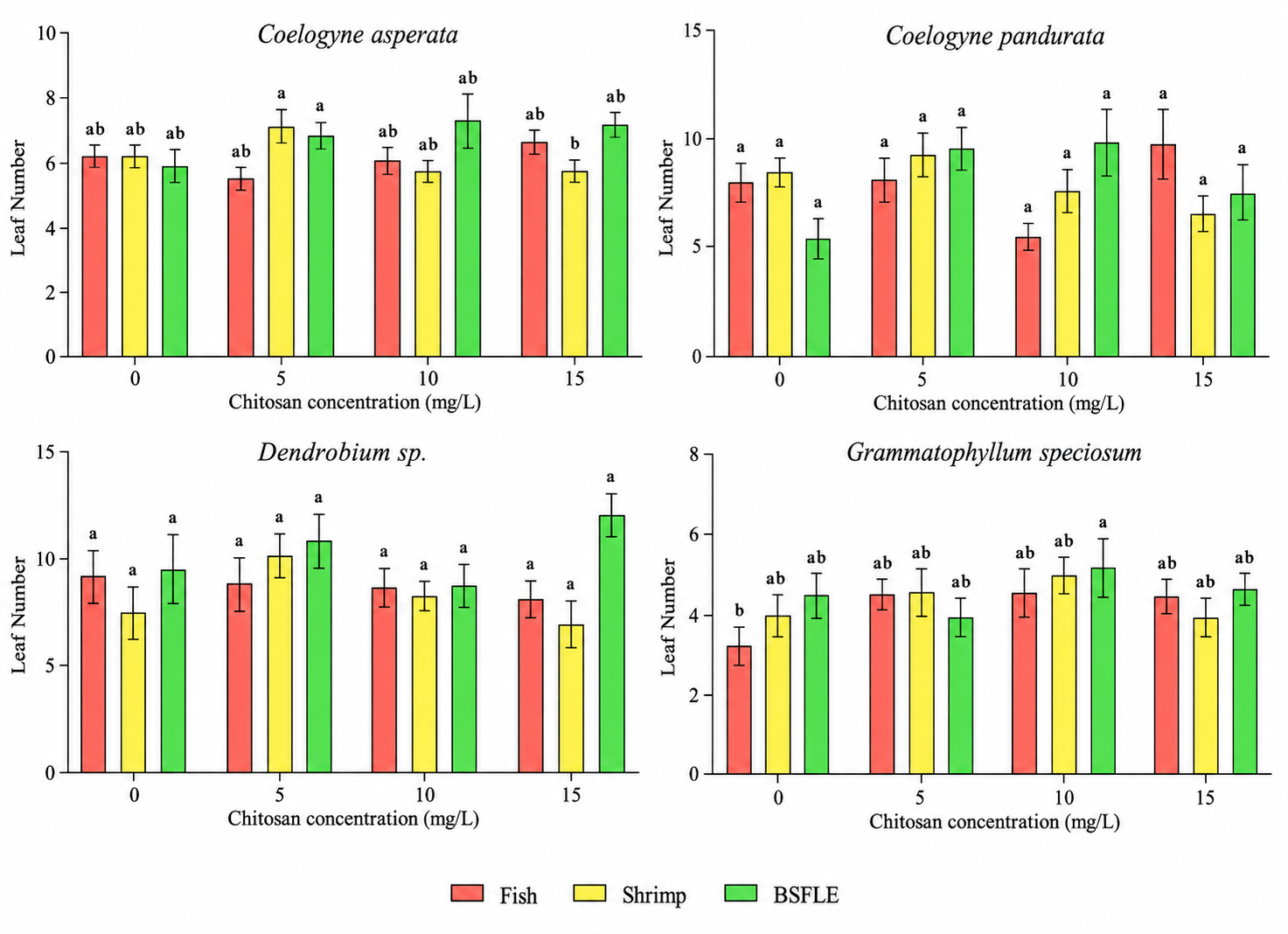
Fig. 4: Leaf number (mean ± SE, n = 5) of four orchid species after 12 weeks of acclimatisation with chitosan from fish, shrimp or BSFLE at 0, 5, 10, 15 mg/L. Different letters (a,b) above bars within the same species indicate significant differences (p < 0.05). Absence of letters indicates no significant difference
In wheat, chitosan increased IAA, GA and CK concentrations (El Amerany et al., 2022). In tomato, chitosan microparticles initially activated the reporter genes for auxin and cytokinin (Suarez-Fernandez et. al., 2020). Moreover, chitosan can repress gibberellin signalling in barley embryos (Lopez Moya et al., 2017). In this study, the increase in species-specific leaf responses may be a reflection of the different ways in which the three chitosan sources modulate these hormone pathways. These differential hormonal interactions may further influence leaf initiation, expansion, and overall vegetative development among the studied species. Subsequent studies have delivered thorough insights into how chitosan acts as a growth enhancer for plants and a trigger for defense responses, thereby explaining the observed increases in leaf number. Chitosan bioactivity is influenced by several factors, such as its molecular weight and degree of deacetylation, which are influenced by the source material (Mukarram et al., 2023; Román-Doval et al., 2023). This observation is consistent with the species-specific responses identified in this study between shrimp-derived chitosan and that derived from BSFLE. The superior performance of shrimp-derived chitosan at intermediate concentrations for C. asperata and G. speciosum aligns with Abou El-Enin et al. (2023); El Amerany et al. (2022) found that chitosan enhances plant growth parameters, including leaf proliferation, through the modulation of nutrient uptake and hormonal signalling. Moderate chitosan doses optimize leaf development. The distinct optimal response of C. pandurata to BSFLE-derived chitosan at 5 mg/L may vary in bioactivity, depending on the source-specific molecular structure. The unique oligomeric profile of BSFLE chitosan could more effectively interact with receptors in C. pandurata, stimulating growth at lower concentrations (Fuhrmann et al., 2022; Lee et al., 2022; Schäfer et al., 2025). Moreover, the increase in leaf number of Dendrobium sp. in a dose-dependent manner with fish-derived chitosan at 15 mg/L was corroborated by earlier studies which highlighted that elevated chitosan concentrations can promote growth in specific monocots by stimulating defense-related enzymes and improving stress tolerance (Ji et al., 2022; Sathiyabama and Manikandan, 2021). These results are also in line with previous findings revealing that chitosan’s dual role in promoting growth and eliciting oxidative stress responses may explain why Dendrobium sp. tolerates and benefits from higher chitosan levels, whereas other species favour lower doses (Pujari et al., 2021). Responses that are specific to each species can be attributed to the differences in the perception of chitosan oligosaccharides at the floral and root levels. Every orchid species contains a unique array of chitin/chitosan binding receptors, whose affinities fluctuate according to the chitosan DD and MW (Suwanchaikasem et al., 2024). A key limitation is the unequal DD across sources (fish 95%, shrimp 80%, BSFLE 70%). The DD affects solubility, charge and receptor affinity (Mukarram et al., 2023; Carera et al., 2023). Therefore, the observed source‑specific leaf promotion cannot be attributed solely to biological origin; DD differences may have contributed. The assertion that BSFLE chitosan serves as a feasible alternative continues to hold true; however, subsequent studies ought to evaluate sources with corresponding DD to distinguish source‑specific effects.
Root number
The evaluation of root number in four orchid species, Coelogyne asperata, Coelogyne pandurata, Dendrobium spp., and Grammatophyllum speciosum, subjected to chitosan treatments of fish, shrimp, and BSFLE at concentrations of 0, 5, 10, and 15 mg/L over a 12-week acclimatization period revealed no statistically significant differences among all treatment groups (p > 0.05) (Fig. 5). Notwithstanding the evident numerical trends, including a marginal increase in root numbers associated with shrimp-derived chitosan treatments at a concentration of 10 mg/L, these findings did not achieve statistical significance when analyzed across different sources, concentrations, or species. This uniformity in root number response indicates that within the tested parameters, the chitosan source and concentration did not exert a discernible effect on root proliferation in the studied orchids. These findings are consistent with prior research demonstrating that the influence of chitosan on root development can be variable and often species- and context-dependent. Numerous studies have indicated that chitosan promotes root growth mainly by modulation of phytohormones and activation of antioxidant defense mechanisms; however, these effects may be subtle or obscured under specific experimental conditions (El Hadrami et al., 2010). The absence of significant differences in root number may reflect the complex interplay of chitosan’s molecular characteristics, such as degree of deacetylation, molecular weight, and purity, which vary by source but do not necessarily translate into uniform biological effects (Kumar, 2000). The chitosan obtained from shrimp demonstrated a greater deacetylation rate (80%) than that of BSFLE chitosan (70%). Nevertheless, this did not lead to statistically superior root proliferation, aligning with findings that molecular differences alone do not guarantee enhanced root induction (Kumari et al., 2017). The deficiency of a remarkable reaction in various orchid species may be linked to fundamental physiological attributes and growth phases that impact root formation, possibly taking precedence over external agents such chitosan (Suwanchaikasem et al., 2024). The subdued root reaction in G. speciosum, recognized for its unique root structure, further corroborates species-specific sensitivity to biostimulants (Quitadamo et al., 2021). The chitosan concentrations tested, between 5 and 15 mg/L, likely neither enhance nor suppress root growth, aligning with studies suggesting moderate chitosan levels optimize growth, while elevated concentrations may cause stress or phytotoxicity under prolonged exposure and varying environmental conditions (Soostani et al., 2025). The outcomes further underscore the likely effects of environmental and methodological variables during acclimatization, including nutrient availability and humidity, which may influence root growth and potentially conceal subtle treatment effects (Riseh et al., 2023). The remaining proteins and lipids present in chitosan derived from insects may affect its bioactivity, potentially explaining the intermediate and statistically insignificant root responses observed with BSFLE chitosan under varying experimental conditions and species-specific physiological responses during early developmental growth stages (Mei et al., 2024).
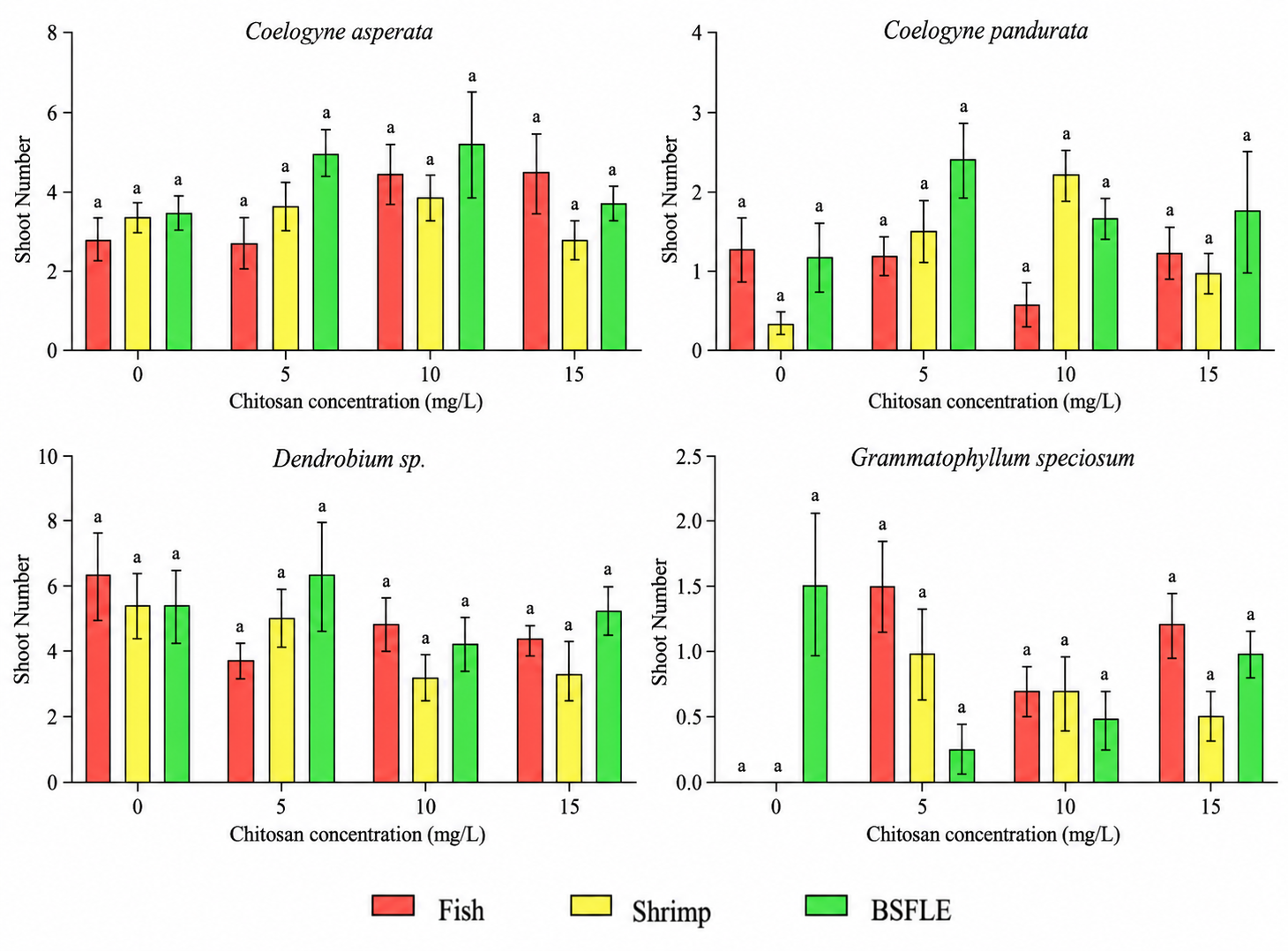
Fig. 5: Root number of the several orchid acclimatized using various concentration of chitosan. Different alphabet (a,b) above the bars at the same orchid indicate significantly different at P < 0.05. The data observation was obtained at the week 12 of acclimatization
Shoot number
The study investigated the effects of the chitosan derived from fish, shrimp, and black soldier fly larvae exuviae (BSFLE) at concentrations of 0, 5, 10, and 15 mg/L on the number of shoots on four different types of orchids. It found that there were some trends in shoot growth, but the trend were not statistically significant across all species (Fig. 6). Specifically, although shrimp-derived chitosan at 10 mg/L appeared to promote the highest shoot numbers in C. asperata and C. pandurata, these increases were not statistically significant across all treatments and species. For Dendrobium spp. and G. speciosum, chitosan treatments from all sources and concentrations, including shrimp at 10 mg/L, did not produce statistically significant differences in shoot count when compared to the controls (p > 0.05). In G. speciosum, shoot number responses were particularly muted, with no significant variation detected among any of the chitosan treatments. The overall absence of a substantial impact on shoot quantity among the four orchid species is consistent with the wider observation that the impact of chitosan on morphological traits can be specific to the species and dependent on concentration, often demonstrating minor or non-significant effects on particular growth characteristics (Shah et al., 2021). Chitosan's physicochemical properties, such as its molecular weight and degree of deacetylation, which can differ by source, may affect bioactivity, yet chitosan generally do not lead to significant amounts of shoot growth under the conditions tested (Wang and Roman, 2023). Furthermore, lack of significant variations suggests that chitosan's role as a shoot growth promoter is limited or overshadowed by the natural growth patterns of the species and the factors that help orchids adapt to their environment (El Amerany et al., 2022). Comparative studies have indicated analogous results, wherein chitosan treatments improved specific growth parameters such as root development or leaf count, while shoot number either remained unchanged or exhibited only slight enhancements. This may be due to the complex regulation of shoot meristem activity, which involves multiple hormonal and genetic controls that chitosan alone cannot sufficiently modulate (Suwanchaikasem et al., 2024).
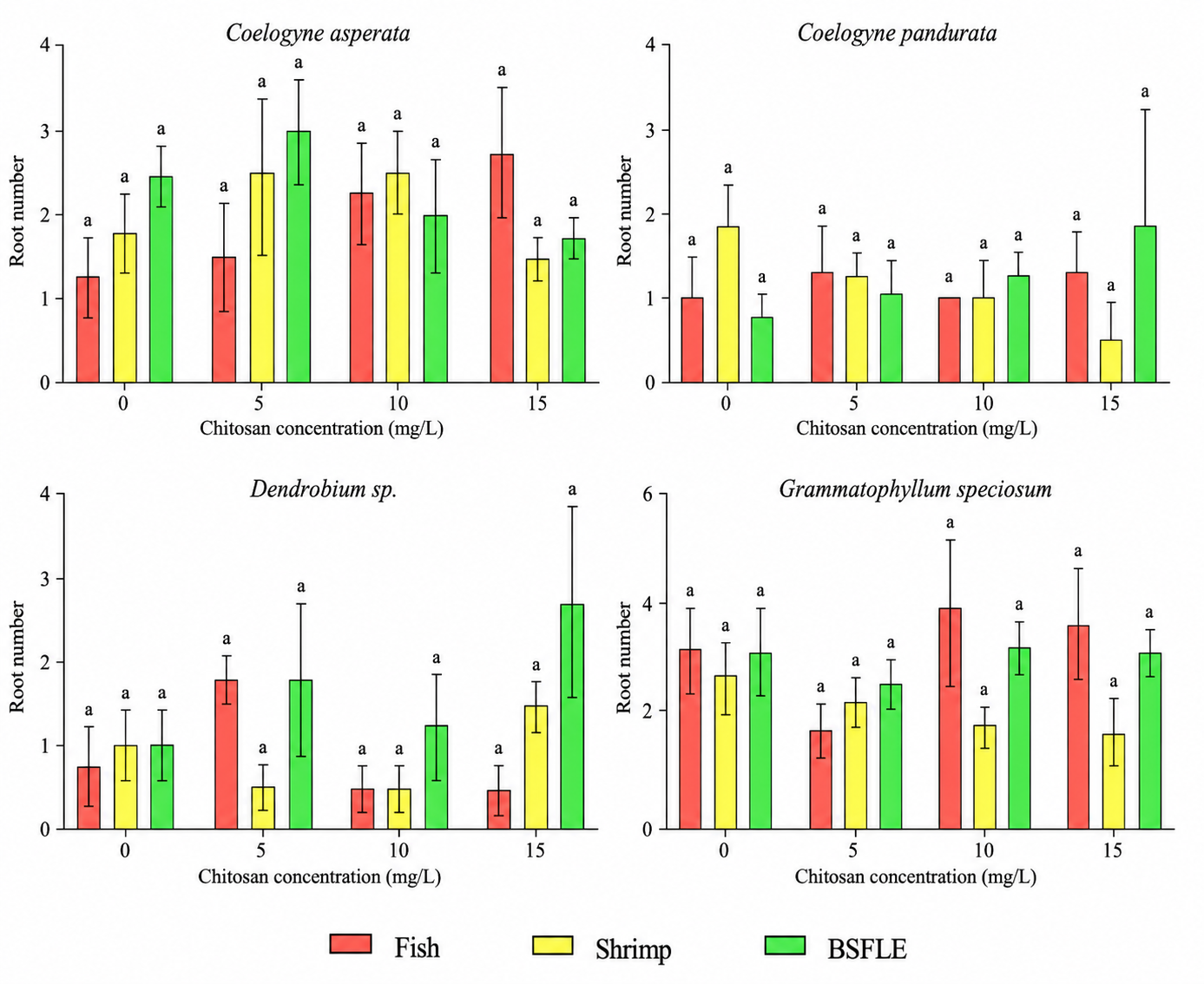
Fig. 6: Shoot number of the several orchid acclimatized using various concentration of chitosan. Different alphabet (a,b) above the bars at the same orchid indicate significantly different at P < 0.05. The data observation was obtained at the week 12 of acclimatization
CONCLUSION
This study has illustrated that chitosan sourced from the exuviae of black soldier fly larvae acts as a feasible and eco-friendly alternative to standard crustacean-derived chitosan for the acclimatization of orchids. The black soldier fly larvae exuviae chitosan can enhance leaf number in a species‑specific manner (C. pandurata) but does not improve height, root or shoot growth. For orchid species that respond positively, BSFLE chitosan may serve as a sustainable alternative to crustacean chitosans, but its efficacy is not universal. The results further validated that all three chitosan sources (fish scales, shrimp shells, and BSFL exuviae) demonstrated distinct polysaccharide structures as observed through FTIR spectroscopy, with shrimp-derived chitosan showing a pronounced N-H bending vibration at 685.45/cm and BSFL exuviae chitosan revealed a distinctive skeletal vibration at 660.70/cm. These structural variations indicated source-specific physicochemical properties that may influence bioactivity. The only significant growth parameter affected was leaf number, which reacted in a manner dependent on both species and source. Plant height, root number and shoot number were unchanged. Coelogyne asperata treated with shrimp chitosan at 10 mg/L produced 6.8 leaves compared to 4.2 in controls, representing a 62 percent increase. Grammatophyllum speciosum responded optimally to shrimp chitosan at 5 mg/L with 5.5 leaves versus 3.8 in controls. Coelogyne pandurata showed optimal response to BSFLE chitosan at 5 mg/L, while Dendrobium species exhibited dose-dependent leaf increase with fish chitosan at 15 mg/L. These findings validated that the effectiveness of chitosan as a biostimulant depends on the specific orchid species as well as the unique molecular properties of the biopolymer from its source. Several limitations of current study, only four orchid species were tested, limiting generalizability across the diverse Orchidaceae family. Furthermore, the species-specific nature of chitosan's effects suggests that even among the Orchidaceae family, various genera or hybrids might exhibit different responses to identical sources and concentrations of chitosan. Thus further screening of rare, threatened and commercially important orchids, such as Paphiopedilum, Cattleya and Phalaenopsis hybrids, is needed before general recommendations can be made. Chitosan concentrations were restricted to 5, 10, and 15 mg/L based on preliminary trials, leaving higher or lower doses unexplored. The degree of deacetylation varied across sources (95% for fish, 80% for shrimp, 70% for BSFLE), potentially confounding source-specific effects with deacetylation differences. Moreover, the molecular mechanisms responsible for the unique leaf responses observed in different species were not explored, encompassing variations in phytohormone levels, gene expression patterns, or changes in cell wall structure. The practical benefits of this study are substantial for orchid conservation and sustainable horticulture. The BSFLE chitosan offers an environmentally friendly alternative that reduces dependence on marine crustacean waste, which is often contaminated with heavy metals or requires energy-intensive processing. Insect farming for chitosan production aligns with circular economy principles by valorizing organic waste streams into high-value bioproducts. Customized chitosan formulations can promote leaf growth during the essential acclimatization stage for orchid nurseries and conservation initiatives, which may lead to higher survival rates and lower production expenses. Future research should prioritize elucidation of the molecular pathways through which source-specific chitosan structures influence leaf meristem activity. In particular, the present 12 week experiment captured only initial vegetative responses; longer term studies (≥12 months) are needed to assess effects on flowering, seed production, stress tolerance and biomass partitioning, as has been called for in other chitosan studies. Transcriptomic or proteomic studies that compare the responses of orchids to various chitosan sources would help in identifying potential receptors and signaling cascades. Long-term field studies extending beyond 12 months are needed to assess persistent effects on flowering, seed production, and stress tolerance. Refining the techniques for extracting BSFLE chitosan to reach elevated levels of deacetylation similar to those found in commercial products may boost bioactivity. Finally, economic feasibility studies comparing BSFLE-based chitosan production with crustacean sources would inform industrial adoption for agricultural biostimulant manufacturing.
AUTHOR CONTRIBUTIONS
S. Samsurianto conceptualized the study idea, designed the study, supervised the project, analytical measurements, and preparing the manuscript draft. R. Kusuma conducted the investigation, performed the literature review, curated the data, and drafted the manuscript. E.S.D. Rahmadhani managed data collection, performed statistical analysis, and contributed to data interpretation. M.K.B. Butar conducted the Fourier-transform infrared spectroscopy analysis and interpreted the results. R.A. Nugroho provided critical insights into insect-derived biopolymer applications, contributed to the refinement of the discussion and conclusions, and assisted in manuscript revision.
ACKNOWLEDGEMENT
The authors gratefully acknowledge the support of the Mulawarman University’s Tissue Culture Laboratory and the Department of Biology, Faculty of Mathematics and Natural Sciences, for providing the facilities and resources essential to this study. Special thanks are extended to the local black soldier fly larva-rearing facility for supplying the raw materials necessary for chitosan extraction. The authors also appreciate the technical assistance and guidance provided by laboratory staff throughout the experimental work.
CONFLICT OF INTEREST
The authors declare that there is no conflict of interest regarding the publication of this manuscript. In addition, ethical issues, including plagiarism, informed consent, misconduct, data fabrication and/or falsification, double publication and/or submission, and redundancy have been completely observed by the authors.
OPEN ACCESS
©2026 The author(s). This article is licensed under a Creative Commons Attribution 4.0 International License, which permits use, sharing, adaptation, distribution and reproduction in any medium or format, as long as you give appropriate credit to the original author(s) and the source, provide a link to the Creative Commons license, and indicate if changes were made. The images or other third-party material in this article are included in the article’s Creative Commons license, unless indicated otherwise in a credit line to the material. If material is not included in the article’s Creative Commons license and your intended use is not permitted by statutory regulation or exceeds the permitted use, you will need to obtain permission directly from the copyright holder. To view a copy of this license, visit: http://creativecommons.org/licenses/by/4.0/
PUBLISHER’S NOTE
GJESM Publisher remains neutral with regard to jurisdictional claims in published maps and institutional afflictions.
Negative AI Statement
The author(s) declared that no AI tools or services were used or not highly applied during the preparation of this work.
ABBREVIATIONS
|
°C |
Degree Celsius |
|
% |
Percent |
|
± |
Plus minus |
|
ANOVA |
Analysis of Variance |
|
BSFLE |
Black soldier fly larvae exuviae |
|
BSFL |
Black soldier fly larvae |
|
cm |
Centimeter |
|
/cm |
Reciprocal centimeter (wavenumber) |
|
DMRT |
Duncan Multiple Range Test |
|
Fig |
Figure |
|
FTIR |
Fourier‑transform infrared spectroscopy |
|
g |
Gram |
|
h |
Hour |
|
H2 |
Hydrogen |
|
HCl |
Hydrogen chloride (hydrochloric acid) |
|
HNO3 |
Nitric acid |
|
K |
Potassium |
|
KBr |
Potassium bromide |
|
kg |
Kilogram |
|
L |
Liter |
|
LAFC |
Laminar air flow cabinet |
|
Ltd |
Limited |
|
M |
Molar |
|
m |
Meter |
|
mg |
Milligram |
|
Mg |
Magnesium |
|
mg/L |
Milligram per liter |
|
mL |
Milliliter (10⁻³ liter) |
|
mL/g |
Mililiter per gram |
|
mL/min |
Milliliter per minute |
|
mm |
Milimeter |
|
MMT |
Million metric ton |
|
MPa |
Megapascals |
|
MS |
Murashige and Skoog |
|
Mt |
Metric ton |
|
MUFA |
Mono-unsaturated fatty acid |
|
N2 |
Nitrogen |
|
Na |
Sodium |
|
NaOH |
Sodium hydroxide |
|
P |
Phosphorous |
|
rpm |
Revolutions per minute |
|
SE |
Standard error |
|
spp |
Species pluralis |
|
WAP |
Weeks after planting |
REFERENCES
Abou El-Enin, M.M.; Sheha, A.M.; El-Serafy, R.S.; Ali, O.A.M.; Saudy, H.S., Shaaban, A., (2023). Foliage-sprayed nano-chitosan-loaded nitrogen boosts yield potentials, competitive ability, and profitability of intercropped maize-soybean. Int. J. Plant Prod., 17: 517-542 (26 pages).
Awasthi, M.; Pokhre, C.P.; You, Y.-H.; Balami, S.; Kunwar, R.M.; Thapa, S.; Kim, E.-J.; Park, J.-W.; Park, J.-H., Lee, J.-M., (2023). Comparative assessment of ethnobotany and antibacterial activity of moringa oleifera lam. In Nepal. Ethnobot. Res. Appl., 25: 1-13 (13 pages).
Awasthi, M.; Thapa, S.; Awasthi, B.; Lim, C.R.; You, Y.H., Chung, K.W., (2024). Diversity patterns of epiphytic orchids along elevation in the mountains of western Nepal. Plants. 13: 3256 (12 pages).
Bhattacharyya, P.; Lalthafamkimi, L., Van Staden, J. (2021). Insights into the biostimulatory effects of chitosan in propagation of orchid bioresources. In Biostimulants for crops from seed germination to plant development. 197-210 (14 pages).
El Amerany, F.; Rhazi, M.; Balcke, G.; Wahbi, S.; Meddich, A.; Taourirte, M., Hause, B., (2022). The effect of chitosan on plant physiology, wound response, and fruit quality of tomato. Polymers. 14: 5006 (17 pages).
El Hadrami, A.; Adam, L.R.; El Hadrami, I., Daayf, F., (2010). Chitosan in plant protection. Mar. Drugs. 8: 968-987 (20 pages).
El-Araby, A.; El Ghadraoui, L., Errachidi, F., (2022). Physicochemical properties and functional characteristics of ecologically extracted shrimp chitosans with different organic acids during demineralization step. Molecules. 27: 8285 (21 pages).
El-Araby, A.; Janati, W.; Ullah, R.; Ercisli, S., Errachidi, F., (2024). Chitosan, chitosan derivatives, and chitosan-based nanocomposites: Eco-friendly materials for advanced applications (a review). Front. Chem., 11: 1327426 (21 pages).
Carrera, C.; Bengoechea, C.; Carrillo, F.; Calero, N., (2023). Effect of deacetylation degree and molecular weight on surface properties of chitosan obtained from biowastes. Food Hydrocolloids. 137: 108383 (10 Pages).
Fuhrmann, A.; Wilde, B.; Conz, R.F.; Kantengwa, S.; Konlambigue, M.; Masengesho, B.; Kintche, K.; Kassa, K.; Musazura, W., Späth, L., (2022). Residues from black soldier fly (Hermetia illucens) larvae rearing influence the plant-associated soil microbiome in the sort term. Frontier. 12: 944091 (19 Pages).
Hu, H.; Wei, Y.; Wang, W.; Suonan, J.; Wang, S.; Chen, Z.; Guan, J., Deng, Y., (2022). Richness and distribution of endangered orchid species under different climate scenarios on the qinghai-tibetan plateau. Front. Plant Sci., 13: (13 pages).
Ji, H.; Wang, J.; Chen, F.; Fan, N.; Wang, X.; Xiao, Z., Wang, Z., (2022). Meta-analysis of chitosan-mediated effects on plant defense against oxidative stress. Sci. Total. Environ., 851: 158212 (9 pages).
Kullan, A.; Neumann, E.; Suresh, A., Choi, H., (2026). Sustainable solutions for entomoremediation organic waste into food and fertilizer using black soldier fly larvae. Global J. Environ. Sci. Manage., 12: 409-430 (22 pages).
Kumar, M.N.R., (2000). A review of chitin and chitosan applications. React. Funct. Polym., 46: 1-27 (27 pages).
Kumari, S.; Kumar Annamareddy, S.H.; Abanti, S., Kumar Rath, P., (2017). Physicochemical properties and characterization of chitosan synthesized from fish scales, crab and shrimp shells. Int. J. Biol. Macromol., 104: 1697-1705 (8 pages).
Lagat, M.K.; Were, S.; Ndwigah, F.; Kemboi, V.J.; Kipkoech, C., Tanga, C.M., (2021a). Antimicrobial activity of chemically and biologically treated chitosan prepared from black soldier fly (Hermetia illucens) pupal shell waste. Microorganisms. 9: 2417 (15 pages).
Lopez-Moya, F.; Escudero, N.; Zavala-Gonzalez, E.A.; Esteve-Bruna, D.; Blázquez, M.A.; Alabadí, D., Lopez-Llorca, L.V., (2017). Induction of auxin biosynthesis and wox5 repression mediate changes in root development in arabidopsis exposed to chitosan. Sci. Rep., 7: 16813 (14 pages).
Martínez-Robinson, K.; Martínez-Inzunza, A.; Rochín-Wong, S.; Rodriguez-Cordova, R.J.; Vásquez-García, S., Fernández-Quiroz, D., (2022). Physicochemical study of chitin and chitosan obtained from california brown shrimp (Farfantepenaeus californiensis) exoskeleton. Biotecnia. 24: 28-35 (7 pages).
Masjedi, M.H.; Roozbahani, A., Baghi, M., (2017). Assessment effect of chitosan foliar application on total chlorophyll and seed yield of wheat (Triticum aestivum L.) under water stress conditions. J. Crop Nutr. Sci., 3: 14-26 (12 pages).
Mei, Z.; Kuzhir, P., Godeau, G., (2024). Update on chitin and chitosan from insects: Sources, production, characterization, and biomedical applications. Biomimetics. 9: 297 (58 pages).
Mukarram, M.; Ali, J.; Dadkhah-Aghdash, H.; Kurjak, D.; Kačík, F., Ďurkovič, J., (2023). Chitosan-induced biotic stress tolerance and crosstalk with phytohormones, antioxidants, and other signalling molecules. Front.Plant Sci., 14: 1217822 (14 pages).
Ningsih, S., Sari, D.W., (2023). Effect of chitosan on chlorophyll content and phytotoxicity in Brassica juncea L. Techno: Jurnal Penelitian. 12: 90-98 (9 pages).
Poznanski, P.; Hameed, A., Orczyk, W., (2023). Chitosan and chitosan nanoparticles: Parameters enhancing antifungal activity. Molecules. 28: 2996 (16 pages).
Pujari, I.; Thomas, A.; Rai, P.S.; Satyamoorthy, K., Babu, V.S., (2021). In vitro bioproduction and enhancement of moscatilin from a threatened tropical epiphytic orchid, Dendrobium ovatum (Willd.) kraenzl. 3 Biotech., 11: 507 (20 pages).
Quitadamo, F.; De Simone, V.; Beleggia, R., Trono, D., (2021). Chitosan-induced activation of the antioxidant defense system counteracts the adverse effects of salinity in durum wheat. Plants. 10: 1365 (17 pages).
Rasweefali, M.K.; Sabu, S.; Sunooj, K.; Sasidharan, A.; Xavier, K.M., (2021). Consequences of chemical deacetylation on physicochemical, structural and functional characteristics of chitosan extracted from deep-sea mud shrimp. Carbohydr. Polym. Technol., 2:100032 (11 pages).
Riseh, R.S.; Vazvani, M.G., Kennedy, J.F., (2023). The application of chitosan as a carrier for fertilizer: A review. Int. J. Biol. Macromol., 252: 126483 (12 pages).
Román-Doval, R.; Torres-Arellanes, S.P.; Tenorio-Barajas, A.Y.; Gómez-Sánchez, A., Valencia-Lazcano, A.A., (2023). Chitosan: Properties and its application in agriculture in context of molecular weight. Polymers. 15: 2867 (26 pages).
Santoso, A.; Handayani, T.; Nugroho, R.; Yanuar, A.; Nadirah, N.; Widjaja, E.; Rohaeni, E.; Ok-taufik, M.; Ayuningtyas, U., Erlambang, Y., (2023). Sustainability index analysis of the black soldier fly (Hermetia illucens) cultivation from food waste, 9(4): 851-870 (20 pages).
Sathiyabama, M., Manikandan, A., (2021). Foliar application of chitosan nanoparticle improves yield, mineral content and boost innate immunity in finger millet plants. Carbohydr. Polym., 258: 117691 (15 pages).
Schäfer, H.L.; Gandras, L.; Schneider, L.; Witthohn, M.; Troidl, K.; Muffler, K., Weiss, C.K., (2025). Analysis, properties, and applications of insect-derived chitosan: A sustainable path to functional polysaccharide materials. Gels. 11: 291 (26 pages).
Shah, M.; Jan, H.; Drouet, S.; Tungmunnithum, D.; Shirazi, J.H.; Hano, C., Abbasi, B.H., (2021). Chitosan elicitation impacts flavonolignan biosynthesis in Silybum marianum (L.) gaertn cell suspension and enhances antioxidant and anti-inflammatory activity of cell extracts, 26(4): 1-17 (17 pages).
Sjamsiah, S.; Firnanelty, F.; Manesa, S.H.D.; Cahyani, A.I., Rahmawati, S., (2024). Gelatin from jerbung shrimp shells (Fenneropenaeus marguiensis De man) using three types of solvent: Acetic acid, phosphoric acid, and sulfuric acid. EduChemia: J. Kimia Pendidikan, 9(1): 33-44 (12 pages).
Sofyan, A., (2024). Physicochemical and antibacterial properties of chitosan extracted from swimming crab shells and wooden grasshoppers using different extraction methods. Food Res., 8: 439-450 (12 pages).
Soostani, S.B.; Ranjbar, M.; Memarian, A.; Mohammadi, M., Yaghini, Z., (2025). Investigating the effect of chitosan on the expression of p5cs, pip, and pal genes in rapeseed (Brassica napus L.) under salt stress. BMC Plant Biol., 25: 215 (18 pages).
Stasińska-Jakubas, M., Hawrylak-Nowak, B., (2022). Protective, biostimulating, and eliciting effects of chitosan and its derivatives on crop plants. Molecules. 27: 2801 (17 pages).
Suarez-Fernandez, M.; Marhuenda-Egea, F.C.; Lopez-Moya, F.; Arnao, M.B., Cabrera-Escribano, F.; Nueda, M.J.; Gunsé, B. and Lopez-Llorca, L.V., (2020). Chitosan induces plant hormones and defenses in tomato root exudates. Front. Plant Sci., 11: 572087 (15 pages).
Suwanchaikasem, P.; Idnurm, A.; Selby-Pham, J.; Walker, R., Boughton, B.A., (2024). The impacts of chitosan on plant root systems and its potential to be used for controlling fungal diseases in agriculture. J. Plant Growth Regul., 43: 3424-3445 (22 pages).
Syafitri, F.I.; Rahayu, T., Jayanti, G.E., (2024). Potential of ecoenzymes and n2 nanobubbles on the growth of Phalaenopsis sp. Orchid at the acclimatization stage. J. Ilmu Dasar. 25: 41-48 (8 pages).
Turnip, M., (2023). Improving the growth and adaptation of the black orchid plantlet (Coelogyne pandurata Lindl) in various growing media by giving plant extracts as biostimulants at the acclimatization stage. JUATIKA. 5: 301-310 (9 pages).
Vázquez-Aldana, M.; Sixto-Berrocal, A.M.; Arcos-Casarrubias, J.A.; Martínez-Trujillo, M.A., Cruz-Díaz, M.R., (2025). Biological and chemical synergy in chitin and chitosan production: The role of process sequencing in shrimp shell waste treatment. Int.
Vilar Junior, J.C.; Ribeaux, D.R.; Alves da Silva, C.A., De Campos-Takaki, G.M., (2016). Physicochemical and antibacterial properties of chitosan extracted from waste shrimp shells. Int. J. Biol. Macromol., 2016: 5127515 (7 pages).
Wang, H., Roman, M., (2023). Effects of chitosan molecular weight and degree of deacetylation on chitosan−cellulose nanocrystal complexes and their formation. Molecules. 28: 1361 (13 pages).
Wei, Y.; Li, J.; Jin, J.; Gao, J.; Xie, Q.; Lu, C.; Zhu, G., Yang, F., (2025). Centenary progress on orchidaceae research: A bibliometric analysis. Genes. 16: 336 (23 pages).
Yasmin, K.; Samyor, D.; Dhar, P., Deka, S.C., (2025). Fabrication and application of biodegradable packaging film utilizing chitosan extracted from catla fish scales. J. Food Meas. Charact., 1-14 (14 pages).
Zhang, S.; Wu, S.-M., Gao, J.-Y., (2024). Floral mechanisms promote pollination success and reduce the incidence of self-pollination in a fly-pollinated self-incompatible orchid. Ecol. Evol., 14: e11295 (12 pages).

| Article View | 1,186 |
| PDF Download | 399 |

Letters to Editor
[1] Letters that include statements of statistics, facts, research, or theories should include appropriate references, although more than three are discouraged.
[2] Letters that are personal attacks on an author rather than thoughtful criticism of the author’s ideas will not be considered for publication.
[3] Letters can be no more than 300 words in length.
[4] Letter writers should include a statement at the beginning of the letter stating that it is being submitted either for publication or not.
[5] Anonymous letters will not be considered.
[6] Letter writers must include their city and state of residence or work.
[7] Letters will be edited for clarity and length.