
5.2
CiteScore
2.9
Impact Factor
Document Type : CASE STUDY
Authors
1 Department of Agribusiness, Faculty of Agriculture, University of Riau, Pekanbaru, Indonesia
2 Research for Behavioral and Circular Economy, National Research and Innovation Agency, Indonesia
3 Research Center for Industrial Systems and Sustainable Manufacturing, National Research and Innovation Agency, Indonesia
Graphical Abstract
Highlights
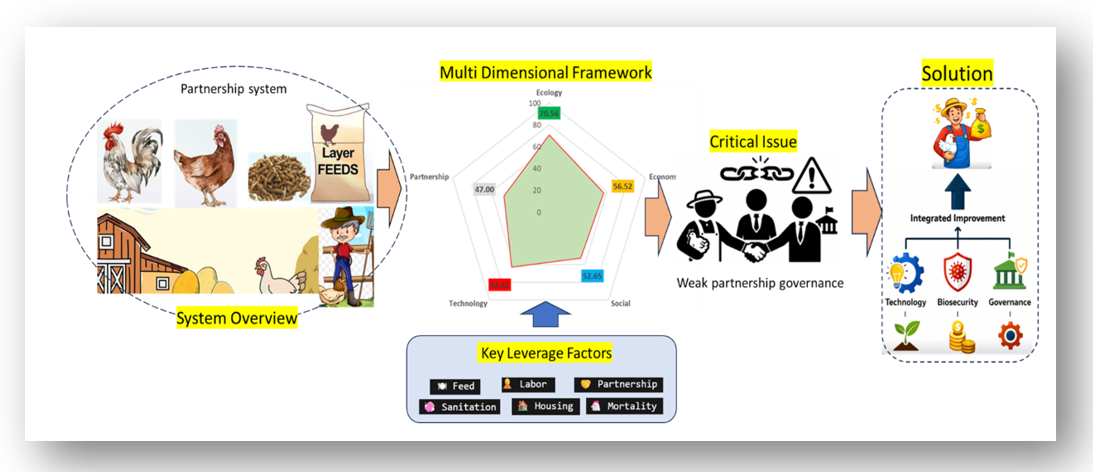
Ø Multidimensional assessment reveals moderate sustainability, with environmental performance highest (70.57%) and partnership lowest (47.00%);
Ø Key leverage factors identified: equipment sanitation (5.20), feeding systems (6.55), and mortality rate (6.36) as the main structural drivers of system sustainability;
Ø The integrated MDS–MICMAC framework improved precision by distinguishing driver, linkage, and dependent sustainability variables;
Ø MDS results showed high model reliability (R² > 0.92; stress < 0.17), supported by Monte Carlo validation.
Keywords
INTRODUCTION
The transformation of global food systems has become one of the most pressing challenges in sustainability science. The global demand for animal protein is increasing due to two main factors: the growing population and the expansion of urban areas. Additionally, it is important to recognize that individuals are altering their dietary preferences (Henchion et al., 2017). The modern agri-food system causes severe environmental damage which includes emitting greenhouse gases and destroying biodiversity and depleting natural resources. Sustainable food systems have developed into the main framework which aims to provide food security while protecting environmental resources and ensuring economic stability and social fairness throughout the food supply chain (Balasundram et al., 2023). The livestock sector plays a crucial role as it supplies essential nutrients to the worldwide population, while also aiding rural communities and safeguarding the environment. Among livestock commodities, poultry production has become the most dynamic and rapidly expanding sector of global animal agriculture (Ahmad et al., 2022). Poultry meat production has increased dramatically over the past decades, rising from approximately 9 million tons in 1961 to more than 133 million tons in recent years, and currently accounts for nearly 40 percent (%) of total global meat production (FAO, 2020). Recent estimates indicate that global poultry meat production exceeded 140 million metric tons in 2023, with broiler chickens contributing more than 85% of total output. The sector is also a fundamental pillar of global food security, providing cost-effective and efficient animal protein to a growing population. In 2023, global broiler meat production reached approximately 134.6 million tonnes, while per capita poultry meat consumption continued to increase worldwide (FAO, 2024). Poultry production is expected to remain the fastest-growing meat sector, accounting for more than 60% of the projected increase in global meat production by 2034 (OECD-FAO, 2024). These trends emphasize the critical role that poultry production plays in determining the future of sustainable food systems. Despite its efficiency advantages compared to other livestock systems, the rapid expansion of poultry production raises important sustainability concerns (Vaarst et al., 2015). Industrial poultry systems are facing growing criticism due to their environmental impact, reliance on external feed sources, difficulties in waste management, and susceptibility to disease outbreaks (Gilbert et al., 2017). At the same time, the sector plays a vital socio-economic role by supporting millions of smallholder farmers and rural households, particularly in developing countries where poultry farming contributes significantly to income generation and livelihood diversification (Wong et al., 2017). The combination of high production efficiency and intricate sustainability challenges has amplified conversations surrounding livestock sustainability and the urgent need for systemic changes in livestock production systems. One pathway increasingly discussed in sustainability science is the agroecological transition, which emphasizes the redesign of agricultural systems to enhance ecological processes, improve resource-use efficiency, and strengthen socio-economic resilience (Vikas and Ranjan, 2024). Agroecological strategies advocate for the incorporation of farming practices, lessen the reliance on outside inputs, and strengthen the relationships between ecological and socio-economic dimensions of agricultural systems (Barrios et al., 2020). In livestock systems, this transition requires moving beyond purely productivity-oriented approaches toward more holistic assessments that incorporate environmental performance, institutional, arrangements, technological innovation, and social welfare outcomes. The analysis of sustainability within livestock systems necessitates analytical frameworks capable of assessing sustainability through its various interconnected aspects according to Schwarz et al. (2022). Multiple academic studies have created sustainability assessment frameworks which evaluate agricultural systems through their various sustainability dimensions. The study has introduced different methods which include life cycle assessment (LCA) and indicator-based sustainability assessment and multi-criteria decision analysis as research methods. The combination of multidimensional scaling (MDS) and rapid appraisal for fisheries (RAPFISH) framework system has emerged as a quick adaptable method which assesses sustainability through its environmental and financial and technological and institutional aspects (Pitcher et al., 2013). RAPFISH established its initial framework to assess fisheries sustainability, however, specialists have effectively applied it in the fields of agriculture and engineering and rural development research due to its ability to merge qualitative and quantitative data into one sustainability measurement system (Rohaeni et al., 2023; Widjaja et al., 2024; Allaily et al., 2024; Santoso et al., 2024; Handayani et al., 2025; Munarso et al., 2025). The use of MDS-based approaches helps to find key system elements which have strong effects on sustainability thereby enabling the development of practical solutions for policy and management methods. To further enhance the analytical precision of sustainability diagnosis, this study complements the Rapfish–MDS framework with matrix of cross-impact multiplication applied to classification (MICMAC) analysis. While, MDS proves to be highly effective in determining sustainability status and identifying dominant leverage attributes, it fails to entirely differentiate whether highly sensitive attributes function as root drivers, linkage variables, or dependent outcomes within the system structure. In complex broiler partnership systems, dominant attributes such as mortality control, sanitation, housing infrastructure, labor organization, and governance of partnerships exhibit a strong interdependence, making the consideration of causal hierarchy vital for the design of strategic interventions. The integration of MDS and MICMAC in this study goes beyond a simple methodological combination by introducing a two-stage empirical filtering process. Leverage factors derived from MDS are used as the primary input for MICMAC, ensuring that structural analysis is grounded in empirically validated variables. This approach reduces subjectivity in variable selection and strengthens the analytical linkage between system performance and structural dynamics, addressing a key gap in sustainability assessment of agrifood systems. There has been a rising trend in the recommendation of integrated structural approaches within sustainability and agri-food system studies to fortify policy prioritization and intervention sequencing (Rachman et al., 2022). Patel et al. (2022) suggest that multidimensional sustainability frameworks are not yet widely used in artnership-based broiler production systems. Recent studies into poultry farming predominantly concentrate on enhancing production efficiency, ensuring animal health, and assessing environmental consequences. In contrast, studies on the institutional and governance aspects of contract farming systems are less common (Junaidi et al., 2023). Most modern poultry supply chains in developing countries use partnership-based broiler production systems, which involve contracts between farmers and integrator companies (Setiadi et al., 2022). Smallholder farmers confront two primary issues, as these systems offer improved access to inputs and technology, but simultaneously generate unequal power dynamics, necessitating farmers to rely on external sources for their economic necessities (Ngwenya et al., 2025). The need for empirical research that combines economic elements with ecological components and social factors and technological aspects and partnership governance elements into one sustainability assessment framework has increased, but such studies remain infrequent (Bartzas et al., 2020). A multidimensional scaling was used to assess the sustainability of broiler farming operations which function through partnership arrangements because this study needed to fill an existing research gap. This research study currently adopts a holistic analytical strategy that encompasses five dimensions of sustainability, which are economic ecological social technological and institutional partnership governance into its assessment framework. The research study identifies key leverage points which affect sustainability results to expand existing knowledge about livestock sustainability while demonstrating how institutional arrangements impact broiler production system sustainability during the ongoing shift toward sustainable food systems. The study leverages existing background knowledge to tackle two research questions which are: 1) What is the sustainability status of partnership-based broiler farming systems when evaluated across multiple sustainability dimensions? 2) Which characteristics have the most significant impact on the sustainability performance of these systems?; 3) How can these leverage factors inform strategies for improving sustainability within broiler production systems?. Accordingly, the aim of this study is to evaluate the sustainability of partnership-based broiler farming systems using a multidimensional scaling framework and to identify key attributes influencing sustainability performance. Additionally, the study endeavors to offer an integrative sustainability evaluation to aid in the development of evidence-based policies and management approaches that bolster the resilience and sustainability of livestock production systems, aligning with the overarching goals of sustainable food systems and agroecological transformation. This study has been carried out in Agriculture Faculty, Riau University in 2025.
MATERIALS AND METHODS
This study was conducted in broiler farming areas operating under partnership schemes in Riau Province, Indonesia, one of the emerging poultry production regions in Sumatra (Fig. 1). The province has witnessed swift growth in broiler farming, driven by a rising domestic demand for poultry meat and the proliferation of integrated poultry companies operating through contract farming arrangements (Sumiati et al., 2025).
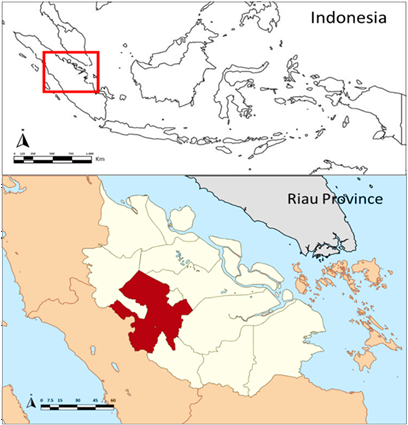
Fig. 1: Geographical Location of the study area in Riau Province, Indonesia
Characteristics of the broiler partnership system
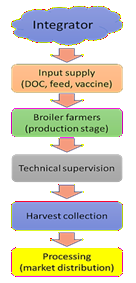
In numerous countries, broiler production systems are progressively structured through contract farming or partnership arrangements, which integrate smallholder farmers into vertically coordinated poultry supply chains (Haq et al., 2020). The poultry sector functions through integrated systems. Poultry companies act as integrators, supplying crucial production elements like day-old chicks (DOC), feed, veterinary care, and technical guidance. Farmers, in turn, furnish housing, labor, and daily flock management. The integrator's promise to buy the finished broilers alleviates market risks for farmers and secures a reliable supply for processing and distribution (Karaman et al., 2023). The global broiler market has experienced transformation toward vertical integration because large agribusiness companies now control production stage operations. The poultry industry in the United States and Brazil has embraced contract growing as its primary method of broiler production. The systems enable integrators to achieve production technology standardization and product quality control and supply chain efficiency improvements while farmers gain access to commercial poultry production with decreased market risk (OECD-FAO, 2024). The governance and structural frameworks of poultry partnership programs display considerable variations across different countries, as the operations of these programs are influenced by institutional structures, industrial development, and market frameworks. The poultry industry in developed countries uses contract farming as its primary production method because it requires comprehensive supply chain management controlled by major corporations while developing economies use partnership systems to operate their small production units through partnerships with multiple smallholder farmers (Wang et al., 2014). The leading poultry-producing nations implement various broiler partnership systems, as illustrated in Table 1 shows through its comparative overview. The poultry industry in Indonesia employs a partnership model which operates according to a nucleus–plasma system because integrator companies serve as the primary production controllers, and farmers act as contract growers responsible for raising broiler chickens (Fig. 2). The system enables smallholder farmers to engage in commercial broiler production while minimizing their risks from changes in input costs and unpredictable market conditions (Putri and Rondhi, 2020). The execution of this partnership system adheres to a fairly standardized business process cycle. The production process begins with the integrator supplying day-old chicks, feed, vaccines, and other production inputs to partner farmers. Farmers then raise the broilers during a production cycle typically lasting between 30 and 35 days, during which technical supervisors from the integrator company monitor farm performance, provide advisory services, and ensure compliance with recommended production standards. During the production cycle, farmers are tasked with daily operational responsibilities that encompass feeding management, environmental regulation within poultry houses, disease surveillance, and the maintenance of flock health. Production performance indicators such as feed conversion ratio (FCR), mortality rate, and final body weight are continuously monitored, as these metrics often determine farmer compensation within partnership contracts. Upon completion of the production cycle, the integrator assembles the broilers and allocates them to slaughterhouses, processing facilities, or poultry markets. Farmer income is generally calculated based on production performance relative to contract benchmarks, which may include performance-based incentives or penalties depending on flock productivity (Setiadi et al., 2022; Putri and Rondhi, 2020). When contrasted with the advanced poultry industries of the United States and Brazil, Indonesia's broiler partnership systems are characterized by smaller farm operations and increased engagement from smallholder farmers. While this structure contributes to rural employment and income generation, it may also create institutional challenges related to contract transparency, farmer bargaining power, and sustainability performance within the partnership system. Comprehending the institutional traits and operational business procedures of broiler partnership systems is crucial for assessing their sustainability performance. The description of the partnership structure and production process presented in this study provides the contextual basis for applying the multidimensional sustainability assessment framework used in the subsequent analysis.
Table 1: Comparative characteristics of broiler partnership systems in selected countries
|
Country |
Dominant partnership model |
Role of integrator company |
Role of farmers |
Market structure |
Key characteristics |
Sources |
|
United States |
Contract growing system |
Provide DOC, feed, veterinary services, technical supervision, and guaranteed purchase contracts |
Provide poultry houses, labor, utilities, and flock management |
Highly vertically integrated industry dominated by large integrators such as Tyson Foods and Pilgrim’s Pride |
Around 90–95% of broilers produced under contract farming systems, with farmer payments often based on performance ranking systems |
|
|
Brazil |
Integrated poultry production |
Supply chicks, feed, veterinary inputs, and coordinate processing plants and export channels |
Manage production houses and daily flock management |
Strong vertical integration led by companies such as BRF and JBS |
One of the world’s largest poultry exporters with highly coordinated production and processing networks |
|
|
Thailand |
Forward contract farming |
Provide production inputs, technical services, and forward pricing agreements |
Invest in poultry houses and manage production cycles |
Dominated by agribusiness corporations such as Charoen Pokphand Foods |
Approximately 80% of broiler farmers operate under contract systems, ensuring supply chain coordination |
|
|
India |
Integrator–farmer contract farming |
Provide DOC, feed, vaccines, and market access through integrator networks |
Provide housing facilities and manage farm operations |
Rapidly expanding poultry industry with strong integrator participation |
Companies such as Suguna Foods have developed contract farming systems involving thousands of farmers |
|
|
Indonesia |
Nucleus–plasma partnership model |
Provide DOC, feed, medicine, technical assistance, and purchase broilers at harvest |
Provide poultry houses, labor, and daily management of broiler production |
Growing vertically coordinated poultry sector involving integrator companies and smallholder farmers |
Widely adopted partnership model enabling small farmers to participate in commercial broiler production while reducing market risk |
Data collection and analysis
The study utilized both primary and secondary data sources to evaluate the sustainable performance of broiler partnership farming systems in Riau Province. The study conducted field observations and semi-structured interviews and structured questionnaires to gather primary data from individuals involved in broiler partnership operations. The study consisted of partnership scheme broiler farmers and poultry integrator company representatives and livestock extension officers and local government officials from the provincial livestock service and poultry industry practitioners. The study identified these stakeholders as they were capable of supplying insights into the operational and economic and institutional components of broiler partnership systems. Prior to the survey, the study facilitated a focus group discussion (FGD) to attain a full understanding of the partnership system. The FGD required participation from farmer representatives and poultry company supervisors and agricultural extension agents and livestock service officers and academic experts in poultry production and agribusiness. The discourse highlighted significant sustainability challenges that influence broiler partnership farming, as the team established sustainability dimensions and attributes pertinent to the research context. The FGD results and the analysis of earlier sustainability assessment studies produced a set of sustainability indicators which were developed. The sustainability evaluation framework comprised five primary dimensions, which encompassed ecological and economic and social and technological and partnership components. These dimensions reflect the multidimensional nature of sustainability in livestock production systems and have been widely used in sustainability assessments employing the Rapfish approach and its derivative methods (Pitcher et al., 2013). A total of 32 sustainability attributes were identified across these five dimensions and subsequently incorporated into the survey questionnaire (Table 2). The selection of sustainability attributes was based on a systematic process involving literature review, expert consultation, and focus group discussions (FGD). The characteristics were adjusted from well-known sustainability assessment frameworks and fine-tuned to capture the distinct aspects of broiler partnership systems. This process ensured that each attribute is theoretically grounded, contextually relevant, and representative of key sustainability dimensions. A total of 17 expert respondents were selected using purposive sampling, based on their expertise, experience, and involvement in broiler partnership systems. The participants included poultry farmers, technical supervisors from companies, government officials overseeing livestock, agricultural extension agents, and poultry industry analysts. Each respondent was asked to evaluate the performance of each sustainability attribute using a three-point ordinal scoring scale, where 0 indicated poor performance, 1 represented moderate performance, and 2 indicated good performance. This scoring method facilitated the conversion of qualitative evaluations from experts into quantitative data that is appropriate for multidimensional analysis. Sustainability performance is classified into four levels, based on percentage intervals of 0–25% (poor, highly unsustainable), 25.01–50% (less, moderately sustainable), 50.01–75% (quite, fairly sustainable), and 75.01–100% (good, very sustainable). These categories are detailed in Table 3.
Table 2: Rap-sustainability dimensions and their corresponding attributes
|
Ecology |
Economy |
Social |
Technology |
Partnership |
|
1. Barn Cleaning Frequency 2. Solid Waste Management 3. Liquid Waste Management 4. Odor Emission 5. Equipment Sanitation 6. Environmental Sanitation 7. Distance to Settlements |
8. Farm Profitability 9. Manure Waste Utilization 10. Carcass Waste Utilization 11. Non-Livestock Income 12. Chicken Mortality Rate 13. Mortality Causes 14. Broiler Market Price 15. Farm Input Price |
16. Productive Age 17. Education Level 18. Family Labor 19. Local Labor 20. Community Conflict 21. Farming Experience |
22. Feed Storage 23. Livestock Production Inputs 24. Feeding Equipment 25. Drinking Equipment 26. Housing Type 27. Floor Type 28. Technological Equipment |
29. Partnership Capital 30. Farmer Participation 31. Farmer Group 32. Partnership Agreement |
Table 3. Sustainability index categories and status for each dimension (Kavanagh and Pitcher, 2004)
|
No. |
Index range (%) |
Classification |
Sustainability status |
|
1 |
0–25 |
Poor |
Unsustainable |
|
2 |
25.01–50 |
Less |
Less |
|
3 |
50.01–75 |
Quite |
Fairly |
|
4 |
75.01–100 |
Good |
Very |
The ordination technique employs the alternating least squares approach, which is founded on the square root of Euclidean distance, referred to as the alternating least-squares scaling (ASCAL) algorithm. This approach improves ordination by minimizing the squared differences dij to the squared data(origin=oijk across three dimensions (i,j,k), referred to as S-Stress.The ordination process is determined based on Euclidean distance In n-dimensional space and is expressed, using Eq. 1 (Pitcher et al., 2013; Pitcher and Preikshot, 2001):
d = √(|x₁ − x₂|² + |y₁ − y₂|² + |z₁ − z₂|² + ⋯) (1)
The positioning of objects or points in MDS was determined by regressing the Eu clidean distance (dij) between points I and j against the reference point (oij), as expressed, using Eq. 2 (Pitcher et al., 2013):
dij = α + βδβij + ε (2)
The regression method applied to Eq. 2, utilized the ALSCAL algorithm. This approach optimizes the squared distance (dijk) relative to the squared data(point of origin=oijk), which, in three dimensions (i,j,k), is expressed through a formula known as S-Stress, using Eq. 3 (Pitcher et al., 2013):
s = √[(1/m) ∑(k=1 to m) { (∑i ∑j (dijk² − Oijk²)) / (∑i ∑j Oijk⁴) }] (3)
where, the squared distance is Euclidian distance assigned a value, using Eq. 4 (Pitcher et al., 2013):
dijk = ∑(a = 1 to r) wka (xia − xja)² (4)
The values of the leverage factors fall within the range of 2%-8%, indicating a moderate to good impact. If < 2%, the factor is considered not influential, while if > 8%, the factor is considered dominant (sustainable) according to Pitcher and Preikshot (2001), Table 4 presents the factors that have an impact and are dominant.
Table 4: Parameter values of the leverage factor
|
No. |
Factor value (%) |
Category |
Description |
|
1 |
<2.0 |
Neutral |
Not influential |
|
2 |
2-8 |
Influential |
Moderate to good impact |
|
3 |
>8.0 |
Significant l |
Dominant |
Monte Carlo analysis assesses uncertainty in MDS by calculating the error margin. When the difference between MDS and Monte Carlo values is minimal (<5%), that the MDS analysis offers a reliable sustainability evaluation with a 95% confidence level. To improve the accuracy of the Rapfish–MDS outcomes, the primary leverage attributes were subjected to additional analysis through MICMAC. This method was used to determine whether the most sensitive sustainability attributes act as driver, linkage, dependent, or autonomous variables within the broiler partnership system. The variables included in MICMAC were selected from the highest leverage attributes across the five sustainability dimensions, followed by validation through FGD. A total of 14 key variables were retained for structural analysis. Expert judgments were then used to build a cross-impact matrix, where the influence of one variable on another was scored on a four-level scale (0 = no influence; 1 = weak; 2 = moderate; 3 = strong). The matrix underwent processing to produce driving power and dependence values, which were subsequently categorized into four MICMAC quadrants: autonomous, dependent, linkage, and independent variables. This classification enhances the MDS findings by elucidating the causal hierarchy and interaction patterns among dominant sustainability factors. Thus, the integration of MDS and MICMAC provides a two-stage framework that improves the robustness of policy recommendations through more targeted intervention prioritization.
RESULTS AND DISCUSSION
Sustainability analysis
The findings of the MDS analysis concerning the sustainability performance of broiler farming suggest that the system is categorized as fairly sustainable, as evidenced by the sustainability index scores across multiple dimensions. The analysis shows that all dimensions achieved structured query reporter (SQR) (R²) values above 0.90, indicating a strong goodness-of-fit of the MDS model, while stress values ranged from 0.1388 to 0.1702, suggesting an acceptable level of ordination reliability. The ecological dimension achieved the highest sustainability index score of 70.57% while the technological dimension reached 62.62% and the economic dimension attained 56.52% in their respective sustainability assessments all three showing fairly sustainable results. The social dimension exhibited a marginally reduced index of 52.65%, which is categorized as fairly sustainable. The partnership dimension achieved its lowest score of 45.00% which revealed less sustainable conditions while demonstrating existing governance and institutional difficulties that affect the broiler partnership system. The results of the sustainability standards assessment are shown in Table 5, which illustrates the findings using a radar diagram depicted in Fig. 3.
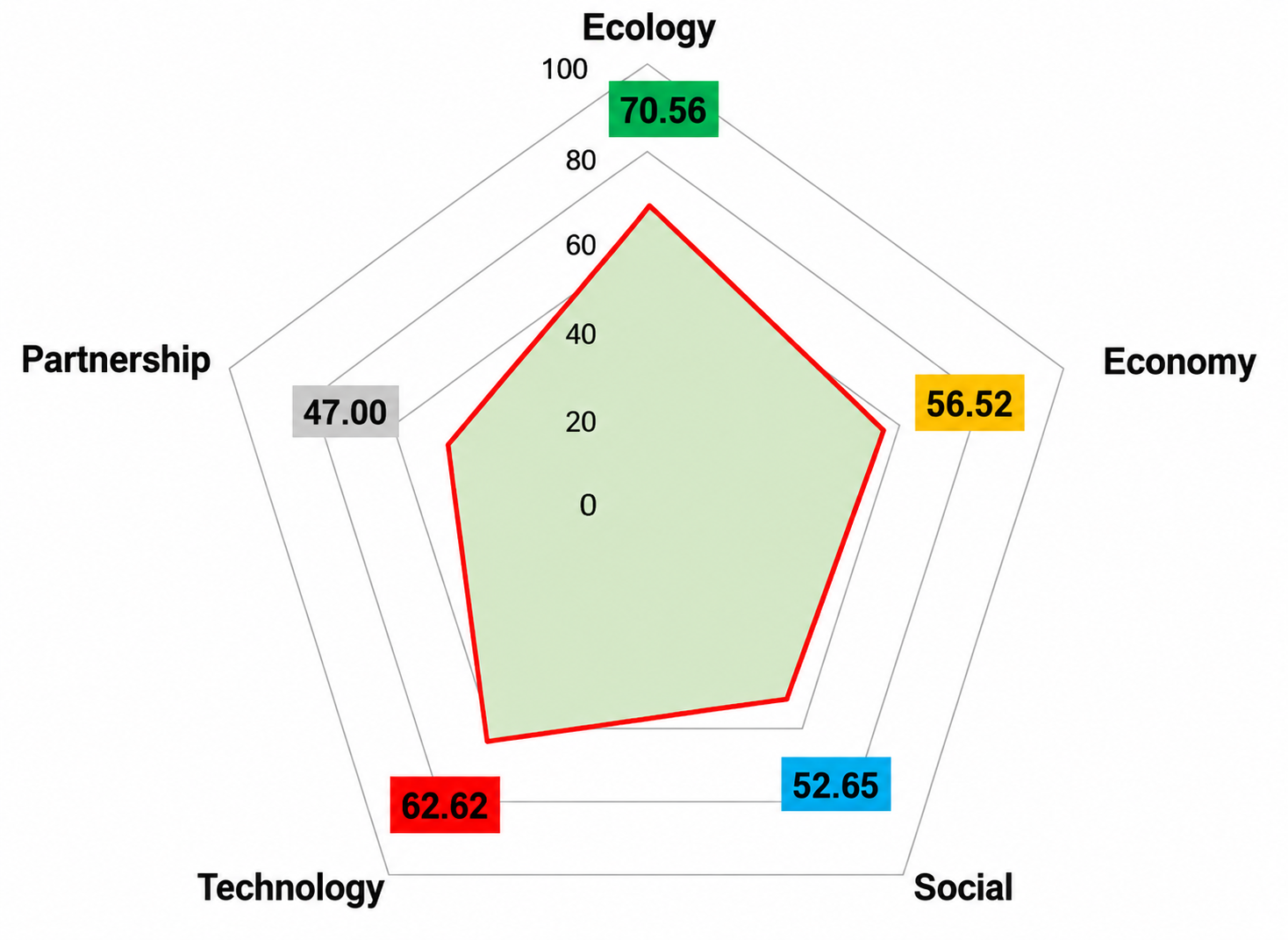
Fig. 3: Sustainability scores across five key dimensions, where 100 represents the highest sustain ability level (very good) and 0 indicates the lowest (very bad)
Table 5. Sustainability assessment scores by dimension
|
Dimension |
Index score (%) |
Stress value |
SQR/R2 |
Sustainability status |
|
Ecology |
70.57 |
0.1455 |
0.9457 |
Fairly |
|
Economy |
56.52 |
0.1388 |
0.9466 |
Fairly |
|
Social |
52.65 |
0.1579 |
0.9363 |
Fairly |
|
Technological |
62.62 |
0.1506 |
0.9422 |
Fairly |
|
Partnership |
45.00 |
0.1702 |
0.9275 |
Less |
Ecology dimension
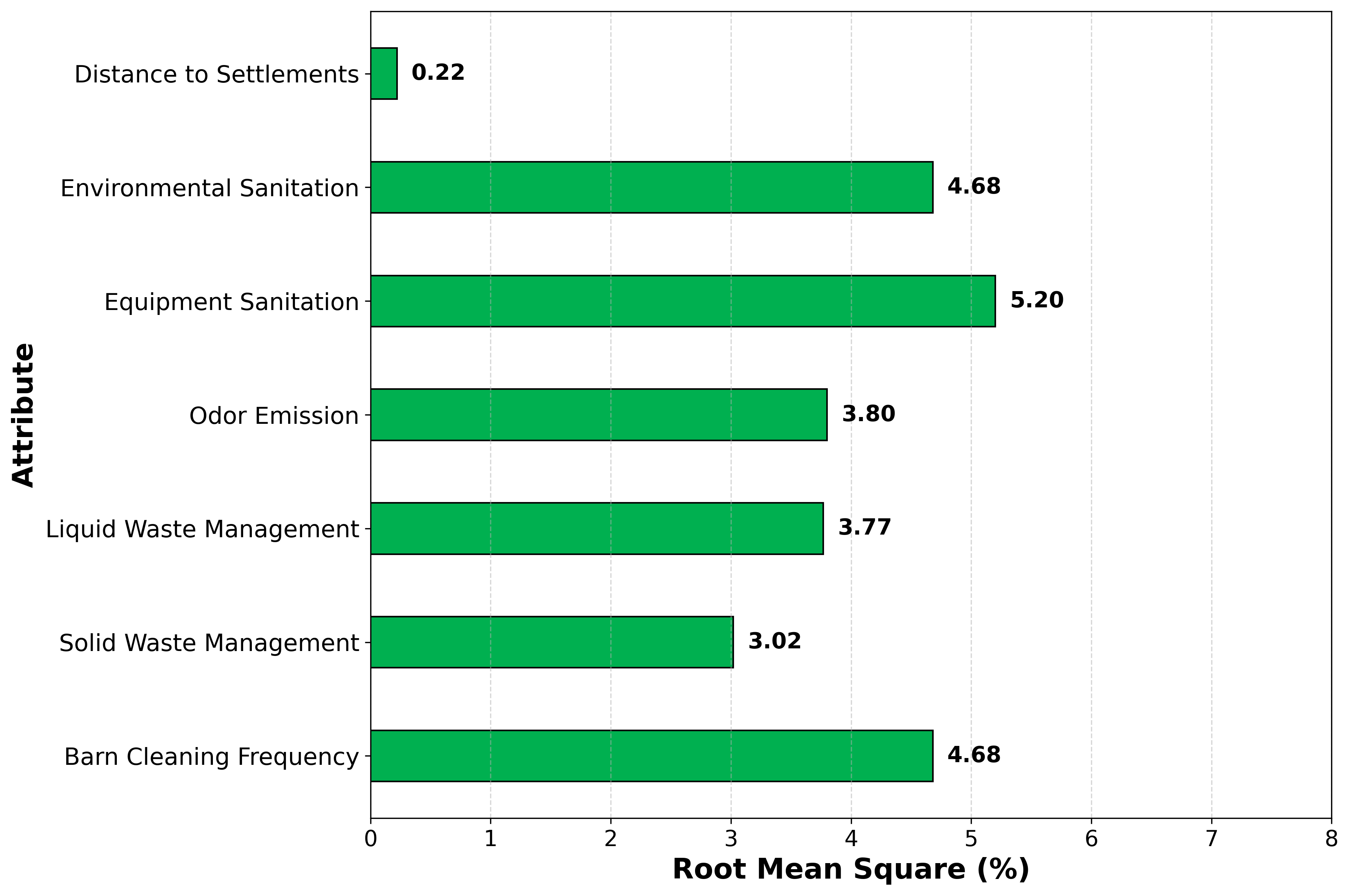
The environmental sustainability index of the broiler farming partnership system reached 70.57% according to the Rapfish-MDS analysis which classified it as moderately sustainable. The leverage analysis indicates that the broiler partnership system achieves environmental sustainability via its three principal components, namely equipment sanitation (5.203), barn cleaning frequency (4.682), and environmental sanitation (4.679) which act as the core elements. The two attributes show major influence because they confirm that broiler farming operations face their main environmental issues from waste handling and emission control problems. The system illustrates efficient environmental management practices that necessitate further enhancement to reach full sustainability for production operations. The efficiency of waste management and sanitation practices, along with a farm's ability to manage externalities such as odor emissions and nutrient pollution determine environmental sustainability in emerging poultry industries. This is due to the fact that livestock systems can generate significant air, water, and soil pollution when waste management is inadequate (Akporube, 2023). The study shows moderate index results which demonstrate that environmental management practices exist in the organization but their application needs yet to achieve complete optimization throughout all operational functions which include manure management and emission control and biosecurity maintenance (Devnath et al., 2025). The findings of global livestock sustainability studies regarding environmental outcomes align at a common point, as improvements in farm management practices have produced beneficial environmental outcomes. However, the actual environmental performance is still constrained by persistent challenges related to waste management, sanitary infrastructure, and pollution mitigation strategies (Zhang et al., 2023). The leverage analysis indicates that the frequency of equipment sanitation, barn cleaning, and environmental sanitation practices are crucial factors influencing environmental sustainability within the broiler partnership system; these aspects are essential for maintaining criticalbiosecurity and hygiene management protocols (Fig. 4). The combination of inadequate sanitation practices together with environmental contamination which results from organic waste accumulation and ammonia emissions creates a direct pathway for pathogens to spread (Leinonen et al., 2019). Better cleaning methods together with effective manure management practices establish an environmental advantage which results in reduced microbial contamination together with decreased odor emissions and diminished nitrogen pollution (Braga et al., 2025). The continuous environmental problems faced by poultry systems are mainly due to two critical waste management failures: the generation of odors and the processing of liquid waste. The transition to sustainable practices requires establishments to implement uniform sanitation standards while developing better manure management methods and enforcing stricter environmental control measures in their partnership systems for broiler production.
Economic dimension
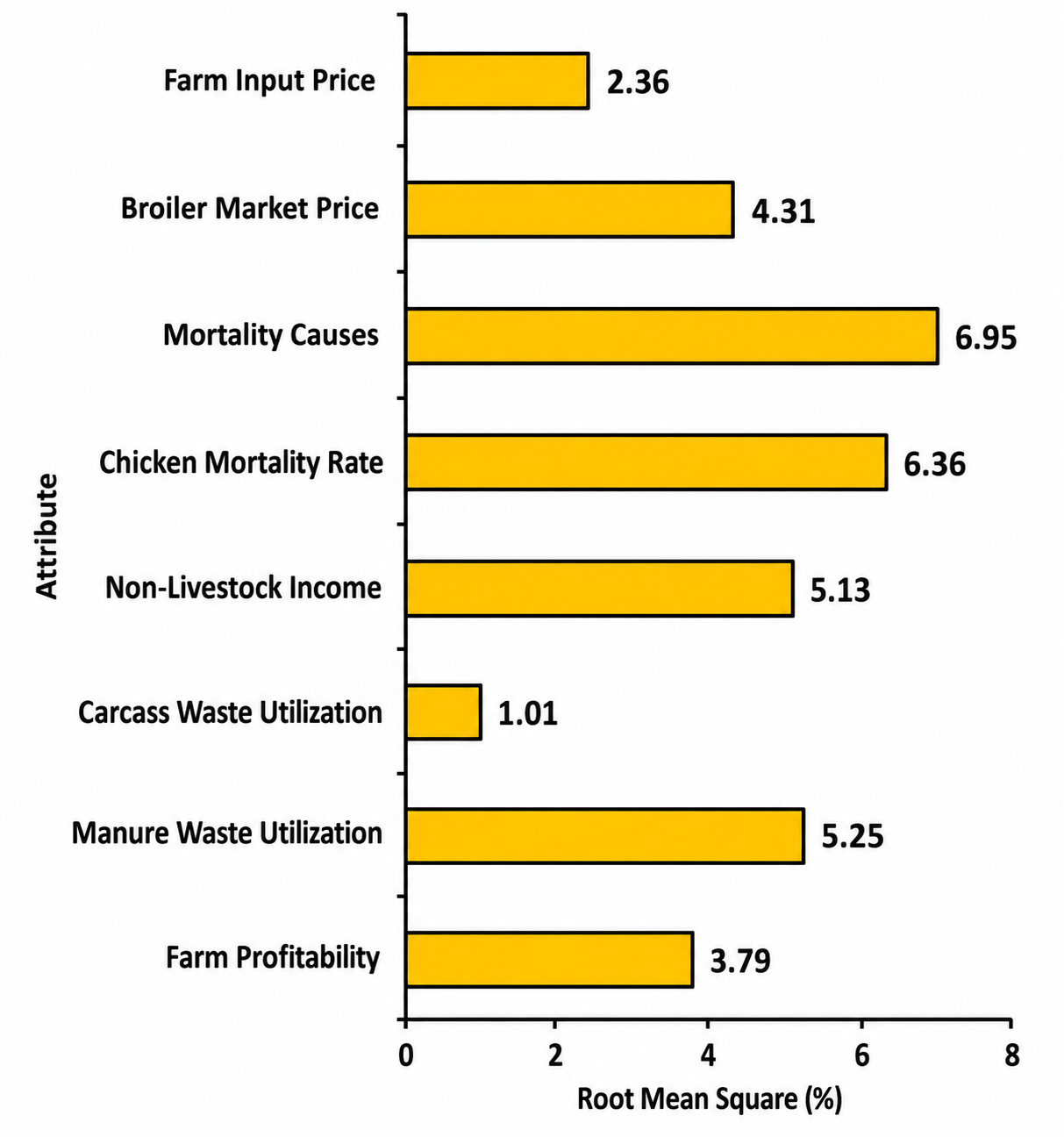
The Rapfish-MDS analysis demonstrates that the broiler partnership system achieved an economic sustainability index of 56.52% which shows moderate sustainable development. The system provides economic stability through its contract-based operations, yet it faces exposure to production threats, and its value distribution model fosters unfairness among stakeholders. Studies show that contract farming bolsters financial security for farmers, but they remain susceptible to potential hazards (Kiprop et al. 2025). The analysis of leverage shows that mortality causes (6.95) and chicken mortality rate (6.36) represent the most significant factors which demonstrate that biological risk functions as the key factor determining economic sustainability. Additionally, manure waste utilization (5.25) and non-livestock income (5.13) show strong influence, indicating that income diversification and by-product valorization are critical for enhancing economic resilience (Fig. 5). Analysis of leverage reveals that factors related to mortality are the most significant attributes, affirming that biological risks serve as the main determinants of economic performance, since elevated mortality negatively impacts productivity and profitability (Leinonen et al., 2019). Manure utilization and income diversification play important roles in strengthening economic resilience, as converting waste into valuable products and developing non-livestock income sources can increase revenue and reduce vulnerability (Beal et al., 2023). Enhancing economic sustainability necessitates the fortification of biosecurity, waste valorization, income diversification, and the establishment of fair contract mechanisms to bolster resilience and promote a more equitable value distribution.
Social dimension
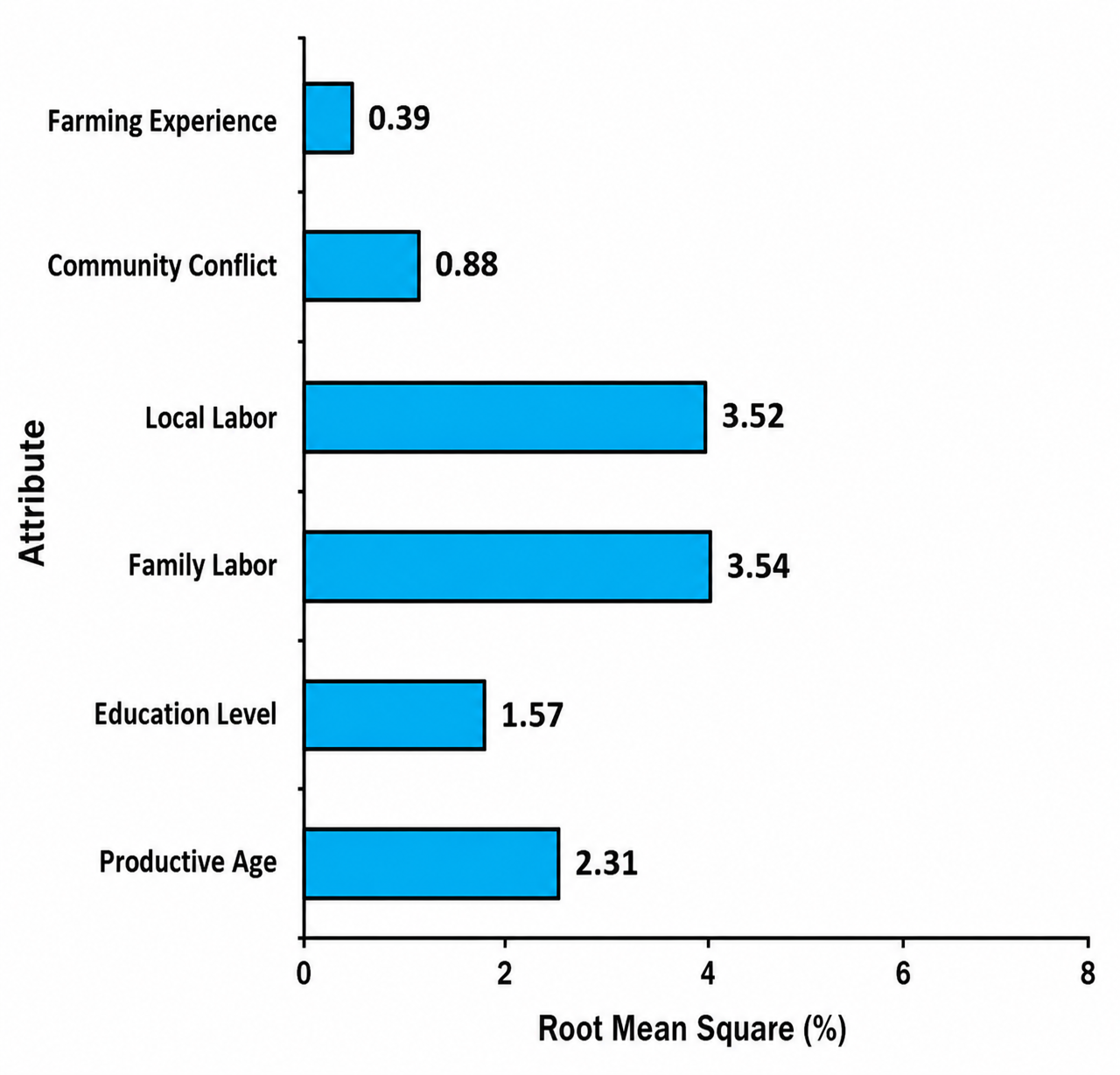
The Rapfish–MDS analysis shows that the social sustainability index of the broiler farming partnership system reached 52.65%, indicating a moderately sustainable condition. This indicates that the system plays a role in supporting rural livelihoods and employment; however, it is still constrained regarding the human capital development. In livestock systems, social sustainability is closely linked to labor participation, community acceptance, and livelihood support, particularly in smallholder-based production systems (Birhanu et al., 2023). Leverage analysis identifies family labor (3.54) and local labor (3.52) are the most significant factors, underscoring the pivotal role of broiler farming in generating employment in rural areas. In contrast, productive age (2.31) and education level (1.57) show moderate influence, suggesting that demographic factors are less compared to labor participation. Meanwhile, community conflict (0.88) and farming experience (0.39) have minimal influence, indicating relatively low social tension and broad community acceptance of broiler farming activities (Fig. 6). The leverage analysis emphasizes that family and local labor are the most significant factors, affirming that broiler farming serves as a crucial generator of rural employment and bolsters local economic circulation. In contrast, factors such as education level and demographic characteristics show moderate influence, while low community conflict indicates strong social acceptance of poultry farming activities. The findings of this study align with previous research that indicated livestock systems contribute to the improvement of rural community welfare through their effective involvement of local workforce participation and their backing of community development efforts (Herrero et al., 2013). Social sustainability requires development efforts which should enhance human capital and develop workforce abilities while maintaining community involvement to create an equitable and strong livestock production system.
Technological dimension
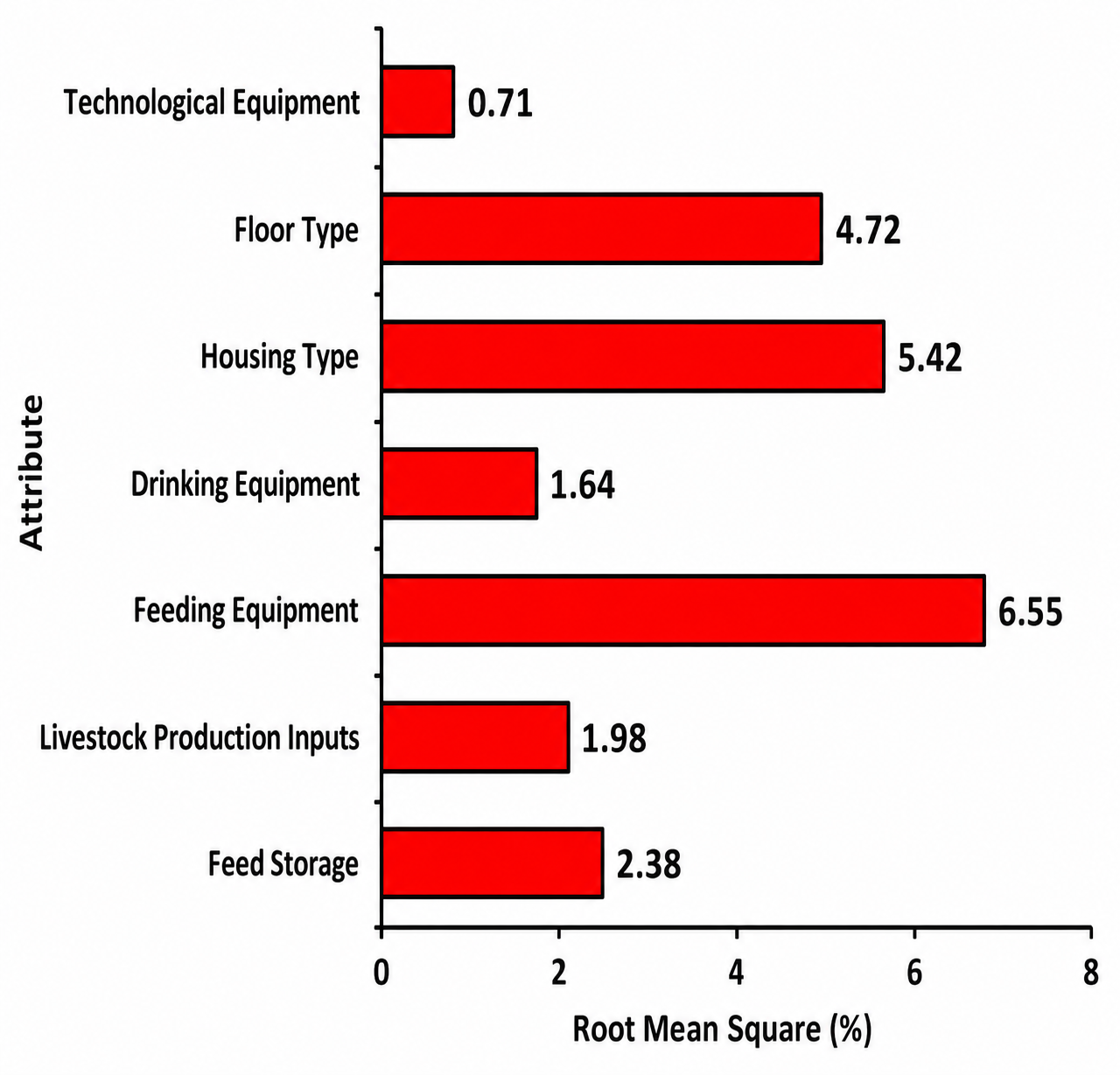
The Rapfish–MDS analysis indicates that the technological sustainability index of the broiler farming partnership system reached 62.62%. This conclusion reveals that the fundamental production technologies of the system already exist. The system should adopt cutting-edge technologies together with integrated systems to ensure comprehensive implementation. The development of poultry systems in developing countries progresses at a slow pace because of limited access to capital and institutional support (Patel et al., 2022). The assessment of leverage reveals that feeding equipment, rated at 6.55, is the key element in the study. The second most important factor which follows this attribute has a scoring weight of 5.42. The third most important factor in the study has a scoring weight of 4.72 (Fig. 7). These results emphasize that feeding equipment, housing type, and floor systems as the most influential attributes, emphasizing that basic infrastructure and mechanization are key determinants of technological sustainability. Effective feeding systems enhance feed efficiency and minimize waste, whereas appropriate housing and ventilation systems regulate microclimate conditions, thereby boosting productivity and animal health (Liang et al., 2020). In contrast, more advanced technologies such as automation, sensors, and digital systems show limited influence, indicating low adoption of precision livestock technologies, which are increasingly recognized as important for improving efficiency and sustainability (Sumiati et al., 2025). Improving technological sustainability necessitates a focus on enhancing infrastructure and adopting new technologies. Investment in feeding systems and housing is crucial because of their significant influence on production performance. The use of precision livestock technologies which include sensors and automation systems leads to better operational performance and disease management and improved animal welfare. The adoption of these technologies necessitates that farmers obtain comprehensive training and extension services, which must be enhanced. The partnership systems depend on integrator companies who provide essential technology transfer and capacity building support which helps organizations achieve their production system transformation goals.
Partnership dimension
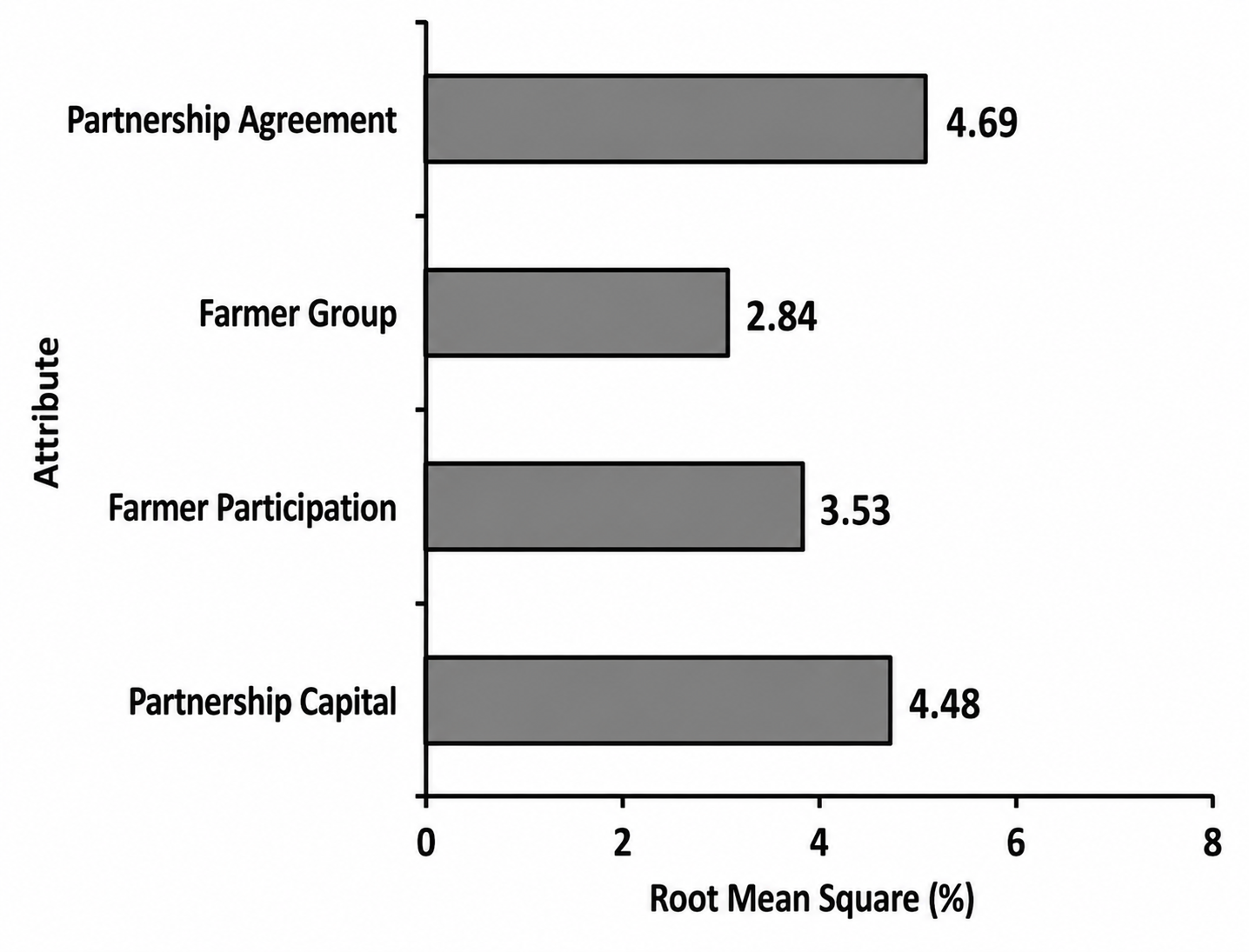
The Rapfish–MDS analysis shows that the partnership dimension reached a sustainability index of 47.00% which results in its classification as less sustainable. According to the findings of the study, the existence of contracts between farmers and integrator companies does not contribute to better governance standards and the rights of farmers. The poultry sustainability of contract systems depends on three factors which include transparency and fairness and the distribution of bargaining power between parties. The analysis shows that partnership agreement (4.69) and partnership capital (4.48) serve as critical factors which drive the importance of both financial support mechanisms and contractual clarity. The creation of explicit and enforceable contracts serves as an essential prerequisite that allows parties to outline their pricing frameworks, responsibilities and risk-sharing agreements, while inadequate contracts result in income instability and reduced trust (Ton et al., 2018). Farmers can access modern value chains through capital access but governance transparency issues create dependency risks (Ragasa et al., 2018). Farmer participation (3.53) and farmer group (2.84) show moderate influence which indicates that collective action remains underdeveloped (Fig. 8). To advance this dimension, it is essential to achieve better governance transparency, alongside enhanced finance and more robust farmer institutions. The primary strategies for achieving this objective include two actions which need to enhance contract fairness while they also need to expand financial instruments through credit and insurance and strengthen farmer organizations to enhance their bargaining power through knowledge exchange. The establishment of participatory governance mechanisms serves as an essential prerequisite that allows organizations to foster trust as they pursue their objectives of establishing equitable relationships. The partnership system needs these essential measures to achieve its transformation into an institutional framework that maintains fairness and resilience.
Cross-dimensional synthesis and policy implications
The multidimensional assessment using Rapfish–MDS demonstrates that the sustainability of broiler farming partnerships requires analytical approaches which examine all operational dimensions to understand their relationship between environmental, economic, social, technological, and institutional dimensions. This study promotes a systemic viewpoint, highlighting that sustainability results are influenced by both reinforcing and constraining interactions across these dimensions rather than by enhancements in individual factors. The integrated framework here matches current sustainability research because it shows how economic and social and environmental systems need their relationships analyzed through an entire system view in agri-food environments (Arora‐Jonsson et al., 2023). The results reveal several critical interdependencies. The economic outcomes of the business operations depend on technological features of feeding systems and lighting systems and housing infrastructure because these features enhance feed efficiency and animal health and productivity. The progress in technology results in environmental advantages as it facilitates improved housing and management systems to cut down emissions and waste externalities (Sakata and Siqueira, 2024). Environmental management practices which include manure handling and pollution control create positive economic sustainability impacts because they decrease operational waste and enhance resource utilization according to circular production standards. The social aspects of labor participation, skill development, and farmers' knowledge are essential for both adopting new technologies and managing farms effectively. According to the study by Akter et al. (2023), inadequate knowledge and limited availability of crucial inputs and training programs considerably hinder the efficiency and sustainability of broiler production. The institutional dimension of partnerships functions as the primary coordinating framework, overseeing input distribution, market equilibrium, and knowledge dissemination. Setiadi et al. (2002) suggests that contract-based broiler farming systems can enhance farmer earnings and foster rural community development; however, their efficacy is contingent upon robust governance practices and inclusive decision-making processes. Conversely, Queenan et al. (2021) reveal that the confluence of weak institutional systems and fragmented governance structures engenders systemic limitations, thereby hindering the achievement of sustainability across various system components. Furthermore, the analysis highlights the importance of meticulously handling substantial trade-offs. Advances in technology frequently yield greater productivity, subsequently leading to economic benefits. However, if not managed properly, these advancements can also cause various environmental problems. These problems can affect how land is used, how much is emitted, and how resources are consumed. The systems designed to improve efficiency result in diminished labor demands, which in turn have detrimental impacts on social inclusion and employment prospects in rural communities. The production of broilers occurs within a multifaceted system that encompasses essential trade-offs influencing the the three sustainability dimensions. The research identifies multiple systemic leverage points which can be used for intervention based on the existing interconnections. The first cross-cutting factors that influence both financial and ecological outcomes encompass biosecurity and health management and the control of mortality rates, based on the research outcomes of Akter et al. (2023). The second research focus area includes feeding systems and housing and environmental control technologies.
MICMAC-based structural analysis of key sustainability leverage factors
The dominant leverage attributes identified through Rapfish–MDS were subsequently examined using MICMAC structural analysis to reveal their causal architecture within the broiler partnership sustainability system. This supplementary layer of analysis categorizes variables based on their driving strength and interdependence, facilitating a shift from dimensional scoring toward systemic interpretation. The resulting direct influence graph and influence–dependence map (Fig. 9 and Fig. 10) show that sustainability performance is not shaped by isolated attributes, but by a tightly connected network of environmental hygiene, biological risk, production technology, labor structure, and partnership governance. The integration of MDS and MICMAC therefore enhances the scientific value of this research by transforming key attributes into a strategic sustainability transition map, a methodological approach that has gained increasing attention in contemporary agrifood systems and sustainable supply-chain studies (Sharma et al., 2022). The structural configuration suggests a highly interconnected and feedback-sensitive system, with most variables concentrated in the high influence–high dependence area. This pattern implies that the broiler partnership system functions as a linkage-dominant socio-technical structure, where operational modifications in one variable swiftly disseminate across other sustainability dimensions. The strongest causal cluster is formed by mortality causes, chicken mortality rate, equipment sanitation, environmental sanitation practices, manure waste utilization, and feeding equipment. These variables jointly connect the environmental, technological, and economic dimensions through a biological-risk pathway. In practical terms, weak sanitation standards increase pathogen pressure, which raises mortality, lowers production efficiency, reduces manure valorization potential, and eventually weakens farm income. Recent poultry sustainability studies likewise verifies that hygiene management, waste utilization, and mortality control represent some of the most crucial control points in sustainable broiler systems, particularly when confronted with climate and disease pressures (Attia et al., 2024). A more in-depth quadrant assessment illustrates that the chicken mortality rate and the factors contributing to mortality function as the primary linkage variables, combining significant driving effects with a similarly high level of dependence. These variables are the most sensitive nodes in the system because they both influence and are influenced by housing type, floor type, feeding equipment, sanitation discipline, and manure management. This position implies strong domino-effect potential: even a small decline in cleaning frequency or housing hygiene could initiate an increase in mortality which subsequently leads to economic losses, contract strain, and diminished capacity for reinvestment. In contrast, family labor and local labor are located near the autonomous–driver boundary with lower dependence, suggesting that they operate as upstream enabling variables. Their function is not direct, yet it holds significant strategic importance, as labor discipline influences the consistent implementation of feeding precision, barn sanitation, and daily flock monitoring are implemented consistently. The institutional variables present another crucial systemic perspective. Partnership agreement and partnership capital display relatively high dependence, indicating that governance quality and financial continuity are strongly shaped by upstream technical and biological performance. This suggests that institutional sustainability in broiler partnerships is not solely a contractual concern, but rather a developing outcome of operational reliability and risk control. When mortality and sanitation risks are well managed, trust between farmers and integrators improves, contract compliance strengthens, and capital recycling becomes more stable. Similar structural behavior indicating that governance variables tend to be influenced by production stability and collaborative trust mechanisms (Sharma et al., 2022). The strategic implication is a clear hierarchy of intervention priorities. The first control layer should target the linkage variables particularly mortality causes, mortality rate, sanitation routines, and manure waste utilization because these nodes produce the largest systemic ripple effects. The second layer should reinforce labor capability through technical training and biosecurity discipline, ensuring the reliability of routine farm operations. The third layer should adapt partnership contracts and capital support systems to ensure that institutional frameworks develop in accordance with enhanced technical performance. This sequence is critical because poorly managed linkage variables may destabilize the entire sustainability architecture, whereas well-managed linkage nodes can accelerate cross-dimensional improvements.
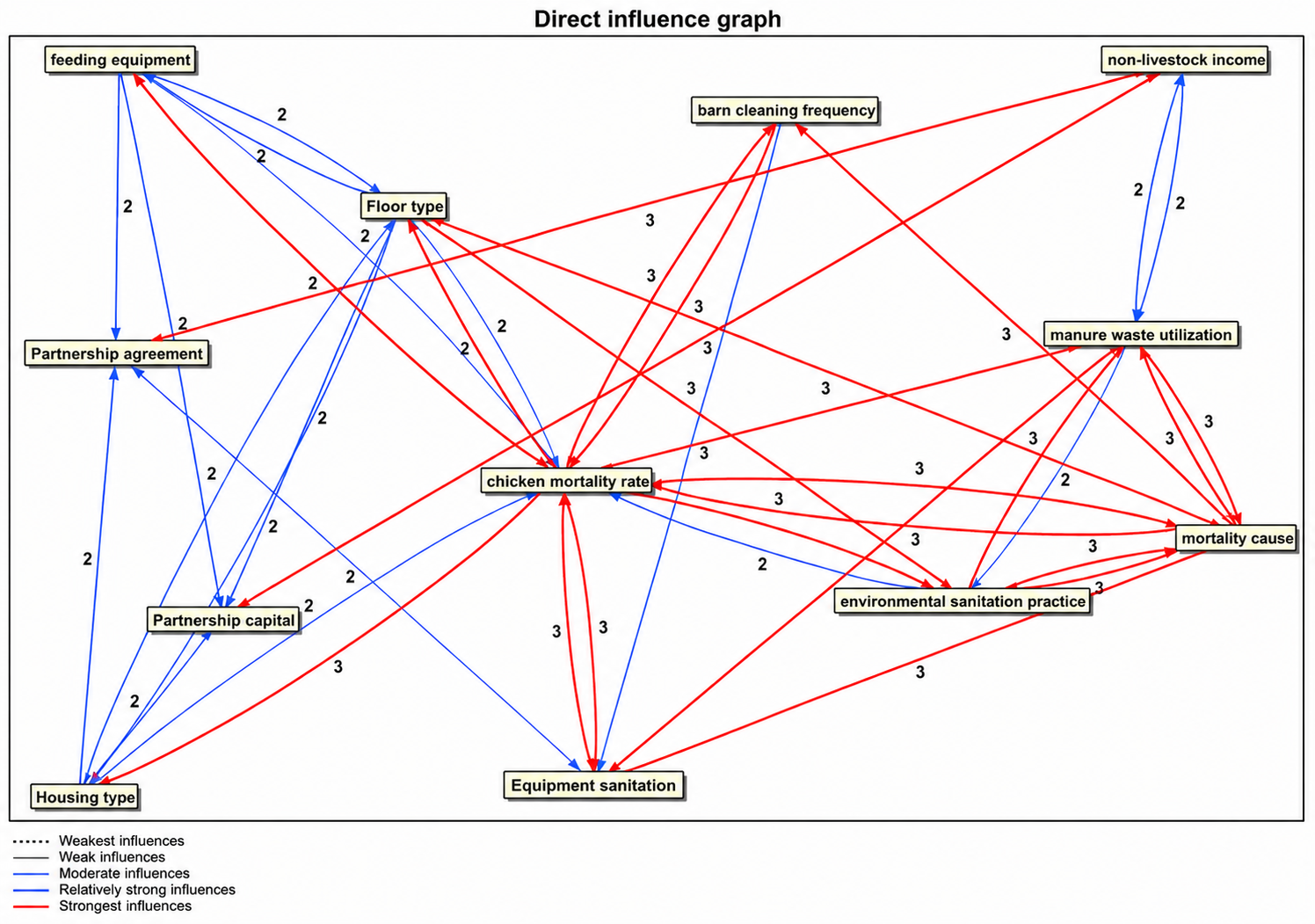
Fig. 9: MICMAC direct influence graph of dominant sustainability leverage variables in broiler farming partnerships
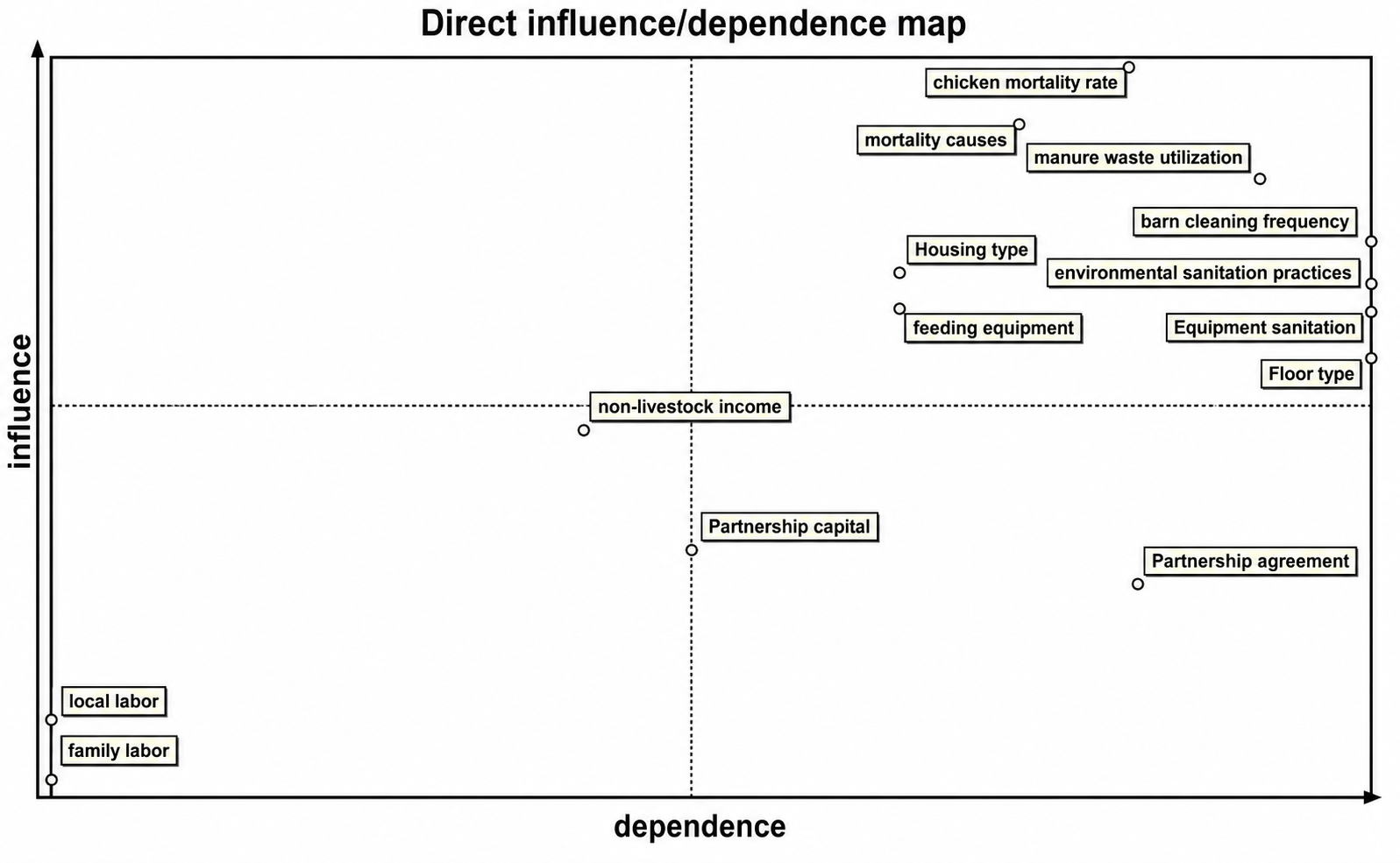
Fig. 10: MICMAC direct influence–dependence map showing the structural classification of key sustainability variables
CONCLUSION
This study applied an integrated Rapfish–MDS and MICMAC framework to evaluate the sustainability of partnership-based broiler farming systems across environmental, economic, social, technological, and institutional dimensions. The findings suggest that the system demonstrates a moderate level of sustainability in general, with the environmental and technological aspects exhibiting comparatively better performance, whereas the partnership aspect continues to be the primary institutional vulnerability. This imbalance confirms that the sustainability of broiler farming partnerships is not constrained primarily by operational capacity, but by governance quality, contractual transparency, and farmer empowerment. The comprehensive evaluation revealed multiple key leverage factors, such as mortality management, sanitation methods, feeding apparatus, type of housing, labor involvement, partnership contracts, and capital access. These attributes demonstrate that sustainability outcomes emerge from strong interactions among biosecurity management, technological efficiency, socio-economic participation, and institutional arrangements. Enhancements in sanitation and mortality management can concurrently alleviate environmental impact, enhance production efficiency, and bolster farm profitability, while better housing and feeding systems support both technical and welfare performance. The additional MICMAC structural analysis strengthens these findings by clarifying the causal hierarchy among dominant leverage factors. The results show that sanitation, mortality-related variables, feeding systems, and housing infrastructure serve as the main drivers and linking variables, which means they influence subsequent outcomes in economic resilience, labor stability, and partnership performance. Conversely, institutional variables such as partnership agreement and capital are often more contingent upon the reliability of upstream technical systems and the processes that foster trust. This confirms that sustainability interventions should prioritize high-driving variables first, as improvements in these nodes can trigger positive cross-dimensional effects throughout the system. Ultimately, the study reveals that for sustainable broiler partnership systems to thrive, an integrated transition pathway is essential, incorporating elements such as technical modernization, environmental management, farmer inclusion, and governance reform. The combined MDS–MICMAC framework offers a more robust foundation for evidence-based policy, as it not only pinpoints essential leverage points but also assesses their structural priority within the sustainability system. This systemic perspective offers a practical roadmap for improving the resilience and environmental performance of broiler farming partnerships in emerging poultry economies.
AUTHOR CONTRIBUTIONS
Cepriadi, the corresponding author, has contributed in supervising the second author and preparing the manuscript. Novian has contributed in analyzing data. A.D. Santoso prepared all the maps and figures and interpretation of the results. M. Herlon participated in the interpretation of the MDS results and manuscript preparation. H. Daulay prepared manuscript and analyzed data.
ACKNOWLEDGEMENT
The authors are grateful to the National Research and Innovation Agency for funding this research through the Advanced Indonesia Research and Innovation Program [Batch III Nomor55/III.3/HK/2025]. The authors would like to thank the editors and anonymous reviewers for their constructive feedback
CONFLICT OF INTEREST
The authors declare that there is no conflict of interests regarding the publication of this manuscript. In addition, the ethical issues, including plagiarism, informed consent, misconduct, data fabrication and/or falsification, double publication and/or submission, and redundancy have been completely observed by the authors.
OPEN ACCESS
©2026 The author(s). This article is licensed under a Creative Commons Attribution 4.0 International License, which permits use, sharing, adaptation, distribution and reproduction in any medium or format, as long as you give appropriate credit to the original author(s) and the source, provide a link to the Creative Commons license, and indicate if changes were made. The images or other third-party material in this article are included in the article’s Creative Commons license, unless indicated otherwise in a credit line to the material. If material is not included in the article’s Creative Commons license and your intended use is not permitted by statutory regulation or exceeds the permitted use, you will need to obtain permission directly from the copyright holder. To view a copy of this license, visit: http://creativecommons.org/licenses/by/4.0/
PUBLISHER’S NOTE
GJESM Publisher remains neutral with regard to jurisdictional claims in published maps and institutional afflictions.
Positive AI Statement
During the preparation of this work the author(s) have used Artificial Intelligence (AI) Grammerly in order to detect grammar mistakes, suggest corrections and reduce typos. After using this tool/service, the authors reviewed and edited the content as needed and take full responsibility for the content of the publication.
ABBREVIATIONS
|
% |
Percent |
|
ASCAL |
Alternating least-squares scaling |
|
d |
Euclidian distance |
|
dij |
Euclidian distance from point i to point j |
|
DOC |
Day-old chicks |
|
FAO |
Food and agriculture organization |
|
FCR |
Feed Conversion Ratio |
|
FGD |
Focus group discussion |
|
ijk |
Dimension |
|
LCA |
Life cycle assessment |
|
MDS |
Multidimensional scaling |
|
MICMAC |
Matrix of Cross-Impact Multiplications Applied to Classification |
|
OECD |
Organisation for economic co-operation and Development |
|
oijk |
point of origin |
|
RAPFISH |
Rapid appraisal for fisheries |
|
R2 |
SQR |
|
RMS |
Root mean square |
|
oijk |
point of origin |
REFERENCES
Ahmad, I.; Mashwani, Z.; Raja, N.I.; Kazmi, A.; Wahab, A.; Ali, A.; Younas, Z.; Yaqoob, S.; Rahimi, M., (2022). Comprehensive approaches of nanoparticles for growth performance and health benefits in poultry: an update on the current scenario. Biomed Res. Int., 17: 9539908 (13 pages).
Akporube, K.; Ikpendu, C.; Edward, I., (2023). Poultry waste management in Nigeria: A neglected sector. J. Sustain. Veter. Allied Sci., 4(2): 137–145 (9 pages).
Akter, M.S.; Uddin, M.T.; Dhar, A.R., (2023). Advancing safe broiler farming in Bangladesh: management practices, financial profitability, and consumer perceptions. Commodities, 2(3): 312–328 (17 pages).
Allaily; Santoso, A.D.; Rofiq, M.N.; Sasongko, N.A.; Daulay, H.; Wiloso, E.I.; Widjaja, E.; Utomo, B.N.; Yanuar, A.I.; Suryani, S.; Erlambang, Y.P.; Thiyas, U.N.; Iskandar, D.; Anhar, A.; Rahmawati, M.; Simamora, T.; Yusriani, Y.; Maghfirah, G.; Ammar, M., (2024). Sustainability assessment of animal feed production from by-products of sago palm smallholder industry. Global J. Environ. Sci. Manage., 10(3): 1275–1296 (22 pages).
Balasundram, S.K.; Shamshiri, R.R.; Sridhara, S., (2023). The role of digital agriculture in mitigating climate change and ensuring food security: An overview. Sustainability. 15(6):5325 (23 pages).
Beal, C.M.; Robinson, D.M.; Smith, J.; Gerber Van Doren, L.; Tabler, G.T.; Rochell, S.J.; Kidd, M.T.; Bottje, W.G.; Lei, X., (2023). Economic and environmental assessment of U.S. broiler production: opportunities to improve sustainability. Poult. Sci., 102(10): 102887 (11 pages).
Bennett, C.; Thomas, R.; Williams, M.; Zalasiewicz, J.; Edgeworth, M.; Miller, H.; Coles, B.; Foster, A.; Burton, E.; Marume, U., (2018). The broiler chicken as a signal of a human reconfigured biosphere. Royal Soc. Open Sci., 5: 180325 (12 pages).
Bristi Devnath; Rana, A.H.; Mohiuddin, A.; Ghosh, P.; Sobur, K.; Sarker, D.; Muraduzzaman, M.; Mohaimen, S.; Biplob, S., (2025). Environmental impact of poultry waste management practices. American J. Environ. Climate. 4(3):3980 (9 pages).
Conway, T., (2025). The role of intermediaries in transitions to agroecology in the Upper Midwest. Agric. Hum. Values. 42: 2151–2169 (19 pages).
FAO, (2024). Food outlook: biannual report on global food markets. FAO (180 pages).
FAO, (2020). FAOSTAT statistical database: livestock primary production. FAO.
Gilbert, M.; Xiao, X.; Robinson, T.P., (2017). Intensifying poultry production systems and the emergence of avian influenza in China: A one health perspective. One Health. 3: 1–7 (7 pages).
Henchion, M.; Hayes, M.; Mullen, A.M.; Fenelon, M.; Tiwari, B., (2017). Future protein supply and demand: strategies and factors influencing a sustainable equilibrium. Foods. 6(7): 53 (21 pages).
Herrero, M.; Grace, D.; Njuki, J.; Johnson, N.; Enahoro, D.; Silvestri, S.; Rufino, M.C., (2013). The roles of livestock in developing countries. Animal. 7: 3–18 (16 pages).
Junaidi, E.J., (2023). Comparative analysis of contract farming effect on technical efficiency of broiler chicken farms. J. World Poultry Res., 13(2): 223–232 (10 pages).
Karaman, S.; Taşcıoğlu, Y.; Bulut, O.D., (2023). Profitability and cost analysis for contract broiler production in Turkey. Animals. 13(13): 2072 (14 pages).
Kiprop, E.; Chelagat, J.; Xianhui, G.; Mwalupaso, E.G.; Bezu, K.; Ibn Yasin, S., (2025). The impact of contract farming on household income and poverty alleviation. Agric. Econ., 71(8): 433–444 (12 pages).
Liang, Y.; Tabler, G.T.; Dridi, S., (2020). Sprinkler technology improves broiler production sustainability: from stress alleviation to water usage conservation. Front. Vet. Sci., 7: 544814 (9 pages).
Munarso, S.J.; Purwanta, W.; Elmatsani, H.M.; Hendriadi, A.; Arianto, A.; Sjafrina, N.; Kailaku, S.I.; Astuti, P.; Benyamin, B.; Djafar, M.J.; Latif, A.; Daulay, H.; Santoso, A.D., (2025). Strategic sustainability assessment of rural agribusiness infrastructure systems in humid tropical regions. Global J. Environ. Sci. Manage., 11(4): 1769–1790 (22 pages).
Ngwenya, P.; Anwana, E.; Mugano, G., (2025). Agricultural value chain finance models and sustainable industrialisation: comparative insights from Zimbabwe and South Africa. Int. J. Environ. Sci., 11: 879–892 (14 pages).
OECD-FAO, (2024). OECD-FAO agricultural outlook 2024–2033. OECD Publishing (150 pages).
Patel, R.K.; Chander, M.; Verma, M.R.; Johnson, D.C., (2022). Adoption of improved poultry technologies amongst members of poultry producer company and non-member women farmers of Madhya Pradesh, India. Indian J. Veter. Scie. Biotechnol., 18 (4): 2-5 (4 pages).
Pitcher, T.J.; Preikshot, D., (2001). RAPFISH: A rapid appraisal technique to evaluate the sustainability status of fisheries. Fish. Res., 49(3): 255–270 (16 pages).
Putri, A.; Rondhi, M., (2020). Contract farming and the effect on price risk in broiler farming. E3S Web Conference. 142: 05002 (6 pages).
Queenan, K.; Cuevas, S.; Mabhaudhi, T.; Chimonyo, M.; Slotow, R.; Häsler, B., (2021). A qualitative analysis of the commercial broiler system and the links to consumers’ nutrition, health, and environmental sustainability. Front. Sustain. Food Syst., 5: 650469 (12 pages).
Ragasa, C.; Lambrecht, I.; Kufoalor, D.S., (2018). Limitations of contract farming as a pro-poor strategy: the case of maize outgrower schemes in upper west Ghana. World Dev., 102: 30–56 (27 pages).
Rondhi, M.; Aji, J.; Khasan, A.; Yanuarti, R., (2020). Factors affecting farmers’ participation in contract farming: the case of broiler sector in Indonesia. Trop. Anim. Sci. J., 43: 183–190 (8 pages).
Rohaeni, E.S.; Ilham, N.; Saptati, R.A.; Sulistyawati, H.; Rahayu, P., (2024). Developing a sustainable beef cattle business model for smallholder farms in South Kalimantan’s drylands. Int. J. Sustain. Dev. Plan., 19(2): 481–500 (20 pages).
Sakata, A.; Siqueira, J., (2024). Lighting in broiler poultry houses: optimization for growth, welfare and sustainability. Rev. Caribeña Cienc. Soc., 13: e4377 (10 pages).
Santoso, A.D.; Daulay, H.; Priyanti, A.; Silalahi, V.M.M.; Yaumidin, U.K.; Irawati, N.; Sumartono, H.; Astuti, P.; Farandy, A.R.; Parikesit, A.; Manti, M.F.; Indriasari, E.; Joelijani, W.; Wahyuni, S., (2024). Conversion of motorcycles to electric vehicles towards sustainable mobility. Global J. Environ. Sci. Manage., 10(SI): 181–200 (20 pages).
Schwarz, G.; Vanni, F.; Miller, D.; Helin, J.; Pražan, J.; Albanito, F.; Fratila, M.; Galioto, F.; Gava, O.; Irvine, K.; Landert, J.; Quero, A.L.; Mayer, A.; Monteleone, D.; Muller, A.; Röös, E.; Smyrniotopoulou, A.; Vincent, A.; Vlahos, G.; Andis, Z., (2022). Exploring sustainability implications of transitions to agroecology: a transdisciplinary perspective. Int. J. Agric. Sustainable. 21(3): 37–47 (11 pages).
Setiadi, A.; Santoso, S.I.; Mukson, M.; Roessali, W., (2022). Contract broiler farming as an effective pathway to improve rural prosperity in Indonesia. Int. Soc. Sci. J., 72 (14 pages).
Sumiati, S.; Fadilah, R.; Darmawan, A.; Nadia, R., (2025). Challenges and constraints to the sustainability of poultry farming in Indonesia. Anim. Biosci., 38: 802–817 (16 pages).
Ton, G.; Vellema, W.; Desiere, S.; Weituschat, S.; D’Haese, M., (2018). Contract farming for improving smallholder incomes: what can we learn from effectiveness studies? World Dev., 104: 46–64 (19 pages).
Vaarst, M.; Steenfeldt, S.; Horsted, K., (2015). Sustainable development perspectives of poultry production. World’s Poult. Sci. J., 71(4): 609–620 (12 pages).
Vikas; Ranjan, R., (2024). Agroecological approaches to sustainable development. Front. Sustain. Food Syst., 8: 1405409 (13 pages).
Wang, H.H.; Wang, Y.; Delgado, M.S., (2014). The transition to modern agriculture: contract farming in developing economies. Am. J. Agric. Econ., 96(5): 1257–1271 (15 pages).
Wong, J.T.; De Bruyn, J.; Bagnol, B.; Grieve, H.; Li, M.; Pym, R.; Alders, R.G., (2017). Small-scale poultry and food security in resource-poor settings: A review. Global Food Secur., 15: 43–52 (10 pages).
OPEN ACCESS
©2026 The author(s). This article is licensed under a Creative Commons Attribution 4.0 International License, which permits use, sharing, adaptation, distribution and reproduction in any medium or format, as long as you give appropriate credit to the original author(s) and the source, provide a link to the Creative Commons license, and indicate if changes were made. The images or other third party material in this article are included in the article’s Creative Commons license, unless indicated otherwise in a credit line to the material. If material is not included in the article’s Creative Commons license and your intended use is not permitted by statutory regulation or exceeds the permitted use, you will need to obtain permission directly from the copyright holder. To view a copy of this license, visit: http://creativecommons.org/licenses/by/4.0/
PUBLISHER NOTE
GJESM Publisher remains neutral concerning jurisdictional claims in published maps and institutional affiliations.
MAJOR DATABASES, CITATION METRICS & CAPTURES
Google Scholar | Scopus - SJR | Web of Science | Biological Abstracts: Clarivate | Biosis Preview: Clarivate | PlumX Metrics | Altmetrics | Mendeley |
CURRENT PUBLISHER

| Article View | 2,676 |
| PDF Download | 420 |


Letters to Editor
[1] Letters that include statements of statistics, facts, research, or theories should include appropriate references, although more than three are discouraged.
[2] Letters that are personal attacks on an author rather than thoughtful criticism of the author’s ideas will not be considered for publication.
[3] Letters can be no more than 300 words in length.
[4] Letter writers should include a statement at the beginning of the letter stating that it is being submitted either for publication or not.
[5] Anonymous letters will not be considered.
[6] Letter writers must include their city and state of residence or work.
[7] Letters will be edited for clarity and length.