
5.2
CiteScore
2.9
Impact Factor
Document Type : RESEARCH ARTICLE
Authors
1 Karst Bioprospecting and Society Research Group LPPM Unhas, Hasanuddin University, Jl.Perintis Kemerdekaan, Tamalanrea Indah, Makassar, South Sulawesi, 90245 Indonesia
2 Research Collaboration Center for Karst Microbes, Jl.Perintis Kemerdekaan, Tamalanrea Indah, Makassar, Sulawesi Selatan, 90245 Indonesia
3 Doctoral Program of Forestry, Faculty of Forestry, Hasanuddin University. Jl. Perintis Kemerdekaan Km.10 Makassar, South Sulawesi, 90245 Indonesia
4 Graduate School of Hasanuddin University, Jl. Perintis Kemerdekaan, Makassar, South Sulawesi, 90245 Indonesia
5 Slovenian Forestry Institute, Vecna pot 2, SI-1000 Ljubljana, Slovenia
6 Faculty of Vocational, Hasanuddin University. Jl. Perintis Kemerdekaan, Makassar, South Sulawesi, 90245 Indonesia
7 Program Study of Forestry Engineering, Faculty of Forestry, Hasanuddin University. Jl. Perintis, Indonesia
8 Research Center for Applied Microbology, Indonesia National Research and Innovation Agency. Jl. Raya Bogor-Jakarta, Cibinong, Bogor, 16912 Indonesia
9 Department of Forest Conservation, Faculty of Forestry, Hasanuddin University, Jl. Perintis Kemerdekaan, Makassar, South Sulawesi, 90245 Indonesia
Graphical Abstract
Highlights
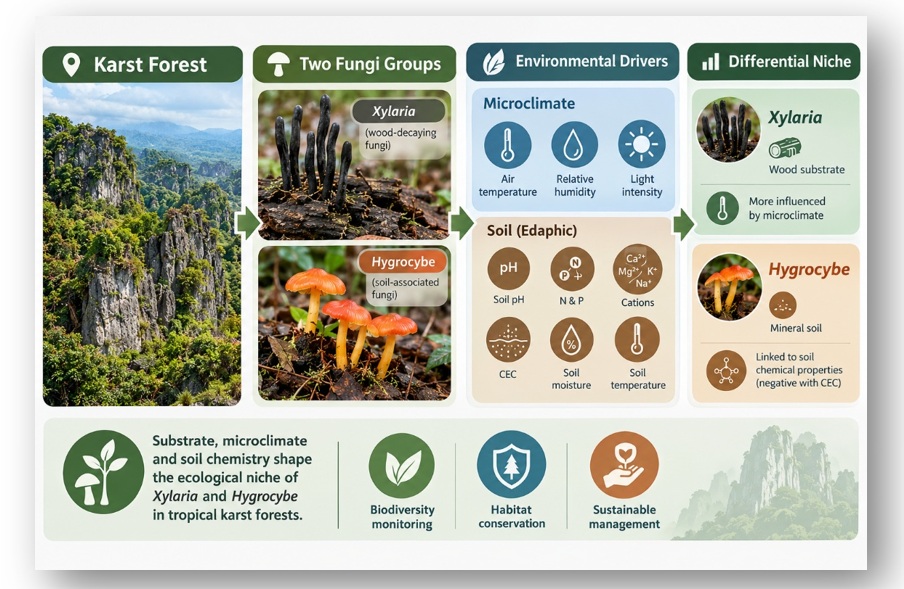
Ø Xylaria (n = 9 plots,) occupied lignicolous substrates exclusively, whereas Hygrocybe (n = 5 plots) was confined to mineral soils;
Ø Principal Component Analysis showed contrasting ordination patterns for the two genera along microclimatic and edaphic gradients, explaining 91.8% and 84.1% of total variance, respectively, though these patterns were largely descriptive and not independently statistically confirmed;
Ø Only Hygrocybe abundance showed a nominally significant negative correlation with soil cation exchange capacity (ρ = −0.894, p = 0.041, n = 5), consistent with an affinity for nutrient-poor soils, though this preliminary finding warrants confirmation with a larger sample size.
Keywords
INTRODUCTION
Macrofungi play a vital ecological role in tropical forest ecosystems as primary decomposers, pathogens, parasites, and symbiotic partners, driving nutrient cycling and maintaining the overall functional stability of the ecosystem (Chen et al., 2018; Petre et al., 2017). Nevertheless, the spatial distribution, abundance, and community structure of macrofungi are notably heterogeneous, being strongly governed by the dynamics of specific micro-environmenta conditions. Canopy composition, available organic substrate, microclimatic fluctuations across the forest floor, and physicochemical soil properties function concurrently as ecological filters, constraining or facilitatingmycelial proliferation and the onset of sporocarp formation (Tuo et al., 2022; Salman et al., 2026). Within the broad functional spectrum of macrofungal communities, the genera Hygrocybe and Xylaria occupy highly distinct and contrasting ecological and morphological positions. The genus Hygrocybe (family Hygrophoraceae) is characterized by brightly pigmented fruiting bodies with a distinctive waxy texture (waxy caps). Ecologically, this genus exhibits pronounced sensitivity to both anthropogenic disturbances and environmental stochasticity; consequently, its biodiversity is frequently coupled with high habitat stability and the integrity of natural ecosystems (Griffith et al., 2002; Lodge et al., 2014). Notably, Hygrocybe frequently demonstrates a pronounced spatial preference for nutrient-deficient, marginal soil zones, rendering it a reliable bioindicator for evaluating ecosystem health and the severity of soil degradation. In contrast, the genus Xylaria (family Xylariaceae) exhibits a contrasting life strategy, as these fungi typically colonize decaying wood, thick litter, and dead plant tissue undergoing decomposition. As a group of saprotrophic fungi, Xylaria plays a crucial role in degrading lignocellulose complexes on the forest floor of tropical forests (Osono et al., 2019). Beyond their established ecological role in the carbon cycle, multiple Xylaria species are recognized to exhibit an endophytic phase and synthesize bioactive secondary metabolites of substantial biotechnological and pharmaceutical value (Helaly et al., 2018; Promputtha et al., 2010). The distribution patterns, abundance, and temporal occurrence of these two genera in the natural environment are governed by dynamic interactions between microclimatic factors (such as air temperature, humidity, and light intensity) and edaphic factors, such as soil potential of hydrogen (pH), cation exchange capacity (CEC) , and organic matter content) (Hu et al., 2022). Spatial variations in these environmental parameters generate microhabitat heterogeneity, which dictates niche partitioning within fungal communities (Krah et al., 2018). Although the impacts of edaphic and microclimatic variables on soil fungi have received extensive global documentation (Tedersoo et al., 2014; Furtak and Gałązka, 2019), investigations into macrofungal ecology, particularly concerning the adaptive responses of the genera Hygrocybe and Xylaria, remains notably scarce within the distinctive ecosystems of tropical Indonesia. A prime setting characterized by environmental complexity ideally suited for this ecological study is the Maros-Pangkep Karst region. This high-conservation ecosystem features unique limestone topography, rapid drainage rates, and pronounced substrate heterogeneity (Duli and Mulyadi, 2019). Furthermore, variations in land cover and the structure of secondary vegetation within the Maros–Pangkep Karst region also modify local edaphic conditions, which in turn shape the structure of microbial communities, including macrofungi (Salman et al., 2026; Mujio et al., 2026). Research on macrofungi in Indonesia’s karst regions is still dominated by inventory studies that focus on species composition and diversity, while studies on the ecological factors that control the structure of macrofungal communities remain relatively limited (Salman et al., 2026). Globally, the spatial distribution of macrofungi is governed by complex interactions among diverse environmental determinants, encompassing microclimatic regimes, edaphic properties, vegetation characteristics, and substrate availability (Lodge et al., 2004; Sakti et al., 2026). Specifically, the distribution of the genus Xylaria has been reported to be associated with moisture gradients and habitat characteristics (Thomas et al., 2016), whereas Hygrocybe exhibits responses to differing soil and microenvironmental conditions across habitats (Halbwachs et al., 2016; Kasim et al., 2026). Nevertheless, to date, empirical evaluations examining the influence of microclimatic and edaphic variables on Hygrocybe and Xylaria assemblages within the Maros–Pangkep karst landscape remain absent. Consequently, this study addresses this knowledge gap by elucidating the relationships linking governing ecological factors to the community dynamics of these two genera in a tropical karst environment. The specific selection of the genera Hygrocybe and Xylaria as the focus of this study is based on their contrasting lifestyles and ecological adaptation strategies in response to nutrient limitations in karst ecosystems. These two genera are considered ideal models for examining how macrofungal communities partition space and resources through opposing functional pathways. The initial hypothesis of this study posits that Xylaria, functioning as a lignicolous saprotrophic fungus, would demonstrate substantial independence from variations in mineral soil chemistry due to its reliance on dead wood-derived lignocellulose as its primary carbon source. Conversely, Hygrocybe is strongly suspected to exhibit a strict ecological preference for nutrient-poor (oligotrophic) marginal soil zones, making it a natural habitat specialist that is highly sensitive to increases in soil chemical fertility. The adopted methodology is anticipated to yield a more comprehensive understanding of the ecological responses exhibited by the two target genera under varying environmental gradients within karst ecosystems (Legendre and Legendre., 2012). Therefore, this study focuses on analyzing the influence of edaphic and microclimatic factors on the distribution patterns of Hygrocybe and Xylaria communities in the Maros–Pangkep Karst region, with the aim of elucidating the environmental factors associated with the distribution of these two genera and providing scientific information to support a better understanding of the role of macrofungi in decomposition processes, nutrient cycling, and the management and conservation of tropical karst ecosystems. Employing a combination of principal component analysis (PCA) and Spearman’s rank correlation, this study aims to identify the main environmental gradients and evaluate the relationships among edaphic properties, microclimatic conditions, and the Hygrocybe and Xylaria communities. This study has been contacted in the Maros–Pangkep karst region in South Sulawesi Province, Indonesia in 2025- 2026. All authentic specimens are deposited as official scientific reference vouchers at the Laboratory of Biotechnology and Tree Breeding, Faculty of Forestry, Hasanuddin University, Indonesia.
MATERIALS AND METHODS
The study is covering both the rainy and dry seasons. The entire process of collecting macrofungal samples and measuring environmental variables was carried out in an integrated manner in the Maros–Pangkep karst region in South Sulawesi Province, Indonesia (Fig. 1). Geographically, this karst landscape is situated at elevations ranging from 50 to 300 meters above sea level (masl) and is characterized by steep, complex limestone (karst) topography. Climatologically, this region features a humid microclimate characteristic of tropical rainforests, marked by mean annual temperatures of 26 to 30 degrees Celsius (°C), elevated vertical atmospheric moisture, and annual precipitation totals between 2,000 and 3,000 millimeters (mm). Edaphically, the limestone formations dominating this area create a very rapid internal drainage system, high substrate heterogeneity, and variations in the canopy structure of secondary vegetation that directly influence the microhabitats of macrofungi.
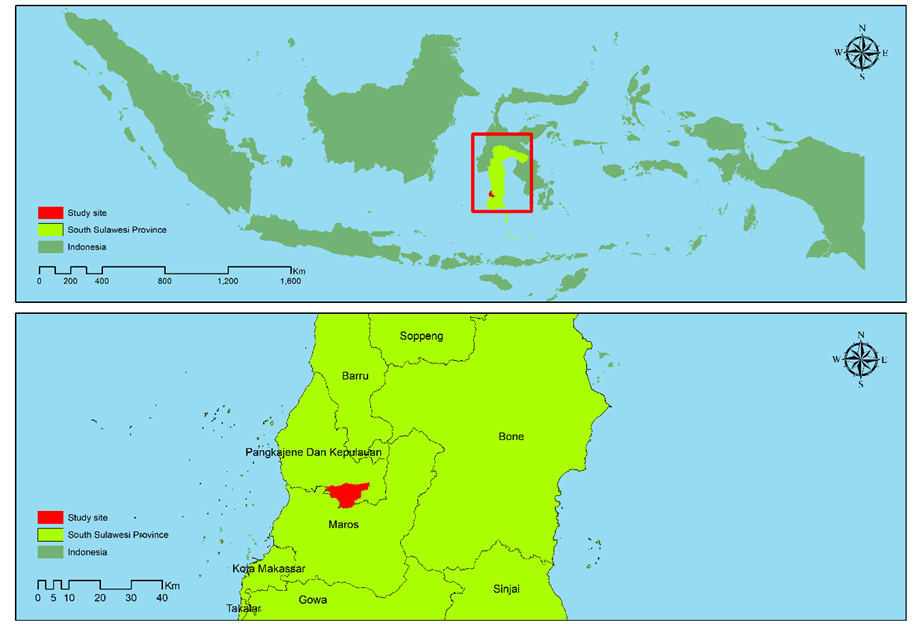
Fig. 1 : Geographical location of the study area along with the macrofungi sampling locations at Maros–Pangkep karst area, Indonesia
Experimental design and sampling of macrofungi
Field sampling utilized an integrated approach combining purposive selection and transect methods to ensure representative assessment of the study area. Transects were established across environmental gradients within the Maros–Pangkep karst area. Along these transects, 20 × 20 meters (m) observation plots were established at locations where Xylaria or Hygrocybe fruiting bodies were recorded during field surveys. Field surveys were executed over three consecutive days per season (dry season of year 1; rainy season of year 2). Each daily sampling session resumed from the preceding day's terminus, thereby establishing a single continuous transect for each seasonal period. Observation plots (20 × 20 m) were established along this route at locations where fruiting bodies were recorded. A total of 14 observation plots were established, comprising nine plots in which Xylaria was recorded and five different plots in which Hygrocybe was recorded. These designated plots served as representative sampling sites for the purposes of this study. Comprehensive macrofungal surveys were conducted within each plot by examining the forest floor, soil surface, and accumulations of decaying wood and leaf litter that served as substrates for macrofungi. To maintain methodological consistency and comparability among sampling locations, macrofungal inventories and the documentation of micro-ecological attributes were performed using standardized sampling protocols. Macrofungal abundance was quantified as the total number of fruiting bodies of each taxon recorded within each observation plot. Multiple fruiting bodies recorded within a single plot were consequently aggregated to establish plot-level abundance metrics, thereby avoiding pseudoreplication by preventing individual sporocarps from being treated as independent statistical observations. The observation plot was considered the independent sampling unit (n) for statistical analysis.
Taxonomic identification of macrofungi
The macroscopic features of fresh macrofungi fruiting bodies were recorded in detail in the field to serve as a primary identification database, including the shape, color, size, and surface texture of the cap (pileus); the type of gills (lamellae); the structure of the stem (stipe); and the presence of waxy coatings or specific exudates. Taxonomic identification was verified to the genus and species levels through morphological comparison with established monographs and standard field guides, including “guide to mushrooms” (Pacioni, 1982), “How to Identify Mushrooms to Genus I, II, and III: Macroscopic Features” (Largent, 1973), and “Edible and Poisonous Mushrooms of the World” (Hall et al., 2003). Taxonomic nomenclature and validity were authenticated through digital verification against authoritative mycological databases, including MycoWeb, alongside peer-reviewed international scientific publications. The identification of macrofungal specimens was conducted using a morpho-taxonomic evaluation approach based on diagnostic morphological characters, including cap morphology, hymenophore structure, stipe characteristics, spore features, and overall macroscopic traits. Subsequent investigations incorporating molecular phylogenetic analyses are recommended in future studies to validate and confirm the taxonomic affinities of closely related species. The fruiting body collections were then dried using a dehydrator to be processed into dried specimens (herbarium specimens) for long-term taxonomic preservation and reference.
Measurement of edaphic variables (soil physical and chemical properties)
Soil characteristics were observed simultaneously at the same plots where macro fungi were found to detect accurate spatial correlations. In-situ soil physical parameters, specifically soil temperature and moisture, were quantified directly at each sampling plot using a calibrated digital soil tester. For the analysis of soil chemical properties, soil sampling was conducted destructively using the composite method, with samples collected from 5 sub-plot points (4 at the plot corners and 1 at the plot center) at a depth of 0–20 centimeters (cm). Additionally, undisturbed soil samples were collected non-destructively using a sample rings to facilitate standardized physical analysis. Subsequent laboratory preparation involved homogenizing, air-drying, and sieving all soil samples to quantify key chemical attributes, encompassing soil acidity (pH) (H₂O)], organic nitrogen content (N-organic), carbon-to-nitrogen ratio (C/N), available phosphorus (P₂O₅), soluble calcium (Ca), magnesium (Mg), potassium (K), sodium (Na), CEC, base saturation (BS), and calcium carbonate (CaCO₃) concentration.
Measurement of microclimate variables
To ascertain the specific microhabitats driving macrofungal proliferation, periodic measurements of microclimatic dynamics were recorded at the center of each sample plot. The microclimate variables measured included:
1. Air temperature (°C): Measured using a digital thermohygrometer placed at a height of approximately 1 meter above the forest floor to avoid direct heat bias from the ground.
2. Air humidity in percent (%): Measured simultaneously using a digital thermohygrometer along with air temperature measurements.
3. Light Intensity (lux): Measured on the forest floor surface above the fungal growth substrate using a calibrated digital lux meter, as an indicator of ambient light availability at the microhabitat level.
Statistical analysis
Raw data of microclimatic and edaphic variables collected from each observation plot were summarized using descriptive statistics (mean ± standard deviation). PCA, derived from a correlation matrix using Minitab (version 22), was utilized to investigate associations between environmental parameters and the sporocarp abundance of Hygrocybe and Xylaria. The correlation matrix was selected because the environmental variables were measured using different units such as; %, °C, pH, and milligram per kilogram (mg/kg), allowing standardized comparison among variables. PCA was performed separately for each genus and dataset, with n = 9 plots (Xylaria) and n = 5 plots (Hygrocybe), corresponding to variable-to-observation ratios of 4:9 (microclimate) and 12:9 / 12:5 (edaphic). Owing to these restricted ratios, PCA was implemented as an exploratory ordination method to delineate primary environmental gradients rather than as a confirmatory test. Interpretability was substantiated by the substantial cumulative variance accounted for by the initial two components, structural alignment with Spearman's rank correlations, and underlying ecological plausibility. For the Hygrocybe edaphic ordination, where variables (12) exceeded observations (n = 5), results are presented as a qualitative illustration only. To complement the multivariate analysis, pairwise relationships were assessed using Spearman's rank correlation coefficient (ρ) in IBM SPSS Statistics, with significance set at P < 0.05. Spearman's rank correlation was chosen because its non-parametric framework avoids assumptions of normality and exhibits resilience against outliers, rendering it well-suited for the modest sample sizes (n = 5-9) characteristic of this exploratory study. As plots were established only at locations where fruiting bodies were recorded, fungal abundance values were always ≥ 1, requiring no zero-handling transformation. The choice of microclimatic and edaphic parameters was informed by their documented significance in analogous macrofungi–environment studies (Tedersoo et al., 2014; Krah et al., 2018). Standard sampling adequacy tests (KMO, Bartlett's test) were not performed, as sample sizes (n = 5–9) were too small relative to the number of variables for reliable interpretation. The first two principal components were retained for two-dimensional biplot visualization rather than the Kaiser eigenvalue > 1 criterion; notably, the second component of the Xylaria-microclimate PCA had an eigenvalue of 0.9861, below this threshold. This selection was made to facilitate consistent two-dimensional interpretation of the major multivariate patterns across the datasets, while preserving comparability among the separately analysed genus-specific environmental variable combinations. PCAs were performed independently for each genus (Xylaria, Hygrocybe) across respective variable sets (microclimatic, edaphic). Although the outcomes are tabulated side-by-side for comparative clarity, each ordination represents a distinct, uncoupled statistical computation. PCA results are presented as loading plots (correlation-based ordination diagrams displaying variable vectors only, without individual plot scores), generated in Minitab version 22 using a correlation matrix (equivalent to standardized/scaled variables.
Ethical considerations and field permits
Field surveys, ecological observations, and sampling of soil and macro fungi fruiting bodies in the Maros–Pangkep karst region were conducted after obtaining official permission from local authorities and the relevant area managers. Macrofungal sampling and environmental parameter collection were executed with minimal disturbance to the local microecosystem, strictly adhering to regional biodiversity conservation policies. This study confirms that no protected or endangered species of flora or fauna were exploited or collected during field activities. Because this research involved neither human subjects nor vertebrate animals, formal institutional ethical approval was not required.
RESULTS AND DISCUSSION
Substrate composition and preferences
The survey successfully recorded two predominant macrofungi genera exemplifying distinct phyla and ecological strategies: Xylaria (Ascomycota) and Hygrocybe (Basidiomycota). From these two genera, eight species were identified based on morphological characters: Xylaria longipes Nitschke, Xylaria longiana, Xylaria polymorpha, Xylaria hypoxylon, Xylaria furcata, Hygrocybe miniata, Hygrocybe flavescens, and Hygrocybe reesiae (Fig. 2). A total of eight species of macrofungi representing two genera were recorded in the Maros–Pangkep karst forest, consisting of five species of Xylaria (Ascomycota: Xylariaceae) and three species of Hygrocybe (Basidiomycota: Hygrophoraceae) (Table 1). Specimen distributions exhibited strict substrate specificity: all recorded Xylaria taxa (X. longipes, X. longiana, X. hypoxylon, X. furcata, and X. polymorpha) were restricted to dead wood substrates, whereas every Hygrocybe representative (H. miniata, H. flavescens, and H. reesiae) occurred solely on edaphic substrates (Table 1). These findings reveal clear differences in substrate utilization between the two genera, indicating distinct ecological strategies for resource acquisition within the Maros–Pangkep karst ecosystem. Among the recorded taxa, the genus Xylaria is represented by a greater number of species than the genus Hygrocybe, indicating that lignicolous habitats are an important ecological component in the study area. The exclusive presence of Xylaria on dead wood reflects its role as a lignicolous saprotrophic fungus that primarily relies on lignocellulosic substrates as a carbon source. Taxa within this genus synthesize extracellular ligninolytic enzymes, specifically laccases and peroxidases, which efficiently degrade lignin and cellulose, facilitating the colonization of woody debris across diverse stages of decomposition (Osono, 2020). Consequently, the availability of dead wood, decaying branches, and tree stumps provides a substrate that supports the formation of Xylaria communities. Similar observations were reported by Purahong et al. (2017), who demonstrated that the quantity and decay stage of coarse wood debris significantly influence the composition and structure of lignicolous fungal communities in forest ecosystems. In contrast, all Hygrocybe species are found only on mineral soil and have not been observed on woody substrates. This pronounced substrate preference mirrors the ecological profile of Hygrocybe, widely recognized as an edaphic genus that predominantly occupies relatively undisturbed habitats characterized by oligotrophic conditions and environmental stability (Griffith et al., 2002; Lodge et al., 2014). Previous research has also shown that Hygrocybe species are sensitive to habitat disturbance, soil compaction, eutrophication, and changes in microenvironmental conditions, making them valuable ecological indicators for assessing habitat quality (Griffith et al., 2002). The marked niche segregation in substrate utilization—wherein Xylaria colonizes lignocellulosic woody debris and Hygrocybe inhabits mineral soil—furnishes robust empirical support for spatial niche partitioning. This segregation mitigates interspecific competition for finite space and resources on the forest floor in harsh karst topography. This functional divergence facilitates the coexistence of both genera within heterogeneous karst environments, reflecting contrasting ecological adaptations and resource-allocation strategies (Boddy et al., 2014; Lodge et al., 2014). This serves as an ecological foundation for further analysis evaluating the influence of edaphic and microclimatic variables on the abundance and distribution of these two genera. Direct, species-level comparisons with previous macrofungal inventories from other tropical karst forests remain limited, as prior studies in Indonesian karst regions have primarily been inventory-focused; the relatively modest number of taxa recorded here should therefore be interpreted in light of the limited sampling effort documented in this study rather than necessarily reflecting the true regional species richness of these genera. Because independent PCAs were executed for each genus using distinct variable sets derived from mutually exclusive, substrate-specific plots, the divergent loading configurations likely stem from intrinsic variations between wood- and soil-associated microhabitats rather than demonstrating an independent axis of niche partitioning beyond the aforementioned substrate segregation.
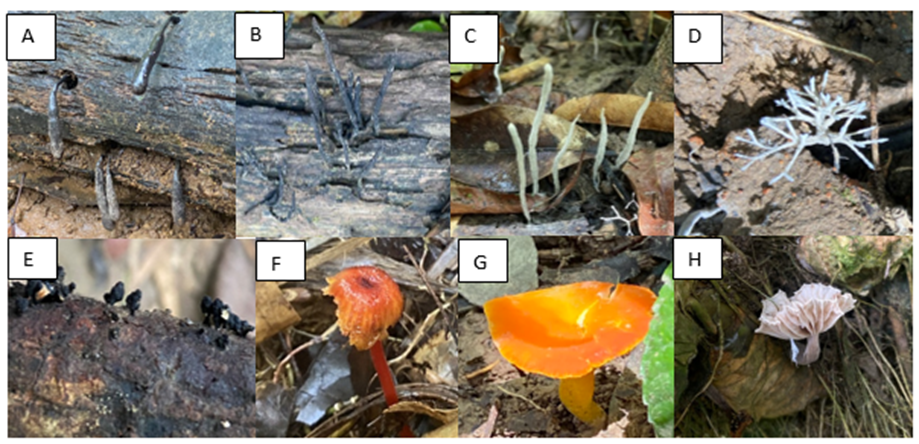
Fig. 2. Macrofungi of the genera Xylariaceae and Hygrophoraceae found in the Maros-Pangkep Karst Region: A. Xylaria longipes, B. Xylaria longiana, C. Xylaria hypoxylon, D. Xylaria furcata, E. Xylaria polymorpha, F. Hygrocybe miniata, G. Hygrocybe flavescens, H. Hygrocybe reesiae.
Table 1 : Xylaria and Hygrocybe found in the Maros–Pangkep karst region
|
Phyllum |
Family |
Species |
Substrates |
|
Ascomycota |
Dead wood |
||
|
Ascomycota |
Xylariaceae |
Xylaria longiana Rehm |
Dead wood |
|
Ascomycota |
Xylariaceae |
Xylaria hypoxylon (L.) Grev. |
Dead wood |
|
Ascomycota |
Xylariaceae |
Xylaria furcata Fr. |
Dead wood |
|
Ascomycota |
Xylariaceae |
Xylaria polymorpha (Pers.) Grev. |
Dead wood |
|
Basidiomycota |
Hygrocybe miniata (Fr.) P. Kumm. |
Soil |
|
|
Basidiomycota |
Hygrophoraceae |
Hygrocybe flavescens (Kauffman) Singer |
Soil |
|
Basidiomycota |
Hygrophoraceae |
Hygrocybe reesiae |
Soil |
Table 2: Average climate in the Maros–Pangkep karst Region
|
Parameter |
Average |
|
Air temperature (°C) |
26.6 |
|
Air humidity (%) |
83.94 |
|
Light (lux) |
362.71 |
Microclimatic factors and their effects on macrofungi
Average microclimate conditions during the study period revealed characteristic environmental parameters (Table 2). The convergence of edaphic and physical parameters, particularly in karst ecosystems, revealed pronounced fluctuations in water retention driven by elevated rock porosity, a condition that fosters vegetative mycelial development and promotes sporocarp formation in macrofungi (Krah et al., 2018). However, although the average conditions indicate an ideal environment, fluctuations in these microclimatic factors result in highly varied responses among fungal genera. PCA analysis shows that the distribution of the genus Xylaria exhibits different patterns of association with microclimate variables, namely air humidity, air temperature, and light intensity. Based on the loadings plot, the Xylaria vector is located in quadrant IV (PC1 = 0.272; PC2 = −0.887), whereas air humidity (PC1 = 0.598; PC2 = −0.001) and light intensity (PC1 = 0.559; PC2 = 0.015) are oriented toward the positive side of the PC1 axis at angles that are relatively smaller compared to the Xylaria vector. These findings reveal an apparent association linking Xylaria distribution with both ambient atmospheric humidity and illumination levels. Conversely, air temperature (PC1 = 0.507; PC2 = 0.461) forms a larger angle with the Xylaria vector due to a difference in direction on the second component (PC2), thus indicating a weak association (Fig. 3). This PCA interpretation is supported by the loading values (eigenvectors), where the second component (PC2) contributes more to distinguishing the position of Xylaria relative to air temperature than the first component (PC1) (Table 3). These results are consistent with the Spearman correlation analysis (Table 4). The correlation between Xylaria and air humidity showed a moderate positive relationship (ρ = 0.464; p = 0.208), while light intensity also showed a positive relationship, albeit a relatively weak one (ρ = 0.287; p = 0.454). In contrast, air temperature showed a weak negative relationship with Xylaria abundance (ρ = −0.268; p = 0.485). Despite directional concordance between the PCA and Spearman's rank correlations, none of the correlation coefficients achieved statistical significance (p > 0.05). Thus, the measured microclimatic factors cannot yet be considered primary predictors of Xylaria distribution at the study site, and the observed relationships are more accurately interpreted as ecological associations rather than deterministic influences. Xylaria is a group of Ascomycota that employs complex life strategies as both endophytes and saprotrophs. Following an endophytic phase within plant tissues, Xylaria can develop into decomposers on wood or litter; thus, the presence of fruiting bodies is not always determined by microclimatic conditions at the time of observation, but also by substrate availability and the stage of its life cycle (Thomas et al., 2016). Owing to superior moisture retention and thermal buffering capacities, decomposing wood establishes a microclimate significantly more stable than the surrounding ambient atmosphere, thereby serving as a primary habitat for lignicolous fungi (Boddy, 2001; Heilmann-Clausen and Christensen, 2004). The positive relationship between Xylaria and air humidity indicates that more humid atmospheric conditions have the potential to support fruiting body formation, although this effect was not significant in this study. Although not directly quantified in this study, it is conceivable that atmospheric humidity assists in sustaining substrate moisture content and bolstering fungal physiological metabolism throughout the decomposition process. Conversely, the tendency toward a negative relationship with air temperature suggests that rising temperatures may reduce the microhabitat conditions optimal for fruiting body formation, although this effect is relatively weak. Experimental studies have shown that Xylaria’s growth and decomposition activities have specific optimal temperature ranges, whereas higher temperatures can alter enzymatic activity and decomposition efficiency (Osono et al., 2011). The positive correlation with light intensity likely does not reflect a direct effect of light on Xylaria growth, but rather is related to the characteristics of the habitat where decomposing substrate is available. As a wood- and litter-decomposing fungus, the spatial distribution of Xylaria is more influenced by the presence of organic substrate than by light intensity itself. Consequently, light variations likely function as an indirect proxy for microenvironmental conditions associated with canopy architecture or substrate patchiness (Osono et al., 2011). Overall, the PCA results indicate an exploratory relationship between Xylaria abundance and microclimate variables, with ordination patterns suggesting a relationship with air humidity and light intensity, as well as a pattern inversely related to air temperature. Nevertheless, subsequent Spearman's rank evaluations revealed no statistically significant associations among these variables. Therefore, these PCA patterns should be interpreted as exploratory ordination patterns, rather than as statistically supported relationships. The results of the study indicate that, within the sample plots, the microclimatic variables do not have a statistically significant relationship with Xylaria abundance. Rather than responding directly to immediate microclimatic fluctuations, the spatial distribution of this genus is likely governed by substrate properties, organic debris availability, and its dual ecological strategy as both an endophyte and a saprotroph, traits that confer broad environmental resilience across diverse habitats (Thomas et al., 2016).
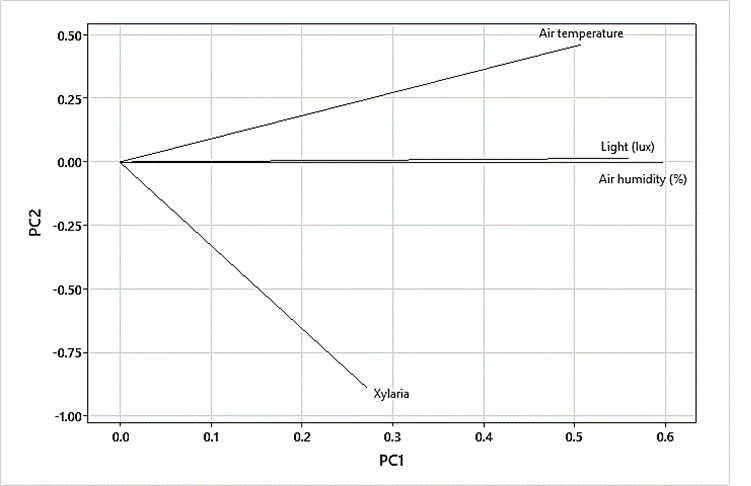
Fig. 3: A PCA loading plot showing the relationships between microclimatic variables and Xylaria in the Maros–Pangkep karst forest (Note: PC1 and PC2 explained 67.1% and 24.7% of the total variance, respectively, with a cumulative explained variance of 91.8%. The corresponding eigenvalues were 2.6856 for PC1 and 0.9861 for PC2)
Table 3: PCA eigenvector values of the microclimate factors associated with the occurrence of Xylaria and Hygrocybe
|
Variable |
PC1 |
PC2 |
Variable |
PC1 |
PC2 |
|
Xylaria |
0.272 |
-0.887 |
Hygrocybe |
0.380 |
-0.751 |
|
Air humidity |
0.598 |
-0.001 |
Air humidity |
-0.473 |
-0.633 |
|
Air temperature |
0.507 |
0.461 |
Air temperature |
-0.543 |
0.149 |
|
Light (lux) |
0.559 |
0.015 |
Light (lux) |
0.581 |
0.114 |
Table 4: Spearman's rank correlation between Xylaria and microclimatic variables in the Maros–Pangkep karst forest
|
Variable |
Spearman's ρ |
p-value |
|
Air humidity |
0.464 |
0.208 |
|
Air temperature |
-0.268 |
0.485 |
|
Light (lux) |
0.287 |
0.454 |
Note: ρ = Spearman’s correlation coefficient; a relationship is considered significant if p < 0.05
PCA shows that Hygrocybe populations exhibit different responses to microclimate variables, namely air humidity, air temperature, and light intensity (Fig. 4). The loading plot shows that the Hygrocybe vector is located in quadrant IV (PC1 = 0.380; PC2 = –0.751), while light intensity is in quadrant I (PC1 = 0.581; PC2 = 0.114), air temperature in quadrant II (PC1 = –0.543; PC2 = 0.149), and air humidity in quadrant III (PC1 = –0.473; PC2 = –0.633). These positions indicate exploratory ordination patterns suggesting an association of Hygrocybe with light intensity and an opposite ordination pattern with air temperature and air humidity (Fig. 4). This interpretation is supported by the loading values (eigenvectors) on the two principal components (Table 3). Hygrocybe has a positive loading on PC1 (0.380) and a strongly negative loading on PC2 (–0.751). Light intensity also has a positive loading on PC1 (0.581) with a relatively small loading on PC2 (0.114), resulting in a relatively similar ordination direction to that of Hygrocybe. In contrast, air temperature has a negative loading on PC1 (–0.543) and a positive loading on PC2 (0.149), resulting in a different ordination direction from Hygrocybe. Furthermore, air humidity exhibits a divergent ordination trajectory (PC1 = –0.473; PC2 = –0.633), primarily driven by its inverse loading value along the PC1. These PCA patterns represent exploratory ordination associations rather than statistically supported relationships. The PCA patterns were then compared with Spearman’s correlation analysis (Table 5). Light intensity exhibited a moderately strong positive correlation with Hygrocybe sporocarp abundance (ρ = 0.783; p = 0.118), whilst air temperature displayed a moderate inverse association (ρ = –0.530; p = 0.358). Air humidity also showed a negative correlation (ρ = –0.447; p = 0.450). Although the directional patterns observed in the PCA were generally consistent with the direction of the Spearman’s correlation coefficients, none of these correlations were statistically significant (p > 0.05). In tropical forests, increased light intensity typically occurs in areas with greater canopy openings. Gaps in the forest canopy elevate soil surface temperature, accelerate litter decomposition, and modulate local moisture availability, collectively establishing microenvironmental conditions favorable for sporocarp production in select Hygrocybe species. However, light is not a primary physiological factor for mycelial growth; rather, it serves as an indicator of changes in microhabitat conditions (Halbwachs et al., 2013). This pattern indicates that Hygrocybe species in the Maros–Pangkep karst region are more frequently found in microhabitats characterised by a relatively open canopy or forest gaps, thereby allowing greater light penetration. Previous research has reported that waxcaps are generally found in habitats with low vegetation, relatively open canopy cover, and limited competition from vascular plants, including semi-natural grasslands and other open habitats (Griffith et al., 2002; Boertmann, 2010). These habitat characteristics are considered to provide environmental conditions conducive to the emergence of waxcap fruiting bodies, although habitat preferences may vary between species (Halbwachs et al., 2013). The inverse relationship observed between air temperature and the abundance of Hygrocybe fruiting bodies suggests that elevated temperatures precipitate a decline in yield. This pattern aligns with the physiological constraints characteristic of the Hygrophoraceae family, which typically proliferate in microhabitats defined by thermal stability and sustained humidity. Rising temperatures can accelerate evaporation and reduce water availability in both the soil surface layer and litter, thereby inhibiting basidiocarp formation (Halbwachs et al., 2018). The combination of PCA (Fig. 4), loading values (Table 3), and Spearman’s correlation (Table 5) reveals mutually supportive patterns: Hygrocybe tends to show a positive association with light intensity and a negative association with air temperature and humidity. However, However, given the lack of statistically significant correlations (p > 0.05), the results of this study indicate that local microclimatic conditions are not strongly associated with the spatial distribution or abundance of Hygrocybe species.
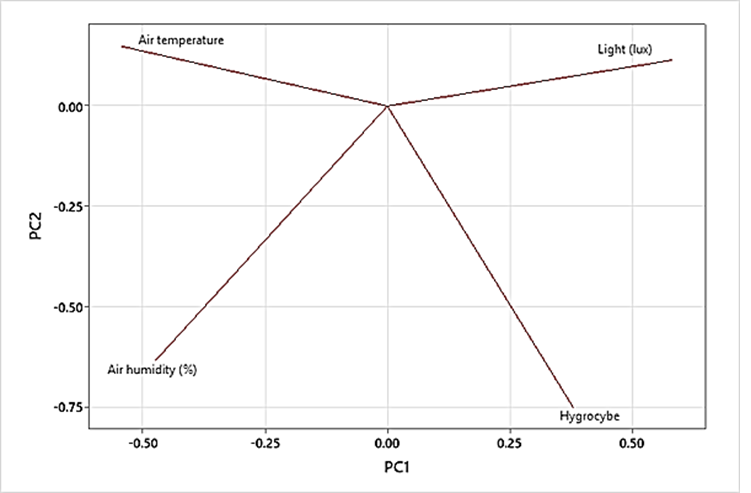
Fig. 4: A PCA loadings plot illustrating the relationship between microclimate variables and Hygrocybe in the Maros–Pangkep karst forest (Note: PC1 and PC2 explained 67.8% and 30.9% of the total variance, respectively, with a cumulative explained variance of 98.7%. The corresponding eigenvalues were 2.713 for PC1 and 1.236 for PC2)
Table 5: Spearman's rank correlation between Hygrocybe and microclimatic variables in the Maros–Pangkep karst forest
|
Variable |
Spearman's ρ |
p-value |
|
Air humidity |
-0.447 |
0.450 |
|
Air temperature |
-0.530 |
0.358 |
|
Light (lux) |
0.783 |
0.118 |
Note: ρ = Spearman’s correlation coefficient; a relationship is considered significant if p < 0.05
The interaction between soil properties and adaptation mechanisms (contrasting lifestyles)
The edaphic characteristics of the Maros–Pangkep karst region reflect typical limestone- derived soils characterized by moderate acidity and moderate CEC, however, they exhibit pronounced macronutrient limitations, as evidenced by low levels of organic nitrogen and base saturation (BS) (Table 6). PCA revealed that the distribution of the genus Xylaria exhibits distinct association patterns with the observed edaphic factors (Fig. 5). In the loading plot, the Xylaria vector is located in quadrant IV (PC1 = 0.121; PC2 = –0.492), while most soil chemical variables, such as pH, P₂O₅, Ca, Mg, K, Na, and BS are located on the positive side of the PC1 axis with relatively small PC2 values. The ordination pattern shows that Xylaria and the variables related to soil fertility occupy different positions along the PCA axes, with pH, P₂O₅, Ca, Mg, K, Na and BS generally oriented towards the positive side of PC1. This pattern illustrates an exploratory association between Xylaria and the soil fertility gradient across the sampling plots, rather than robust statistical significance. In contrast, soil moisture lies on the negative side of PC1 (PC1 = –0.124; PC2 = 0.183), resulting in a different ordination direction from that of Xylaria. This pattern suggests an exploratory association between Xylaria and soil moisture, diverging from the trends observed for soil fertility variables.
Table 6: Average profile of the physical and chemical characteristics of soils in the Maros–Pangkep karst region
|
Parameter |
Average |
|
pH |
6.12 |
|
N organic (%) |
0.15 |
|
P2O₅ (ppm) |
11.24 |
|
Ca in centimole per kilogram (cmol/kg) |
5.35 |
|
Mg (cmol/kg) |
0.86 |
|
K (cmol/kg) |
0.24 |
|
Na (cmol/kg) |
0.24 |
|
CEC (cmol/kg) |
19.9 |
|
Base saturation (%) |
33.47 |
|
Soil temperature (°C) |
26.26 |
|
Soil moisture (%) |
22 |
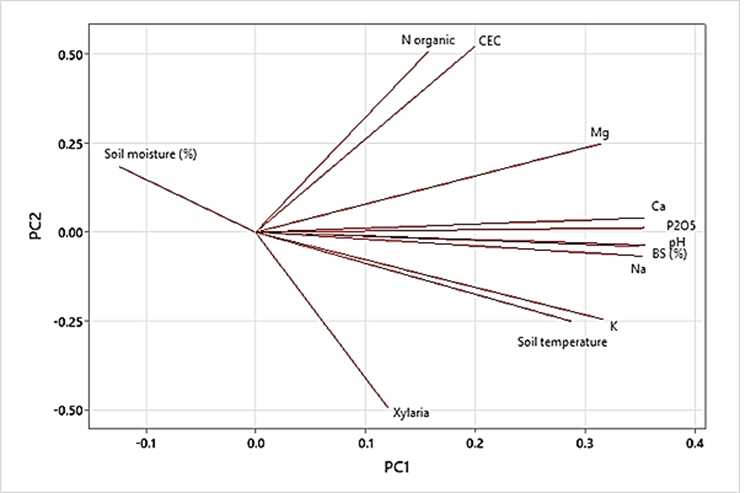
Fig. 5. A PCA loadings plot illustrating the relationship between edaphic factors and Xylaria in the Maros–Pangkep karst forest (Note: PC1 and PC2 explained 65.7% and 14.5% of the total variance, respectively, with a cumulative explained variance of 80.2%. The corresponding eigenvalues were 7.8860 for PC1 and 1.7425 for PC2)
The loading values (eigenvectors) (Table 7) support this interpretation. The variables pH (0.355; –0.036), P₂O₅ (0.354; 0.012), Ca (0.354; 0.041), Mg (0.314; 0.248), K (0.317; –0.245), Na (0.352; –0.067), and BS (%) (0.350; –0.040) are relatively aligned with the Xylaria vector on the first principal component (PC1), indicating that the occurrence of Xylaria fruiting bodies tends to increase at sites with higher soil fertility. Conversely, soil moisture has a negative loading value on PC1 (–0.124), so its position is opposite to that of Xylaria. Meanwhile, CEC and organic nitrogen had fairly high positive PC2 values (0.522 and 0.508, respectively), whereas Xylaria had a negative PC2 value (–0.492). The patterns observed in the PCA analysis were compared with the results of the Spearman’s correlation analysis (Table 8). The Spearman’s correlation analysis revealed a positive correlation between Xylaria abundance and pH (ρ = 0.262; p = 0.497), P₂O₅ (ρ = 0.232; p = 0.548), Ca (ρ = 0.186; p = 0.632), Mg (ρ = 0.186; p = 0.632), K (ρ = 0.439; p = 0.237), Na (ρ = 0.211; p = 0.586), and soil temperature (ρ = 0.331; p = 0.385). Conversely, negative correlations were observed between Xylaria abundance and soil moisture (ρ = –0.456; p = 0.218), CEC (ρ = –0.211; p = 0.586), BS (ρ = –0.152; p = 0.696), and organic nitrogen (ρ = –0.013; p = 0.974). Although the direction of some Spearman’s correlation coefficients was generally consistent with the exploratory patterns observed in the PCA, none were statistically significant (p > 0.05). The PCA pattern revealed exploratory ordination relationships, whereas Spearman rank correlations indicated that no statistically significant associations between Xylaria abundance and the evaluated edaphic variables. This apparent discrepancy highlights the distinct analytical functions of the two methods: PCA functions as a descriptive, exploratory ordination technique that summarizes overall covariance without evaluating structure without testing statistical significance, whereas Spearman's rank correlation formally assesses pairwise relationship. Consequently, the PCA loading pattern should be interpreted as a non-significant, exploratory trends rather than definitive associations. As a lignocellulose decomposer, the presence of Xylaria is determined more by the availability of wood and litter substrates than by any single edaphic factor. Several Xylaria species can efficiently degrade lignin, cellulose, and hemicellulose, enabling them to proliferate across diverse soil conditions provided that sufficient organic substrate is available (Osono, 2020). The tendency toward a positive relationship between Xylaria and pH, P₂O₅, Ca, Mg, K, and Na also indicates that the presence of Xylaria fruiting bodies is not limited by low nutrient content at the study site. These elements contribute to sustaining microbial metabolic activity and enhancing organic matter decomposition of organic matter.
Table 7: PCA eigenvector values of the edaphic variables associated with the occurrence of Xylaria and Hygrocybe
|
Variable |
PC1 |
PC2 |
Variable |
PC1 |
PC2 |
|
Xylaria |
0.121 |
-0.492 |
Hygrocybe |
-0.114 |
0.511 |
|
pH |
0.355 |
-0.036 |
pH |
0.368 |
0.068 |
|
N organic |
0.158 |
0.508 |
N organic |
0.202 |
-0.486 |
|
P2O5 |
0.354 |
0.012 |
P2O5 |
0.279 |
-0.095 |
|
Ca |
0.354 |
0.041 |
Ca |
0.373 |
-0.003 |
|
Mg |
0.314 |
0.248 |
Mg |
0.171 |
-0.025 |
|
K |
0.317 |
-0.245 |
K |
0.367 |
-0.077 |
|
Na |
0.352 |
-0.067 |
Na |
0.334 |
0.055 |
|
CEC |
0.200 |
0.522 |
CEC |
-0.091 |
-0.542 |
|
BS (%) |
0.350 |
-0.040 |
BS (%) |
0.372 |
0.043 |
|
Soil temperature |
0.287 |
-0.250 |
Soil temperature |
0.189 |
0.422 |
|
Soil moisture (%) |
-0.124 |
0.183 |
Soil moisture (%) |
0.369 |
0.075 |
Table 8: Spearman's rank correlation between Xylaria and edaphic factors in the Maros–Pangkep karst forest
|
Variable |
Spearman's ρ |
p-value |
|
pH |
0.262 |
0.497 |
|
N organic |
-0.013 |
0.974 |
|
Phosphorus pentoxide (P₂O₅) |
0.232 |
0.548 |
|
Ca |
0.186 |
0.632 |
|
Mg |
0.186 |
0.632 |
|
K |
0.439 |
0.237 |
|
Na |
0.211 |
0.586 |
|
CEC |
-0.211 |
0.586 |
|
BS (%) |
-0.152 |
0.696 |
|
Soil temperature |
0.331 |
0.385 |
|
Soil moisture (%) |
-0.456 |
0.218 |
Note: ρ = Spearman’s correlation coefficient; a relationship is considered significant if p < 0.05
However, given their relatively weak and statistically nonsignificant correlations, these factors likely function merely as supporting conditions, while the primary determinants of Xylaria distribution appear linked to the quality and availability of lignocellulosic substrate. Similar findings have been reported in various soil fungal communities, where edaphic variables generally account for only a small portion of the variation in fungal communities compared to habitat and vegetation factors (Detheridge et al., 2018). The inverse trend between Xylaria abundance soil moisture indicates that sporocarp density is elevated in drier substrates. This pattern is ecologically plausible because most Xylaria species function as lignicolous saprotrophic that colonize coarse woody debris, twigs, stumps, and woody litter at various decomposition stages (Rogers, 2000). As wood-decaying fungi, the growth and decomposition activity of Xylaria depend on their ability to utilize lignocellulosic substrates through the production of extracellular enzymes; thus, the characteristics and microhabitat conditions of the substrate are key factors influencing colonization and fruiting body development (Ponting et al., 2003). Consequently, elevated soil moisture does not invariably promote an increase in Xylaria fruiting body abundance. It is hypothesized that micro-moisture conditions within the substrate, rather than bulk soil moisture, exert a more pronounced influence on sporocarp formation, although substrate-level moisture was not directly measured in this study. Consequently, the inverse relationship observed in this study suggests that suitable substrate availability is a more critical driver of Xylaria sporocarp emergence than soil moisture variations alone (Rogers, 2000; Pointing et al., 2003). Overall, the PCA results (Fig. 5) and Spearman’s correlation coefficients (Table 8) show mutually supportive patterns, namely a tendency toward a positive association between Xylaria and most soil fertility parameters (pH, P₂O₅, Ca, Mg, K, Na, and soil temperature), as well as a tendency toward a negative association with soil moisture, CEC, and organic nitrogen. However, given the lack of statistically significant correlations (p > 0.05), the results of this study suggest that microclimate variations are not strongly associated with the distribution of Xylaria. Instead, the distribution of this genus appears to be governed primarily by an interplay of substrate characteristics, vegetation attributes, and microhabitats, a pattern widely documented in ecological studies of macrofungi in tropical karst ecosystems (Salman et al., 2026). PCA revealed that the fruit body distribution of Hygrocybe exhibits distinct patterns of association with edaphic factors (Fig. 6). On the loading plot, the Hygrocybe vector is located in quadrant II (PC1 = –0.114; PC2 = 0.511), while most soil chemical variables, such as pH, Ca, K, Na, BS (%), P₂O₅, soil moisture, and soil temperature, are on the positive side of PC1. Conversely, CEC aligns relatively closely with Hygrocybe due to shared negative PC1 scores, whereas organic N exhibits an opposing vector, particularly along the second principal component (Fig. 6). This interpretation is supported by the loading values (eigenvectors) for the two principal components (Table 7). Hygrocybe has loadings of PC1 = –0.114 and PC2 = 0.511, while pH (0.368; 0.068), Ca (0.373; –0.003), K (0.367; –0.077), Na (0.334; 0.055), BS (%) (0.372; 0.043), soil moisture (0.369; 0.075), and soil temperature (0.189; 0.422) are dominated by positive loadings on PC1. These spatial positions indicate that Hygrocybe exhibits an inverse relationship with the majority of soil fertility parameters. In contrast, CEC has a negative loading on PC1 (–0.091) and a negative loading on PC2 (–0.542); thus, although it differs on the second component, the same direction on PC1 indicates a relative proximity compared to the other variables. These PCA results are consistent with the Spearman correlation analysis (Table 9). Among all evaluated edaphic parameters, CEC alone exhibited strong, statistically significant inverse relationship with the abundance of Hygrocybe fruiting bodies (ρ = –0.894; p = 0.041). In contrast, soil temperature showed a fairly strong positive trend (ρ = 0.783; p = 0.118), though it was not yet significant. Soil moisture showed a weak negative correlation (ρ = –0.224; p = 0.718), while organic nitrogen also exhibited a moderate negative correlation (ρ = –0.447; p = 0.450). Other soil chemical parameters, such as pH, Ca, K, BS (%), and P₂O₅, showed very weak relationships, all of which were insignificant (p > 0.05). Consequently, the PCA and Spearman’s correlation analyses provide complementary interpretations, demonstrating that no single edaphic factor robustly accounts for the variance in Hygrocybe sporocarp abundance, with the sole exception of a inverse tendency regarding CEC. The negative relationship between Hygrocybe and CEC indicates that the presence of Hygrocybe tends to decrease in soils with higher nutrient retention capacity. Elsewhere, Hygrocybe species particularly within semi-natural grassland ecosystems, have been documented as sensitive bioindicators of habitat integrity, low soil nutrient availability, and oligotrophic ecosystem stability (Griffith et al., 2002; Lodge et al., 2014; Halbwachs et al., 2018). Although the observation of a negative correlation between Hygrocybe abundance and CEC (ρ = −0.894, uncorrected p = 0.041; as stated in the Study Limitations) aligns with previously reported trends, limitations including a restricted sample size, a single edaphic variable, and tropical karst rather than grassland setting Hygrocybe as a preclude designating bioindicator in this system. Confirming this role would require broader evidence, including multiple independent sites, additional habitat variables, and replication across seasons.
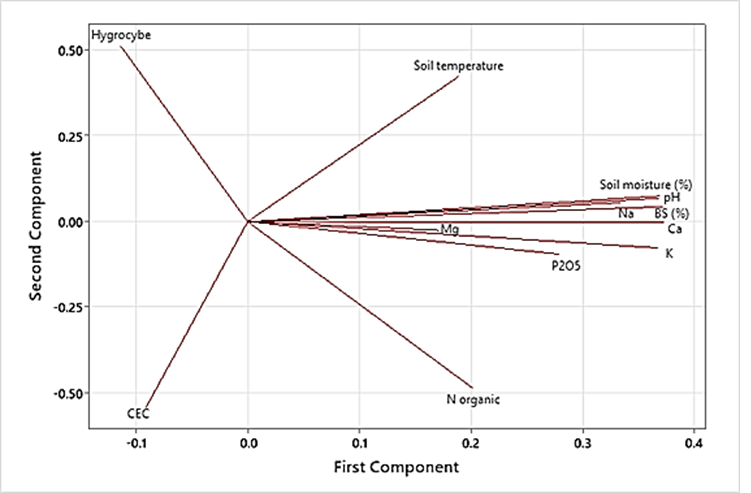
Fig. 6: A PCA loadings plot illustrating the relationship between edaphic factors and Hygrocybe in the Maros–Pangkep karst forest (Note: PC1 and PC2 explained 59.9% and 24.2% of the total variance, respectively, with a cumulative explained variance of 84.1%. The corresponding eigenvalues were 7.190 for PC1 and 2.896 for PC2)
Table 9: Spearman's rank correlation between Hygrocybe and edaphic factors in the Maros–Pangkep karst forest
|
Variable |
Spearman's ρ |
p-value |
|
pH |
-0.224 |
0.718 |
|
P₂O₅ |
0.112 |
0.858 |
|
Ca |
-0.224 |
0.718 |
|
Mg |
0.057 |
0.927 |
|
K |
-0.224 |
0.718 |
|
Na |
0.447 |
0.450 |
|
CEC |
-0.894 |
0.041* |
|
BS (%) |
-0.224 |
0.718 |
|
Soil temperature |
0.783 |
0.118 |
|
Soil moisture (%) |
-0.224 |
0.718 |
|
N organic |
-0.447 |
0.450 |
(Note: ρ = Spearman’s correlation coefficient; a relationship is considered significant if p < 0.05)
Therefore, the negative correlation between CEC and Hygrocybe observed in this study likely reflects the ecological affinity of these fungi for nutrient-deficient soils, rather than indicating that CEC acts as a direct causal driver.The negative relationship between Hygrocybe and organic nitrogen is also consistent with the unique nutritional characteristics of the Hygrophoraceae family. Although the observed correlation was statistically nonsignificant (ρ = –0.447; p = 0.450), stable isotope analyses indicate that waxcaps utilize a nutritional strategy distinct from typical saprotrophic fungi. Evidence from δ¹³C and δ¹⁵N isotopes indicates that this group is likely biotrophic or root-endophytic and utilizes different sources of carbon and nitrogen than conventional saprotrophic fungi. Consequently, elevated soil organic nitrogen content is not invariably mirrored by an increase in Hygrocybe abundance, given that total nitrogen availability does not necessarily reflect the specific nitrogen sources assimilated by these fungi (Halbwachs et al., 2018). Although statistically nonsignificant, soil temperature exhibited a positive correlation trend (ρ = 0.783). These findings indicate that rising soil temperatures do not invariably suppress Hygrocybe fruiting body production at the study site. This pattern is likely attributable to local microhabitat conditions wherein thermal elevations remain within the optimal physiological threshold for basidiocarp development. Furthermore, soil temperature may also reflect differences in canopy openness or moisture dynamics between plots and therefore cannot be interpreted as a direct influence on fungal physiology. Other parameters such as pH, Ca, K, Na, BS (%), and soil moisture showed a relatively weak relationship with the number of Hygrocybe fruiting bodies. These results demonstrate that variations in the measured soil chemical parameters do not fully account for the distribution of Hygrocybe at the study site. aligns with broader ecological evidence indicating that waxcaps occurrence is governed by multifaceted interactions among habitat conditions, land-management history, vegetative or bryophyte cover, microclimate, and specialized trophic strategies. Consequently, their spatial distribution cannot be explained by any single soil chemical property in isolation (Griffith et al., 2002). Furthermore, the observed negative association with soil moisture suggests that increasing soil moisture may reduce oxygen availability within soil pores, thereby constraining aerobic fungal metabolism and mycelial respiration (Dighton, 2016). Although the correlation between Hygrocybe abundance and CEC was nominally significant (ρ = −0.894, p = 0.041), it was derived from only five plots and should be interpreted cautiously. This limited small sample size diminishes statistical power, rendering the correlation highly sensitive to individual data points. Furthermore, the unfavorable variable-to-observation ratio in the corresponding PCA (12 variables across 5 plots) restricts the robustness of multivariate patterns for this genus. Additionally, because CEC was one of 14 variables tested independently, the possibility of a false-positive result due to multiple testing cannot be excluded. As sampling was restricted to the Maros–Pangkep karst landscape, the generalizability of this finding to alternative ecosystems remains uncertain. The CEC–Hygrocybe association, though ecologically plausible given the known oligotrophic affinity of Hygrophoraceae, should therefore be regarded as preliminary and requiring confirmation with larger sample sizes. Furthermore, CEC, BS, and exchangeable cations (Ca, Mg, K, and Na) are chemically interrelated, as they collectively reflect the same underlying soil base-cation status, with soil pH exhibiting a well-documented covariation with this geochemical complex. Because independent Spearman correlations were conducted for each variable without accounting for this relatedness, the CEC–Hygrocybe correlation should not be interpreted as evidence of an independent, CEC-specific ecological driver, but rather as one indicator within a broader, intercorrelated soil fertility gradient. Sampling effort was restricted to a single continuous transect per season, surveyed over six field days over two seasons. Combined with the non-random, presence-based plot selection, this captures only a narrow spatial and temporal slice of macrofungal occurrence and should not be assumed to reflect the full spatial or seasonal variability of the Maros–Pangkep karst landscape. Due to the presence-based and purposive design of plot selection, the findings of this study should be interpreted as characteristic of the sampled locations rather than as being statistically representative of the broader Maros–Pangkep karst region. Microclimatic parameters were recorded as instantaneous single-point measurements per visit rather than continuous or diurnally-repeated readings, potentially failing to capture diurnal fluctuations in temperature and light. Combined with the limited number of sampling visits, this constrains the extent to which reported values reflect the full temporal variability relevant to fungal fruiting. Because no formal statistical procedure (e.g., a genus by-environment-interaction test) was performed to ascertain whether the contrasting environmental associations observed between Hygrocybe and Xylaria reflect genuine ecological divergence—as opposed to confounding artifacts of unequal sample size, detectability, or substrate availability, this comparison should be interpreted as descriptive rather than statistically confirmed. Most prior ecological studies of Hygrocybe and Xylaria originate from temperate or subtropical, non-karst systems; whether the substrate- and CEC-associated patterns observed here operate similarly under tropical, calcareous karst conditions has not been directly established and represents an important direction for future comparative research across karst and non-karst tropical systems.
This study provides one of the first attempts to quantitatively link environmental variation to the occurrence of Xylaria and Hygrocybe within the Maros–Pangkep karst forest, an ecosystem that, despite its recognized ecological and geomorphological significance, remains substantially understudied with respect to its macrofungal communities. Past investigations of this landscape have focused primarily on taxonomic cataloging and distributional mapping. Building upon this baseline, the current research investigates potential microclimatic and edaphic gradients that may account for the distinct ecological trajectories and distribution patterns observed between the two genera. The selection of Xylaria and Hygrocybe as a comparative model was grounded in their fundamentally different substrate-use strategies: Xylaria, a lignicolous saprotroph reliant on decaying woody debris, and Hygrocybe, a genus widely reported as sensitive to soil fertility and associated with oligotrophic conditions in other ecosystems. The complete substrate exclusivity observed in this sample, wherein all recorded Xylaria specimens occurred dead wood, and all Hygrocybe specimens on mineral or lichen-covered soil, accords with anticipated ecological contrast. This pattern underscores the utility of the comparative framework for investigating substrate-driven niche partitioning in tropical karst environments, although confirmation via expanded sampling remains necessary given the presence-based nature of plot selection in this study. The absence of statistically significant associations between Xylaria abundance and any measured microclimatic or edaphic variable constitutes an informative result in its own right. This indicates that the primary environmental drivers governing lignicolous fungi in this ecosystem operate at the substrate level, encompassing wood decay stage, moisture retention , and host wood wood species identity, rather than at the level of ambient soil chemistry or general microclimate. As these substrate-level variables were not directly quantified in the present study, this interpretation remains a hypothesis rather than a demonstrated conclusion, and represents a specific, testable direction for future research. Conversely, the nominally significant negative correlation between Hygrocybe abundance and soil CEC provides preliminary, exploratory support for the oligotrophic preferences widely documented for this genus. Nevertheless, given the restricted sample size (n = 5), multiple testing across fourteen independent variables, and the geochemical collinearity of CEC with other base-cation metrics, this observation remains strictly hypothesis-generating rather than confirmatory, underscoring the need for replication via larger, more balanced sampling frameworks. Beyond these genus-specific patterns, this study illustrates several broader methodological considerations relevant to macrofungal ecology research in logistically challenging environments such as karst landscapes. Due to operational constraints—including rugged topography, restricted access, and limited fieldwork duration, a purposive, presence-based sampling strategy was adopted in lieu of a randomized or stratified design. Although this methodology facilitated the collection of ecologically informative data within practical boundaries, it concurrently restricts statistical power, spatial representativeness, and the broader generalizability of the findings across the Maros–Pangkep karst region. Future studies would benefit from expanded, spatially replicated sampling across multiple independent transects and seasons, systematic recording of absence as well as presence data, and the direct quantification of substrate-level and vegetation-structural variables (including dead-wood volume, decay stage, canopy cover, litter depth, and land-use history) that could not be incorporated here. Where feasible, future investigations employing count-based statistical frameworks such as generalized linear models or generalized linear mixed models, alongside substantially expanded sample sizes, would facilitate a more rigorous and statistically robust identification of environmental drivers than the exploratory correlation, and ordination-based techniques necessitated by this preliminary study. Despite these limitations, this study offers ecologically meaningful, hypothesis-generating baseline information on the potential environmental associations of two contrasting macrofungal genera in an underexplored tropical karst ecosystem. Recognizing the profound susceptibility of karst landscapes to anthropogenic pressures such as habitat degradation, quarrying, and land conversion, baseline ecological surveys of this nature retain significant applied importance. They pinpoint prospective indicator taxa and environmental correlates that can shape the framework of subsequent, long-term monitoring initiatives, while highlighting the critical need to integrate both micro-substrate characteristics and soil chemistry into conservation planning for karst macrofungal communities. It should be emphasized that the patterns documented herein serve as a foundational baseline rather than a definitive characterization of, the ecological drivers governing macrofungal diversity in the Maros–Pangkep karst forest, and future studies are encouraged to expand upon these findings through more extensive, methodologically rigorous investigation.
AUTHOR CONTRIBUTIONS
S.H. Larekeng, the corresponding author, contributed to conceptualization, supervision, funding acquisition, project administration, resources, writing – review and editing. A.H. Salman, contributed to methodology, investigation, data curation, formal analysis, visualization, writing – original draft. H.A. Amanah, contributed to investigation, data curation, validation. T. Grebenc, contributed to methodology, validation, supervision, writing – review and editing. M.B. Akzad, contributed to data collection. M.D. Usman, contributed to resources, validation. M. Restu, contributed to formal analysis, visualization, writing – review and editing. R. Prayudyaningsih, contributed to conceptualization, supervision, validation, writing – review and editing. Asrianny, contributed to formal analysis, data curation. All authors have read and approved the final version of the manuscript.
ACKNOWLEDGEMENT
Authors would like to thank to the Indonesian Endowment Fund for Education (LPDP) on behalf of the Indonesian Ministry of Higher Education, Science and Technology, and managed under the EQUITY Program Contract No. [4307/B3/DT.03.08/ 2025] and [47103 / UN4.1/PM.01.01/2025]. TG was supported by Research Program P4-0107, Infrastructure Program I0-0012-0404, abd research project J4-70171.
CONFLICT OF INTEREST
The authors declare that there is no conflict of interest regarding the publication of this manuscript. In addition, the authors have fully addressed the ethical issues, including plagiarism, informed consent, misconduct, data fabrication and/or falsification, double publication and/or submission, and redundancy.
OPEN ACCESS
©2027 The author(s). This article is licensed under a Creative Commons Attribution 4.0 International License, which permits use, sharing, adaptation, distribution and reproduction in any medium or format, as long as you give appropriate credit to the original author(s) and the source, provide a link to the Creative Commons license, and indicate if changes were made. The images or other third-party material in this article are included in the article’s Creative Commons license, unless indicated otherwise in a credit line to the material. If material is not included in the article’s Creative Commons license and your intended use is not permitted by statutory regulation or exceeds the permitted use, you will need to obtain permission directly from the copyright holder. To view a copy of this license, visit: http://creativecommons.org/licenses/by/4.0/
PUBLISHER’S NOTE
GJESM Publisher remains neutral with regard to jurisdictional claims in published maps and institutional affiliations.
NEGATIVE AI STATEMENT
The author(s) declare that no AI tools or services were used during the preparation of this work.
ABBREVIATIONS
|
% |
Percentage |
|
°C |
Degrees Celsius |
|
BS |
Base saturation |
|
Ca |
Calcium |
|
CaCO₃ |
calcium carbonate |
|
CEC |
Cation exchange capacity |
|
cm |
Centimeters |
|
cmol/kg |
Centimole per kilogram |
|
K |
Potassium |
|
m |
Meters |
|
masl |
Meters above sea level |
|
mg/kg |
Milligrams per kilogram |
|
Mg |
Magnesium |
|
mm |
Millimeters |
|
N |
Nitrogen |
|
Na |
Sodium |
|
n |
Sample size |
|
P |
Probability value |
|
P₂O₅ |
Phosphorus pentoxide |
|
PC |
Principal component |
|
PCA |
Principal component analysis |
|
pH |
Potential of hydrogen |
|
ppm |
Part per million |
|
Spearman's ρ |
Spearman's rank correlation coefficient |
REFERENCES
Boddy, L., (2001). Fungal community ecology and wood decomposition processes in angiosperms: from standing tree to complete decay of coarse woody debris. Ecol. Bull., 49: 43-56 (14 pages).
Boddy, L.; Büntgen, U.; Egli, S.; Gange, A.C.; Heegaard, E.; Kirk, P.M.; Mohammad, A.; Kauserud, H., (2014). Climate variation effects on fungal fruiting. Fungal Ecol., 10: 20-33 (14 pages).
Boertmann, D., (2010). The genus Hygrocybe, 2nd ed. The Danish Mycological Society (200 pages).
Duli, A.; Mulyadi, Y.; Rosmawati., (2019). The mapping out of Maros-Pangkep karst forest as a cultural heritage conservation. IOP Conference Serires: Earth Environ. Sci., 270 (1), 012014 (19 pages).
Detheridge, A.P.; Comont, D.; Callaghan, T.M.; Bussel, J.; Brand, G.; Gwyn-jones, D.; Scullion, J.; Griffith, G.W., (2018). Vegetation and edaphic factors influence rapid establishment of distinct fungal communities on former coal-spoil sites. Fungal Ecol., 33: 92-103 (12 pages).
Dighton, J., (2016). Fungi in ecosystem processes, 2nd ed. CRC Press, Boca Raton (434 pages).
Kasim, K.; Nurdjaman, S.; Putri, M.R.; Saputra, T.A.; Hermawati, S.; Fikri, I.A.; Nugraha, B.R.D; Triharyuni, S., (2026). Oceanic environmental variability and fishing effort reallocation in data constrain small-scale fishery. Global J. Environ. Sci. Manage., 12(4): 1917-1940 (24 pages).
Legendre, P.; Legendre, L., (2012). Numerical Ecology, 3rd ed. Elsevier, Amsterdam (990 pages).
Mujio.; Natsir, M.; Ermyanyla, M.; Rusdiana, O; Yanuadi, A., (2026). Socio-ecological transformation and biodiversity dynamics under agromaritime development. Global J. Environ. Sci. Manage., 12(4): 2041-2060 (20 pages).
Pacioni, G., (1982). Simon and Schuster’s Guide to mushrooms. Mycologia. 75 (511 pages).
Rogers, J.D., (2000). Thoughts and musings on tropical Xylariaceae. Mycol. Res., 104: 12 (9 pages).
Sakti, W.I.; Radjawane, I.M.; Latief, H.; Meilano, I.; Trenggono, S.W.; Diantara, S.D.; Wahyudin, R.A.; Radiarta, I.N.; Ketaren, D.G.K..; Winata, I.N.P.; Gusmawati, N.F.; Syamdidi; Yuwono, T.; Arthatiani, F.Y.; Maharani, S.; Fahira, N.D.; Kasim, K., (2026). Balancing ecological stability and economic growth under oceanographic variability and coastal interventions in fisheries systems. Global J. Environ. Sci. Manage., 12(3): 1263-1286 (24 pages).
OPEN ACCESS
©2027 The author(s). This article is licensed under a Creative Commons Attribution 4.0 International License, which permits use, sharing, adaptation, distribution and reproduction in any medium or format, as long as you give appropriate credit to the original author(s) and the source, provide a link to the Creative Commons license, and indicate if changes were made. The images or other third party material in this article are included in the article’s Creative Commons license, unless indicated otherwise in a credit line to the material. If material is not included in the article’s Creative Commons license and your intended use is not permitted by statutory regulation or exceeds the permitted use, you will need to obtain permission directly from the copyright holder. To view a copy of this license, visit: http://creativecommons.org/licenses/by/4.0/
PUBLISHER NOTE
GJESM Publisher remains neutral concerning jurisdictional claims in published maps and institutional affiliations.
MAJOR DATABASES, CITATION METRICS & CAPTURES
Google Scholar | Scopus - SJR | Web of Science | Biological Abstracts: Clarivate | Biosis Preview: Clarivate | PlumX Metrics | Altmetrics | Mendeley |
CURRENT PUBLISHER

| Article View | 581 |
| PDF Download | 349 |


Letters to Editor
[1] Letters that include statements of statistics, facts, research, or theories should include appropriate references, although more than three are discouraged.
[2] Letters that are personal attacks on an author rather than thoughtful criticism of the author’s ideas will not be considered for publication.
[3] Letters can be no more than 300 words in length.
[4] Letter writers should include a statement at the beginning of the letter stating that it is being submitted either for publication or not.
[5] Anonymous letters will not be considered.
[6] Letter writers must include their city and state of residence or work.
[7] Letters will be edited for clarity and length.