
5.2
CiteScore
2.9
Impact Factor
Document Type : REVIEW PAPER
Authors
1 Facultad de Ciencias Administrativas, Universidad Estatal Península de Santa Elena, La Libertad, 240204 Ecuador
2 Facultad de Ciencias Sociales y de la Salud, Universidad Estatal Península de Santa Elena, La Libertad, 240204 Ecuador
3 Escuela de Ciencias Ambientales, Universidad Espíritu Santo, Samborondón, Ecuador
4 Departamento de Ingeniería Cartográfica y Topografía, Universidad Politécnica de Madrid, Crta. Valencia km 7, 28031-Madrid, Spain
Graphical Abstract
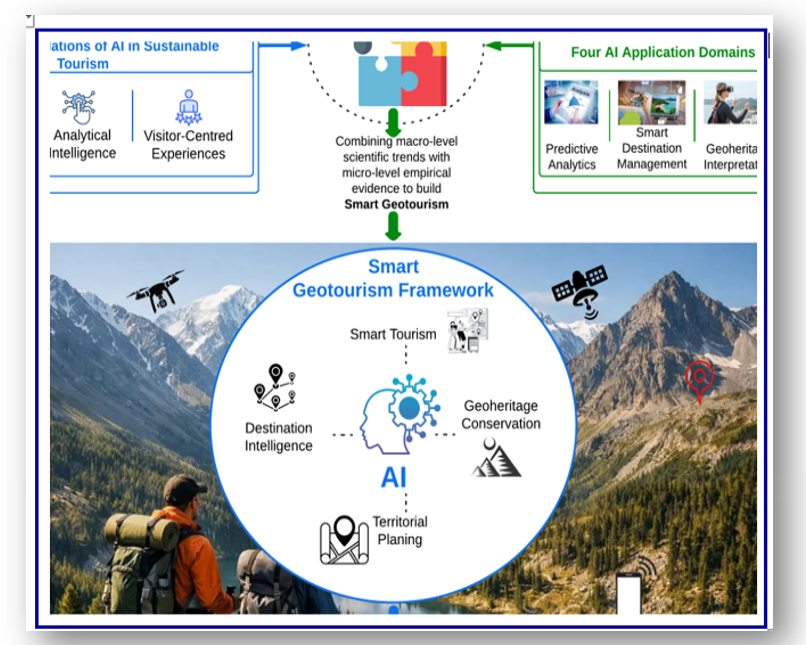
Highlights
Ø The bibliometric analysis demonstrates the evolution of artificial intelligence research from digital technologies towards intelligent tourism governance supported by analytical intelligence, sustainability, and destination management;
Ø The systematic review identifies four functional domains through which artificial intelligence contributes to smart geotourism: predictive analytics, smart destination management, geoheritage interpretation, and environmental monitoring and geoconservation;
Ø The proposed smart geotourism framework provides a strategic roadmap for evidence-based territorial planning, sustainable destination governance, and the long-term conservation of geoheritage under different regional contexts.
Keywords
INTRODUCTION
The digital transformation of tourism is reshaping how destinations are planned, governed, and experienced. Advances in digital infrastructures, geospatial technologies, and data-driven decision-making have accelerated the transition from conventional tourism management towards smart tourism (Mehraliyev et al., 2020; Zhang et al., 2022). Rather than representing only the adoption of digital technologies, smart tourism constitutes a new governance paradigm based on interconnected ecosystems, intelligent networks, collaborative destination management, and data-driven decision-making (Gretzel et al., 2015). Thus, smart tourism effectively couples technological innovation with sustainable destination stewardship and elevated experiential outcomes for visitors (Madzík et al., 2023; Wu et al., 2024). In the context of this transformation, artificial intelligence (AI) has emerged as one of the principal enabling technologies of smart destinations (Knani et al., 2022; Saydam et al., 2022). Recent advances in machine learning (ML), deep learning (DL), natural language processing (NLP), and predictive analytics have significantly expanded the analytical capacity of tourism organisations by facilitating demand forecasting, visitor behavior analysis, mobility modelling, and personalised service provision (Alhaddar and Kummitha, 2025; Hu et al., 2022; Laesser et al., 2025; Núñez et al., 2024). Moreover, AI applications augment operational efficacy by leveraging recommender frameworks, conversational interfaces, and automated decision-support architectures, thereby facilitating more responsive destination management in the face of fluctuating tourism demands (Alves et al., 2023; Ku and Chen, 2024). Consequently, AI is recognized not only as a technological innovation but also as a strategic instrument for destination intelligence and adaptive tourism governance within increasingly complex tourism systems (Baggio and Del Chiappa, 2014). AI is becoming increasingly relevant for addressing the sustainability challenges facing tourism destinations. The growing pressure on natural resources, biodiversity, and local communities requires planning approaches that balance tourism development with environmental conservation and social well-being (Hall, 2019; Santos et al., 2021; Silva et al., 2024). AI contributes to this objective through predictive modelling, environmental monitoring, optimisation of resource consumption, intelligent transport management, and spatial analysis, supporting more sustainable destination planning (García-Madurga and Grilló-Méndez, 2023; Majid et al., 2023). By integrating geospatial technologies, remote sensing, and big data analytics, AI underpins territorial intelligence, harmonizing heterogeneous environmental and tourism streams into comprehensive decision-support systems (Flórez et al., 2024; Parra-Sanchez and Viviescas-Jaimes, 2024). This convergence aligns with the sustainable development goals (SDGs), particularly those promoting sustainable cities, responsible consumption, climate action, and ecosystem conservation (Naciones Unidas, 2025). These advances are particularly relevant for geotourism, a specialized form of sustainable tourism centered on the conservation, interpretation, and appreciation of geoheritage and geodiversity (Gupta et al., 2024; Kubalíková et al., 2021). Diverging from conventional nature-based tourism paradigms, geotourism explicitly synthesizes geoconservation efforts with academic education, scientific knowledge transfer, and local economic stimulation via the valorization of geosites, geoparks, and distinctive geomorphological landscapes (Drinia et al., 2023; Quesada-Valverde and Quesada-Román, 2023; Spyrou et al., 2024). This territorial perspective is consistent with place-based approaches to tourism development that emphasise resilience, destination stewardship, and landscape management (Lew, 2014). In this context, geoparks function as territorial governance systems where conservation, community participation, education, and sustainable development are integrated within a place-based management framework (Rosado-González et al., 2023; Salgado-Jauregui et al., 2025). This perspective on governance is intrinsically linked to sustainability transitions that frame tourism destinations as complex socio-ecological systems demanding adaptive territorial stewardship (Saarinen, 2013). Consequently, the long-term success of geotourism increasingly depends on destinations' capacity to combine geoheritage conservation with intelligent territorial planning, adaptive governance, and data-driven management. While investigation into AI applications in tourism has grown exponentially and geotourism is recognized as a cornerstone of sustainable tourism literature, the two areas continue to progress largely decoupled from each other. This separation also reflects the broader evolution of tourism research towards experience-oriented and creative destination development, where technological innovation has often progressed independently of place-based heritage management (Richards, 2021). Within the proposed framework, smart geotourism is distinguished from related concepts by its simultaneous integration of geoheritage conservation, geodiversity management, destination intelligence, and evidence-based territorial governance. Smart tourism primarily emphasises digital innovation and intelligent destination services (Koo et al., 2025a); geotourism focuses on the appreciation and conservation of geological heritage (Ferdowsi and Németh, 2026); sustainable tourism seeks balanced environmental, social, and economic development (Khater et al., 2025); and geological heritage tourism concentrates on visitation associated with geosites and geological assets (Salvadeo et al., 2025). Smart geotourism advances these frameworks through the incorporation of intelligent spatial analytics and adaptive governance mechanisms, thereby ensuring the enduring viability and conservation of geoheritage. Existing studies primarily investigate AI applications for tourism demand forecasting, recommendation systems, destination management, and visitor behavior analysis (Ma, 2025; Wang et al., 2025), whereas geotourism research mainly focuses on geoheritage conservation, environmental education, geosite assessment, and territorial development (Carrillo-Hernández et al., 2024; Gupta et al., 2024; Quesada-Román et al., 2021). Consequently, a significant gap remains in understanding how AI mechanisms can be leveraged to advance the governance, strategic planning, preservation, and sustainable administration of geoheritage within contemporary smart tourism destinations. From the perspective of the mobilities paradigm, tourism destinations are increasingly understood as dynamic networks of people, technologies, information, and places rather than static geographical locations (Sheller and Urry, 2006). Consequently, understanding how AI interacts with geoheritage requires integrating technological innovation with territorial mobility, governance, and destination intelligence. This fragmentation also characterises the review literature. The proposed framework is underpinned by the theoretical nexus of smart tourism theory, territorial governance theory, socio-ecological systems theory, and destination intelligence paradigms. Smart tourism theory explains how digital infrastructures and AI support intelligent destination management (Koo et al., 2025b); territorial governance theory emphasises coordination among public, private, and community actors (Torre, 2025); socio-ecological systems theory conceptualises geoheritage destinations as coupled human–environment systems (Esengulova et al., 2026); and destination intelligence provides the analytical link through which AI-generated knowledge informs geoconservation, geodiversity management, and adaptive territorial decision-making (Ferdowsi et al., 2025). Current bibliometric investigations characterize the application of artificial intelligence in tourism through technical or managerial paradigms, whereas scholarly reviews on geotourism tend to isolate conservation, educational dimensions, and geosite assessment. To the best of our knowledge, there is a significant paucity of research that combines bibliometric analysis with a systematic literature review to investigate how AI specifically contributes to smart geotourism through geoheritage conservation, territorial planning, and destination intelligence. To explicitly position the current research gap and the distinct value proposition of this study, Table 1 offers a comparative synthesis of existing reviews addressing artificial intelligence within tourism, smart destination frameworks, and geoheritage contexts. This comparison demonstrates that previous studies have mainly focused on technological adoption, operational efficiency, destination management, or sustainability dimensions. At the same time, limited attention has been given to integrating AI with geoheritage conservation, territorial planning, and geotourism governance. Therefore, despite the growing body of research on AI in tourism, an integrated understanding of how AI can support smart geotourism remains insufficiently developed. Consequently, this study addresses this void by synthesizing bibliometric techniques and systematic review protocols, thereby elucidating the developmental trajectory, empirical scope, and conceptual architecture of AI applications in geotourism development. This knowledge gap significantly limits both the conceptual understanding of smart geotourism and the development of robust, context-specific, and practically relevant evidence-based strategies that integrate technological innovation with territorial sustainability.Accordingly, this study addresses the following research questions (RQ): (i) RQ1: How has scientific knowledge on AI in sustainable tourism evolved, and what intellectual structures, collaboration patterns, and emerging research themes support the transition towards smart geotourism? (ii) RQ2: How is AI contributing to territorial planning, destination governance, geoheritage conservation, and sustainable management within geotourism? In order to examine these questions, the present study analyzes scientific publications on AI in sustainable tourism through a dual methodological design: an integrated bibliometric analysis utilizing Scopus and Web of Science (WoS), paired with a systematic literature review dedicated to geotourism applications. Specifically, the bibliometric component maps the intellectual landscape, thematic evolution, and international collaboration networks of the overarching discipline, complemented by a systematic review that consolidates empirical findings on AI technologies, application domains, sustainability dimensions, geoconservation outcomes, and smart tourism paradigms within geotourism. This study makes three principal contributions: i) it provides an integrated synthesis linking AI, smart tourism, geoheritage conservation, and geotourism through a combined bibliometric and systematic review approach. ii) proposes a conceptual framework that explains how AI functions as an enabler of smart geotourism by connecting destination intelligence, territorial planning, geoconservation, and sustainable tourism governance. iii) identifies four strategic domains through which AI is transforming geotourism: predictive analytics, smart destination management, geoheritage interpretation, and environmental monitoring and geoconservation, while highlighting current research gaps and future directions. These findings furnish both conceptual advancements regarding the emerging domain of smart geotourism and strategic implications for destination administrators, regulatory authorities, and regional planners striving to integrate digital innovation into the long-term management of geological heritage. The study aims is to propose an integrated conceptual framework that connects AI, smart tourism, geoheritage conservation, and territorial planning to support the development of smart geotourism. The study was carried out at UPSE University, Santa Elena, Ecuador, in 2026.
Table 1: Comparative overview of previous review studies on AI in tourism/geotourism and the distinctive contribution of the present study
|
S.N. |
Author and year |
Review type |
Geoheritage / geotourism |
Territorial planning / geoconservation |
Bibliometric and systematic integration |
Research scope and main contribution |
|
1 |
Bibliometric |
No |
No |
No |
Maps the evolution, intellectual structure, and future research agenda of AI applications in tourism and hospitality through large-scale bibliometric analysis. |
|
|
2 |
Systematic literature review |
No |
No |
No |
Reviews AI methods, algorithms, data sources, and applications in hospitality and tourism, highlighting their role in forecasting, destination management, visitor behavior analysis, and personalised services. |
|
|
3 |
Systematic literature review |
No |
No |
No |
Examines the role of AI and big data in tourism, focusing on value creation, operational efficiency, personalised experiences, and the challenges of strategic adoption. |
|
|
4 |
Literature review |
No |
Partial |
No |
Analyses how AI supports smart tourist destinations through marketing, personalised services, predictive analytics, enhanced visitor experiences, and digital destination management. |
|
|
5 |
Bibliometric and literature review |
No |
Partial |
Partial |
Examines the evolution of AI applications in hospitality and tourism, identifying emerging research directions and future opportunities for the sector. |
|
|
6 |
Conceptual review / literature-based study |
No |
Partial |
No |
Explores the integration of AI and Internet of Things (IoT) in smart tourism destinations, emphasising data-driven management, connectivity, and improved tourist experiences. |
|
|
7 |
Bibliometric |
No |
No |
No |
Identifies influential authors, institutions, thematic structures, and emerging trends in AI research applied to tourism. |
|
|
8 |
Systematic literature review |
No |
Partial |
No |
Synthesises research on smart tourism destinations and sustainable development, addressing economic, social, and environmental dimensions of destination management. |
|
|
9 |
Conceptual and empirical framework |
No |
No |
No |
Analyses organisational factors influencing the adoption of AI and automation in hospitality and tourism, including technological, human, and institutional dimensions. |
|
|
10 |
Literature review |
No |
No |
No |
Examines AI-enabled value co-creation in tourism by identifying technological, behavioral, organisational, and relational factors shaping AI-mediated tourist experiences. |
|
|
11 |
Conceptual |
Yes |
Yes |
No |
Explores digital technologies for geoheritage conservation and sustainable geotourism, proposing a framework for digital transformation based on conservation, interpretation, and management needs. |
|
|
12 |
Bibliometric analysis and content analysis |
No |
Partial |
Partial |
Analyses the evolution of AI research in sustainable rural tourism, identifying trends related to governance, sustainability, employment, ethics, and community development. |
|
|
13 |
Conceptual |
Yes |
Yes |
No |
Discusses digital geovisualization and AI-supported geointerpretation for geoheritage management, including inventory, education, visitor engagement, and conservation applications. |
METHODOLOGY
This study employed an integrated approach, combining bibliometric analysis and a systematic review to investigate the relationships among AI, sustainable tourism, and geotourism. The analytical architecture of this study implements a multi-scale framework structured across two mutually reinforcing levels: i) a macro-level bibliometric analysis examining the evolution of AI in sustainable tourism, and ii) a micro-level systematic review focused on AI applications in geoheritage and geodiversity contexts. Integrating these two levels provides the basis for conceptualising the emerging field of smart geotourism. This dual-method strategy amalgamates quantitative and qualitative frameworks to comprehensively capture the trajectory of scientific growth, thematic transformation, and empirical applications characterizing the field. Fig. 1 presents the methodological framework adopted in the study. The methodological design followed a sequential analytical logic in which a macro-level bibliometric analysis characterized the evolution, intellectual structure, thematic dynamics, and international collaboration patterns of AI research in sustainable tourism, and a micro-level preferred reporting items for systematic reviews and meta-analyses (PRISMA)-based systematic review synthesized empirical evidence on AI applications in geoheritage, geodiversity, and geotourism. Ultimately, the insights yielded across both analytical scales were brought together to furnish the theoretical underpinning that defines smart geotourism as the convergence of destination intelligence, territorial planning, geoheritage conservation, and sustainable tourism governance. The first phase of the study consisted of identifying and collecting information through structured search strategies conducted on 15 March 2026 in the Scopus and WoS databases (Escandón-Panchana et al., 2024; Mongeon and Paul-Hus, 2016). All data retrieval procedures were completed on a single day to control for temporal fluctuations in database indexing, thereby preserving the consistency and comparability of the dataset. Scopus and WoS were selected because they are the two most widely used multidisciplinary databases in bibliometric research, offering high-quality indexing standards, extensive international coverage, citation metadata, and export compatibility with bibliometric software such as Bibliometrix and VOSviewer (Martín-Martín et al., 2018; Belu and Marinoiu, 2025). The synergistic use of these sources curtails database-driven bias, optimizes literature representation across tourism, sustainability, geoscience, and information technology domains, and elevates the analytical rigor of cross-disciplinary analyses (Mondal, 2026). The search strategy was designed to capture publications addressing AI within tourism and sustainability contexts. Searches were conducted in the title, abstract, and keywords fields in both databases without restricting subject categories.
Scopus query: TITLE-ABS-KEY [("artificial intelligence" OR AI OR "machine learning" OR "deep learning") AND ("tourism" OR "sustainable tourism" OR "ecotourism" OR "nature-based tourism" OR "smart tourism"]
WoS query: TS=[("artificial intelligence" OR AI OR "machine learning" OR "deep learning") AND ("tourism" OR "sustainable tourism" OR "ecotourism" OR "nature-based tourism" OR "smart tourism")]
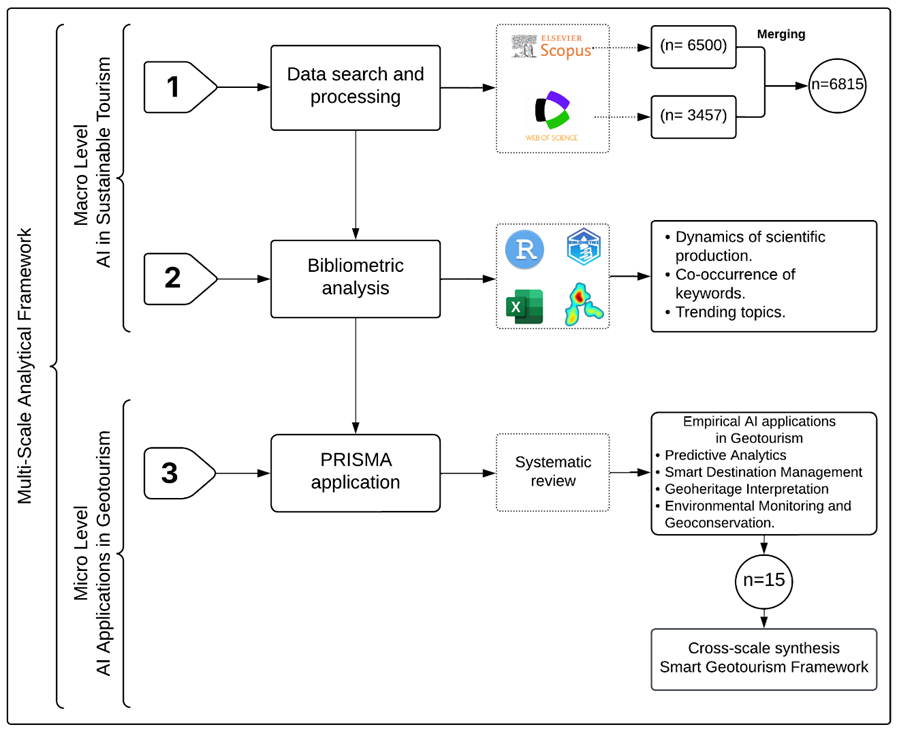
Fig. 1: Multi-scale methodological and conceptual framework integrating macro-level bibliometric analysis with a micro-level PRISMA-based systematic review to establish the foundations of the smart geotourism framework
No restrictions were applied regarding publication year, country, or subject area. The scope of the analyzed publication period spans 1993 through 2026—commencing with the earliest appearance of records satisfying the search protocol in Scopus and WoS, and concluding with the latest fully compiled annual data available during the retrieval phase. The analysis therefore covers the full historical range of retrievable publications on AI in tourism and sustainability rather than an arbitrarily selected period. It enables a longitudinal interpretation of technological evolution, capturing the transition from early exploratory AI applications in tourism during the 1990s, through the expansion of big data and digital tourism platforms after 2008, to the rapid development of ML, DL, conversational AI, and generative AI since 2017. Consequently, this observation window permits a comprehensive assessment of how artificial intelligence evolved from a minor technological interest into a central component governing destination intelligence, smart tourism frameworks, and the developing field of smart geotourism research. The retrieved records were exported in BibTeX (Scopus) and Plain Text (WoS) formats for subsequent integration and cleaning (Mitha and Omarsaib, 2025). To facilitate reproducibility, the bibliometric procedure followed four sequential steps: (i) execution of the Scopus and WoS queries on 15 March 2026; (ii) export of records in BibTeX and Plain Text formats; (iii) integration and duplicate removal using the Bibliometrix package in RStudio; and (iv) manual verification and cleaning prior to bibliometric analysis in Biblioshiny and VOSviewer. The same search strings, export formats, software versions, and cleaning criteria were applied throughout the process. No language filter was applied during the bibliometric retrieval stage in Scopus and WoS. Consequently, to ensure comprehensive coverage, records indexed across all languages were systematically retrieved and compiled into the bibliometric database whenever they aligned with the search criteria. The language restriction was applied only during the PRISMA-based systematic review, where English-language publications were retained to ensure consistent screening, interpretation, and comparison of empirical evidence. Peer-reviewed journal articles and conference papers indexed in Scopus or WoS were selected for inclusion in the bibliometric dataset given their status as primary scholarly outputs capable of capturing cutting-edge artificial intelligence implementations prior to journal-bound release. In contrast, review articles, conference reviews, book chapters, editorials, notes, and other secondary publications were excluded from the systematic review to avoid double counting and to ensure that the synthesis was based on original empirical evidence. Owing to inconsistent indexing in Scopus and WoS and the frequent absence of rigorous peer review and complete bibliographic metadata, grey literature comprising theses, technical reports, policy briefs, and institutional outputs, was not subjected to systematic retrieval. Given the fragmented nature of the literature on AI applications in geotourism, the search strategy was developed iteratively through preliminary pilot searches. These pilot tests combined AI-related terms with geoheritage- and geotourism-specific descriptors, including geotourism, geoheritage, geodiversity, geopark, geosite, and geological tourism. The retrieved records were manually inspected to evaluate thematic relevance and indexing consistency across Scopus and WoS. This assessment showed that many potentially relevant publications were indexed under broader tourism, heritage, environmental, or geoscience categories and did not consistently use geotourism-specific keywords, resulting in fragmented retrieval and unstable search performance. Consequently, to minimize potential omissions of relevant research, a more expansive search strategy centered on AI and sustainable tourism terms was implemented to enhance retrieval sensitivity and assemble a representative corpus of scientific production. The resulting dataset was then refined through a PRISMA-based systematic review using geoheritage- and geodiversity-specific screening criteria to increase thematic specificity. This two-stage strategy combined broad bibliometric coverage with targeted geoheritage screening and was designed to maximize the identification of AI studies relevant to geotourism, geoheritage conservation, and territorial planning. As a result, 9957 publications were retrieved, including 6500 records from Scopus and 3457 from WoS. The datasets were subsequently merged and cleaned using the Bibliometrix package in RStudio version 4.1.1 (Pratama et al., 2024)—duplicate removal combined automated and manual verification procedures. To resolve duplicate entries stemming from database redundancy, records were prioritized and matched using digital object identifiers (DOIs), while entries devoid of DOIs underwent subsequent cross-verification based on composite criteria including title, authors, publication year, and source title. Candidate duplicates generated by Bibliometrix were manually inspected to confirm true duplicates and avoid the erroneous deletion of records with similar titles or revised metadata. Database duplication was systematically controlled by evaluating unique identifiers across pre- and post-deduplication stages, effectively streamlining the dataset from 9957 retrieved records down to 7211 unique records. A final manual quality-control review identified residual duplicates, incomplete metadata, records without authors (298 publications), and unavailable documents (98), resulting in a final dataset of 6815 publications. The combined database was exported to Microsoft Excel 365 for data organisation and subsequently analyzed using Biblioshiny version 4.1.2 and VOSviewer version 1.6.16 for bibliometric analysis, network visualization, and identification of emerging research patterns (Gupta and Chakravarty, 2021; Arruda et al., 2022; Espinel et al., 2024). Phase two of the methodology incorporated scientific mapping, utilizing a bibliometric approach designed to map the intellectual structure and thematic progression of the scholarly landscape (Chandler et al., 2018). This analysis evaluated the dynamics of scientific production based on the number of publications and citations per year, as well as contributions and collaboration between countries (Moral-Muñoz et al., 2020). Co-occurrence analysis was performed using author keywords, thereby identifying thematic relationships and field development patterns (Ali and Gölgeci, 2019). The terms were organised into networks, where nodes represent keywords and links reflect their degree of association. These nodes are systematically aggregated into clusters reflecting their interconnectivity levels, employing algorithms standard to bibliometric analytical tools (Velastegui-Montoya et al., 2023). Additionally, emerging trends were analyzed using normalization techniques, parameter grouping, and overlay visualization (Lozano et al., 2019), which enabled the identification of the temporal evolution of research topics. By examining the relationship between keywords and publication timestamps, the thematic trend analysis uncovered the emergence of more recent research trajectories (Correia and Kozak, 2022). Co-occurrence networks were generated from author keywords using full counting, association-strength normalization, and the VOSviewer clustering algorithm with default resolution settings. To evaluate thematic progression, longitudinal analyses were executed in Biblioshiny on the basis of author keywords, applying annual time-slicing parameters. Network visualization employed default attraction–repulsion parameters in VOSviewer, with node size proportional to keyword occurrence and link thickness proportional to co-occurrence strength. The third phase consisted of a systematic review using the PRISMA method, which ensures transparency, methodological rigour, and reproducibility in the selection of studies (Page et al., 2022). The screening process involved reviewing titles, abstracts, and keywords and considering the specific inclusion and exclusion criteria defined in Table 2. Irrelevant documents, publications in other languages, reviews, book chapters, documents with limited access, and studies without explicit AI application were excluded, including theoretical models, geospatial analyses without AI, and conceptual approaches without applied evidence. The primary screening process was performed manually by the investigators and subsequently corroborated through an automated RStudio routine containing essential geotourism keywords, such as geoheritage, geopark, geosite, geodiversity, and natural heritage. To improve reliability and reduce subjective selection bias, two researchers independently screened articles, assessed eligibility, and extracted data. Discrepancies were discussed and resolved by consensus through joint review of the publications and predefined eligibility criteria (Sunarti et al., 2024). The final dataset and extracted variables were subsequently cross-checked before synthesis. This procedure ensured consistency and accuracy in identifying relevant studies. Fig. 2 presents a schematic summary of the entire selection process, mapping the methodological flow from the preliminary identification stage through to the final incorporation of studies. Fig. 2 reports the number of records excluded at each screening stage and the specific reason for exclusion, including language, full-text availability, document type, and thematic relevance to AI applications in geoheritage, geodiversity, geoparks, geosites, and geotourism. Consequently, a total of fifteen case studies centering on AI implementations within sustainable tourism associated with geodiversity and geoheritage were selected. The reviewed corpus consisted predominantly of empirical analyses driven by observed spatial, environmental, tourism, or behavioral metrics, supplemented by one conceptual evaluation on smart tourism and volunteering (Kumar, 2025), resulting in a definitive sample comprised fifteen empirical studies. Although this number may appear limited relative to the broader bibliometric corpus, it reflects the current state of the literature on AI applications explicitly linked to geoheritage, geodiversity, geoparks, geosites, and geotourism. The review aimed to synthesise the available empirical evidence within this emerging research field, and the selected studies were considered sufficiently representative because they cover multiple geographical regions, territorial contexts, and AI techniques. From these studies, the following variables were extracted: country, type of AI technology, application in tourism, type of resources, type of data, relationship with the dimensions of sustainability, target user, impact on geoconservation, and integration with the smart tourism. Formal methodological quality appraisal was not conducted because the present study adopts an exploratory and conceptual framework, prioritizing the identification of artificial intelligence application domains in geotourism over the estimation of effect sizes. Nevertheless, a structured quality screening was conducted during the eligibility stage. Studies were retained only when they explicitly applied AI techniques, clearly described the tourism or geoheritage context, identified the data sources, and reported the analytical procedure with sufficient methodological detail. Any publications lacking these minimum criteria were systematically excluded during the full-text evaluation process. The final synthesis therefore emphasises recurring functional patterns across studies, and the conclusions should be interpreted as an evidence-informed conceptual synthesis rather than a quality-weighted quantitative assessment. Finally, the selected cases were classified into four thematic domains: i) AI for Predictive Analytics, ii) AI for Smart Destination Management, iii) AI for Geoheritage Interpretation, and iv) AI for Environmental Monitoring and Geoconservation. These four domains represent the principal empirical manifestations of AI in geotourism identified through the systematic review. Together with the macro-level bibliometric findings, they provide the analytical basis for interpreting the emergence of smart geotourism as an integrated research field.
Table 2: Inclusion and exclusion criteria
|
Inclusion |
Exclusion |
|
Publications in English |
Publications written in languages other than English |
|
Articles focusing on AI applications in geotourism |
Irrelevant documents (other approaches) |
|
Document types: Articles and conference papers |
Document types: review, book chapter, and conference review |
|
Publications with accessible full text |
Publications with limited or inaccessible full text |
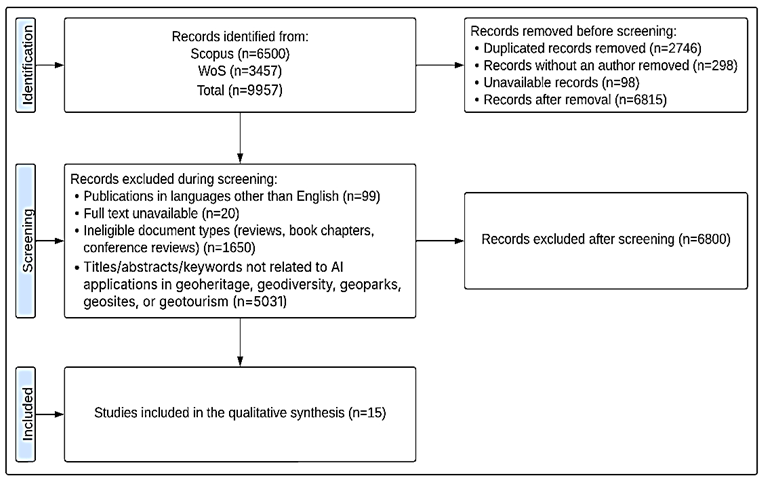
Fig. 2: PRISMA flow diagram showing the identification, screening, eligibility assessment, and inclusion process
Time and productivity trends
Fig. 3 depicts the chronological trajectory of publications investigating AI applications within sustainable tourism over the period spanning 1993 to 2026. During this period, the dataset comprised 6815 publications from 2861 scientific sources, indicating the consolidation of a broad, interdisciplinary body of knowledge. The annual growth rate of 20.36 percent (%) demonstrates the rapid expansion of this research field, while the average of 11.93 citations per document reflects its increasing scientific relevance and international visibility. Collectively, these metrics indicate that AI has evolved from a niche topic into a core research area driving innovation, sustainability, and data-informed destination management. The temporal evolution of scientific production reveals three developmental stages (Fig. 4). The initial stage (1993–2008) was characterized by limited scientific output, reflecting the early development of AI technologies and their restricted application within tourism research. During the intermediate stage (2009–2016), publication activity increased steadily alongside the widespread adoption of big data, cloud computing, and digital tourism platforms, which substantially expanded the availability of tourism-related data for analysis (Li et al., 2018; Xiang et al., 2015). Finally, since 2017, there has been a pronounced acceleration in both publications and citations, coinciding with major advances in ML, DL, and intelligent decision-support systems, as well as the consolidation of the smart tourism paradigm (Yu and Chen, 2022; Zhang et al., 2021). Furthermore, the Coronavirus-2019 (COVID-19) pandemic expedited tourism's digital transition by stimulating the adoption of AI tools for visitor management, service customization, operational resilience, and sustainability (Gretzel et al., 2020; Sigala, 2020). From a macro-level perspective, this evolution demonstrates that AI research has progressively shifted from technology-oriented applications towards integrated approaches centered on destination intelligence, sustainable governance, and evidence-based territorial management. This broader scientific context provides the foundation upon which more specialized fields, such as AI applications in geotourism, have recently begun to emerge. Future research priorities in smart geotourism were delineated through the analysis of emerging keywords, thematic progression, and citation-intensity patterns. The increasing prominence of generative AI, conversational AI, digital transformation, sustainability, and advanced geospatial analytics indicates a transition towards intelligent territorial governance, real-time destination management, and personalised geoheritage interpretation. These trends informed the future research agenda proposed in this study, including digital twins, explainable artificial intelligence (XAI), ethical AI governance, and integrated geospatial intelligence for geoheritage management. An analysis of the geographical distribution of scientific publications demonstrates the worldwide dissemination of AI research in sustainable tourism while revealing distinct regional disparities in academic leadership (Fig. 5). Asia dominates the field, accounting for approximately half of the top 10 most productive countries, with China (27.37%) and India (9.15%) leading. This leadership is likely associated with investments in AI research, rapid digital transformation, and the growing strategic importance of smart tourism initiatives across the region. Europe contributes nearly 40% of the leading countries, with Spain (4.68%) and the United Kingdom (3.55%) drive this leadership through research intersecting technological innovation, sustainability and destination governance. The United States (6.84%) represents the principal contributor from North America, remaining among the three most productive countries worldwide. The co-authorship network further reveals a highly interconnected international research community in which China and the United States function as central knowledge hubs, establishing strong collaborative links with European countries (such as the United Kingdom, Spain, and Italy) and Asian countries (including India, South Korea, and Malaysia) (Fig. 5a). These collaboration patterns indicate that advances in AI for sustainable tourism are driven by transnational research networks that integrate technological expertise, multidisciplinary knowledge, and diverse territorial contexts. At the-analytical level, this international scientific matrix provides the epistemological foundation that drives the incremental evolution of specialized applications, encompassing geoheritage conservation, rationalized spatial planning, and smart geotourism. The collaboration networks also facilitate the diffusion of AI innovations into geotourism by enabling knowledge transfer, methodological exchange, shared datasets, and joint technological development among tourism, geoscience, and information-technology researchers. Countries occupying central positions in the collaboration network act as innovation hubs that accelerate the dissemination of analytical tools, geospatial methods, and smart destination practices into geopark management, geoheritage interpretation, and territorial planning. These temporal and geographical patterns demonstrate the rapid consolidation of AI research in sustainable tourism; however, they do not explain how the field is intellectually organised. To address this objective, the following section investigates the conceptual framework and thematic trajectory of the extant literature utilizing bibliometric science mapping methodologies.
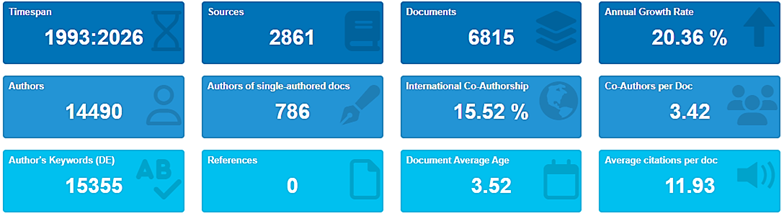
Fig. 3: Main bibliometric indicators of the dataset
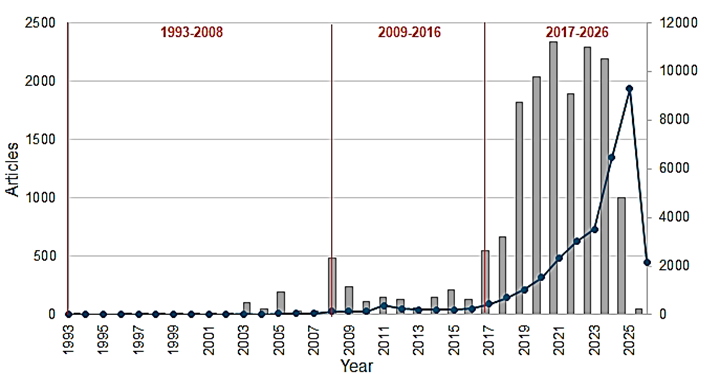
Fig. 4: Annual publication trends on AI applications in sustainable tourism
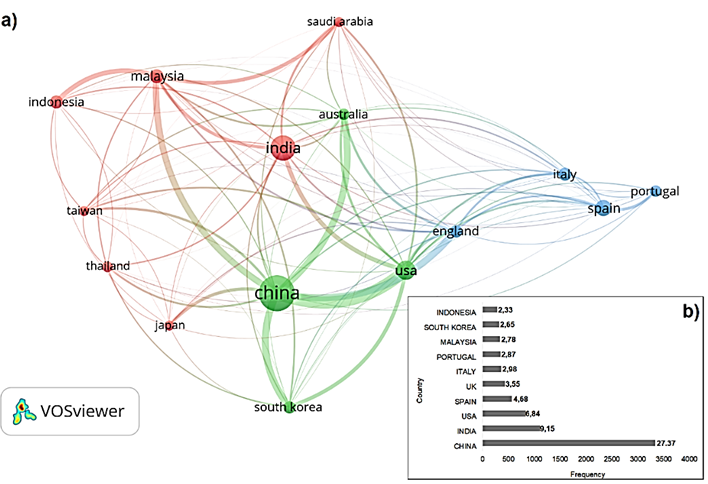
Fig. 5: International collaboration in AI research on sustainable tourism: (a) country co-authorship network generated with VOSviewer and (b) scientific output of the ten most productive countries
Thematic structure and evolutionary dynamics of the study
The macro-level bibliometric analysis reveals that AI research in sustainable tourism has evolved through the progressive integration of three complementary knowledge domains that constitute the scientific foundations of smart tourism. Instead of operating as isolated domains, these thematic areas highlight the synchronized development of technological advancements, analytical capabilities, and visitor-oriented applications, creating the necessary epistemological conditions for the adoption of AI within specialized niches such as geotourism (Fig. 6). The thematic clusters were identified using the VOSviewer modularity-based clustering algorithm and subsequently validated through qualitative consistency assessment. Validation considered the semantic coherence of keywords within each cluster, the strength of co-occurrence links, and the stability of the three-cluster structure under the selected normalization and counting settings. The pronounced demarcation separating technological infrastructure, analytical intelligence, and visitor-centered applications, reinforced by the dense network of internal keyword connections, validates the premise that these clusters reliably capture the primary intellectual domains of AI research in tourism sector. Cluster 1 (red) represents the strategic and technological infrastructure supporting the digital transformation of tourism. This cluster connects concepts such as digital transformation, sustainable tourism, smart tourism, big data, blockchain, IoT, and immersive technologies such as virtual reality (VR) and augmented reality (AR), indicating that research has progressively shifted from isolated technological innovations towards integrated destination ecosystems. Moreover, this thematic grouping highlights the ways in which advanced technological infrastructures increasingly reinforce territorial governance, long- term sustainability, and overall destination competitiveness. These developments provide the technological foundation upon which geoheritage destinations may later implement intelligent planning and management strategies. Cluster 2 (green) represents the analytical intelligence underpinning smart tourism. ML, DL, sentiment analysis, text mining, forecasting, and classification occupy central positions within the network, reflecting the growing importance of predictive analytics for understanding tourism dynamics. The presence of COVID-19 in this cluster illustrates how external disruptions accelerated the adoption of AI-based analytical approaches that support adaptive destination management and resilience. Thus, this grouping marks the critical progression from data proliferation to knowledge creation and empirical, evidence-based policy formulation. Cluster 3 (blue) reflects the evolution of AI towards human-centered tourism experiences. NLP, conversational agents, ChatGPT, generative AI, personalization, and hospitality demonstrate how recent research focuses on improving tourist interaction rather than merely automating operational processes. This evolution suggests that AI is serving as an interface between visitors and destinations, facilitating interpretation, communication, and personalised experiences that are particularly relevant to heritage-based tourism. The three clusters illustrate a broader scientific transition from technological development towards intelligent destination governance. The interaction between digital infrastructures, analytical capabilities, and visitor-oriented provisions reveals that smart tourism transcends its origins as a technological artifact, emerging instead as a holistic paradigm for territorial management. This macro-level evidence provides the conceptual rationale for examining how these AI capabilities are currently being adopted within the more specialized context of geotourism.
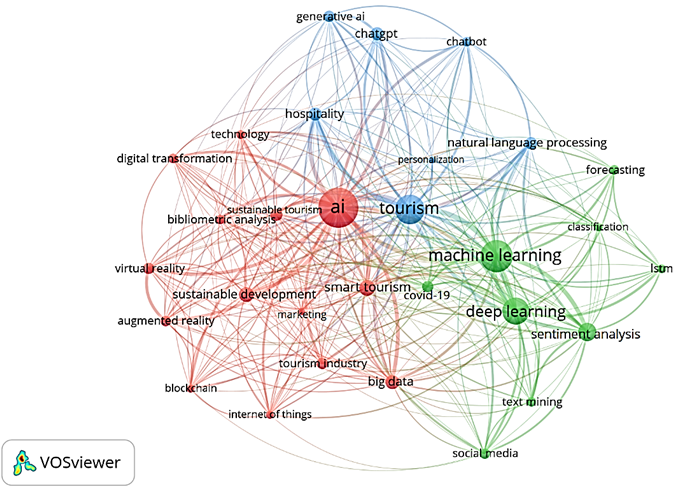
Fig. 6: Keyword co-occurrence network generated with VOSviewer showing the three main thematic clusters of AI research in sustainable tourism
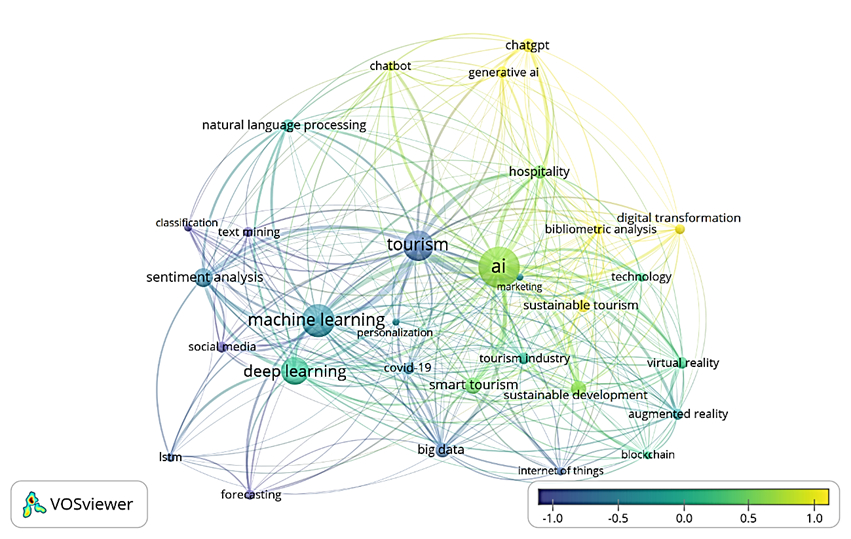
Fig. 7: Overlay visualization of author keywords showing the temporal evolution of AI research in sustainable tourism between 2022 and 2024
From a temporal perspective, the field's evolution shows a clear transition towards greater complexity and specialisation (Fig. 7). To minimize synonym variation and optimize conceptual consistency, keyword standardization procedures were executed prior to the construction of the network. Equivalent terms and spelling variants were merged using a thesaurus file in VOSviewer, including artificial intelligence/AI, machine learning/ML, deep learning/DL, and smart tourism/smart tourism destination. Singular–plural variants, hyphenation differences, and capitalisation inconsistencies were also standardized. The normalization procedure preserved the conceptual distinction between AI, ML, DL, and smart tourism while reducing redundant nodes and improving the interpretability of thematic relationships and temporal trends. The earliest phase (from -1.0 to -0.5) is characterized by data-oriented AI applications, in which research focused on exploiting digital information generated by tourism activities through techniques such as text mining, classification, forecasting, and social media analytics. The intermediate phase (0.0) reflects methodological consolidation, with ML and DL becoming central analytical approaches that generate predictive knowledge rather than descriptive information. The latest developmental phase (normalized from 0.5 to 1.0) highlights a pronounced evolution towards intelligent destination ecosystems, with digital transformation, sustainable tourism, generative AI, ChatGPT, and advanced conversational systems establishing themselves as primary research focal points. Rather than introducing isolated technologies, these topics indicate the convergence of AI, sustainability, and governance within smart tourism. This temporal evolution suggests that smart tourism is no longer defined solely by technological innovation but increasingly by the capacity to integrate AI into destination governance, sustainability, and visitor experience. Consequently, specialized tourism niches necessitating territorial intelligence, exemplified by geotourism—manifest as natural extensions of this overarching scientific progression, establishing the epistemological foundation for the micro-analytical investigation pursued hereafter. The temporal persistence analysis (Fig. 8) complements the previous findings by distinguishing between foundational concepts and emerging specialisations. Tourism and AI remain the structural pillars of the field. In contrast, ML, DL, sustainable development, and the tourism industry represent rapidly expanding research domains that have achieved notable structural consolidation in recent years. This pattern indicates that the scientific evolution of AI in tourism is characterized not only by the emergence of new technologies but also by their progressive integration into sustainability-oriented destination management. Furthermore, this trajectory highlights a progression from foundational terms to nuanced, localized concepts, thereby supporting the premise that the maturation of smart tourism and geotourism relies on the systematic convergence of advanced technological tools with strategic and sustainable methodologies. These macro-level trends demonstrate that the scientific community has progressively developed the technological and conceptual foundations required to transfer AI applications to specialized sustainability contexts. The following systematic review explores how these broader scientometric developments translate into geotourism practices through empirical implementations in geotourism through empirical applications in geoheritage interpretation, destination management, predictive modeling, and environmental surveillance.
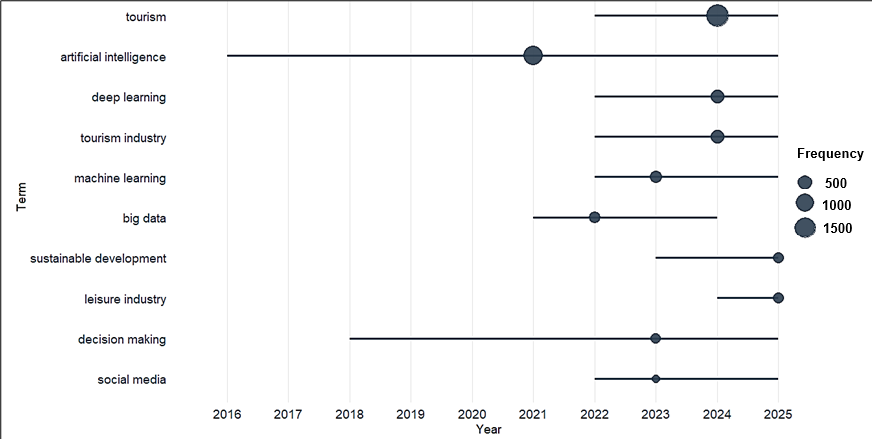
Fig. 8: Temporal evolution and persistence of the principal research topics in AI applied to sustainable tourism
Empirical AI applications in geotourism: functional typologies from the systematic review
Operating in tandem with the macro-level bibliometric analysis, this systematic review furnishes empirical validation of the deployment of AI in geotourism. Whereas the bibliometric evaluation highlights sustainable tourism as a broader scientometric framework, the chosen case analyses reveal how underlying technological proficiencies convert into applied mechanisms reinforcing geoheritage conservation, destination planning, visitor dynamics, and environmental management (Table 3). The reviewed studies illustrate the emerging transition from smart tourism towards smart geotourism through the integration of AI with destination governance, geoconservation, and place-based sustainability. Rather than representing isolated technological developments, the reviewed studies reveal a coherent functional evolution of AI applications. Across diverse geographic contexts, AI supports decision-making throughout the geotourism management cycle, from predictive analytics and territorial planning to heritage interpretation and environmental monitoring. This diverse functionality highlights that AI has increasingly shifted beyond its role as a decision-support utility, emerging instead as a foundational catalyst for intelligent territorial governance. The empirical evidence also highlights the increasing integration of heterogeneous data sources, including textual information, social media content, geospatial databases, satellite imagery, environmental indicators, three-dimensional models, and multimedia resources. Through the integration of these complementary datasets enables AI systems are capable of generating multi-dimensional territorial intelligence that collectively reinforces tourism planning, resource management, visitor interaction, and geoheritage conservation. Another consistent finding concerns the diversity of stakeholders involved in AI implementation. Destination managers, policymakers, geopark authorities, environmental agencies, researchers, educators, local communities, and tourists all appear as active users of AI-based systems. This multidimensional participation suggests that smart geotourism should be understood as the adoption of digital technologies and a governance model in which multiple actors interact through data-driven decision-making processes. Grounded in these insights, the synthesized corpus was structured into four key functional domains, delineating the core pathways by which AI drives smart geotourism.
Table 3: Empirical evidence on AI applications in geotourism synthesized into four functional domains supporting smart geotourism: (i) predictive analytics, (ii) smart destination management, (iii) geoheritage interpretation, and (iv) environmental monitoring and geoconservation.
|
S.N. |
Author |
Country |
AI Technology |
Application in tourism |
Resource type |
Application purpose |
Data types |
Target user |
|
Predictive analytics |
||||||||
|
1 |
India |
ML / Topic Modelling (BERTopic, NLP, BERT embeddings) |
Strategic planning |
Natural heritage / Geoheritage |
Identification and mapping of key sustainable tourism themes |
Textual |
Policymakers / Academics |
|
|
2 |
Italy |
ML/Space Clustering |
Tourism planning / Territorial analysis / Destination management |
Cultural heritage |
Identification of the likelihood of tourist attraction in museums |
Spatial and attraction variables |
Tourism planners and cultural managers |
|
|
Smart destination management |
||||||||
|
3 |
China |
ML/Big Data/Intelligent systems |
Destination Management |
Cultural heritage |
AI model promoting sustainable and smart heritage tourism |
Tourism, behavioral and management data |
Destination Managers / Tourism Planners |
|
|
4 |
India |
Smart technologies |
Tourism Management / Social Tourism |
Community / Cultural |
Smart tourism in the transformation of tourism volunteering |
Theoretical and descriptive information |
Local Communities / Volunteer Tourists / Managers |
|
|
Geoheritage interpretation |
||||||||
|
5 |
China |
ML / DL / ANN |
Tourism Planning / Sustainability Assessment |
World Heritage Sites |
ANN's role in sustainable tourism assessment |
Socioeconomic, environmental, and tourism-related factors |
Conservation organizations / Tourism planners |
|
|
6 |
China |
ML / NLP / Text mining |
Tourist Behavior Analysis |
Geopark / Geoheritage |
Analysis of tourist perceptions in geoparks |
Tourist reviews and digital platforms |
Geopark managers/Tourism marketers |
|
|
7 |
Türkiye |
Metaverse / VR / AR |
Heritage Interpretation / Digital Accessibility |
Geosite / Geoheritage / Geodiversity |
Use of metaverse technologies for the valuation of isolated geosites |
Multimedia, virtual environments, and 3D models |
Tourists, educators, and managers |
|
|
8 |
China |
ML / Data mining |
Tourist Experience Analysis / Perceptual Assessment |
Natural heritage / Geoheritage |
Quantification of the aesthetic value of karst landscapes |
Multimedia, reviews, and digital platforms |
Destination managers / Tourism planners |
|
|
9 |
- |
LLMs / NLP / Text Mining |
Tourist Perception Analysis / Sustainability Assessment |
Natural heritage / World Heritage |
Analysis of sustainability characteristics in natural heritage destinations |
Tourist reviews and big data |
Destination managers / Policymakers |
|
|
10 |
Spain |
HBIM |
Digital Conservation / Heritage Interpretation / Cultural Dissemination |
Cultural heritage |
Sustainable conservation of built heritage |
Point clouds, geospatial data, and 3D models |
Heritage managers / Researchers / Planners |
|
Environmental monitoring and geoconservation |
||||||||
|
11 |
Brazil |
ML / DL / MLP / ANN |
Tourism governance / Environmental management |
Geodiversity / Natural heritage |
Analysis and prediction of the relationship between biodiversity and tourism in sustainable governance contexts |
Ecological, tourism, and territorial indicators |
Policymakers / Environmental Managers |
|
|
12 |
China |
DL / CNN / Computer Vision |
Environmental monitoring / Destination management |
Geopark / Geoheritage / Geodiversity |
Monitoring landscape changes in a geopark for its sustainable management |
Satellite imagery, geospatial data, and time series |
Geopark Managers / Environmental Authorities |
|
|
13 |
Indonesia |
ML / DL / ANN |
Tourism planning / Development assessment / Territorial management |
Geopark / Geoheritage / Geodiversity |
Quantification of the geopark's contribution to the development of local communities |
Socioeconomic, territorial, and VDI indicators |
Policymakers / Geopark Managers |
|
|
14 |
China |
ML |
Tourism planning / Destination management / Territorial management |
Geoheritage / Geopark / Geotourism |
Analysis of geotourism resilience considering spatio-temporal dynamics |
Geographic, time series, and tourism indicators |
Policymakers / Destination Managers |
|
|
15 |
Morocco |
ML |
Geotourism planning / Territorial assessment / Resource management |
Geosite / Geoheritage / Geodiversity |
Identification and classification of geosites with potential for geotourism development |
Geomorphological, Geographic information system (GIS), and environmental criteria |
Land Planners / Tourism Managers |
|
Note: Fourteen of the fifteen studies synthesized in Table 3 are empirical studies based on observed or measured data, whereas one study is conceptual (Kumar, 2025). BERT: Bidirectional Encoder Representations from Transformers, ANN: Artificial Neural Network, LLMs: Large Language Models, HBIM: Heritage Building Information Modelling, MLP: Multilayer Perceptron, CNN: Convolutional Neural Network, VDI: Village Development Index and GIS.
These four functional domains illustrate the progressive operationaliZation of AI within geotourism. Predictive analytics supports anticipatory planning and decision-making; smart destination management strengthens governance and territorial coordination; geoheritage interpretation enhances visitor engagement through intelligent digital experiences; and environmental monitoring reinforces geoconservation through continuous assessment of landscape dynamics. These distinct domains illustrate that the emergence of smart geotourism is predicated on embedding complementary AI functionalities into sustainable destination management paradigms. The reviewed studies also reveal clear technological patterns. Predictive analytics is mainly supported by ML algorithms such as random forests, support vector machines, and neural networks. In contrast, image recognition and automated geosite detection are more closely associated with DL and computer vision, particularly CNNs. Geospatial modelling is significantly enhanced by coupling ML with GIS and spatial statistics, whereas environmental monitoring commonly leverages DL techniques applied to temporal sequences of remote sensing time series. NLP, LLMs, recommender systems, and immersive AI platforms increasingly support geoheritage interpretation and visitor interaction. ML and geospatial AI improve geoheritage assessment by integrating geomorphological, geological, topographic, environmental, and tourism variables within predictive spatial models (Sousa et al., 2024). Through these approaches, automated geosite identification is achieved alongside the hierarchical categorization of geoheritage resources relative to their scientific and touristic utility, as well as multi-faceted vulnerability evaluations accounting for erosion, anthropogenic land-use modification, climate vulnerability, accessibility constraints, and visitor intensity. The evidence further highlights opportunities for integrating remote sensing, unmanned aerial vehicles (UAVs), light detection and ranging (LiDAR), GIS, and AI into smart geotourism management systems. Satellite imagery provides continuous regional monitoring (Bhattacharjee et al., 2026), UAVs enable high-resolution local observation (Williams et al., 2025), LiDAR supports detailed terrain modelling (Sahahiri et al., 2026), GIS integrates spatial information (Sahahiri, 2025), and AI supports automated classification, change detection, risk assessment, and scenario simulation (Tang, 2025). Thus, the deployment of integrated geospatial intelligence platforms serves to bolster environmental surveillance, visitor management, carrying-capacity evaluation, early hazard detection, and adaptive conservation planning. Moreover, AI contributes to real-time environmental tracking in vulnerable tourist destinations by integrating diverse observational inputs—such as sensor arrays, mobile tracking data, UAV observations, remote sensing temporal series, and comprehensive environmental monitoring systems. ML models can identify crowding hotspots, detect early signs of erosion or vegetation degradation, and support dynamic carrying-capacity assessment (Xiong et al., 2026). In hazard-prone areas, AI-based change detection and forecasting can assist in monitoring landslides, rockfalls, flooding, and geomorphological instability (Bera et al., 2025). Effective, large-scale implementation requires the establishment of interoperable geospatial infrastructures combining GIS, remote sensing repositories, environmental sensor networks, tourism databases, and cultural heritage inventories. Open geospatial standards, interoperable metadata protocols, common spatial reference systems, and standardized geoheritage taxonomies constitute fundamental prerequisites for effective data sharing across institutional and destination boundaries (da Silva Mano et al., 2024). Cloud-based spatial infrastructures can facilitate multi-source integration and collaborative territorial management (Zhidebayeva et al., 2025). Emerging opportunities also include integration with Digital Twins, AR, VR, and immersive geospatial visualization platforms. Digital Twins can simulate visitor flows and conservation scenarios in real time (Durden, 2025), while AR and VR can enhance geoheritage interpretation, accessibility, and virtual access to fragile geosites (Vandelli et al., 2024). When synthesized with AI-enabled personalization and advanced geospatial visualization, these systems serve to augment visitor education and risk mitigation awareness, thereby bolstering both destination management and conservation planning initiatives. Their adoption, however, remains uneven across regions due to differences in technological maturity, governance capacity, environmental priorities, and territorial conditions.
Regional comparative assessment of sustainability and tourism intelligence in geotourism
Fig. 9 provides a comparative assessment of the fifteen empirical case studies according to three complementary dimensions that underpin the smart geotourism framework proposed in this study: geoconservation, smart tourism integration, and sustainability. As depicted in Fig. 6, different geographical settings combine these structural dimensions to advance AI-driven geotourism, exposing a multiplicity of pathways towards smart geotourism. Asia represents the largest body of empirical evidence and exhibits the greatest variability across the three dimensions. Several studies demonstrate high levels of smart tourism integration, supported by advanced AI techniques such as ML, DL, computer vision, and large-scale spatial analytics. At the same time, the empirical cases highlight considerable divergence concerning the degree to which geoconservation priorities and broader sustainability outcomes parallel technological advancements. This diversity suggests that Asian research is characterized by rapid technological experimentation while simultaneously exploring different governance models for integrating AI into geoheritage management. European studies present a comparatively more balanced profile. Despite the limited corpus of empirical cases identified, these instances consistently align advanced technologies with the core objectives of heritage conservation and sustainability objectives. European research tends to position AI as a decision-support tool within integrated territorial governance, reinforcing the relationship between destination intelligence, heritage interpretation, and sustainable planning. North American evidence is characterized by strong smart tourism integration combined with moderate levels of geoconservation and sustainability. Empirical findings reveal that the investigated instances predominantly utilize AI to advance destination intelligence and administrative efficiency, thereby suggesting a management-driven approach where technological adoption outpaces broader environmental integration. In contrast, Latin American and African case studies demonstrate a more balanced interaction among the three analytical dimensions. Although the technological sophistication of AI applications is generally lower than in Asia, these studies consistently link AI to local territorial planning, environmental conservation, and community-oriented sustainability. Consequently, these observations implies that smart geotourism is forged not solely through technological evolution, but fundamentally through the deepened integration of territorial governance and conservation mandates. Overall, the regional comparison demonstrates that smart geotourism does not follow a single developmental trajectory. Instead, destinations combine AI, sustainability, and geoconservation across different territorial contexts, with varying governance capacities and levels of technological maturity. Consequently, these findings validate that the evolution of smart geotourism is governed less by the standalone adoption of advanced AI capabilities than by their functional efficacy in underpinning integrated destination intelligence, evidence-based territorial planning, and long-term geoheritage conservation.
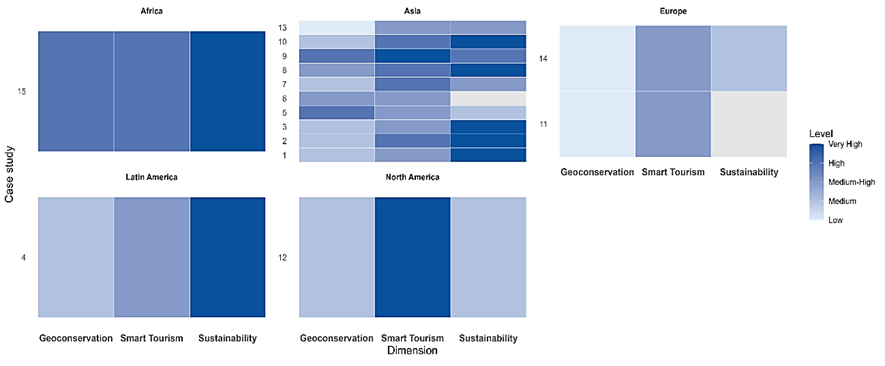
Fig. 9: Regional implementation patterns of the smart geotourism framework based on geoconservation, smart tourism integration, and sustainability
The integration of bibliometric analysis and systematic review provides a multi-scale interpretation of the evolution of AI in tourism. The results indicate a transition from isolated digital applications towards a scientific system in which analytical intelligence, territorial governance, and sustainability increasingly converge. This evolution provides the conceptual basis for understanding smart geotourism as a specialized extension of the smart tourism paradigm. In this perspective, smart geotourism emerges within this framework as a complex socio-technical system driven by the ongoing, reciprocal feedback loops connecting technological innovation, environmental stewardship, tourist behavior, and regional progression (Zheng et al., 2025). AI-based monitoring and analytics inform management decisions, while visitor responses generate new behavioral and spatial information that supports adaptive territorial management (Gacu et al., 2025). Bibliometric evidence shows that the rapid growth of scientific production reflects a structural transformation of the field rather than merely an increase in publications. The temporal evolution of publications (Fig. 4), the consolidation of international collaboration networks (Fig. 5), and the progressive thematic maturation demonstrate that AI has become a central component of destination intelligence. This trajectory corresponds with the transition from digitization to data-driven smart tourism ecosystems highlighted by recent studies (Gajdošík and Marciš, 2025; Mondol et al., 2026). Furthermore, the findings of this analysis reveal that these developments constitute the empirical and theoretical bedrock for novel geoheritage-oriented applications. Co-occurrence analysis reveals three complementary domains (Fig. 6), digital infrastructures, analytical intelligence, and visitor-centered services, which together illustrate the progressive integration of AI within smart tourism systems. This pattern supports previous research on AI-based destination planning (Ku and Chen, 2024; Wang et al., 2025) and suggests that smart tourism is increasingly incorporating territorial conservation and geoheritage management objectives (Ferdowsi, 2025). The substantial contributions spanning tourism studies, computer science, geosciences, geography, environmental sciences, remote sensing, GIS, and sustainability studies clearly validate the inherently multidisciplinary paradigm of the field. The temporal evolution of keywords indicates a transition from data-processing-oriented research towards themes such as digital transformation (Fig. 7), generative AI, and sustainability, suggesting that AI is being embedded within broader territorial governance frameworks. Thus, smart tourism is evolving beyond a technology-centric efficiency paradigm, reorienting instead toward destination intelligence, adaptive planning, and sustainability, a trajectory consistent with contemporary frameworks of resilient tourism and smart governance (Gómez Rodríguez, 2025; Song and Chen, 2025). Comparison with previous reviews highlights an important gap between AI-oriented tourism research and geotourism research. AI reviews mainly focus on visitor analytics, recommendation systems, and smart destination management (Bingöl and Yang, 2025; Panigrahy and Verma, 2025), whereas geotourism reviews emphasise geoheritage assessment, conservation, education, and territorial development (Reynard and Brilha, 2025). The reviewed empirical studies indicate that these research traditions remain only partially connected. Moreover, while increasingly sophisticated AI applications tend to concentrate on destination intelligence and visitor management, concrete evidence demonstrating their direct impact on measurable geoheritage conservation outcomes remains limited (Bingöl and Yang, 2025; Tuo et al., 2025). In contrast, several Latin American and African studies demonstrate stronger integration between territorial planning and conservation despite using less advanced AI techniques (Córdoba Azcárate, 2025), suggesting that governance capacity may be as important as technological maturity. This study fundamentally contributes by coupling macro-level bibliometric evidence with micro-level data within the domains of geoheritage and geotourism. This combined approach facilitates the extraction of four recurring functional categories: predictive analytics, smart destination management, geoheritage interpretation, and environmental monitoring, which collectively underpin the proposed smart geotourism framework (Table 3). Although the empirical sample is limited to fifteen studies, the diversity of territorial contexts, governance arrangements, heritage types, and AI techniques strengthens the robustness of these recurring patterns. Synthesizing the reviewed findings, AI underpins evidence-based territorial planning by interconnecting four core processes: data acquisition, spatial intelligence, decision support, and adaptive management (Hao et al., 2024). By integrating geospatial, environmental, tourism, and behavioral data, AI can generate predictive models, suitability assessments, risk maps, carrying-capacity indicators, and alternative planning scenarios that support conservation prioritization, visitor management, and monitoring of landscape change (Kim et al., 2026). Reported conservation outcomes involve more efficient tracking of landscape alterations, the precise identification of at-risk geosites, the systematic prioritization of remedial measures, and the reinforcement of adaptive management frameworks within geoparks and protected geological regions. Predictive models can also identify emerging threats associated with erosion, climate change, uncontrolled tourism, and land-use transformation (Goyal et al., 2025), while AI-based decision-support systems can help balance tourism development with conservation objectives (Vujko et al., 2025). Sustainability considerations across the reviewed studies encompass environmental, social, economic, cultural, and governance dimensions, including landscape conservation, community participation, tourism development, heritage interpretation, and institutional coordination. The available data imply that the successful implementation of smart geotourism relies on complex, multi-level governance structures comprising UNESCO Global Geoparks, environmental authorities, tourism bureaus, planning agencies, research bodies, and host communities (Xanthakis et al., 2024). AI-enabled decision-support systems can facilitate collaboration among these stakeholders through shared geospatial planning platforms. At the same time, responsible AI adoption requires data governance, interoperability standards, ethical guidelines, and community participation mechanisms. Regional disparities in AI adoption are associated with differences in institutional capacity, investment, digital infrastructure, geospatial data availability, technical expertise, and education (Fig. 9). Consistent with antecedent literature highlighting the mediating influence of institutional frameworks on smart technology adoption and territorial innovation, these patterns reinforce the significance of local governance contexts (Frenzel et al., 2022; Reverte and Luque, 2021). Asian cases generally reflect stronger technological ecosystems, whereas several Latin American and African studies demonstrate that effective smart geotourism can emerge through stronger integration between conservation objectives, governance arrangements, and community participation. Thus, successful execution seems governed less by standalone technologies than by the strategic synthesis of AI applications with clear institutional governance and conservation-driven planning (Güngör et al., 2026). Persistent barriers include data ownership restrictions, limited interoperability, fragmented institutional responsibilities, insufficient financing, and weak technological governance frameworks. Recent technological developments indicate that smart geotourism is entering a new phase. Generative AI and LLMs are increasingly used for multilingual geoheritage interpretation, conversational visitor assistance, educational content generation, and personalised storytelling (Mah, 2025), while Digital Twins offer opportunities for real-time simulation of visitor flows and conservation scenarios (Florido-Benítez, 2024). Simultaneously, these technological strides present profound governance complexities associated with transparency, interpretability, data privacy, algorithmic equity, accountability, and civic engagement (Ma et al., 2026). The limited attention to responsible AI governance in the reviewed studies highlights a significant research gap. Overall, the findings support the interpretation of AI not merely as a tourism technology but as a strategic enabler of territorial intelligence. Consequently, smart geotourism emerges as an integrative paradigm uniting AI, territorial governance, geoconservation, and sustainability under the umbrella of a unified destination management system. Future studies should prioritize operational indicators, longitudinal validation, comparative destination studies, ethical governance frameworks, and interdisciplinary integration among AI, geoscience, tourism management, spatial planning, environmental governance, and sustainability science.
Limitations of the study
This study presents some limitations that should be considered for the correct interpretation of the results: i) the bibliometric search was conducted in Scopus and WoS without language restrictions; however, the systematic review was restricted to English-language publications. Thus, relevant literature published across diverse linguistic contexts, regional outlets, or grey literature repositories could be inadvertently overlooked, potentially imparting geographical and intellectual skewness to the aggregation of empirical data. ii) the systematic review identified fifteen empirical case studies explicitly applying AI within geoheritage and geotourism contexts. This limited number reflects the emerging nature of smart geotourism and the current scarcity of empirically documented applications. Nevertheless, the selected studies were intentionally retained because they represent diverse geographical regions, territorial settings, and AI application domains. Additionally, given that a formal methodological quality appraisal tool was omitted from the study selection process, the present synthesis captures the existing empirical literature without quantitative adjustment for individual study rigor. (iii) the regional comparative assessment relied on qualitative interpretation of the relationships among geoconservation, sustainability, and smart tourism integration. Although the comparative framework enabled systematic interpretation across heterogeneous studies, differences in methodologies, AI techniques, geographical contexts, and evaluation criteria limited the possibility of quantitative meta-analysis. The proposed smart geotourism framework remains conceptual and has not yet been empirically validated through expert assessment, pilot implementation, or comparative case-study testing. Thus, rather than functioning as a verified operational model, its pragmatic value lies in serving as a structured planning and governance reference drawn from the synthesis of current empirical findings. Future research should validate and operationalise the framework through Delphi studies, longitudinal assessments, comparative case studies, and the development of standardized performance indicators.
Political implications
The findings have important implications for tourism governance and territorial planning. Public policies should integrate AI into broader strategies linking destination intelligence, geoheritage conservation, and sustainable territorial development. As evidenced by the regional comparison, standalone technological advancements fall short of achieving smart geotourism; rather, effective implementation is contingent upon institutional readiness, interdisciplinary synergy, equitable geospatial data stewardship, and comprehensive planning systems capable of unifying tourism, environmental tracking, and cultural heritage management. To improve the operational value of the smart geotourism framework, the following stakeholder-specific recommendations are proposed:
§ For policymakers, priorities include establishing national and regional smart geotourism strategies, promoting open geospatial data infrastructures, strengthening local AI capabilities, and adopting ethical and transparent governance frameworks.
§ Geopark managers and conservation authorities should prioritize AI-supported visitor monitoring, carrying-capacity assessment, digital interpretation, environmental monitoring, and interoperable geospatial databases that support adaptive geoheritage management.
§ Tourism planners should incorporate predictive analytics, mobility modelling, and geospatial decision-support tools into destination planning and conservation-sensitive zoning.
Policy priorities should be adapted to regional conditions. Developing regions require investment in digital infrastructure, access to geospatial data, technical training, and institutional strengthening for AI-enabled territorial governance. Consequently, in advanced technological contexts, policy frameworks should increasingly incorporate geoconservation objectives into smart tourism strategies, ensuring that digital and technical innovations serve directly to safeguard geological heritage over the long term. Overall, the proposed smart geotourism framework provides a practical governance reference for coordinating AI, destination management, sustainability, and territorial planning, supporting a transition from technology-driven tourism towards evidence-based territorial management aligned with the SDGs.
CONCLUSION
This study demonstrates that research on AI in sustainable tourism has evolved from isolated technological applications towards a broader scientific paradigm centered on destination intelligence, sustainability, and evidence-based governance. The bibliometric analysis confirms the field's progressive maturation. Simultaneously, the findings of the systematic review reveal that AI applications in geotourism cluster primarily into four distinct functional domains: predictive analytics, smart destination management, geoheritage interpretation, and environmental monitoring and geoconservation. In addition, the synthesis reveals that AI integration across geotourism sectors is unevenly distributed geographically. Such adoption is fundamentally contingent upon a triad of factors: technological maturity, institutional capacity, and the embeddedness of sustainability and geoconservation into tourism planning. By integrating macro-level bibliometric evidence and micro-level empirical studies, the present study advances a smart geotourism framework designed to unify destination intelligence, spatial planning, geoheritage conservation, and sustainable tourism stewardship. This framework should be interpreted as a conceptual synthesis derived from the reviewed literature rather than as an empirically validated operational model. Accordingly, the study contributes to the emerging smart geotourism literature by offering an integrated analytical perspective that connects AI, territorial governance, and geoheritage management. Looking ahead, future inquiries must move beyond the current empirical boundaries to address operational implementation, ethical and trustworthy AI governance, and the interdisciplinary appraisal of smart geotourism frameworks. Further research should prioritize empirical validation of the framework through comparative case studies, longitudinal assessments, and the development of standardized indicators for destination intelligence, geoheritage conservation, governance capacity, and sustainability outcomes. Cutting-edge technological paradigms, encompassing as generative AI, digital twins, sophisticated geospatial analytics, XAI, and Earth observation systems, establish valuable avenues for operational validation in practical geotourism contexts. These directions should be interpreted as priorities for future research rather than as conclusions demonstrated by the present review.
AUTHOR CONTRIBUTIONS
T. Aguirre-Suárez contributed to the conceptualisation, formal analysis, data curation, investigation, methodology, writing - original draft, writing - review and editing, project administration, software and validation. M. Pérez-Chiquito contributed to the conceptualisation, formal analysis, data curation, methodology, writing - original draft and writing - review and editing. H. Cochea-Tomalá contributed to the formal analysis, investigation, methodology, writing - original draft, writing - review and editing and project administration. P. Escandón-Panchana contributed to the conceptualisation, data curation, investigation, methodology, writing - original draft, writing - review and editing, project administration and software.
CONFLICT OF INTEREST
The authors declare that there is no conflict of interests regarding the publication of this manuscript. In addition, the ethical issues, including plagiarism, informed consent, misconduct, data fabrication and/or falsification, double publication and/or submission, and redundancy have been completely observed by the authors.
OPEN ACCESS
©2027 The author(s). This article is licensed under a Creative Commons Attribution 4.0 International License, which permits use, sharing, adaptation, distribution and reproduction in any medium or format, as long as you give appropriate credit to the original author(s) and the source, provide a link to the Creative Commons license, and indicate if changes were made. The images or other third-party material in this article are included in the article’s Creative Commons license, unless indicated otherwise in a credit line to the material. If material is not included in the article’s Creative Commons license and your intended use is not permitted by statutory regulation or exceeds the permitted use, you will need to obtain permission directly from the copyright holder. To view a copy of this license, visit: http://creativecommons.org/licenses/by/4.0/
PUBLISHER’S NOTE
GJESM Publisher remains neutral with regard to jurisdictional claims in published maps and institutional affiliations.
NEGATIVE AI STATEMENT
The author(s) declare that no AI tools or services were not used or not highly applied during the preparation of this work.
ABBREVIATIONS
|
% |
Percent |
|
AI |
Artificial intelligence |
|
ANN |
Artificial neural network |
|
AR |
Augmented reality |
|
BERT |
Bidirectional encoder representations from transformers |
|
CNN |
Convolutional neural network |
|
COVID-19 |
Corronavirus-2019 |
|
DL |
Deep learning |
|
DOIs |
Digital object identifiers |
|
e.g. |
Exempli gratia (for example) |
|
GIS |
Geographic information system |
|
HBIM |
Heritage building information modelling |
|
IoT |
Internet of Things |
|
LiDAR |
Light detection and ranging |
|
LLMs |
Large language models |
|
ML |
Machine learning |
|
MLP |
Multilayer perceptron |
|
NLP |
Natural language processing |
|
PRISMA |
Preferred reporting items for systematic reviews and meta-analyses |
|
RQ |
Research questions |
|
SDGs |
Sustainable development goals |
|
UAVs |
Unmanned aerial vehicles |
|
VDI |
Village development index |
|
VR |
Virtual reality |
|
WoS |
Web of Science |
|
XAI |
Explainable artificial intelligence |
REFERENCES
Alhaddar, M.; Kummitha, H., (2025). Digitalization and sustainable branding in tourism destinations from a systematic review perspective. Discover Sustainability. 6(1): 1167 (18 pages).
Ali, I.; Gölgeci, I., (2019). Where is supply chain resilience research heading? A systematic and co-occurrence analysis. Int. J. Phys. Distrib. Logist. Manage., 49(8): 793–815 (23 pages).
Aliyah, C.; Lukita, C.; Pangilinan, G.; Chakim, M.; Saputra, D., (2023). Examining the Impact of Artificial Intelligence and Internet of Things on Smart Tourism Destinations: A Comprehensive Study. Aptisi Trans. Technopreneurship (ATT), 5(2sp): 135–145 (11 pages).
Alves, P.; Martins, H.; Saraiva, P.; Carneiro, J.; Novais, P.; Marreiros, G., (2023). Group recommender systems for tourism: how does personality predict preferences for attractions, travel motivations, preferences and concerns? User Model User-Adap Inter., 33(5): 1141–1210 (70 pages).
Arruda, H.; Silva, E.; Lessa, M.; Proença J.; Bartholo, R., (2022). VOSviewer and Bibliometrix. J. Med. Lib. Assoc., 110(3): 392–395 (4 pages).
Baggio, R.; Del Chiappa, G., (2014). Real and virtual relationships in tourism digital ecosystems. Inf. Technol. Tourism. 14(1): 3–19 (17 pages).
Belu, M.; Marinoiu, A., (2025). AI-Enabled Supply Chain Management: A Bibliometric Analysis Using VOSviewer and RStudio Bibliometrix Software Tools. Sustainability, 17(5): 2092 (28 pages).
Benantar, H.; de Larriva, J.; Triviño-Tarradas, P., (2025). Scan to HBIM: A Pathway to Sustainable Divulgation of the Built Heritage. Adv. Mechanics, Design Eng. Manufactur., V. 917–930 (14 pages).
Bera, S.; Talukdar, S.; Nguyen, K.; Liou, Y.; Guru, B.; Chatterjee, R.; Ramana, G., (2025). Enhancing evacuation shelter suitability in compound hazard-prone regions with a Bayesian optimized convolutional neural network approach. Int. J. Disaster Risk Reduct., 119: 105306 (22 pages).
Bhattacharjee, T.; Sarkar, S.; De, D., (2026). FedGeoTour: Federated learning-based geostatistical approach to privacy-preserving mobile crowdsensing for sustainable tourism. Inf. Technol. Tourism, 28(1): 24 (34 pages).
Bingöl, S.; Yang, Y., (2025). Integrating smart technologies and artificial intelligence to build smart tourism destination ecosystems: A model for smart destination management. Tourism Manage. Perspect., 58: 101380 (12 pages).
Bozkurt, A.; Şeker, F., (2023). Harmonizing Heritage and Artificial Neural Networks: The Role of Sustainable Tourism in UNESCO World Heritage Sites. Sustainability. 15(17): 13031 (17 pages).
Bravo-Jaico, J.; Serquén, O.; Alarcón, R.; Suarez-Rivadeneira, J.; Ruiz-Camacho, W.; Manayay, F., (2026). Artificial intelligence for biodiversity and tourism governance: predictive insights from multilayer perceptron models in Amazonia. Front. Artif. Intell., 9:1-13 (13 pages).
Carrillo-Hernández, Y.; Ríos-Reyes, C.; Villarreal-Jaimes, C., (2024). Geotourism and Geoeducation: A Holistic Approach for Socioeconomic Development in Rural Areas of Los Santos Municipality, Santander, Colombia. Geoheritage. 16(4):94 (26 pages).
Chandler, B.; Lovell, H.; Boston, C.; Lukas, S.; Barr, I.; Benediktsson, Í.; Benn, D.; Clark, C.; Darvill, C.; Evans, D.; Ewertowski, M.; Loibl, D.; Margold, M.; Otto, J.; Roberts, D.; Stokes, C.; Storrar, R.; Stroeven, A., (2018). Glacial geomorphological mapping: A review of approaches and frameworks for best practice. Earth Sci. Rev., 185: 806–846 (41 pages).
Cheng, X.; Chen, Y.; Kim, S., (2025). A tourist review mining framework for the sustainability features of world natural heritage based on AI large models. Curr. Issues in Tourism. 28(11): 1701–1709 (8 pages).
Córdoba Azcárate, M., (2025). Tourism, space, and place: bridging past, present and future research. Tourism Geographies, 27(3–4): 735–755 (21 pages).
Correia, A.; Kozak, M., (2022). Past, present and future: trends in tourism research. Curr. Issues in Tourism. 25(6): 995–1010 (15 pages).
da Silva Mano, A.; Silva, B.; Mocho, P.; Ortega, F., (2024). Location-Based Management of Paleontological Collections using Open Source GIS Software. Geoheritage, 16(2): 38 (16 pages).
Das, P.; Mandal, S.; Nedungadi, P.; Raman, R., (2025). Unveiling sustainable tourism themes with machine learning based topic modeling. Discover Sustainability. 6(1): 280 (28 pages).
Distefano, V.; De Iaco, S.; Maggio, S., (2025). Improving spatial clustering through a weight system on multilevel permanent museum attraction probability. Qual. Quant., 59(2): 1059–1088 (30 pages).
Doborjeh, Z.; Hemmington, N.; Doborjeh, M.; Kasabov, N., (2022). Artificial intelligence: a systematic review of methods and applications in hospitality and tourism. Int. J. Contemp. Hospitality Manage., 34(3): 1154–1176 (23 pages).
Drinia, H.; Voudouris, P.; Antonarakou, A., (2023). Geoheritage and Geotourism Resources: Education, Recreation, Sustainability II. Geosci., 13(11): 350 (7 pages).
Durden, J., (2025). Environmental management using a digital twin. Environ. Sci. Policy , 164: 104018 (9 pages).
El Archi, Y.; Benbba, B.; Nizamatdinova, Z.; Issakov, Y.; Vargáné, G.; Dávid, L., (2023). Systematic Literature Review Analysing Smart Tourism Destinations in Context of Sustainable Development: Current Applications and Future Directions. Sustainability, 15(6); 5086 (14 pages).
Escandón-Panchana, P.; Herrera-Franco, G.; Jaya-Montalvo, M.; Martínez-Cuevas, S., (2024). Geomatic tools used in the management of agricultural activities: a systematic review. Environ. Dev. Sustainability. 27(7): 15275–15309 (35 pages).
Esengulova, N.; Lopolito, A.; Pazienza, P.; Lucia, C., (2026). The UNESCO Global Geopark model for sustainable development in marginalised areas: Investigating perceptions and social acceptance in a local context. Land Use Policy, 168: 108090 (14 pages).
Espinel, R.; Herrera-Franco, G.; Rivadeneira García, J.; Escandón-Panchana, P., (2024). Artificial Intelligence in Agricultural Mapping: A Review. Agric., 14(7): 1071 (36 pages).
Ferdowsi, S., (2025). Management of geoheritage conservation and vulnerability in tourism destinations. Tourism Rev., 80(2): 601–623 (23 pages).
Ferdowsi, S.; Németh, K., (2026). Geoparks Management in Tourism Destinations: Integrating Development and Conservation. Sustainable Dev., 34(S2): 1034–1056 (23 pages).
Ferdowsi, S.; Tavana, M.; Heydari, R.; Štrba, Ľ., (2025). Geoeducation: the key to geoheritage conservation in tourism destinations. Int. Geol. Rev., 67(13): 1674–1696 (23 pages).
Flórez, M.; Becerra, O.; Carrillo, E.; Villa, M.; Álvarez, Y.; Suárez, J.; Mendes, F., (2024). Deep Learning Application for Biodiversity Conservation and Educational Tourism in Natural Reserves. ISPRS Int. J. Geo-Inf., 13(10): 358 (20 pages).
Florido-Benítez, L., (2024). The Use of Digital Twins to Address Smart Tourist Destinations’ Future Challenges. Platforms, 2(4): 234–254 (21 pages).
Florido-Benítez, L.; del Alcázar Martínez, B., (2024). How Artificial Intelligence (AI) Is Powering New Tourism Marketing and the Future Agenda for Smart Tourist Destinations. Electron., 13(21): 4151 (20 pages).
Frenzel, F.; Giddy, J.; Frisch, T., (2022). Digital technology, tourism and geographies of inequality. Tourism Geographies. 24(6–7): 923–933 (11 pages).
Gacu, J.; Monjardin, C.; Mangulabnan, R.; Pugat, G.; Solmerin, J., (2025). Artificial Intelligence (AI) in Surface Water Management: A Comprehensive Review of Methods, Applications, and Challenges. Water, 17(11): 1707 (27 pages).
Gajdošík, T.; Marciš, M., (2025). Data-Driven Practices in European Smart Tourism Destinations: Towards a Tourism Data Space. Information and Communication Technologies in Tourism 2025. ENTER 2025. Springer. 39–49 (11 pages).
García-Madurga, M.; Grilló-Méndez, A., (2023). Artificial Intelligence in the Tourism Industry: An Overview of Reviews. Admin. Sci., 13(8): 172 (22 pages).
Gómez Rodríguez, D., (2025). The convergence between artificial intelligence and tourism: perspectives for sustainable development and operational efficiency. Investigación, Tecnología e Innovación. 17(23): 125–136 (13 pages).
Goyal, N.; Dandotiya, M.; Qurashi, J.; Kumari, M.; Sharma, S., (2025). AI-Driven Predictive Analytics for Disease Management. IGI Global Sci. Publishing, 231–276 (46 pages).
Gretzel, U.; Fuchs, M.; Baggio, R.; Hoepken, W.; Law, R.; Neidhardt, J.; Pesonen, J.; Zanker, M.; Xiang, Z., (2020). e-Tourism beyond COVID-19: a call for transformative research. Inf. Technol. Tourism, 22(2): 187–203 (17 pages).
Gretzel, U.; Sigala, M.; Xiang, Z.; Koo, C., (2015). Smart tourism: foundations and developments. Electron. Mark., 25(3): 179–188 (10 pages).
Güngör, Y.; Zülfikar, R.; Zülfikar, Z.; Bakırcıoğlu, N.; Güngör, A.; Azaz, D.; Işık, O.; Turan, A., (2026). Proposal for Transitioning From Traditional Tourism to Geotourism: İnceğiz Caves (Çatalca/Istanbul/Turkey). Geoheritage, 18(3): 151 (23 pages).
Gupta, N.; Chakravarty, R., (2021). Research visualization of Indian LIS research using VOSviewer and Bibliometrix. Lib. Hi Tech News, 38(8): 6–8 (3 pages).
Gupta, V.; Anand, S.; Wei, D.; Wang, G.; Tripathi, S., (2024). Exploring applied sustainable strategies through geoheritage and geotourism: A systematic literature review. Int. J. Geoheritage Parks, 12(4): 660–677 (18 pages).
Hall, C., (2019). Constructing sustainable tourism development: The 2030 agenda and the managerial ecology of sustainable tourism. J. Sustainable Tourism. 27(7): 1044–1060 (17 pages).
Hao, H.; Wang, Y.; Chen, J., (2024). Empowering Scenario Planning with Artificial Intelligence: A Perspective on Building Smart and Resilient Cities. Eng., 43: 272–283 (12 pages).
Henriques, R.; Cayla, N.; Santos, I.; Martin, S.; Mariano, G., (2025). Digital technologies for geovisualization and AI-powered geointerpretation applied to geoheritage management. In Geoheritage, Elsevier, 457–478 (22 pages).
Hu, M.; Li, H.; Song, H.; Li, X.; Law, R., (2022). Tourism demand forecasting using tourist-generated online review data. Tourism Manage., 90: 104490 (19 pages).
Jabeen, F.; Al Zaidi, S.; Al Dhaheri, M., (2022). Automation and artificial intelligence in hospitality and tourism. Tourism Rev., 77(4): 1043–1061 (19 pages).
Karadayı, Z.; Yaşar, C.; Çalık, A.; Ulugergerli, E., (2026). Metaverse Technologies for Accessing Isolated Geosites: A Digital Bridge for Immersive Geotourism. Geoheritage. 18(1): 36 (11 pages).
Khater, M.; Ibrahim, O.; Sayed, M.; Faik, M., (2025). Legal frameworks for sustainable tourism: balancing environmental conservation and economic development. Curr. Issues Tourism, 28(22): 3693–3714 (22 pages).
Kim, J.; Jang, S.; Gretzel, U.; Koo, C., (2026). Special issue on “Smart tourism 2.0: Perspectives with geospatial data and AI.” Electron. Mark., 36(1): 3 (5 pages).
Kirtil, I.; Aşkun, V., (2021). Artificial Intelligence in Tourism: A Review and Bibliometrics Research. Adv. Hospitality Tourism Res., 9(1): 205–233 (29 pages).
Knani, M.; Echchakoui, S.; Ladhari, R., (2022). Artificial intelligence in tourism and hospitality: Bibliometric analysis and research agenda. Int. J. Hospitality Manage., 107: 103317 (15 pages).
Koo, C.; Shin, S.; Gretzel, U.; Xiang, Z., (2025a). AI-powered smart tourism 2.0: A 10-year retrospective and updated model. Electron. Mark., 35(1): 108 (17 pages).
Koo, I.; Zaman, U.; Ha, H.; Nawaz, S., (2025b). Assessing the interplay of trust dynamics, personalization, ethical AI practices, and tourist behavior in the adoption of AI-driven smart tourism technologies. J. Open Innovation: Technol., Mark., Complexity, 11(1): 100455 (10 pages).
Ku, E.; Chen, C., (2024). Artificial intelligence innovation of tourism businesses: From satisfied tourists to continued service usage intention. Int. J. Inf. Manage., 76: 102757 (15 pages).
Kubalíková, L.; Drápela, E.; Kirchner, K.; Bajer, A.; Balková, M.; Kuda, F., (2021). Urban geotourism development and geoconservation: Is it possible to find a balance? Environ. Sci. Policy, 121: 1–10 (10 pages).
Kumar, N. (2025). Smart Tourism and the Future of Volunteerism: Transforming India's Travel Landscape. In R. Coutinho, J. Fraiz, and B. Sousa (Eds.), Impacts of AI on International Volunteering, 209-230 (22 pages).
Laesser, C.; Reinhold, S.; Beritelli, P., (2025). The 2024 consensus on advances in destination management. J. Destination Mark. and Manage., 38: 101038 (13 pages).
Lew, A., (2014). Scale, change and resilience in community tourism planning. Tourism Geographies. 16(1): 14–22 (9 pages).
Li, D.; Du, P.; He, H., (2022). Artificial Intelligence‐Based Sustainable Development of Smart Heritage Tourism. Wireless Commun. Mobile Comput., 2022(1): 5441170 (13 pages).
Li, J.; Xu, L.; Tang, L.; Wang, S.; Li, L., (2018). Big data in tourism research: A literature review. Tourism Manage., 68: 301–323 (23 pages).
Lozano, S.; Calzada-Infante, L.; Adenso-Díaz, B.; García, S., (2019). Complex network analysis of keywords co-occurrence in the recent efficiency analysis literature. Scientometrics. 120(2): 609–629 (21 pages).
Luo, Y.; He, J.; Mou, Y.; Wang, J.; Liu, T., (2021). Exploring China’s 5A global geoparks through online tourism reviews: A mining model based on machine learning approach. Tourism Manage. Perspect., 37: 100769 (15 pages).
Ma, J., (2025). Demand forecasting of smart tourism integrating spatial metrology and deep learning. Sci. Rep., 15(1): 42646 (14 pages).
Ma, D.; Peng, S.; Lin, Z.; Zhu, J.; Pan, X.; Jiao, Y.; Zhu, Z.; Shi, S.; Cui, B.; Jin, R., (2026). Explainable artificial intelligence reveals heterogeneous erosion responses to extreme rainfall: A new framework for conservation prioritization. Int. J. Appl. Earth Obs. Geoinf., 147: 105181 (15 pages).
Madzík, P.; Falát, L.; Copuš, L.; Valeri, M., (2023). Digital transformation in tourism: bibliometric literature review based on machine learning approach. Eur. J. Innovation Manage., 26(7): 177–205 (29 pages).
Mah, P. M., (2025). Unlocking Cameroon’s geomaterials heritage via 3D AI-driven intelligence and NLP-based resource analysis. npj Heritage Sci., 13(1): 532 (22 pages).
Majid, G.; Tussyadiah, I.; Kim, Y.; Pal, A., (2023). Intelligent automation for sustainable tourism: a systematic review. J. Sustainable Tourism. 31(11): 2421–2440 (20 pages).
Martín-Martín, A.; Orduna-Malea, E.; Thelwall, M.; Delgado López-Cózar, E., (2018). Google Scholar, Web of Science, and Scopus: A systematic comparison of citations in 252 subject categories. J. Informetrics. 12(4): 1160–1177 (18 pages).
Mehraliyev, F.; Chan, I.; Choi, Y.; Koseoglu, M.; Law, R., (2020). A state-of-the-art review of smart tourism research. J. Travel Tourism Mark., 37(1): 78–91 (13 pages).
Mitha, S.; Omarsaib, M., (2025). Emerging technologies and higher education libraries: a bibliometric analysis of the global literature. Lib. Hi Tech, 43(2–3): 1248–1270 (23 pages).
Mondal, H., (2026). A Technical Note on Bibliometric Analysis by Biblioshiny and VOSviewer. Indian J. Radiol. Imaging, 36(02): 167–174 (8 pages).
Mondol, N.; Takee, M.; Ahad, A.; Joardar, S.; Hossain, S., (2026). Smart Tourism Technologies in the Industry 4.0 Era: A PRISMA-Based Systematic Review of Adoption, Implications, Outcome and Future Direction. J. Comput. Sci. Inf. Technol., 3(1): 43–69 (26 pages).
Mongeon, P.; Paul-Hus, A., (2016). The journal coverage of Web of Science and Scopus: a comparative analysis. Scientometrics. 106(1): 213–228 (15 pages).
Moral-Muñoz, J.; Herrera-Viedma, E.; Santisteban-Espejo, A.; Cobo, M., (2020). Software tools for conducting bibliometric analysis in science: An up-to-date review. El Profesional de La Información, 29(1): e290103 (20 pages).
Naciones Unidas, (2025). Objetivos y metas de desarrollo sostenible.
Naimi, L.; Manaouch, M.; Jakimi, A., (2024). Leveraging machine learning algorithms to identify potential geosites for geotourism promotion in ziz upper watershed in Southeastern Morocco. Geoj. Tourism Geosites. 57(4 supplement): 2041–2051 (11 pages).
Nannelli, M.; Capone, F.; Lazzeretti, L., (2023). Artificial intelligence in hospitality and tourism. State of the art and future research avenues. Eur. Plann. Stud., 31(7): 1325–1344 (20 pages).
Nugraha, R.; Fauzi, A.; Rustiadi, E.; Basuni, S., (2025). Quantifying the Geopark Contribution to the Village Development Index Using Machine Learning—A Deep Learning Approach: A Case Study in Gunung Sewu UNESCO Global Geopark, Indonesia. Sustainability. 17(15): 6707 (31 pages).
Núñez, J.; Gómez-Pulido, J.; Ramírez, R., (2024). Machine learning applied to tourism: A systematic review. WIREs Data Min. Knowl. Discovery. 14(5): e1549 (35 pages).
Omosanya, K.; Oludipe, V.; Lawal, R.; Lawal, T.; Mosuro, G.; Saka, H., (2026). Smart Geoheritage: Using Digital Technologies for Geoheritage Conservation and Sustainable Geotourism in Nigeria. Geoheritage, 18(2): 72 (21 pages).
Page, M.; Moher, D.; McKenzie, J., (2022). Introduction to PRISMA 2020 and implications for research synthesis methodologists. Res. Synth. Methods. 13(2): 156–163 (8 pages).
Panigrahy, A.; Verma, A., (2025). Tourist experiences: a systematic literature review of computer vision technologies in smart destination visits. J. Tourism Futures, 11(2): 187–202 (16 pages).
Parra-Sanchez, D.; Viviescas-Jaimes, P., (2024). Application of digital technologies in nature-based tourism: A scientometric analysis. J. Digital Econ., 3: 249–259 (11 pages).
Pham, T.; Dang, K.; Giang, T.; Hoang, T.; Le, V.; Ha, H., (2024). Deep learning models for monitoring landscape changes in a UNESCO Global Geopark. J. Environ. Manage., 354: 120497 (15 pages).
Pratama, J.; Rahmawati, Z.; Widyanto, A.; Gunawan, T.; Wan Abdullah, W.; Azua Jamari, N.; Hamzah, A.; Fansuri, H., (2024). Advancements in green diesel production for energy sustainability: a comprehensive bibliometric analysis. RSC Adv., 14(48): 36040–36062 (23 pages).
Quesada-Román, A.; Torres-Bernhard, L.; Ruiz-Álvarez, M.; Rodríguez-Maradiaga, M.; Velázquez-Espinoza, G.; Espinosa-Vega, C.; Toral, J.; Rodríguez-Bolaños, H., (2021). Geodiversity, Geoconservation, and Geotourism in Central America. Land. 11(1): 48 (16 pages).
Quesada-Valverde, M.; Quesada-Román, A., (2023). Worldwide Trends in Methods and Resources Promoting Geoconservation, Geotourism, and Geoheritage. Geosci., 13(2): 39 (12 pages).
Reynard, E.; Brilha, J., (2025). Geoheritage: a multidisciplinary and applied research topic. In Geoheritage, Elsevier. 3–12 (10 pages).
Reverte, F.; Luque, P., (2021). Digital Divide in E-Tourism. In: Xiang, Z., Fuchs, M., Gretzel, U., Höpken, W. (eds) Handbook of e-Tourism. Springer, Cham., 1-21 (22 pages).
Richards, G. (2021). Rethinking Cultural Tourism (Edward Elgar Publishing, Ed.), 1-161 (162 pages).
Rosado-González, E.; Lourenço, J.; Palacio-Prieto, J.; Sá, A., (2023). Collaborative mapping on sustainable development goals in Latin America UNESCO Global Geopark: A methodological discussion. Int. J. Geoheritage Parks, 11(2): 203–220 (18 pages).
Saarinen, J., (2013). Critical Sustainability: Setting the Limits to Growth and Responsibility in Tourism. Sustainability, 6(1): 1–17 (18 pages).
Sahahiri, R., (2025). Integrating smart technologies in ecotourism opportunities development. The Int. Arch. Photogramm., Remote Sens. Spatial Inf. Sci., XLVIII-G-2025, 1299–1307 (9 pages).
Sahahiri, R.; Alattas, A.; Fallatah, A.; Mandourah, A., (2026). Sustainable Tourist Walking Trails Development Using GIS and RS. Urban Sci., 10(4): 218 (22 pages).
Salgado-Jauregui, E.; Ellins, K.; Henry, D.; Gordon-Smith, D.; Martindale, R., (2025). A Participatory Decision-making Strategy for Geoconservation Implemented in Portland, Jamaica. Geoheritage. 17(4): 122 (20 pages).
Salvadeo, V.; Medina, W.; Cisterna, G., (2025). Geosites as Tourism Resources in the Laguna Brava Andean High Lagoon, a Ramsar Site from La Rioja, Argentina. Geoheritage, 17(2): 41 (17 pages).
Samara, D.; Magnisalis, I.; Peristeras, V., (2020). Artificial intelligence and big data in tourism: a systematic literature review. J. Hospitality Tourism Technol., 11(2): 343–367 (25 pages).
Sánchez‐Sánchez, A.; Ruiz‐Muñoz, D.; Sánchez‐Sánchez, F., (2026). Trends and Challenges of Sustainable Rural Tourism in the Face of Artificial Intelligence: A Bibliometric Analysis. Sustainable Dev., 34(1): 676–695 (20 pages).
Santos, V.; Sousa, M.; Costa, C.; Au-Yong-Oliveira, M., (2021). Tourism towards Sustainability and Innovation: A Systematic Literature Review. Sustainability. 13(20): 11440 (20 pages).
Saydam, M.; Arici, H.; Koseoglu, M., (2022). How does the tourism and hospitality industry use artificial intelligence? A review of empirical studies and future research agenda. J. Hospitality Mark. Manage., 31(8): 908–936 (27 pages).
Shahabi, H.; Jamini, D.; Shirzadi, A.; Sadeghi, H.; Komasi, H.; Elkhrachy, I.; Salvati, A.; Clague, J.; Ghaderi, Z., (2026). Spatiotemporal dynamics of geotourism resilience: Machine learning methodologies and key insights. Int. J. Geoheritage Parks., 14(1): 91–107 (17 pages).
Sheller, M.; Urry, J., (2006). The New Mobilities Paradigm. Environ. Plann. A: Econ. Space, 38(2): 207–226 (20 pages).
Sigala, M., (2020). Tourism and COVID-19: Impacts and implications for advancing and resetting industry and research. J. Bus. Res., 117: 312–321 (10 pages).
Silva, I.; Costa, V.; Malheiro, A., (2024). Sustainable Tourism: A Systematic Literature Review and Bibliometric Analysis. Eur. J. Tourism, Hospitality Recreat., 14(1): 127–139 (13 pages).
Solakis, K.; Katsoni, V.; Mahmoud, A.; Grigoriou, N., (2024). Factors affecting value co-creation through artificial intelligence in tourism: a general literature review. J. Tourism Futures, 10(1): 116–130 (15 pages).
Song, D.; Chen, H., (2025). Artificial Intelligence as a Catalyst for Sustainable Tourism: A Case Study from China. Syst., 13(5): 333 (20 pages).
Sousa, J.; Lin, J.; Wang, Q.; Liu, G.; Fan, J.; Bai, S.; Zhao, H.; Pan, H.; Wei, W.; Rittlinger, V.; Mayrhofer, P.; Sonnenschein, R.; Steger, S.; Reis, L., (2024). Using machine learning and satellite data from multiple sources to analyze mining, water management, and preservation of cultural heritage. Geo-spatial Inf. Sci., 27(3): 552–571 (20 pages).
Spyrou, E.; Maroukian, H.; Saitis, G.; Evelpidou, N.; Karkani, A., (2024). Promoting geo-education and geotourism through geosite assessment: A case study from Acheron-Parga, Epirus, Greece. Int. J. Geoheritage Parks. 12(2): 256–277 (22 pages).
Sunarti S.; Nuryana, M.; Wiryanto, W.; Aswin, A.; Permatasari, C.; Tjakraatmadja, J., (2024). Intervention strategy for sustainable waste management systems in developing countries using community of practice. Global J. Environ. Sci. Manage., 10: 323–348 (26 pages).
Tang, S., (2025). Monitoring geomorphological evolution and assessing conservation priorities of geoheritage sites using multi-temporal DEMs and deep learning. Geocarto Int., 40(1): 2602979 (19 pages).
Torre, A., (2025). Contribution to the theory of territorial development: a territorial innovations approach. Reg. Stud., 59(1): 2193218 (16 pages).
Tuo, Y.; Wu, J.; Zhao, J.; Si, X., (2025). Artificial intelligence in tourism: insights and future research agenda. Tourism Rev., 80(4): 793–812 (20 pages).
Vandelli, V.; Migoń, P.; Palmgren, Y.; Spyrou, E.; Saitis, G.; Andrikopoulou, M.; Coratza, P.; Medjkane, M.; Prieto, C.; Kalovrektis, K.; Lissak, C.; Papadopoulos, A.; Papastamatiou, N.; Evelpidou, N.; Maquaire, O.; Psycharis, S.; Stroeven, A.; Soldati, M., (2024). Towards Enhanced Understanding and Experience of Landforms, Geohazards, and Geoheritage through Virtual Reality Technologies in Education: Lessons from the GeoVT Project. Geosci., 14(5): 127 (21 pages).
Velastegui-Montoya, A.; Escandón-Panchana, P.; Peña-Villacreses, G.; Herrera-Franco, G., (2023). Land use/land cover of petroleum activities in the framework of sustainable development. Cleaner Eng. Technol., 15: 100659 (12 pages).
Vujko, A.; Karabašević, D.; Panić, A.; Arsić, M.; Mirčetić, V., (2025). AI Transparency and Sustainable Travel Under Climate Risk: A Geographical Perspective on Trust, Spatial Decision-Making, and Rural Destination Resilience. Sustainability, 17(24): 11200 (32 pages).
Wang, S.; Wang, Q.; Cui, Q.; Lan, T., (2025). Artificial Intelligence in Tourism: A Systematic Literature Review and Future Research Agenda. Sustainability. 17(20): 9080 (25 pages).
Williams, M.; Tronti, G.; Peruzzo, R.; García-Rodríguez, M.; Fazio, E.; Zucali, M.; Bollati, I., (2025). Geoscience popularisation in Geoparks: A common workflow for digital outcrop modelling. Comput. Geosci., 201: 105945 (15 pages).
Wu, W.; Xu, C.; Zhao, M.; Li, X.; Law, R., (2024). Digital Tourism and Smart Development: State-of-the-Art Review. Sustainability. 16(23): 10382 (19 pages).
Xanthakis, M.; Simatou, A.; Antonopoulos, N.; Kanavos, A.; Mylonas, N., (2024). Alternative Forms of Tourism: A Comparative Study of Website Effectiveness in Promoting UNESCO Global Geoparks and International Dark Sky Parks. Sustainability, 16(2): 864 (20 pages).
Xiang, Z.; Schwartz, Z.; Gerdes, J.; Uysal, M., (2015). What can big data and text analytics tell us about hotel guest experience and satisfaction? Int. J. Hospitality Manage., 44: 120–130 (11 pages).
Xiong, W.; Senathirajah, A.; Bin S.; Li, Y.; Yan, X.; Shui, Z.; Zhou, Y., (2026). GIS-based tourist flow prediction for smart scenic areas using multi-source data fusion and deep learning. Geoj., 91(4): 117 (22 pages).
Yu, N.; Chen, J., (2022). Design of Machine Learning Algorithm for Tourism Demand Prediction. Comput. Math. Methods Med., 2022: 1–9 (9 pages).
Zhang, H.; Huang, R.; Zhang, Y.; Buhalis, D., (2022). Cultural ecosystem services evaluation using geolocated social media data: a review. Tourism Geographies. 24(4–5): 646–668 (23 pages).
Zhang, Y.; Li, G.; Muskat, B.; Law, R., (2021). Tourism Demand Forecasting: A Decomposed Deep Learning Approach. J. Travel Res., 60(5): 981–997 (17 pages).
Zhao, X.; Xiong, K.; Zhang, M., (2025). Quantitative research on aesthetic value of the world heritage karst based on UGC data: A case study of Huangguoshu Scenic Area. PLoS One. 20(2): e0317304 (22 pages).
Zheng, X.; Lin, Y.; Cheng, X.; Ahn, Y.; Chi, X., (2025). An Investigation into the Formation of Tourists’ Pro-Environmental Behavior in Geotourism: Balancing Tourism and Ecosystem Preservation. Sustainability, 17(4): 1422 (23 pages).
Zhidebayeva, A.; Syrlybekkyzy, S.; Taizhanova, L.; Koibakova, S.; Altybaeva, Z.; Koishina, A.; Seidaliyeva, L.; Mkilima, T., (2025). Emerging frontiers in ecosystem and biodiversity monitoring using remote sensing and geographic information systems. Global J. Environ. Sci. Manage., 11(4): 1791–1818 (28 pages).
OPEN ACCESS
©2027 The author(s). This article is licensed under a Creative Commons Attribution 4.0 International License, which permits use, sharing, adaptation, distribution and reproduction in any medium or format, as long as you give appropriate credit to the original author(s) and the source, provide a link to the Creative Commons license, and indicate if changes were made. The images or other third party material in this article are included in the article’s Creative Commons license, unless indicated otherwise in a credit line to the material. If material is not included in the article’s Creative Commons license and your intended use is not permitted by statutory regulation or exceeds the permitted use, you will need to obtain permission directly from the copyright holder. To view a copy of this license, visit: http://creativecommons.org/licenses/by/4.0/
PUBLISHER NOTE
GJESM Publisher remains neutral concerning jurisdictional claims in published maps and institutional affiliations.
MAJOR DATABASES, CITATION METRICS & CAPTURES
Google Scholar | Scopus - SJR | Web of Science | Biological Abstracts: Clarivate | Biosis Preview: Clarivate | PlumX Metrics | Altmetrics | Mendeley |

| Article View | 628 |
| PDF Download | 355 |

Letters to Editor
[1] Letters that include statements of statistics, facts, research, or theories should include appropriate references, although more than three are discouraged.
[2] Letters that are personal attacks on an author rather than thoughtful criticism of the author’s ideas will not be considered for publication.
[3] Letters can be no more than 300 words in length.
[4] Letter writers should include a statement at the beginning of the letter stating that it is being submitted either for publication or not.
[5] Anonymous letters will not be considered.
[6] Letter writers must include their city and state of residence or work.
[7] Letters will be edited for clarity and length.