
5.2
CiteScore
2.9
Impact Factor
Document Type : CASE STUDY
Authors
1 Research Center for Horticulture, National Research and Innovation Agency, Jl., Cibinong, Indonesia
2 Department of Agrotechnology, Faculty of Agriculture, Universitas Sumatera Utara, Medan, Indonesia
3 Department of Agrotechnology, Faculty of Agriculture, Universitas Medan Area, Medan, Indonesia
Graphical Abstract
Highlights
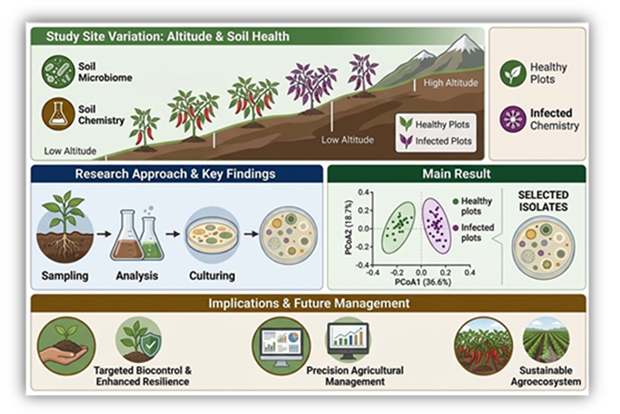
Ø Soil organic carbon and total nitrogen showed the strongest positive associations with fungal diversity, and the best regression model explained 84.7% of the variation in stem fungal diversity;
Ø The survey recovered 218 bacterial and 16 fungal isolates, providing a substantial culture-based resource for future screening;
Ø Healthy chili plants consistently harbored greater microbial diversity than diseased plants;
Ø Soil C-organic, nitrogen, and phosphorus were key drivers of microbiome structure.
Keywords
INTRODUCTION
Chili (Capsicum annuum L.) is a high-value horticultural crop in tropical production systems because it contributes to household food use, market supply, and farm income. Its production is highly vulnerable to disease, and anthracnose caused by Colletotrichum spp. remains one of the most damaging constraints because it affects both immature and mature fruits and reduces yield, quality, and marketability in preharvest and postharvest stages (Saxena et al., 2016). Within warm and humid agricultural regimes, the impact of anthracnose pressure is highly pronounced, with crop health being modulated concurrently by virulence, agricultural intensification, soil condition, and the indigenous microbial habitat (Saxena et al., 2016). A chili plant is not a single biological entity but a host habitat that supports interacting microbial communities in the rhizosphere, endosphere, and phyllosphere. These microbial assemblages contribute to nutrient acquisition, pathogen suppression, stress buffering, and host adaptation to environmental change (Compant et al., 2019; Wang et al., 2024). Emerging literature underscores the pivotal role of plant-associated microbiomes in advancing sustainable agriculture, specifically through the promotion of nutrient uptake, phytostimulation, and pathogen suppression. Additionally, endophytic consortia actively mediate host tolerance to environmental and nutritional stressors via complex metabolic and signaling networks (Hanif et al., 2024; Vimal et al., 2024). This ecological perspective is important because shifts in microbiome structure can reflect changes in plant health and ecosystem functioning, not just the presence or absence of taxa (Compant et al., 2019; Vimal et al., 2024). Soil chemical properties are a central driver of this plant–microbe system. Organic carbon (C-organic), total nitrogen (N), available phosphorus (P), exchangeable potassium (K), and soil acidity influence microbial activity, nutrient cycling, and host performance. Given that soil microbial communities actively mediate decomposition and nutrient transformation, multiple investigations have identified soil potential of hydrogen (pH) as a dominant predictor of bacterial community composition, alongside C-organic availability as a driver of environmental variation (Wang et al., 2024; Xia et al., 2024). Organic fertilizers and biological inputs can also alter soil microbial community structure and C-organic stocks, showing that management practices may reshape the soil habitat in ways that affect downstream microbial assembly (Hanif et al., 2024). While these results corroborate the close relationship between soil quality and microbial diversity, they are insufficient to confirm long-term sustainability outcomes without supporting empirical environmental data (Wang et al., 2024; Xia et al., 2024). Altitude and climate add another ecological layer to the system. Elevational gradients change temperature, moisture regime, radiation, and soil development over relatively short geographic distances, and these factors can reorganize microbial communities and their functions. The present study was conducted across four major chili-producing regencies in North Sumatra (Deli Serdang, Langkat, Karo, and Simalungun), which were purposively selected to represent the principal agroecological gradients of the region. Characterized by contrasting altitudes, diverse soil types, varying anthracnose occurrence, and distinct cultivation practices, these regencies establish a representative ecological framework for evaluating the links between soil chemical properties, microbial diversity, and plant health. Soil pH and C-organic have been shown to drive bacterial community patterns along elevational gradients, while soil moisture and drying–rewetting dynamics are major regulators of microbial community structure and enzyme activity (Brockett et al., 2012). Due to organ- and habitat-specific responses within microbial communities, root-associated tissues often display more pronounced environmental filtering than aboveground tissues, which are jointly influenced by host filtering and environmental exposure (Wang et al., 2024). These gradients are therefore useful for describing how environment and disease jointly structure the culturable microbial assemblages in field conditions. The present study was designed as a baseline ecological characterization of chili agroecosystems in North Sumatra. This study was developed within an integrated agroecosystem ecology framework that combines the soil–plant–microbiome continuum, disease triangle theory, and agroecosystem ecology. Within this framework, soil physicochemical properties regulate microbial diversity and nutrient cycling, whereas altitude, crop management, and anthracnose infection interact to determine plant health, ecosystem functioning, and sustainable chili production. This study elucidates how environmental and anthropogenic drivers—specifically altitude, soil physicochemical properties, agronomic practices, and anthracnose pressure—modulate microbial diversity and community composition. The earlier study reported biochemical and antagonistic characterization of selected isolates by Tarigan et al. (2025). Consequently, soil chemical parameters and microbial diversity were utilized as baseline ecological indicators, given their direct reflection of soil fertility, nutrient availability, microbial community structure, nutrient cycling, all of which jointly modulate anthracnose dynamics across varying agroecological conditions (Silva et al., 2022). The aims of this study are to compare soil chemical properties between healthy and anthracnose-infected chili plots across altitude classes, describe bacterial and fungal diversity patterns across plant organs and agroecological zones, and identify morphologically distinct microbial isolates as a basis for future functional screening. The study was conducted in the in North Sumatra, Indonesia, in 2025.
MATERIALS AND METHODS
Study design and site selection
This study employed a comparative field-based ecological design to investigate relationships among altitude, soil properties, cultivation practices, anthracnose incidence, and chili-associated microbial communities under natural field conditions. Field sampling was conducted across four major chili-producing regencies in North Sumatra, Indonesia, representing lowland, mid-altitude, and highland agroecosystems. To ensure adequate representation of regional chili production dynamics, representative villages and twenty distinct plots per regency were deliberately selected to encompass the baseline variability in elevation, soil chemical profiles, cultivation regimes, and disease severity (DS). The hierarchical sampling design consisted of regency, village/site, field plot, individual chili plants, plant compartment (root-associated tissue-associated tissue, stem, leaf), microbial isolation and laboratory analysis. At each sampling site, geographic coordinates, elevation, topography, soil type, temperature, humidity, rainfall conditions, compost application, and pesticide use were recorded using a standardized protocol. A purposive sampling approach was employed to select twenty chili plots that major agroecological variation of chili production systems in North Sumatra. The plots encompassed different altitudes, soil types, cultivation practices, and levels of anthracnose severity. Anthracnose infection was confirmed through field symptom assessment, followed by laboratory isolation and morphological identification of Colletotrichum spp. These variables were recorded to characterize the environmental conditions of each sampling location and to facilitate the subsequent ecological interpretation of microbial diversity patterns. The study therefore treated each plot as a naturally occurring ecological unit in which plant health condition and habitat characteristics could be compared under comparable sampling effort. Anthracnose-infected plots were identified from typical field symptoms, including sunken lesions, dry rot, and dark-edged circular lesions on fruits and leaves. DS values indicate the intensity of visible symptoms at the sampled site. To isolate fungal pathogens, symptomatic tissue was collected from the margins between healthy and diseased areas. Due to the inherent limitations of identifying Colletotrichum spp. based solely on morphology, this initial diagnosis is treated as tentative pending molecular confirmation.
Field data collection and plant sampling
At each sampling site, paired healthy and anthracnose-infected chili plots were selected, and three representative fruiting-stage plants (5–6 months old) were sampled using a standardized protocol to ensure comparable sampling effort. Rhizosphere/root-associated tissues, stems, and leaves were collected from the same plants, while anthracnose infection was confirmed based on characteristic field symptoms. The deployment of a paired sampling strategy effectively controlled for localized environmental heterogeneity, thus fortifying downstream comparative analyses between healthy and diseased plant cohorts across contrasting agroecological gradients (Kinkel, 1997). Fruit samples from both healthy and diseased plants were also collected for pathogen isolation. To ensure sample integrity and prevent cross-contamination, collections were executed under aseptic conditions utilizing disposable gloves, pre-sterilized instruments, and sterile containment bags. Cutting and digging tools were disinfected with 70 percent (%) ethanol before and after sampling each plant to prevent cross-contamination. To control for ontogenetic and positional variations, tissue profiles (root, stem, and leaf) were systematically sampled from identical positions within individual plants, whereas corresponding rhizosphere samples were isolated from the soil tightly bound to the root-associated tissue system. Root-associated tissue samples were gently rinsed with sterile water to remove loosely attached soil before further processing. All samples were individually labelled, transported in a cool box at approximately 4 degrees Celsius (°C), and processed immediately upon arrival at the laboratory to preserve microbial integrity and minimise changes in culturable microbial assemblages (Zhao et al., 2016). The same standardised sampling protocol was applied across all study sites to ensure methodological consistency. To minimize temporal and developmental biases, sampling was repeated at identical locations across four distinct collection periods using plants of uniform age. This study used a hierarchical field sampling design across the selected agroecological locations in North Sumatra. Paired healthy and anthracnose-infected chili plots were evaluated within each location using the same field protocol. To control for pseudo-replication, individual plants were operationalized as biological subsamples within each plot, whereas the plot constituted the fundamental field-level observational unit (Harrison et al., 2018). The field plot was treated as the main observational unit, while plants collected within a plot were subsamples. Repeated observations from the same location were treated as nested data rather than independent field replicates. Given the field-based nature of the experimental design, successive observations within a single plot were treated as nested data structures instead of independent replication units, ensuring a valid statistical framework. The relationship between the four reported collection periods and the two stages. Stage 1 refers to the first sampling period conducted during the early crop growth phase, whereas Stage 2 represents the second sampling period conducted during the subsequent crop development phase. These stages correspond to the two field sampling periods used consistently across all study sites for microbial isolation, diversity assessment, and soil chemical analyses.
Isolation of bacteria and fungi from plant tissues
Microbial isolation was performed using both tissue-plating and grinding/dilution approaches so that both endophytic and epiphytic communities could be recovered. Plant tissues were initially rinsed under running water to eliminate surface debris. For surface-sterilized samples, tissues were sequentially treated with 70% ethanol, sodium hypochlorite, and sterile distilled water, followed by drying on sterile tissue paper prior to subsequent processing. This surface-sterilization step was necessary to reduce external contamination and to increase the likelihood that microbes recovered from internal tissue represented endophytic populations. For the grinding method, sterilized tissues were cut into approximately 1 × 1 centimeter (cm) pieces, macerated aseptically with a sterile mortar and pestle, and suspended in sterile diluent before serial dilution. Diluted suspensions were then spread on nutrient agar (NA) for bacterial recovery and on Potato Dextrose Agar for fungal recovery. Following standard microbiological protocols, dilution plating was utilized to isolate heterotrophic bacteria and fungi from plant tissues, allowing for a consistent comparison among tissues and sampling sites under identical culture conditions (Madigan et al., 2012). Each treatment was performed in replicate to improve consistency of isolate recovery. For the tissue-plating method, sterilized root-associated tissue, stem, and leaf segments were placed directly onto agar media under aseptic conditions. To isolate microorganisms emerging directly from the internal tissues without prior homogenization, this method was utilized as a complementary approach to tissue grinding. Bacterial plates were incubated at 28 °C for 24 hours (h), whereas fungal plates were incubated for 5–7 days at room temperature or under standard fungal growth conditions until colony development was sufficient for purification and characterization (Agu et al., 2023). Representative bacterial and fungal isolates were selected using a stepwise screening approach based on colony morphology, including colony shape, margin, elevation, colour, texture, frequency of occurrence, and antagonistic activity against Colletotrichum spp. Rhizosphere soil, epiphytic microbes, and endophytic microbes were processed using separate recovery steps. To isolate endophytes, surface-sterilized tissues were used, while surface-associated microflora were recovered using an appropriate plating method. These protocols are detailed in separate sections to clearly distinguish between the two microhabitats.
Purification and characterization of bacterial isolates
Distinct bacterial colonies were selected based on colony morphology, including shape, margin, elevation, color, and texture. Phenotypic profiling based on macro- and microscopic morphological features was implemented as a primary screening phase to categorize the isolated strains. Selected isolates were subsequently characterized using biochemical assays, antagonistic activity tests, hydrolytic enzyme assays, and molecular identification through 16S rRNA gene sequencing (bacteria) and ITS sequencing (fungi). Colonies with different phenotypes were purified on Nutrient Agar by repeated streaking until stable single colonies were obtained (Tarigan et al., 2025). The pathogen was preliminarily identified in this study via symptom presentation and morphological traits. Because Colletotrichum spp. contains multiple species complexes, morphology alone cannot confirm species identity. Species-level confirmation would require molecular analysis, which is beyond the scope of the present study. Microscopic identification of fungal isolates was carried out using the slide culture method. Briefly, a small agar block was placed on a microscope slide, inoculated with the fungal isolate, secured with a coverslip, and subsequently incubated within a humid chamber. After sufficient growth, the fungal structures were examined under 40× and 100× magnification to observe hyphae, conidiophores, spores, and reproductive structures (Agu et al., 2023). This technique is widely used because it preserves fungal morphology and improves the reliability of microscopic observation.
Isolation and identification of the anthracnose pathogen
Anthracnose-causing fungi were isolated from symptomatic fruit and leaf tissues using a standard surface-sterilization protocol followed by plating on potato dextrose agar (PDA) supplemented with chloramphenicol. To maximize the likelihood of recovering actively growing pathogen tissue, segments were systematically harvested from the border separating healthy and diseased tissues (Koyyappurath et al., 2015). Surface sterilization was used before endophyte isolation to reduce external contamination. Formal validation using final-rinse plating or imprint controls was not fully documented in this study. Plant tissues were rinsed, surface-sterilized, and then processed by tissue plating and dilution plating. The homogenized tissue suspension was serially diluted and plated on nutrient agar for bacteria and Potato Dextrose Agar for fungi. Distinct colonies were purified by repeated streaking, and colony selection was based on stable morphology after incubation. These steps are stated in a reproducible sequence so the culture procedure can be followed directly. Colonies presenting morphotypes characteristic of Colletotrichum spp. post-incubation were transferred to establish pure cultures, followed by comprehensive microscopic analysis to assess diagnostic structural features. Identification was based on colony characteristics and on the microscopic features of hyphae and reproductive structures using standard taxonomic references for imperfect fungi (Sutton, 1980; Barnett, 1998). Lactophenol cotton blue staining was used to improve visibility of fungal structures during microscopy. Selected pathogen isolates were then used in the antagonism study reported separately by Tarigan et al. (2025).
Soil chemical analysis
Soil samples collected from the sampling plots were analyzed for C-organic, total N, available P (Bray I), exchangeable K, and pH. Selection of these variables was predicated on their widespread validation as indicators of edaphic fertility, nutrient pools, and the ambient habitat quality shaping microbial community structures. C-organic and total N represent soil organic matter status, available P and exchangeable K reflect macronutrient availability, and pH is a key regulator of nutrient solubility and microbial community structure. In this study, these variables were used as ecological descriptors for interpreting the association between soil quality and microbiome patterns in healthy and diseased chili plots (Lal, 2016).
Diversity analysis and abundance descriptors
Microbial diversity was summarized using the Shannon diversity index and isolate abundance descriptors. The sixteen purified fungal isolates represent representative cultures selected after purification. Instead of using the total count of purified isolates, the Shannon diversity index was determined from the full occurrence data of culturable fungal morphotypes across various sites, plant compartments, growth stages, and health statuses. Morphologically distinct colony types were used as operational morphotypes for preliminary diversity estimation. Abundance values were based on isolate frequency recovered from each sample. Due to potential mismatches between morphology and species identity, these findings serve as preliminary culture-dependent diversity proxies. For diversity analysis, each morphologically distinct isolate group was treated as an operational category. To evaluate diversity, the Shannon index was computed from the relative abundance of these categories within each sample according to Eq. 1 (Bernadip et al., 2014):
H'=−∑(ni/N)log(ni/N) (1)
Where: ni is the number of individuals in a given category and N is the total number of individuals across categories. Diversity values were interpreted following the scale used in the manuscript: values below 1 indicate low diversity, values between 1 and 3.322 indicate moderate diversity, and values above 3.322 indicate high diversity. To account for both richness and evenness, the Shannon diversity index was computed using a natural log base. This metric is well-suited for evaluating and comparing microbial communities across various sites, plant organs, and phytosanitary states. The Shannon diversity index was selected because it simultaneously considers species richness and evenness and is widely applied in microbial ecology to compare community diversity across different environmental conditions. The quantitative abundance of bacterial and fungal cohorts was defined by the total isolate counts recovered per sample type, organ, and site, with the associated variance across environmental gradients delineated using standard deviation (SD) ranges to assess microbial distribution patterns and evaluate habitat-specific variability.
Statistical analysis
Data analysis combined descriptive statistics, diversity calculations, correlation analysis, and regression analysis. Soil chemical data and diversity indices were summarized across healthy and diseased plots and across altitude classes. Where appropriate, one-way analysis of variance (ANOVA) followed by least significant difference testing at alpha (α) = 0.05 was used to compare climatic variables and field descriptors across sampling periods. Prior to inferential statistical modeling, dataset compliance with the classical assumptions of normality and homogeneity of variance was explicitly evaluated. Relationships between individual soil properties and microbial diversity were evaluated using Pearson correlation analysis, whereas multiple linear regression was applied to assess the combined effects of soil organic carbon, total nitrogen, and soil pH on microbial diversity. Each regression model is now reported with the sample size, fit statistics, and coefficient estimates where available. The interpretation of R² is cautious because the analysis is exploratory and field based. Within a nested field survey framework, statistical analyses were employed to screen for relationships among soil properties, elevation, disease status, and microbial diversity. The results are interpreted cautiously because field observations are not fully independent across all levels of sampling. Multivariate approaches such as mixed-effects modeling or ordination would be valuable for future work, particularly where altitude, soil type, and management covary. Characterization of soil chemical properties was partitioned by site and health status, followed by a comparative analysis of climatic variables across sampling intervals. Finally, microbial taxonomic diversity was modeled against soil physicochemical characteristics using correlation and regression analysis. The regression models are presented as exploratory summaries of observed associations. The purpose of the models is to identify variables most closely related to fungal diversity in the sampled plots. The models are not presented as universal predictive equations. Because soil variables co-vary strongly, the coefficients are interpreted cautiously within the ecological context and biologically.
RESULTS AND DISCUSSION
Environmental characteristics of chili sampling sites
The ecological and management implications discussed herein represent conceptual applications rather than validated empirical conclusions; consequently, the framework does not provide direct metrics for ecosystem services or definitive environmental remediation. Altitude within this research framework is conceptualized as a composite environmental gradient that inherently covaries with soil taxonomy, geographic location, localized climate, and management practices. Consequently, altitude-dependent trends are documented strictly as site-level associations; comprehensive physiographic attributes—including geographic location, elevation, and soil type for each site—are compiled in Table 1.
Soil chemical properties and plant health status
Table 2 shows that healthy chili plots generally had better soil chemical conditions than anthracnose-infected plots. The highest C-organic values were recorded in Desa Suka, Kabupaten Karo (4.02%) and Desa Siboras, Kabupaten Simalungun (4.56%), whereas the infected plot in Desa Suka showed a lower value of 2.68%. A clear distinction in soil chemical profiles was observed between healthy and diseased plots across the sampled localities. Specifically, healthy plots were characterized by systematically higher baselines of C-organic, total N, available P, exchangeable K, and pH compared to the adjacent diseased plots in paired experimental designs. These differences are reported as field observations from the sampled plots. Higher C-organic indicates better organic matter availability, improved soil structure, greater water-holding capacity, and stronger support for beneficial microbial activity (Lal, 2016). Total N also tended to be higher in healthy plots. In Desa Suka, total N reached 0.48% in healthy plants and 0.36% in infected plants, with similar patterns in Padang Brahrang and Pantai Labu. Sufficient N application not only optimizes vegetative growth and plant structural vigor but also plays a critical role in modulating rhizosphere conditions to favor the proliferation of beneficial soil microorganisms. Available P showed the same pattern. Healthy soil in Desa Suka contained 26.06 ppm (parts per million) P, compared with 19.55 ppm in the infected plot. Similar differences were found in phosphorus availability. Phosphorus is essential for energy metabolism, root tissue development, and plant defense responses; therefore, low P availability may weaken resistance to pathogen attack (Rodríguez and Fraga, 1999). Exchangeable K was also higher in healthy soil, for example 2.80 me/100 g in Desa Suka compared with 1.95 milliequivalents per 100 gram (me/100 g) in the infected plot. K is important for osmotic regulation, photosynthate transport, and tolerance to biotic stress, including fungal infection (Wang et al., 2021). Collectively, these empirical insights indicate that significantly higher soil fertility in healthy chili fields acted as a catalyst for enhanced nutrient cycling, microbial activity, and nutrient availability, mechanisms that directly augmented plant nutrient assimilation and sustained crop health. Enhanced soil fertility also promoted more stable microbial communities that contribute to natural disease suppression and greater resilience against anthracnose infection. These beneficial microbial interactions improved soil biological activity, nutrient availability, and ecosystem functioning. Conversely, lower soil organic carbon, total nitrogen, available phosphorus, exchangeable potassium, and less favorable soil pH were observed in infected fields. These conditions were associated with reduced microbial stability, impaired nutrient cycling, increased disease susceptibility, and lower productivity.
Table 1: Position, altitude, and soil type of chili sampling sites
|
No. |
Regency |
Subdistrict – village |
Plant condition |
Sampling location (Coordinates) |
Elevation |
Soil type |
|
1 |
Deli Serdang Regency |
Beringin Subdistrict – Beringin Village |
Healthy plants |
3°36'28.019466" N, 98°52'42.13326" E |
3.1 m a.s.l. (Meters above sea level) |
Latosol |
|
Beringin Subdistrict – Beringin Village |
Diseased plants (DS > 50%) |
3°36'28.102271" N, 98°52'43.22228" E |
3.19 m a.s.l. |
Latosol |
||
|
Pantai Labu Subdistrict – Pantai Labu Village |
Healthy plants |
3°36'22.194621" N, 98°53'44.13228" E |
2.3 m a.s.l. |
Latosol |
||
|
Pantai Labu Subdistrict – Pantai Labu Village |
Diseased plants (DS > 50%) |
3°36'22.201325" N, 98°53'46.152019" E |
2.16 m a.s.l. |
Latosol |
||
|
Tanjung Muda Hulu Subdistrict – Bah Bah Buntu Village |
Healthy plants |
3°17'8.10466" N, 98°67'9.24587" E |
601.3 m a.s.l. |
Alluvial |
||
|
Tanjung Muda Hulu Subdistrict – Bah Bah Buntu Village |
Diseased plants (DS = 65%) |
3°17'7.98709" N, 98°67'8.16124" E |
628.7 m a.s.l. |
Alluvial |
||
|
2 |
Langkat Regency |
Stabat Subdistrict – Kwala Bingai Village |
Healthy plants |
3°44'20.23832" N, 98°25'34.35938" E |
3.71 m a.s.l. |
Alluvial |
|
Stabat Subdistrict – Kwala Bingai Village |
Diseased plants (DS > 50%) |
3°44'21.19021" N, 98°25'34.42156" E |
3.79 m a.s.l. |
Alluvial |
||
|
Selesai Subdistrict – Padang Brahrang Village |
Healthy plants |
3°35'24.75683" N, 98°25'59.47756" E |
3.37 m a.s.l. |
Alluvial |
||
|
Selesai Subdistrict – Padang Brahrang Village |
Diseased plants |
3°35'21.45656" N, 98°25'52.96818" E |
3.31 m a.s.l. |
Alluvial |
||
|
3 |
Karo Regency |
Tiga Panah Subdistrict – Suka Village |
Healthy plants |
3°05'00.77845" N, 98°53'05.69477" E |
1,200 m a.s.l. |
Andisol |
|
Tiga Panah Subdistrict – Suka Village |
Diseased plants (DS = 55%) |
3°05'08.0547" N, 98°53'05.68382" E |
1,210 m a.s.l. |
Andisol |
||
|
Merek Subdistrict – Negeri Tongging Village |
Healthy plants |
2°93'6.59787" N, 98°53'6.59775" E |
1,280 m a.s.l. |
Andisol |
||
|
Merek Subdistrict – Negeri Tongging Village |
Diseased plants |
2°93'6.54073" N, 98°53'64.6849" E |
1,295 m a.s.l. |
Andisol |
||
|
4 |
Simalungun Regency |
Silimakuta Subdistrict – Seribu Dolok Village |
Healthy plants |
2°09'19.20063" N, 98°63'13.7705" E |
1,380.5 m a.s.l. |
Andisol |
|
Silimakuta Subdistrict – Seribu Dolok Village |
Diseased plants (DS = 65%) |
2°09'20.10112" N, 98°63'15.2028" E |
1,405 m a.s.l. |
Andisol |
||
|
Pematang Silimahuta Subdistrict – Siboras Village |
Healthy plants |
2°93'8.48416" N, 98°58'75.57335" E |
1,411.5 m a.s.l. |
Andisol |
||
|
Pematang Silimahuta Subdistrict – Siboras Village |
Diseased plants (DS = 50%) |
2°93'8.490716" N, 98°58'76.0698" E |
1,420 m a.s.l. |
Andisol |
Table 2: Soil chemical properties of chili plots based on C-organic, total Nitrogen (N-total), available P (P-Bray I), exchangeable K (K-dd), and pH
|
No. |
Study Location |
Organic C (%) |
Total N (%) |
Bray I P (ppm P) |
Exchangeable K (Milliequivalents per 100 gram Soil, me/100 g) |
pH |
|
1 |
Healthy Plant – Beringin Village |
1.22 |
0.12 |
12.50 |
1.06 |
5.75 |
|
2 |
Diseased Plant – Beringin Village |
1.06 |
0.09 |
10.81 |
1.01 |
5.70 |
|
3 |
Healthy Plant – Pantai Labu Village |
1.82 |
0.22 |
16.75 |
1.43 |
6.08 |
|
4 |
Diseased Plant – Pantai Labu Village |
1.78 |
0.18 |
15.01 |
1.23 |
5.58 |
|
5 |
Healthy Plant – Kwala Bingai Village |
0.72 |
0.11 |
17.69 |
1.53 |
6.59 |
|
6 |
Diseased Plant – Kwala Bingai Village |
0.62 |
0.11 |
15.88 |
1.25 |
6.29 |
|
7 |
Healthy Plant – Padang Brahrang Village |
1.51 |
0.21 |
15.19 |
1.37 |
7.27 |
|
8 |
Diseased Plant – Padang Brahrang Village |
1.05 |
0.14 |
12.81 |
1.22 |
6.72 |
|
9 |
Healthy Plant – Bah-bah Buntu Village |
2.34 |
0.23 |
19.60 |
1.37 |
5.71 |
|
10 |
Diseased Plant – Bah-bah Buntu Village |
2.10 |
0.25 |
18.89 |
1.21 |
5.70 |
|
11 |
Healthy Plant – Suka Village |
4.02 |
0.48 |
26.06 |
2.80 |
6.68 |
|
12 |
Diseased Plant – Suka Village |
2.68 |
0.36 |
19.55 |
1.95 |
5.80 |
|
13 |
Healthy Plant – Negeri Tongging Village |
2.21 |
0.28 |
15.62 |
1.42 |
7.13 |
|
14 |
Diseased Plant – Negeri Tongging Village |
2.19 |
0.27 |
15.05 |
1.40 |
7.10 |
|
15 |
Healthy Plant – Seribu Dolok Village |
2.21 |
0.28 |
15.62 |
1.42 |
7.13 |
|
16 |
Diseased Plant – Seribu Dolok Village |
2.19 |
0.27 |
15.05 |
1.40 |
7.10 |
|
17 |
Healthy Plant – Siboras Village |
4.56 |
0.46 |
20.87 |
1.05 |
6.43 |
|
18 |
Diseased Plant – Siboras Village |
4.03 |
0.40 |
16.37 |
0.91 |
6.03 |
Agroclimatic conditions at the sampling locations
Agroclimatic conditions remained generally moderate throughout the study period, but it’s still showed seasonal variation that is ecologically relevant for soil and plant-associated microbes. Temperature ranged narrowly from 18.13 °C to 18.55 °C, indicating that the sampling period was not characterized by extreme thermal stress. Nevertheless, a significant monthly effect was observed, with October showing distinct differences compared to the remaining months (F (5,175) = 3.02, p = 0.012). Although the absolute temperature difference was small, such variation can still influence microbial metabolism, enzyme activity, and decomposition rates, particularly in tropical agroecosystems where microbial processes are highly responsive to microclimatic change. Consequently, temperature functions as a critical environmental filter shaping community assembly, with the capacity to modulate taxonomic turnover and competitive dynamics among microbial communities, aligning with observations by Koyama et al. (2018) and Cregger et al. (2012). Humidity showed a stronger temporal pattern than temperature. The humidity indicator derived from paired dry-bulb and wet-bulb readings varied significantly across months (F (6,208) = 73.49, p < 0.001), with December showing the highest value and August the lowest. The degrees of freedom in the F-tests reflect the number of observations and group levels used in the climate analysis. This seasonal heterogeneity plays a pivotal role, since humidity levels govern leaf wetness, microbial persistence, and soil moisture retention, thereby shaping organismal survival across the rhizosphere-phyllosphere continuum. Higher humidity generally favors fungal growth, sporulation, and colonization, whereas lower humidity may reduce microbial abundance or shift communities toward more stress-tolerant taxa. Rainfall also fluctuated across the sampling period, although the variation was not statistically significant (F (4,52) = 0.64, p = 0.637). Rather than demonstrating that precipitation is negligible to the soil microbiome, this non-significant correlation underscores the resolution boundaries of the current site dataset (Cregger et al., 2012; Jiang et al., 2024).
Environmental control of bacterial abundance and diversity
Table 3 shows that bacterial abundance was influenced by altitude, plant health status, and cultivation practice. Bacterial diversity in healthy plants exhibited greater heterogeneity across lowland and highland gradients, particularly within root-associated tissues, which suggests that root-associated tissues, implying that the root microenvironment represents the most dynamic microbial habitat. Table 3 summarizes the variation in endophytic bacterial isolate recovery across distinct altitude, plant health status, and manure application rates. The presented values represent descriptive intervals derived from the observed isolate counts in each sampling category, where notation n refers to the number of isolate recovery observations contributing to each group summary. Importantly, this dataset is intended to illustrate the descriptive distribution of recovered isolates, rather than serving as a quantitative biological measure of absolute abundance. It should also be recognised that agricultural management practices, including fertiliser application, irrigation, pesticide use, crop management, seasonal climatic variation, and previous land-use history, may have associated soil properties and microbial diversity independently of anthracnose infection. Although sampling was restricted to prominent chili-producing regions characterized by largely comparable cultivation practices, confounding environmental variables could not be entirely controlled under field conditions. Consequently, the documented variations in microbial structures should be attributed to the synergistic influences of agroecological conditions, agricultural management, and plant phytosanitary status rather than being ascribed solely to anthracnose infection. This is consistent with the view that root-associated tissue-associated communities are strongly associated by environmental filtering, root-associated tissue exudates, and soil properties.
Table 3: SD of endophytic bacterial abundance in root, stem, and leaf tissues by altitude, plant condition, and manure dose
|
Environmental factor |
Root-associated tissue (95% confidence interval, CI) |
n |
Stem (95% CI) |
n |
Leaf (95% CI) |
n |
|
Altitude based on healthy chili plants |
||||||
|
0–500 m a.s.l. |
-21.988 to 60.623 |
126 |
-9.324 to 45.006 |
132 |
-7.152 to 45.607 |
144 |
|
>500–800 m a.s.l. |
-7.434 to 44.478 |
69 |
-6.090 to 39.510 |
69 |
-9.433 to 46.149 |
84 |
|
>1340 m a.s.l. |
-24.834 to 64.404 |
135 |
-17.313 to 55.210 |
123 |
-20.362 to 59.075 |
129 |
|
Altitude based on diseased chili plants |
||||||
|
0–500 m a.s.l. |
-11.177 to 45.539 |
207 |
-6.478 to 42.822 |
216 |
-4.409 to 47.122 |
195 |
|
>500–800 m a.s.l. |
-3.318 to 41.984 |
87 |
-0.944 to 39.240 |
81 |
-1.341 to 42.255 |
81 |
|
>1340 m a.s.l. |
-7.943 to 44.533 |
210 |
-1.727 to 40.633 |
201 |
-3.310 to 46.283 |
203 |
|
Chili plant health status |
||||||
|
Healthy plants |
-20.471 to 57.990 |
380 |
-13.143 to 51.587 |
342 |
-13.203 to 51.099 |
348 |
|
Anthracnose-infected plants |
-8.529 to 44.223 |
505 |
-3.729 to 41.267 |
490 |
-3.401 to 47.316 |
498 |
|
0–100 g plant |
-10.739 to 45.222 |
120 |
-0.789 to 15.222 |
161 |
-9.005 to 39.816 |
210 |
In infected plants, bacterial community variation remained high, but the spatial distribution shifted toward foliar and cauline tissues. This transition indicates that anthracnose infection fundamentally alters the internal host microenvironment, subsequently disrupting microbial equilibrium. Pathogen infection can disrupt host physiology and open space for opportunistic or antagonistic bacteria to colonize plant tissues (Compant et al., 2019; Liu et al., 2020). Differences in manure dose also affected bacterial variation, suggesting that organic inputs modified the habitat quality for microbial colonization, although the effect remained associated by local environmental conditions. In the present study, microbial abundance was operationalized as the total count of bacterial and fungal isolates successfully recovered across various plant organs, sampling locations, elevational classes, and host health statuses. Although culture-dependent methods recover only the culturable fraction of microbial communities, this approach provided an appropriate baseline ecological assessment for comparing microbial abundance and diversity across contrasting agroecological conditions and for selecting representative isolates for subsequent functional characterization and future microbiome-based applications.
Bacterial diversity in healthy chili plants
In healthy plants, bacterial endophytes showed low to moderate diversity (Table 4). The root-associated tissue compartment consistently showed the highest diversity, followed by leaves and stems. The highest values were found in the mid-altitude sites, particularly Bah-bah Buntu Kampung Baru and Bah-bah Buntu Kampung Lama. Reduced bacterial diversity was documented in lowland sites such as Pantai Labu. This spatial trend suggests that internal tissues act as a highly selective microhabitat, permitting only specific bacterial taxa to establish, whereas root-associated tissues remain the most hospitable niches for colonization (Xia et al., 2024; Hardoim et al., 2015). The greater bacterial diversity observed in root-associated tissue tissues reflects their ecological role as the primary interface between plants and soil, where root-associated tissue exudates provide a continuous supply of diverse carbon compounds and signalling molecules that stimulate microbial colonisation and community assembly. Furthermore, root-associated tissue-associated microbial communities are strongly associated by soil physicochemical properties, including organic carbon, nutrient availability, and pH, resulting in greater diversity than in stems and leaves, which constitute more selective habitats with stronger host filtering.
Table 4: Shannon diversity and abundance of endophytic bacteria in healthy chili plants on NA
|
No. |
Location/village |
Root-associated tissue (Stage 1) |
Root-associated tissue (Stage 2) |
Leaf (Stage 1) |
Leaf (Stage 2) |
Stem (Stage 1) |
Stem (Stage 2) |
|
1 |
Suka Village |
0.910 |
1.014 |
0.937 |
0.974 |
0.852 |
0.487 |
|
2 |
Negeri Tongging Village |
0.833 |
0.910 |
0.861 |
0.789 |
1.051 |
0.835 |
|
3 |
Seribu Dolok Village |
0.988 |
1.043 |
1.048 |
0.903 |
0.604 |
0.574 |
|
4 |
Siboras Village |
0.930 |
0.924 |
0.974 |
0.759 |
0.874 |
0.816 |
|
5 |
Bahbuntu Kampung Baru Village |
1.042 |
1.058 |
0.985 |
0.807 |
0.501 |
0.645 |
|
6 |
Bahbuntu Kampung Lama Village |
0.910 |
1.036 |
0.855 |
0.770 |
0.776 |
0.823 |
|
7 |
Kwala Bingai Village |
1.043 |
0.562 |
0.877 |
0.921 |
0.523 |
0.603 |
|
8 |
Padang Brahrang Village |
0.886 |
0.664 |
0.645 |
0.493 |
0.717 |
0.488 |
|
9 |
Beringin Village |
0.692 |
0.746 |
0.834 |
0.809 |
0.760 |
1.009 |
|
10 |
Pantai Labu Village |
0.801 |
0.812 |
0.626 |
0.646 |
0.514 |
0.479 |
These results underscore the ecological significance of the root-associated microbiome in sustaining nutrient cycling, microbial homeostasis, and host fitness across divergent agroecological gradients. Epiphytic bacteria in healthy plants showed moderate diversity, with higher values in Beringin and Padang Brahrang, particularly in root-associated tissues and leaves (Table 5). This result suggests that the plant episphere hosts a more diverse bacterial community than the endosphere, particularly in niches characterized by heightened environmental exposure and nutrient availability. Synergistic microbial interactions on root-associated tissues foliar surfaces may enhance community stability, thereby bolstering host resilience against biotic and abiotic stressors. All data present the complete Shannon diversity dataset for bacterial and fungal communities across sampling locations, plant compartments, developmental stages, and plant health conditions. This presentation of results highlights primary ecological trends and statistically meaningful comparisons, while keeping the dataset accessible to ensure transparency, verification, reproducibility, and future comparative analyses.
Bacterial diversity in anthracnose-infected chili plants
In anthracnose-infected plants, bacterial endophyte diversity was generally higher in leaves, followed by stems and root-associated tissues (Table 6). The highest values were recorded in Negeri Tongging and Suka, with Shannon diversity in the range of 1.475–1.759 for leaves and 1.428–1.610 in Suka. Stem diversity was also elevated in Bah-bah Buntu. This shift implies that anthracnose-induced tissue modifications carve out new ecological niches, selectively facilitating the establishment of stress-tolerant and opportunistic bacteria. Epiphytic bacteria in infected plants also showed a distinct pattern (Table 7). The highest diversity was found in Kwala Bingai, especially in leaves, where Shannon values reached 1.531–1.567. These observations indicate that pathogenesis alters the phyllosphere microenvironment, subsequently facilitating colonization by stress-tolerant bacterial cohorts through changes in nutrient avaiablity and host physiological responses under disease pressure. This aligns with prior studies on diseased plant systems, where pathogen-induced tissue degradation triggers a transition from a stable climax microbiome to a highly dynamic, opportunistic microbial community.
Fungal diversity in healthy chili plants
Fungal endophytes in healthy chili plants showed low to moderate diversity (Table 8). The highest values were found in the highland sites, especially Seribu Dolok, Siboras, and Negeri Tongging, where Shannon diversity exceeded 1.0 and, in some cases, reached above 2.0. In contrast, lowland sites such as Kwala Bingai and Padang Brahrang showed lower diversity. This pattern indicates that cooler and more stable highland habitats foster a more complex fungal community structure (Mendes et al., 2013).
Table 5: Shannon diversity and abundance of epiphytic bacteria in healthy chili plants on NA
|
No. |
Location/village |
Root-associated tissue (Stage 1) |
Root-associated tissue (Stage 2) |
Leaf (Stage 1) |
Leaf (Stage 2) |
Stem (Stage 1) |
Stem (Stage 2) |
|
1 |
Suka Village |
0.816 |
0.868 |
0.549 |
0.602 |
0.740 |
0.759 |
|
2 |
Negeri Tongging Village |
1.344 |
0.970 |
1.107 |
0.692 |
1.443 |
1.169 |
|
3 |
Seribu Dolok Village |
1.163 |
1.211 |
1.061 |
1.144 |
0.803 |
0.796 |
|
4 |
Siboras Village |
1.263 |
1.202 |
1.309 |
1.038 |
1.068 |
1.071 |
|
5 |
Bahbuntu Kampung Baru Village |
1.103 |
0.957 |
0.936 |
0.686 |
1.116 |
0.759 |
|
6 |
Bahbuntu Kampung Lama Village |
1.292 |
0.945 |
0.813 |
0.971 |
0.735 |
0.685 |
|
7 |
Kwala Bingai Village |
1.254 |
1.384 |
1.124 |
1.172 |
1.252 |
1.288 |
|
8 |
Padang Brahrang Village |
1.730 |
1.661 |
1.155 |
1.139 |
1.024 |
1.043 |
|
9 |
Beringin Village |
1.567 |
2.017 |
1.740 |
1.646 |
1.004 |
0.913 |
|
10 |
Pantai Labu Village |
0.988 |
0.994 |
0.799 |
0.708 |
1.055 |
0.731 |
Table 6: Shannon diversity and abundance of endophytic bacteria in anthracnose-infected chili plants on NA
|
No. |
Location/village |
Root-associated tissue (Stage 1) |
Root-associated tissue (Stage 2) |
Leaf (Stage 1) |
Leaf (Stage 2) |
Stem (Stage 1) |
Stem (Stage 2) |
|
1 |
Suka Village |
1.067 |
1.011 |
1.428 |
1.610 |
0.696 |
0.674 |
|
2 |
Negeri Tongging Village |
0.984 |
0.826 |
1.759 |
1.475 |
1.271 |
1.137 |
|
3 |
Seribu Dolok Village |
0.986 |
1.075 |
0.930 |
0.933 |
0.486 |
0.439 |
|
4 |
Siboras Village |
1.162 |
0.923 |
0.956 |
0.920 |
1.161 |
1.132 |
|
5 |
Bahbuntu Kampung Baru Village |
0.979 |
1.057 |
1.502 |
1.224 |
1.472 |
1.436 |
|
6 |
Bahbuntu Kampung Lama Village |
1.089 |
1.614 |
0.776 |
1.204 |
1.236 |
0.801 |
|
7 |
Kwala Bingai Village |
1.362 |
0.670 |
1.136 |
0.999 |
1.008 |
0.765 |
|
8 |
Padang Brahrang Village |
1.607 |
0.922 |
1.177 |
0.606 |
1.283 |
0.588 |
|
9 |
Beringin Village |
0.859 |
0.850 |
1.063 |
1.045 |
1.104 |
1.277 |
|
10 |
Pantai Labu Village |
0.795 |
0.842 |
0.636 |
0.650 |
0.585 |
0.562 |
Table 7: Shannon diversity and abundance of epiphytic bacteria in anthracnose-infected chili plants on NA
|
No. |
Location/village |
Root-associated tissue (Stage 1) |
Root-associated tissue (Stage 2) |
Leaf (Stage 1) |
Leaf (Stage 2) |
Stem (Stage 1) |
Stem (Stage 2) |
|
1 |
Suka Village |
1.179 |
1.081 |
0.997 |
0.675 |
0.644 |
0.781 |
|
2 |
Negeri Tongging Village |
1.108 |
0.908 |
1.160 |
0.774 |
0.950 |
1.146 |
|
3 |
Seribu Dolok Village |
1.138 |
1.090 |
0.907 |
1.094 |
0.736 |
0.725 |
|
4 |
Siboras Village |
0.967 |
1.079 |
0.999 |
1.145 |
0.980 |
1.079 |
|
5 |
Bahbuntu Kampung Baru Village |
1.030 |
1.048 |
1.037 |
0.877 |
0.668 |
0.630 |
|
6 |
Bahbuntu Kampung Lama Village |
0.943 |
0.883 |
0.932 |
0.776 |
0.806 |
0.901 |
|
7 |
Kwala Bingai Village |
1.438 |
1.531 |
1.567 |
1.457 |
1.023 |
1.518 |
|
8 |
Padang Brahrang Village |
1.148 |
1.649 |
0.869 |
1.422 |
1.235 |
1.281 |
|
9 |
Beringin Village |
0.967 |
1.339 |
0.861 |
1.287 |
0.670 |
1.296 |
|
10 |
Pantai Labu Village |
0.788 |
1.572 |
0.771 |
1.248 |
0.887 |
1.164 |
Table 8: Shannon diversity and abundance of endophytic fungi in healthy chili plants on PDA
|
No. |
Location/village |
Root-associated tissue (Stage 1) |
Root-associated tissue (Stage 2) |
Leaf (Stage 1) |
Leaf (Stage 2) |
Stem (Stage 1) |
Stem (Stage 2) |
|
1 |
Suka Village |
0.972 |
0.858 |
1.360 |
0.839 |
0.945 |
0.835 |
|
2 |
Negeri Tongging Village |
1.586 |
1.165 |
1.440 |
1.159 |
2.051 |
1.158 |
|
3 |
Seribu Dolok Village |
2.028 |
1.778 |
1.363 |
1.753 |
1.698 |
1.747 |
|
4 |
Siboras Village |
1.791 |
1.686 |
1.575 |
1.688 |
1.642 |
1.688 |
|
5 |
Bahbuntu Kampung Baru Village |
2.015 |
2.048 |
1.951 |
2.040 |
2.470 |
2.038 |
|
6 |
Bahbuntu Kampung Lama Village |
0.970 |
0.942 |
1.207 |
0.946 |
1.285 |
0.947 |
|
7 |
Kwala Bingai Village |
0.787 |
0.774 |
0.758 |
0.768 |
0.772 |
0.766 |
|
8 |
Padang Brahrang Village |
0.479 |
0.651 |
0.476 |
0.658 |
0.673 |
0.659 |
|
9 |
Beringin Village |
1.541 |
1.470 |
1.377 |
1.477 |
1.530 |
1.479 |
|
10 |
Pantai Labu Village |
1.258 |
1.117 |
1.804 |
1.106 |
1.100 |
1.103 |
Fungal epiphytes associated with healthy plants also exhibited low to moderate diversity (Table 9). Highland locations generally supported greater taxonomic richness than lowland locations, suggesting that climatic and elevational gradients shape fungal community assembly on both the episphere and within endophytic tissues. Environmental conditions such as humidity, temperature, and host physiological status are known to influence fungal colonization and community balance in the phyllosphere.
Relationship between soil chemistry and microbial diversity
The correlation analysis showed that soil C-organic and total N were the strongest positive predictors of fungal diversity in the root-associated tissue compartment (Fig. 1). Positive correlations were observed between C-organic and fungal Shannon diversity (r = 0.48 in stage I and r = 0.41 in stage II), and between total N and fungal diversity (r = 0.47 in stage I and r = 0.31 in stage II) (Fig. 2). These findings indicate that elevated soil organic matter and better N availability sustained a highly diverse fungal community within the rhizosphere (Banerjee and van der Heijden, 2023). Collectively, these findings indicate that soil organic carbon, total nitrogen, available phosphorus, exchangeable potassium, soil pH, and altitude act as complementary ecological drivers regulating soil fertility and microbial community assembly across the investigated agroecosystems. Higher soil fertility enhanced nutrient bioavailability and sustained more diverse microbial communities, particularly root-associated tissue-associated fungi—whereas diminished soil fertility was correlated with altered culturable microbial assemblages and a higher incidence of anthracnose (Zhou et al., 2021). These findings highlight soil fertility as a key ecological determinant of plant–soil–microbe interactions in chili production systems. Although the documented soil variations correlate with plant phytosanitary status, they do not establish a causal relationship between soil chemistry and susceptibility to anthracnose. Other factors such as location, cultivar, irrigation, fertilization, and local management may also influence the pattern (Sterrantino, 2024). Bacterial diversity showed a more mixed response to soil chemistry (Fig. 3). Soil organic carbon and total nitrogen exhibited a strong positive mutual correlation with each other and were positively associated with the diversity of root endophytic fungi; conversely, both biogeochemical parameters were negatively correlated with root endophytic bacterial diversity. Soil pH exhibited the strongest positive predictor of root endophytic fungal diversity, suggesting that soil physiochemical gradients exert distinct selective pressures on culturable bacterial and fungal communities (Fig. 4). The regression models showed positive relationships between soil chemical properties and fungal diversity, with the multivariable model providing a significantly stronger fit (R² = 0.847) than the univariable model (R² = 0.461) overall. These results indicate that combined soil physicochemical properties accounted for a substantial proportion of the variance in stem endophytic fungal diversity (Fig. 5). These observations align with the well-documented sensitivity of soil bacterial communities to pH fluctuations (Jiao et al., 2021). In the leaf compartment, bacterial diversity was positively associated with organic C, N, and P, especially in the second sampling stage. Fungal diversity was sensitive to soil pH and K availability, though the magnitude and polarity of these associations varied across developmental stages. These patterns suggest that soil chemistry directly modulates aboveground microbial communities, mediated by plant physiological responses and host filtering. Similar results have been reported in studies showing that microbiome assembly is controlled by soil nutrients, host traits, and microbial competition (Compant et al., 2019; Liu et al., 2020).
Table 9: Shannon diversity and abundance of epiphytic fungi in healthy chili plants on PDA
|
No. |
Location/village |
Root-associated tissue (Stage 1) |
Root-associated tissue (Stage 2) |
Leaf (Stage 1) |
Leaf (Stage 2) |
Stem (Stage 1) |
Stem (Stage 2) |
|
1 |
Suka Village |
1.223 |
1.318 |
1.377 |
1.347 |
1.242 |
1.195 |
|
2 |
Negeri Tongging Village |
1.397 |
1.439 |
1.431 |
1.382 |
1.285 |
1.268 |
|
3 |
Seribu Dolok Village |
1.302 |
1.366 |
1.485 |
1.368 |
1.179 |
1.364 |
|
4 |
Siboras Village |
1.376 |
1.500 |
1.363 |
1.316 |
1.257 |
1.226 |
|
5 |
Bahbuntu Kampung Baru Village |
1.218 |
1.090 |
1.252 |
1.192 |
1.194 |
1.179 |
|
6 |
Bahbuntu Kampung Lama Village |
1.285 |
1.317 |
1.232 |
1.259 |
1.163 |
1.106 |
|
7 |
Kwala Bingai Village |
1.137 |
1.240 |
1.232 |
1.219 |
0.977 |
1.008 |
|
8 |
Padang Brahrang Village |
1.166 |
1.242 |
1.212 |
1.225 |
1.123 |
1.177 |
|
9 |
Beringin Village |
1.059 |
1.096 |
1.196 |
1.081 |
1.032 |
1.073 |
|
10 |
Pantai Labu Village |
1.149 |
1.124 |
1.124 |
1.121 |
1.071 |
1.041 |
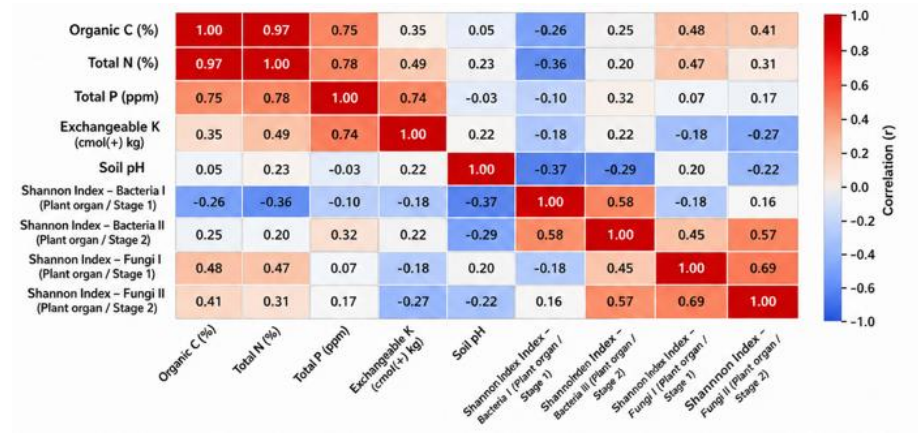
Fig. 1: Correlation matrix between soil chemical properties and microbial diversity in leaves of healthy chili plants
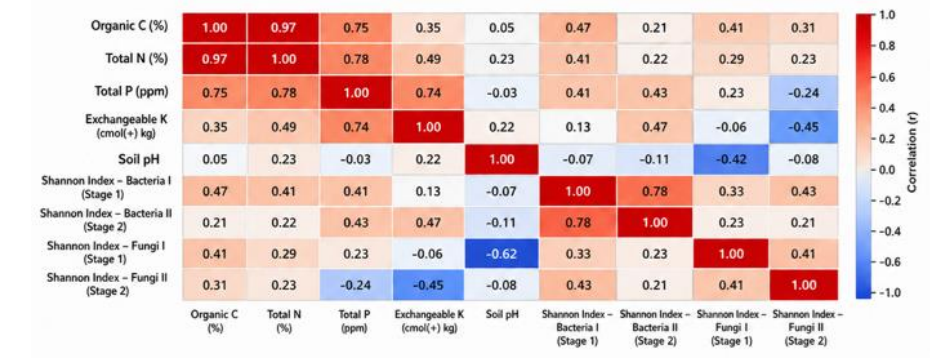
Fig. 2: Correlation matrix between soil chemical properties and microbial diversity in stems of healthy chili plants
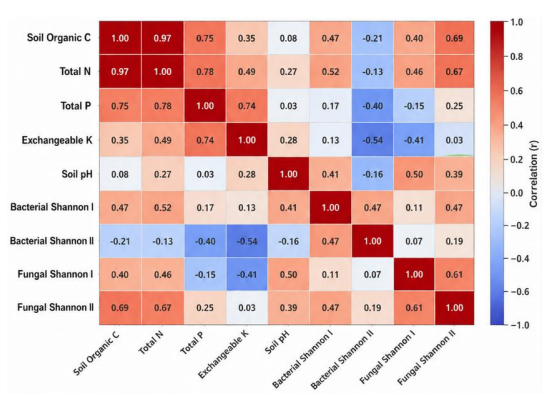
Fig. 3: Correlation matrix between soil chemical properties and microbial diversity in root-associated tissues of healthy chili plants
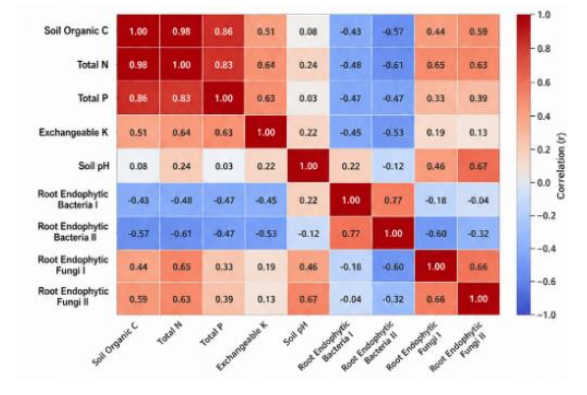
Fig. 4: Correlation matrix for fungal epiphyte diversity in root-associated tissues of healthy chili plants
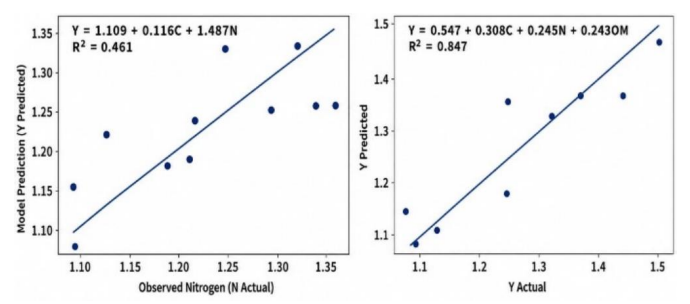
Fig. 5: Regression summaries for microbial diversity across plant compartments
In stems, C-organic and total N again showed the strongest relationships with fungal diversity. The regression analysis supported this pattern. In stage I, fungal diversity was modeled as Y = 1.109 + 0.116C + 1.487N (R² = 0.461). In stage II, the model improved substantially, with Y = −0.507 + 0.308(C-organic) − 2.405(N-total) + 0.262(pH), and R² = 0.847. Building upon the preliminary Pearson correlation analysis, multiple linear regression was employed to model the collective influence of soil physicochemical properties. The final model demonstrated that soil organic carbon, total nitrogen, and soil pH jointly accounted for a substantial proportion of the variation in fungal diversity, indicating that microbial community dynamics are shaped by synergistic interaction of among multiple soil properties rather than discrete variables. The high coefficient of determination (R² = 0.847) indicates that soil organic carbon, total nitrogen, and soil pH jointly explained a substantial proportion of the variation in stem fungal diversity. These variables collectively modulate nutrient availability, microbial proliferation, and habitat suitability, demonstrating that fungal community assembly is driven by the integrated effects of soil fertility rather than discrete, isolated soil properties. C-organic positively supported microbial diversity by providing an important energy source for microbial growth, whereas the negative coefficient of N during the second stage suggests that excessive N may reduce fungal evenness and diversity (Zhou et al., 2021; Li et al., 2023). The ecological responses of bacterial and fungal communities were highly distinct: bacterial diversity was predominantly driven by soil pH, while fungal diversity correlated more strongly with overall soil fertility parameters (Jiao et al., 2021). Higher soil fertility also promoted greater root-associated tissue microbial diversity, emphasizing the importance of the rhizosphere in regulating plant–microbe interactions through root exudates and soil physicochemical properties (Fitzpatrick et al., 2020). Subsequent regression modeling demonstrated that fungal diversity was governed by synergistic environmental interactions, with these associations becoming more pronounced during the second sampling stage—underscoring the combined role of seasonality and phenological crop development in shaping microbial community assembly (Liu et al., 2020; Purohit et al., 2024). These findings support the use of microbiome diversity as a biological indicator of soil quality, contributing to nutrient cycling, pathogen suppression, and ecosystem resilience in tropical chili production systems (Naylor and Coleman-Derr, 2018; Banerjee and van der Heijden, 2023).
Ecological interpretation of the microbial patterns
Altitude, soil chemical properties, plant health status, and cultivation practices collectively influenced the diversity of culturable microbial assemblages associated with chili plants. Root-associated tissues consistently supported the highest microbial diversity, while anthracnose infection restructured microbial composition in aboveground tissues, illustrating how environmental variables, host selection, and soil fertility interact to shape plant–microbe dynamics (Compant et al., 2019; Jiao et al., 2021; Liu et al., 2020). The findings also show that high soil C-organic and N were associated with stronger fungal diversity, whereas bacterial communities were more sensitive to pH and to the balance among soil nutrients. These findings indicate that bacterial and fungal taxa exhibit divergent ecological responses to identical soil environment. These distinctions are significant, as soil microbiome structure typically reflects concurrent, multifaceted ecological pressures at the same time, rather than a single, dominant governing factor. The microbial communities identified in the present study comprised both beneficial and potentially opportunistic microorganisms. While beneficial microorganisms facilitate to nutrient cycling, nutrient acquisition, maintenance of soil biological stability, and the biopriming or natural suppression of soil-borne pathogens, anthracnose-induced shifts in culturable microbial assemblages likely reflect ecological dysbiosis and a concomitant rise in colonization by opportunistic pathogens. Therefore, maintaining beneficial microbial communities through appropriate soil fertility and crop management practices represents an important strategy for improving soil health and promoting environmentally sustainable chili production. Finally, the recovery of 218 bacterial isolates and 16 fungal isolates, followed by the selection of 41 bacterial and 10 fungal isolates for further screening, establishes a valuable ecological repository for future functional characterizations of culturable microbial assemblages. The microbial consortia identified in this study establish a valuable biological foundation for the development of targeted microbiome-based disease management strategies. Representative antagonistic isolates may serve as candidate biological control agents against Colletotrichum spp., whereas maintaining diverse beneficial microbial communities through appropriate soil management may enhance natural disease suppression and reduce anthracnose incidence under field conditions. The ecological interpretation presented in this study was based on culture-dependent analyses, including microbial abundance, Shannon diversity, and their relationships with soil chemical properties across contrasting agroecological conditions. While these culture-dependent approaches yield crucial baseline ecological insights, incorporating high-throughput sequencing technologies in future studies will facilitate the detection of unculturable taxa, enhance taxonomic resolution, and offer a more holistic understanding of microbial community structure, ecological dynamics, and ecosystem functioning. The primary objective of the present study was to characterise culturable microbial diversity under contrasting agroecological conditions. Nevertheless, representative isolates recovered during this study were subsequently evaluated for antagonistic activity against Colletotrichum spp. as part of a separate investigation. Future evaluation of additional functional traits, including nutrient solubilisation, nitrogen fixation, siderophore production, and plant growth-promotion, would further strengthen the ecological interpretation and facilitate the development of microbiome-based biological control strategies. The subsequent biochemical and antagonistic screening of the selected isolates has been reported separately by Tarigan et al. (2025). Consequently, these findings establish a baseline characterization of how the field environment and host disease status interact to modulate microbial diversity in chili production systems. From an applied standpoint, these findings advocate for integrated soil and microbiome management strategies. Specifically, prioritizing the maintenance of soil organic matter, balanced fertilization regimes, preservation of beneficial microbial consortia, and minimized reliance on chemical fungicides is expected to enhance soil fertility, strengthen natural disease suppression, and sustainable chili cultivation.
CONCLUSION
This study demonstrates that agroecological conditions, particularly soil chemical properties, altitude, and plant health status, are important drivers of culturable microbial diversity associated with chili pepper. In contrast to anthracnose-infected areas, healthy fields exhibited significantly enhanced soil fertility, characterized by elevated levels of organic carbon, total nitrogen, available phosphorus, exchangeable potassium, and near-neutral soil pH than anthracnose-infected fields. Root tissues consistently supported the greatest microbial diversity, highlighting their ecological importance in plant–soil interactions. While fungal diversity displayed more robust positive correlations with soil organic carbon and total nitrogen, bacterial diversity was predominantly driven by soil pH. These findings indicate that soil fertility plays a central role in structuring culturable microbial assemblages under field conditions. Improving soil quality may therefore enhance microbial stability, plant health, and resilience against disease. In conclusion, this study establishes a vital ecological baseline that can guide the design of sustainable, microbiome-mediated soil and crop management strategies in chili production systems. A total of 218 bacterial isolates and 16 fungal isolates were recovered from healthy and anthracnose-infected chili plants, providing a valuable culture collection for future ecological and functional studies. Among these, 41 bacterial isolates and 10 fungal isolates were selected for further phenotypic profiling based on their distinctive morphological features. Although these findings are applicable to chili agroecosystems with environmental conditions similar to those investigated in North Sumatra, caution is required when extrapolating the results to regions with different climates, soil types, agricultural practices, or disease pressures. Further validation across diverse agroecosystems is recommended. This study establishes baseline data for long-term monitoring of soil fertility, microbial diversity, anthracnose incidence, and ecosystem functioning to evaluate temporal changes in agroecosystem sustainability. Future studies integrating high-throughput sequencing, metagenomics, functional diversity analyses, and ecosystem service assessments should complement the culture-dependent approach and provide a comprehensive understanding of plant–soil–microbe interactions. These findings provide a scientific basis for microbiome-based soil health assessment and sustainable disease management in chili production systems. They also support future research on beneficial plant-associated microorganisms to enhance crop resilience and promote sustainable agriculture. Differences in soil fertility between healthy and anthracnose-infected chili fields influence nutrient cycling, plant productivity, disease resistance, and agroecosystem sustainability. Healthy fields generally exhibited higher soil organic carbon, total nitrogen, available phosphorus, exchangeable potassium, and a more favorable soil pH, providing conditions that enhance microbial activity, nutrient cycling, and plant nutrient uptake. These conditions support plant growth, improve resistance to Colletotrichum spp. infection, and maintain more stable microbial communities. In contrast, reduced soil fertility in infected fields is associated with poorer microbial habitats, increased disease susceptibility, and lower plant productivity. Therefore, the present study should be regarded as the ecological basis for functional investigations. From an environmental science and management perspective, this study provides baseline information on factors shaping chili-associated microbial communities. Soil properties, altitude, and plant health were associated with microbial diversity and community composition. The findings support microbiome-based management strategies that emphasize the conservation of beneficial microbial communities through maintenance of soil organic matter, balanced nutrient management, reduced dependence on chemical fertilizers and fungicides, and application of locally adapted beneficial microbial inoculants. These approaches may contribute to ecological restoration of agricultural soils, improved soil health, enhanced natural disease suppression, and sustainable chili production under diverse environmental conditions through integrated ecosystem-based agricultural management practices and interventions that strengthen ecosystem resilience while maintaining long-term agricultural productivity and environmental sustainability across regions. However, the observed soil differences are associated with disease status but do not prove that soil chemistry caused anthracnose susceptibility. Other factors such as location, cultivar, irrigation, fertilization, and local management may also influence the pattern. The results are presented as ecological patterns observed across sites, plots, and plant compartments. Any mechanistic explanation is framed as a hypothesis for future testing through controlled experimental validation studies.
AUTHOR CONTRIBUTIONS
R. Tarigan conceived the study, designed experiments, led fieldwork, interpreted data, and drafted the manuscript. Lisnawita supported study design, methodology contributed to data interpretation and manuscript revision. A.R. Tantawi participated in collecting data, conducting analytical procedures and assisted with manuscript refinement. C. Hermanto assisted with data interpretation and contributed to drafting figures and tables.
ACKNOWLEDGEMENT
The authors sincerely thank the Department of Agroecotechnology, Faculty of Agriculture, Universitas Sumatera Utara, for providing laboratory facilities and technical support throughout this research. The authors also gratefully acknowledge the financial support provided by the Research Organization for Agriculture and Food, National Research and Innovation Agency (BRIN), through the Research Program House under the Budidaya Tanaman (BUTAN) research scheme [Grant No. 5.3/2025]. The funding agency had no role in the study design, data collection, data analysis, interpretation of the results, manuscript preparation, or the decision to submit the article for publication. Field sampling was conducted with permission from participating farmers. Laboratory isolation and handling of plant-associated microorganisms followed institutional Biosafety Level 1 (BSL-1) procedures for environmental microorganisms
CONFLICT OF INTEREST
The authors declare that there is no conflict of interest regarding the publication of this manuscript. The ethical issues, including plagiarism, informed consent, misconduct, data fabrication and/or falsification, double publication and/or submission, and redundancy have been completely observed by the authors.
OPEN ACCESS
©2026 The author(s). This article is licensed under a Creative Commons Attribution 4.0 International License, which permits use, sharing, adaptation, distribution and reproduction in any medium or format, as long as you give appropriate credit to the original author(s) and the source, provide a link to the Creative Commons license, and indicate if changes were made. The images or other third-party material in this article are included in the article’s Creative Commons license, unless indicated otherwise in a credit line to the material. If material is not included in the article’s Creative Commons license and your intended use is not permitted by statutory regulation or exceeds the permitted use, you will need to obtain permission directly from the copyright holder. To view a copy of this license, visit: http://creativecommons.org/licenses/by/4.0/
PUBLISHERS NOTE
GJESM Publisher remains neutral regarding jurisdictional claims in published maps and institutional afflictions.
R Negative AI Statement
The author(s) declared that no AI tools or services were used or highly applied during the preparation of this work.
ABBREVIATIONS
|
% |
Percent |
|
α |
Alpha |
|
°C |
Degree Celsius |
|
ANOVA |
Analysis of variance |
|
DS |
Disease severity |
|
C-organic |
Organic carbon |
|
cm |
Centimeter |
|
G |
Gram |
|
GPS |
Global positioning system |
|
h |
hour |
|
H' |
Shannon Diversity Index |
|
K |
Potassium |
|
K-dd |
Exchangeable Potassium |
|
LSD |
Least Significant Different |
|
M |
Meter |
|
m.a.s.l. |
Meters above sea level |
|
Me |
Milliequivalent |
|
me/100 g |
Milliequivalents per 100 g Soil |
|
NA |
Nutrient agar |
|
n |
Number sample |
|
ni |
Number of individuals in a given category |
|
Ni |
Total number of individuals across categories |
|
N |
Nitrogen |
|
N-total |
Total nitrogen |
|
P |
Phosphorus |
|
PDA |
Potato dextrose agar |
|
pH |
Potential of hydrogen |
|
P-Bray I |
Available P Determined by the Bray I Method |
|
Ppm |
Parts per million |
|
SD |
Standard deviation |
REFERENCES
Agu, K.C.; Chidozie, C.P., (2021). An improved slide culture technique for the microscopic identification of fungal species. Int. J. Trend Sci. Res. Dev., 6(1): 243–254 (12 pages).
Bernadip, B.R.; Hadiwiyono; Sudadi., (2014). Keanekaragaman jamur dan bakteri rizosfer bawang merah terhadap patogen moler. Sains Tanah J. of Soil Sci. Agroclimatology. 52-60 (9 pages).
Barnett, H.L.; Hunter, B.B., (1998). Illustrated Genera of Imperfect Fungi. 4th ed. APS Press. (218 pages).
Brockett, B.F.T.; Prescott, C.E.; Grayston, S.J., (2012). Soil moisture is the major factor influencing microbial community structure and enzyme activities across seven biogeoclimatic zones in western Canada. Soil Biol. Biochem., 44(1): 9–20 (12 pages).
Compant, S.; Samad, A.; Faist, H.; Sessitsch, A., (2019). A review on the plant microbiome: Ecology, functions, and emerging trends in microbial application. J. Adv. Res., 19: 29–37 (9 pages).
Cregger, M.A.; Schadt, C.W.; McDowell, N.G.; Pockman, W.T.; Classen, A.T., (2012). Response of the soil microbial community to changes in precipitation in a semiarid ecosystem. Appl. Environ. Microbiol., 78(24): 8587–8594 (8 pages).
Fitzpatrick, C.R.; Salas-González, I.; Conway, J.M.; Finkel, O.M.; Gilbert, S.; Russ, D.; Teixeira, P.J.P.L.; Dangl, J.L., (2020). The plant microbiome: From ecology to reductionism and beyond. Annu. Rev. Microbiol., 74: 81–100 (19 pages).
Hanif, M.S.; Tayyab, M., (2024). Plant microbiome technology for sustainable agriculture. Front. Microbiol., 1500260 (18 pages).
Hardoim, P.R.; Van Overbeek, L.S.; Van Elsas, J.D., (2015). Properties of bacterial endophytes and their proposed role in plant growth. Trends Microbiol., 23(7): 463–471 (9 pages).
Harrison, X.A.; Donaldson, L.; Correa-Cano, M.E.; Evans, J.; Fisher, D.N.; Goodwin, C.E.; Inger, R., (2018). A brief introduction to mixed effects modelling and multi-model inference in ecology. PeerJ, 6: e4794 (32 Pages).
Jiang, H.; Chen, X.; Li, Y.; Jiangang, C.; Li, W.; Yuanbin, Z., (2024). Seasonal dynamics of soil microbiome in response to dry–wet alternation along the Jinsha River Dry-hot Valley. BMC Microbiol., 24: 496 (14 pages).
Jiao, S.; Lu, Y., (2021). Soil pH drives microbial community assembly in agricultural ecosystems. Environ. Microbiol., 23(2): 793–806 (13 pages).
Kinkel, L.L., (1997). Microbial population dynamics on leaves. Annu. Rev. Phytopathol., 35: 327–347 (21 pages).
Koyama, A.; Steinweg, J.M.; Haddix, M.L.; Dukes, J.S.; Wallenstein, M.D., (2018). Soil bacterial community responses to altered precipitation and temperature regimes in an old field grassland are mediated by plants. FEMS Microbiol. Ecol., 94(1): fix156 (15 pages).
Koyyappurath, S.; Conéjéro, G.; Dijoux, J.B.; Lapeyre-Montès, F.; Jade, K.; Chiroleu, F.; Gatineau, F.; Verdeil, J.L.; Besse, P.; Grisoni, M., (2015). Differential responses of vanilla accessions to root-associated tissue rot and colonization by Fusarium oxysporum f. sp. radicis-vanillae. Front. Plant Sci., 6: 1125 (13 pages).
Lal, R., (2016). Soil health and carbon management. Food Energy Secur., 5(4): 212–222 (11 pages).
Li, J.; Benti, G.; Wang, D.; Yang, Z.; Xiao, R., (2022). Effect of alteration in precipitation amount on soil microbial community in a semi-arid grassland. Front. Microbiol., 13: 842446 (7 pages).
Liu, H.; Brettell, L.E.; Singh, B.K., (2020). Microbiome-mediated stress resistance in plants. Trends Plant Sci., 25(8): 733–743 (11 pages).
Madigan, M.T., (2012). Brock Biology of Microorganisms. 13th ed. Pearson Prentice Hall. (104 pages).
Mendes, R.; Garbeva, P.; Raaijmakers, J.M., (2013). The rhizosphere microbiome: significance of plant beneficial, plant pathogenic, and human pathogenic microorganisms. FEMS Microbiol. Rev., 37(5): 634–663 (30 pages).
Naylor, D.; Coleman-Derr, D., (2018). Drought stress and root-associated tissue-associated bacterial communities. Front. Plant Sci., 8: 2223 (11 pages).
Purohit, H.J.; Pandit, P.; Pal, R.; Warke, R.; Warke, G.M., (2024). Soil microbiome: An intrinsic driver for climate-smart agriculture. J. Agric. Food Res., 18: 101433.
Rodríguez, H.; Fraga, R., (1999). Phosphate solubilizing bacteria and their role in plant growth promotion. Biotechnol. Adv., 17(4–5): 319–339 (21 pages).
Saxena, A.; Raghuwanshi, R.; Gupta, V.K.; Singh, H.B., (2016). Chili anthracnose: the epidemiology and management. Front. Microbiol., 7: 1527 (13 pages).
Sterrantino, A.F., (2024). Observational studies: practical tips for avoiding common statistical pitfalls. The Lancet Reg. Health-Southeast Asia, 25:1-9 (9 Pages).
Silva, I.; Alves, M.; Malheiro, C.; Silva, A.R.R.; Loureiro, S.; Henriques, I.; González-Alcaraz, M.N., (2022). Short-Term Responses of Soil Microbial Communities to Changes in Air Temperature, Soil Moisture and UV Radiation. Genes. 13(5): 850 (21 pages).
Sutton, B.C., (1980). The Coelomycetes. Commonwealth Mycological Institute, Kew. (589 pages).
Tarigan, R.; Lisnawita, Tantawi, A.R.; Hermanto, C., (2025). Exploration of microbial antagonists in chili to control anthracnose disease in vitro. In BIO Web of Conference, 186: 01003 (14 Pages).
Vimal, S.R.; Shobhit, R.; Jay,; S.S.; Ashwani, K.; Sheo, M.P., (2024). The plant endomicrobiome: structure and strategies to improve plant performance. PubMed Central., 1-13 (13 pages).
Wang, C.; Wang, Y.; Pan, Z.; Zhang, L.; Zhang, Y., (2021). Flagellar motility facilitates bacterial colonization and pathogenesis in plants. Front. Plant Sci., 12: 660255 (10 pages).
Wang, J.; Xiao, S.; Hayat, K.; Liao, X.; Chen, J.; Zhang, L.; Xie, Y.I., (2024). Investigating the effects of elevation on microbial communities. Forests. 1-15 (15 pages).
Xia, Y.; Reyer J.; Scott, D.; Williams, M.A., (2015). Characterization of culturable bacterial endophytes and their diversity in vegetable crops under organic and conventional farming systems. Front. Plant Sci., 6: 490 (11 pages).
Zhao, C.; Miao, Y.; Yu, C.; Zhu, L.; Wang, F.; Jiang, L.; Hui, D.; Wan, S., (2016). Soil culturable microbial assemblages and respiration along an experimental precipitation gradient in a semiarid steppe. Sci. Rep., 6: 24317 (9 pages).
Zhou, W.P.; Shen, W.J.; Li, Y.E.; Hui, D.F., (2017). Interactive effects of temperature and moisture on composition of the soil microbial community. Eur. J. Soil Sci., 68: 909–918 (10 pages).
Zhou, J.; Ning, D., (2021). Stochastic community assembly in microbial ecology. Microbiol. Mol. Biol. Rev., 85(2): e00058-20 (11 pages).
OPEN ACCESS
©2026 The author(s). This article is licensed under a Creative Commons Attribution 4.0 International License, which permits use, sharing, adaptation, distribution and reproduction in any medium or format, as long as you give appropriate credit to the original author(s) and the source, provide a link to the Creative Commons license, and indicate if changes were made. The images or other third party material in this article are included in the article’s Creative Commons license, unless indicated otherwise in a credit line to the material. If material is not included in the article’s Creative Commons license and your intended use is not permitted by statutory regulation or exceeds the permitted use, you will need to obtain permission directly from the copyright holder. To view a copy of this license, visit: http://creativecommons.org/licenses/by/4.0/
PUBLISHER NOTE
GJESM Publisher remains neutral concerning jurisdictional claims in published maps and institutional affiliations.
MAJOR DATABASES, CITATION METRICS & CAPTURES
Google Scholar | Scopus - SJR | Web of Science | Biological Abstracts: Clarivate | Biosis Preview: Clarivate | PlumX Metrics | Altmetrics | Mendeley |
CURRENT PUBLISHER

| Article View | 834 |
| PDF Download | 290 |

Letters to Editor
[1] Letters that include statements of statistics, facts, research, or theories should include appropriate references, although more than three are discouraged.
[2] Letters that are personal attacks on an author rather than thoughtful criticism of the author’s ideas will not be considered for publication.
[3] Letters can be no more than 300 words in length.
[4] Letter writers should include a statement at the beginning of the letter stating that it is being submitted either for publication or not.
[5] Anonymous letters will not be considered.
[6] Letter writers must include their city and state of residence or work.
[7] Letters will be edited for clarity and length.