
5.2
CiteScore
2.9
Impact Factor
Document Type : RESEARCH ARTICLE
Authors
1 School of Architecture, Building and Design, Faculty of Innovation and Technology, Taylor’s University, 47500 Subang Jaya, Selangor, Malaysia
2 School of Civil and Architectural Engineering, Panzhihua University, Dong District, 617000 Panzhihua, China
Graphical Abstract
Highlights
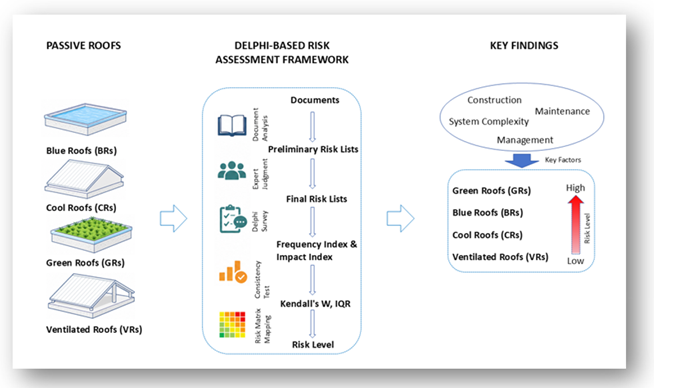
Ø Green roofs exhibited the highest overall risk levels, whereas ventilated roofs showed the lowest risk;
Ø Risk distribution varied significantly among four passive roof types under rural construction conditions;
Ø Management capacity, construction quality, maintenance demand, and cost constraints were identified as key risk factors;
Ø Expert disagreement highlighted the uncertainty and context dependency of passive roof applications in rural areas.
Keywords
INTRODUCTION
Improving the energy performance of rural housing has become an important issue under the “dual carbon” goals and rural revitalization strategies (Chang et al., 2022; Qi et al., 2023; Shao et al., 2021; Wang et al., 2023; Xiao et al., 2024). Unlike urban buildings, rural dwellings typically lack comprehensive regulatory or technical oversight during design, execution, and operation, resulting in deficient envelope performance and elevated energy consumption (Shao et al., 2021). Hot–dry regions of Southwest China are characterized by high temperatures, strong solar radiation, and large diurnal temperature variations. Together with the high roof-to-floor ratio of low-rise buildings, these characteristics make roofs a critical factor influencing indoor thermal conditions and energy consumption (Athmani, et al., 2022; Dristy, et al., 2020). Passive roofing systems—encompassing green roofs (GRs), blue roofs (BRs), cool roofs (CRs), and ventilated roofs (VRs)—mitigate environmental impacts by leveraging inherent physical mechanisms such as insulation, reflection, evaporation, and ventilation (Shun et al., 2025). However, their implementation in rural areas faces multiple challenges, such as limited technical capacity, weak management systems, insufficient maintenance, and cost constraints (Andenæs et al., 2020; Mbua et al., 2024; Rawat et al., 2021). Such constraints introduce critical uncertainties regarding practical scalability; however, the established body of research focus is largely confined to engineering metrics, namely thermal performance, energy modeling, material synthesis, and structural design (Saber et al., 2021; Yazdani and Baneshi, 2021; Zhao et al., 2023). While these studies demonstrate the technical potential of passive roofs, they pay limited attention to risks during implementation. Moreover, risk assessments are often conducted in urban or well-regulated environments, overlooking the complexities of rural construction contexts. In rural regions, roof application involves not only technical feasibility but also management, financial, environmental, and operational factors. Without systematic risk identification and classification, the deployment of passive roofing technologies may yield suboptimal outcomes or precipitate novel safety and operational hazards. These studies generally focus on single roof technologies, urban contexts, or lifecycle management issues (Gerzhova et al., 2022; Säwén et al., 2022; Tabatabaee et al., 2022). Consequently, there is a lack of systematic frameworks that cover multiple passive roof types and address both technical and non-technical risks under resource-constrained conditions. Owing to its capacity for establishing expert consensus amidst high levels of uncertainty, the Delphi method has seen extensive application within construction and sustainability research (Abdul Rahman et al., 2022; Tabatabaee et al., 2022). By conducting multiple rounds of anonymous evaluation, it improves the reliability of subjective judgments, making it particularly suitable for risk assessment in data-scarce contexts (Hussain et al., 2024; Khosravi et al., 2020). As a visual classification framework, the risk matrix (RM) maps severity and frequency into intuitive risk thresholds, thereby facilitating strategic decision-making (Anthony Cox, 2008). Integrating Delphi with RM enables both quantitative assessment and clear visualization of risks. It develops a systematic framework for risk identification and assessment of passive roofs. The contributions are threefold. First, this study shifts the research paradigm from localized technical performance toward a comprehensive, system-level risk assessment. Second, it establishes an integrated methodological framework that sequentially synthesizes a literature review, the content validity ratio (CVR) screening, Delphi evaluation, and risk matrix (RM) classification. Third, it provides practical support for decision-making in rural passive roof applications. The aims are: 1) To establish risk factor lists through literature review and expert judgment; 2) To quantify impact and occurrence frequency using Delphi surveys; 3) To classify risk levels using a modified RM method and identify high-risk and low-consensus risks. This study has been carried out in Panzhihua City in Sichuan, China a hot–dry region in 2025 and 2026.
MATERIALS AND METHODS
The study area
Panzhihua sits at the geographic border of Sichuan and Yunnan Provinces, representing a textbook sub-hot-dry climate in Southwest China (SPDHURD, 2022; Szokolay, 1980). The region experiences a distinct climatic dichotomy characterized by pronounced wet and dry seasons, high evaporation rates, and an annual mean temperature of 20.7 degrees Celsius (oC) (People's Government of Panzhihua Municipality, 2025). Within its rural territories, the building fabric is overwhelmingly dominated by single- or two-story low-rise houses. In such microclimates, the roof envelope rather than vertical walls acts as the primary conduit for intense solar heat entry (Saurabh and Madhura, 2023). Crucially, while the regional "Technical Standard for Application of Energy-saving Technology for Civil Buildings in Panxi"- 2022, officially endorses passive roofs, its generic guidelines lack actionable, risk-oriented execution paths. This institutional oversight constrains rural residents to rely on unstandardized and inherently vulnerable roofing practices during autonomous construction. Panzhihua’s collision of climate stress and rural resource bottlenecks makes it an irreplaceable empirical case to dissect implementation risks.
Literature search and identification of risk factors
To identify potential risk factors associated with passive roofing systems in rural housing, this study employed a structured literature review coupled with qualitative content analysis. Considering that the study area is located in the hot–dry regions of Southwest China, where local codes and practical experience are often documented in Chinese, both English and Chinese sources were included to ensure comprehensive coverage. ScienceDirect and China National Knowledge Infrastructure (CNKI) were selected as the primary databases. ScienceDirect was used to retrieve English journal articles, while CNKI was used to identify Chinese studies and roof-related technical codes (Shun et al., 2025). To guarantee data timeliness, the temporal scope of the literature search was restricted to the 2016–2025 period. Furthermore, in contrast to keyword- or abstract-based queries, a title-based retrieval strategy was implemented to yield more precise and highly topic-focused results (Lu et al., 2025). Accordingly, a title-based search strategy was adopted using terms such as “passive roof”, “blue roof”, “cool roof”, “green roof”, “ventilated roof”, “double roof”, “pond roof”, and “roofing code”. Crucially, to counteract the potential omission risks inherent in title-only filtering, a systematic manual backward snowballing strategy was subsequently executed. This involved a meticulous manual screening of the reference lists from the fully reviewed articles and prominent review papers. For example, although the technical code for roof engineering (GB 50345–2012) issued by MOHURD, (2012) falls outside the selected timeframe, it remains the current governing standard in the study region and was therefore included as a key reference. Following the literature screening process, 88 studies met the inclusion criteria and were selected for subsequent risk identification and analysis (Fig. 1). Content analysis was used to code and categorize risk-related information from the selected literature (Elo et al., 2014). Similar or overlapping risk descriptions were merged and standardized, and then classified according to their characteristics. To ensure comprehensiveness, particularly within rural contexts, the initial risk framework was supplemented with operational risk factors derived from professional expertise and subsequently validated against contemporary literature. This process resulted in a preliminary risk list comprising five categories: management and policy risks, financial risks, environmental risks, health and safety risks, and quality risks. This list formed the basis for subsequent expert screening and the Delphi survey.
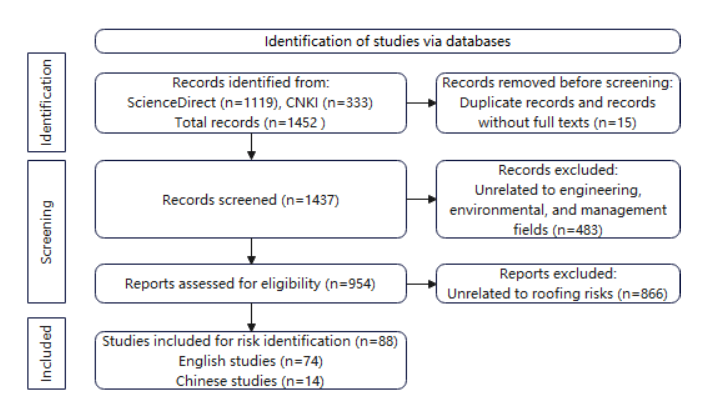
Fig. 1: Flow diagram of the literature screening process (Adapted from the preferred reporting items for systematic reviews and meta-analyses)
Overall research framework
The overall research framework is illustrated in Fig. 2 and comprises five main stages. A preliminary risk list was initially generated by conducting a systematic literature review targeted at identifying the diverse risk factors associated with passive roofing applications. Experts were then recruited through purposive sampling based on predefined selection criteria, and the preliminary risk list was screened to establish the final risk lists for the four roof types. Delphi surveys were subsequently conducted to evaluate the impact index (II) and frequency index (FI) of each risk factor. The initial phase centered on the elicitation of expert ratings, which were subsequently subjected to descriptive statistical analysis and consistency testing. Statistical feedback from the first round was then provided to the experts to support a second round of evaluation and further improve consensus. After the predefined consistency criteria had been satisfied, the mean II and FI values were calculated. In the final stage, the risk factors were projected onto the RM to categorize critical and severe threats, providing a structured foundation for the ensuing evaluation and discussion.
Expert selection criteria
To ensure the rigor of the results, explicit expert selection criteria were established (Table 1), covering professional experience, project involvement, expertise, and contextual familiarity. To qualify for selection, panel experts were required to possess a minimum of five years of professional experience in architectural design, construction, or management. Additionally, eligible candidates must have participated in at least five roof-related initiatives and demonstrate familiarity with hot–dry climates or rural construction practices. To ensure relevance, this study employed purposive sampling based on specific criteria and considerations (Rama et al., 2023). The resulting panel comprised architects, engineers, researchers, government officials, contractors, and material suppliers, thereby enhancing the overall representativeness of the cohort. Considering that Delphi studies typically involve 15–20 experts, and given the limited availability of qualified participants, 15 experts were ultimately selected (Khosravi et al., 2020). Experts were recruited through multiple channels, including industry associations, engineering projects, official documents, and professional recommendations. To maintain strict confidentiality, all panel participants remained completely anonymized throughout the evaluation process.
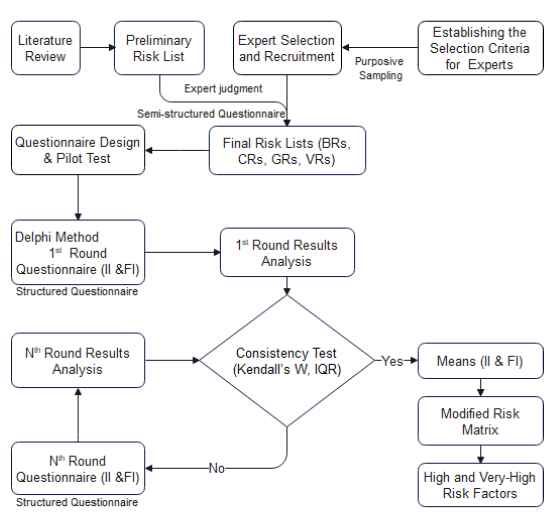
Fig. 2: The study framework for risk identification and assessment Note: BRs = blue roofs; CRs = cool roofs; FI = frequency index; GRs = green roofs; II = impact index; IQR = interquartile range; Kendall’s W = Kendall’s coefficient of concordance; VRs = ventilated roofs
Table 1: Expert selection criteria for the Delphi survey
|
Criterion |
Description |
|
Professional experience |
Professional or research experience ≥5 years related to building design, construction, or management |
|
Project involvement |
Participation in roof-related projects ≥5 |
|
Professional background |
Architect, engineer, researcher, government official, contractor, or building material supplier |
|
Relevant expertise |
Experience in passive building design, roof systems, rural housing, or building risk management |
|
Context familiarity |
Familiarity with hot–dry climatic conditions or rural construction practices in Southwest China or similar regions |
Risk identification
A triangulation approach combining literature analysis and expert judgment was adopted to improve validity (Abdul Rahman et al., 2022). The preliminary risk inventory was distributed to the 15-member expert panel, who evaluated the practical applicability of each factor across the four designated roofing typologies. The questionnaire was semi-structured, allowing experts not only to classify risks but also to suggest additional factors based on their experience. This step ensured alignment between literature-derived risks and real-world conditions. The CVR was used to determine risk retention (Lawshe, 1975). In accordance with the content validity thresholds established by Ayre and Scally (2014), a minimum of 12 panel endorsements from the 15 participating experts was required for a risk factor to be retained. Any risks falling below this consensus benchmark were systematically excluded, yielding the final risk inventory for subsequent analysis and prioritization.
Delphi questionnaire design
A structured questionnaire was developed, including instructions, risk categories, codes, descriptions, II, and FI. II and FI were measured using a five-point Likert scale. II ranged from 1 (low risk) to 5 (very high risk), while FI ranged from 1 (very rare) to 5 (very frequent). The questionnaire was distributed via email and online using a quick response code. To enhance the clarity and comprehensibility of the instrument, a pilot test was conducted with a tripartite expert panel comprising a researcher, an engineer, and a government official. Based on feedback, adjustments were made to layout, format (Excel preferred), and risk descriptions. The first Delphi round then collected expert ratings for II and FI.
Data analysis methods
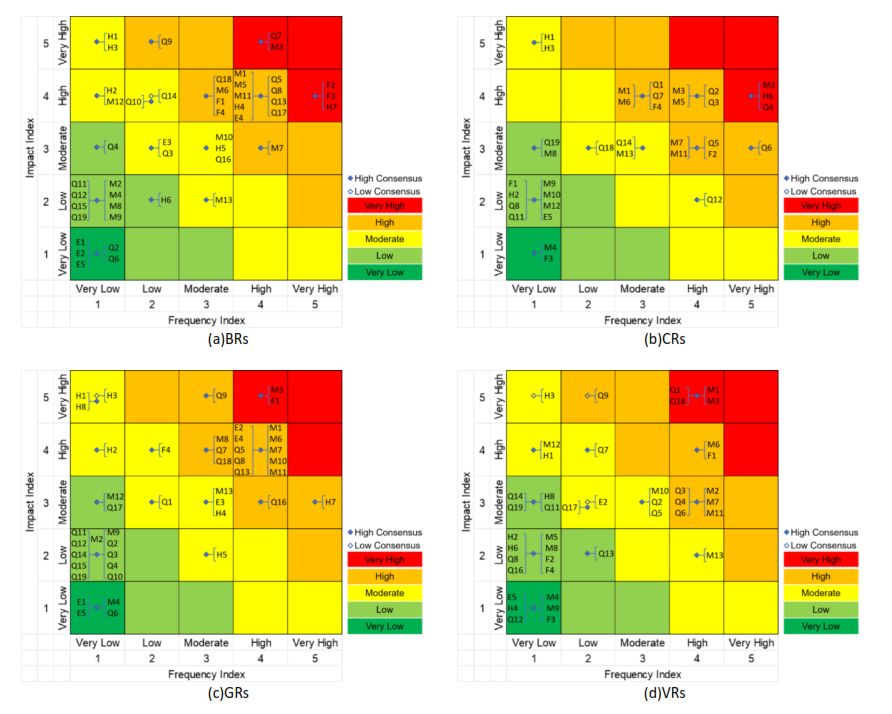
Data analysis included three steps: descriptive statistics, consistency testing, and RM mapping. After each Delphi round, data were analyzed using statistical package for the social sciences (SPSS). To assess the distribution of the data, the mean values and interquartile ranges (IQRs) were determined for each individual risk factor (Hussain et al., 2024). The mean reflects overall evaluation, while the IQR indicates consensus. An IQR ≤ 1.0 suggests agreement, whereas values > 1.0 indicate low consensus. Kendall’s coefficient of concordance (W) was used to assess ranking consistency, with significance tested using p-values (Chen et al., 2024; Dong et al., 2025). A value of W ≥ 0.5 with p < 0.001 indicates acceptable agreement; otherwise, an additional Delphi round is required (Ashrafi et al., 2025). Once consensus was achieved, mean II and FI values were calculated. To maintain consistency between expert ratings and risk-level interpretations, the 0.8-interval classification was established by segmenting the 1–5 Likert scale range into five equal categories (Table 2). Compared with numerical tables, the RM provides a clearer visualization of risk levels and their relative positions (Anthony Cox, 2008). The mean II and FI values were mapped onto a 5 × 5 RM, where the vertical axis represents impact and the horizontal axis represents frequency. Risk severity escalates from the lower-left to the upper-right quadrant of the matrix, facilitating the clear delineation of high-risk and critical zones. Furthermore, risk factors characterized by a low expert consensus were explicitly retained for closer examination. A modified RM was used to map these risks, allowing both their risk levels and divergence to be visualized. Fig. 3 presents the distribution of risk levels and low-consensus risks across the four roof types.
RESULTS AND DISCUSSION
Risk identification results
Through a systematic literature review, an initial risk inventory for passive roofing systems in rural dwellings within hot–dry regions was established, comprising 49 distinct risk factors classified into five primary categories (Table 3). To enhance practical relevance, expert screening was conducted. A total of 32 experts were invited, and 15 participated, including researchers, architects, engineers, government officials, contractors, and a materials supplier. Using the CVR threshold, risk factors were screened separately for each roof type, resulting in 47, 35, 48, and 42 risks for BRs, CRs, GRs, and VRs, respectively. Such differences reflect divergent levels of technical complexity alongside distinct operational and application environments. Overall, synthesizing the literature review and expert judgment ensured both comprehensiveness and validity of the research framework. The CVR-based screening improved reliability, forming a robust foundation for subsequent Delphi-based assessment, while minimizing the inclusion of irrelevant variables and enhancing the methodological rigor, consistency, and credibility of the identified risk inventory across different rooftop farming system configurations examined.
Table 2: Likert scale for the mean II and mean FI
|
The range of mean II/mean FI |
Index |
Level |
|
1.0000 – 1.7999 |
1 |
Very Low |
|
1.8000 – 2.5999 |
2 |
Low |
|
2.6000 – 3.3999 |
3 |
Moderate |
|
3.4000 – 4.1999 |
4 |
High |
|
4.2000 – 5.0000 |
5 |
Very High |
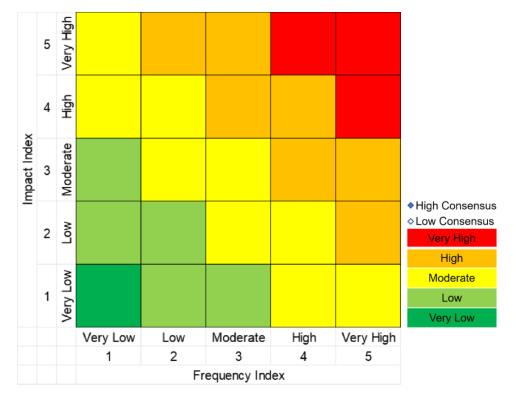
Fig. 3: Distribution of risks in the modified RM for passive roofs
Table 3: Preliminary risk list for passive roofs
|
Risk clusters |
Code |
Risk factors |
Risk clusters |
Code |
Risk factors |
|
Management and Policy risks |
M1 |
Non-compliant construction practices |
Health and safety risks |
H4 |
Mould contamination |
|
M2 |
Incongruous architectural style |
H5 |
Microbial contamination |
||
|
M3 |
Adoption of non-standard technical solutions |
H6 |
Light pollution |
||
|
M4 |
Breach of contract |
H7 |
Mosquito breeding |
||
|
M5 |
Underestimation of required maintenance |
H8 |
Fire risk |
||
|
M6 |
Construction workers lack technical experience |
Quality risks |
Q1 |
Low resistance to strong winds |
|
|
M7 |
Lack of policies and guidance |
Q2 |
Degraded thermal insulation performance |
||
|
M8 |
Supply chain vulnerability |
Q3 |
Substandard thermal insulation performance |
||
|
M9 |
Lack of collaboration among stakeholders |
Q4 |
Material corrosion |
||
|
M10 |
Insufficient contractor awareness level |
Q5 |
Material aging or deterioration |
||
|
M11 |
Insufficient owner awareness level |
Q6 |
Noise Intrusion |
||
|
M12 |
Insufficient architect awareness level |
Q7 |
Roof leakage |
||
|
M13 |
Incentive policy uncertainty |
Q8 |
Difficulty in detecting leak points |
||
|
Financial risks |
F1 |
Initial construction cost exceeds expectations |
Q9 |
Overloading |
|
|
F2 |
Unexpectedly high maintenance costs |
Q10 |
Horizontal displacement of roof components |
||
|
F3 |
Underestimated the high operating costs |
Q11 |
Lightning strike |
||
|
F4 |
Unsatisfactory cost-effectiveness |
Q12 |
Condensation risk |
||
|
Environmental risks |
E1 |
Water or soil contamination |
Q13 |
Moisture risk |
|
|
E2 |
Animal infestation and pests |
Q14 |
Material deformation |
||
|
E3 |
Odor generation |
Q15 |
Insulation flotation |
||
|
E4 |
Drought risk |
Q16 |
Drain blockage |
||
|
E5 |
Causing an increase in carbon emissions |
Q17 |
Spatial impact |
||
|
Health & safety risks |
H1 |
Construction injuries |
Q18 |
Incompatible building details |
|
|
H2 |
Tripping hazards |
Q19 |
Insulation board failure |
||
|
H3 |
Fall hazards |
|
|
|
Delphi round 1 results
The first Delphi round evaluated expert agreement on II and FI using IQR and W. Overall, statistically significant agreement was achieved across all roofing typologies (p < 0.001), although the level of consensus exhibited considerable variation. For BRs, W reached 0.588 for II and 0.720 for FI, indicating moderate to high agreement among experts. Most risks exhibited IQR values ≤ 1, with only six risks in each category showing relatively low consensus. CRs showed comparatively lower agreement in II assessment (W = 0.430), while FI assessment demonstrated improved consistency (W = 0.612). Several risks factors maintained IQR values of 2, indicating a degree of divergence in expert consensus. Notably, GRs demonstrated the most pronounced variance in expert opinions during II assessment. Two risks showed an IQR of 3 and 20 risks exhibited an IQR of 2, indicating substantial disagreement regarding impact severity. By contrast, FI assessment achieved higher consistency (W = 0.682), with a reduced number of risk factors demonstrating low consensus. For VRs, W values were 0.553 for II and 0.547 for FI, reflecting moderate agreement among experts. Although most risks achieved IQR values ≤ 1, several risks still demonstrated limited consensus, particularly in FI assessment. Overall, while the initial Delphi round yielded an acceptable level of consensus, the convergence of expert opinions remained incomplete, necessitating a subsequent round to enhance consistency and stabilize risk assessments.
Delphi round 2 results and consistency analysis
Delphi round 2 substantially improved expert consensus across all passive roof types. For BRs, W increased to 0.685 for II and 0.798 for FI. All II assessments achieved IQR values ≤ 1, while only one FI risk (Q14) exhibited an IQR > 1. For CRs, W reached 0.643 for II and 0.817 for FI. All II and FI assessments exhibited IQR values ≤ 1, indicating full convergence of expert opinions. For GRs, W increased to 0.691 for II and 0.846 for FI. All II assessments achieved IQR values ≤ 1, whereas only one FI risk (H3) showed an IQR > 1. For VRs, W reached 0.708 for II and 0.737 for FI. All II assessments exhibited IQR values ≤ 1, while three FI risks (E2, H3, and Q9) exhibited IQR values > 1. Compared with the first Delphi round, IQR values generally decreased and W increased for both II and FI, suggesting improved stability and consistency in expert judgment. To ensure a comprehensive evaluation, risk factors exhibiting persistent disagreement were not discarded; instead, they were classified as low-consensus risks and subjected to further scrutiny in the RM framework and discussion.
RM and risk level classification
Upon achieving panel consensus, the finalized risk levels were classified using the RM method. The RM distribution for passive roofs is presented in Fig. 4. Among the identified risks of BRs, 5 were classified as very low risk, 10 as low risk, 12 as medium risk, 15 as high risk, and 5 as very high risk. Among the identified risks of CRs, 2 were classified as very low risk, 10 as low risk, 6 as medium risk, 14 as high risk, and 3 as very high risk. An analysis of the risks associated with GRs revealed that the 49 identified factors spanned a broad spectrum: 4 were classified as very low risk, 13 as low risk, 10 as medium risk, 16 as high risk, and 5 as very high risk. Among the identified risks of VRs, 6 were classified as very low risk, 13 as low risk, 10 as medium risk, 9 as high risk, and 4 as very high risk. The results reveal: Clear differences in risk distribution across roof types; GRs and BRs have higher overall risk levels; CRs and VRs show relatively lower or more concentrated risks. High-risk and very high-risk factors are primarily concentrated within the management and quality control dimensions. In addition, a few risks (H3, E2, Q14) were identified as a low-consensus risks, located in the medium-risk zone. While these factors fell short of the high-risk classification threshold, the observed panel dissension underscores an inherent ambiguity in expert consensus, thereby justifying closer scrutiny during empirical deployment and subsequent analysis.
Comparative analysis of risk levels among four passive roofs
The four passive roofing typologies exhibit pronounced variations regarding their respective risk volumes, their spatial distribution within the RM, and their primary risk categories. As shown in Fig. 5, GRs contain the largest number of high-risk and very high-risk factors, followed by BRs, whereas VRs present the lowest overall risk level. Although CRs exhibit fewer high and very high-risk factors in absolute terms, they represent a greater proportion of the system's total risk profile. These differences are largely associated with variations in structural complexity, dependence on construction quality, and maintenance intensity. GRs involve multi-layer systems—including vegetation, drainage, waterproofing, and substrate layers—resulting in high structural and functional complexity (Abdul Rahman et al., 2022). In rural environments, constrained technical capacity and deficient quality control measures frequently introduce systemic flaws across various project phases, ultimately escalating the cumulative risk profile. In addition, GRs rely heavily on post-installation maintenance, such as irrigation and vegetation management, which further increases uncertainty.
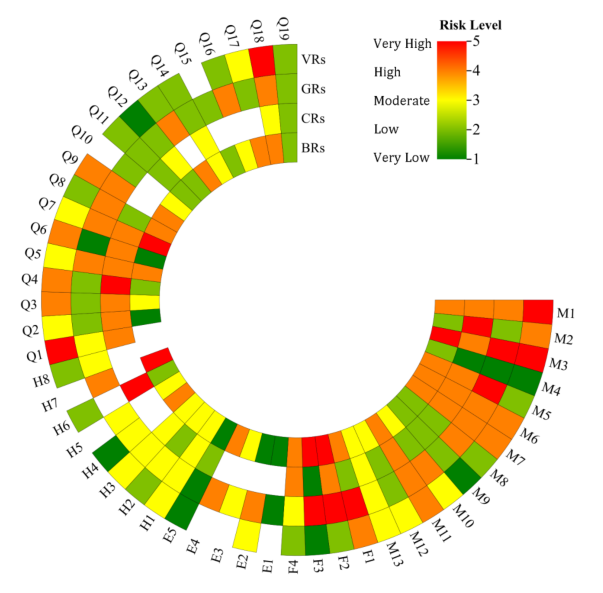
Fig. 5: Risk level of risk factors for the four passive roofs
Their relatively limited adoption, combined with insufficient technical guidance, also contributes to elevated risks. Notwithstanding these challenges, GRs exhibit distinct advantages in thermal performance, illustrating a fundamental trade-off between operational benefits and implementation risks. BRs also exhibit relatively high-risk levels. While they provide benefits in stormwater management and thermal regulation, the inclusion of water storage and drainage systems introduces additional risks related to waterproofing, structural loads, and operational management. In rural houses, these risks are amplified by limited maintenance capacity. CRs rank third in terms of high-risk and very high-risk factors. T Their comparatively uncomplicated design, ease of assembly, and lower capital requirements collectively foster a highly manageable risk profile (Athmani et al., 2022). However, reliance on high-reflectivity materials may introduce specific risks, including surface degradation, glare, and potential impacts on visual comfort and building aesthetics. VRs exhibit the lowest overall risk level. The strong dependence of these systems on proper technical execution is evidenced by the concentration of high-risk factors within design detailing, construction quality, and structural performance parameters. Compared with GRs and BRs, VRs have advantages in reduced maintenance requirements and long-term stability. Overall, risk levels are closely linked to structural complexity, construction dependency, and maintenance requirements. Roofing typologies characterized by structural simplicity and minimal maintenance requirements typically exhibit a lower prevalence of high-risk factors, whereas structurally complex systems encounter significantly greater risk exposure.
Causes of high-risk, very high-risk, and low-consensus risks
This study shows that high-risk and low-consensus risks are shaped not only by technical factors but also by the broader rural context. From a construction perspective, high-risk factors are mainly associated with construction management, quality control, and structural safety. Residential construction practices within rural contexts are predominantly governed by empirical, generationally transmitted knowledge as opposed to standardized engineering protocols. Limited technical expertise, inadequate supervision, and insufficient training may increase the likelihood of construction deviations and compromise implementation quality (Kaushik et al., 2024). In addition, the outflow of skilled labor further reduces construction quality. Consequently, even structurally sound passive roofing systems may fall short of anticipated performance benchmarks, thereby exacerbating operational risks. Economic constraints are another critical factor. Rural households are highly sensitive to initial costs. When passive roofs—especially GRs, BRs, and VRs—require additional investment, cost pressures may lead to simplified designs, lower-quality materials, or inadequate maintenance. Such cost-driven compromises can significantly increase long-term risks. The hot–dry climate is defined by intense solar radiation, pronounced diurnal temperature fluctuations, and elevated rates of evaporation. These conditions may accelerate the degradation of reflective coatings and insulation materials, increase water-related operational challenges, and contribute to greater implementation and performance risks. Low-consensus risks reflect variability in expert judgment, an outcome attributable to multiple distinct sources: 1) Differences in professional background and involvement across project stages lead experts to emphasize different aspects of risk. For instance, while engineers prioritize structural load-bearing capacity and public safety, regulatory compliance and environmental impacts command the attention of government officials; concurrently, architects concentrate heavily on the conceptual design stage, whereas contractors emphasize execution and long-term maintenance. 2) Practical experience varies considerably across regions. Some experts have limited exposure to rural houses and therefore assess risks based on urban project experience, whereas actual rural conditions are often more complex. 3) Some risks are context-dependent, with their frequency of occurrence and level of impact varying substantially under different village and township conditions. Collectively, these findings indicate that both high-risk factors and low-consensus variations originate from a combination of technical complications and broader systemic impediments, most notably institutional capacity limitations, management practices, and economic constraints.
Comparison with existing research
The findings of this study both align with and extend existing research. Consistent with previous studies, construction quality, structural capacity, and long-term maintenance are identified as key risk factors for GRs and CRs (Perivoliotis et al., 2023). These elements are similarly categorized as high or very high risk within the present study, underscoring their role as fundamental diverse challenges across contexts. However, differences emerge when comparing rural and urban settings. Existing studies tend to emphasize technical performance, such as thermal efficiency and material optimization, while paying less attention to implementation risks (Chen et al., 2024; Saber et al., 2021; Zhao et al., 2023). In contrast, this study highlights the importance of management and institutional risks in rural houses. This implies that within resource-constrained settings, successful deployment hinges not merely on technical efficacy but equally on managerial capabilities and institutional support. In such contexts, non-technical factors may play a more decisive role. In addition, several low-consensus risks identified in this study have received limited attention in previous research, indicating that existing studies may not fully capture the uncertainties of rural applications. By incorporating expert judgment and iterative consensus-building, this study provides a more context-sensitive understanding of risk. Overall, this study expands the scope of passive roofing literature by transitioning from a performance-centric analysis to a multidimensional framework integrating management, economic, environmental, safety, and quality considerations.
Implications for practice
Risk management should extend beyond technical design. Many high-risk factors are linked to construction practices and institutional capacity. Strengthening training, technical guidance, and supervision mechanisms is therefore essential. Particular attention should also be given to low-consensus risks. Given that these risks are frequently context-dependent and subject to geographical variation, localized, site-specific assessments are imperative prior to deployment rather than relying exclusively on generalized frameworks. In this sense, low-consensus risks provide a complementary perspective to conventional risk assessment. The RM developed in this study can further support decision-making during project planning and design. While high- and very high-risk factors necessitate immediate, prioritized intervention, moderate- and low-level risks can typically be mitigated through routine administrative controls. Shcherbak et al. (2024) reported similar findings and highlighted the role of systematic assessment approaches in supporting environmental sustainability and strengthening environmental management practices in rural areas. Beyond the practical findings, the methodological framework adopted in this study, integrating a comprehensive literature review, expert judgment, Delphi consensus, and RM mapping, provides a transparent and systematic approach that may serve as a valuable reference for future risk assessment studies in rural, resource-constrained, and data-scarce settings across diverse infrastructure and sustainability applications.
CONCLUSION
This study investigated the risks associated with passive roofs in rural housing located in the hot–dry regions of Southwest China. By integrating a comprehensive literature review, CVR-based expert screening, a dual-round Delphi survey, and RM analysis, a robust and systematic assessment framework was successfully developed. Through this process, the impact, occurrence frequency, and overall risk level of passive roof applications were evaluated for GRs, BRs, CRs, and VRs. The findings show clear differences among the four roof types. GRs and BRs were associated with the largest numbers of high-risk and very high-risk factors, whereas VRs presented the lowest overall risk level. CRs occupied an intermediate position, with fewer very high-risk factors but a relatively large proportion of high-risk factors. These variations appear to be intimately linked to structural complexity, construction specifications, and subsequent maintenance demands. Roofs involving additional structural layers, water management components, or intensive maintenance tended to exhibit greater risk exposure than relatively simple roof configurations. The evaluation also demonstrates that numerous critical risks stem from systemic factors lying outside the domain of formal engineering design. Structural performance, waterproofing, and construction quality remain important concerns. However, management capacity, financial limitations, policy support, and long-term maintenance were repeatedly identified as major sources of risk. This finding holds particular relevance for rural regions, where technical resources, professional oversight, and financial investments are frequently constrained. Under such conditions, implementation challenges may become as important as technical performance in determining project success. Several risks remained characterized by relatively low consensus even after two Delphi rounds. Differences in professional background, practical experience, and familiarity with rural construction conditions may partly explain this outcome. Furthermore, certain risks are heavily contingent upon localized environmental and socio-economic dynamics, complicating uniform assessment across divergent spatial scales. The presence of these low-consensus risks highlights the importance of considering local context when applying passive roof technologies. Overall, this study extends current passive-roof research from a predominantly performance-oriented perspective to a broader consideration of implementation risks. The proposed framework offers a practical screening mechanism for planners and practitioners, enabling the proactive identification of critical risks prior to the implementation of passive roofing systems. This may facilitate more informed decision-making, particularly in regions with limited empirical data. Several limitations should be acknowledged. Although the equal-interval classification facilitates interpretation and comparison, it may introduce boundary effects. The findings are based on expert judgments obtained through purposive sampling and may therefore be influenced by subjective bias. The current iteration of the framework centers exclusively on risk identification and evaluation metrics, omitting empirical validation via case studies or field-level data. In addition, advanced statistical analyses and mitigation strategies were beyond the scope of this study. Furthermore, because the framework was designed specifically around rural housing in China's hot–dry zones, extending its direct applicability to alternative climatic, socio-economic, or institutional environments requires careful qualification. Further sstufies are required to operationalize these identified risks into actionable, concrete mitigation strategies. Developing a structured risk response framework would support more effective implementation of passive roofs in rural houses by facilitating systematic decision-making, optimizing resource allocation, improving stakeholder coordination, ensuring long-term sustainability, and enhancing project resilience.
AUTHOR CONTRIBUTIONS
S. Li, the first author, contributed to the conceptualization of the study, methodology development, data collection, data analysis, and manuscript preparation. S.N.Z. Abidin, the corresponding author, contributed to the methodology development, data collection, supervision of the research, and manuscript review. M.A. Kamarazaly contributed to the methodology development and data analysis. All authors read and approved the final manuscript prior to journal submission.
ACKNOWLEDGEMENT
The authors would like to thank the 15 experts who participated in the Delphi survey for their professional insights. This study was supported by the Panzhihua University Innovation and Entrepreneurship Program for College Students [Grant No. 2026cxcy242], which is gratefully acknowledged herein.
CONFLICT OF INTEREST
The authors declare that there is no conflict of interest regarding the publication of this manuscript. The Delphi survey collected anonymous professional opinions from experts on passive roof risks. Participation was voluntary, and no personal, medical, or sensitive information was collected. The study adhered to good research practices. The authors consulted the University's Human Ethics Committee regarding this study and were informed that retrospective ethics approval cannot be issued after data collection has been completed. In addition, the authors confirm that all ethical issues, including plagiarism, informed consent, misconduct, data fabrication and/or falsification, double publication and/or submission, and redundancy, have been fully observed.
OPEN ACCESS
©2026 The author(s). This article is licensed under a Creative Commons Attribution 4.0 International License, which permits use, sharing, adaptation, distribution and reproduction in any medium or format, as long as you give appropriate credit to the original author(s) and the source, provide a link to the Creative Commons license, and indicate if changes were made. The images or other third-party material in this article are included in the article’s Creative Commons license, unless indicated otherwise in a credit line to the material. If material is not included in the article’s Creative Commons license and your intended use is not permitted by statutory regulation or exceeds the permitted use, you will need to obtain permission directly from the copyright holder. To view a copy of this license, visit: http://creativecommons.org/licenses/by/4.0/
PUBLISHER’S NOTE
GJESM Publisher remains neutral regarding jurisdictional claims with regard to published maps and institutional affiliations.
R Positive AI Statement
During the preparation of this work the author(s) have used Artificial Intelligence (AI) [ChatGPT] in order to [language editing and proofreading]. After using this tool/service, the authors reviewed and edited the content as needed and take full responsibility for the content of the publication.
ABBREVIATIONS
|
< |
Less than |
|
≤ |
Less than or equal to |
|
> |
Greater than |
|
≥ |
Greater than or equal to |
|
= |
Equal sign |
|
oC |
Degree Celsius |
|
BRs |
Blue roofs |
|
CNKI |
China national knowledge infrastructure |
|
CRs |
Cool roofs |
|
CVR |
Content validity ratio |
|
e.g. |
Exempli gratia |
|
FI |
Frequency index |
|
Fig. |
Figure |
|
GRs |
Green roofs |
|
IQR |
Interquartile range |
|
II |
Impact index |
|
MOHURD |
Ministry of housing and urban-rural development of the people's republic of China |
|
p |
p-value |
|
RM |
Risk matrix |
|
SPSS |
Statistical package for the social sciences |
|
VRs |
Ventilated roofs |
|
W |
Kendall’s coefficient of concordance |
REFERENCES
Abdul Rahman, A.; Mohamed Zaid, S.; Mohammad Shuhaimi, N.D.A., (2022). Effects of green roof in reducing surface temperature and addressing urban heat island in tropical climate of Malaysia. J. Design Built Environ., 22(2): 1–20 (20 pages).
Ahmadipari, M.; Hoveidi, H.; Jafari, H.R.; Pazoki M., (2018). An integrated environmental management approach to industrial site selection by genetic algorithm and fuzzy analytic hierarchy process in geographical information system. Global J. Environ. Sci. Manage., 4(3): 339-350 (12 pages).
Andenæs, E.; Engebø, A.; Time, B.; Lohne, J.; Torp, O.; Kvande, T., (2020). Perspectives on quality risk in the building process of blue-green roofs in Norway. Buildings. 10(10) (18 pages).
Anthony Cox, L., (2008). What’s wrong with risk matrices? Risk Anal., 28(2): 497–512 (16 pages).
Ashrafi, S.M.Y.; Alaloul, W.S.; Farooqui, R.U.H.; Saqib, M.; Ahmed, R. R.; Khan, A.M., (2025). Evaluation and classification of risk from multi-party stakeholders of the construction industry. J. Asian Architect. Building Eng., 1–18 (18 pages).
Athmani, W.; Sriti, L.; Dabaieh, M.; Younsi, Z., (2022). The potential of using passive cooling roof techniques to improve thermal performance and energy efficiency of residential buildings in hot arid regions. Buildings. 13(1): 21 (23 pages).
Ayre, C.; Scally, A.J., (2014). Critical values for Lawshe’s content validity ratio: revisiting the original methods of calculation. Measurement and Evaluation in Counseling and Development. 47(1): 79–86 (18 pages).
Barforoush, N.; Etebarian, A.; Naghsh, A.R.; Shahin, A., (2020). A dynamic modeling for green business development in oil refining industry. Global J. Environ. Sci. Manage., 6(2): 233-244 (12 pages).
Chang, H.; Hou, Y.; Lee, I.; Liu, T.; Acharya, T., (2022). Feasibility study and passive design of nearly zero energy building on rural houses in Xi’an, China. Buildings. 12: 341 (22 pages).
Chen, Y.; Li, W.; Wang, X., (2024). An investigation into the risk assessment of building-integrated photovoltaic residential project development utilizing the DEMATEL-ANP methodology: a Chinese case study. Buildings. 14(3): 623 (19 pages).
Dong, Z.; Yang, J.; Yuan, R.; Su, G.; Lei, M., (2025). A game-theoretic Kendall’s coefficient weighting framework for evaluating autonomous path planning intelligence. Automation. 6(4): 85 (24 pages).
Dristy, N.F.; Parvez, M.; Rahman, N., (2020). Potential measures of cool roof treatment for different building types in urban context of Bangladesh. In 5th International Conference on Advances in Civil Engineering (ICACE-2020). Chittagong University of Engineering and Technology (CUET), Bangladesh (7 pages).
Elo, S.; Kääriäinen, M.; Kanste, O.; Pölkki, T.; Utriainen, K.; Kyngäs, H., (2014). Qualitative content analysis: a focus on trustworthiness. Sage Open. 4(1): 1-10 (10 pages).
Gerzhova, N.; Dagenais, C.; Ménard, S.; Blanchet, P.; Côté, J., (2022). A parametric study of fire risks of green roofs to adjacent buildings. Fire. 5(4): 93 (23 pages).
Hussain, S.; Hasmori, M.F.; Nagapan, S.; Khan, M.W., (2024). A delphi study approach to prioritising BIM applications for construction. J. Adv. Res. Design. 122(1): 184–197 (14 pages).
Kaushik, B.; Nikhil, B.; Ashwin, M., (2024). An analysis of safety practices for small, medium, and large construction projects: A resilience engineering perspective. Saf. Sci., 169: 106330 (32 pages).
Khosravi, M.; Sarvari, H.; Chan, D.W.M.; Cristofaro, M.; Chen, Z., (2020). Determining and assessing the risks of commercial and recreational complex building projects in developing countries: a survey of experts in Iran. J. Facilities Manage., 18(3): 259–282 (24 pages).
Lawshe, C.H., (1975). A quantitative approach to content validity. Personnel Psychol., 28(4): 563–575 (13 pages).
Lu, Y.; Zhang, Y.; Huang, Z.; Cheng, B.; Wang, C.; Sun, Y.; Zhang, H.; Li, J., (2025). A literature review of sustainable building research: bibliometric analysis from 2015–2025. Buildings. 15(19): 3609 (30 pages).
Mbua, R.L.; Efande, S.E.; Sunjo, T.E., (2024). Health burden of the consumption of rooftop rainwater harvesting systems in Buea Sub–Division, Cameroon. J. Geogr. Environ. Earth Sci. Int., 28(5): 31-42 (12 pages).
MOHURD (2012). Wumian gongcheng jishu guifan [Technical code for roof engineering] (GB 50345-2012). Ministry of Housing and Urban-Rural Development of the People's Republic of China. China Architecture and Building Press (79 pages). (In Chinese)
People's Government of Panzhihua Municipality, (2025). Overview of Panzhihua: Natural geography and climate. (In Chinese)
Perivoliotis, D.; Arvanitis, I.; Tzavali, A.; Papakostas, V.; Kappou, S.; Andreakos, G.; Fotiadi, A.; Paravantis, J.A.; Souliotis, M.; Mihalakakou, G., (2023). Sustainable urban environment through green roofs: a literature review with case studies. Sustainability. 15(22): 15976 (25 pages).
Qi, Y.; Li, X.; Wang, Y.; Zhou, D., (2023). Research on indoor thermal environment analysis and optimization strategy of rural dwellings around Xi’an based on PET evaluation. Sustainability. 15: 7889 (25 pages).
Rama, A.S.; Yasri; Susanto, P., (2023). The effect of environmental awareness as a moderation on determinants of green product purchase intention. Global J. Environ. Sci. Manage., 10(2): 699-712 (14 pages).
Rawat, M.; Singh, R.N.; Paul, B., (2021). Energy saving aspects of green and shaded roofs: a review. Journal of Xidian University, 15: 438–450 (13 pages).
Saber, H.H.; Hajiah, A.E.; Alshehri, S.A.; Hussain, H.J., (2021). Investigating the effect of dust accumulation on the solar reflectivity of coating materials for cool roof applications. Energies. 14(2): 445 (24 pages).
Saurabh, S.; Madhura, Y., (2023). A thermal study of roof shapes and materials in hot dry climates: Insights from a simulation from Rajasthan, India. Int. J. Soc. Study Vernac. Settl., 10(12): 597-609 (13 pages).
Säwén, T.; Stockhaus, M.; Hagentoft, C.E.; Schjøth Bunkholt, N.; Wahlgren, P., (2022). Model of thermal buoyancy in cavity-ventilated roof constructions. J. Build. Phys., 45(4): 413–431 (19 pages).
Shao, T.; Zheng, W.; Cheng, Z., (2021). Passive energy-saving optimal design for rural residences of Hanzhong region in Northwest China based on performance simulation and optimization algorithm. Buildings. 11(9) (30 pages).
Shcherbak, V. G.; Danko, Y. I.; Tereshchenko, S.; Nifatova, O.; Dehtiar, N.; Stepanova, O.; Yatsenko, V., (2024). Circular economy and inclusion as effective tools to prevent ecological threats in rural areas during military operations. Global J. Environ. Sci. Manage., 10(3): 969-986 (18 pages).
Shun, L.; Zainal Abidin, S.N.; Kamarazaly, M.A., (2025). A review on the practical value of passive roofs for rural housing in Panzhihua, China. In S. Gunasagaran, K. J. Kam (Eds), Sustainable Construction and Heritage Conservation in the Digital Age. IGI Global Sci. Publishing. 1–36 (36 pages).
Sichuan Provincial Department of Housing and Urban-Rural Development (SPDHURD), (2022). Panxi diqu minyong jianzhu jieneng yingyong jishu biaozhun [Technical standard for application of energy-saving technology for civil buildings in Panxi] (DBJ51/186—2022). Southwest Jiaotong University Press (93 pages). (In Chinese)
Szokolay, S.V., (1980). Environmental science handbook: For architects and builders (2nd ed.). Architectural press (532 pages).
Tabatabaee, S.; Mahdiyar, A.; Mohandes, S.R.; Ismail, S., (2022). Towards the development of a comprehensive lifecycle risk assessment model for green roof implementation. Sustainable Cities Soc., 76: 103404 (18 pages).
Wang, M.; Chen, C.; Fan, B.; Yin, Z.; Li, W.; Wang, H.; Chi, F., (2023). Multi-objective optimization of envelope design of rural tourism buildings in southeastern coastal areas of China based on NSGA-II algorithm and entropy-based TOPSIS method. Sustainability. 15: 7238 (27 pages).
Xiao, Q.; Liu, Y.; Cho, S.; He, Y.; Cao, M., (2024). Thermal insulation performance of roof forms in rural residential houses in Western China. E3S Web of Conference. 490: 01007 (6 pages).
Yazdani, H.; Baneshi, M., (2021). Building energy comparison for dynamic cool roofs and green roofs under various climates. Sol. Energy. 230: 764–778 (15 pages).
Zhao, S.; Hai, G.; Zhang, X., (2023). An analysis of the influence of cool roof thermal parameters on building energy consumption based on orthogonal design. Buildings. 14(1): 28 (19 pages).
OPEN ACCESS
©2026 The author(s). This article is licensed under a Creative Commons Attribution 4.0 International License, which permits use, sharing, adaptation, distribution and reproduction in any medium or format, as long as you give appropriate credit to the original author(s) and the source, provide a link to the Creative Commons license, and indicate if changes were made. The images or other third party material in this article are included in the article’s Creative Commons license, unless indicated otherwise in a credit line to the material. If material is not included in the article’s Creative Commons license and your intended use is not permitted by statutory regulation or exceeds the permitted use, you will need to obtain permission directly from the copyright holder. To view a copy of this license, visit: http://creativecommons.org/licenses/by/4.0/
PUBLISHER NOTE
GJESM Publisher remains neutral concerning jurisdictional claims in published maps and institutional affiliations.
MAJOR DATABASES, CITATION METRICS & CAPTURES
Google Scholar | Scopus - SJR | Web of Science | Biological Abstracts: Clarivate | Biosis Preview: Clarivate | PlumX Metrics | Altmetrics | Mendeley |
CURRENT PUBLISHER

| Article View | 1,813 |
| PDF Download | 481 |

Letters to Editor
[1] Letters that include statements of statistics, facts, research, or theories should include appropriate references, although more than three are discouraged.
[2] Letters that are personal attacks on an author rather than thoughtful criticism of the author’s ideas will not be considered for publication.
[3] Letters can be no more than 300 words in length.
[4] Letter writers should include a statement at the beginning of the letter stating that it is being submitted either for publication or not.
[5] Anonymous letters will not be considered.
[6] Letter writers must include their city and state of residence or work.
[7] Letters will be edited for clarity and length.