
5.2
CiteScore
2.9
Impact Factor
Document Type : RESEARCH ARTICLE
Author
School of Business and Communication Arts, University of Phayao, Thailand
Graphical Abstract
Highlights
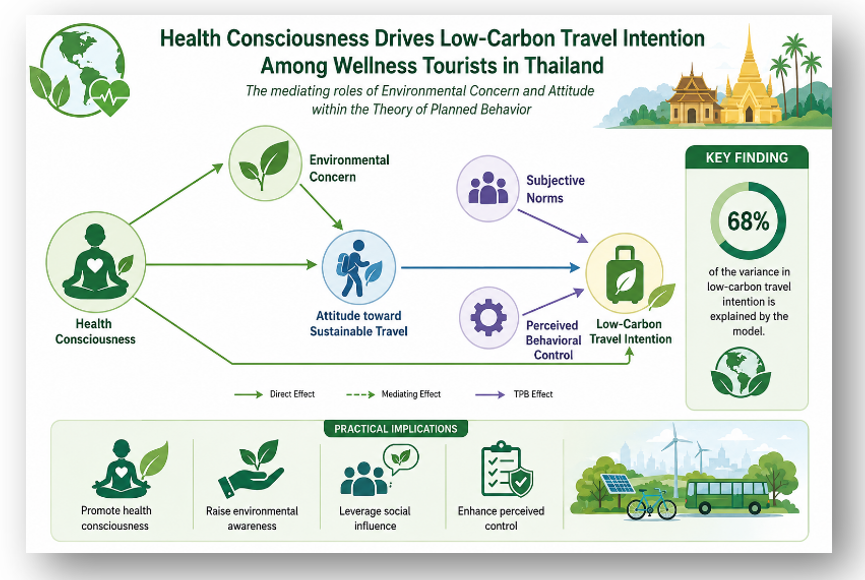
Ø Health consciousness significantly promotes low-carbon travel intention among wellness tourists in Thailand;
Ø Health consciousness strongly influences environmental concern and sustainable travel attitudes;
Ø Attitude toward sustainable travel is the strongest predictor of low-carbon travel intention.
Ø Environmental concern and attitude act as mediating factors between health consciousness and travel intention.
Keywords
INTRODUCTION
The changing climate pushes the tourism sector to decrease greenhouse gas (GHG) emissions, as tourism represents one major source of greenhouse gas. In Thailand, the advancement of low-carbon tourism initiatives is imperative to foster long-term sustainability and ensure robust environmental protection (Sakcharoen et al., 2024). The post-Coronavirus-2019 (COVID-19) health and wellness tourism industry has grown exponentially owing to heightened health awareness, accelerated economic recovery, and increasing demand for whole experiences, combining medical and nonmedical services to achieve physical, mental, and spiritual health (Gan et al., 2023). While wellness tourism is experiencing rapid growth and driving business development in China, Thailand stands out as a globally competitive wellness destination. Benefiting from an advanced healthcare system, deep cultural roots, and diverse wellness offerings, Thailand effectively provides tourists with comprehensive mental, physical, and spiritual health improvement (Theerathitichaipa et al., 2025). Thailand's cultural values, social beliefs and traditional wellness practices can have a significant impact on tourists' health consciousness (HC) and their responsible behavior in travelling environment. Holistic health and wellness, mindfulness and harmony with nature in cultural values can help raise awareness of personal health and environmental sustainability, thereby having a positive impact on low-carbon travel intention. To bolster sustainable tourism, various frameworks have been increasingly promoted in Thailand, characterized by the adoption of green tourism programs, eco-certification schemes, environmentally conscious hotel operations, and capital investments in sustainable transit infrastructure. These activities can contribute to improving tourists' environmental awareness and promoting the use of low-carbon tourism. In addition, there may be differences between domestic and international wellness tourists as the latter might be affected by global sustainability campaigns and environmental awareness programmes, while the former may be influenced by the local cultural values, familiarity with the destinations and accessibility to sustainable tourism services. Consequently, understanding the connection between cultural context, sustainable tourism policies, and behavioral factors is crucial for elucidating the intention to embrace low carbon travel among wellness tourists in Thailand, as well as for formulating effective sustainable tourism strategies. Climate change has increased awareness of environmentally responsible tourism practices and encouraged the development of low-carbon tourism strategies. The research makes another contribution to the field of environmental science and management literature, as it explores the potential relationship between HC and sustainable travel behaviors on the one hand, and low-carbon tourism development and climate-based destination management on the other. Knowledge about the determinants of low-carbon travel intentions can help policymakers and tourism planners develop tourism management policies that are oriented toward carbon reduction and environmental protection. Grounded in the theory of planned behavior (TPB), this study examines tourists' behavioral intentions toward low-carbon travel practices, specifically focusing on sustainable transportation and eco-friendly hotels (Ma et al., 2024). Rising climate change and global greenhouse gas emissions present challenges for sustainable tourism, especially in island destinations. Investigating low-carbon tourism approaches and visitor behaviors in island destinations can harmonize sustainable economic viability with environmental sustainability (Fakfare and Wattanacharoensil, 2024). Post-COVID-19 health awareness and life stress promote wellness tourism; China and South Korea are major markets that affect tourist behavior and well-being (Zhou et al., 2023). The accelerating threat of climate change to glacial ecosystems and ski tourism underscores the critical imperative for fostering pro-environmental behaviors among tourists. Thus, research on tourists' experiences and place attachment may inspire more pro-environmental behaviors in tourism and life (Boadu et al., 2025). Environmental strains on fragile plateaus, driven by climate change, have been severely exacerbated by the rapid expansion of rural tourism. Thus, it is critical to understand rural residents' pro-environmental behavior and strike a balance between economic development and environmental conservation and sustainability (Fang et al., 2025). Tourism emissions from growth have prompted research on low-carbon tourism, where sustainability and experience can be balanced by studying the main factors influencing tourist choice in the decision to select a low-carbon tourist destination. Environmentally friendly short videos have been shown to be powerful tools for promoting tourist behavior (Chen and Cheng, 2023). As an emerging phenomenon, the integration of wind power generation and tourism is actively developed in China, where wind farms serve as sustainable attractions. These sites generate local economic and educational benefits, elevate environmental awareness, and promote eco-friendly travel practices (Liu et al., 2025). Rapid tourism growth offers economic benefits but raises sustainability challenges. Environmental knowledge, Tourists' social interaction and pro-environmental conduct are greatly influenced by an eco-destination's image and biospheric values, which promote the growth of sustainable tourism. (Alashiq and Aljuhmani, 2025). Spurred by the environmental impact of greenhouse gas emissions from a growing tourism sector, the framework of low-carbon tourism seeks a sustainable equilibrium between leisure entertainment and resource conservation. Thus, the key determinants of the factors leading tourists to choose low-carbon travel destinations need further research (Liu et al., 2023). Low-carbon tourism addresses greenhouse gas emissions from tourism expansion, with the goal of balancing sustainability with enjoyment while critical elements affecting visitors' preferences to choose eco-friendly, low-carbon places are investigated (Janchai and Suvittawat, 2025). Building on the low-carbon destination attributes identified by Fakfare and Wattanacharoensil (2023), this study applies the stimulus–organism–response (SOR) framework combined with importance–gap satisfaction and competitive analysis (IGSCA) and multigroup analysis. While it successfully identifies risk-influenced attitudes and behavior gaps but is limited by sample scope and pandemic-specific context. To investigate the environmental determinants of low-carbon tourism (Wang and Phakdeephairot, 2024) using the SOR model, questionnaires and SEM were used. The study's scope is bounded by a distinct regional emphasis and the inherent biases of self-reported data. Nevertheless, the empirical results indicate that nearly all examined factors positively influence behavior, leaving values as the sole exception. This study investigated the causes and geographical disparities of low-carbon tourism in Fujian (Zhan et al., 2025), analysed the effects of policy awareness using questionnaires and regression, and identified attitudes as significant determinants, while awareness had mixed effects; limitations included regional scope and self-reported data. By exploring low-carbon transition pathways and identifying drivers and barriers present in characteristic towns (Wan et al., 2025), stakeholders were assessed through the application of game theory and system dynamics, yielding scores of 63.3 overall, 66.9 for Zhou Zhuang, and 57.6 for Tongli; limitations included the specificity of cases and the assumptions of the model. Tourists’ understanding of degrowth and its link to sustainability should be explored (Pinto et al., 2025). An online survey of 261 respondents revealed low awareness but alignment with sustainable behavior; younger tourists resisted such behavior, and the limitations included the use of a small convenience sample and self-reported responses. The relationship between slow-paced tourism and personal transformation, as well as well-being, has been studied (Vo-Thanh et al., 2025). Applying a hypothetico-deductive approach via covariance-based structural equation modeling (CB-SEM) to a sample of 319 tourists, this study reveals that co-creation and self-transformation significantly enhance visitor well-being. Although these findings are bounded by a cross-sectional design, a localized sample size, and the inherent biases of self-reported measures, they provide a foundation to examine how shifting conclusions regarding environmental sustainability might intersect with or disrupt tourist well-being (Alizadeh et al., 2024). Drawing on 30 semi-structured interviews, this study reveals that responsible travel behavior enhances visitor well-being, whereas irresponsible behavior induces guilt. While the generalizability of these findings is constrained by a small qualitative sample, the study successfully identifies key indicators for low-carbon tourism itinerary planning are (Lin and Heeren, 2025). Expert consultations revealed that “sustainable management” and “environmental education” were most impactful, followed by green energy and monitoring; limitations included a qualitative approach, a small sample size, and a lack of quantitative validation. To examine the factors influencing tourists’ low-carbon behavior at glacier destinations (Lv et al., 2024), on-site data collection and virtual reality (VR) experiments revealed that engagement increased behaviorvia place attachment and responsibility; boundaries included the experimental context and limited generalizability. Effects of low-carbon tourist awareness, place attachment, and behaviors on sustainable village expansion (Lin et al., 2022). Utilizing a mixed-methods approach, this study analyzed existing questionnaire data (n=828) alongside expert interviews using multiple regression analysis. The empirical results indicate that while environmental awareness significantly increased eco-behavior, financial cost exerted no significant effect on adoption; however, the generalizability of these findings is constrained by a reliance on self-reported data and a narrow regional focus. Seeking to develop a model linking low-carbon travel with visitor well-being, Yu et al. (2023) conducted SEM analysis (n = 523). Their findings revealed positive effects (β =0.189–0.327), though the study was limited by a cross-sectional design, regional bias, and a reliance on self-reported measures; nonetheless, their framework helps identify critical factors influencing tourists' sustainable travel choices (Naik et al., 2025). The study's results demonstrated that environmental concern (EC) had a beneficial impact on intentions, with age acting as a mediator and moderator in this context. Notably, the use of self-reported measures and the cross-sectional approach are two critical limitations that also raise questions about generalizability. The focus was on carbon-neutral travel behavior among younger travelers (Hatamifar et al., 2025). A questionnaire using data to verify TPB and a norm activation model (NAM) revealed that social norms are relevant and that positive effects are 4.2 times greater. Limitations included the use of regional-level data and self-reported data on a cross-sectional basis. To explore Indian tourists' intention to adopt energy-saving behaviors for carbon neutrality (Siddiqui and Sujood, 2025). The use of existing data (n=456) and SEM revealed that aggregated NAM-TPB factors were meaningful; limitations such as self-reports, cross-sectional nature and lack of generalizability apply. To identify the market segments of medical tourists on the basis of push–pull motivations (Cha et al., 2024). The multilingual survey (31 items) revealed 3 segments: quality, necessity of services and remaining seekers; constraints: self-reported data; sampling bias; and limited generalizability of the results. Seeking to explore the integration of artificial intelligence (AI) with circular economy principles in tourism, Bang-Ning et al. (2025) deployed a mixed-methods approach combining stakeholder insights with PLS-SEM. Their findings indicate that while AI implementation significantly improves resource management, systemic resistance continues to hinder widespread adoption. Furthermore, the study's generalizability is bounded by context specificity, a limited sample, and evolving technology constraints. The effect of healthy tourism motivation on participation and pleasure of Himalayan spa resorts was investigated (Manhas et al., 2025). The use of questionnaires (n=260) with SEM revealed positive effects and mediation; limitations included a limited sample size, regional focus, and self-reported responses. The key contributions are as follows: 1) Confirms health consciousness (HC) as the key psychological incentive impacting the intention toward low-carbon travel and ties health advantages to low-carbon tourist behaviors. 2) When EC and health awareness are integrated, the TPB framework extends its structural utility, thereby enhancing the model's predictive power regarding sustainable travel choices. 3) Demonstrates important direct and mediating relationships using SEM and regression analyses and provides robust support for behavioral pathways. 4) Emphasizing attitudes, social influence, and perceived behavioral control as key motivators offers critical strategic pathways for accelerating the adoption of sustainable mobility among wellness travelers in Thailand. Although artificial intelligence (AI)-powered tourism management studies were reviewed to provide broader sustainability context, the present study primarily focuses on behavioral and environmental determinants of low-carbon travel intention rather than AI-based tourism systems. Thailand was selected because it is an internationally recognized wellness tourism destination with strong growth in sustainable and health-oriented tourism services, providing an appropriate context for examining relationships between HC and low-carbon travel intention. However, contextual characteristics may limit direct generalization to other countries or tourism environments. This study aimed to investigate the structural relationships among HC, perceived behavioral control, personal attitudes, subjective norms (SN) ecological concern, and their direct and indirect effects on ecologically responsible travel decisions. This study was conducted among wellness and medical tourists in major tourism destinations in Thailand during 2025.
The study gap
Previous studies on low-carbon tourism primarily focused on environmental concern, social norms, or behavioral intention using conventional TPB or sustainability frameworks (Hatamifar et al., 2025; Siddiqui and Sujood, 2025). Although sustainable tourism and low-carbon travel behavior have been widely investigated, limited studies have examined how HC functions as a psychological driver influencing environmentally responsible travel behavior among wellness tourists. Furthermore, few studies have integrated HC, environmental concern, and the constructs of the TPB into a cohesive framework to elucidate low-carbon travel intention in wellness tourism contexts (Naik et al., 2025). Existing research has also largely focused on specific regional populations, with limited evidence from Thailand despite its global importance as a wellness tourism destination (Theerathitichaipa et al., 2025). Consequently, comprehending the direct and indirect connections among HC, environmental concern, attitude, subjective norms, perceived behavioral control, and low-carbon travel intention remains insufficient. Addressing these gaps may provide broader insights into sustainable tourism behavior and supports the development of environmentally responsible tourism management strategies. The current study distinguishes itself from previous studies in the field of TPB-based sustainable tourism analysis, which mainly emphasized either HC or solely one of the other two components of TPB separately, by incorporating all three components of the TPB, and especially by adding environmental concern in addition to HC, into its analysis. The study makes a contribution by investigating the psychological antecedents of the environmental sustainability behavior in relation to the concept of HC, and the direct and mediating pathways of the environmental concern and attitude toward sustainable travel. This comprehensive framework provides deeper insights into the behavioral mechanisms that facilitate low-carbon tourism and promote environmentally sustainable destination management.
Hypothesis development
The study approach adopted for this study is the examination of the relationship between HC, EC, AT, SN and PBC and the effects of the combination of these on low-carbon travel intention (LCTI). All psychological, environmental and social factors are shown to affect sustainable travel behavior. Fig. 1 illustrates the hypothesized correlations among these structural dimensions for wellness travelers in Thailand.
HC relationships
HC serves as a crucial catalyst for sustainable travel practices, positively influencing EC, AT and LCTI. A high level of health awareness can promote the low-carbon consciousness of health tourists, which can inspire positive attitudes and reinforced health tourists' intentions for low-carbon travel.
H1: HC is positively related to EC. HC → EC
H2: HC is positively related to AT. HC → AT
H3: HC is positively related to LCTI. HC → LCTI
Environmental concern effects
The EC has a substantial effect on sustainable travel behavior by increasing AT and LCTI. Increased awareness of environmental concerns motivates wellness tourists to embrace eco-friendly and low-carbon travel activities with more positive attitudes and intents.
H4: EC is positively related to AT. EC → AT
H5: EC is positively related to LCTI. EC → LCTI
Theory of planned behavior constructs
AT, SN, and PBC significantly influence LCTI. Positive attitudes, social influence, and greater perceived control strengthen wellness tourists’ willingness to adopt eco-friendly and intention toward low-carbon travel behavior.
H6: AT is positively related to LCTI. AT → LCTI
H7: SN is positively related to LCTI. SN → LCTI
H8: PBC is positively related to LCTI. PBC → LCTI
Mediating effects
EC and AT act as key mediators between HC and LCTI. Greater health awareness indirectly strengthens low-carbon travel intention by enhancing environmental concern and fostering more positive attitudes toward sustainable travel behavior.
H9: EC mediates the relationship between HC and LCTI. EC → HC → LCTI
H10: AT mediates the relationship between HC and LCTI. AT → HC → LCTI
All the hypotheses were supported, confirming that HC directly or indirectly influences low-carbon travel intention, with strong contributions from attitude, environmental concern, and behavioral factors.
MATERIALS AND METHODS
HC and behavioral elements that affect the intention toward low-carbon travel were explored through the collection of information from wellness tourists in Thailand. The survey includes six constructs, namely, HC, EC, AT, SN, PBC, and LCTI. Additional demographic variables, including age, gender, educational background, and travel purpose, were collected to help differentiate sustainable travel behavior. These respondents were requested to report their opinion, attitude and intention towards travelling low carbon on a 5-point Likert scale. The data analysis method is carried out by SPSS (version 26) and quantitative analysis method including multiple regression analysis, confirmatory factor analysis (CFA), SEM and test of discriminant validity to establish the validity of measurement instruments. Multiple regression analysis was adopted to analyze the direct effects of HC, eco-consciousness, attitude, norms in society and sense of behavior control on sustainable travel. Furthermore, SEM was used to explore the relational effects, including both direction and indirect influences of the independent variables on the dependent variable. The entire flow is displayed in Fig. 2.
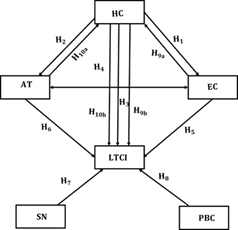
Fig. 1: Conceptual framework of the hypothesized structural model
Data collection
Data were collected from a sample of 465 respondents who had participated in wellness and medical tourism in Thailand. To ensure participants were representative of prominent wellness and medical tourism hubs in Thailand, a convenience sampling technique was implemented across key destinations during 2025. The respondents were the adults (≥18 years) who had already experienced either wellness tourism, medical tourism or sustainable travel related activity and were willing to participate in the survey voluntarily. Incomplete surveys and responses from individuals lacking relevant travel experience were excluded from the final analysis. Participants were selected from a pool of travelers with prior experience in sustainable tourism practices and services, such as utilizing eco-friendly accommodations, engaging in wellness tourism, adopting green transportation methods, and participating in low carbon tourism. A total of 465 valid responses were retained for final analysis. Table 1 presents the demographic breakdown of the sampled population. Fig. 3 displays the subject information broken down into (a) level of education, (b) occupation, (c) monthly income and (d) frequency of travel. A sample size of 465 respondents comfortably exceeds the recommended minimum threshold for SEM. This robust sample ensures adequate statistical power and enhances model stability for the proposed empirical analysis. In addition to the primary constructs, demographic characteristics including age, gender, education level, occupation, monthly income, travel frequency, and tourism type were collected to describe respondent profiles and assess potential differences in health consciousness and low-carbon travel intention among wellness tourists. Previous studies indicate that demographic factors may influence environmental awareness, sustainable travel attitudes, and environmentally responsible behavior. Furthermore, prior experience with wellness tourism or sustainable travel practices can enhance environmental concern and strengthen positive attitudes toward low-carbon travel behavior. Exposure to environmental awareness campaigns, sustainability-related information, and digital wellness content can also contribute to shaping tourists’ perceptions and intentions regarding sustainable tourism. Although these contextual factors were considered conceptually in interpreting travel behavior, the present research primarily focused on examining the structural relationships among health consciousness, environmental concern, attitude, subjective norms, perceived behavioral control, and low-carbon travel intention. The composition of the wellness tourist segments indicates that they are comprised of diverse wellness tourists who possess varying levels of education levels, occupation types, travel frequencies, and monthly incomes brackets. The heterogeneity of the sample provides comprehensive insights into how different segments perceive health consciousness and adopt intention toward low-carbon travel behavior in sustainable tourism contexts.
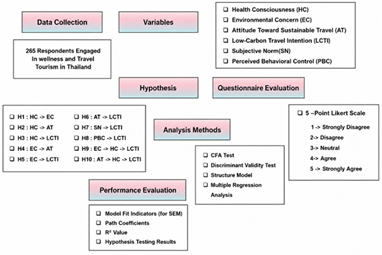
Fig. 2: Methodological workflow for evaluating health consciousness and its impact on low-carbon travel intention among wellness tourists
|
Demographic factor |
Category |
Count (n=465) |
Percentage (%) |
|
Gender |
Male |
232 |
49.8 |
|
Female |
233 |
50.2 |
|
|
Age group |
18–25 years |
102 |
21.9 |
|
26–35 years |
161 |
34.7 |
|
|
36–45 years |
107 |
23.0 |
|
|
46–55 years |
60 |
12.8 |
|
|
Above 55 years |
35 |
7.5 |
|
|
Education level |
High School |
56 |
12.1 |
|
Bachelor’s degree |
213 |
45.7 |
|
|
Master’s degree |
144 |
30.9 |
|
|
Doctorate/others |
52 |
11.3 |
|
|
Occupation |
Student |
86 |
18.5 |
|
Employed (private/public) |
240 |
51.7 |
|
|
Self-employed |
107 |
23.0 |
|
|
Retired |
32 |
6.8 |
|
|
Monthly income |
Below $1000 |
113 |
24.2 |
|
$1000–$2000 |
154 |
33.2 |
|
|
$2001–$3000 |
104 |
22.3 |
|
|
Above $3000 |
94 |
20.4 |
|
|
Travel frequency |
Once a year |
126 |
27.2 |
|
2–3 times a year |
207 |
44.5 |
|
|
More than 3 times |
132 |
28.3 |
|
|
Type of tourism |
Wellness tourism |
274 |
58.9 |
|
Medical tourism |
191 |
41.1 |
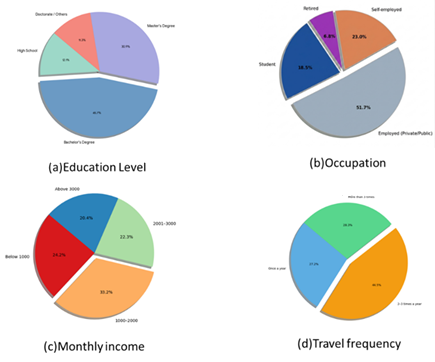
Fig. 3: Demographic and behavioral profile of wellness tourists based on (a) education level (b) Occupation, (c) monthly income, (d) travel frequency
Variable explanation
The sample consists of 465 individuals who are informed about health and sustainable travel. A questionnaire was developed on the basis of the core research constructs (HC, EC, AT, SN, PBC, and LCTI), and it included age, gender, education level, occupational income, frequency and pattern of travel, and travel style. Demographics: Gathering to identify respondent characteristics and evaluate the extent to which background attributes, including age, gender, level of education, profession, income, frequency of travel, and tourist style, may influence awareness and the intention to travel sustainably.
HC: Evaluates an individual's knowledge, attentiveness, and concern regarding their physical and mental well-being, while capturing their intrinsic motivation to engage in a healthy lifestyle and wellness tourism.
EC: This measures the understanding of environmental issues and the influence of tourism on climate change to assess environmental concern and the willingness to conserve natural resources.
AT: Defines the degree to which an individual evaluates environmentally responsible travel with a favorable or unfavorable disposition.
SN: Is the perception of social pressure from family members, friends, transport companions and social reference groups that may affect ET. Positive social networking can raise awareness and boost intentions to use sustainable, low carbon travel. Normative beliefs and social approval are then considered to be important behavioral determinants in the TPB model.
PBC: PBC looks at the perceived ability of individuals to travel in ways that are sustainable (including ease/difficulty of choosing low-carbon travel options). Contextual factors like travel costs, cost of eco-tourism services, access to sustainable transportation, access to green tourism infrastructure and cost to adopt low carbon tourism behavior also influence the perceived behavioral control. Furthermore, the use of new digital technologies, such as eco-travel applications, carbon footprint monitoring systems, and smart tourism systems, can enhance awareness, access to sustainability information and trust in choosing sustainable travel options. While not directly measured in the present study, these elements provide vital contextual background for interpreting the sustainable travel behaviors of wellness-focused tourists.
LCTI: This dimension assesses travelers' willingness and intrinsic motivation to adopt low-carbon practices, including the utilization of eco-friendly transport and accommodations, alongside a conscious effort to minimize their overall environmental impact during transit.
Questionnaire design
Six latent variables were employed to investigate the relationship between HC and LCTI for the wellness tourists in Thailand. Health awareness: HC; environmental concern: EC; attitudes toward sustainable travel: AT; social influence: SN; perceived control: PBC. LCTI represents the desire to travel in a low carbon way and is the total sum of behavioral and psychological influences on sustainable travel. The structural organization of the questionnaire, delineated by its respective latent variables, is outlined in Table 2. Each item was scored using a five-point Likert scale (1 = strongly disagree, 2 = disagree, 3 = neutral, 4 = agree, and 5 = strongly agree). Prior to full-scale administration, individual measurement items were slightly modified based on pilot test feedback to enhance clarity, readability, and overall instrument reliability and validity. To minimize potential common method bias and social desirability effects associated with self-reported data, respondent anonymity and confidentiality were guaranteed, participation was strictly voluntary, and the survey items were constructed using clear neutral wording and logically organized response structures for better participant comprehension.
RESULTS AND DISCUSSION
To evaluate the hypotheses, a rigorous two-stage SEM approach was employed, beginning with the measurement model to validate the proposed associations among the constructs. The reliability and validity of the measurement models for HC, EC, AT, SN, PBC, and LCTI were first tested using CFA. Discriminant validity was subsequently assessed to confirm that the latent constructs were empirically distinct from one another. Second, SEM was employed to simultaneously evaluate the direct and mediated effects of the independent constructs on the LCTI of wellness tourists in Thailand.
CFA test
The latent variables of health-conscious sustainable travel behavior (HC, EC, AT, SN, PBC, and LCTI) were measured by CFA to test the measurement model structure. CFA was performed to assess the relationships between observed indicators and their corresponding latent factors, verifying that the measurement items accurately captured the theoretical dimensions of each construct. The CFA model is estimated using Eqs. 1 and 2 (Siddiqui and Sujood, 2025):
X = Λₓξ + δ (1)
Y = Λᵧη + ϵ (2)
where and represent the observed indicators for exogenous and endogenous constructs, and denote the factor loading metrics, and represent the latent constructs, and and represent the measurement errors. Table 3 demonstrates the CFA outcomes, while Fig. 4 depicts the path diagram showing the factor loadings. The evaluation of the research's reliability and validity was conducted using Cronbach alpha, CR, AVE, and confirmatory factor analysis. All constructs passed the set criteria for reliability and validity as their Cronbach alpha and CR were above 0.70 and AVE was above 0.50.
Table 2: Questionnaire structure and variables
|
Variables |
Questionnaire Items |
|
HC |
How often do you consider your health when making travel decisions? How much do you like activities to improve your physical and mental health when travelling? What's your take on keeping a healthy lifestyle throughout your travels? |
|
EC |
How concerned are you about the environmental impact of tourism activities? To what extent do you believe tourism contributes to climate change? How important is environmental protection when choosing travel destinations? |
|
AT |
How positively do you view choosing eco-friendly or low-carbon travel options? To what extent do you believe sustainable travel is beneficial for the environment? How favourable is your overall attitude toward sustainable tourism practices? |
|
SN |
Do your friends and family encourage you to choose environmentally friendly travel options? To what extent do social expectations influence your travel decisions? How important is social approval when choosing sustainable travel behavior? |
|
PBC |
How easy is it for you to choose low-carbon or eco-friendly travel options? Do you feel you have enough resources (time, money, access) to travel sustainably? To what extent do you feel in control of making environmentally responsible travel choices? |
|
LCTI |
How likely are you to choose low-carbon transportation for future travel? To what extent do you intend to stay in eco-friendly accommodations? How willing are you to reduce your environmental impact during travel? |
Table 3: Reliability and validity of constructs
|
Latent Construct |
Items |
Loading Values |
Mean (M) |
SD |
Cronbach’s α |
CR |
AVE |
DG rho |
VIF |
|
HC |
HC1, HC2, HC3 |
0.86, 0.83, 0.81 |
4.12 |
0.70 |
0.88 |
0.91 |
0.71 |
0.87 |
2.3 |
|
EC |
EC1, EC2, EC3 |
0.85, 0.82, 0.80 |
4.18 |
0.72 |
0.87 |
0.90 |
0.69 |
0.85 |
2.4 |
|
AT |
AT1, AT2, AT3 |
0.88, 0.84, 0.81 |
4.05 |
0.74 |
0.89 |
0.92 |
0.73 |
0.88 |
2.2 |
|
SN |
SN1, SN2, SN3 |
0.84, 0.82, 0.79 |
3.98 |
0.76 |
0.86 |
0.89 |
0.68 |
0.84 |
2.3 |
|
PBC |
PBC1, PBC2, PBC3 |
0.87, 0.85, 0.82 |
4.10 |
0.71 |
0.88 |
0.91 |
0.72 |
0.86 |
2.5 |
|
LCTI |
LCTI1, LCTI2, LCTI3 |
0.90, 0.87, 0.85 |
4.22 |
0.69 |
0.90 |
0.93 |
0.75 |
0.88 |
2.6 |
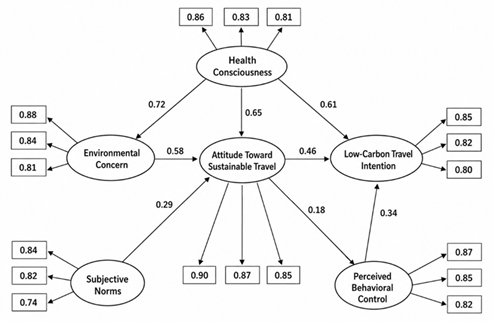
Fig. 4: Visual representation of construct relationships
The CFA results confirm the strong reliability and validity for HC, EC, AT, SN, PBC, and LCTI, with CR and loadings > 0.70, AVE (0.68–0.75), and no multicollinearity (VIF: 1.9–2.5). Discriminant validity is also confirmed, indicating that all hypotheses are distinct and effectively assess low-carbon travel intention among wellness tourists. As shown in Fig. 5, all the components have high reliability and convergent validity, validating the measurement model’s resilience for wellness visitors. The findings indicate that all constructs (HC, EC, AT, SN, PBC, and LCTI) demonstrate satisfactory validity and reliability. Consequently, the established reliability and validity of the measurement scales provide a robust foundation for investigating the low-carbon travel intentions of wellness tourists in Thailand.
SEM
The hypothesized relationships were tested using SEM, with LCTI as the dependent variable and HC, EC, AT, SN, and PBC as the independent variables. SEM enables the simultaneous testing of multiple direct and indirect (mediated) relationships within a single model, while concurrently evaluating the framework's explanatory power via R2 values. The standardized path coefficient (β) and pvalue for each relationship are simultaneously considered to validate the impact of measurement error and complex relationships within the model structure. Hence, it is pertinent to examine the concurrent impact of psychological, environmental, and behavioral factors on LCTI. The outcomes surpass the realm of behavioral intention, indicating potential ramifications for environmental sustainability initiatives. These encompass the advocacy of low-carbon tourism practices, the decrease of carbon emissions linked to tourism, and the endorsement of sustainable destination management strategies. Increased health awareness combined with environmental concern can encourage environmentally responsible tourism behaviors aligned with long-term sustainability objectives.
Discriminant validity test
Discriminant validity ensures that the indicators assessing the impact of health-conscious sustainable travel behavior (HC, EC, AT, SN, PBC, and LCTI) are unique from one another. The Fornell–Larcker criterion states that discriminant validity is established when the square root of the AVE for each object exceeds its correlations with all other latent variables. This indicates that a given construct shares more variance with its assigned indicators than with alternative constructs by employing Eq. 3 (Siddiqui and Sujood, 2025):
√AVEᵢ > rᵢ,ⱼ (3)
where, indicates the AVE for construction and relates to the correlation between constructs and . The discriminant validity test confirms that HC, EC, AT, SN, PBC, and LCTI represent independent and theoretically distinct constructs for explaining low-carbon travel intention among wellness tourists in Thailand. Table 4 presents the discriminant validity results among the constructs. The Fornell-Larcker criterion was employed to assess discriminant validity, indicating that the square root of the AVE for each construct exceeded the correlation coefficients between constructs. Furthermore, all HTMT ratios remained lower than 0.85, which is considered an ideal value to establish discriminant validity. The discriminant validity and convergent validity assessments reveal that all the construct measurements are unique (AVE=0.82–0.87; interconstruct correlations=0.49–0.72). This suggests a solid measurement model capable of understanding and measuring low-carbon travel intentions among Thailand wellness tourists with strong construct reliability, validity, and predictive analytical consistency.
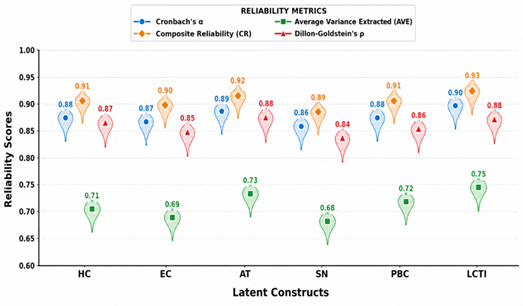
Fig. 5: Measurement model reliability and validity of health consciousness conclusions for Low-carbon travel intention
Table 4: Assessment of discriminant validity
|
Construct |
HC |
EC |
AT |
SN |
PBC |
LCTI |
|
HC |
0.84 |
|||||
|
EC |
0.62 |
0.83 |
||||
|
AT |
0.58 |
0.65 |
0.86 |
|||
|
SN |
0.49 |
0.52 |
0.60 |
0.82 |
||
|
PBC |
0.55 |
0.57 |
0.63 |
0.66 |
0.85 |
|
|
LCTI |
0.60 |
0.64 |
0.71 |
0.68 |
0.72 |
0.87 |
Structural model
The structural model demonstrates the function of health consciousness in mediating LCTI via EC, AT, SN, and PBC. The model illustrates the sequential influence of health consciousness on environmental awareness and favorable ecological attitudes, which collectively culminate in the sustainable travel behavior of wellness tourists in Thailand. The structural correlations can be proved using Eqs. 4, 5 and 6 (Wang and Phakdeephairot, 2024; Siddiqui and Sujood, 2025):
EC = β₁HC + ζ₁ (4)
AT = β₂HC + β₃EC + ζ₂ (5)
LCTI = β₄HC + β₅EC + β₆AT + β₇SN + β₈PBC + ζ₃ (6)
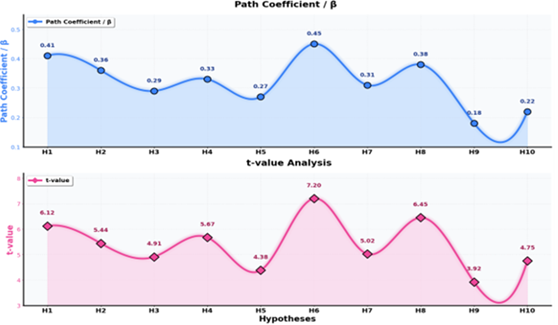
where, β coefficients (β1-β8) represent the standardized path effects between the constructs in the structural model and ζ terms (ζ1, ζ2, ζ3) represent the residual error terms for each endogenous variable. All these models reveal the direct and indirect influence of HC on LCTI mediated through EC and AT as mediators and that SN and PBC act as complementary behavioral predictors. The structural pathways are also detailed in Table 5, depicting the hypothesized structural connections of sustainable travel behavior. The findings of the structural model confirmed all the hypotheses put forward, with statistically significant standardized path estimates (β) and p-values below 0.05. The statistical significance of both the direct and indirect effects was established, confirming that environmental concern and attitudes regarding sustainable tourism acted as mediators in the intention to pursue low-carbon travel. The model's hypothesized associations have substantial support, since all the hypotheses are statistically significant (p < 0.05). Structural path studies support all hypothesized links in the case of Thailand wellness tourists, with substantial path coefficients among the variables. As shown in
Fig. 6, HC directly affects EC (β=0.41), AT (β=0.36), and LCTI (β=0.29). AT has the greatest direct impact on LCTI (β=0.45), followed by PBC and SN. The analysis presents path coefficients (β) and t values for the hypothesized path impacts of health consciousness on low-carbon travel intention. An established correlation between environmental concern and sustainable travel attitudes indicates that greater environmental literacy and awareness of climate issues serve to strengthen favorable perceptions toward environmentally responsible tourism behavior. Increased understanding of climate-related impacts associated with tourism activities can encourage wellness tourists to support sustainable travel practices and adopt stronger low-carbon travel intentions. Furthermore, eco-labels, green certifications, and destination branding that emphasizes sustainability may increase tourists' confidence in eco-friendly tourism services, thus promoting environmental concern and positive perceptions of sustainable travel. However, the present study focused primarily on behavioral intention rather than actual travel behavior; therefore, whether stated low-carbon travel intention translates into real environmentally responsible behavior requires further investigation using longitudinal or behavioral data. These findings indicate that all the hypotheses (H1–H10) are positively and significantly related among wellness tourists in Thailand and that H6 is the most powerful in terms of its influence (β = 0.45, t = 7.20), whereas H9 is the least powerful (β = 0.18, t = 3.92). This important role of subjective norms on travelers' intention to travel in low-carbon mode indicates that social reference groups, such as family members, friends and travel companions, may help with low-carbon travelers' decisions. Social support and subjective norms regarding sustainable behavior can significantly reinforce an individual's intention to select eco-friendly travel alternatives. Moreover, infrastructure for sustainable tourism, such as environmentally friendly tourism accommodation, sustainable transportation and adoption of renewable energy, and sustainable tourism approaches in the hospitality sector can facilitate positive attitudes toward low carbon travel, by making it more accessible and removing barriers to sustainable tourism decisions. While these contextual factors fell outside the scope of the current empirical investigation, they may serve as critical facilitators of low-carbon travel intentions and warrant exploration in future studies to deepen the understanding of sustainable tourism behavior. The results show that psychological factors like environmental responsibility and moral obligation possess a downstream impact, thereby bolstering positive attitudes toward sustainable travel and strengthening low-carbon travel intention among environmentally conscious wellness tourists in Thailand. There was a slightly greater direct effect of health consciousness on low carbon travel intention (β = 0.29) than environmental concern (β = 0.27), suggesting that perceived personal health benefits may be more powerful in motivating sustainable travel decisions. Furthermore, the perception of an environmentally friendly image of a location, combined with the principles of ecotourism aimed at wellness, can positively influence sustainable travel perspectives, particularly regarding physical and mental wellness. Because these variables were not directly quantified in the current study, subsequent research should empirically investigate their influence on sustainable travel behavior. The environmental concern was found to significantly mediate the relationship between health consciousness and low-carbon travel intention (H9: β = 0.18, p = 0.010), suggesting that health awareness can help boost the sustainable travel intention through environmental concern. Furthermore, macro-level disruptions—such as global health crises and climate-induced environmental challenges—frequently elevate consumer consciousness regarding personal health and sustainability, subsequently driving a shift toward pro-environmental travel choices. The results indicate that health consciousness has a positive effect on the low-carbon travel intention, which is recognized as positive implications for personal health from the use of sustainable travel behavior. Other psychological factors, such as environmental identity, ecological commitment and moral responsibility, can further reinforce sustainable travel attitudes and low carbon travel intention. Also, sustainable lifestyle practices, such as the consumption of organic products and sustainable foods, are closely intertwined with pro-environmental tourism behaviors and environmentally responsible consumer decision-making.
Table 5: Structural paths and hypotheses
|
Hypothesis |
Path relationship |
Beta(β) |
p value |
t value |
Decision |
|
H1 |
HC → EC |
0.41 |
0.001 |
6.12 |
Supported |
|
H2 |
HC → AT |
0.36 |
0.002 |
5.44 |
|
|
H3 |
HC → LCTI |
0.29 |
0.004 |
4.91 |
|
|
H4 |
EC → AT |
0.33 |
0.001 |
5.67 |
|
|
H5 |
EC → LCTI |
0.27 |
0.006 |
4.38 |
|
|
H6 |
AT → LCTI |
0.45 |
0.004 |
7.20 |
|
|
H7 |
SN → LCTI |
0.31 |
0.003 |
5.02 |
|
|
H8 |
PBC → LCTI |
0.38 |
0.001 |
6.45 |
|
|
H9 |
EC→ HC → LCTI |
0.18 |
0.010 |
3.92 |
|
|
H10 |
AT → HC → LCTI |
0.22 |
0.003 |
4.75 |
Multiple regression analysis
Using multiple regression, the effects of HC, EC, AT, SN, and PBC on LCTI were determined for Thailand wellness tourists. LCTI was identified as the dependent variable, and HC, EC, AT, SN, and PBC were identified as independent variables for multiple regression, using Eq. 7 (Naik et al., 2025; Siddiqui and Sujood, 2025):
LCTI = β₀ + β₁HC + β₂EC + β₃AT + β₄SN + β₅PBC + ε (7)
where, LCTI is the dependent variable representing low-carbon travel intention; is the intercept; are the regression coefficients for each predictor variable; HC, EC, AT, SN, and PBC are the independent variables; and is the error term. Table 6 shows the multiple regression results for the factors influencing the LCTI among wellness tourists. All the predictor factors are very significant (p < 0.005). HC, EC, AT, SN, and PBC substantially influenced the LCTI of Thailand wellness tourists and explained a large proportion of the LCTI (R=0.82, R2=0.68). AT had the greatest influence (β =0.41; p=0.001), followed by PBC and HC (β =0.36; β =0.32). The data in Fig. 7 confirm these significant associations when B and tvalues are used. Table 7 presents the goodness-of-fit indices used to evaluate the adequacy of the proposed CFA and SEM models. The obtained goodness-of-fit measures complied with established SEM evaluation criteria, confirming that the structural framework possessed acceptable adequacy and a robust overall model fit. These results confirmed the robustness and suitability of the proposed conceptual framework for structural analysis. AT is the most significant factor (β = 0.26, t = 6.78), whereas EC is the least influential predictor. All constructions had substantial effects on wellness tourists' intention to travel low-carbon in Thailand, with t values greater than 4.0. This study utilized cross-sectional survey data gathered from a sample of 465 wellness tourists in Thailand. Although the sample size was adequate for SEM analysis, the use of self-reported responses and convenience sampling may limit generalizability and introduce response bias, which restricted generalizability. These results are largely consistent with empirical evidence from previous sustainable tourism studies, confirming that environmental concern and favorable travel attitudes positively influence low-carbon travel intention (Ma et al., 2024). However, prior studies have also documented weaker linkages among these behavioral constructs, noting that economic barriers, restricted environmental consciousness, and inadequate green tourism infrastructure often hinder compliance (Sakcharoen et al., 2024). The stronger relationships observed in the present study may be associated with the increasing environmental consciousness and wellness-oriented travel preferences among tourists in Thailand. These findings indicate that sustainable travel intention could vary across tourism contexts, demographic characteristics, and environmental awareness levels. Reliance on self-reported interview data introduces potential response bias, while the inherent nature of the cross-sectional design precludes definitive causal inferences. Context-specific findings restrict broader application of triple helix model relationships (Alizadeh et al., 2024). Constraints included a Finland-focused sample, limiting generalizability. The utilization of a cross-sectional design and self-reported measures may have introduced response bias, thereby limiting the capacity for definitive causal inference. The increased relevance for young people diminished the relevance for others; combining the TPB and NAM potentially overlooked other behaviors (Hatamifar et al., 2025). To address these defects and provide a design, this study ensured an appropriate sample size and diversity of wellness tourists; measured a range of dimensions using a well-established and reliable scale to avoid response bias; and used a variety of analytical methods, including multiple regression (the prediction ability of this model was significant), and demonstrated that HC, EC, AT, SN, and PBC significantly predicted LCTI. The SEM results revealed a direct and mediated relationship, as well as model routes connecting HC and LCTI via EC and AT. Furthermore, the thoughtful construction of surveys and the maintenance of respondent anonymity, along with a multifaceted viewpoint, could mitigate answer bias and yield a more complete analysis of low-carbon travel intention. This study focused on perceived effects to explain travel behavior. Furthermore, this analysis does not account for broader contextual factors, such as economic costs and infrastructure availability. Additional methodological limitations include the reliance on a single travel survey method and a geographically restricted sample size within Thailand. While AI-supported tourism management research was considered to help establish a broad understanding of sustainability issues, this study concentrates on factors affecting low carbon traveling intentions in particular, not on AI-supported tourism management. Possible extensions of this study include the use of real behavioral data with larger sample sizes and the introduction of context-specific effects such as policy, technology and availability that may explain and predict intention toward low-carbon travel behavior. The empirical insights yielded by this study carry profound implications for both environmental management strategies and the formulation of sustainable tourism policy. Encouraging intention toward low-carbon travel behavior among wellness tourists is likely to be beneficial in achieving environmental sustainability and mitigating the environmental impacts of tourism in Thailand. Consequently, this study extends beyond behavioral psychology and sustainable tourism literature to offer valuable incremental contributions to the field of environmental management. Consequently, this study extends beyond behavioral psychology and sustainable tourism literature to offer valuable incremental contributions to the field of environmental management.
Table 6: Multiple regression analysis results
|
Independent variable |
B |
β |
t |
Sig. |
R |
R² |
|
Health consciousness (HC) |
0.21 |
0.32 |
5.21 |
0.001 |
0.82 |
0.68 |
|
Environmental concern (EC) |
0.18 |
0.28 |
4.63 |
0.002 |
||
|
Attitude toward sustainable travel (AT) |
0.26 |
0.41 |
6.78 |
0.001 |
||
|
Subjective norms (SN) |
0.19 |
0.30 |
5.09 |
0.003 |
||
|
Perceived behavioral control (PBC) |
0.24 |
0.36 |
6.15 |
0.001 |
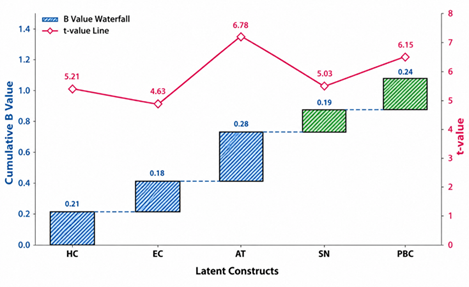
Fig. 7: Comparative analysis of B-values and t values for structural relationships among health consciousness constructs and low-carbon travel intention
Table 7: Goodness-of-fit indices for CFA and SEM model evaluation
|
Fit index |
Recommended threshold |
Model evaluation |
|
χ²/df |
< 3.00 |
Acceptable fit |
|
RMSEA |
< 0.08 |
Good fit |
|
CFI |
> 0.90 |
Good fit |
|
TLI |
> 0.90 |
Acceptable fit |
|
GFI |
> 0.90 |
Satisfactory fit |
|
SRMR |
< 0.08 |
Good fit |
Future scope of the research
To advance this line of inquiry, future research should expand along four key dimensions. First, subsequent studies could incorporate objective environmental performance indicators, carbon footprint metrics, or longitudinal interventions to more accurately assess the long-term impacts of sustainable tourism. Second, adopting cross-cultural and longitudinal research designs would allow investigators to track the temporal evolution of sustainable travel behaviors. Third, future models should integrate these omitted contextual and technological variables to construct a more holistic framework of how PBC interacts with and drives pro-environmental travel choices. Fourth, researchers should investigate how specific reference groups—such as family, friends, and travel companions—interact with micro-contextual tourism factors, including eco-friendly accommodations, sustainable transportation systems, and the implementation of green services, to influence low-carbon travel intentions. Finally, subsequent studies should explore how macro-level factors—such as sustainable destination branding, green certifications, and eco-labeling—interact with climate change and environmental awareness to shape pro-environmental travel choices. Travel behavior observation should be integrated in longitudinal methods to gain deeper understanding of the relationship between the intention and the actual environmentally responsible tourism practices.
CONCLUSION
This study investigated the role of health consciousness in shaping low-carbon travel intention among wellness tourists in Thailand by integrating health-related psychological factors with environmental and behavioral dimensions. By demonstrating an empirical link between health consciousness and the health-directed behaviors of tourists, this study extends the scope of sustainable tourism frameworks and establishes these wellness habits as potent predictor of sustainable behavior. The study integrates environmental concern, attitude towards sustainable travel, subjective norms and perceived behavioral control in an integrated behavior model and offers a holistic explanation of the factors impacting low carbon travel intention in the context of wellness tourism.The empirical findings demonstrate that health consciousness significantly influences environmental concern, sustainable travel attitudes, and the intention to engage in low-carbon travel. The SEM analysis demonstrated that health consciousness positively affected environmental concern (β = 0.41, p = 0.001), attitude toward sustainable travel (β = 0.36, p = 0.002), and low-carbon travel intention (β = 0.29, p = 0.004). The results showed that those who are more aware of personal health tend to be more inclined to engage in more environmentally sustainable travel habits and promote eco-friendly tourism activities. Concern about the environment also had positive significant effects on attitude towards sustainable travel (β = 0.33, p = 0.001) and low carbon travel intention (β = 0.27, p = 0.006), meaning that ecological awareness is a positive factor that intensifies tourists' intentions of sustainable travel among wellness tourists. The attitude towards sustainable travel was the most highly significant TPB construct (β = 0.45, p = 0.004) in predicting low-carbon travel intention. This finding highlights the pivotal role of positive attitudes toward eco-friendly travel in motivating tourists to engage in sustainable tourism activities. Subjective norms (β = 0.31, p = 0.003) and perceived behavioral control (β = 0.38, p = 0.001) also had significant effects on low carbon travel intention, suggesting that both social influence and perceived ability to change behavior is important for low carbon travel intention. Furthermore, the mediation analysis confirmed that environmental concern and attitudes toward sustainable travel serve as significant mediating pathways between health consciousness and low-carbon travel intentions. The results show that the indirect effect of health awareness towards sustainable travel behavior is mediated by forming environmental responsibility and positive travel attitudes. Multiple regression analysis was used to validate the robustness of the proposed model. The explanatory power of the combined effects of health consciousness, environmental concern, attitude, subjective norms, and perceived behavioral control for the intention to use low-carbon travel was 68% (R² = 0.68). The empirical findings support the premise that integrating health-conscious and environmental dimensions offers a more comprehensive understanding of sustainable tourist behavior compared to conventional behavioral constructs. Therefore, in regard to the theory application of this study, the incorporation of health consciousness and environmental concern as one of the important variables that affect the low-carbon tourism intention goes beyond the previous studies. Regarding its theoretical contributions, this study integrates health consciousness and environmental concern as pivotal determinants of low-carbon tourism intentions, thereby extending the scope of prior literature. The policy implications of this study are important to policy makers, tourism authorities, wellness tourism operators, and environmental planners. Medical tourism stakeholders need to boost sustainability programs and campaigns grounded in health approaches, which link health and environmental protection. In order to achieve this, the development of eco-friendly accommodation, sustainable transportation systems, wellness-oriented green tourism packages, and environmental education programs can stimulate tourists to shift towards intention on low carbon travel behavior. Furthermore, leveraging social influence and public awareness mechanisms can bolster the efficacy of sustainable tourism initiatives while fostering favorable attitudes and behaviors toward pro-environmental practices. The results also imply practical environmental benefits, as health awareness and environmental awareness could promote the selection of environmentally friendly travel options, which could help to lower the carbon footprint generated by tourism and promote sustainable tourism destination management and green tourism policies in Thailand. The findings demonstrate that enhancing sustainable tourism awareness alongside promoting eco-friendly travel behaviors serves as a key catalyst for establishing enduring, responsible, and low carbon tourism destinations in Thailand. An approach to combining health awareness with environmental sustainability measures can contribute to the reinforcement of tourism policies through the promotion of environmentally-friendly travel, accommodation, medical tourism packages and environmental education.
AUTHOR CONTRIBUTIONS
W. Madhyamapurush, as the sole author, conceived the study, performed the analyses, interpreted the results, and drafted and revised the manuscript.
ACKNOWLEDGEMENT
This study was supported by the University of Phayao and the Thailand Science Research and Innovation Fundamenta fund 2025 [Grant No. 5015/2567].
CONFLICT OF INTEREST
The author declares that there are no conflicts of interest regarding the publication of this manuscript. In addition, ethical issues, including plagiarism, informed consent, misconduct, data fabrication and/or falsification, double publication and/or submission, and redundancy, were observed by the authors.
OPEN ACCESS
©2026 The author(s). This article is licenced under a Creative Commons Attribution 4.0 International Licence, which permits use, sharing, adaptation, distribution and reproduction in any medium or format, as long as you give appropriate credit to the original author(s) and the source, provide a link to the Creative Commons licence, and indicate if changes were made. The images or other third-party material in this article are included in the article’s Creative Commons licence, unless indicated otherwise in a credit line to the material. If material is not included in the article’s Creative Commons licence and your intended use is not permitted by statutory regulation or exceeds the permitted use, you will need to obtain permission directly from the copyright holder. To view a copy of this licence, visit: http://creativecommons.org/licenses/by/4.0/
PUBLISHER’S NOTE
GJESM Publisher remains neutral with regard to jurisdictional claims with regard to published maps and institutional affiliations.
Negative AI Statement
The author(s) declared that no AI tools or services were used or not highly applied during the preparation of this work.
ABBREVIATIONS
|
% |
Percent |
|
AI |
Artificial intelligence |
|
AT |
Attitude toward sustainable travel |
|
AVE |
Average variance extracted |
|
B |
Unstandardized coefficient |
|
CB-SEM |
Covariance-based structural equation modelling |
|
CFA |
Confirmatory factor analysis |
|
COVID-19 |
Coronavirus disease 2019 |
|
CR |
Composite reliability |
|
DG rho |
Dijkstra–Henseler’s rho |
|
EC |
Environmental concern |
|
GHG |
Greenhouse gas |
|
HC |
Health consciousness |
|
IGSCA |
Importance-gap satisfaction and competitive analysis |
|
LCTI |
Low-carbon travel intention |
|
MCA |
Multiple correspondence analysis |
|
NAM |
Norm activation model |
|
PBC |
Perceived behavioral control |
|
SEM |
Structural equation modelling |
|
SN |
Subjective norms |
|
SOR |
Stimulus–organism–response |
|
SPSS |
Statistical package for the social sciences |
|
TPB |
Theory of planned behavior |
|
VIF |
Variance inflation factor |
|
VR |
Virtual reality |
REFERENCES
Alashiq, S.; Aljuhmani, H.Y., (2025). From sustainable tourism to social engagement: A value-belief-norm approach to the roles of environmental knowledge, eco-destination image, and biospheric value. Sustainability. 17(10): 4353.
Alizadeh, A.; Higham, J.; Filep, S.; Moyle, B.; Vada, S., (2024). Responsible behavior and psychological well-being in tourism: The triple helix model. J. Responsible Tourism Manage., 4(1): 1–21(21 pages).
Bang-Ning, H.; Jitanugoon, S.; Puntha, P., (2025). AI-powered sustainable tourism: Unlocking circular economies and overcoming resistance to change. Bus. Strategy Environ., 34(5): 5781–5802(22 pages).
Boadu, B.; Jiang, X.; Sampene, A. K., (2025). Nudging eco-tourism behavior through tourist experience satisfaction. Tourism Hosp., 6(5): 275(29 pages).
Cha, J.; Jo, M.; Lee, T.J.; Hyun, S.S., (2024). Characteristics of market segmentation for sustainable medical tourism. Int. J. Tourism Res., 26(1): e2626(17 pages).
Chen, X.; Cheng, Z.F., (2023). The impact of environmentally friendly short videos on low-carbon tourism behavioral intention. Front. Psychol., 14: 1137716(17 pages).
Fakfare, P.; Wattanacharoensil, W., (2023). Low-carbon tourism for island destinations: A crucial alternative for sustainable development.. Sustainable Dev., 31(1): 180–197 (18 pages).
Fang, Y.; He, X.; Su, X.; Xu, Q.; Qiu, X.; Yang, X.; Wu, G., (2025). Place Attachment’s Mediating Role in Rural Residents’ Perceived Value of Tourism and Pro-Environmental Behavior of Rural Tourism Destinations in Western Sichuan Plateau Under Climate Change. Sustainability. 17(23): 10453 (18 pages).
Gan, T.; Zheng, J.; Li, W.; Li, J.; Shen, J., (2023). Health and Wellness Tourists’ Motivation and Behavior Intention: The Role of Perceived Value. Int. J. Environ. Res. Public Health. 20(5): 4339 (14 pages).
Hatamifar, P.; Tervo-Kankare, K.; Ghaderi, Z., (2025). Carbon-neutral travel behavior among young adults. Scand. J. Hosp. Tour., 25(5): 476–495 (20 pages).
Janchai, N.; Suvittawat, A., (2025). The structural equation model of factors affecting decision-making on low-carbon tourist destinations. Sustainability. 17(5): 2082 (20 pages).
Lin, H.H.; Ling, Y.; Chen, I.S.; Wu, P.Y.; Hsu, I.C.; Hsu, C.H.; Zhang, S.F., (2022). Can Low-Carbon Tourism Awareness Promote Rural and Ecological Development, Create Safe Leisure Spaces, and Increase Public Happiness? A Discussion from the Perspective of Different Stakeholders. Water. 14(21): 3557 (16 pages).
Liu, D.; Jackson, L.A.; Upchurch, R.; Johnson, C., (2025). Environmental Citizenship and Behavioral Determinants of Wind Farm Tourism: Evidence from Grass Skyline, Zhangjiakou, China. Tourism Hosp., 6(3): 152 (17 pages).
Lv, X.; Pan, X.; Xu, S.; Lan, T., (2024). Tourist engagement in glacier tourism. J. Sustainable Tour., 32(12): 2479–2499 (21 pages).
Ma, Y.; Li, Y.; Han, F., (2024). Interconnected Eco-Consciousness: Gen Z Travelers’ Intentions toward Low-Carbon Transportation and Hotels. Sustainability. 16(15): 6559 (19 pages).
Manhas, P.S.; Sharma, P.; Quintela, J.A., (2025). Wellness Tourism in the Himalayas: A Structural Analysis of Motivation, Experience, and Satisfaction in Spa Resorts. Tourism Hosp., 6(2): 118 (20 pages).
Naik, S.; Chanda, R.S.; Paliwal, M., (2025). Encouraging sustainable travel choices through behavioral interventions to reduce tourists' carbon footprints. Discov. Sustainable. 6(1): 1320 (18 pages).
Pinto, H.; Barboza, M.; Nogueira, C., (2025). Perceptions and Behaviors Concerning Tourism Degrowth and Sustainable Tourism: Latent Dimensions and Types of Tourists. Sustainability. 17(2): 387 (18 pages).
Siddiqui, S.; Sujood, (2025). Carbon neutrality intentions in Indian tourists. Curr. Issues Tour., 28(23): 3733–3753 (21 pages).
Theerathitichaipa, K.; Seefong, M.; Prasomsab, P.; Wisutwattanasak, P.; Banyong, C.; Ratanavaraha, V.; Jansirisuk, N.; Ariyarit, A.; Kasemsri, R., (2025). Exploring Determinants of Wellness Tourism and Behavioral Intentions: An SEM-Based Study of Holistic Health. Sustainability. 17(17): 7824 (19 pages).
Vo-Thanh, T.; Luong, V.H.; Manthiou, A.; Petr, C., (2025). Slow tourism and well-being. Tour. Plan. Dev., 22(2): 282–300 (19 pages).
Wan, S.; Liu, L.; Chen, G.; Wang, P.; Lan, Y.; Zhang, M., (2025). Low-carbon transformation of tourism in characteristic towns under the carbon neutral goal: a three-dimensional mechanism analysis of tourists, residents, and enterprises. Sustainability. 17(11): 5142 (19 pages).
Wang, Y.; Phakdeephairot, N., (2024). Low-Carbon Travel Behavior in Daily Residence and Tourism Destination: Based on TPB-ABC Integrated Model., 11(4): 465–483 (19 pages).
Yu, L.; Xu, Y.; Shi, H., (2023). Carbon emission quotas and a reduction incentive scheme integrating carbon sinks for China's provinces: An equity perspective. Sustainable Production and Consumption, 41, 213-227. (12 pages).
Zhan, L.; Yang, J.; Lin, M.; Qi, X., (2025Tourism consumers’ perceptions, attitudes and low-carbon tourism behaviors towards “dual carbon” of China. Frontiers in Environmental Science, 13, 1598632. (15 pages).
Zhou, Y.; Liu, L.; Han, S.; Sun, X., (2023). Wellness tourism behavioral intention China–Korea comparison. Humanit. Soc. Sci. Commun., 10(1): 1–11 (11 pages).
OPEN ACCESS
©2026 The author(s). This article is licensed under a Creative Commons Attribution 4.0 International License, which permits use, sharing, adaptation, distribution and reproduction in any medium or format, as long as you give appropriate credit to the original author(s) and the source, provide a link to the Creative Commons license, and indicate if changes were made. The images or other third party material in this article are included in the article’s Creative Commons license, unless indicated otherwise in a credit line to the material. If material is not included in the article’s Creative Commons license and your intended use is not permitted by statutory regulation or exceeds the permitted use, you will need to obtain permission directly from the copyright holder. To view a copy of this license, visit: http://creativecommons.org/licenses/by/4.0/
PUBLISHER NOTE
GJESM Publisher remains neutral concerning jurisdictional claims in published maps and institutional affiliations.
MAJOR DATABASES, CITATION METRICS & CAPTURES
Google Scholar | Scopus - SJR | Web of Science | Biological Abstracts: Clarivate | Biosis Preview: Clarivate | PlumX Metrics | Altmetrics | Mendeley |
CURRENT PUBLISHER

| Article View | 1,481 |
| PDF Download | 484 |


Letters to Editor
[1] Letters that include statements of statistics, facts, research, or theories should include appropriate references, although more than three are discouraged.
[2] Letters that are personal attacks on an author rather than thoughtful criticism of the author’s ideas will not be considered for publication.
[3] Letters can be no more than 300 words in length.
[4] Letter writers should include a statement at the beginning of the letter stating that it is being submitted either for publication or not.
[5] Anonymous letters will not be considered.
[6] Letter writers must include their city and state of residence or work.
[7] Letters will be edited for clarity and length.