
5.2
CiteScore
2.9
Impact Factor
Document Type : RESEARCH ARTICLE
Authors
1 Department of Government and Public Administration, Lovely Professional University, Phagwara, Punjab, 144411 India
2 1137 Spectrum, Irvine, Orange County 92618 USA
3 Department of Environmental Health Engineering, Tehran University of Medical Sciences, Tehran, Iran
Graphical Abstract
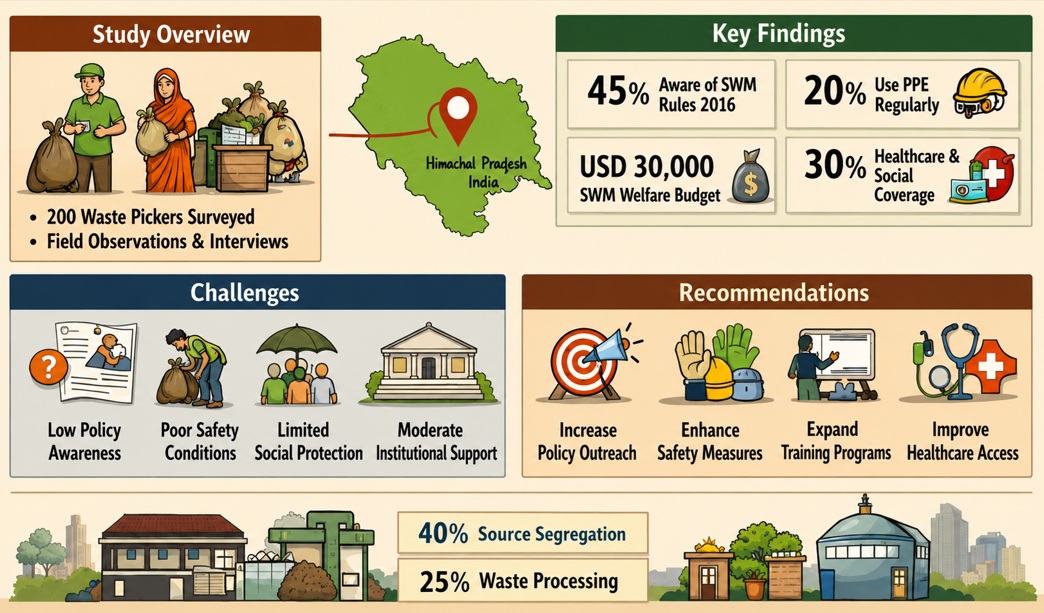
Highlights
Ø Only 45% aware of SWM Rules 2016; 35% formally registered with municipal or cooperative programs;
Ø Institutional support includes USD 30,000 budget, 12 trainings, and 40% cooperative membership;
Ø PPE usage low at 20%; 70% perform 6–8 h manual lifting of 60–90 kg waste daily;
Ø Social protection limited to 30% waste processing reaches 25% with 40% source segregation efficiency.
Keywords
INTRODUCTION
Informal waste pickers play a vital role in municipal solid waste management (MSWM), enabling recycling, resource recovery, and cost-effective waste handling, yet they remain largely unrecognized within formal policy frameworks (Balasubramanian, 2018; Buch et al., 2021). These employees make substantial contributions to the circular economy by reclaiming recyclable materials, minimizing reliance on landfills, and promoting sustainable waste management systems (Alqaralleh et al., 2026). Despite this role, they operate under precarious conditions with limited social protection, irregular incomes, and inadequate occupational safety (Chokhandre et al., 2017). In Himachal Pradesh, characterized through mixed urban–rural settlements and dispersed municipal systems, integration of informal waste pickers into formal programs is hindered by geographic challenges, administrative heterogeneity, and uneven municipal infrastructure (Sharma and Acharya, 2019). This situation serves as a pertinent framework to investigate the impact of geographic dispersion, institutional variation, and infrastructure shortcomings on policy implementation, worker inclusion, and waste management effectiveness (Shaherani et al., 2026). Although India has established national frameworks such as the Solid Waste Management Rules (SWMR), 2016, issued by the Ministry of Environment, Forest and Climate Change (MoEFCC, 2016), their uptake and implementation at the grassroots level remain limited. Low awareness of legal provisions and registration under municipal or cooperative programs restrict access to welfare schemes, health coverage, and institutional support. Occupational health risks remain critical. Waste pickers handle heavy loads of 60–90 kilograms (kg) daily over 6–8 hours (h) while limited personal protective equipment (PPE) use exposes them to musculoskeletal strain, cuts, respiratory hazards, and skin infections (Thakur et al., 2018). Subsequent studies have primarily focused on socio-economic vulnerabilities or occupational health independently, showing a lack of attention to the relationship between policy awareness, governance structures, and waste management effectiveness (Singh et al., 2023). Institutional interventions, including municipal budget allocations, training programs, and cooperative facilitation, aim improved inclusion and welfare, yet remain inconsistent across districts and insufficiently address gender-specific challenges (Li and Chen, 2025). Female waste pickers encounter further obstacles stemming from gender-specific labor roles, limited access to social protection, and reduced involvement in cooperatives (Misra and Tewari, 2022). Consequently, a knowledge gap persists regarding how policy awareness, occupational safety practices, and institutional mechanisms collectively influence inclusion, operational efficiency, and welfare outcomes (Pedroso et al., 2024). Existing studies concerning informal waste pickers predominantly concentrate on singular facets such as health hazards associated with their occupation (Chokhandre et al., 2017; Thakur et al., 2021), socio-economic vulnerabilities (Singh et al., 2023), and gender-based precarity (Misra and Tewari, 2022), with limited integration of governance and policy dimensions. Broader reviews emphasize fragmented evidence and the absence of holistic frameworks (Pedroso et al., 2024). These overlapping discussions suggest a redundancy concerning roles and gaps, necessitating consolidation for enhanced clarity. Despite this body of work, a clearly defined linkage between policy awareness, institutional mechanisms, and measurable waste management outcomes remains insufficiently articulated, limiting analytical precision in existing studies. Empirical studies seldom link policy awareness, institutional frameworks, and the results of operational waste management within a cohesive structure. To address this gap, the current study formulates a comprehensive assessment framework that connects policy awareness under the SWMR, 2016, occupational safety practices, and institutional support with quantifiable waste management performance indicators. This framework is conceptually based on an interactional systems perspective linking governance inputs, worker-level practices, and system-level outcomes. In this context, governance variables act as independent drivers, worker-level practices operate as mediating mechanisms, and waste management performance indicators denote outcome dimensions. The comprehensive analysis offers a clear insight into the ways in which how institutional, social, and occupational elements collectively impact inclusion, efficiency, and sustainability in MSWM systems (Kala and Bolia, 2024). This integrated assessment highlights gaps within policy implementation and occupational safety infrastructure while identifying opportunities for strengthening institutional support. The results are designed to inform strategies that elevate policy outreach, increase cooperative participation, and advance municipal training programs, consequently bolstering occupational safety and the effectiveness of waste management. The study also addresses gender disparities, healthcare access, and welfare inclusion barriers often overlooked in informal waste work research. Overall, it provides actionable insights for policymakers, urban planners, and social welfare agencies seeking to strengthen sustainable and inclusive MSWM systems in the Indian Himalayan context. The study is structured around the following aims: i) to assess the degree of policy awareness among waste pickers and their registration status under MSWM programs; ii) to assess occupational safety conditions and ergonomic risks associated with waste collection and handling practices; iii) to analyze the function of governance mechanisms, training programs, and institutional assistance on improving waste management efficiency; and iv) to analyze access to healthcare and social protection programs in order to pinpoint obstacles that hinder welfare inclusion for informal waste workers. These objectives are directly operationalized through corresponding hypotheses (H1–H4), ensuring explicit alignment between research aims and testable relationships. Collectively, these goals establish a systematic approach to address current research deficiencies, evaluate the operational and social aspects of integrating waste pickers, and support evidence-driven policy and program initiatives designed to enhance both worker welfare and municipal waste management outcomes. The study was conducted at the Department of Government and Public Administration, Lovely Professional University, Punjab, India, in 2025.
MATERIALS AND METHODS
This study presents the methodological framework of the study, including research design, data collection procedures, use of quantitative and qualitative methods, and analytical techniques ensuring reliability, validity, and systematic interpretation. This study specifically employs a convergent mixed-methods design, wherein quantitative and qualitative data are gathered simultaneously, analyzed independently, and subsequently integrated during the interpretation phase. The integration of multiple methods provides a comprehensive basis for examining the research problem.
Research design
A mixed-methods design was adopted to analyze governance structures, policy awareness, occupational safety, and institutional integration of waste pickers in MSWM systems in Himachal Pradesh, India (Rani et al., 2025). Waste pickers are essential to the activities of waste segregation, recycling, and organic waste management, yet they are predominantly excluded from formal governance and social protection systems. The study integrates structured surveys, stakeholder interviews, and field observations to examine relationships among governance mechanisms, policy implementation, occupational conditions, and waste management efficiency, addressing both technical and institutional dimensions.
Study area description
The study was conducted in Shimla, Mandi, Solan, Kangra, and Dharamshala, representing diverse urban local bodies in Himachal Pradesh, India with 30°–33° north (N), 75°–79° east (E); 350–6,900 meters (m) altitude, (MoEFCC, 2017). The state has varied climatic zones from subtropical to alpine, which affects the processes of waste generation and management processes. Himachal Pradesh comprises 61 urban local bodies generating about 346 tonnes (T) of municipal solid waste daily, of which 332 tonnes are collected, 221 tonnes processed, and 111 tonnes disposed (Central Pollution Control Board (CPCB), 2021; CPCB, 2020). Selected municipalities represent variations in population density, infrastructure, and informal recycling activity.
Sampling strategy and sample size determination
Selection of municipalities
Five urban local bodies, Shimla, Mandi, Solan, Kangra, and Dharamshala, were purposively selected to capture heterogeneity in population density, MSWM infrastructure, and informal recycling activities, consistent with established approaches in informal sector studies (Etikan et al., 2016). The selection was influenced by specific inclusion criteria that included differences in population size and density, levels of MSWM infrastructure, presence of informal recycling activities, and geographic representation. Municipalities that did not meet these criteria were excluded. The inclusion of five municipalities was deemed sufficient to capture variability and enable meaningful comparative analysis across diverse urban contexts within the study scope. The selection process was conducted using stratified purposive sampling to ensure representation of diverse urban contexts, thereby enabling a comparative evaluation of MSWM systems (Gupta et al., 2017).
Selection of stakeholder groups
Three stakeholder groups were identified to provide comprehensive perspectives on MSWM. Waste pickers represented operational practices, municipal officers provided insights into governance and policy implementation, and NGO/cooperative representatives contributed information on institutional support mechanisms, reflecting the multi-actor structure of informal waste systems. Inclusion of these groups allowed triangulation of data and enhanced reliability and validity of findings (Singh et al., 2023). However, the reliance on purposive and accessibility-based sampling could lead to selection bias, which means that the results are viewed as generally indicative rather than completely representative of the entire waste picker population.
Sample size
The sample size was calculated by the Slovin formula, using Eq. 1 (Etikan et al., 2016):
n = N / (1 + N × e²) (1)
where, n denotes the required sample size, N represents the population, and e indicates the margin of error.
The margin of error was set at 5 percent (%) to maintain statistical rigour. Based on an estimated waste picker population of 550, the calculated sample size was approximately 231 respondents. The Slovin formula was embraced as a practical method for determining sample size when detailed population variance data is lacking, a situation often encountered in informal sector research contexts. Considering field feasibility and operational constraints, the final sample included 225 respondents, comprising 200 waste pickers, 15 municipal officers, and 10 NGO/cooperative representatives (Etikan et al., 2016). The reduced count of NGO and cooperative representatives signifies their constrained presence and specialized function within the study area, where merely a few organizations are actively engaged in MSWM-related activities; hence, their inclusion was guided on relevance and expertise rather than statistical representation (Table 1). The marginal reduction from the calculated sample size (231) to the achieved sample (225) was due to non-response and field constraints and is not expected to significantly affect statistical reliability or the overall interpretation of results. Furthermore, while the sample size is based on statistical methods, factors such as field accessibility and participant willingness can impact its representativeness, which are frequent constraints in studies concerning the informal sector.
Table 1: Study population characteristics and data collection methods
|
Category |
Subcategory |
Waste Pickers |
Municipal Officers |
NGO/Cooperative Representatives |
Total |
|
Sample size |
– |
200 |
15 |
10 |
225 |
|
Data collection method |
– |
Structured questionnaire |
Semi-structured interviews |
Key informant interviews |
– |
|
Age (years) |
18–25 |
30 |
2 |
1 |
33 |
|
26–40 |
105 |
8 |
5 |
118 |
|
|
41–60 |
65 |
5 |
4 |
74 |
|
|
Gender |
Male |
80 |
10 |
6 |
96 |
|
Female |
120 |
5 |
4 |
129 |
|
|
Experience (years) |
<5 |
50 |
– |
– |
50 |
|
5–10 |
90 |
– |
– |
90 |
|
|
>10 |
60 |
– |
– |
60 |
|
|
Education |
No formal schooling |
40 |
– |
– |
40 |
|
Primary |
90 |
– |
– |
90 |
|
|
Secondary |
50 |
– |
– |
50 |
|
|
Higher |
20 |
15 |
10 |
45 |
|
|
Primary work activity |
Collection |
120 |
– |
– |
120 |
|
Segregation |
50 |
– |
– |
50 |
|
|
Recycling / resale |
30 |
– |
– |
30 |
|
|
Registration status |
Registered with municipal/cooperative |
80 |
– |
10 |
90 |
|
Not registered |
120 |
15 |
– |
135 |
Pre-testing of questionnaire
The structured questionnaire was pre-tested with ten waste pickers to evaluate clarity, relevance, and reliability, consistent with occupational survey practices in informal settings (Chokhandre et al., 2017). Feedback from the pre-test guided the enhancement of the instrument, ensuring it aligns with research goals and reduces measurement error. Content validity was ensured through expert review and alignment of questionnaire items with study objectives, while construct validity was addressed by designing items based on established concepts in MSWM and informal sector research. Additionally, internal consistency reliability was assessed using Cronbach’s alpha, yielding a value of 0.82. This indicates a good level of reliability as values above 0.7 are considered acceptable and those above 0.8 reflect good internal consistency. This confirms that the items in the questionnaire effectively measure the intended constructs (Chokhandre et al., 2017).
Data sources and study design
A mixed-methods research approach was adopted, incorporating quantitative surveys, qualitative interviews, field observations, and secondary data analysis to explore MSWM and the integration of waste picker inclusion, as recommended in occupational health studies of informal workers (Rani et al., 2025).
Primary data collection
Structured questionnaires were administered to 200 waste pickers to obtain quantitative information on demographic characteristics, occupational profiles, education, registration status, awareness of SWMR, 2016, occupational safety practices, PPE usage, healthcare access, and income levels, reflecting common vulnerability dimensions in waste picker populations (Misra and Tewari, 2022). Semi-structured interviews were conducted with 15 municipal officers to examine governance structures, program implementation, monitoring systems, budget allocation, regulatory enforcement, and informal worker integration. Participants for qualitative interviews were selected purposively based on their direct involvement and expertise in MSWM and informal sector activities, and interviews followed a semi-structured protocol with predefined thematic guides to ensure consistency and reproducibility. Interviews conducted with 10 representatives from NGOs and cooperatives gathered information regarding training initiatives, advocacy programs, cooperative membership, and institutional support frameworks, consistent with inclusive waste management approaches (Buch et al., 2021). Field observations were conducted at waste collection points and informal sorting sites to document segregation practices, PPE usage, and ergonomic conditions associated with occupational health risks (Singh and Chokhandre, 2015).
Secondary data sources
Secondary data were obtained from the CPCB annual report (2021), Swachh Bharat Mission–Urban (SBM-U) datasets (Ministry of Housing and Urban Affairs (MoHUA), 2025), and the annual report 2024–2025 published by the MoEFCC, (2025). Regulatory frameworks, including the SWMR, 2016 and Street Vendors Act, 2014, were reviewed to assess institutional mandates and informal worker inclusion policies (MoEFCC, 2016; Government of India, 2014). Secondary data were incorporated via comparative analysis alongside primary data to provide context for the findings and confirm the identified patterns. Data collection process was executed in a sequential multi-stage process, with fieldwork carried out during a specified study period, utilizing local language administration and trained enumerators to ensure respondent comprehension, consistency, and data quality. Survey instruments captured demographic and occupational characteristics of waste pickers, who are known to experience high levels of occupational vulnerability (Chokhandre et al., 2017). Interviews with municipal officials explored governance constraints and implementation gaps.
Data analysis
Quantitative analysis: Quantitative data from 200 respondents were analyzed using descriptive statistics, including frequencies, percentages, and cross-tabulations. The factors taken into account were PPE usage, healthcare accessibility, and income, all of which are essential factors influencing occupational health outcomes within informal waste sectors (Uhunamure et al., 2021). Results indicated low awareness of SWM Rules, limited registration coverage, and low PPE usage.
Qualitative analysis
Qualitative data were analyzed using thematic analysis. A systematic coding procedure was followed, involving initial open coding, categorization of codes into themes, and iterative refinement; coding was conducted manually using a predefined thematic guide, and consistency was ensured through repeated review and cross-verification of coded data. Key themes comprised governance capacity, deficiencies in policy implementation, constraints in training, and the state of occupational safety, consistent with the findings on the precarious situation of informal waste workers (Shankar and Sahni, 2018). An analytical framework was applied to examine relationships between key variables, such as policy awareness and PPE usage, using cross-tabulation to identify patterns and associations relevant to occupational safety outcomes. Ergonomic hazards and musculoskeletal tension were commonly documented, consistent with findings derived from health studies on waste pickers (Singh and Chokhandre, 2015).
Data triangulation
Triangulation integrated surveys, interviews, field observations, and secondary datasets to enhance validity. Triangulation was conducted by cross-validating findings across data sources to ensure consistency and strengthen interpretation. Convergence of evidence indicated structural governance restrictions and occupational health hazards exist among waste pickers (Rani et al., 2025).
Statistical analysis
Statistical analysis was conducted using the statistical package for the social sciences (SPSS) (Version 29). Advanced techniques, including correlation analysis, multiple regression, and analysis of variance (ANOVA), were employed to examine relationships among socio-economic, occupational, and institutional variables affecting waste picker welfare. Before model estimation, assumptions for statistical tests, including normality, linearity, independence, and homoscedasticity, were assessed using appropriate diagnostic tests such as normality plots, residual analysis, and Durbin–Watson statistics. Additionally, multicollinearity among independent variables was assessed using variance inflation factors (VIF) to ensure the robustness of the regression models. Categorical variables were dummy-coded, and missing values were handled through listwise deletion.
Ethical considerations and informed consent
Ethical approval was obtained from the Institutional Ethics Committee prior to data collection. Participation was voluntary, and informed consent was obtained from all respondents. Confidentiality and anonymity were preserved during the entire study, and the data were utilized exclusively for academic purposes.
Hypotheses development
In accordance with the aims of the study and the existing literature, four hypotheses (H1 to H4) were formulated. Each hypothesis was aligned with specific analytical techniques, including cross-tabulation, correlation analysis, and regression models, to empirically examine relationships between variables.
i. H1: Waste pickers with higher awareness of SWMR, 2016 are more likely to be registered under municipal or cooperative programs, consistent with governance–compliance relationships (Kala and Bolia, 2024).
ii. H2: Female waste pickers have lower access to healthcare services and social protection compared to male waste pickers, which illustrates the gender inequalities that exist within informal work (Misra and Tewari, 2022).
iii. H3: Waste segregation efficiency and organic waste processing are positively associated with training participation and governance support, consistent with cooperative-driven waste management outcomes (Buch et al., 2021).
iv. H4: Poor ergonomic practices and lack of PPE significantly increase occupational health risks among waste pickers, as widely documented in occupational health studies (Thakur et al., 2021).
RESULTS AND DISCUSSION
Quantitative analysis
This section presents quantitative analysis of survey data pertaining to waste pickers, examining socio-demographic characteristics, occupational safety, governance support, and access to healthcare and social protection. Descriptive statistics, percentage distributions, and institutional indicators derived from field surveys, municipal records, and program data are used to assess key patterns. Table 2 and Figs. 1 to 4, including the structured questionnaire, illustrate variations in policy awareness, registration status, work practices, governance support, and welfare access.
Table 2: Structured questionnaire for waste pickers (N = 200)
|
Construct |
Sample items / questions |
Response type / Likert scale |
Purpose |
|
Policy awareness |
Awareness of Solid Waste Management (SWM) Rules, 2016 |
1 = Not aware 5 = Fully aware |
Measures knowledge and understanding of municipal waste policies |
|
Registration status |
Registered with municipal/cooperative program |
0 = No 1 = Yes |
Assesses formal inclusion in governance and municipal programs |
|
Occupational safety |
Use of PPE, frequency of manual lifting |
1 = Never 5 = Always |
Evaluates adherence to occupational safety practices and risk exposure |
|
Workload |
Hours worked per day; average quantity of waste handled |
Continuous / numeric |
Quantifies operational intensity and physical workload |
|
Healthcare access |
Access to insurance, healthcare services |
1 = No access 5 = Full access |
Measures coverage under social protection schemes and occupational health support |
|
Governance participation |
Cooperative membership, participation in training programs |
1 = Never 5 = Frequently |
Captures engagement with institutional mechanisms and skill-building initiatives |
|
Income |
Average daily income from recycling activities |
Continuous / numeric |
Assesses socio-economic outcomes and financial dependency on waste work |
Interview insights from municipal officers, NGOs, and waste picker representatives provide contextual interpretation. The integrated analysis highlights the level of formal inclusion in MSW systems and identifies gaps in occupational safety, institutional support, and social protection coverage (Government of Himachal Pradesh, 2025). The structured questionnaire administered to 200 waste pickers integrated both closed-ended and Likert-scale items, capturing multiple dimensions of informal waste work, including policy awareness, occupational safety, governance participation, social protection, workload, and income. Likert-scale items enabled quantitative measurement of behaviors, perceptions, and engagement levels, forming the basis for descriptive statistics, cross-tabulations, and correlation analyses in subsections 3.1.1 – 3.1.4. This instrument, designed with scientific principles, guarantees reliability, validity, and comparability across the study population, in accordance with established practices in occupational risk and informal worker assessment frameworks (Rani et al., 2025; Yamane et al., 2023).
Waste picker awareness, registration, and socio-demographics
Fig. 1 illustrates the patterns of waste picker awareness and registration with respect to age groups, showing variations in policy awareness and participation in municipal or cooperative registration programs. It may be noted from Fig. 1 that waste picker awareness of the SWMR, 2016 was relatively limited. Survey results indicated that 45% of respondents were aware of the rules and 35% were registered with municipal or cooperative programs. The number of registrations was notably higher for women in the 26 to 40 age bracket, reflecting increased participation in recycling efforts and local waste management systems. About 70% of respondents with secondary or higher education were aware of the SWM Rules, compared to 25% among those with no schooling. Qualitative interviews confirmed that limited outreach and complex procedures restrict inclusion (Singh et al., 2023; Misra and Tewari, 2022). These results emphasize the necessity for focused policy communication and streamlined registration procedures to enhance involvement in official municipal waste management initiatives.
Occupational safety, health, and work practices
Fig. 2 illustrates occupational safety conditions and work practices among waste pickers, including PPE usage, manual lifting activities, work duration, and the average quantity of waste handled per day, daily exposure frequency and intensity, consistent with documented occupational exposure patterns in informal waste systems (Yamane et al., 2023).
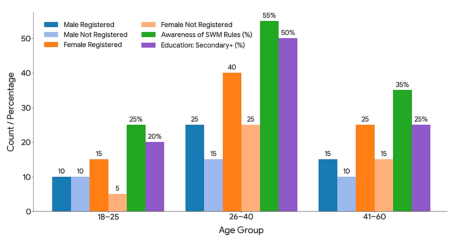
Fig. 1: Waste picker awareness and registration patterns
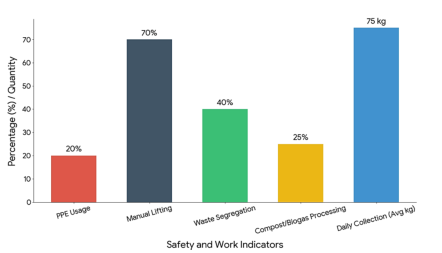
Fig. 2: Occupational safety and work practices
It is evident from Fig. 2 that waste pickers demonstrate low compliance with occupational safety practices. Only 20% consistently used PPE, while 70% engaged in manual lifting, increasing exposure to musculoskeletal strain and injury. Daily work duration ranged from 6 to 8 hours, with 60–90 kg of waste handled per worker. Interviews conducted with municipal representatives and NGOs highlighted the prevalence of sprains, cuts, and fatigue, especially among older workers, which is consistent with the occupational health hazards associated with informal urban livelihoods (Singh et al., 2023). These conditions indicate that low PPE use and intensive manual work substantially increase occupational health risks among workers. These findings highlight significant occupational health risks and emphasize the need for ergonomic training, improved PPE provision, and regular health monitoring programs to enhance worker safety and working conditions in MSWM systems for informal waste workers.
Governance, institutional support, and policy implementation
Fig. 3 presents the governance and institutional metrics related to MSWM, including budget allocation, training programs conducted, cooperative membership among waste pickers, and levels of policy enforcement. Municipal governance and institutional support for SWM showed moderate but uneven implementation. Municipal records indicated that approximately 30,000 United States dollars (USD) was allocated for SWM welfare programs, with 12 training sessions conducted across six districts during the study period. The survey results indicated that 40% of waste pickers were affiliated with cooperatives, reflecting a degree of institutional integration. Policy enforcement varied, with 20% reporting strong enforcement, 50% moderate, and 30% weak, reflecting fragmented institutional capacity (Kala and Bolia, 2024). Interviews revealed a moderate level of collaboration among multiple stakeholders in three out of five municipalities; however, there remain ongoing deficiencies in monitoring, training, and awareness (Sharma et al., 2018). These findings reflect fragmented institutional capacity, limiting effective translation of cooperation and enforcement into implementation outcomes. Institutional support remains uneven, constraining MSWM implementation and formal inclusion of waste pickers. Strengthening budget allocation, training programs, and cooperative facilitation mechanisms could improve policy outcomes and enhance institutional effectiveness.
Access to healthcare and social protection
Fig. 4 illustrates the level of access to healthcare and social protection among waste pickers, highlighting differences in coverage based on age group, gender, and registration status. Access to healthcare and social protection among waste pickers in Himachal Pradesh was limited. Survey findings revealed that 30% of participants possessed healthcare or insurance coverage, whereas the majority did not have formal protection. Coverage was higher among registered workers (45%) than unregistered ones (20%), showing the role of formal inclusion (Misra and Tewari, 2022). Women reported slightly higher coverage (32%) than men (28%), linked to cooperative and NGO participation (Dutta et al., 2021; Wittmer, 2021). Workers aged 26–40 years and those with 5–10 years’ experience had greater access to schemes. Interviews revealed obstacles including limited awareness, complicated processes, and insufficient outreach. These results indicate that healthcare access is largely determined by institutional registration and support mechanisms rather than demographic factors alone. Integration between quantitative results and qualitative insights is strengthened through clearer transitions across subsections, explicitly linking statistical patterns with interview-based evidence to enhance interpretative continuity. Quantitative findings on awareness, safety, governance, and healthcare access are directly contextualized using stakeholder perspectives, improving coherence between datasets. This alignment guarantees a more uniform narrative progression and promotes a deeper comprehension of the institutional and operational dynamics that affect the inclusion and welfare of waste pickers.
Qualitative analysis
This section presents the qualitative analysis of semi-structured interviews conducted with municipal officers (n = 15) and NGO/cooperative representatives (n = 10) to examine governance mechanisms, policy implementation, training initiatives, occupational safety practices, and institutional integration challenges affecting waste pickers in MSWM systems. Thematic analysis was employed to examine interview transcripts, systematically coding and categorizing responses into key themes, in alignment with recognized methodologies in informal waste governance research (Singh et al., 2023). Table 3 summarizes the identified themes, associated indicators, the number and proportion of respondents addressing each theme, and key insights derived from the analysis. Combining these qualitative insights with quantitative survey data offers a thorough comprehension of institutional limitations, operational difficulties, and the efficacy of current support systems. The thematic analysis, as summarized in Table 3, highlights critical institutional, operational, and policy-level factors influencing waste picker inclusion in formal MSWM. Governance limitations, weak policy enforcement, inconsistent training, and occupational safety gaps were recurrently reported, aligning with evidence on structural vulnerabilities in informal waste systems (Rani et al., 2025). These findings reveal that institutional shortcomings are interrelated and mutually exacerbate exclusion, operational inefficiencies, and occupational dangers, which hinders the formal incorporation of waste pickers. Integrating these qualitative insights with the quantitative survey findings, the study provides a robust evidence base for evaluating institutional support mechanisms, identifying operational constraints, and formulating targeted interventions to enhance formal inclusion, occupational safety, and welfare of informal waste workers.
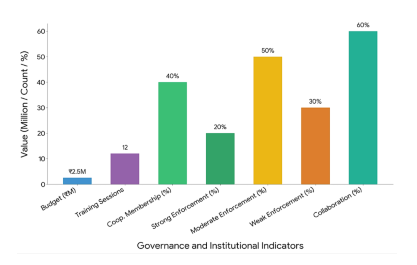
Fig. 3: Governance and institutional metrics
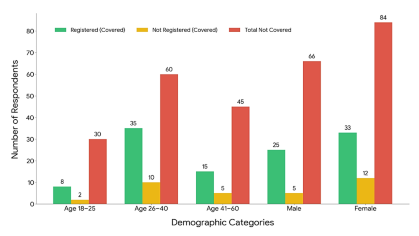
Fig. 4: Access to healthcare and social protection among waste pickers
Table 3: Key themes and insights from qualitative interviews
|
Theme |
Indicators |
Number of respondents (X) |
Percentage of responses (Y%) |
Key insight |
|
Governance and institutional mechanisms |
Budget allocation, monitoring systems |
8 |
32% |
Limited staff capacity and uneven monitoring coverage across municipalities |
|
Policy implementation |
Awareness of SWM Rules and registration procedures |
7 |
28% |
Waste pickers had limited awareness; NGOs facilitated outreach |
|
Training and Skill development |
Workshops, cooperative membership |
4 |
16% |
Skill-building programs exist but reach and coverage are limited |
|
Occupational safety |
PPE use, ergonomic practices |
3 |
12% |
PPE usage inconsistent; musculoskeletal strain and safety risks observed |
|
Integration challenges |
Inclusion in municipal programs |
3 |
12% |
Administrative barriers and lack of registration impede formal inclusion |
|
Total |
— |
25 |
100% |
— |
Mixed-method interpretation
This mixed method of interpretation integrates quantitative survey data with qualitative insights from municipal officers and NGO representatives to examine policy awareness, governance mechanisms, institutional support, and occupational safety conditions of waste pickers. Quantitative indicators are supported by interview-based observations to identify institutional gaps, barriers to social protection, and areas for system improvement. The collective analysis delivers an extensive comprehension of how the implementation of policies, allocation of resources, and operational strategies impact theinclusion and welfare of informal waste workers. The integration of quantitative and qualitative evidence is streamlined to improve analytical clarity and coherence. Integrated assessment of policy, institutional, and occupational indicators derived from mixed-method analysis is presented in Table 4.
Policy awareness, integration, and social protection
It may be noted from Table 4 that awareness of the SWMR, 2016 remains limited, with only 45% of waste pickers reporting knowledge of these policies. Despite 40% of respondents being enrolled in cooperatives, active participation in municipal programs is low (20%), highlighting gaps in formal integration. Healthcare access is confined to 30% those surveyed, with women being underrepresented, which underscores the importance of implementing targeted social protection measures. Qualitative insights confirm that NGOs provide partial registration support, but administrative complexities and limited outreach constrain policy implementation, consistent with evidence on gendered vulnerability and exclusion in informal waste work (Misra and Tewari, 2022). Collectively, these insights highlight the importance of raising awareness, streamlining registration processes, and reinforcing cooperative engagement as vital components for enhancing the inclusion and welfare of waste pickers, ensuring that the terminology and descriptions of indicators are aligned for consistency across different dimensions.
Governance, budget allocation, and institutional resilience
It may be noted from Table 4 that municipal budget allocation for waste management welfare programs is moderate (USD 30,000), yet only 35% of waste pickers benefit, indicating implementation gaps due to limited monitoring and enforcement. NGO training programs reach just 20% of the target population, suggesting that training coverage is inadequate to build widespread capacity. The implementation of the municipal program reveals a low inclusion rate of 15%, which reflects challenges in coordination and operational effectiveness. Collectively, these observations underscore the need to strengthen institutional coordination, expand training, and ensure effective budget utilization to enhance program reach and resilience, as also reflected in cooperative-based waste governance models (Buch et al., 2021). Logical sequencing of findings is refined to improve interpretative clarity and coherence.
Table 4: Integrated assessment of policy, institutional, and occupational indicators from mixed-method analysis
|
Indicator |
Quantitative observation |
Qualitative insight |
Interpretation |
|
|
Policy awareness, integration, and social protection |
||||
|
Awareness of SWM Rules, 2016 |
45% aware |
Limited understanding of registration procedures among workers |
Low policy awareness constrains formal participation |
|
|
Participation in Municipal Programs |
20% actively participate |
NGOs facilitate partial registration support |
Simplified and digital registration systems can improve inclusion |
|
|
Access to Healthcare |
30% covered |
Lower representation of women in formal schemes |
Gender-sensitive interventions required to improve equity |
|
|
Cooperative Membership |
40% enrolled |
Limited reach of skill development programs |
Cooperatives strengthen inclusion and access to training |
|
|
Governance, budget allocation, and institutional resilience |
||||
|
Municipal budget for swm welfare (USD) |
30,000 |
Partial coverage of intended beneficiaries (35%) |
Monitoring and implementation gaps limit effectiveness |
|
|
NGO training programs (USD) |
18,000 |
Limited training reach (20% of target group) |
Expansion of training coverage required for capacity building |
|
|
Municipal program execution USD) |
12,000 |
Low inclusion levels (15%) reported |
Coordination and institutional efficiency require strengthening |
|
|
Engineering interventions, waste processing, and occupational safety |
||||
|
Source segregation efficiency |
40% compliance |
Inconsistent segregation practices observed |
Improved enforcement needed to enhance recovery efficiency |
|
|
Waste processing (Compost/biogas) |
25% processed |
Limited adoption of decentralized technologies |
Scope for scaling resource recovery interventions |
|
|
PPE usage |
20% usage |
Low compliance observed during field assessment |
PPE provision and ergonomic training required |
|
|
Manual handling of waste |
70% engaged in manual lifting |
Reports of musculoskeletal strain and fatigue |
Mechanical aids and ergonomic interventions needed to reduce risk |
|
Engineering interventions, waste processing, and occupational safety
It may be noted from Table 4 that compliance with waste segregation at source is low (40%), and only 25% of waste is processed for compost or biogas, reflecting limited adoption of resource recovery practices. PPE usage is minimal (20%), and the majority of workers (70%) engage in manual lifting, leading to musculoskeletal strain and occupational health risks. Qualitative observations validate the inconsistent compliance with safety protocols and the limited implementation of engineering solutions, aligning with occupational hazard assessments in municipal waste workers (Thakur et al., 2018). These findings highlight the need for ergonomic training, mechanical aids, and enhanced adoption of small-scale waste processing technologies to improve both efficiency and worker safety in MSWM (Prayogo et al., 2022). Integration of quantitative and qualitative findings reveals systemic gaps in policy awareness, institutional support, occupational safety, and social protection for waste pickers in Himachal Pradesh. A lack of awareness regarding policies, minimal involvement in municipal initiatives, inconsistent budget allocation, and insufficient training suggest shortcomings in governance. In parallel, poor safety compliance, heavy manual handling, and limited ergonomic interventions highlight occupational and health risks, as supported by comparative studies on informal waste worker vulnerability and urban inequality (Beall, 1997). The collective findings establish a foundation for targeted interventions, which encompass simplified registration processes, the enhancement of cooperative efforts, gender-sensitive social protection measures, and ergonomic and engineering solutions designed to foster inclusion and welfare. Additionally, this framework consolidates mixed-method evidence to bolster coherence and retain analytical depth.
Comparative analysis of existing waste picker studies and novel contributions of the present study
A comparative assessment of existing waste picker studies across selected Indian cities, summarizing thematic focus, key findings, research gaps, and distinctive contributions of the present study conducted in Himachal Pradesh, is presented in Table 5. This analysis facilitates a structured recognition of the shortcomings in previous studies and delineates the role of the current research within the wider academic framework. The comparative analysis (Table 5) demonstrated that existing studies in Indian contexts predominantly examine fragmented dimensions of informal waste work. Research carried out in Mumbai and Ghaziabad highlights the health risks associated with various occupations, providing substantial evidence of morbidity and outcomes linked to exposure (Chokhandre et al., 2017; Singh and Chokhandre, 2015). Studies in Chandigarh and Assam focus on socio-economic vulnerability and gender-based precarity, highlighting structural inequalities but lacking integration with municipal systems (Singh et al., 2023; Misra and Tewari, 2022). Investigations in Delhi and Ahmedabad contribute insights into awareness and lived experiences; however, these remain either population-level or qualitative in orientation without linkage to operational waste management indicators (Wittmer, 2021; Bhawal Mukherji et al., 2016). Studies conducted in Himachal Pradesh and Shimla yield crucial observations about the effectiveness of waste management practices and the risks associated with occupational exposure (Sharma et al., 2020). Across the reviewed literature, limited empirical evidence exists connecting policy awareness, formal registration, occupational safety practices, and governance support with measurable waste management performance indicators, as also reflected in occupational risk assessments of waste workers (Kumar and Panigrahi, 2021). These external studies are largely incorporated to substantiate observed patterns rather than being critically interrogated across contextual, methodological, and evidentiary dimensions, thereby restricting deeper analytical comparison of heterogeneity in institutional settings, measurement approaches, and outcome linkages. The current study confronts these limitations by utilizing a comprehensive analytical framework that combines quantitative and qualitative evidence. Statistical results demonstrate strong associations between policy awareness and registration, and between registration and healthcare access, indicating that formal inclusion functions as a critical pathway linking policy provisions with welfare outcomes. Moderate connections with cooperative membership emphasize the importance of institutional mechanisms in bolstering inclusion and training access. Lower association of PPE usage suggests dependence on institutional provision rather than individual behavior, reinforcing the importance of governance interventions, consistent with findings on institutional determinants of waste worker safety. Furthermore, the incorporation of system-level indicators, including source segregation efficiency and waste processing rates, alongside worker-level variables, offers a comprehensive view of MSWM performance. This approach enables simultaneous evaluation of social inclusion, occupational safety, and operational efficiency, which remains absent in prior studies on informal waste governance systems (Thakur et al., 2021). Overall, the analysis establishes that the novelty of the present study lies in bridging policy, occupational, institutional, and operational dimensions within a single empirical framework, thereby contributing context-specific and evidence-based insights relevant to sustainable and inclusive MSWM systems in geographically complex regions, while also supporting informed policy interventions and adaptive governance strategies for strengthening long-term waste management sustainability outcomes across diverse socio-environmental and administrative contexts.
Table 5: Comparative assessment of existing waste picker studies and novel contributions of the present study
|
Study location |
Primary focus and key findings |
Research gap |
Contribution of present study |
References |
|
Mumbai |
Occupational health and morbidity; high prevalence of health risks and musculoskeletal disorders |
Absence of policy and governance linkage |
Integrates health risks with policy awareness, registration, and institutional support |
|
|
Chandigarh |
Socio-economic vulnerability; income instability and social exclusion |
Limited governance and system-level analysis |
Links vulnerability with institutional participation and waste management outcomes |
|
|
Assam |
Gender and migration; gender-based precarity and exclusion |
Lack of policy and operational integration |
Combines gender analysis with policy awareness and healthcare access |
|
|
Ghaziabad |
Occupational and environmental health; high exposure to respiratory and physical risks |
Limited institutional and policy perspective |
Connects occupational risks with PPE usage and governance mechanisms |
|
|
Delhi |
Public participation in waste management; variation in awareness and participation |
Excludes informal waste picker role |
Integrates worker-level awareness with policy and system performance |
|
|
Ahmedabad |
Well-being and lived experience; gendered work conditions influence well-being |
Predominantly qualitative; lacks quantitative linkage |
Combines qualitative insights with measurable indicators such as PPE use and registration |
|
|
Shimla |
Waste management and worker health; health risks and municipal challenges |
Limited institutional integration analysis |
Expands to governance, policy awareness, and cooperative systems |
|
|
Himachal Pradesh |
Waste systems and occupational exposure; moderate processing efficiency and exposure risks |
Lack of micro-level worker and policy interaction data |
Integrates system-level and worker-level indicators within a unified framework |
|
|
Bhubaneswar |
Occupational health among general workers; risks linked to health outcomes |
Not specific to waste pickers or MSWM systems |
Applies occupational analysis within informal waste picker and MSWM context |
Statistical analysis
Statistical analysis, including correlation, multiple regression, and ANOVA, provides insights into relationships among factors influencing waste picker welfare, such as policy awareness, registration status, cooperative participation, PPE usage, and healthcare access. These findings enhance previous descriptive and mixed-method results by providing a precise understanding of interactions between socio-economic, occupational, and institutional variables shaping welfare outcomes.
Correlation analysis - key institutional and occupational variables
Table 6 shows strongest correlations between policy awareness and registration (r = 0.62), and between registration and healthcare access (r = 0.58), indicating closer alignment of institutional variables than behavioural factors. Cooperative membership demonstrates a moderate correlation with registration (r = 0.54) and healthcare access (r = 0.46). In contrast, PPE usage is weakly associated, suggesting limited impact without institutional support. External evidence similarly reports significant associations between informal work exposure and health outcomes (odds ratio (OR) > 2; level of significance (p) < 0.05), including respiratory and musculoskeletal morbidity. (Chokhandre et al., 2017; Rani et al., 2025), with landfill exposure further confirming elevated risk (adjusted odds ratio (AOR) = 1.733; p = 0.041) (Uhunamure et al., 2021). Furthermore, the observed correlations imply a structured hierarchy where institutional factors play a more crucial role in explaining healthcare access than individual factors such as PPE usage. This suggests that institutional embedding is the dominant underlying determinant of welfare outcomes.
Table 6: Correlation matrix of policy awareness, registration, cooperative membership, PPE usage, and healthcare access among waste pickers (N = 225)
|
Variables |
Policy awareness |
Registration status |
Cooperative membership |
PPE usage |
Healthcare access |
|
Policy awareness |
1.00 |
0.62 |
0.48 |
0.35 |
0.41 |
|
Registration status |
0.62 |
1.00 |
0.54 |
0.32 |
0.58 |
|
Cooperative membership |
0.48 |
0.54 |
1.00 |
0.29 |
0.46 |
|
PPE usage |
0.35 |
0.32 |
0.29 |
1.00 |
0.38 |
|
Healthcare access |
0.41 |
0.58 |
0.46 |
0.38 |
1.00 |
Regression analysis - predictors of healthcare access
From Table 7, it could be noted that registration status is the strongest predictor (standardized regression coefficient (β) = 0.41, p < 0.001), followed by policy awareness (β = 0.28) and cooperative membership (β = 0.25). PPE usage contributes positively but less strongly (β = 0.14). This is consistent with elevated risks of morbidity and musculoskeletal disorders in waste pickers, identified through logistic regression and propensity score matching (PSM) (Chokhandre et al., 2017; Singh and Chokhandre, 2015). Formal inclusion and occupational factors significantly predict health outcomes (Rani et al., 2025; Uhunamure et al., 2021). The model explains 46% of variance (R² = 0.46), with diagnostics indicating no serious multicollinearity (VIF range = 1.32–2.18; tolerance = 0.46–0.76) and acceptable residual distribution (Durbin–Watson = 1.89; Kolmogorov–Smirnov p = 0.112), supporting model stability and specification validity. The results demonstrate notable correlations among institutional, occupational, and welfare variables; however, due to the cross-sectional nature of the study, these associations ought to be understood as correlational instead of causal, representing structural connections without any temporal implications.
ANOVA - Differences in healthcare access by registration status
It could be noted from Table 8 that healthcare access differs significantly across registration categories, with registered pickers reporting approximately 45% access versus 20% for unregistered workers. Rani et al. (2025) similarly discovered that formalized groups exhibit improved health outcomes (p < 0.05), thereby reinforcing the notion that registration serves as a crucial structural determinant of welfare.
ANOVA - differences in PPE usage by work experience
It could be observed from Table 9 that PPE usage varies significantly by experience, with workers having 5–10 years of experience showing slightly higher adoption. Singh and Chokhandre (2015) reported a higher prevalence of musculoskeletal disorders (MSDs) among less experienced pickers, while Rani et al. (2025) noted variations in occupational risk based on worker characteristics, supporting the present study’s observation. From Tables 6 to 9, it may be inferred that the survey of 225 waste pickers, complemented by qualitative interviews, highlights the determinants of formal inclusion, occupational safety, and welfare access. 45% of pickers were aware of the SWMR, 2016, and 35% were registered, with women and educated workers participating slightly more. Only 20% used PPE consistently, while 70% handled 60–90 kg of waste daily. Occupational exposures show significant associations with health morbidities and formal inclusion (Chokhandre et al., 2017). Higher prevalence of musculoskeletal disorders among waste pickers has also been reported in prior studies (Singh and Chokhandre, 2015). Formal inclusion and occupational conditions have a substantial impact on health outcomes (Rani et al., 2025). Strong relationships between exposure levels and health risks have also been observed in related research (Uhunamure et al., 2021).
Table 7: Multiple regression analysis of institutional and occupational determinants of healthcare access (N = 225)
|
Independent variable |
β |
Standard error (SE) |
T-static |
p-value |
VIF |
|
Policy Awareness |
0.28 |
0.07 |
4.02 |
0.001 |
1.74 |
|
Registration Status |
0.41 |
0.08 |
5.12 |
0.000 |
2.18 |
|
Cooperative Membership |
0.25 |
0.06 |
3.64 |
0.002 |
1.62 |
|
PPE Usage |
0.14 |
0.05 |
2.31 |
0.021 |
1.32 |
|
Constant |
0.12 |
0.04 |
2.05 |
0.043 |
— |
Model Summary: multiple correlation coefficient (R) = 0.68; coefficient of determination (R²) = 0.46; Adjusted R² = 0.44
Table 8: One-way ANOVA of healthcare access across registration categories (registered, cooperative, unregistered; N = 225)
|
Source of variation |
Sum of squares |
df |
Mean square |
F-static |
p-value |
|
Between Groups |
18.42 |
2 |
9.21 |
7.84 |
0.001 |
|
Within Groups |
261.35 |
222 |
1.18 |
— |
— |
|
Total |
279.77 |
224 |
— |
— |
— |
Table 9: One-way ANOVA of PPE usage across experience groups (0–5, 5–10, 10–15, >15 years; N = 225)
|
Source of variation |
Sum of squares |
df |
Mean square |
F-static |
p-value |
|
Between groups |
12.75 |
3 |
4.25 |
4.62 |
0.004 |
|
Within groups |
203.64 |
221 |
0.92 |
— |
— |
|
Total |
216.39 |
224 |
— |
— |
— |
In-depth statistical analyses reveal robust correlations between policy awareness and registration (r = 0.62), as well as between registration and access to healthcare (r = 0.58). Regression identifies registration, awareness, and cooperative membership as predictors of healthcare access (R² = 0.46), while ANOVA shows significant differences in healthcare access and PPE use by registration and experience. These results indicate that formal inclusion and institutional support are crucial factors influencing welfare, health protection, and integration of waste pickers into MSWM systems. Essentially, these results indicate that enhancements in welfare are contingent upon the fortification of institutional registration systems, which serve as the main gateway for accessing services. This should be complemented by organized cooperative frameworks and focused administrative support that translate policy awareness into quantifiable service utilization, rather than relying solely on the assumption of behavioral change. These statistical relationships show that policy awareness alone is insufficient without formal registration and institutional linkage under SWMR, 2016. Strong correlations between awareness, registration, and healthcare access indicate that formal inclusion is the key pathway translating policy into benefits. Cooperative membership moderately improves access to welfare and training, while PPE usage reflects dependence on institutional support rather than individual behavior (Bhawal Mukherji et al., 2016). ANOVA confirms that registered workers have better healthcare access and safety outcomes (Sharma and Acharya, 2019). Overall, inadequacies in registration, enforcement, and institutional capacity restrict the successful execution of policies and the provision of welfare within MSWM systems.
Policy gap analysis under SWMR, 2016
Findings indicate divergence between provisions of the SWMR, 2016 and ground-level implementation in municipal systems of Himachal Pradesh. The Rules emphasize inclusion of informal waste workers, source segregation, occupational safety, and institutional responsibility; however, empirical evidence reveals partial compliance across these dimensions. Table 10 illustrates a systematic comparison of policy deficiencies, the evidence that supports them, and contributions of the study.
Table 10: Policy gaps, empirical evidence, and study contributions
|
Policy gap |
Evidence from study |
Study contribution |
References |
|
Limited policy awareness and outreach |
45% awareness; qualitative evidence shows weak outreach and complex procedures |
Identifies awareness gaps and need for targeted communication and simplified registration |
|
|
Low registration in formal systems |
35% registered under municipal / cooperative programs |
Examines barriers limiting formal inclusion and highlights administrative constraints |
|
|
Weak occupational safety implementation |
20% PPE usage; 70% manual handling with 60–90 kg loads |
Links occupational risks with policy gaps; supports ergonomic training and PPE provision |
|
|
Uneven institutional support |
USD 30,000 budget; 40% cooperative membership; 20% training coverage |
Evaluates governance support and identifies limited reach of training and cooperative mechanisms |
|
|
Variability in policy enforcement and monitoring |
20% strong, 50% moderate, 30% weak enforcement; monitoring gaps reported |
Highlights institutional capacity and coordination limitations |
|
|
Low segregation and processing efficiency |
40% source segregation; 25% composting/biogas processing |
Connects engineering performance with policy implementation gaps |
|
|
Limited healthcare and social protection |
30% coverage; higher among registered workers |
Demonstrates link between formal inclusion and welfare access |
|
|
Gender and inclusion disparities |
Variation in participation and access; qualitative barriers identified |
Highlights need for inclusive and gender-sensitive policy design |
The analysis in Table 10 indicated that policy intent under the SWMR, 2016 does not fully translate into practice due to limitations in awareness, institutional capacity, and enforcement mechanisms, consistent with weak outreach and procedural complexity in informal waste systems (Singh and Chokhandre, 2015). Low awareness (45%) and limited registration (35%) reduce participation in municipal and cooperative systems, restricting access to welfare schemes and formal inclusion, as reflected in administrative barriers to integration (Kala and Bolia, 2024). The complexity of administrative processes further hinders inclusion, especially for workers who have less education. Occupational safety provisions remain weakly implemented, with low PPE usage (20%) and high dependence on manual handling (70%), leading to significant health risks, consistent with documented occupational exposure patterns (Thakur et al., 2018). Institutional support exists through budget allocation and training programs; however, coverage remains limited and uneven across districts, with only 20% training reach, reflecting constrained cooperative and governance mechanisms (Buch et al., 2021). Variability in enforcement and monitoring capacity further reduces effectiveness of policy implementation (Sharma and Acharya, 2019). Waste management performance remains partial, with low source segregation (40%) and limited processing (25%), indicating weak operational efficiency (CPCB, 2021). The level of healthcare and social protection coverage is notably low at 30%, but it is higher for registered workers, underscoring the significance of formal inclusion. The findings show that awareness, registration, institutional support, and occupational safety are strongly interconnected. Limited awareness reduces registration, weak coordination affects training and monitoring, and poor safety practices increase occupational risks. Gender disparities additionally affect access and participation, thereby reinforcing gaps in inclusion within informal waste systems (Rani et al., 2025). The study integrates these dimensions to highlight the need for improved communication, simplified registration, stronger governance, and enhanced occupational safety mechanisms for sustainable informal waste sector integration.
Policy implications
Statistical evidence derived from correlation, regression, and ANOVA analyses indicates that policy awareness, registration status, cooperative participation, and occupational safety practices significantly influence welfare access and integration outcomes. These results establish a foundation for focused, evidence-based policy measures aimed at enhancing the effectiveness of implementation.
Policy awareness and registration
Strong correlation exists between policy awareness and registration (r = 0.62) and between registration and healthcare access (r = 0.58), indicating a structured association between informational exposure and institutional uptake. Strengthening decentralized awareness mechanisms and simplifying registration procedures is essential. Coordination between municipal bodies and NGOs can improve outreach (Singh and Chokhandre, 2015; Kala and Bolia, 2024). These patterns indicate that enhanced awareness could promote entry into formal systems via administrative pathways.
Institutional strengthening
Regression results identify registration (β = 0.41, p < 0.001) and cooperative membership (β = 0.25, p = 0.002) as significant predictors, with moderate model explanatory power (R² = 0.46). Correlations further indicate associations between cooperative membership and registration (r = 0.54) and healthcare access (r = 0.46). Enhancing the integration of registration systems with welfare eligibility mechanisms, in conjunction with collaborative expansion, could lead to increased institutional efficiency (Buch et al., 2021; Sharma and Acharya, 2019). These results indicate the centrality of institutional embeddedness in shaping access pathways.
Occupational safety
PPE usage shows weaker association with healthcare access (r = 0.38) and lower predictive strength (β = 0.14, p = 0.021). ANOVA indicates significant variation across experience groups (F = 4.62, p = 0.004), suggesting heterogeneity in safety practices. Institutional provision of PPE and mechanized handling systems is consequently more pertinent than individual compliance mechanisms (Thakur et al., 2018). This reflects structurally conditioned occupational safety outcomes.
Healthcare and social protection
Registration is significantly associated with healthcare access (β = 0.41; F = 7.84, p = 0.001), supported by correlations with cooperatives (r = 0.46) and awareness (r = 0.41). Regression and ANOVA results indicate that formal inclusion is linked with improved healthcare access. Broadening social protection to include unregistered workers and tackling gender inequalities through focused and inclusive enrollment strategies are essential policy objectives aimed at minimizing exclusion and improving equitable welfare access (Wittmer, 2021). These findings indicate that formal system integration is closely associated with improved welfare access.
Waste management performance
Moderate levels of segregation and processing indicate partial achievement of resource recovery objectives. Reinforcing the enforcement of source segregation, alongside the encouragement of decentralized composting and biogas systems, has the potential to enhance the efficiency of waste processing. Associating worker inclusion with performance-driven waste recovery metrics could improve both operational efficiency and social integration in MSWM systems (CPCB, 2021; Pedroso et al., 2024). These associations suggest that inclusion-oriented governance may support operational efficiency gains.
Hypotheses analysis
Hypotheses integrated results for the four hypotheses using quantitative survey data, qualitative interviews, and mixed-method interpretation. The combined analysis links measurable indicators, stakeholder perspectives, and institutional context to evaluate socio-economic conditions, governance mechanisms, occupational safety, and social protection among waste pickers.
H1: Policy awareness and registration
Quantitative data showed that 45% of waste pickers were aware of the SWM Rules, 2016, while 35% were registered under municipal or cooperative programs, with awareness rising to 70% among respondents with secondary or higher education. Through qualitative interviews, it was found that a significant number of waste pickers did not possess knowledge regarding registration procedures. NGOs were instrumental in aiding enrolment, which emphasizes the barriers created by administrative complexity and the lack of local advocacy. Mixed-method interpretation indicates that policy awareness is a key determinant of formal participation, as workers with higher understanding of municipal rules were more likely to be registered, thereby supporting H1, suggesting that targeted communication and simplified registration processes could enhance inclusion (Singh and Chokhandre, 2015).
H2: Gender differences in access to healthcare and social protection
Survey results indicated that only 30% of waste pickers had access to healthcare or insurance schemes, with women slightly higher at 32% and men at 28%. PPE usage was low overall, at 20%, and female workers reported marginally lower access to protective equipment in some locations. Qualitative interviews suggested that women were often inadequately represented in municipal welfare schemes because of informal employment, challenges with documentation, and the restricted outreach of social protection services. Mixed-method analysis shows that institutional constraints and informal employment structures restrict equitable access, partially supporting H2, emphasizing the need for gender-sensitive policy interventions and improved enrolment procedures (Misra and Tewari, 2022).
H3: Governance support and waste processing efficiency
Quantitative observations indicated that 40% of municipal waste was segregated at source and 25% processed for compost or biogas, while 40% of waste pickers were members of cooperatives and 12 training sessions were conducted across six districts. Qualitative findings highlighted that training programs were inconsistently implemented, and monitoring capacity was constrained by limited staff and resources. The interpretation of mixed methods indicates that training programs, collaborative involvement, and governance assistance improve the efficiency of waste segregation and processing. However, the limited scope and inconsistent application only partially validate H3, highlighting the necessity for broader training, enhanced monitoring, and reinforced institutional support (Buch et al., 2021).
H4: Occupational health risks and ergonomic practices
Quantitative survey results showed that 70% of waste pickers engaged in manual lifting, handling 60–90 kg of waste per day for 6–8 h, with only 20% consistently using PPE. Qualitative interviews and field observations reported frequent musculoskeletal strain, sprains, cuts, and fatigue due to repetitive manual handling and inadequate protective equipment. Mixed-method interpretation confirms that poor ergonomic practices and low PPE usage substantially increase occupational health risks, thereby supporting H4, highlighting the necessity of ergonomic training, improved PPE provision, and regular health monitoring programs to enhance worker safety. The integrated examination of all four hypotheses underscores that policy awareness, governance backing, and institutional frameworks play a crucial role in determining the formal inclusion, occupational safety, and social protection of waste pickers. H1 demonstrated that higher awareness of the SWM Rules, 2016 promotes registration, indicating that targeted outreach and simplified registration processes are essential (Kala and Bolia, 2024). H2 uncovered gender-based inequalities in access to healthcare and social protection, indicating the necessity for gender-sensitive program development and fair welfare enrolment (Misra and Tewari, 2022). H3 showed that governance support and training programs partially improve waste segregation and organic waste processing, emphasizing the importance of scaling cooperative engagement and enhancing monitoring systems. Finally, H4 confirmed that poor ergonomic practices and low PPE usage exacerbate occupational health risks, underscoring the necessity of ergonomic interventions, PPE provision, and regular health monitoring (Thakur et al., 2018). Collectively, these findings present a robust evidence foundation for municipal authorities, NGOs, and cooperatives to execute integrated strategies aimed at enhancing formal inclusion, operational efficiency, occupational safety, and socio-economic welfare of informal waste workers, while also tackling both institutional and gender-specific constraints. Additionally, the findings support the development of inclusive policy frameworks that strengthen long-term sustainability and resilience within urban MSWM systems through participatory stakeholder engagement approaches.
Novelty of the study
This study advances research on informal waste pickers through an integrated framework examining policy awareness under SWMR, 2016, occupational safety, institutional support, and waste processing efficiency. Prior studies in India conducted in India focuses on specific factors including occupational health, socio-economic vulnerability, and gender disparities, but they show a limited connection to governance and operational outcomes. The study integrates quantitative indicators including source segregation efficiency, PPE usage, training coverage, registration status, and municipal budget distribution alongside qualitative perspectives from municipal officials and NGOs. The mixed-method approach evaluates interactions between worker-level conditions and institutional mechanisms. Integration of engineering, social, policy, and governance aspects offers a comprehensive understanding of inclusion and system performance. Evidence from a geographically complex Himalayan region highlights relationships among policy implementation, institutional capacity, and occupational practices influencing formal integration and welfare outcomes in MSWM systems.
Limitations of the study
The study is limited by its sample size of 200 waste pickers, which may not fully represent the diversity of informal waste workers across Himachal Pradesh. Data collection was partially dependent on self-reported survey responses, which introduced the potential for reporting bias. Furthermore, the restricted access to longitudinal municipal data on waste processing performance and worker health outcomes limited the capacity to perform more in-depth statistical analyses and assess long-term effects of institutional interventions.
Recommendations
To improve formal inclusion and occupational welfare of waste pickers, the study recommends expanding policy awareness campaigns and registration programs. Municipal authorities should increase funding for PPE distribution and targeted occupational safety training. Enhancing cooperative frameworks can bolster institutional backing and worker representation, whereas better monitoring and evaluation systems can guarantee accountability in waste management initiatives. Community-level initiatives such as decentralized composting and localized waste segregation can further enhance efficiency and sustainability.
Future scope of the study
Future research should focus on longitudinal assessment of occupational health outcomes among waste pickers to understand long-term risks. Advanced statistical modelling and geospatial analysis can be applied to optimize waste management efficiency. The influence of digital registration systems and improved cooperative frameworks on worker inclusion must be analyzed. Additionally, engineering interventions including mechanized waste handling and decentralized waste-to-energy systems could be explored to reduce occupational hazards and promote sustainable municipal waste management practices.
CONCLUSON
The study highlights the vital contribution of informal waste pickers to MSWM in Himachal Pradesh, India, while identifying persistent gaps in policy implementation, institutional support, occupational safety, and social protection, consistent with the stated background and objectives. Informal waste pickers are crucial to recycling, resource recovery, and economical waste management; nevertheless, their exclusion from formal systems hampers both operational efficiency and welfare results. In line with the study objectives, the analysis examines socio-economic conditions, occupational health risks, institutional support mechanisms, and policy awareness, and evaluates how these factors interact to influence formal integration. Employing a mixed-methods strategy, primary data collected from 200 waste pickers, along with field observations and interviews with municipal officials and NGOs, establishes a thorough evidence base. Survey results indicate that 45% of respondents were aware of the Solid Waste Management Rules, 2016, while only 35% were formally registered under municipal or cooperative programs. This gap reflects limited translation of policy awareness into institutional participation, primarily due to administrative complexity, inadequate outreach, and procedural barriers identified through qualitative insights. The state of occupational safety remains unsatisfactory. Merely 20% of the workforce regularly utilized personal protective gear, while 70% were involved in manual lifting, highlighting persistent physical strain and considerable risk of occupational hazards. Institutional support was moderate but uneven. Governance indicators show a municipal allocation of USD 30,000, and 40% cooperative membership, yet limited coverage, weak monitoring systems, and inconsistent implementation reduce overall effectiveness. Healthcare and social protection access continues to be constrained, with only 30% of waste pickers participating in any program, which signifies a lack of proper integration into welfare systems. Waste management performance reflects partial achievement of policy objectives, with 40% source segregation efficiency and 25% processing, suggesting underutilization of resource recovery potential. Statistical analysis reinforces these findings by demonstrating that registration status significantly influences healthcare access, while policy awareness and cooperative participation contribute to formal inclusion. These relationships imply that simply being aware of policies is inadequate without institutional ties, and that registration plays a vital role in bridging policy provisions with welfare outcomes. Rather than reiterating empirical results, the study synthesizes these findings to demonstrate that effective integration of informal waste pickers depends on the convergence of policy awareness, simplified institutional access, and occupational safeguards, highlighting registration as the central mechanism linking governance structures with welfare and environmental outcomes. The study provides a theoretical advancement by broadening the scope of MSWM governance literature. It integrates informal labor, institutional inclusion, and vulnerability as interconnected factors that influence formalization. This study further enriches existing literature by empirically demonstrating a multi-level interaction between policy awareness, institutional registration, and cooperative participation, which act as joint determinants of formal inclusion in informal waste management systems. Methodologically, it strengthens evidence generation by applying a mixed methods design that triangulates survey, field observation, and stakeholder interviews, thereby enhancing the robustness and depth of informal sector analysis. However, the claim of a “comprehensive evidence base” should be interpreted with caution, as reliance on a single-state sample, limited sample size, and potential reporting and selection biases constrain generalizability; the mixed-methods design improves depth, but the evidence remains context-specific rather than fully comprehensive. The study offers a theoretical contribution by establishing a relationship between informal labor, institutional inclusion, and vulnerability within MSWM governance. It also adopts a mixed-methods approach that that integrates surveys, observations, and interviews, thus enhancing the analysis by incorporating policy institutional, and welfare aspects into a cohesive framework. The study underscores the need for strengthened institutional frameworks, enhanced policy communication, and improved occupational safety measures to support informal waste pickers. Furthermore, these guidelines continue to be somewhat vague and would benefit from an emphasis on prioritization and feasibility considerations, particularly in making a clear distinction between immediate low-cost actions (including the supply of PPE and simplified registration processes) and medium- to long-term structural reforms (such as the integration of institutions and the broadening of social protection coverage), enhance practical implementation. Expanding training programs, simplifying registration procedures, strengthening monitoring systems, and increasing access to social protection are essential for effective integration into formal MSWM systems. The findings provide evidence-based policy insights for improving both environmental performance and worker well-being, while future research may examine long-term impacts of formal inclusion and technological interventions to reduce manual handling.
AUTHOR CONTRIBUTIONS
K. Nithiananthan conceptualized the study, designed the methodology, conducted data collection and analysis, and prepared the original manuscript draft. Manvendra Singh contributed to data interpretation, statistical analysis, and critical revision of the manuscript. J. Nouri provided expert guidance on environmental and public health aspects, contributed to the study design, and reviewed and edited the manuscript. All authors read and approved the final version of the manuscript.
ACKNOWLEDGEMENT
The authors gratefully acknowledge the support of the Department of Government and Public Administration, Lovely Professional University, Phagwara, Punjab, India, for providing institutional facilities and academic support. The authors also extend their sincere thanks to municipal authorities, non-governmental organizations, and informal waste pickers in Himachal Pradesh for their cooperation and valuable participation in the study.
CONFLICT OF INTEREST
The authors declare that there is no conflict of interest regarding the publication of this manuscript. In addition, the ethical issues, including plagiarism, informed consent, misconduct, data fabrication and/or falsification, double publication and/or submission, and redundancy, were observed by the authors.
OPEN ACCESS
©2026 The author(s). This article is licensed under a Creative Commons Attribution 4.0 International License, which permits use, sharing, adaptation, distribution and reproduction in any medium or format, as long as you give appropriate credit to the original author(s) and the source, provide a link to the Creative Commons license, and indicate if changes were made. The images or other third-party material in this article are included in the article’s Creative Commons license, unless indicated otherwise in a credit line to the material. If material is not included in the article’s Creative Commons license and your intended use is not permitted by statutory regulation or exceeds the permitted use, you will need to obtain permission directly from the copyright holder. To view a copy of this license, visit: http://creativecommons.org/licenses/by/4.0/
PUBLISHER’S NOTE
GJESM Publisher remains neutral regarding jurisdictional claims regarding published maps and institutional affiliations.
Positive AI Statement
During the preparation of this work, the author(s) used Artificial Intelligence (AI) tools/services, Grammarly, to support English language editing, improving clarity and coherence, restructuring selected paragraphs, and formatting tables. After using these tools/services, the author(s) reviewed and edited the content as needed and take full responsibility for the content of the publication.
ABBREVIATIONS
|
% |
Percent |
|
°E |
Degree east (Longitude) |
|
°N |
Degree north (Latitude) |
|
Adjusted R² |
Adjusted coefficient of determination |
|
ANOVA |
Analysis of Variance |
|
AOR |
Adjusted odds ratio |
|
CI |
Confidence interval |
|
CPCB |
Central Pollution Control Board |
|
df |
Degrees of freedom |
|
e |
Margin of error |
|
F |
F-statistic (ANOVA test value) |
|
h |
Hour |
|
H1–H4 |
Hypotheses 1 to 4 |
|
kg |
Kilogram |
|
m |
Meter |
|
MoEFCC |
Ministry of Environment, Forest and Climate Change |
|
MoHUA |
Ministry of Housing and Urban Affairs |
|
MSDs |
Musculoskeletal disorders |
|
MSWM |
Municipal solid waste management |
|
N |
Total sample size |
|
n |
Sub-sample size |
|
NGO |
Non-governmental organization |
|
OR |
Odds ratio |
|
p |
Probability value (level of significance) |
|
PPE |
Personal protective equipment |
|
PSM |
Propensity score matching |
|
r |
Correlation coefficient |
|
R |
Multiple correlation coefficient |
|
R² |
Coefficient of determination |
|
SBM-U |
Swachh Bharat Mission–Urban |
|
SE |
Standard error |
|
SSPS |
Statistical package for the social sciences |
|
SWM |
Solid waste management |
|
SWMR |
Solid waste management rules |
|
T |
T-statistic (regression test value) |
|
T |
Tonnes |
|
USD |
United States dollars |
|
VIF |
Variance inflation factors |
|
β |
Standardized regression coefficient |
REFERENCES
Alqaralleh, R.M.Z., (2026). Municipal solid waste bins distribution in urban environment using multi-criteria decision-making methods. Global J. Environ. Sci.Manage., 12(2): 709-726 (18 pages).
Balasubramanian, M., (2018). Municipal solid waste management in India: Status, problems and challenges. Int. J. Environ. Waste Manage., 21(4): 253–268 (16 pages).
Beall, J., (1997). Thoughts on poverty from a South Asian rubbish dump: Gender, inequality and household waste. IDS Bull., 28(3): 73–90 (18 pages).
Bhawal Mukherji, S.; Sekiyama, M.; Mino, T.; Chaturvedi, B., (2016). Resident knowledge and willingness to engage in waste management in Delhi, India. Sustainability. 8(10): 1065 (14 pages).
Buch, R.; Marseille, A.; Williams, M.; Aggarwal, R.; Sharma, A., (2021). From waste pickers to producers: An inclusive circular economy solution through development of cooperatives in waste management. Sustainability. 13(16): 8925 (18 pages).
Central Pollution Control Board (CPCB), (2020). Annual report 2019-20 on implementation of solid waste management rules, 2016.
Chokhandre, P.; Singh, S.; Kashyap, G.C., (2017). Prevalence, predictors and economic burden of morbidities among waste-pickers of Mumbai, India: A cross-sectional study. J. Occup. Med. Toxicol., 12(1): 30 (12 pages).
Dutta, J.; Kerketta, A.; Choudhury, M.; Ranga, M.M., (2021). Women warriors of waste management. In: Handbook of Solid Waste Management: Sustainability Through Circular Economy. Springer. 1–23 (23 pages).
Etikan, I.; Musa, S.A.; Alkassim, R.S., (2016). Comparison of convenience sampling and purposive sampling. Am. J. Theor. Appl. Stat., 5(1): 1–4 (4 pages).
Government of India, (2014). Street Vendors Act: Guidelines on registration and social protection of informal workers.
Government of Himachal Pradesh, (2025). Municipal solid waste generation, collection, and segregation data for ULBs in Himachal Pradesh.
Gupta, S.; Rameshwar, R.; Gupta, S.N.; Gupta, N., (2017). Impact of municipal solid waste in the state of Himachal Pradesh. J. Soc. Welfare Manage., 9(3): 1–6 (6 pages).
Kala, K.; Bolia, N.B., (2024). Empowering the informal sector in urban waste management: Towards a comprehensive waste management policy for India. Environ. Dev., 49: 100968 (12 pages).
Kumar, A.; Panigrahi, A., (2021). Occupational health hazards among health care personnel working in public health facilities in Bhubaneswar, India. J. Public Health. 29(3): 633–639 (7 pages).
Li, P.; Chen, X., (2025). Gender dynamics in dual-earner couples: Spousal occupational status and working hours. Econ. Ind. Democr., 46(4): 1060–1100 (41 pages).
Ministry of Environment, Forest and Climate Change (MoEFCC), (2016). Solid Waste Management Rules, 2016. Government of India.
Ministry of Housing and Urban Affairs (MoHUA), (2025). Swachh Bharat Mission–Urban (SBM-U) datasets. Government of India, New Delhi, India.
Misra, R.; Tewari, N., (2022). Gender, migration, and precarity: A case study of migrant women waste pickers from Assam. Indian J. Labour Econ., 65(4): 1179–1192 (14 pages).
Pedroso, K.; Zolnikov, T.R.; Cruvinel, V.R.N.; Menegon, F.A.; de Castilhos Júnior, A.B., (2024). The global distribution of epidemiological studies involving waste pickers: A systematic review. Waste Manage., 177: 95–105 (11 pages).
Prayogo, W.; Chairani, R.; Telaumbanua, D.R.; Fitria, N.; Alam, F.C.; Ikhwali, M.F.; Azizah, R.N.; Zamani, I.S., (2022). The effects of community characteristics on solid-waste generation and management in the village. J. Presipitasi, 19(2): 303–315 (13 pages).
Rani, U.; Matlovicova, K.; Pandey, B.W.; Vaishnav, H.K.; Saini, R.; Dey, S.K.; Gozner, M.; Bujdoso, Z.; Mishra, P.K., (2025). Informal urban livelihoods and environmental inequality: Occupational health risks among waste pickers in Ghaziabad, India. GeoJournal Tour. Geosites, 61(3): 1859–1874 (16 pages).
Shaherani, N.; Utaya, S.; Sumarmi; Bachri, S.; Matsumoto, T.; Rachman, I., (2026). Plastic waste management for a green university campus initiative by students. Global J. Environ. Sci. Manage., 12(2): 921-946 (16 pages).
Shankar, V.K.; Sahni, R., (2018). Waste pickers and the ‘right to waste’ in an Indian city. Econ. Polit. Wkly., 53: 54–62 (9 pages).
Sharma, J.C.; Acharya, S.S., (2019). Waste management and health of the waste workers. A study in Shimla City, Himachal Pradesh. In: Health, Safety and Well-Being of Workers in the Informal Sector in India. Springer, Singapore: 233–244 (12 pages).
Singh, K.; Singla, N.; Sharma, M.; Singh, J., (2023). Urban informal economy and vulnerabilities of domestic waste-pickers: A case of Chandigarh, India. Waste Manag. Res., 41(8): 1360–1371 (12 pages).
Thakur, P.; Ganguly, R.; Dhulia, A., (2018). Occupational health hazard exposure among municipal solid waste workers in Himachal Pradesh, India. Waste Manage., 78: 483–489 (7 pages).
Uhunamure, S.E.; Edokpayi, J.N.; Shale, K., (2021). Occupational health risk of waste pickers: A case study of northern region of South Africa. J. Environ. Public Health. 2021: 5530064 (10 pages).
Wittmer, J., (2021). “We live and we do this work”: Women waste pickers’ experiences of wellbeing in Ahmedabad, India. World Dev., 140: 105253 (12 pages).
Yamane, L.H.; Dutra, R.M.; Siman, R.R., (2023). Assessment and perception of occupational risks in waste picker organizations. Detritus. 13–26 (14 pages).
OPEN ACCESS
©2026 The author(s). This article is licensed under a Creative Commons Attribution 4.0 International License, which permits use, sharing, adaptation, distribution and reproduction in any medium or format, as long as you give appropriate credit to the original author(s) and the source, provide a link to the Creative Commons license, and indicate if changes were made. The images or other third party material in this article are included in the article’s Creative Commons license, unless indicated otherwise in a credit line to the material. If material is not included in the article’s Creative Commons license and your intended use is not permitted by statutory regulation or exceeds the permitted use, you will need to obtain permission directly from the copyright holder. To view a copy of this license, visit: http://creativecommons.org/licenses/by/4.0/
PUBLISHER NOTE
GJESM Publisher remains neutral concerning jurisdictional claims in published maps and institutional affiliations.
MAJOR DATABASES, CITATION METRICS & CAPTURES
Google Scholar | Scopus - SJR | Web of Science | Biological Abstracts: Clarivate | Biosis Preview: Clarivate | PlumX Metrics | Altmetrics | Mendeley |
CURRENT PUBLISHER

| Article View | 1,751 |
| PDF Download | 779 |


Letters to Editor
[1] Letters that include statements of statistics, facts, research, or theories should include appropriate references, although more than three are discouraged.
[2] Letters that are personal attacks on an author rather than thoughtful criticism of the author’s ideas will not be considered for publication.
[3] Letters can be no more than 300 words in length.
[4] Letter writers should include a statement at the beginning of the letter stating that it is being submitted either for publication or not.
[5] Anonymous letters will not be considered.
[6] Letter writers must include their city and state of residence or work.
[7] Letters will be edited for clarity and length.