
5.2
CiteScore
2.9
Impact Factor
Document Type : RESEARCH ARTICLE
Authors
1 Environmental Studies Graduate Program, Universitas Terbuka, Tangerang Selatan, Indonesia
2 Department of Marine Affairs, Fisheries and Food Security of Pangandaran Regency, Indonesia
3 Department of Aquatic Resources Management, Faculty of Fishery and Marine Science, IPB University, Bogor, Indonesia
4 Research Center for Oceanology, National Research and Innovation Agency Republic of Indonesia, Jakarta, Indonesia
Graphical Abstract
Highlights
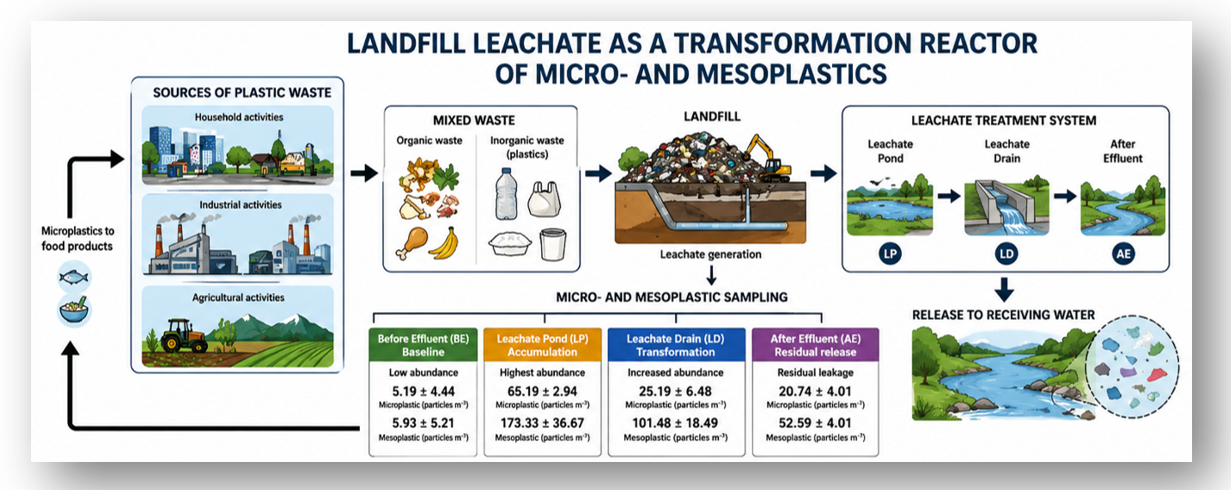
Ø Leachate pond and drain act as key zones of accumulation and transformation, with increases of 8-12% and 9-10%, respectively;
Ø Fragment-dominated shapes and shifts toward smaller size classes suggest a progressive fragmentation process from mesoplastics to microplastics;
Ø Polymer composition is dominated by polyethylene, polypropylene, and polystyrene, with increasing oxidized polymers evidencing in-situ transformation processes.
Keywords
INTRODUCTION
Small-sized plastic debris, particularly microplastics, has emerged as a pervasive pollutant across aquatic, terrestrial, and atmospheric environments (Horton et al., 2017; Horton and dixon 2018; Wright and Kelly, 2017). Their diminutive size increases bioavailability and promotes the movement of harmful materials, such as persistent organic pollutants and heavy metals (Alimba and Faggio, 2019; Bouwmeester et al., 2015). While numerous studies have documented microplastic occurrences in marine and freshwater systems (Cordova et al., 2025; Nakano et al., 2025), the understanding of land-based sources, especially landfill systems, remains limited (Cordova et al., 2019; Cordova et al., 2020). Landfills are commonly acknowledged as one of the main storage sites for plastic waste, especially in developing nations where the systems for managing waste are often inadequate (Abdel-Shafy and Mansour, 2018; Damanhuri et al., 2014). Under landfill conditions, including mechanical pressure, temperature fluctuations, and microbial activity, plastics undergo fragmentation processes that generate smaller particles (He et al., 2019; Su et al., 2019). Subsequently, these particles may be conveyed through leachate systems into adjacent aquatic environments. Previous research has demonstrated that landfill leachate acts as a direct pathway for micro- and mesoblastic entering river systems, with significant increases observed after discharge points (Nurhasanah et al., 2021). In that study, it was observed that microplastics increased by as much as three times, while mesoblastic rose by up to nine times due to leachate input, emphasizing the importance of leachate as a point source (Nurhasanah et al., 2021). However, the leachate system has primarily been treated as a passive conduit, with limited attention to potential system where transformation, mixing, and redistribution processes occurring within the system. This perspective introduces a critical gap. The leachate pathway consists of multiple interconnected stages, including retention ponds, drainage channels, and effluent discharge points, each with distinct physical and chemical conditions. These circumstances may encourage fragmentation, selective retention, and re-release of microplastics, which could potentially change both their abundance and polymer composition (Alimi et al., 2018; Muhtadi et al., 2025). Despite the growing evidence regarding the presence of microplastics in landfill leachate, there are still several significant gaps that persist. Previous studies have largely treated leachate systems as point-source pathways, with limited attention to compartment-scale processes occurring within the system (Nurhasanah et al., 2024; Omeyer et al., 2023; Omeyer et al., 2022; Purba et al., 2021; Vriend et al., 2021). In addition, temporal evolution of microplastic dynamics under consistent methodological frameworks remains poorly documented (Anshar et al., 2026). Furthermore, the systematic investigation into the combination of physical indicators (including size and shape) and chemical indicators (specifically polymer composition) for inferring transformation processes remains unexplored. While dominant polymers such as polyethylene and polypropylene are commonly reported in landfill-derived microplastics (Nurhasanah et al., 2021), the emergence of less common polymer types within leachate systems may indicate secondary inputs, advanced degradation, or mixing processes. Comprehending these dynamics is crucial for recognizing the mechanisms that regulate microplastic behavior microplastics in landfill settings. Previous studies have primarily treated leachate systems as point-source pathways (Nurhasanah et al., 2021), with limited attention to compartment-scale processes occurring within the system (Nurhasanah et al., 2025). In addition, temporal evolution of microplastic dynamics under consistent methodological frameworks remains poorly documented (Nurhasanah et al., 2024; Omeyer et al., 2023; Omeyer et al., 2022; Purba et al., 2021; Vriend et al., 2021). Furthermore, the integration of physical (size, shape) and chemical (polymer composition) indicators to infer transformation processes has not been systematically explored (Omeyer et al., 2023; Omeyer et al., 2022). Microplastic sources in landfill systems are primarily associated with municipal plastic waste, particularly packaging materials such as polyethylene, polypropylene, and polystyrene (Nurhasanah et al., 2021). Besides direct inputs, secondary microplastics are generated through fragmentation processes under landfill conditions (Cordova et al., 2019; Cordova et al., 2020). Direct source tracing was not conducted; instead, source inference was based on polymer composition, morphology, and size distribution patterns. In this study, the inference of sources is facilitated by employing polymer composition, particle morphology, and size distribution as combined indicators of origin and transformation. It is hypothesized that microplastic abundance and polymer diversity vary along the leachate pathway, influenced by transport, retention, and transformation-related processes within the system. Landfill leachate has been previously identified as a channel and a possible environment for the transformation of microplastics; however, quantitative evidence illustrating the evolution of transformation processes through different treatment compartments is still lacking. Existing studies have largely focused on point-source contributions or end-of-pipe discharge, with less attention given to intra-system dynamics and temporal shifts. Comparable observations in river environments have emphasized the importance of compartment-specific dynamics and secondary contamination pathways, while variations in polymer composition further demonstrate the usefulness of polymer diversity as an indicator of environmental sources and transformation processes (Yanuhar et al., 2025; Basri et al., 2024). This study contributes to the existing comprehension by delivering i) a compartment-specific examination of microplastic behavior throughout the leachate pathway, ii) a temporal comparison between datasets collected under consistent methodological frameworks, and iii) integrated evidence linking abundance, size distribution, and polymer composition to infer transformation processes within specific treatment units. Rather than reinterpreting landfill leachate as a transformation system, this study delivers a compartment-specific and temporally consistent quantification of microplastic dynamics, underscoring the spatial and temporal differences in transformation-related processes within the system. This study aims to i) evaluate the spatial variation of microplastic abundance across different stages of a landfill leachate system, ii) assess changes in polymer composition along the pathway, and iii) compare current conditions with previous observations to identify temporal trends. This study has been carried out was conducted in the Galuga landfill area in Indonesia, with sampling campaigns performed in 2021 and 2025 to enable temporal comparison.
MATERIALS AND METHODS
Study area and sampling design
The study was conducted in a municipal solid waste landfill system characterized by an open dumping practice and a conventional leachate management pathway. The Galuga landfill (Fig. 1) spans an area of about 42.7 hectares (ha). It has been operated jointly by the local governments of Bogor City and Bogor Regency since 1992. The facility receives around 1,100 tons of waste per day, consisting of roughly 500 tons from Bogor City and 600 tons from Bogor Regency (Nurhasanah et al., 2025). The incoming waste stream is dominated by 76 percent (%) organic material, followed by plastic (19%), paper (4%), and other residual fractions (1%). Currently, waste management is conducted via an open dumping system, but there has been a proposal to move towards a controlled landfill method. The landfill has been operating for several decades and receives mixed domestic waste, creating conditions favorable for plastic accumulation and fragmentation processes. Leachate produced from the waste mass is conveyed through several management phases, which include a leachate pond and a drainage channel, prior to being released into an adjacent river system.
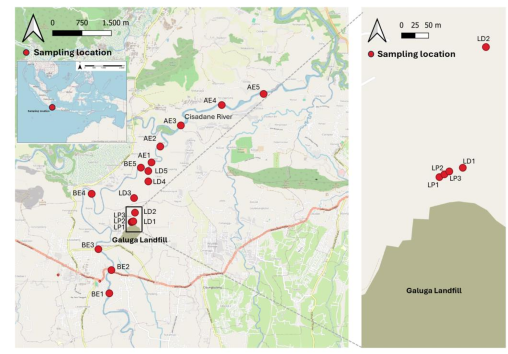
Fig. 1: Geographical location of the study and the sampling sites in Galuga Landfill area and Cisadane watershed in Indonesia
Field sampling
Sampling sites were chosen to illustrate the primary phases of the leachate pathway (Fig. 1), which includes i) five sampling locations in the upstream river segment prior to leachate introduction or before effluent (BE1-5), ii) three sampling points in the leachate pond (LP1-3), iii) five sampling points in the leachate drainage channel or leachate drain (LD1-5), and iv) five sampling points in the downstream river section after effluent discharge or after effluent (AE1-5). Each sampling category encompassed various stations positioned along the flow direction to account for spatial variability. The sampling framework followed the same design and spatial configuration as previously established to ensure temporal comparability (Nurhasanah et al., 2021; Nurhasanah et al., 2025). This design facilitated the evaluation of spatial variation in microplastic abundance across the leachate pathway and enabled comparison between compartments. Surface water samples were collected at each station using sterile high-density polyethylene containers. At each sampling point, approximately 150 liters (L) of water were collected in triplicate to ensure representativeness. The sampling volume and replication method were preserved in alignment with prior studies to facilitate a straightforward comparison of the findings. Due to the high turbidity and organic content of leachate, samples were immediately filtered in the field using a multi-level stainless-steel sieve system with mesh sizes of 5 millimeters (mm), 200 micrometers (μm), and 20 μm. The collected material was washed with double-distilled deionized water and transferred into clean glass containers, which were then sealed and stored at a temperature of 4±2 degrees Celsius (°C) temperature prior to laboratory analysis. The sampling design included 18 stations distributed across four compartments. Each station was sampled in triplicate, resulting in 15 replicate samples for the upstream section (BE), 9 for the leachate pond (LP), 15 for the leachate drain (LD), and 15 for the downstream section (AE). This design was used to capture spatial variability within each compartment while maintaining consistency with previous datasets (2021 and 2025), enabling robust temporal comparison. The sampling framework was formulated to strike a balance between spatial coverage and analytical consistency, which guarantees that the differences identified between compartments are a true reflection of system dynamics rather than sampling bias.
Laboratory analysis
Microplastic extraction followed a density separation and chemical digestion approach adapted from established protocols (Nurhasanah et al., 2021; Nurhasanah et al., 2025; Cordova et al., 2019; Cordova et al., 2020). Filtered residues underwent an initial drying process at a regulated temperature, followed by mixing with a saturated zinc chloride (ZnCl2), possessing a density of 1.6 gram per cubic centimeter (g/cm³), to facilitate the separation of low-density plastic particles from inorganic materials. In order to boost recovery efficiency, the separation procedure was conducted multiple times. The supernatant containing suspected microplastics was then subjected to chemical digestion using Fenton’s reagent, consisting of 50 milliliters (mL) hydrogen peroxide (H₂O₂), 30% Merck Millipore Emprove®) and 20 mL of 10 milligram per milliliter (mg/mL) ferrous sulfate solution (Fe(II)SO₄, Merck Millipore Emsure®), to remove organic matter. The digestion procedure was performed under regulated circumstances to avert the degradation of plastic particles. After digestion, the samples were filtered onto membrane filters (0.45 μm pore size) and dried prior to microscopic examination. Microplastic particles were first recognized using a stereomicroscope according to visual criteria, which included consistent coloration, lack of cellular structure, and irregular morphology, in accordance with established guidelines (Hidalgo-Ruz et al., 2012). Particles were categorized according to shape (fiber, fragment, foam, and granule) and size classes consistent with previous classification schemes. This identification was done using an Olympus CX31 optical microscope equipped with an IMX307 Sony Camera. Quantification was articulated as particle concentration per cubic meter (particles/m³), facilitating comparisons among sampling sites and aligning with previous results. A subset of representative particles was identified for polymer identification, based on size classes and morphotypes, with the application of Fourier transform infrared (FTIR) spectroscopy. The attenuated total reflectance (ATR)-FTIR (Fourier Transform Infrared Spectroscopy) techniques (Agilent Cary 630 FTIR spectrometer fitted with a diamond ATR unit and operated through MicroLab Expert software) were applied depending on particle size. Spectral data were collected within the range of 4000-650 cm⁻¹ and compared against reference libraries to determine polymer types. Selected particles were designed to illustrate the predominant size classes and morphotypes identified throughout the various compartments. Only spectra with a matching quality above 70% were considered valid, ensuring reliability in polymer identification (Nurhasanah et al., 2021; Nurhasanah et al., 2025; Cordova et al., 2019; Cordova et al., 2020). The analysis facilitated the evaluation of polymer diversity and contributed to the understanding of possible sources and processes related to transformation.
Quality assurance/quality control
Strict contamination control procedures were implemented throughout the study. Laboratory work was conducted using non-plastic equipment where possible, and all materials were rinsed with filtered deionized water prior to use. Personnel wore cotton laboratory clothing to reduce synthetic fiber contamination. Procedural blanks were incorporated into the analysis to track possible contamination, and no substantial contamination was detected. Prior to use, all chemical reagents were subjected to pre-filtration to eliminate background particles. The procedural blanks consistently indicated no contamination, showing 0 particles per sample. Therefore, no correction was applied to sample counts. Recovery efficiency tests using spiked samples indicated an average recovery rate of 99.5-99.9%, confirming the reliability of the extraction method. The analytical method is limited to particles ≥20 μm due to filtration constraints. Consequently, the total abundance of microplastics may be underestimated due to the exclusion of nano-plastics and ultra-fine particles. Approximately 32% of the total recovered particles were subjected to FTIR analysis. From this subset, a representative group of particles (n = 479) with high spectral matching quality (>70%) was selected and reported for polymer composition analysis. This method guaranteed that the identification of polymers accurately represents the predominant particle types, all the while ensuring analytical reliability. The proportion of FTIR-analyzed particles falls within commonly reported validation ranges in microplastic studies (Nurhasanah et al., 2021; Nurhasanah et al., 2025; Cordova et al., 2019; Cordova et al., 2020). Airborne contamination was mitigated by executing sample processing within a controlled environment, and blank filters were subjected to exposure during the analysis to assess airborne contamination levels. Additionally, the analytical method may exhibit biases in visual identification, face challenges in detecting smaller particle sizes, and rely partially on representative FTIR validation. These limitations were minimized through strict quality assurance/quality control (QA/QC) procedures and high recovery efficiency.
Data analysis
Differences in microplastic abundance among sampling locations were evaluated using non-parametric statistical tests with statistical software PAST5 (version 5.22). A correlation analysis was conducted to investigate the relationships between the abundance of microplastics and mesoplastics. Temporal comparisons of the datasets from 2021 and 2025 were carried out using a consistent sampling framework and methodology to ensure comparability. Variability across replicates was expressed using standard deviation and interquartile ranges. Statistical significance was evaluated at p < 0.05.
RESULTS AND DISCUSSION
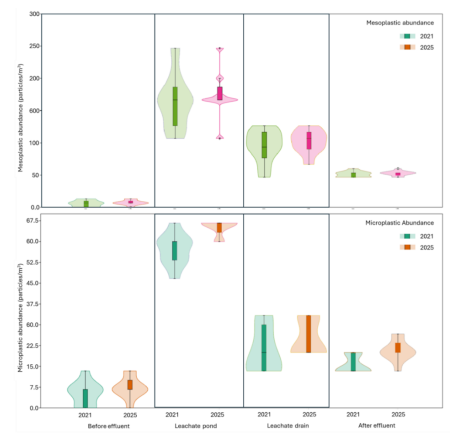
Micro and mesoblastic were consistently identified across all sampling sites, which included before effluent (BE), leachate pond (LP), leachate drain (LD), and after effluent (AE). This observation confirms that the leachate system operates as a conduit for the transport of small-sized plastics (Fig. 2). The abundance displayed a distinct spatial gradient along the leachate flow pathway, suggesting compartment-specific differences related to transport, retention, and transformation-related processes within the system. Fig. 2 illustrates the spatial variation and distribution range of microplastic and mesoplastic abundance across compartments, highlighting both central tendencies and variability among sampling points.
Abundance of dynamics across leachate system
At the BE, both micro- and mesoplastic abundances remained relatively low, with mean values of 5.19 ± 4.44 particles/m3 and 5.93 ± 5.21 particles/m3, respectively. This condition exemplifies a foundational state before the direct impact of leachate, indicating that plastic contributions are predominantly from diffuse environmental sources instead of point-source discharge. Similar baseline conditions have been reported in river systems with limited direct anthropogenic input (Hitchcock and Mitrovic, 2019). A marked increase in abundance was observed in the leachate pond (LP), where microplastics reached 65.19 ± 2.94 particles/m3 and mesoplastics increased to 173.33 ± 36.67 particles/m3. In comparison to the earlier dataset, this reflects an increase of roughly 8-12%, suggesting that the pond serves as a vital accumulation area with possible transformation-related activities. The elevated concentrations in this compartment can be attributed to intensive mixing processes, high residence time, and the accumulation of suspended plastic debris. Such conditions may promote fragmentation and re-suspension of particles, as previously described in landfill leachate systems (He et al., 2019; Su et al., 2019; Nurhasanah et al., 2021). Further downstream, the leachate drain (LD) showed sustained elevated concentrations, with microplastic abundance measured to 25.19 ± 6.48 particles/m3 and mesoplastic abundance reaching 101.48 ± 18.49 particles/m3. The differences noted among compartments suggest a clear spatial variation, even though the patterns do not follow a strictly linear trajectory. This section represents a transitional zone where physical transport dominates, potentially accompanied by fragmentation processes influenced by hydraulic turbulence. The interplay of flow velocity and channelized transport increases the likelihood of particle collisions and disintegration, which may lead to the fragmentation of larger particles into smaller components (Klein et al., 2018; McCormick et al., 2017). At the downstream end, both micro- and mesoplastics remained detectable, with mean values of 20.74 ± 4.01 particles/m3 and 52.59 ± 4.01 particles/m3, respectively. Although lower than peak values in the pond, these concentrations indicate continued presence and potential residual leakage into the receiving aquatic system. This conclusion affirms that the leachate treatment and conveyance system fail to entirely retain plastic particles in the observed circumstances. This situation allows continuous discharge into the river system. Despite the overall upward trend observed, local discrepancies among compartments suggest that the dynamics of microplastics are not entirely linear, highlighting the impact of specific hydrodynamic conditions and retention mechanisms at each site. Comparable inefficiencies have been noted in landfill and wastewater management systems, where microplastics continue to exist even following treatment procedures (Mahon et al., 2017; van Praagh et al., 2018). Overall, the observed pattern demonstrates a structured pathway: baseline conditions at BE, accumulation and amplification in LP, transformation and transport in LD, and residual release at AE. This advancement bolsters the view that landfill leachate systems operate not just as channels for transportation but also as environments conducive to transformation processes that may happen prior to their discharge into the environment.
Temporal comparison with previous study
A comparison with the previous baseline study conducted at the same site reveals both continuity and evolution in the behavior of micro- and mesoplastics within the leachate system. The previous study indicated a three-fold rise in microplastics and a nine-fold rise in mesoplastics following the introduction of leachate input into the river (Nurhasanah et al., 2021). These findings highlighted the strong contribution of landfill leachate as a point source of plastic debris to aquatic environments. In the current study, the general upward trend continues to be stable; nevertheless, the extent and patterns of spatial distribution have altered. Instead of a sharp stepwise increase at the outlet, the data indicate a more distributed amplification along the system, particularly within the leachate pond and drain. Microplastic abundance increased from 24.63 ± 20.58 particles/m3 (2021) to 29.07 ± 22.32 particles/m3 (2025), while mesoplastics increased from 78.89 ± 63.70 particles/m3 to 83.70 ± 65.46 particles/m3. This incremental growth indicates that the accumulation of plastic has been persisted over time, possibly alongside processes of transformation (Cordova et al., 2022). More importantly, the spatial dynamics have become more complex. In the prior study, the leachate drain was pinpointed as the key area of increase, whereas in the current dataset, the leachate pond stands out as the primary hotspot. This shift suggests that internal processes within the landfill system, such as prolonged retention and sludge accumulation, may play a more significant role than previously recognized. The conditions present in landfills, such as microbial activity, variations in temperature, and chemical reactions, can lead to the fragmentation of plastics and changes in their structure (He et al., 2019; Su et al., 2019; Nurhasanah et al., 2021). The persistence of high mesoplastic abundance alongside increasing microplastic fractions suggests a potential progressive fragmentation process. Rather than a simple reduction in particle size, the system may contribute to the generation of smaller particles from larger debris. This observation is consistent with the idea of secondary microplastic formation, in which mesoplastics serve as a reservoir for ongoing microplastic generation (Arthur et al., 2009; Song et al., 2017). Taken together, these results indicate that while the leachate system remains a significant source of plastic debris, its role has evolved from a primarily transport-driven system to a more dynamic transformation-driven system. This temporal shift emphasizes the necessity of regarding landfill leachate not just as a source, but also as a system in which processes associated with transformation might impact the properties and spread of plastic particles prior to environmental release.
Shape and size characteristics of micro- and mesoplastics
The composition of micro- and mesoplastics based on shape and size showed distinct spatial patterns across the leachate system, reflecting both source characteristics and potential in-situ transformation-related processes (Figs. 3 and 4). Overall, all four shape categories (fiber, fragment, granule, and foam) were identified in many sampling sites, although their relative proportions exhibited significant variation along the flow pathway. For microplastics (Fig. 3), fragments consistently dominated across all sampling sites, particularly in BE, where fragment proportions reached approximately 60-65%. Fibers were significantly lacking or present in minimal amounts at BE, indicating a minimal upstream input from sources related to textiles (De Falco et al., 2018; De Falco et al., 2019). This pattern suggests that the baseline condition is primarily influenced by secondary microplastics derived from the breakdown of larger debris rather than direct primary inputs (Hidalgo-Ruz et al., 2012; Cordova et al., 2019; Nurhasanah et al., 2021). In the LP pond, the variety of microplastic shapes achieved a greater balance, with fragments, fibers, granules, and foam each accounting for roughly 20-30%. This shift suggests the role of the pond as a mixing and retention zone, where heterogeneous plastic inputs accumulate and undergo physical redistribution. The presence of all shape types in relatively equal proportions suggests multiple concurrent processes, including input from landfill waste, mechanical mixing, and early-stage fragmentation. Analogous reports have emerged regarding landfill leachate systems, where extended retention time contributes to greater particle diversity (He et al., 2019; Su et al., 2019; Nurhasanah et al., 2021). As one moves further downstream in the LD, the dominance of fragments and fibers increased, making up about 70-80% in total, while the relative presence of granules and foam diminished. This pattern suggests that hydraulic transport and turbulence may influence the persistence of elongated and irregular particles, which are more resistant to settling. Simultaneously, granules are likely to fragment into smaller particles, which may contribute to the rising proportion of fragments. This study supports the interpretation from previous section that the drain may function as a transport-dominated corridor with possible transformation-related processes influenced by hydrodynamic forces. At the AE site, fragments remained dominant, reaching nearly 90%, while granules were largely absent. The substantial decrease in granules at this phase points to the occurrence of advanced fragmentation processes, resulting in the breakdown of larger, more compact particles into smaller irregular forms. This observation is consistent with the increasing microplastic abundance downstream and supports the interpretation that the leachate system may facilitate progressive fragmentation processes, inferred from shifts in size distribution and shape composition along the pathway. For mesoplastics (Fig. 4), foam was the predominant shape across all sampling locations, accounting for approximately 35-55% of total particles. This dominance was already evident at BE and persisted through LP, LD, and AE. Foam materials, commonly sourced from packaging and insulation products, are distinguished by their low density and high buoyancy, which could elucidate for their persistence and broad distribution in aquatic systems (Andrady and Neal, 2009; Su et al., 2019). In addition to foam, fragment-type mesoplastics were also abundant, particularly in LP and LD, contributing approximately 30-40% of total particles. Compared to the previous study (Nurhasanah et al., 2021), the persistence of foam dominance suggests that the primary waste composition entering the landfill may have remained relatively consistent over time. Nonetheless, the elevated ratio of fragments in downstream sites implies an enhancement in mechanical breakdown activities. This aligns with the temporal shift identified in previous section, where the system shows stronger evidence of internal transformation dynamics. A distinct gradient in size distribution was noted, transitioning from larger to smaller particle classes along the leachate pathway (Figs. 3 and 4). For microplastics, the BE site was dominated by larger size fractions (300-500 μm and 500-1000 μm), indicating limited fragmentation prior to leachate influence. The absence or low proportion of smaller size classes (<80 μm and 80-300 μm) suggests that upstream inputs are relatively less processed. In LP, microplastic the size distribution of microplastics exhibited greater heterogeneous, characterized by enhanced contributions from intermediate size classes (80-300 μm and 300-500 μm). This illustrates the cumulative impacts of both accumulation and initial fragmentation within the pond ecosystem. The presence of multiple size classes supports the interpretation of the pond as a transitional zone where plastic debris may undergo progressive breakdown. In the LD, smaller size classes became more prominent, particularly 80-300 μm and 300-500 μm fractions, suggesting ongoing fragmentation during transport. The growth of smaller particles corresponds with mechanical stress caused by turbulence, potentially resulting in particle degradation (Klein et al., 2018; McCormick et al., 2016). At the AE, microplastics were dominated by smaller and intermediate size classes, particularly 300-500 μm and 1000-5000 μm. The ongoing existence of these fractions implies that a full decomposition into very fine particles (<80 μm) may necessitate an extended residence time or supplementary environmental processes, including photodegradation and biofouling (Andrady, 2011; Horton et al., 2017). For mesoplastics, larger size classes (10,000-15,000 μm and 15,000-20,000 μm) dominated at BE, indicating that upstream inputs consist primarily of relatively intact plastic debris originating from mixed municipal solid waste. In LP and LD, size distribution shifted toward a broader range, including smaller mesoplastic classes (5000-10,000 μm), reflecting progressive breakdown. At AE, the durability of mid-sized classes (10,000-15,000 μm) implies that fragmentation remains incomplete, which reinforces the coexistence of both meso- and microplastic fractions within the system.
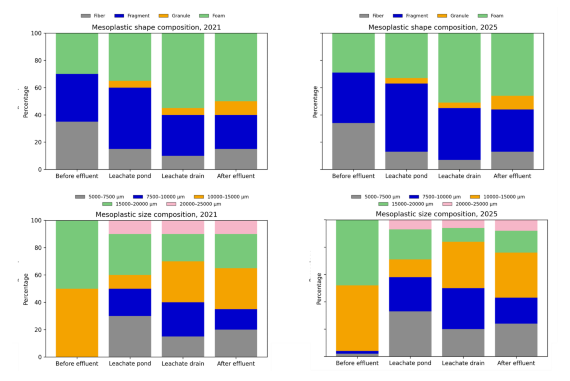
Fig. 3: Microplastic shape and size proportion in the sampling sites (BE: before effluent, LP: leachate pond, LD: Leachate drain, AE: after effluent)
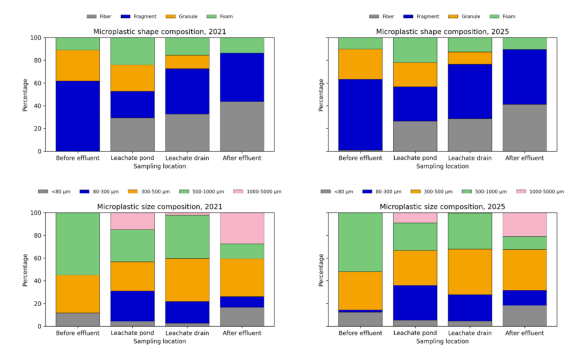
Fig. 4: Mesoplastic shape and size proportion in the sampling sites (BE: before effluent, LP: leachate pond, LD: Leachate drain, AE: after effluent)
Polymer composition and transformation
The analysis of the chemical composition of micro- and mesoplastics has shown a wide variety of polymer types present within the leachate system, indicating the intricate nature of landfill inputs and potential transformation-related processes. More than twenty polymer types were identified, with clear dominance of polyethylene (PE), polypropylene (PP), and polystyrene (PS) (Table 1). These polymers showed consistent increases from 2021 to 2025, indicating continued input and persistence within the system. Their dominance suggests that plastic debris entering the landfill is largely derived from single-use packaging materials (He et al., 2019; Su et al., 2019), consistent with previous studies in landfill environments (Nurhasanah et al., 2021; Nurhasanah et al., 2025). Spatially, polymer distribution exhibited distinct compartment-specific patterns. The upstream areas exhibited a lack of diversity, predominantly characterized by PE and PP, suggesting a minimal direct impact from landfill discharge. In contrast, the leachate pond displayed the highest polymer diversity and abundance, confirming its role as a major accumulation and mixing zone. Downstream in the leachate drain, polymer composition remained diverse but was increasingly dominated by more durable polymers, + suggesting selective retention and possible fragmentation of less stable materials (Andrady, 2011; Horton et al., 2017). At the ultimate discharge location, there was a slight reduction in polymer diversity; nevertheless, essential polymers like PE, PP, and PS were still detected, suggesting that removal was not fully achieved and that environmental release persists. Temporal comparison between 2021 and 2025 further revealed an increase in both polymer abundance and diversity. In 2025, there was a notable increase in the prevalence of polymers like nylon, polyvinyl chloride (PVC), and oxidized polymers, indicating changes in waste inputs and potential transformation-related processes. The presence of oxidized polymers provides indirect evidence of possible chemical alteration within the system, likely associated with prolonged exposure to landfill conditions. Overall, the observed polymer patterns indicate that composition is determined not just by the source input but is also influenced by selective transport, retention, and transformation processes along the leachate pathway.
Relative concentration balance and removal efficiency across the leachate system
A quantitative evaluation of the microplastic mass balance throughout the leachate system demonstrates non-conservative behavior, highlighting the coexistence of accumulation, retention, and release processes within the system. Microplastic concentration increased markedly from 7.41 particles/m3 at the upstream section to 65.19 particles/m3 in the leachate pond, representing an approximately 780% increase. This enhancement indicates that the leachate pond functions not merely as a receiving compartment but also as a zone of particle accumulation and possible secondary formation processes. Subsequently, concentrations decreased to 25.19 particles/m3 in the leachate drain and further to 20.74 particles/m3 after effluent discharge. This reduction implies that there may be some degree of retention or sedimentation occurring, yet the sustained elevated concentrations observed downstream reveal that the removal process is not entirely effective. When evaluated from a system perspective, removal efficiency estimated between the upstream and downstream sections resulted in a negative value, indicating a net increase rather than removal of microplastics. This finding indicates that the leachate system may not function as an effective removal system under the observed conditions. However, instead contributes to the redistribution of microplastics prior to environmental release. Despite the observation of a general upward trend, the spatial distribution is not entirely linear. Variations between compartments indicate the influence of localized hydrodynamic conditions and retention processes. The leachate pond represents a primary accumulation hotspot, characterized by peak concentrations and the highest polymer diversity within the system. This indicates a generally low removal efficiency when assessing the concentrations upstream and downstream, suggesting a net increase in particle abundance across the system.
Table 1: Summary of polymer composition and spatial dominance across the leachate system (2021-2025)
|
Polymer Type |
Total 2021 |
Total 2025 |
Change (%) |
Dominant Zone |
Interpretation |
|
Polyethylene (PE) |
17 |
22 |
29.41 |
LP-LD |
Highly persistent, dominant packaging polymer |
|
Polypropylene (PP) |
15 |
19 |
26.67 |
LP-LD |
Resistant polymer with strong transport potential |
|
Polystyrene (PS) |
12 |
18 |
50.00 |
LP |
Accumulates in low-energy zones (pond) |
|
Polyester |
5 |
7 |
40.00 |
LP |
Likely associated with textile and mixed waste |
|
Nylon (6,9) |
4 |
8 |
100.00 |
LP-LD |
Indicates secondary inputs and transformation |
|
Polyvinyl chloride (PVC) |
3 |
9 |
200.00 |
LP |
Increased presence suggests evolving waste input |
|
Polybutadiene |
1 |
9 |
800.00 |
LD |
Likely fragmentation-derived polymer |
|
Polyurethanes |
3 |
5 |
66.67 |
LP-LD |
Moderate persistence and degradation behavior |
|
Polyethylene terephthalate (PET) |
4 |
11 |
175.00 |
LP |
Common packaging material with increasing input |
|
Oxidized polymers |
2 |
4 |
100.00 |
LD |
Indicative of in-situ chemical transformation |
|
Others (minor polymers) |
<5 each |
<5 each |
0.00 |
Variable |
Minor contributions, heterogeneous sources |
|
Total identified polymers |
91 |
141 |
54.95 |
LP dominant |
Increasing diversity and complexity over time |
Treatment inefficiency, environmental release, and implication
Furthermore, the presence of both microplastics and mesoplastics at the AE sampling locations, despite their passage through the leachate management system, highlights the inadequacy of the treatment in completely eliminating these contaminants, leading to their ongoing discharge into the aquatic ecosystem. The mean abundance at AE reached 20.74 ± 4.01 particles/m3 for microplastics and 52.59 ± 4.01 particles/m3 for mesoplastics, indicating that a substantial fraction of plastic particles persists beyond the treatment stages. This observation emphasizes a shortcoming of the present leachate system, where the physical and chemical processes fail to adequately retain or remove plastic debris. While the leachate pond and drain may act as zones of accumulation and potential transformation-related processes, these compartments do not function as effective barriers for plastic containment. Instead, these units may facilitate fragmentation and redistribution, resulting in the downstream transport of smaller and more mobile particles. The ongoing issue of plastics in AE is notably troubling, as this site acts as the direct connection between the landfill system and the natural riverine environment. The release of microplastics and mesoplastics into the Cianter River and Cisadane watershed suggests that landfill leachate may act as a continuous point source of plastic pollution. Comparable findings have been documented in studies concerning wastewater and landfills, indicating that standard treatment methods are inadequate in entirely removing microplastics, which consequently enter surface waters (Mahon et al., 2017; van Praagh et al., 2018). In addition, the dominance of fragment-type microplastics and the presence of smaller size classes at AE indicate that particles released into the environment are already in a highly transformed state. These particles may remain suspended, be transported over long distances, and interact with biota due to their increased surface area and reactivity (Andrady, 2011; Horton et al., 2017). This may enhance their environmental risk compared to larger debris. Several factors may account for the inefficiency of the leachate system in retaining plastics. First, the absence of dedicated filtration or separation units targeting micro-sized particles allows plastics to pass through the system. Second, hydraulic turbulence within the drain may resuspend previously settled particles, reintroducing them into the flow. Third, continuous fragmentation processes might lead to the creation of smaller particles within the system, counteracting any removal that could take place. These findings emphasize that landfill leachate management systems, particularly those based on conventional designs, are not equipped to address emerging pollutants such as microplastics. Without targeted intervention, such systems may unintentionally contribute to the propagation of plastic pollution in aquatic environments. The amalgamated outcomes from abundance dynamics, shape and size characteristics, and polymer composition together advocate for a conceptual shift in understanding of the role of landfill leachate systems. Instead of merely acting as passive conduits, these systems could serve as settings where processes related to transformation take place. This situation leads to changes in particle characteristics prior to environmental release. Within the landfill body, plastic waste is subjected to a range of stressors, including mechanical pressure, microbial activity, chemical reactions, and fluctuating environmental conditions. These elements could play a role in the disintegration of larger plastic objects into smaller particle sizes. As leachate forms and flows through the system, it mobilizes these particles and transports them into the leachate pond. The leachate pond functions as a vital processing zone, distinguished by extended residence time, intricate mixing dynamics, and accumulation of organic and inorganic materials. In this environment, plastic particles are exposed to prolonged interactions that may promote fragmentation and alteration of their physical properties. This is reflected in the increased diversity of observed shapes and sizes. As the leachate flows into the drainage system, hydraulic turbulence emerges as the primary process, which may increase particle collision and mechanical fragmentation. The results may contribute to a shift toward smaller particle sizes and fragment-dominated shapes. The drain thus serves as a transformation corridor, linking the accumulation processes in the pond with the release processes downstream. Finally, at the after-effluent phase, the system releases a blend of altered particles into the aquatic ecosystem. These particles are not only smaller and more abundant but may also exhibit signs of chemical alteration, as indicated by the presence of oxidized polymers. This may increase their environmental persistence and potential ecological impact. The framework of the leachate system, characterized as a transformation-active environment, offers a cohesive framework that links source, process, and outcome. It provides a possible explanation for the observed increase in microplastic abundance, the dominance of fragment shapes, the shift toward smaller size classes, and the persistence of specific polymer types across the system. This conceptual model has important implications for both research and management. From a scientific standpoint, it emphasizes the necessity of viewing landfill systems as dynamic ecosystems in which the transformation of plastic takes place actively. From a management perspective, it underscores the urgency of redesigning leachate treatment systems to include targeted removal technologies for microplastics, such as advanced filtration or sedimentation enhancements. To gain a deeper understanding of these patterns, the fundamental transformation processes within the leachate system are elaborated upon below.
Process interpretation and transformation mechanisms within the leachate system
Microplastic dynamics observed across the leachate pathway indicate that the system may function as an environment where multiple transformation-related processes occur simultaneously. A variety of physical, chemical, and biological mechanisms may impact these processes, with variations observed across compartments (Nurhasanah et al., 2021; Nurhasanah et al., 2025). Physical processes, particularly hydraulic turbulence within the leachate drain, may play an important role in particle fragmentation (He et al., 2019; Su et al., 2019). The enhancement of flow velocity and the impact of particle collisions could encourage the fragmentation of larger plastic debris into smaller pieces, which in turn contributes to the noted transition toward smaller size classes downstream (He et al., 2019; Su et al., 2019). In contrast, the leachate pond may function as a low-energy environment with high residence time, facilitating particle accumulation, aggregation, and intermittent resuspension. The presence of oxidized polymers identified within the system may indicate chemical transformation. Oxidation processes, driven by prolonged exposure to leachate conditions, may weaken polymer structures and increase their susceptibility to fragmentation (Alimba and Faggio, 2019; Bouwmeester et al., 2015). This procedure may hold significant importance in the pond ecosystem, as extended retention heightens exposure to reactive conditions. Biological processes may also contribute to microplastic transformation. Under landfill conditions, microbial activity and organic matter interactions may influence degradation pathways (Alimi et al., 2018). Although anaerobic conditions may slow complete polymer degradation, they do not necessarily prevent mechanical fragmentation. Instead, plastics may persist while undergoing gradual size reduction over time (Alimi et al., 2018; Muhtadi et al., 2025). Furthermore, microplastics present in the leachate system engage with elevated levels of organic matter and dissolved substances (Alimba and Faggio, 2019; Bouwmeester et al., 2015). These interactions may promote aggregation, alter particle density, and increase the potential for contaminant adsorption (Alimba and Faggio, 2019). Consequently, microplastics can serve as vehicles for associated pollutants (for instance heavy metals and various contaminants), impacting their distribution and ecological consequences (Alimba and Faggio, 2019; Bouwmeester et al., 2015; Muhtadi et al., 2025). Based on these combined observations, the landfill leachate system can be conceptualized as a hybrid system that may function simultaneously as a source, retention zone, and transformation-active environment. The upstream section represents baseline conditions, the leachate pond may serve as a primary accumulation and processing compartment, and the drainage channel may act as a transport-dominated corridor with potential fragmentation-related processes. Ultimately, the system emits particles into the receiving environment, implying that processes associated with transformation could happen prior to environmental discharge instead of following it.
CONCLUSION
This study provides an integrated assessment of micro- and mesoplastic occurrence, characteristics, and transformation within a landfill leachate system. The results indicate that plastic particles are present across all stages of the leachate pathway, from upstream conditions to downstream discharge, suggesting that landfill leachate may act as a source of plastic pollution to aquatic environments. In accordance with the study objectives, the analysis reveals that both abundance and polymer composition vary across compartments, reflecting spatial heterogeneity within the system. Spatial analysis reveals a structured pattern across the leachate pathway. The upstream segment denotes baseline conditions with a comparatively low abundance, while the leachate pond may function as a significant accumulation zone containing the highest levels of both microplastics and mesoplastics. The leachate drain may function as a transport-dominated corridor, where hydraulic conditions may contribute to particle redistribution and fragmentation-related processes. Additionally, the presence of plastic particles at the after-effluent stage suggests that the removal process is not fully effective, leading to their continued release into the river system. These findings are consistent with the study hypothesis that microplastic abundance and composition vary along the leachate pathway due to combined effects of transport, retention, and transformation-related processes, rather than following a strictly linear increase. The detected non-linear spatial arrangement, featuring localized peaks in the leachate pond and persistent concentrations downstream, underscores the significance of compartment-specific dynamics within the system. Temporal comparison with previous observations further indicates that system behavior has evolved from localized increases toward a more distributed pattern across compartments. This shift suggests that internal processes within the landfill system, such as retention, mixing, and prolonged exposure conditions, may increasingly influence plastic dynamics, rather than being controlled solely by external inputs. The characterization of plastic debris supports this interpretation. Microplastics are mainly characterized by their fragmented forms and reduced size classifications, particularly in downstream regions, which implies a continuous degradation of larger materials. Mesoplastics remain dominated by foam and fragment types but show a shift toward smaller size classes along the pathway. These patterns suggest a possible connection between mesoplastics and microplastics, indicating that larger debris could play a role in the gradual formation of smaller particles. Polymer composition analysis further reinforces these findings. Polyethylene, polypropylene, and polystyrene consistently dominate across sampling locations, reflecting their widespread use and persistence in the environment. The presence of oxidized polymers provides indirect evidence of possible chemical alteration within the system, particularly in compartments with longer residence time. The analogous polymer composition found in meso- and microplastics indicates that the formation of secondary microplastics may transpire within the leachate pathway. From a system perspective, landfill leachate may function not only as a transport pathway but also as a transformation-active environment, where physical, chemical, and biological processes influence particle characteristics prior to environmental release. These processes could enhance the mobility, persistence, and potential ecological interaction of plastic particles in aquatic environments. From a management perspective, the findings highlight a gap in current leachate treatment systems, which are not specifically designed to retain or remove microplastics. The ongoing existence of plastics in effluent implies that further treatment techniques, such as fine filtration, improved sedimentation, and optimized retention strategies, could be essential to decrease plastic emissions into water bodies. Integrating microplastic monitoring into routine leachate management frameworks may also improve early detection and mitigation of plastic leakage. Future studies ought to include flow-based measurements, sediment and sludge analysis, along with controlled experimental methods to enhance the quantification of transformation mechanisms and to create a comprehensive system-scale evaluation. Such efforts will be essential to validate process-based interpretations and support the development of more effective management strategies for emerging plastic pollutants.
AUTHOR CONTRIBUTIONS
Nurhasanah, the corresponding authors contributed to result interpretation and manuscript preparation and finalization. Hasrianti, contributed to interpretation and manuscript preparation. L. Hakim contributed to result interpretation and manuscript preparation. E. Riani designed the field sampling, contributed to data analysis, and participated in result interpretation. M. R. Cordova, the primary contributor, conceived and designed the study, conducted laboratory analysis, performed data analysis, interpreted the results, prepared and finalized the manuscript.
ACKNOWLEDGEMENT
The authors would like to extend their heartfelt thanks to the staff at the Galuga Landfill for their invaluable assistance throughout this study. This research was funded by the Universitas Terbuka funding scheme for 2026 grant number [B/937/UN31.LPPM/PT.01.03/2026] for Nurhasanah and M.R. Cordova. The authors collectively examined the findings and contributed their insights and feedback to the manuscript preparation and final revision process. The authors appreciate the valuable and constructive critiques offered by anonymous reviewers, which significantly improved the quality of the manuscript. Additionally, the authors sincerely acknowledge the editor's constructive feedback on earlier drafts and recommendations for enhancing the overall scientific clarity.
CONFLICT OF INTEREST
The authors declare that there is no conflict of interest regarding the publication of this manuscript. In addition, ethical issues, including plagiarism, informed consent, misconduct, data fabrication and/or falsification, double publication and/or submission, and redundancy have been completely observed by the authors.
OPEN ACCESS
©2026 The author(s). This article is licensed under a Creative Commons Attribution 4.0 International License, which permits use, sharing, adaptation, distribution and reproduction in any medium or format, as long as you give appropriate credit to the original author(s) and the source, provide a link to the Creative Commons license, and indicate if changes were made. The images or other third-party material in this article are included in the article’s Creative Commons license, unless indicated otherwise in a credit line to the material. If material is not included in the article’s Creative Commons license and your intended use is not permitted by statutory regulation or exceeds the permitted use, you will need to obtain permission directly from the copyright holder. To view a copy of this license, visit: http://creativecommons.org/licenses/by/4.0/
PUBLISHER’S NOTE
GJESM Publisher remains neutral regarding jurisdictional claims in published maps and institutional afflictions.
Positive AI Statement
The authors utilized Grammarly. AI as a writing assistant to ensure grammatical accuracy and tone consistency and to detect potential plagiarism. Following this process, the authors diligently reviewed and refined the text in the manuscript. All authors assume full responsibility for the content of the publication.
ABBREVIATIONS
|
% |
percent |
|
°C |
degree Celsius |
|
μm |
Micrometer or micron |
|
AE |
after effluent |
|
ATR-FTIR |
Attenuated Total Reflectance - Fourier Transform Infrared Spectroscopy |
|
BE |
Before effluent |
|
cm |
Centimeter |
|
/cm |
A reciprocal centimeter (or wavenumber) |
|
Fe(II)SO4 |
Iron(II) sulfate or ferrous sulfate |
|
FTIR |
Fourier Transform Infrared spectroscopy |
|
g |
gram |
|
g/cm |
gram per centimeter cubic |
|
Ha |
Hectare |
|
H2O2 |
Hydrogen peroxide |
|
kg |
Kilogram |
|
L |
Liters |
|
LD |
leachate drain |
|
LP |
leachate pond |
|
mg/mL |
milligram per milliliter |
|
mL |
milliliter |
|
mm |
millimeters |
|
particles/m3 |
Particles per meter cubic |
|
p-value |
probability value |
|
QA/QC |
Quality assurance/quality control |
|
ZnCl2 |
Zinc chloride |
REFERENCES
Abdel-Shafy, H.I.; Mansour, M.S.M., (2018). Solid waste issue: sources, composition, disposal, recycling and valorization. Egypt. J. Pet., 27: 1275-1290 (16 pages).
Alimba, C.G.; Faggio, C., (2019). Microplastics in the marine environment: current trends and toxicological mechanisms. Environ. Toxicol. Pharmacol., 68: 61-74 (14 pages).
Alimi, O.S.; Farner Budarz, J.; Hernandez, L.M.; Tufenkji, N., (2018). Microplastics and nanoplastics in aquatic environments: aggregation, deposition, and enhanced contaminant transport. Environ. Sci. Technol., 52: 1704-1724 (21 pages).
Andrady, A.L., (2011). Microplastics in the marine environment. Mar. Pollut. Bull., 62: 1596-1605 (10 pages).
Andrady, A.L.; Neal, M.A., (2009). Applications and societal benefits of plastics. Philos. Trans. R. Soc. B, 364: 1977-1984 (8 pages).
Anshar, A.R.; Darusman, H.S.; Manalu, W.; Yaqin, K.; Nurdin, M.A.; Cordova, M.R., (2026). Styrene toxicity in the embryonic development of Celebes Medaka (Oryzias celebensis, Weber 1894): An assessment of the plastic monomer's impact. Mar. Pollut. Bull., 222: 118693 (10 pages).
Arthur, C.; Baker, J.; Bamford, H., (2009). NOAA technical memorandum on microplastic debris. NOAA (49 pages).
Bouwmeester, H.; Hollman, P.C.H.; Peters, R.J.B., (2015). Potential health impact of micro- and nanoplastics in the food production chain. Environ. Sci. Technol., 49: 8932-8947 (16 pages).
Cordova, M.R.; Iskandar, M.R.; Muhtadi, A.; Nurhasanah; Saville, R.; Riani, E., (2022). Spatio-temporal variation and seasonal dynamics of stranded beach anthropogenic debris on Indonesian beach from the results of nationwide monitoring. Mar. Pollut. Bull., 182: 114035 (10 pages).
Cordova, M.R.; Iskandar, M.R.; Surinati, D.; Purwandana, A.; Kaisupy, M.T.; Pitriana, P.; Arfianti, T.; Wibowo, S.P.A.; Subandi, R.; Ulumuddin, Y.I.; Purbonegoro, T.; Yogaswara, D.; Sani, S.Y.; Puspitasari, R.; Rositasari, R.; Riani, E.; Zheng, S.; Sun, X.; Wang, Z., (2025). First evidence of microplastics in the deep-sea barnacle in the Indonesian Throughflow region. Environ. Forensics, 1-17 (17 pages).
Cordova, M.R.; Riani, E.; Shiomoto, A., (2020). Microplastics ingestion by blue panchax fish (Aplocheilus sp.) from Ciliwung Estuary, Jakarta, Indonesia. Mar. Pollut. Bull., 161: 111763 (7 pages).
Damanhuri, E.; Handoko, W.; Padmi, T., (2014). Municipal solid waste management in Indonesia. In: Municipal solid waste management in Asia and the Pacific Islands. Springer, 139-155 (17 pages).
De Falco, F.; Di Pace, E.; Cocca, M.; Avella, M., (2019). Microplastic release from textile washing. Sci. Rep., 9: 6633 (10 pages).
De Falco, F.; Gullo, M.P.; Gentile, G.; Di Pace, E.; Cocca, M.; Gelabert, L.; Brouta-Agnésa, M.; Rovira, A.; Escudero, R.; Villalba, R.; Mossotti, R.; Montarsolo, A.; Gavignano, S.; Tonin, C.; Avella, M., (2018). Evaluation of microplastic release caused by textile washing processes of synthetic fabrics. Environ. Pollut., 236: 916-925 (10 pages).
He, P.; Chen, L.; Shao, L.; Zhang, H.; Lü, F., (2019). Municipal solid waste (MSW) landfill: A source of microplastics? -Evidence of microplastics in landfill leachate. Water Res., 159: 38-45 (8 pages).
Hidalgo-Ruz, V.; Gutow, L.; Thompson, R.C.; Thiel, M., (2012). Microplastics in the marine environment: identification methods. Environ. Sci. Technol., 46: 3060-3075 (16 pages).
Hitchcock, J.N.; Mitrovic, S.M., (2019). Microplastic pollution in estuaries across a gradient of human impact. Environ. Pollut., 247: 457-466 (10 pages).
Horton, A.A.; Dixon, S.J., (2018). Microplastics: An introduction to environmental transport processes. Wiley Interdiscip. Rev. Water, 5: e1268 (10 pages).
Horton, A.A.; Walton, A.; Spurgeon, D.J.; Lahive, E.; Svendsen, C., (2017). Microplastics in freshwater and terrestrial environments: Evaluating the current understanding to identify the knowledge gaps and future research priorities. Sci. Total Environ., 586: 127-141 (15 pages).
Klein, S.; Dimzon, I.K.; Eubeler, J.; Knepper, T.P., (2018). nalysis, Occurrence, and Degradation of Microplastics in the Aqueous Environment BT - Freshwater Microplastics: Emerging Environmental Contaminants? Springer, 51-67 (17 pages).
Mahon, A.M.; O’Connell, B.; Healy, M.G.; O’Connor, I.; Officer, R.; Nash, R.; Morrison, L., (2017). Microplastics in Sewage Sludge: Effects of Treatment. Environ. Sci. Technol., 51: 810-818 (9 pages).
McCormick, A.R.; Hoellein, T.J.; London, M.G.; Hittie, J.; Scott, J.W.; Kelly, J.J., (2016). Microplastic in surface waters of urban rivers: Concentration, sources, and associated bacterial assemblages. Ecosphere, 7: e01556 (12 pages).
Muhtadi, A.; Leidonald, R.; Rahmawati, A.; Merdangga, T.D.T.; Nurhamiyah, Y.; Cordova, M.R., (2025). Spatial and temporal distribution of microplastics in the Belawan Estuary, Indonesia. Egypt. J. Aquat. Res., 51: 163-171 (9 pages).
Nakano, H.; Alfonso, M.B.; Phinchan, N.; Jandang, S.; Manap, M.R.A.; Chavanich, S.; Viyakarn, V.; Müller, M.; Wong, C.; Bacosa, H.P.; Celik, M.; Cordova, M.R.; Isobe, A., (2025). Aquatic microplastics research in the ASEAN region: analysis of challenges and priorities. Mar. Pollut. Bull., 210: 117342 (10 pages).
Nurhasanah; Cordova, M.R.; Riani, E., (2021). Micro- and mesoplastics release from the Indonesian municipal solid waste landfill leachate to the aquatic environment: Case study in Galuga Landfill Area, Indonesia. Mar. Pollut. Bull., 163: 111986 (9 pages).
Nurhasanah; Hasrianti; Hakim, L.; Riani, E.; Cordova, M.R., (2025). Fate and dynamics of microplastics in the municipal waste composting process. Global J. Environ. Sci. Manage., 11: 1671-1686 (16 pages).
Nurhasanah; Hasrianti; Hakim, L.; Riani, E.; Iswari, M.Y.; Cordova, M.R., (2024). Microplastic contamination in the gut and gills of commercial marine fish. Global J. Environ. Sci. Manage., 10: 1897-1916 (20 pages).
Omeyer, L.C.M.; Duncan, E.M.; Abreo, N.A.S.; Acebes, J.M.V.; AngSinco-Jimenez, L.A.; Anuar, S.T.; Aragones, L.V.; Araujo, G.; Carrasco, L.R.; Chua, M.A.H.; Cordova, M.R.; Dewanti, L.P.; Espiritu, E.Q.; Garay, J.B.; Germanov, E.S.; Getliff, J.; Horcajo-Berna, E.; Ibrahim, Y.S.; Jaafar, Z.; Janairo, J.I.B.; Gyi, T.K.; Kreb, D.; Lim, C.L.; Lyons, Y.; Mustika, P.L.K.; Neo, M.L.; Ng, S.Z.H.; Pasaribu, B.; Pariatamby, A.; Peter, C.; Porter, L.; Purba, N.P.; Santa Cruz, E.T.; Shams, S.; Thompson, K.F.; Torres, D.S.; Westerlaken, R.; Wongtawan, T.; Godley, B.J., (2023). Interactions between marine megafauna and plastic pollution in Southeast Asia. Sci. Total Environ., 874: 162502 (12 pages).
Omeyer, L.C.M.; Duncan, E.M.; Aiemsomboon, K.; Beaumont, N.; Bureekul, S.; Cao, B.; Carrasco, L.R.; Chavanich, S.; Clark, J.R.; Cordova, M.R.; Couceiro, F.; Cragg, S.M.; Dickson, N.; Failler, P.; Ferraro, G.; Fletcher, S.; Fong, J.; Ford, A.T.; Gutierrez, T.; Shahul Hamid, F.; Hiddink, J.G.; Hoa, P.T.; Holland, S.I.; Jones, L.; Jones, N.H.; Koldewey, H.; Lauro, F.M.; Lee, C.; Lewis, M.; Marks, D.; Matallana-Surget, S.; Mayorga-Adame, C.G.; McGeehan, J.; Messer, L.F.; Michie, L.; Miller, M.A.; Mohamad, Z.F.; Nor, N.H.M.; Müller, M.; Neill, S.P.; Nelms, S.E.; Onda,
D.F.L.; Ong, J.J.L.; Pariatamby, A.; Phang, S.C.; Quilliam, R.; Robins, P.E.; Salta, M.; Sartimbul, A.; Shakuto, S.; Skov, M.W.; Taboada, E.B.; Todd, P.A.; Toh, T.C.; Valiyaveettil, S.; Viyakarn, V.; Wonnapinij, P.; Wood, L.E.; Yong, C.L.X.; Godley, B.J., (2022). Priorities to inform research on marine plastic pollution in Southeast Asia. Sci. Total Environ., 841: 156704 (12 pages).
Purba, N.P.; Faizal, I.; Cordova, M.R.; Abimanyu, A.; Afandi, N.K.A.; Indriawan, D.; Khan, A.M.A., (2021). Marine debris pathway across Indonesian boundary seas. J. Ecol. Eng., 22: 82-98 (17 pages).
S. Basri K.; Daud, A.; Birawida, A.B.; Maming, M.; Mukono, H.J.; Arsyad, D.S., (2024). Microplastic polymers in shellfish and fish in the coastal area. Global J. Environ. Sci. Manag., 10(4): 1477-1500 (24 pages).
Song, Y.K.; Hong, S.H.; Jang, M.; Han, G.M.; Jung, S.W.; Shim, W.J., (2017). Combined Effects of UV Exposure Duration and Mechanical Abrasion on Microplastic Fragmentation by Polymer Type. Environ. Sci. Technol., 51: 4368-4376 (9 pages).
Su, Y.; Zhang, Z.; Wu, D.; Zhan, L.; Shi, H.; Xie, B., (2019). Occurrence of microplastics in landfill systems and their fate with landfill age. Water Res., 164: 114968 (10 pages).
van Praagh, M.; Hartman, C.; Brandmyr, E., (2018). Microplastics in Landfill Leachates in the Nordic Countries. TemaNord, 557: 1-35 (35 pages).
Vriend, P.; Hidayat, H.; van Leeuwen, J.; Cordova, M.R.; Purba, N.P.; Löhr, A.J.; Faizal, I.; Ningsih, N.S.; Agustina, K.; Husrin, S.; Suryono, D.D.; Hantoro, I.; Widianarko, B.; Lestari, P.; Vermeulen, B.; van Emmerik, T., (2021). Plastic pollution research in Indonesia: state of science and future research directions to reduce impacts. Front. Environ. Sci., 9: 692907 (12 pages).
Wright, S.L.; Kelly, F.J., (2017). Plastic and Human Health: A Micro Issue? Environ. Sci. Technol., 51: 6634-6647 (14 pages).
Yanuhar, U.; Wiratno, E.N.; Suryanto, H.; Machfuda, D.R.; Caesar, N.R., (2025). Microplastic contamination in river and its impact on fish health. Global J. Environ. Sci. Manage., 11(3): 915-940 (26 pages).
OPEN ACCESS
©2026 The author(s). This article is licensed under a Creative Commons Attribution 4.0 International License, which permits use, sharing, adaptation, distribution and reproduction in any medium or format, as long as you give appropriate credit to the original author(s) and the source, provide a link to the Creative Commons license, and indicate if changes were made. The images or other third party material in this article are included in the article’s Creative Commons license, unless indicated otherwise in a credit line to the material. If material is not included in the article’s Creative Commons license and your intended use is not permitted by statutory regulation or exceeds the permitted use, you will need to obtain permission directly from the copyright holder. To view a copy of this license, visit: http://creativecommons.org/licenses/by/4.0/
PUBLISHER NOTE
GJESM Publisher remains neutral concerning jurisdictional claims in published maps and institutional affiliations.
MAJOR DATABASES, CITATION METRICS & CAPTURES
Google Scholar | Scopus - SJR | Web of Science | Biological Abstracts: Clarivate | Biosis Preview: Clarivate | PlumX Metrics | Altmetrics | Mendeley |
CURRENT PUBLISHER

| Article View | 2,258 |
| PDF Download | 604 |


Letters to Editor
[1] Letters that include statements of statistics, facts, research, or theories should include appropriate references, although more than three are discouraged.
[2] Letters that are personal attacks on an author rather than thoughtful criticism of the author’s ideas will not be considered for publication.
[3] Letters can be no more than 300 words in length.
[4] Letter writers should include a statement at the beginning of the letter stating that it is being submitted either for publication or not.
[5] Anonymous letters will not be considered.
[6] Letter writers must include their city and state of residence or work.
[7] Letters will be edited for clarity and length.