
5.2
CiteScore
2.9
Impact Factor
Document Type : CASE STUDY
Authors
1 Faculty of Water Resources and Information Technology, Kazakh National Agrarian Research University, 050010, Almaty, Kazakhstan
2 Department of Motor Vehicles and Life Safety, Mukhamedzhan Tynyshpayev ALT University, 050012, Almaty, Kazakhstan
3 School of Architecture, Civil Engineering and Energy, D. Serikbayev East Kazakhstan Technical University, 070004, Ust-Kamenogorsk, Kazakhstan
4 Department of Civil Engineering, University North, Croatia
5 ⁵L.B. Goncharov Kazakh Automobile and Road Institute, Almaty, Kazakhstan
Graphical Abstract
Highlights
Ø The Ulba River acts as a significant source of transit pollution, increasing concentrations of Mn, Zn, and Cu in the Irtysh River within the industrial zone of Ust-Kamenogorsk;
Ø Seasonal analysis revealed the highest heavy-metal concentrations during winter, reflecting enhanced anthropogenic influence under reduced natural runoff conditions;
Ø Elevated Zn and Cd accumulation in bottom sediments downstream of the Ulba confluence indicates long-term technogenic impact on the Irtysh aquatic ecosystem;
Ø Despite detectable metal enrichment, hydrobiological indicators classified the Irtysh River water as non-toxic with a moderately polluted ecological status.
Keywords
INTRODUCTION
Surface water quality is a fundamental component of environmental sustainability and ecosystem stability. River systems are characterized by their dynamic nature, responding to natural processes as well as human-induced factors. Among the key factors affecting river water quality, tributaries play a significant role by transporting water, dissolved substances, and pollutants into main channels (Anh et al., 2023). These inputs can influence the physicochemical equilibrium and lead to variations in the spatial distribution of water composition. Industrial discharge, urban runoff, and land-use changes intensify the pressure on tributary systems (Mkilima et al., 2024; Tang et al., 2024; Zhang et al., 2025). Consequently, contaminants introduced via tributaries can have a substantial impact on the quality of water further downstream. Comprehending these interactions is vital for the effective administration of water resources. It also helps in identifying pollution sources and predicting their environmental impact. Therefore, integrated studies of tributary–river systems are necessary. Such approaches support sustainable environmental planning and protection strategies. Heavy metals such as manganese (Mn), zinc (Zn), and copper (Cu) are among the most critical pollutants in aquatic systems (Singh et al., 2023; Xie et al., 2025; Zhong et al., 2018). These substances are long-lasting, detrimental, and have the potential to build up in sediments and living organisms. Their sources include natural weathering processes and anthropogenic activities, particularly industrial and municipal operations within river basins. In the case of the Ulba River, tributary inflow plays a significant role in influencing the ecological status of the Irtysh River, especially within the urban-industrial zone of Ust-Kamenogorsk, by transferring pollutants and altering downstream water quality. The discharges from industrial and municipal sources within the Ulba River basin greatly affect the transport, transformation, and bioavailability of heavy metals and nutrients in interconnected river systems. Once introduced into rivers, heavy metals have the potential to be carried over extensive distances. This process leads to transit pollution, where contaminants from tributaries influence downstream sections. The confluence zone between tributaries and main rivers acts as a critical control point, where changes in hydrodynamics, sediment interactions, and chemical conditions drive shifts in water quality, ecological stress, and contaminant redistribution. The transport of heavy metals is determined by several factors, including the hydrogen Hydrogen ion concentration (pH) level and the concentration of organic matter. Seasonal fluctuations likewise impact their distribution and concentration in water bodies. Elevated levels of these metals pose risks to aquatic ecosystems and human health (Hama Aziz et al., 2023). Therefore, their monitoring is essential for environmental assessment. Comprehending their actions aids in formulating efficient pollution management strategies. Hydrochemical parameters are widely used to characterize water quality and assess environmental conditions (Arpine and Gayane, 2016; Patil et al., 2022; Subba Rao et al., 2024). Indicators such as pH, mineralization, major ions, and biochemical oxygen demand over five days (BOD₅) provide essential information. These parameters indicate the influence of natural processes as well as external pollution contributions. In addition to chemical analysis, biological indicators offer insights into ecological health. Organisms such as Daphnia magna are used in biotesting to evaluate water toxicity (Jeong et al., 2024; Jeong and Simpson, 2019). Macrozoobenthos communities serve as reliable indicators of long-term environmental conditions (Ndale et al., 2021; Rodrigues et al., 2023). Their structure and diversity respond sensitively to pollution levels. Combining hydrochemical and hydrobiological methods improves assessment accuracy. This cohesive method offers a broader insight into aquatic systems. It also allows better evaluation of ecological risks and environmental changes. Sediments play a crucial role in the dynamics of aquatic ecosystems (Hauer et al., 2018). They function as receptacles for pollutants, encompassing heavy metals along with other types of contaminants. Over time, sediments accumulate substances that reflect the history of pollution in a river system (Alfee and Bloor, 2025; Jaskuła et al., 2021). However, under changing environmental conditions, these pollutants can be released back into the water. This procedure leads to additional pollution and extends ecological hazards. Sediment composition provides valuable information about long-term contamination trends. It also influences nutrient cycling and biological activity in aquatic environments. The interaction between water and sediments is therefore highly dynamic (Madsen et al., 2001). Assessing sediment quality is essential for a complete understanding of pollution processes (Xu et al., 2018). Incorporating sediment analysis improves the dependability of water quality studies. Seasonal variability significantly influences the behavior of pollutants in river systems. Changes in flow rate, temperature, and precipitation affect pollutant concentration and distribution. During periods of low flow, diminished dilution results in elevated levels of contaminants. Conversely, conditions of high flow may dilute pollutants while simultaneously increasing their transport. These variations create complex spatial and temporal patterns in water quality. Biological processes within aquatic ecosystems also vary with seasons. Temperature changes influence chemical reactions and biological activity (Kazmi et al., 2022). Consequently, it is essential to conduct multi-seasonal monitoring for precise evaluation. Neglecting seasonal factors might result in insufficient incomplete conclusions. Temporal analysis is thus a key component of environmental studies. Despite advances in monitoring techniques, data interpretation often relies on descriptive approaches. Such methods may not fully capture complex relationships among variables. Integrating statistical and graphical analyses facilitates better interpretation of results. This approach boosts the objectivity and trustworthiness conclusions. Modern analytical approaches are therefore essential in environmental research. They support more informed decision-making in water management. Particular attention is given to Mn, Zn, and Cu as key pollutants. Spatial and seasonal variations of these elements are examined. The study further evaluates the extent of degree pollution that arises from tributary inflow. Statistical tools, including correlation analysis and boxplots, are applied for data interpretation. This approach improves the understanding of relationships among environmental variables. The findings provide insights into pollution mechanisms in river systems. They also support the development of effective management strategies. In conclusion, the study plays a significant role in the protection of sustainable water resource protection. The aims of this study are to evaluate the influence of a tributary on river water quality and ecological status. The study integrates hydrochemical, hydrobiological, and sediment analyses. This study has been carried out in Irtysh–Ulba River system in the industrial region of Ust-Kamenogorsk, Kazakhstan in 2025.
MATERIALS AND METHODS
Study area and monitoring design
The study was conducted within the Irtysh–Ulba River system in the industrial region of Ust-Kamenogorsk, where the confluence of a major river and its tributary forms a hydrochemically complex mixing zone influenced by metallurgical and municipal discharges. The examined stretch of the Irtysh River spans roughly 30 Kilometer (km) within the city limits, featuring an average width of 168 m and depths varying from 2.65 to 4.0 m. The Ulba River, a right-bank tributary approximately 100 km in length with a catchment area of 4,990 km², represents a major pathway for industrial effluents entering the Irtysh system. A monitoring network comprising of four sampling stations was created to illustrate the longitudinal gradient of pollutant transport. Station U1 was located upstream on the Ulba River to represent background conditions with minimal direct industrial influence. Station U2 was situated on the Ulba River roughly 1–2 km upstream of the confluence to evaluate the combined effects of industrial and municipal discharges. Station I1 was located on the Irtysh River upstream of the confluence to represent baseline conditions of the main river. Station I2 was positioned 3–5 km downstream of the confluence, beyond the estimated complete mixing length derived from average flow velocity and channel geometry, thereby ensuring representative post-mixing conditions. The sites selected were influenced by hydrological and geomorphological factors, which encompass flow velocity, channel morphology, proximity to discharge points, and anticipated mixing behavior inferred from hydraulic characteristics. Despite the spatial resolution is restricted to four stations, this design was opted for to enable a process-based evaluation of pollutant transfer at the junction of the tributary and the main river, instead of providing a detailed mapping of spatial heterogeneity along the entire reach. Water sampling was conducted in March, July, September, and December 2025 to represent key hydrological phases, including spring high flow associated with snowmelt, summer low flow conditions, autumn transitional flow, and winter low flow under ice-influenced conditions. These sampling intervals were chosen to reflect the prevailing seasonal fluctuations in dilution and concentration processes. While this temporal resolution captures broad seasonal trends, it does not resolve short-term pollution events, which is acknowledged as a limitation. Bottom sediment samples were obtained in June 2025 during periods of relatively stable hydrological conditions to ensure a representative assessment of contaminant accumulation. This approach allows evaluation of spatial differences in sediment contamination but does not support temporal trend analysis (Fig. 1).
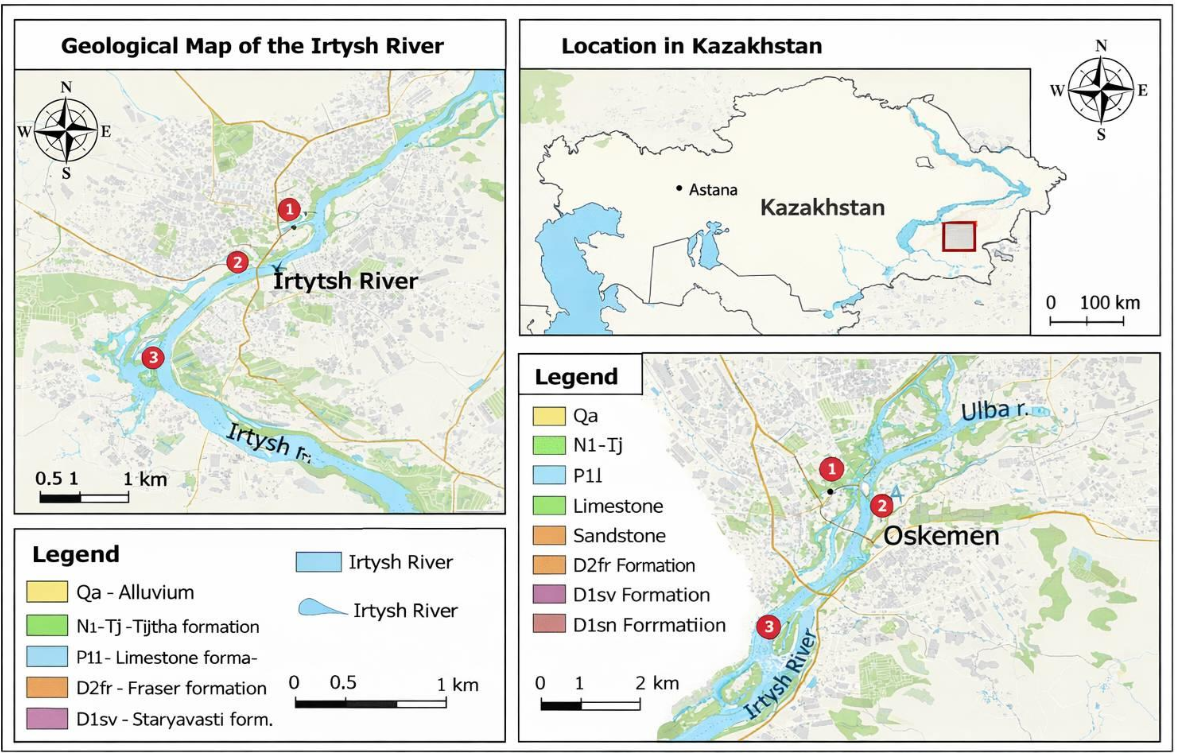
Fig. 1: Geographical location of the study area in the Irtysh–Ulba River system of Ust-Kamenogorsk, Kazakhstan
Sampling procedures and field measurements
Surface water samples were collected from a depth of 0–0.5 meter (m) using acid-washed polyethylene bottles. At each station, three independent replicate samples were collected and analyzed separately to ensure statistical reliability. Field duplicates and blanks were compiled to evaluate the possibility of contamination during sampling and transport. Bottom sediment samples were collected from the upper 0–10 Centimeter (cm) layer using a stainless-steel tubular corer, targeting the biologically active zone where recent deposition and contaminant interactions are most significant. Sediment samples were homogenized, placed in pre-cleaned containers, and stored at a temperature of 4 degrees Celsius (°C) prior to analysis. Immediately following sample collection, in situ measurements of water temperature, pH, dissolved oxygen, and electrical conductivity were carried out using calibrated multiparameter probes. Calibration was conducted prior to each field campaign using certified standard solutions. The performance of the instrument was confirmed by conducting repeated measurements at designated stations. All samples were transported to the laboratory under cooled conditions and processed within recommended holding times to maintain chemical integrity.
Laboratory analysis of physicochemical and hydrobiological parameters
Major ions, including calcium ion (Ca²⁺), magnesium ion (Mg²⁺), sodium ion (Na⁺), hydrocarbonate (HCO₃⁻), sulfate (SO₄²⁻), and Chloride (Cl⁻), were determined using standard titrimetric and ion chromatographic methods to characterize hydrochemical facies and mineralization. Nutrients, including ammonium (NH₄⁺), nitrite (NO₂⁻), nitrate (O₃⁻), phosphate (PO₄³⁻), total phosphorus, and dissolved iron (Fe), were measured using spectrophotometric methods based on standard colorimetric procedures. The incorporation of iron was warranted due to its ecological significance and its responsiveness to redox conditions, especially in river systems affected by industrial and urban discharges. Biochemical oxygen demand over five days (BOD₅) and chemical oxygen demand (COD) were analyzed to assess organic pollution and the balance between biodegradable and non-biodegradable organic matter. Heavy metals, specifically manganese (Mn), zinc (Zn), and copper (Cu), were selected based on their association with regional metallurgical activities, contrasting geochemical behavior, and ecological significance related to toxicity and bioaccumulation. Water samples were acidified with nitric acid to pH below 2 immediately after collection to preserve dissolved metal fractions. Both water and sediment samples were subjected to microwave-assisted acid digestion utilizing a blend of concentrated nitric acid and hydrochloric acid, conducted under regulated temperature and pressure conditions. Metal concentrations were determined using atomic absorption spectrometry. Calibration was performed using multi-point standard curves with correlation coefficients exceeding 0.995. Detection limits for each analyte were determined before the analysis was conducted. Analytical precision was maintained within ±5 percent (%) based on replicate measurements, and accuracy was verified using certified reference materials with recovery rates ranging from 85% to 110%. Quality assurance and quality control processes encompassed the examination of procedural blanks, duplicate samples, and calibration verification standards during each analytical run to ensure reliability and reproducibility of results.
Biological assessment and integration with physicochemical data
Macrozoobenthos samples were collected using a standard benthic sampler with consistent sampling effort across stations. Organisms were identified to family or genus level using taxonomic keys. The Woodiwiss biotic index was determined by analyzing taxa composition, abundance, and their sensitivity to pollution, thereby delivering a comprehensive assessment of ecological status. To ensure consistency with hydrochemical data, macrozoobenthos data corresponding to comparable seasonal periods were used. Acute toxicity tests were conducted using Daphnia magna under controlled laboratory conditions. Test organisms were subjected to water samples for periods of 24 and 48 hours at a temperature of 20 ± 2°C, maintained under a regulated light environment. Each test was performed in triplicate and included control samples. Mortality rates were recorded and used to assess the combined toxic effects of contaminants. Physicochemical and biological datasets were interpreted together to evaluate ecological status. The concentrations of pollutants were characterized by water chemistry, whereas sediment data demonstrated accumulation and potential secondary sources. Macrozoobenthos indicated long-term ecological consequences, and toxicity tests supplied information regardingshort-term biological responses.
Sediment quality assessment
The evaluation of sediment contamination was conducted using sediment quality guidelines, which encompass threshold effect concentrations and probable effect concentrations, in order to evaluate ecological risk. Measured concentrations were also compared with regional geochemical background values to determine enrichment levels and anthropogenic influence.
Statistical analysis, correlation assessment, and data visualization
Descriptive statistics, including mean, median, standard deviation, and range, were calculated for all variables. Pearson correlation analysis was used to evaluate relationships between heavy metals and physicochemical parameters, with statistical significance defined at p < 0.05. Seasonal differences were interpreted in relation to hydrological conditions, with higher flows associated with increased dilution and transport capacity, whereas low-flow conditions were associated with higher pollutant concentrations. Boxplots were employed to illustrate the distribution of heavy metal concentrations across various sampling locations and seasons. All statistical analyses were performed using R (version 4.3.1) and IBM statistical package for the social sciences (SPSS) statistics (version 26).
Methodological integration and justification
The methodological framework encompasses hydrological conditions, water chemistry, sediment contamination, and biological indicators to furnish a detailed appraisal of ecological status. This combined approach allows evaluation of pollutant transport, accumulation, and biological effects, which is particularly important in river confluence zones where mixing processes strongly influence environmental conditions.
RESULTS AND DISCUSSION
All reported values represent the mean of three replicate measurements, with relative standard deviations generally within 3–7%, indicating good analytical precision. The degree of variability between replicates was found to be the least for major ions, in contrast to trace metals, which exhibited higher variability, particularly in areas impacted by industrial discharge. Statistical comparison using analysis of variance confirmed that differences between upstream and downstream sites for Mn and Zn were significant at p < 0.05, particularly during winter and spring conditions.
Salt composition and hydrochemical characteristics
The hydrochemical composition of the Ulba River demonstrates clear seasonal variability associated with changes in hydrological conditions and sources of river feeding. Throughout the observation period, the concentration of dissolved ions ranged from 75 to 205 milligrams per liter (mg/L), with the lowest concentrations observed in spring as a consequence of dilution from snowmelt runoff, and the highest concentrations noted in autumn when there is a reduction in river discharge and an increase in groundwater influence. Water hardness ranged from 1.07 to 2.60 milliequivalent per liter (meq/L), indicating that the river water can be classified as soft. The ionic composition is dominated by calcium and magnesium, with calcium concentrations ranging from 15.6 to 35.3 mg/L and magnesium from 2.8 to 10.2 mg/L. Calcium exceeded magnesium by approximately three to five times, which is typical for river systems with hydrocarbonate calcium water composition. The hydrogen index demonstrated seasonal variability, characterized by near neutral conditions throughout winter and spring, and weakly alkaline conditions during the summer and fall seasons. Similar hydrochemical characteristics were observed in the Irtysh River at the investigated monitoring sites. The pH values ranged from 7.72 to 8.21, reflecting stable weakly alkaline conditions associated with carbonate equilibrium processes. Hydrocarbonates dominate the anionic composition and exhibit seasonal variability, with higher concentrations observed during the spring period. Calcium is also the dominant cation in the Irtysh River, with concentrations ranging from 20.4 to 38.5 mg/L, while magnesium and sodium concentrations varied between 3.9 to 7.8 mg/L and 5.6 to 8.9 mg/L respectively. Total mineralization in the Irtysh River fluctuated from 136 to 211 mg/L influenced by seasonal hydrological conditions, and water hardness ranged from 1.39 to 2.08 meq/L, indicating that the river water is classified as soft. These hydrochemical characteristics reflect the influence of both natural hydrological processes and local anthropogenic factors within the studied river basin (Cao et al., 2026; Li et al., 2025) (Table 1).
Table 1: Salt composition of water in the Irtysh and Ulba Rivers within Ust-Kamenogorsk (2025)
|
Sampling Site |
Season |
pH |
Ca²⁺ (mg/L) |
Mg²⁺ (mg/L) |
Na⁺ (mg/L) |
K⁺ (mg/L) |
Hardness (mg/L) |
Mineralization (mg/L) |
|
Ulba River (Kamenny Karyer settlement) |
Winter |
6.96 |
15.6 |
3.5 |
2.6 |
3.5 |
1.07 |
97 |
|
Spring |
7.23 |
17.8 |
2.8 |
2.4 |
0.5 |
1.12 |
75 |
|
|
Summer |
8.36 |
20.9 |
3.4 |
3.1 |
0.6 |
1.32 |
105 |
|
|
Autumn |
8.29 |
32.1 |
10.2 |
3.5 |
0.8 |
2.44 |
193 |
|
|
Ulba River (1 km upstream from mouth; 0.36 km downstream of Ulba Bridge) |
Winter |
7.36 |
25.6 |
4 |
4 |
1 |
1.61 |
142 |
|
Spring |
7.29 |
17.6 |
3.9 |
6.1 |
0.8 |
1.2 |
90 |
|
|
Summer |
8.08 |
23.1 |
3.8 |
4.4 |
1.3 |
1.47 |
124 |
|
|
Autumn |
8.33 |
35.3 |
10.2 |
4.5 |
0.4 |
2.6 |
205 |
|
|
Irtysh River (0.5 km downstream from Kondensatorny Plant discharge) |
Winter |
7.83 |
22.8 |
4.4 |
8.2 |
1.5 |
1.53 |
148 |
|
Spring |
8.06 |
38.5 |
6.3 |
8.9 |
2.44 |
1.99 |
211 |
|
|
Summer |
8.02 |
24.5 |
4.4 |
8.2 |
1.58 |
1.39 |
151 |
|
|
Autumn |
7.68 |
20.4 |
7.5 |
6.3 |
0.8 |
1.64 |
144 |
|
|
Irtysh River (3.2 km downstream from Ulba confluence) |
Winter |
7.72 |
23.6 |
4.5 |
8.6 |
1.5 |
1.55 |
149 |
|
Spring |
7.51 |
28.5 |
3.9 |
5.6 |
1.6 |
1.74 |
142 |
|
|
Summer |
8.21 |
25.8 |
4.5 |
6.7 |
1.1 |
1.66 |
136 |
|
|
Autumn |
7.78 |
26.5 |
7.8 |
6.5 |
0.6 |
2.08 |
173 |
Main anions and heavy metals
During the study period, the concentrations of major anions, particularly chlorides and sulfates, in both rivers remained generally low, indicating limited overall mineral pollution. An observable surge in these ions was recorded close to the Ulba Bridge area, which is related to the outflow of treated industrial wastewater and demonstrates localized human influence. In the Ulba River, sulfate concentrations showed clear seasonal variability, reaching a maximum value of 32.6 mg/L in autumn and declining to a minimum of 5.6 mg/L in spring. Chloride concentrations also fluctuated throughout the year, ranging from 1.1 to 10.3 mg/L in winter and decreasing to as low as 0.5 mg/L during summer. Among the anions, hydrocarbonates were dominant in the Ulba River system, with concentrations varying between 27.5 and 104 mg/L. This dominance highlights the significance of carbonate weathering processes in influencing the hydrochemical composition. Seasonal hydrological changes, including variations in discharge and temperature, likely contributed to the observed fluctuations. The comparatively low levels of chlorides and sulfates indicate that dilution processes are largely effective throughout most of the year (Szalińska et al., 2025). However, localized increases point to the need for continued monitoring of industrial impacts. Overall, the Ulba River demonstrates both natural geochemical control and measurable human influence. In the Irtysh River, the levels of chloride consistently remained low and stable at both monitoring locations, fluctuating between 2.8 and 6.8 mg/L during the entire study period. The average chloride concentration was approximately 3.7 mg/L, indicating minimal external contamination and relatively uniform water quality conditions. Sulfate concentrations were moderately higher than chlorides but still remained within a controlled range of 16.7 to 30.1 mg/L. These values indicate a consistent hydrochemical regime with minimal seasonal fluctuations when compared to the Ulba River.
The consistency in ion concentrations reflects the larger volume and higher dilution capacity of the Irtysh River. Natural geological factors appear to play a dominant role in determining its chemical composition. Human-induced effects, although evident, are not as significant as those found in smaller tributaries. Seasonal changes did not significantly alter the overall ionic balance in the river. This stability highlights the buffering capacity of the Irtysh River system. Overall, the data suggest that the Irtysh River exhibits a fairly stable water chemistry with only slight variations (Table 2).
Table 2: Content of main anions and heavy metals (mg/L) in surface waters of the Irtysh and Ulba Rivers within Ust-Kamenogorsk (2025)
|
Sampling site |
Season |
HCO₃⁻ (mg/L) |
SO₄²⁻ (mg/L) |
Cl⁻ (mg/L) |
Mn (mg/L) |
Zn (mg/L) |
Cu (mg/L) |
|
Ulba River (Kamenny Karyer settlement) |
Winter |
61 |
9.1 |
1.1 |
0.016 |
0.019 |
0.003 |
|
Spring |
42.7 |
5.6 |
1.3 |
0.0062 |
0.001 |
0.0043 |
|
|
Summer |
54.9 |
10.4 |
0.5 |
0.011 |
0.013 |
0.0025 |
|
|
Autumn |
104 |
25.1 |
4.4 |
0.007 |
0.023 |
0.0016 |
|
|
Ulba River (1 km upstream from mouth; 0.36 km downstream of Ulba Bridge) |
Winter |
79.3 |
12.8 |
10.3 |
0.037 |
0.031 |
0.003 |
|
Spring |
27.5 |
19.2 |
2.5 |
0.011 |
0.017 |
0.0032 |
|
|
Summer |
64.1 |
15.9 |
2.1 |
0.014 |
0.02 |
0.0026 |
|
|
Autumn |
97.6 |
32.6 |
9.6 |
0.017 |
0.045 |
0.0019 |
|
|
Irtysh River (0.5 km downstream from Kondensatorny Plant discharge) |
Winter |
88.5 |
19.2 |
3.3 |
0.008 |
0.002 |
0.003 |
|
Spring |
120 |
28.8 |
4.7 |
0.0056 |
0.001 |
0.0013 |
|
|
Summer |
79.3 |
21.5 |
3.2 |
0.002 |
0.0038 |
0.0018 |
|
|
Autumn |
70.2 |
26.9 |
6 |
0.004 |
0.002 |
0.0015 |
|
|
Irtysh River (3.2 km downstream from Ulba confluence) |
Winter |
85.4 |
20.2 |
3.9 |
0.014 |
0.011 |
0.004 |
|
Spring |
79.3 |
16.7 |
4.5 |
0.014 |
0.018 |
0.0046 |
|
|
Summer |
70.2 |
19.9 |
2.8 |
0.0095 |
0.014 |
0.0024 |
|
|
Autumn |
85.4 |
30.1 |
6.8 |
0.001 |
0.018 |
0.0019 |
Spatial gradient and confluence impact
To explicitly evaluate the role of the Ulba River in modifying the hydrochemical regime of the Irtysh River, a comparative analysis of upstream (I1) and downstream (I2) conditions was performed. The findings demonstrate quantifiable modifications in multiple parameters following the confluence, thereby affirming the Ulba River's contribution as a source of pollutant influx. For manganese, concentrations increased from 0.008 mg/L at the upstream Irtysh site (I1, winter) to 0.014 mg/L at the downstream site (I2), corresponding to an increase of approximately 75%. A similar pattern was observed in spring, where Mn concentrations increased from 0.0056 mg/L to 0.014 mg/L, representing an increase of more than 100%. Zinc concentrations also showed consistent enrichment downstream of the confluence, increasing from 0.002–0.0038 mg/L at I1 to 0.011–0.018 mg/L at I2 depending on season, indicating a 3–5-fold increase. Copper displayed more gradual variations yet continued to demonstrate a steady increase downstream, especially in the spring season, where levels rose from 0.0013 mg/L to 0.0046 mg/L. These results demonstrate that the Ulba River significantly contributes to the transfer of heavy metals into the Irtysh River. The magnitude of increase varies by element and season, reflecting differences in geochemical behavior and hydrological conditions. The confluence zone functions as an essential control point, where contaminant inflows from the tributary change the chemical structure and ecological environment of the main river.
Heavy metal distribution in water
Trace elements represent a diverse category of chemical constituents found in natural bodies. These elements are inherent components of aquatic ecosystems and are crucial for various biological and biochemical functions. Nevertheless, increased levels of heavy metals, especially those resulting from human activities, can have detrimental impacts and disturb the stability of ecosystems (El-Sharkawy et al., 2025). In this study, Mn, Zn, Cu, and Cd were selected due to their strong association with emissions from non-ferrous metallurgy and their ecological relevance in industrially impacted river systems. The findings demonstrate significant spatial and seasonal fluctuations in metal concentrations. In the Ulba River, Mn concentrations ranged from 0.011 to 0.037 mg/L near the Ulba Bridge, with winter values exceeding permissible limits by approximately threefold, while in summer and autumn exceedances averaged around 15 percent (%). In the Irtysh River, Mn concentrations reached 0.014 mg/L downstream of the Ulba confluence during winter and spring, exceeding standards by about 14%, indicating that the Ulba River acts as a significant source of Mn input. Zn concentrations in the Ulba River ranged from 0.001 to 0.023 mg/L at the reference site, surpassing allowable limits by about twofold, while consistently elevated levels, reaching a maximum of 0.045 mg/L in autumn, were observed near the Ulba Bridge. Cu concentrations ranged from 0.0025 to 0.0043 mg/L in the Ulba River and from 0.0013 to 0.0046 mg/L in the Irtysh River, exceeding regulatory thresholds throughout all seasons. The heat map visualization emphasizes distinct seasonal trends and specific contamination hotspots, showing that the highest concentrations of Mn and Cu observed in winter at the downstream impact location, while the lowest concentrations are typically noted in autumn at the more distal site. Compared to background conditions, manganese and zn concentrations at the impacted site exceeded normative values year-round, while elevated levels at the downstream Irtysh site further confirm transboundary influence. Cu exceedances remained relatively stable, with a notable increase in spring at the downstream site (Fig. 2).
Seasonal patterns of heavy metals
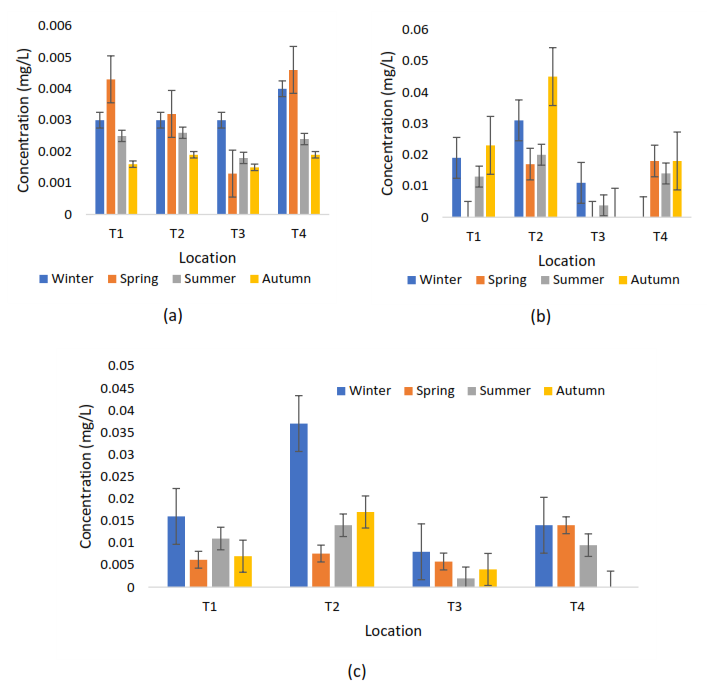
The distribution of heavy metals across seasons exhibits evident and organized variability, which mirrors the joint effects of hydrological factors, industrial discharge, and natural geochemical processes throughout the year. Analysis of the average concentrations indicates that the highest levels of heavy metals are consistently observed during the winter season, which can be attributed to reduced river discharge, limited dilution capacity, and an increased relative contribution of wastewater under low-flow conditions. During this period, the buildup of pollutants is more evident because of ice cover and diminished mixing processes, resulting in increased concentrations in the water column.
The reduced self-purification capacity of the river system further contributes to the persistence of contaminants during this season. Conversely, the spring season brings about heightened runoff as a result of snowmelt, which facilitates the movement of dissolved substances while simultaneously enhancing dilution conditions. Summer is typically characterized by relatively stable flow and moderate dilution, while autumn may show transitional behavior depending on precipitation patterns. These seasonal contrasts clearly demonstrate the dependence of heavy metal concentrations on hydrological regime and climatic factors. Variations in flow velocity, water temperature, and sediment interaction also influence the mobility and distribution of metals (Poot et al., 2007). Consequently, fluctuations in concentration over time are influenced not only by external factors but also by internal river dynamics. Understanding these dynamics is essential for accurate interpretation of monitoring data. The spatial and temporal variability of these metals is visually supported by graphical representations of seasonal trends (Fig. 3).
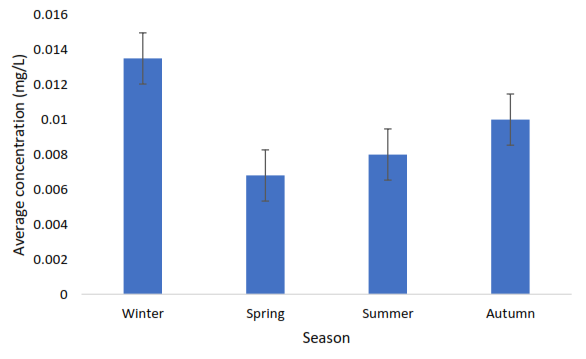
The overall ranking of metals based on their average concentrations follows the order Zn greater than Mn greater than Cu, highlighting Zn as the dominant contaminant in the study area. This hierarchy illustrates the degree of human-induced contributions as well as the geochemical characteristics of each element within aquatic ecosystems. Zn concentrations tend to peak during winter and autumn, which may be associated with with increased industrial discharge and reduced dilution capacity during these periods. Mn concentrations show a clear maximum during winter, consistent with stagnant hydrological conditions and the possible release of Mn from bottom sediments under low-oxygen conditions. In contrast, Cu concentrations reach their maximum levels in the spring season, likely owing to heightened surface runoff and the movement of pollutants from adjacent soils and urban areas (Maphanga et al., 2024). Seasonal fluctuations in redox conditions and pH may also influence the speciation and bioavailability of these metals. These observed patterns emphasize the importance of seasonal dynamics in controlling heavy metal distribution. They also emphasize the necessity for ongoing and seasonally adjusted monitoring programs. Such an approach allows for more accurate assessment of ecological risks and pollution sources. The distribution patterns of individual metals are illustrated in detail in Fig. 4.
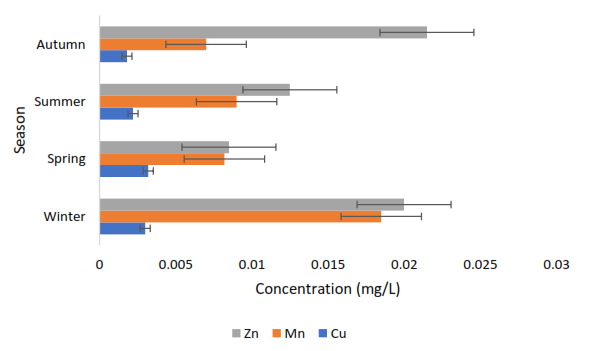
Fig. 4: Analysis of seasonal distribution of heavy metals
Correlation analysis
Pearson correlation analysis revealed statistically significant relationships between heavy metals and key physicochemical parameters. Manganese demonstrated a negative relationship with dissolved oxygen (r = −0.68, p < 0.05), suggesting enhanced mobility in conditions of reduced oxygen conditions, particularly during winter. Zinc exhibited a positive correlation with mineralization (r = 0.72, p < 0.05) and sulfate concentrations (r = 0.65), suggesting association with industrial effluent inputs. Copper showed moderate correlation with organic matter indicators, including COD (r = 0.58), indicating partial association with organic complexes. No strong correlation was observed between heavy metals and pH within the observed range, reflecting relatively stable weakly alkaline conditions across the study area. These connections validate that both geochemical processes and anthropogenic inputs affect the distribution of metals within the river system (Table 3).
Table 3: Pearson correlation coefficients (r) between heavy metals and selected physicochemical parameters (p < 0.05)
|
Parameter |
Mn (mg/L) |
Zn (mg/L) |
Cu (mg/L) |
|
Dissolved Oxygen (DO) |
−0.68 |
−0.21 |
−0.34 |
|
Mineralization |
0.41 |
0.72 |
0.29 |
|
Sulfate (SO₄²⁻) |
0.38 |
0.65 |
0.26 |
|
COD |
0.22 |
0.33 |
0.58 |
|
pH |
−0.12 |
0.09 |
0.15 |
Organic matter, nutrient, and iron concentrations
In the Ulba and Irtysh Rivers, the dynamics of organic matter and nutrient levels indicate the presence and behavior of nitrogen and phosphorus compounds, essential for fostering biological productivity in aquatic ecosystems (Joel Mihale, 2015). Among the nitrogen species assessed, nitrates were the most prevalent, exhibiting concentrations between 0.33 to 3.59 mg/L. The highest total phosphorus concentration (0.018 mg/L) was recorded in the Irtysh River downstream of the Ulba confluence during spring, although this increase was not directly linked to inflow from the Ulba River. Phosphate concentrations ranged from 0.011 to 0.14 mg/L in the Ulba River and from 0.009 to 0.049 mg/L in the Irtysh River. Iron levels exceeded the permissible limit for fishery water bodies (0.1 mg/L) during spring, with recorded concentrations of 0.25 mg/L at the Ulba upstream site, 0.27 mg/L near the Ulba Bridge, and 0.20 mg/L in the Irtysh River after the confluence, indicating a measurable influence of the Ulba River on iron levels in the Irtysh. Dichromate oxidizability (COD) ranged from 6.5 to 11 mg/L in the Ulba River and from 5.9 to 8.1 mg/L in the Irtysh River, classifying both as “polluted” waters; however, based on BOD₅ values, both rivers fall under the “clean waters” category, suggesting relatively low concentrations of readily biodegradable organic matter (Table 4).
Table 4: Content of organic and nutrient substances (mg/L) in surface waters of the Irtysh and Ulba Rivers within Ust-Kamenogorsk
|
Sampling site |
Season |
COD |
BOD₅ |
NH₄⁺ |
NO₂⁻ |
NO₃⁻ |
P (total) |
Fe |
PO₄³⁻ |
|
Ulba River (Kamenny Karyer settlement) |
Winter |
11 |
1.66 |
0.3 |
0.04 |
3.32 |
0.008 |
0.19 |
0.024 |
|
Spring |
7.4 |
2.96 |
0.12 |
0 |
0.33 |
0.006 |
0.25 |
0.016 |
|
|
Summer |
7.1 |
2.33 |
0.12 |
0 |
0.44 |
0.005 |
0.03 |
0.012 |
|
|
Autumn |
6.5 |
1.1 |
0.08 |
0.005 |
1.62 |
0.004 |
0.07 |
0.011 |
|
|
Ulba River (1 km upstream of mouth; 0.36 km downstream of Ulba Bridge) |
Winter |
10.8 |
1.8 |
0.15 |
0.05 |
3.59 |
0.007 |
0.16 |
0.017 |
|
Spring |
8.2 |
2.38 |
0.38 |
0 |
1.26 |
0.005 |
0.27 |
0.014 |
|
|
Summer |
7.6 |
2.63 |
0.13 |
0.011 |
0.58 |
0.006 |
0.03 |
0.011 |
|
|
Autumn |
6.7 |
2.44 |
0.06 |
0.006 |
1.86 |
0 |
0.04 |
0.013 |
|
|
Irtysh River (0.5 km downstream of Kondensatorny Plant discharge) |
Winter |
6.7 |
1.55 |
0 |
0.01 |
1.37 |
0.004 |
0.03 |
0.004 |
|
Spring |
6.3 |
2.3 |
0.11 |
0.002 |
0.57 |
0.009 |
0.05 |
0.009 |
|
|
Summer |
6 |
2.33 |
0.14 |
0.008 |
0.4 |
0.006 |
0.15 |
0.006 |
|
|
Autumn |
8.3 |
1.86 |
0.09 |
0.003 |
1.17 |
0.004 |
0.07 |
0.011 |
|
|
Irtysh River (3.2 km downstream of Ulba confluence) |
Winter |
8.1 |
2.15 |
0.35 |
0 |
0.93 |
0.004 |
0.03 |
0.009 |
|
Spring |
7.9 |
2.22 |
0.23 |
0 |
0.37 |
0.018 |
0.2 |
0.049 |
|
|
Summer |
5.9 |
2.18 |
0.08 |
0.007 |
0.36 |
0.007 |
0.1 |
0.012 |
|
|
Autumn |
8 |
1.85 |
0.1 |
0.003 |
1.64 |
0.004 |
0.09 |
0.011 |
Water biotesting
Biological indicators of water quality, particularly water biotesting, emphasize the significance of biological responses in demonstrating ecosystem stability amidst anthropogenic pressure (Qu and Peng, 2025). The toxicity of river waters was evaluated using Daphnia magna as a test organism, with a total of 48 water samples analyzed during the study period. The analysis revealed that the test organisms did not exhibit any acute toxic effects, although a minor level of mortality was documented in 20 samples, with percentages ranging from 3.3% to 20%. The average mortality of Daphnia magna in the Irtysh River ranged from 0.3% to 5.0%, while in the Ulba River it ranged from 1.9% to 5.8%. Despite these observations, all tested waters were classified as non-toxic in terms of acute toxicity thresholds (Table 5). When considered alongside the hydrochemical data, the lack of acute toxicity corresponds to relatively moderate concentrations of heavy metals (Mn, Zn, Cu) and nutrients, which which typically remained below levels established to trigger short-term lethal consequences. However, the consistently higher mortality rates observed in the Ulba River compared to the Irtysh River are consistent with the elevated concentrations of Zn and Mn recorded downstream of industrial influence zones, indicating a sub-lethal biological response to chemical stressors. These results indicate that although chemical contamination does not lead to immediate toxicity, it can still cause observable biological stress, thereby emphasizing the necessity for a combined chemical–biological evaluation when assessing the ecological condition of the river system.
Table 5: Results of biotesting for acute toxicity of surface waters of the Irtysh and Ulba Rivers
|
Site |
01 |
02 |
03 |
04 |
05 |
06 |
07 |
08 |
09 |
10 |
11 |
12 |
|
Ulba River (Kamenny Karyer settlement) |
6.7 |
10 |
3.3 |
0 |
0 |
0 |
0 |
0 |
0 |
3.3 |
0 |
0 |
|
Ulba River (1 km upstream of mouth; 0.36 km downstream of Ulba Bridge) |
20 |
20 |
13.3 |
0 |
0 |
0 |
0 |
3.3 |
0 |
6.7 |
6.7 |
0 |
|
Irtysh River (0.5 km downstream of Kondensatorny Plant discharge) |
0 |
0 |
0 |
0 |
0 |
0 |
3.3 |
0 |
0 |
0 |
0 |
0 |
|
Irtysh River (3.2 km downstream of Ulba confluence) |
10 |
6.7 |
6.7 |
3.3 |
6.7 |
0 |
6.7 |
0 |
3.3 |
0 |
13.3 |
3.3 |
Bioindication using macrozoobenthos
Bioindication using macrozoobenthos is an essential component of modern environmental monitoring, as aquatic organisms integrate and reflect the cumulative impacts of environmental factors on water quality over time (Chazanah et al., 2020). Macrozoobenthos communities serve as highly dependable indicators because their taxonomic composition, abundance, and biomass to long-term ecological changes. In this study, macrozoobenthos data from Kazhydromet monitoring programs for the period 2021–2025 were analyzed. The results show that the Irtysh River within Ust-Kamenogorsk was consistently classified as Class III (“moderately polluted”) based on macrozoobenthos indicators. In contrast, the upstream section of the Ulba River displayed Class II (“clean”) water quality, while downstream of the industrial discharge zone, conditions deteriorated to Class III (“moderately polluted”). Overall, the macrozoobenthos indicate that the ecological conditions in the Irtysh River have remained relatively stable over the last five years (Table 6).
Table 6: Average values of the Woodiwiss biotic index (BI) and water quality class (QC) in the Irtysh and Ulba Rivers within Ust-Kamenogorsk (2021–2025)
|
Site |
2021 |
2022 |
2023 |
2024 |
2025 |
Average |
|
Ulba River, within the settlement of Kamenny Karyer |
6.7/II |
6.8/II |
6.9/II |
7.4/II |
8.0/II |
7.2/II |
|
Ulba River, 1 km upstream from the mouth of the Ulba River; 0.36 km downstream of the Ulba Bridge |
3.9/IV |
5.0/III |
7.5/III |
7.1/III |
7.0/III |
6.1/III |
|
Irtysh River, 0.5 km downstream from the wastewater discharge of the Kondensatorny Plant |
4.7/III |
5.6/III |
4.7/III |
5.0/III |
5.4/III |
5.1/III |
|
Irtysh River, within the city limits; 3.2 km downstream from the confluence of the Ulba River |
6.6/II |
6.0/III |
6.4/III |
5.8/III |
5.9/III |
6.1/III |
Sediment contamination
The sediment contamination is a critical aspect of aquatic ecosystem assessment, as sediments function both as sinks and potential secondary sources of pollutants (Mazilamani et al., 2025). In this study, heavy metals including cadmium, Mn, Zn, and Cu were analyzed to evaluate long-term contamination in river sediments. Furthermore, the lack of established MPC for river sediments necessitated the assessment of contamination levels through the application of soil maximum permissible concentrations (MPC) values along with geochemical background (Clarke values). In the Irtysh River, cadmium concentrations ranged from 6 to 9 mg/kg, exceeding the soil MPC (2 mg/kg) by three to four times, while in the Ulba River, concentrations ranged from less than 5 to 8 mg/kg, also surpassing permissible levels by approximately four times. Mn concentrations remained below the soil MPC (1500 mg/kg), ranging from 630 to 680 mg/kg in the Irtysh River and 670 to 790 mg/kg in the Ulba River. Zn levels in the Irtysh River reached 511 mg/kg, exceeding the soil MPC (100 mg/kg) by about five times and Clarke values by 6.8 times, indicating significant technogenic accumulation, whereas in the Ulba River, Zn concentrations ranged from 254 to 270 mg/kg, reflecting a moderate degree of contamination. Cu concentrations in the Irtysh River varied between 50 and 59 mg/kg, slightly exceeding the soil MPC (55 mg/kg) at the downstream site, suggesting low-level pollution. Ultimately, these observations affirm that sediments on the bottom function as enduring accumulators of heavy metals, showcasing the repercussions of industrial activity in the Ust-Kamenogorsk region (Fig. 5). It should be noted that the spatial resolution of the monitoring network and the seasonal frequency of sampling limit the detection of short-term pollution events and fine-scale spatial variability. The chosen design adequately identifies the primary processes involved in pollutant transport, mixing, and ecological impact within the Ulba–Irtysh confluence zone.
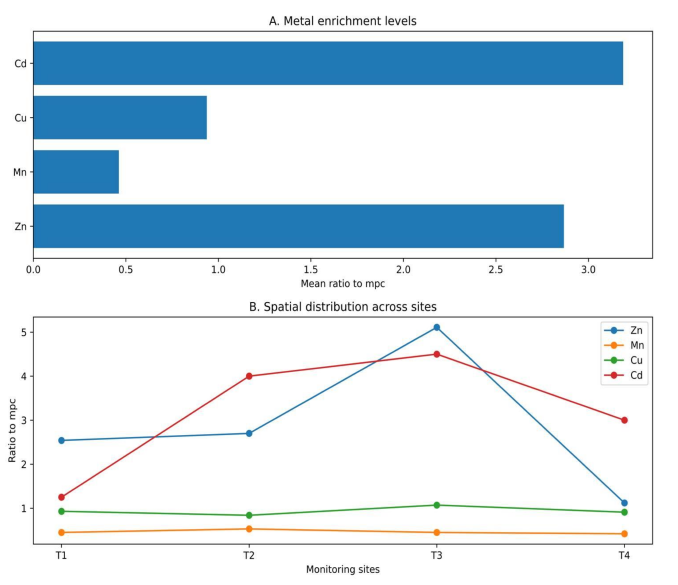
Fig. 5: Sediment contamination
The present study provides an integrated assessment of the hydrochemical, hydrobiological, and sedimentological conditions of the Ulba–Irtysh River system, focusing on tributary–mainstream interactions and their influence on downstream water quality. The findings indicate that the Ulba River serves as a notable yet spatially limited source of transit pollution, leading to increased levels of Mn, Zn, and Cu in the Irtysh River within the urban-industrial zone of Ust-Kamenogorsk. This influence is most pronounced at the confluence and immediately downstream, particularly near the Ulba Bridge, where hydrodynamic mixing and localized discharge inputs jointly control contaminant redistribution. Nonetheless, the effects observed are not consistent throughout the Irtysh River, suggesting that the Ulba River is neither the sole nor the primary factor in the overall decline of water quality in the basin, but instead serves as a significant contributor within a specific mixing corridor. Seasonal variability emerged as the primary regulator of pollutant dynamics. Winter conditions were associated with higher metal concentrations due to reduced discharge and limited dilution capacity, whereas spring and summer flows promoted partial dilution and downstream transport. These patterns suggest that the hydrological regime controls short-term variability; however, it does not eradicate ongoing anthropogenic contributions, as demonstrated by the consistent exceedances of guideline values for Zn and Mn at impacted sites. Sediment analysis confirms long-term contaminant retention, with elevated accumulation of Zn and Mn indicating that bottom sediments function both as sinks and potential secondary sources. This creates a linked water-sediment system where internal loading can maintain contamination even when external inputs are diminished, thus prolonging ecological exposure beyond immediate discharge occurrences. ecological impact. Although Daphnia magna assays indicated no acute toxicity, site-specific mortality differences and macrozoobenthos-based classification suggest moderate ecological impairment in the Ulba River and downstream sections of the Irtysh River. These findings indicate that the system is characterized primarily by chronic sub-lethal stress rather than acute toxic conditions, consistent with sustained exposure to elevated metal concentrations. The combined chemical and biological evidence indicates that various stressors, including nutrients, organic matter, and heavy metals, operate simultaneously within the system. Although statistical correlations suggest co-occurrence and potential coupling, the absence of process-based flux modeling restricts the mechanistic quantification of these interactions. Increased levels of nutrients (nitrates and phosphates) along with moderate COD levels indicate a continued impact from urban and industrial effluents, which may indirectly influence the mobility of metals by altering redox conditions and complexation processes. From a system standpoint, the confluence zone acts as a dynamic mixing interface that regulates the redistribution of pollutants between tributary and main river flows, rather than a simple accumulation point. This highlights the importance of spatially resolved monitoring for capturing non-linear changes in water quality across river continua. Another notable constraint of this study is the limited temporal resolution, which encompasses merely four seasonal campaigns, as well as a low spatial sampling density. These factors impede the detection of short-term pollution events and fine-scale spatial variability. In addition, the absence of direct hydrodynamic flux measurements prevents quantification of pollutant loads and transport rates. From a risk management standpoint, the findings suggest that the accumulation of heavy metals in both water and sediments poses a dual environmental concern: dissolved fractions signify short-term exposure risk, while sediment-bound metals constitute a long-term reservoir that can potentially release secondary contaminants under varying environmental conditions. Furthermore, effective oversight of industrial river systems should focus on the comprehensive monitoring of water and sediment compartments, as well as the specific control of industrial discharges in tributary catchments including the Ulba River. Future studies ought to concentrate on high-resolution temporal monitoring, integrated hydrodynamic–water quality modeling, and metal speciation analysis to enhance comprehension of transport mechanisms, bioavailability, and long-term ecological risk. Such approaches are essential for developing predictive tools for pollutant fluxes and for supporting evidence-based river basin management.
AUTHOR CONTRIBUTIONS
G. Mamyrbekova contributed to the conceptualization of the study, coordination of data collection, and preparation of the manuscript. Y. Kalybekova participated in the development of methodological approaches related to transport safety aspects, supported data interpretation, and contributed to manuscript drafting. V. Kolpakova participated in the interpretation of hydrological and environmental data, contributed to the analysis of river water quality dynamics, and supported manuscript preparation. Y. Yeremeyeva, as the corresponding author, supervised the overall research process, coordinated contributions from all co-authors, performed critical interpretation of results, and finalized the manuscript. A. Aniskin contributed to structural and civil engineering interpretation of river system impacts, supported technical analysis, and assisted in manuscript revision and improvement. B. Botantayeva contributed to transport infrastructure and environmental impact assessment, supported data analysis, and assisted in manuscript editing.
ACKNOWLEDGEMENT
The authors sincerely acknowledge all individuals and institutions that contributed to the completion of the study titled “Tributary-induced heavy metal pollution and water quality dynamics in river systems”. Field investigations and sampling campaigns conducted in the Ulba and Irtysh River systems within Ust-Kamenogorsk were supported by local logistical and technical assistance, which is gratefully appreciated. The authors also extend their gratitude to the laboratory staff and technical teams involved in hydrochemical analysis, heavy metal determination, and biological assessment using macrozoobenthos and biotesting methods for their valuable support throughout the research process.
CONFLICT OF INTEREST
The authors declare that there is no conflict of interests regarding the publication of this manuscript. In addition, the ethical issues, including plagiarism, informed consent, misconduct, data fabrication and/or falsification, double publication and/or submission, and redundancy have been completely observed by the authors.
OPEN ACCESS
©2026 The author(s). This article is licensed under a Creative Commons Attribution 4.0 International License, which permits use, sharing, adaptation, distribution and reproduction in any medium or format, as long as you give appropriate credit to the original author(s) and the source, provide a link to the Creative Commons license, and indicate if changes were made. The images or other third-party material in this article are included in the article’s Creative Commons license, unless indicated otherwise in a credit line to the material. If material is not included in the article’s Creative Commons license and your intended use is not permitted by statutory regulation or exceeds the permitted use, you will need to obtain permission directly from the copyright holder. To view a copy of this license, visit: http://creativecommons.org/licenses/by/4.0/
PUBLISHER’S NOTE
GJESM Publisher remains neutral with regard to jurisdictional claims in published maps and institutional afflictions.
Negative AI Statement
The author(s) declared that no AI tools or services were used or not highly applied during the preparation of this work.
ABBREVIATIONS
|
% |
Percent |
|
oC |
Degree Celsius |
|
BI |
Biotic index |
|
BOD₅ |
Biochemical oxygen demand over five days |
|
Ca²⁺ |
Calcium ion |
|
Cd |
Cadmium |
|
Cl⁻ |
Chloride |
|
cm |
Centimeter |
|
COD |
Dichromate oxidizability |
|
Cu |
Copper |
|
Fe |
Iron |
|
HCO₃⁻ |
Hydrocarbonate |
|
K⁺ |
Potassium ion |
|
km |
Kilometer |
|
km² |
Square kilometer |
|
L |
Liter |
|
m |
Meter |
|
meq/L |
Milliequivalent per liter |
|
Mg²⁺ |
Magnesium ion |
|
mg/L |
Milligram per liter |
|
mg/kg |
Milligram per kilogram |
|
Mn |
Manganese |
|
MPC |
Maximum permissible concentration |
|
Na⁺ |
Sodium ion |
|
NH₄⁺ |
Ammonium |
|
NO₂⁻ |
Nitrite |
|
NO₃⁻ |
Nitrate |
|
O₂ |
Oxygen |
|
pH |
Hydrogen ion concentration |
|
PO₄³⁻ |
Phosphate |
|
QC |
Quality class |
|
SO₄²⁻ |
Sulfate |
|
SPSS |
Statistical package for the social sciences |
|
Zn |
Zinc |
REFERENCES
Alfee, S.L.; Bloor, M.C., (2025). A global review of river sediment contamination and remobilization through climate change-induced flooding. Sustainable Environ., 11: 1-16 (16 pages).
Anh, N.T.; Can, L.D.; Nhan, N.T.; Schmalz, B.; Luu, T. Le, (2023). Influences of key factors on river water quality in urban and rural areas: A review. Case Stud. Chem. Environ. Eng., 8: 100424 (12 pages).
Arpine, H.; Gayane, S., (2016). Determination of background concentrations of hydrochemical parameters and water quality assessment in the Akhuryan River Basin (Armenia). Phys. Chem. Earth. Parts A/B/C, 94: 2-9 (8 pages).
Cao, Z.; Qian, H.; Gao, Y.; Li, K.; Shi, X.; Li, S.; Tian, P.; Liu, Y.; Zhang, J.; Shi, Z.; Wu, P.; Ma, Y., (2026). Hydrochemical evolution and surface water-groundwater interactions in a typical mountainous basin: Insights from multiple isotopes, chemical tracers, and multiple models. J. Environ. Chem. Eng., 14: 120611 (14 pages).
Chazanah, N.; Muntalif, B.; Sudjono, P., (2020). Macrozoobentos distribution as a bioindicator of water quality in the upstream of the Citarum River. J. Ecol. Eng., 21: 10-17 (8 pages).
El-Sharkawy, M.; Alotaibi, M.O.; Li, J.; Du, D.; Mahmoud, E., (2025). Heavy metal pollution in coastal environments: Ecological implications and management strategies: A review. Sustainability. 17: 701 (29 pages).
Hama Aziz, K.H.; Mustafa, F.S.; Omer, K.M.; Hama, S.; Hamarawf, R.F.; Rahman, K.O., (2023). Heavy metal pollution in the aquatic environment: efficient and low-cost removal approaches to eliminate their toxicity: a review. RSC Adv., 13: 17595-17610 (16 pages).
Hauer, C.; Leitner, P.; Unfer, G.; Pulg, U.; Habersack, H.; Graf, W., (2018). The role of sediment and sediment dynamics in the aquatic environment. In: Riverine Ecosystem Management. Springer International Publishing, Cham. 151-169 (19 pages).
Jaskuła, J.; Sojka, M.; Fiedler, M.; Wróżyński, R., (2021). Analysis of spatial variability of river bottom sediment pollution with heavy metals and assessment of potential ecological hazard for the Warta River, Poland. Minerals. 11: 327 (13 pages).
Jeong, H.; Park, S.; Choi, B.; Yu, C.S.; Hong, J.Y.; Jeong, T.-Y.; Cho, K.H., (2024). Machine learning-based water quality prediction using octennial in-situ Daphnia magna biological early warning system data. J. Hazard. Mater., 465: 133196 (14 pages).
Jeong, T.-Y.; Simpson, M.J., (2019). Daphnia magna metabolic profiling as a promising water quality parameter for the biological early warning system. Water Res., 166: 115033 (21 pages).
Joel Mihale, M., (2015). Nitrogen and phosphorus dynamics in the waters of the Great Ruaha River, Tanzania. J. Water Resour. Ocean Sci., 4: 59 (18 pages).
Kazmi, S.S.U.H.; Wang, Y.Y.L.; Cai, Y.-E.; Wang, Z., (2022). Temperature effects in single or combined with chemicals to the aquatic organisms: An overview of thermo-chemical stress. Ecol. Indic., 143: 109354 (15 pages).
Li, X.; Zhang, Y.; Xu, L.; Jiang, J.; Zhang, Chaoyu; Wang, G.; Liu, Y.; Zhang, Chengfu; Tian, D., (2025). Hydrochemical characteristics and dominant controlling factors of the Qujiang River under dual natural–anthropogenic influences. Water. 17: 1581 (14 pages).
Madsen, J.D.; Chambers, P.A.; James, W.F.; Koch, E.W.; Westlake, D.F., (2001). The interaction between water movement, sediment dynamics and submersed macrophytes. Hydrobiologia. 444: 71-84 (14 pages).
Maphanga, T.; Chidi, B.S.; Phungela, T.T.; Gqomfa, B.; Madonsela, B.S.; Malakane, K.C.; Lekata, S.; Shale, K., (2024). The interplay between temporal and seasonal distribution of heavy metals and physiochemical properties in Kaap River. Int. J. Environ. Sci. Technol., 21: 6053-6064 (12 pages).
Mazilamani, L.S.; Annammala, K. V.; Martin, P.; Qi, L.Y.; Sugumaran, D.; Ling, Y.E.; Reynard, P.S.; Nurhidayat, A.; Syawal, M.S.; Sutapa, I.D.A., (2025). Comprehensive assessment of water and sediment quality to support sustainable management practices and mitigate potential risks of trace metal pollution in the Johor River Basin, South Peninsular Malaysia. Ecohydrol. Hydrobiol., 25: 315-329 (15 pages).
Mkilima, T.; Zharkenov, Y.; Abduova, A.; Sarypbekova, N.; Kudaibergenov, N.; Sakanov, K.; Zhukenova, G.; Omarov, Z.; Sultanbekova, P.; Kenzhaliyeva, G., (2024). Utilization of banana peel-derived activated carbon for the removal of heavy metals from industrial wastewater. Case Stud. Chem. Environ. Eng., 10: 100791 (10 pages).
Ndale, Y.C.; Restu, I.W.; Wijayanti, N.P.P., (2021). The structure of macrozoobenthos community as a bioindicator of water quality in Gilimanuk Bay, Jembrana Regency, Bali. Adv. Trop. Biodivers. Environ. Sci., 5(2): 46-50 (5 pages).
Patil, C.A.; Nalawade, P.M.; Gadakh, B.L.; Khangar, N.V., (2022). Statistical assessment of groundwater quality using hydrochemical parameters for drinking water of rural areas in Nashik district, Maharashtra, India. Water Sci., 36: 136-143 (8 pages).
Poot, A.; Gillissen, F.; Koelmans, A.A., (2007). Effects of flow regime and flooding on heavy metal availability in sediment and soil of a dynamic river system. Environ. Pollut., 148: 779-787 (9 pages).
Qu, J.; Peng, J., (2025). Significance and enlightenment of implementing water ecological assessment. Water Ecol., 1: 100002 (13 pages).
Rodrigues, S.; Pinto, I.; Nogueira, S.; C. Antunes, S., (2023). Perspective chapter: Daphnia magna as a potential indicator of reservoir water quality – current status and perspectives focused in ecotoxicological classes regarding the risk prediction. IntechOpen. (11 pages).
Singh, S.; Singh, A.N.; Singh, R.; Sharma, N.R., (2023). Heavy metal pollution in the aquatic system and their toxicological effects on Clarias batrachus. Int. J. Membr. Sci. Technol., 10: 496-506 (11 pages).
Subba Rao, N.; Das, R.; Sahoo, H.K.; Gugulothu, S., (2024). Hydrochemical characterization and water quality perspectives for groundwater management for urban development. Groundw. Sustain. Dev., 24: 101071 (14 pages).
Szalińska, E.; Motyka, J.; D’Obyrn, K.; Orlińska-Woźniak, P.; Nachlik, E.; Mączałowski, A.; Wilk, P., (2025). Current and future chloride concentrations in a large river - will a disaster happen again? Water Resour. Ind., 33: 100289 (18 pages).
Tang, J.; Liu, D.; Shang, C.; Niu, J., (2024). Impacts of land use change on surface infiltration capacity and urban flood risk in a representative karst mountain city over the last two decades. J. Clean. Prod., 454: 142196 (20 pages).
Xie, H.; Zhang, M.; Shi, Y.; Wu, Y.; Li, M.; Li, Q.; Zhao, Y.; Hua, J., (2025). Heavy metal pollution in aquatic systems of the Hunhe River Basin, China: Source apportionment, ecological and health risk assessments. Process Saf. Environ. Prot., 201: 107478 (14 pages).
Xu, J.; Chen, Y.; Zheng, L.; Liu, B.; Liu, J.; Wang, X., (2018). Assessment of heavy metal pollution in the sediment of the main tributaries of Dongting Lake, China. Water. 10: 1060 (21 pages).
Zhang, J.; Li, Z.; Li, X.; Zhang, L.; Duan, D., (2025). Impact of land use changes on total rainfall and urban hydrological fluxes. Geomatics, Nat. Hazards Risk. 16: 1-20 (20 pages).
Zhong, W.; Zhang, Y.; Wu, Z.; Yang, R.; Chen, X.; Yang, J.; Zhu, L., (2018). Health risk assessment of heavy metals in freshwater fish in the central and eastern North China. Ecotoxicol. Environ. Saf., 157: 343-349 (7 pages).
OPEN ACCESS
©2026 The author(s). This article is licensed under a Creative Commons Attribution 4.0 International License, which permits use, sharing, adaptation, distribution and reproduction in any medium or format, as long as you give appropriate credit to the original author(s) and the source, provide a link to the Creative Commons license, and indicate if changes were made. The images or other third party material in this article are included in the article’s Creative Commons license, unless indicated otherwise in a credit line to the material. If material is not included in the article’s Creative Commons license and your intended use is not permitted by statutory regulation or exceeds the permitted use, you will need to obtain permission directly from the copyright holder. To view a copy of this license, visit: http://creativecommons.org/licenses/by/4.0/
PUBLISHER NOTE
GJESM Publisher remains neutral concerning jurisdictional claims in published maps and institutional affiliations.
MAJOR DATABASES, CITATION METRICS & CAPTURES
Google Scholar | Scopus - SJR | Web of Science | Biological Abstracts: Clarivate | Biosis Preview: Clarivate | PlumX Metrics | Altmetrics | Mendeley |
CURRENT PUBLISHER

| Article View | 2,574 |
| PDF Download | 460 |

Letters to Editor
[1] Letters that include statements of statistics, facts, research, or theories should include appropriate references, although more than three are discouraged.
[2] Letters that are personal attacks on an author rather than thoughtful criticism of the author’s ideas will not be considered for publication.
[3] Letters can be no more than 300 words in length.
[4] Letter writers should include a statement at the beginning of the letter stating that it is being submitted either for publication or not.
[5] Anonymous letters will not be considered.
[6] Letter writers must include their city and state of residence or work.
[7] Letters will be edited for clarity and length.