
5.2
CiteScore
2.9
Impact Factor
Document Type : RESEARCH ARTICLE
Authors
1 Centro de Investigaciones Económicas, Administrativas y Sociales, Instituto Politécnico Nacional, Mexico City, Mexico
2 Secretaría de Ciencias, Humanidades, Tecnología e Innovación, Centro de Investigación en Alimentación y Desarrollo A.C. Subsede Hidalgo, San Agustín Tlaxcala, Hidalgo, Mexico
Graphical Abstract
Highlights
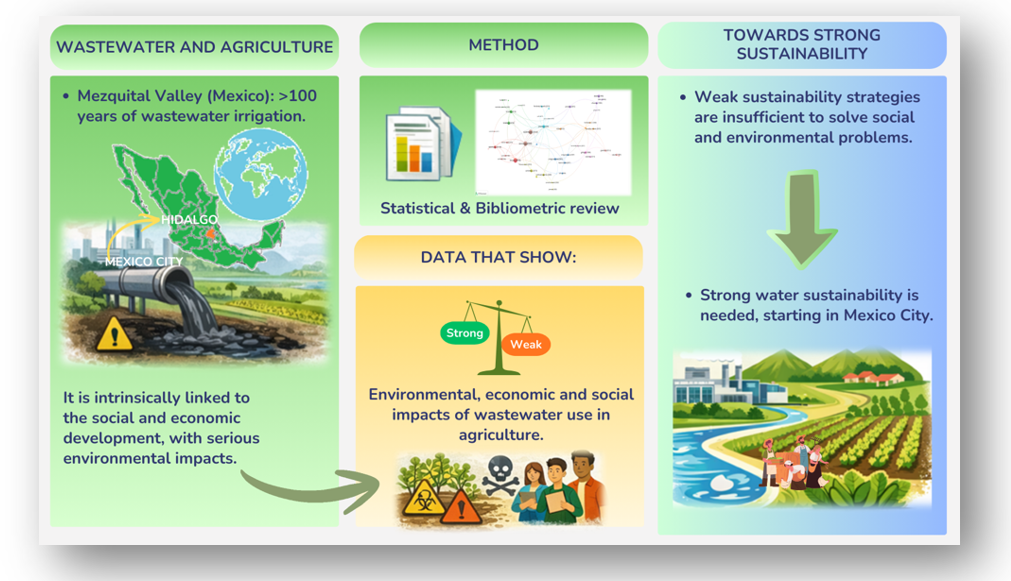
Ø Mexico has the highest scientific output in the Mezquital Valley, and the priorities emphasize physicochemical pollution and risks of groundwater contamination;
Ø Wastewater irrigation sustains agricultural production and supports thousands of users in the region, but it increases risks to soils, groundwater, environmental quality, and public health;
Ø Management follows a weak sustainability model driven by economic benefits and high water availability. Transitioning to strong sustainability requires expanding the use of treated water and integrating the technical, social, and ecological dimensions.
Keywords
INTRODUCTION
All economic activities require water, still, approximately 24 percent (%) of the world's land surface suffers from severe shortages, and 35% of the global population lives in areas affected by this issue (Borsato et al., 2020). Overall, economic development is achieved at the expense of excessive use of water resources. For over five decades, it has been acknowledged that humanity faces risks stemming from the management of nature, especially water. To date, managing global water resources sustainably has proven to be a significant challenge. In the last century, water extraction rates have increased almost sixfold (De Castro et al., 2023). The problem is mostly with irrigated agriculture, as irrigated areas represent only 18% of the world's cropland, a relatively small portion of the total cropland. Still, they use, on average, 70% of each country's water. While irrigated agriculture yields higher profits compared to rainfed agriculture, contributing around 40% to global food production (Borsato et al., 2020), sustaining this level of water usage is not feasible in the long run. Furthermore, the growing population and climate change exacerbate the agricultural challenges faced by countries with limited water resources, as they experience both water scarcity and thermal stress (Mainardis et al., 2022). As demand for freshwater rises, conflicts among water users and even between countries become more evident, underscoring the need for alternative water sources for agriculture (Ricart et al., 2019). Treated or reclaimed wastewater is progressively being recommended as an alternative across in various economic sectors, particularly agriculture (Penserini et al., 2024; Mainardis et al., 2022; Khan et al., 2022; Rossi et al., 2021; Chojnacka et al., 2020; Ricart et al., 2019). In addition, agrochemical-based agriculture imposes intense pressure on planetary boundaries, including biosphere integrity, earth system changes, freshwater use, and nitrogen fluxes (Gerten et al., 2020). Fertigation (the use of nutrients from wastewater for agricultural irrigation) can assist in alleviating these pressures (Penserini et al., 2024). However, 400 cubic kilometres (km³)/year of sewage is generated worldwide, yet less than 20% is treated, and only 2% to 15% is reused for irrigation (Christou et al., 2024). This would correspond to approximately 20 million hectares of land being irrigated using non-conventional water resources (Trotta et al., 2024). In Mexico, irrigation with wastewater is practiced in various regions mainly through irrigation districts, as is the case in the states of Chihuahua, State of Mexico, Puebla, Morelos, Michoacán, Tamaulipas Aguascalientes and Durango, but it is the Mezquital Valley region in Hidalgo, the most extensive area and with the longest tradition in this practice (Cisneros and Saucedo, 2016; IWMI, 2017). On a national scale, it is estimated that approximately 350,000 hectares (ha) are irrigated using wastewater, predominantly in semi-arid regions; however, the extent of wastewater treatment and its application for irrigation can differ markedly across various areas, influenced by factors such as the accessibility of alternative water sources, local regulations, and the current state of treatment infrastructure (Gilabert et al., 2018; Rosas and García, 2024). In the Mezquital Valley region, wastewater for irrigation is intrinsically linked to economic and social development. Since colonial times, farmers in the valley have used wastewater from Mexico City, locally known as "black waters", to irrigate approximately 563 square kilometres (km2) of grain crops (Hernández et al., 2021; García, 2019). The primary source of this wastewater is the drainage of the Metropolitan Area of the Valley of Mexico (MAVM), which discharges without conventional treatment. A significant recipient of this wastewater is the Tula River, which crosses the Mezquital Valley, ultimately directing its flow to the Irrigation District 003 Tula, located in the municipalities of Tula and Mixquiahuala (Siebe and Cifuentes, 1995). In this region, mainly alfalfa, corn, and bean crops are irrigated due to Mexican regulations that restrict the use of untreated wastewater for the irrigation of crops consumed raw and with low stem (CIMMYT, 2012; Garcia, 2019). The emergence of wastewater in this area, historically occupied by the Otomí people, was originally perceived as an issue. Over time, however, it transformed the valley into one of the most productive agricultural areas of Hidalgo. It is now known as the breadbasket of Hidalgo, home to 79% of the state's total irrigated area. In the region, this water is known as the "black gold" that helped lift people out of the poverty they lived in (Inegi, 2022; García, 2019). The persistent supply of nutrient-rich water from the MAVM's sewage system facilitated farmers to achieve higher yields than in rain-fed agriculture, with a primary focus on cultivating alfalfa and corn. The volume of wastewater from the MAVM to the Mezquital Valley became so significant that it exceeded the flow of many of the country's major rivers, making the valley one of the largest wastewater agriculture systems in the world, after China (Bonhevi and Denizen, 2024; CIMMYT, 2012; Jiménez and Asano, 2008). The enhancement of agricultural output results in adverse effects on the environment and social dynamics. High levels of total coliforms in surface and groundwater where wastewater irrigation is practiced in the Mezquital Valley pose a continuous risk of gastrointestinal diseases (Downs et al., 2000). Since the 1990s, a notable rise in the occurrence of diarrheal diseases and parasitic infections has been recorded in adults, especially in children (Cifuentes et al., 1991; 1994; 2000; Contreras et al., 2017; Domínguez-Narváez et al., 2023). In addition, the soil is contaminated with lead (Pb), cadmium (Cd), nickel (Ni), zinc (Zn), chromium (Cr), copper (Cu), and arsenic (As), as well as pathogenic microorganisms such as Escherichia coli. Emerging contaminants have also been detected in wastewater, such as antibiotics such as sulfonamides, ciprofloxacin, trimethoprim, and unmetabolized drugs that contribute to the emergence of drug-resistant bacteria (Cajuste et al., 1991; Durán-Álvarez et al., 2023; Ortíz-Olguín., 2023). By law, crops grown with wastewater in Mexico should be used only for animal feed; however, various crops such as beans, corn, squash, and some vegetables are marketed and consumed by humans (Contreras et al., 2020). According to the available literature, the predominant grains in the regions utilizing wastewater for irrigation alfalfa, corn, and wheat, which tend to accumulate mainly Cd, Pb, Cu, and Zn (Salazar-Ledezma et al., 2018; Lara-Viveros et al., 2015). Furthermore, the topic of sustainability in the region has received scant attention, despite the existing social and environmental consequences. It has mainly been addressed within the Sustainable Development Goals. However, the weak and strong sustainability approaches have a theoretical basis that enables the generation of alternatives to this type of environmental problem and the analysis of the scope of strategies to mitigate or prevent environmental damage. That is why the aims of this study were to analyse the Mezquital Valley case using the weak and strong sustainability approaches to identify the limitations and opportunities of wastewater reuse in agriculture. The methodology applied is documentary, relying on the examination of recent statistical data and a comprehensive bibliometric review of specialized literature. This document presents a theoretical overview of weak and strong sustainability, including their association with wastewater in agriculture, to enhance the analysis. This study has been conducted using the database Scopus, covering the years 1991 to 2024. For statistical analysis, data were obtained from the Institute of Statistics and Geography, the Agrifood and Fisheries Information Service, the National Water Commission, and the National Council for the Evaluation of Social Development, covering 2020 and 2023. The study aims to address the question: Is it possible to achieve strong sustainability in a region that presents social and environmental impacts of the magnitude of those in the Mezquital Valley? This study has been contacted in Mexico in 2025.
Weak and strong sustainability in agriculture with wastewater
The theoretical frameworks of environmental and ecological economics support the weak and strong sustainability approaches. Environmental economics is based on neoclassical economics, which advocates for the free market and the privatization of natural resources as mechanisms for conservation while adopting an anthropocentric perspective. Its link to the definition of sustainable development is direct, as it focuses on the satisfaction of present and future human needs. Therefore, the weak sustainability perspective accepts both trade-offs and collaborations in the Sustainable Development Goals (De Castro et al., 2023; Borsato et al., 2020). Conversely, ecological economics asserts that economic goals are often at odds with environmental aims. This is exemplified by the fact that the economic growth target of the Sustainable Development Goals hinders the attainment of other objectives, as its robust sustainability framework only permits synergies among goals that align with the notion of planetary boundaries (Hirai, 2022). The concept of weak or strong sustainability concerning irrigation can be examined through the lens that water is a renewable resource if specific conditions are satisfied. Consequently, from the standpoint of Borsato et al. (2020), its application could be interpreted as strong sustainability, but this would only be valid if the following conditions adhered to: the preservation of water reserves such as aquifers, lakes and rivers is guaranteed, which meaning that their utilization should facilitate natural replenishment; the exploitation of water sources does not generate losses of aquatic habitat or biodiversity and irrigation should not inflict other forms of environmental damage such as soil loss and contamination. In addition to the environmental aspect, economic viability is also considered within the perspective of strong sustainability, meaning that the cost of irrigation should be lower than the value of the marginal productivity compared to rainfed production. Furthermore, when considering Sustainable Development Goal 6.4, it is essential that water-use indicators take into account the variability in water availability. They should also be spatially explicit to account for the spatial variability in water scarcity driven by climatic, topographic, and land-use conditions (Vanham et al., 2018). Moreover, natural water resources must be differentiated from surface water, groundwater, and non-conventional water such as reclaimed or wastewater. In contemporary times, it is essential to recognize alternative or non-conventional sources of high-quality water for agricultural production, including reclaimed water, which refers to treated municipal wastewater that complies with state-specific water quality standards and is intended for reuse (Gerdes et al., 2020). The reuse of treated wastewater for agricultural purposes is classified into two categories: direct and indirect reuse. The former occurs when irrigation water is supplied directly from the wastewater treatment plant (WWTP). The latter situation arises when wastewater is directed downstream and has the potential to become contaminated with sewage. However, in the case of indirect wastewater reuse, controlling irrigation water quality is challenging because it depends on several factors, including the quality of the treated wastewater effluent and the hydrological conditions of the stream into which the effluent is discharged (Jeong et al., 2016). One of the main risks associated with water flows from wastewater treatment plants (WWTPs) and onsite wastewater treatment facilities is the release of micropollutants into receiving water bodies. In any case, the construction of WWTPs is costly and falls under the logic of weak sustainability, given the high costs of energy and construction materials (Gago et al., 2017). Additionally, various treatment techniques are under development to deliver water of suitable quality for designated reuse purposes, complementing the role of WWTPs. Selective approaches have been proposed, with the "fit-for-purpose" concept gaining significant attention because it can reduce energy use and the complexity of WWTPs, thereby avoiding unnecessary treatment steps (Cecconet et al., 2017). However, treated effluents may still contain antibiotics, antibiotic-resistant bacteria and genes, as well as several emerging contaminants that conventional treatments have not removed, including pharmaceuticals and toxic organic compounds (Mainardis et al., 2022). Domestic wastewater is made up of three key elements: black water from toilets, which is often mixed with yellow water (urine), and gray water from showers, dishwashers, and washing machines. Non-segregated wastewater typically exhibits variable quality parameters that depend on local conditions and the level of industrialization in the locality or city. In contrast, drip fertigation is appropriate for customizing the supply of water and nitrogen to align with crop requirements, thus enhancing product yield, water use efficiency, and nitrogen use efficiency, while decreasing evapotranspiration compared to flood irrigation (Li et al., 2021). Drip irrigation offers many advantages, but it also has a few disadvantages, the latter of which are related to specific crop characteristics or clogging problems. Clogging is predominantly limited to the inlet and vortex areas, and it can be substantially alleviated through appropriate hydrodynamic design and management (Lequette et al., 2020). Subsurface drip fertigation is particularly efficient at reducing water use in rice (48-53%) and wheat (42-53%) cultivation in South Asia, yielding results comparable to those of flood irrigation while requiring lower nitrogen fertiliser demand (-20%) (Mainardis et al., 2022). Anaerobic biological processes constitute another treatment mechanism, offering a sustainable alternative to energy-intensive aerobic processes (Capodaglio and Olsson, 2019). Drip irrigation with wastewater aligns with the principles of Strong Sustainability because it uses less water without compromising crop yields. However, the treatment applied to the water must be low in energy consumption. From the standpoint of weak sustainability, the application of treated or untreated wastewater in agricultural practices, based on traditional economic views, serves as an efficient strategy to maximize limited water resources. This method enables a partial substitution of natural capital (clean water) for manufactured capital (treatment infrastructure) or even direct utilization of untreated wastewater when circumstances are favorable (Jiménez and Asano, 2008). Therefore, this practice is sustainable because it maintains or increases the total capital stock while generating economic and social benefits: I) it reduces pressure on freshwater sources, II) it guarantees supply for productive activities in areas of scarcity, and III) it provides nutrients that partially substitute fertilizers, reducing costs (Drechsel et al., 2010). In this framework, a limited decline in water quality is deemed acceptable if it is balanced by growth in economic or human capital, for instance, through elevated agricultural earnings or betterment in infrastructure and productive capacities. However, this reasoning has critical limitations when wastewater is used without adequate treatment, as is often the case in large agricultural regions of Mexico, India, or North African countries, because the negative impacts on human health, soil degradation, and aquifer contamination often outweigh the short-term economic benefits (Qadir et al., 2010). Furthermore, the logic of weak sustainability implies that future investments in health, infrastructure, or decontamination technologies may counterbalance these effects; however, various studies demonstrate that reversing such damages is frequently problematic, especially in rural communities that are vulnerable and have low institutional capacity along with restricted public investment (Jiménez, 2006; Drechsel et al., 2015). From the Strong Sustainability perspective, the use of wastewater without adequate treatment is a classic case of false substitution, i.e., degraded natural capital (soil, public health, groundwater quality) cannot be entirely replaced by economic or manufactured capital because ecosystem services and the health of rural populations are essential and irreplaceable components of wellbeing (Martinez-Alier, 2021; Daly, 1996). Conversely, the intended and controlled application of treated wastewater could be in harmony with the tenets of weak sustainability, contingent upon investments in infrastructure and capacity that preserve total capital stock and prevent irreversible degradation of natural capital. However, this requires robust regulatory frameworks, sufficient financing, and monitoring systems that are often absent in contexts where reuse of untreated wastewater is most common (Jiménez and Asano, 2008). Thus, the case of the agricultural use of wastewater highlights both the possibilities and limitations of weak sustainability: while it helps identify pragmatic solutions to water scarcity, it risks legitimizing practices that, far from being sustainable, compromise ecological resilience and social equity over the long term, contrary to what Strong Sustainability postulates.
MATERIALS AND METHODS
The study begins with a bibliometric analysis and then proceeds to a statistical and documentary review of the Mezquital Valley region, located in Hidalgo, Mexico (Fig. 1). This region practices both rainfed and irrigated agriculture; the latter is distinguished by the heavy reliance on wastewater, which is applied with little to no treatment and forms the productive core of the region in a context of water scarcity. Wastewater comes mainly from the irrigation districts (003 Tula, 100 Alfajayuca, and 112 Ajacuba). This agricultural system operates mainly through gravity irrigation via an extensive network of open canals, which allows for continuous cultivation and intensive production, especially of alfalfa and forage corn. The reason for employing these two methods is that the literature review obtained from the bibliometric analysis provides information concerning the environmental consequences of using agricultural wastewater, but it fails to provide direct data on agricultural production in the region. Bibliometric analysis provides an overview of the literature on the topic, helping identify knowledge gaps and position contributions that broaden research on the phenomenon under study (Donthu et al., 2021). Here, bibliometric analysis is used to examine the literature on agriculture with wastewater in the Mezquital Valley; however, because only one document was found containing the terms “agriculture and wastewater and mezquital and valley,” the literature on the terms “wastewater and mezquital and valley” was reviewed in the Scopus database, using 1991 to 2024. It should be noted that the term “sustainability,” as used in the revised terms, did not yield any data, so it was decided to use only the words mentioned. The VOSviewer software, which visualizes scientific landscapes, was utilized to generate maps depicting word co-occurrence, enabling the examination of the conceptual structure within a research field, as well as co-authorship, and co-citation (Aria and Cucurullo, 2017). After the data were extracted, the records were carefully reviewed to select papers on agriculture and wastewater use in this region and to remove duplicates and irrelevant entries before importing them into VOSviewer. This software was utilized develop and assess network maps that recognized the most impactful publications, authors, and emerging research topics in the field (Judijanto et al., 2025). Quantitative bibliometric metrics, including publication counts and citation frequencies, were calculated to elucidate research development and discipline. Table 1 identifies the thematic axes of the theoretical references on weak and strong sustainability for the analysis of the literature. The statistical review discussed in the preceding section relied on the following databases to present a summary of wastewater application in agriculture in the designated study region: (a) Agricultural Census-2022 of the National Institute of Statistics and Geography (Instituto Nacional de Estadística y Geografía, Inegi); (b) Agrifood and Fisheries Information Service (Servicio de Información Agroalimentaria y Pesquera, SIAP) of the Ministry of Agriculture and Rural Development, with data from 2023; (c) Agricultural Statistics of the Irrigation Districts of the National Water Commission (Comisión Nacional del Agua, Conagua) and the Ministry of Environment and Natural Resources (Secretaría de Medio Ambiente y Recursos Naturales, Semarnat), with data from the 2022-2023 agricultural year; and (d) Poverty measurement at the municipal level in 2020, from the National Council for the Evaluation of Social Development Policy (Consejo Nacional de Evaluación de la Política de Desarrollo Social, Coneval).
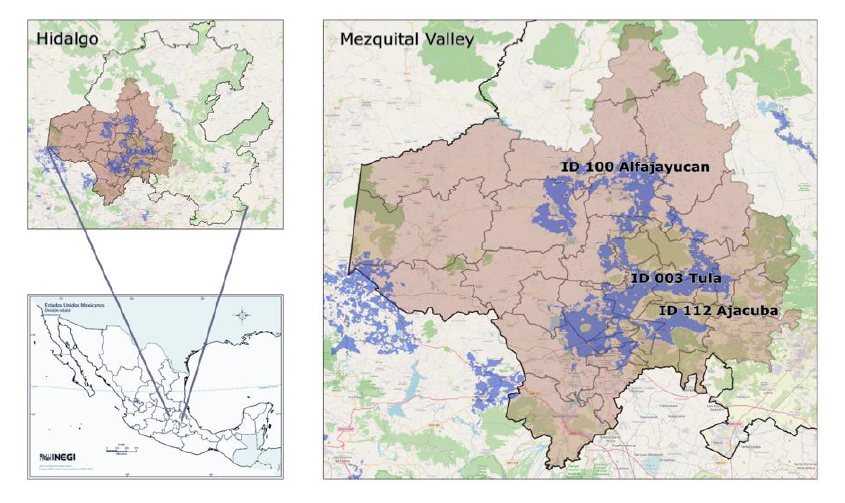
Fig. 1: Geographic location of the study area in Mezquital Valley, Hidalgo, Mexico
Table 1: Irrigation from sustainability perspectives
|
Weak sustainability |
Strong sustainability |
|
Wastewater Treatment Plant: Direct and Indirect Reuse |
Conservation of water reserves such as aquifers, lakes, and rivers |
|
Partial degradation of water quality is acceptable if offset by increases in capital |
No loss of aquatic habitat or biodiversity |
|
The impacts of wastewater use, or pollution are offset by future investments |
No soil loss or pollution |
|
Requires infrastructure and decontamination technologies |
Economic viability |
|
Energy-intensive |
Regenerated water |
|
Allows for biodiversity loss |
Drip fertigation |
|
Strong sustainability to prevent damage and weak sustainability to regulate impacts require robust regulatory frameworks, sufficient financing, and monitoring systems. |
|
RESULTS AND DISCUSSION
Irrigated agriculture in the Mezquital Valley, Hidalgo, from the perspective of sustainability
The Mezquital Valley region, which includes 28 of the 84 municipalities that make up the state of Hidalgo, is semi-arid, with low rainfall and xerophytic vegetation that limits agriculture; however, agriculture and livestock are its main economic activities. Its altitude ranges from 1,500 to 2,200 meters (m) above sea level, with average annual temperatures between 16 and 20 degrees Celsius (°C) and yearly rainfall of up to 500 millimeters (mm), concentrated during the rainy season from June to September (Moreno et al., 2006). With a population of 1,019,865 in 2020, 43% live in poverty (90% moderate and 10% extreme), and 17% are indigenous (Coneval, 2022). It is inhabited in primarily by ñähñú (Otomí) indigenous communities, concentrated in the municipalities of Ixmiquilpan, Cardonal, Santiago de Anaya and San Salvador. These communities maintain their cultural traditions and organizational structures, despite confronting systemic issues of poverty, marginalization, and inequality. Nevertheless, they exhibit a notable ability to adapt and demonstrate resilience when faced with environmental and economic challenges (Granados et al., 2004; García, 2019).
Bibliometric analysis of the literature on wastewater and the Mezquital Valley and weak and strong sustainability
The review was conducted using the Scopus database and the search query “Mezquital Valley” and “wastewater,” which yielded 79 documents, including 70 articles, four book chapters, four conference papers, and a review. Environmental sciences are the disciplines with the greatest quantity of documents (50), agriculture and biological sciences (22), medicine (14), engineering (eight), and earth sciences (seven). The investigation covers the period from 1991, the year the initial published article was discovered, to 2024. First, the mapping identifies an analysis of citations in which Siebe with various co-authors (Siebe and Cifuentes, 1995; Friedel et al., 2000; Vázquez-Alarcón et al., 2001; Ortega-Larrocea et al., 2001; Ortega-Larrocea et al., 2007; Siemens et al., 2008; Dalkmann et al., 2012; Müller et al., 2012; Dalkmann et al., 2014a; Dalkmann et al., 2014b; Broszat et al., 2014; Guédron et al., 2014; Jechalke et al., 2015; Zamora-Martínez et al., 2016; González‐Méndez et al., 2017; Contreras et al., 2017; Lüneberg et al., 2018; Salazar-Ledesma et al., 2018; Lüneberg et al., 2019; González-Méndez et al., 2020; Contreras et al., 2020; Heyde et al., 2021; Aguilar-Santos et al., 2024; Espiral et al., 2024) has 25 documents with 952 citations. This constitutes the most substantial number of citations pertaining to the theme of wastewater and agriculture in the Mezquital Valley; Broszat follows this with 269 citations and four documents (Broszat et al., 2014; Dalkmann et al., 2012; Jechalke et al., 2015; Broszat and Grohmann, 2017), then Jan Siemens with six documents (Siemens, et al., 2008; Dalkmann et al., 2012; Dalkmann et al., 2014a; Dalkmann et al., 2014b; Heyde et al., 2021; Carrillo et al., 2016b) and 254 citations, and Amelung with four papers (Dalkmann et al., 2012; Dalkmann et al., 2014a; Dalkmann et al., 2014b; Carrillo et al., 2016a) and 230 citations as well as Philipp Dalkmann (Dalkmann et al., 2012; Dalkmann et al., 2014a; Dalkmann et al., 2014b; Carrillo et al., 2016b) with four documents and 230 citations. The issues addressed in Table 2 highlight the environmental and health risks associated with the use of untreated wastewater for agriculture in the Mezquital Valley. Since Christina Siebe is based in Mexico, 1848 citations are in this country, 671 in Germany, 204 in the United States, and 156 in the United Kingdom, indicating that this has been a relatively relevant topic for researchers based in Mexico. Regarding the institutions where the researchers who have carried out work on the use of wastewater and agriculture in the Mezquital Valley are located, find that they are mainly in the Geolo gy Institutes of the National Autonomous University of Mexico (Universidad Nacional Autónoma de México, UNAM), as is the case of Christina Siebe, in Fig. 2 she is located in a green node with a size that stands out about other centers. In the case of Melanie Broszat, she is located at the University Medical Centre Freiburg, Division of Infectious Diseases, Freiburg, Germany, and in the case of Jan Siemens, she works at the Department of Soil Science, Berlin University of Technology. It should be noted that this author has worked with Christina Siebe.
Table 2: Topics Addressed in the Mezquital Valley by the most cited authors
|
Authors |
Main research topics |
Environmental relevance |
|
Impact of untreated wastewater irrigation on soils and agriculture; accumulation of toxic contaminants; soil microbiology. |
Evaluation of long-term soil quality changes and environmental risks derived from wastewater irrigation practices. |
|
|
Effects of wastewater on soil bacterial communities; presence of potentially pathogenic bacteria; dissemination of antibiotic resistance genes and mobile genetic elements. |
Assessment of microbial health risks and spread of antibiotic resistance in agricultural systems. |
|
|
Behavior of pharmaceutical and emerging contaminants in irrigated soils; accumulation of microorganisms and resistance genes. |
Analysis of mobility, persistence, and ecological risks of emerging contaminants in agroecosystems. |
|
|
Accumulation and persistence of emerging contaminants (pharmaceuticals and resistance genes); interaction between soil organic matter, microflora, and persistent pollutants. |
Understanding how soil properties regulate contaminant retention and long-term environmental impact. |
|
|
Accumulation and transport of antibiotics and pharmaceuticals in wastewater-irrigated soils; dissipation and retention processes. |
Investigation of contaminant fate, transport mechanisms, and implications for soil and environmental sustainability. |
Note: Co-citation mapping in VOSviewer measures how often two authors are cited together, not their total citation counts. Therefore, an author ranked fifth may still be highly influential if frequently co-cited with leading scholars in the field.
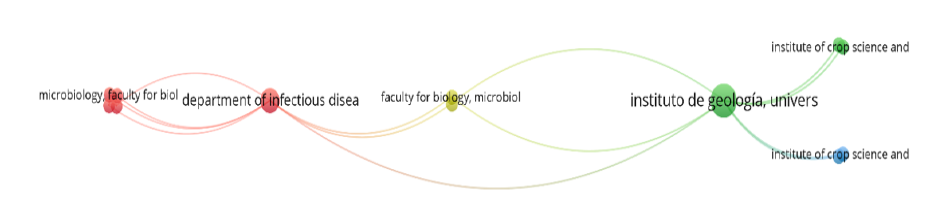
Fig. 2: Institutes where the researchers on the subject are located
Finally, co-occurrence analysis is a technique that examines the actual content of the publications, derived from the keywords provided by the authors. Moreover, it remains possible to depict words that are highlighted in titles, abstracts, and entire texts for analytical purposes. Regarding Fig. 3, the key words can be recognized as "Mexico," stemming from the fact that the Mezquital Valley is situated in this country, as well as, "wastewater", and "Mezquital Valley". This image shows four clusters: the olive-green cluster links wastewater with the Mezquital Valley and irrigation, contaminated soil, concentration, and composition, and grains such as alfalfa and corn. The green cluster links groundwater issues, water quality, drinking water, water supply, and groundwater contamination. In the red cluster, find wastewater management, agriculture, environment, controlled studies, untreated wastewater, and wastewater reuse, among others. Finally, in the blue cluster, topics such as soil contamination, untreated wastewater, soil moisture, and wastewater effluent can be found. The clusters indicate a lack of research on social issues in the region. The red cluster associated with the term "children" is the most similar to these, having been pertinent in research concerning gastrointestinal diseases, although it originates from the 1990s. Additionally, the term "sustainability" is not present. To enhance comprehension of the data presented by the co-occurrence analysis, Table 3 outlines seven themes central to the research, all of which are associated with wastewater and agriculture in the Mezquital Valley. The seven topics identified are: Wastewater and its impact on groundwater; Wastewater for crop irrigation and its pollutants; Contamination of agricultural products by wastewater use; Impacts on the soil by wastewater use; Health and wastewater; Wastewater and climate change; and Agriculture, wastewater, and sustainable development. Only six articles were found on this topic out of the 79 documents reviewed; however, the term does not appear in the title of the publications. It is worth noting that two papers were discarded because they did not fit any of the identified general topics. The exclusion criterion was that the study site was not in the Mezquital Valley. The topic that has generated the most significant concern among researchers has been the physicochemical study of wastewater pollutants, which encompasses 23 research articles. This is followed by apprehension regarding groundwater pollution, as the irrigation method in this region is flooding. Lastly, there is the evaluation of different soil pollutants resulting from wastewater usage, including the presence of heavy metals and conditions of salinity and sodicity. A less relevant topic, yet one that has raised concerns, is the connection between wastewater and health, with nine studies investigating diseases associated with exposure to this type of water. The analysis of existing literature regarding the application of wastewater in agriculture and its diverse effects indicates the necessity to evaluate both the strong and weak sustainability of irrigation methods in the area. Despite six documents discussing sustainable development, these two perspectives remain unutilized. In general, the research focuses on the relevance of using treated wastewater, the resistance of producers to changing their irrigation systems and water use, and a proposal to reduce heavy metal concentrations through spatial reorganisation. Regarding producers' resistance to the use of treated water, Rosas and García (2023) mention that agricultural producers perceive that there are negative effects on the soil due to the use of wastewater, but on the one hand, agriculture is an activity they inherited from their parents, as is the method of irrigation, so they consider it normal to irrigate with sewage water. Conversely, the matter of the activity's profitability arises, as the extensive application of agrochemicals results in soil productivity being one of the highest in the country. The literature also provides information on the creation of the Atotonilco WWTP (Table 4). To analyze the only sustainability strategy implemented, the proposed theoretical lines of analysis are revisited. In the case of strong sustainability, the results show that wastewater use has a naturally positive effect on aquifer recharge, although the extent of this effect is unknown. Regarding the need for regulation in both cases, Mexico has the following standards: “NOM-CCA/032-ECOL/1993, which establishes the maximum permissible limits of contaminants in urban or municipal wastewater for disposal through agricultural irrigation” (DOF, 1993a: 1); NOM-CCA-033-ECOL/1993 “which establishes the bacteriological conditions for the use of urban or municipal wastewater or a mixture of this with water bodies in the irrigation of vegetables and horticultural products” (DOF, 1993b: 1) and NOM-001-ECOL-1996 “which establishes the maximum permissible limits of contaminants in wastewater discharges into national waters and property” (DOF, 1997: 1). However, there is no compliance due to lack of monitoring and lack of infrastructure. Among the strategies that have gained interest in recent years for economical wastewater treatment is constructed wetlands, which are categorized as conventional and intensified. For the Mezquital Valley, an enhanced system is essential owing to the significant contaminants found in the water. Aeration increases the rate of contaminant removal, and plants capable of absorbing contaminants are integrated into its operation. However, further research is still needed to remove specific compounds, such as nitrogen, and emerging pollutants (Zurita and Sandoval, 2024). Drip irrigation is a type of irrigation that fits within the logic of strong sustainability. Each plant is addressed separately, employing minimal but regular and precise volumes of water via emitters, referred to as drippers (Table 4) (Burgos and González., 2014). However, this cannot be applied efficiently in the Mezquital Valley because its main difficulty is that the water contains suspended particles (Rosas and García, 2023).
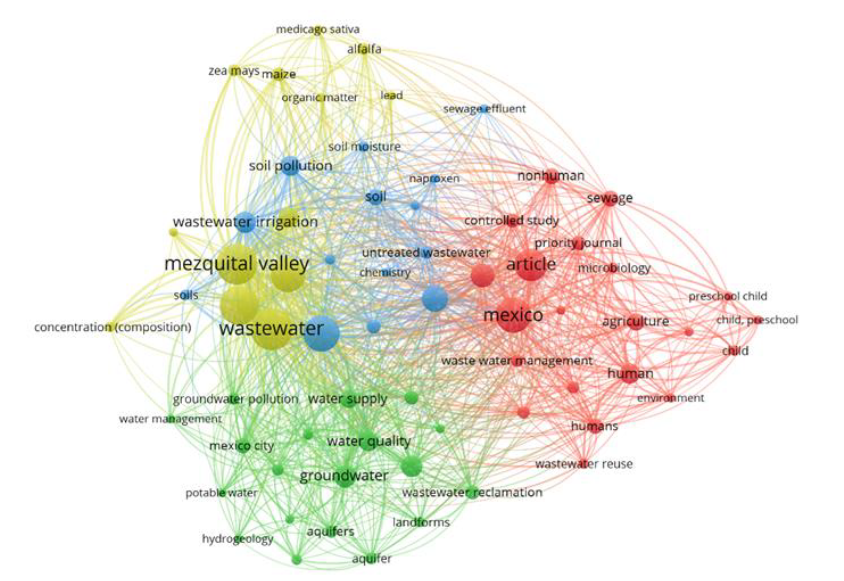
Fig. 3: Analysis of co-occurrences in the literature on wastewater and the Mezquital Valley. Source: Own elaboration based on Scopus data and Vosviewer software
Table 3: Identification of issues related to wastewater in agriculture in the Mezquital Valley
|
General subject matter |
Topic related to agriculture |
Number of documents |
|
Wastewater and its impact on groundwater |
Evaluation of the existence and severity of bacterial and pathogenic infiltration in the local aquifer. Occurrence of fecal coliforms, fecal enterococci, and Escherichia coli, Calculation of volumes. Groundwater quality. Wastewater volumes are exported to the Mezquital Valley. |
15 |
|
Wastewater for crop irrigation and its pollutants |
Analysis of the existence of trihalomethanes (THM). Sodium, ammonium, potassium, calcium, and magnesium content. Pharmaceutically active compounds (FAAC). Existence of micropollutants. Mercury, arsenic, and lead. Presence of SARS-CoV-2 in wastewater. Physicochemical characterization of water. |
23 |
|
Contamination of agricultural products by wastewater use |
Bioaccumulation of heavy metals in cucumber. Analysis for corn, sunflower, and alfalfa. |
5 |
|
Impacts on soil due to wastewater use |
Agricultural soil conditions resulting from wastewater use. Soil redox potential analysis. Salinity and sodicity. Temporary accumulation of quaternary alkylammonium (QAAC) in soils. Change of land use. Measurement of zinc, lead, copper, and cadmium. |
15 |
|
Health and wastewater |
Characterization of the spatial dynamics of wastewater. Health risks. Diarrheal diseases. |
9 |
|
Wastewater and climate change |
Nitrous oxide (N2O) emissions and wastewater in agriculture. GHG emissions |
4 |
|
Agriculture, wastewater, and sustainable development |
Reduction of heavy metal concentration in different plant structures. Producers, wastewater use, and sustainable development. Safe use of wastewater. |
6 |
Table 4: Application of sustainability perspectives
|
Weak sustainability |
Strong sustainability |
|
§ The geographical location of Atotonilco WWTP implies indirect water reuse. According to Espira et al. (2024), there is evidence of recontamination of wastewater treated by local communities downstream of the plant. § Atotonilco WWTP, due to its location, allows for partial degradation of water quality. However, there is no compensation or remediation of any kind. § The construction of the Atotonilco WWTP required infrastructure and decontamination technologies and is energy intensive. |
§ Conservation of water reserves such as, lakes, and rivers. § The use of untreated wastewater has led to artificial recharge of the aquifer. As a result, the water table has risen, and in recent decades, several springs with flows of 100-600 liters per second have appeared (Jiménez and Chavez, 2004). However, cases such as the Mezquital Valley show additional aquifer recharge, but the results are uncertain, as this could affect the balance of groundwater systems. But it may also induce lasting hydrochemical changes in aquifers and ecosystems, the effects of which are unknown (Hernandez-Espriú et al., 2016). § Drip irrigation would be required, unlike the practices currently used by agricultural producers of surface water (Burgos and González, 2014). |
Contexto actual de la producción agrícola del Valle del Mezquital
Consequently, the subsequent analysis pertains to irrigated agriculture in the Mezquital Valley, derived from a review of multiple information sources that offer a comprehensive overview of the present circumstances. Fragile soil and limited natural water availability in the region have led to intensive use of wastewater from the MCMA for agricultural activities, enabling irrigated agriculture in a naturally dry region. Nonetheless, considerable environmental effects have been recognized, such as soil and groundwater pollution and risks to public health, as indicated in the bibliometric analysis (Rosas and García, 2024; Lara and García, 2019). However, evidence has also been presented that, due to the soil conditions in the irrigated area, this acts as a slow filtration system. The main reservoir and canals serve as waste stabilisers. Downs (2000) found that levels of basic/neutral/acidic semi-volatile organic compounds in surface water after reservoir retention were much lower than before, while levels in groundwater were significantly lower than in surface water. All nitrate levels in groundwater exceeded drinking water standards and were higher than those in surface water. Concentrations of metals in groundwater were found to be beneath the acceptable standards for drinking water; conversely, in surface water, they were above these standards for a limited number of metals. Pesticides were detected at low to moderate levels. However, it should be noted that a more up-to-date study would be needed to review these results 25 years after that study. It should be noted that water in this region is distributed mainly through the irrigation districts 003 Tula, 100 Alfajayucan, and 112 Ajacuba (Fig. 1). It is through modules that water is administered and distributed (an average of 1,405,811.25 thousand cubic meters (m3) over 25 years) to agricultural users (56,284 on average) on an average planted area of 77,415 ha (Fig. 4). The main crops grown in the irrigation districts are alfalfa (445,170 tons) and grain corn (3,739,027 tons) being 003 Tula is the one that concentrates 64% and 69% of the production of both crops in the region, in addition to the fact that this district is the one that primarily uses untreated wastewater in the region (Table 5). The utilization of these substantial volumes of wastewater accounts for the significant apprehension surrounding the issues highlighted in the 23 articles concerning pollutants. Hernandez et al. (2025) mention that the farmers in the region possess a significant availability of this type of water. Its treatment is perceived as a threat, hence their opposition to the Atotonilco WWTP. Treated water is more expensive than wastewater. In addition to alfalfa and grain corn, forage oats, zucchini, green chilli, and green tomatoes are also grown (Table 6).
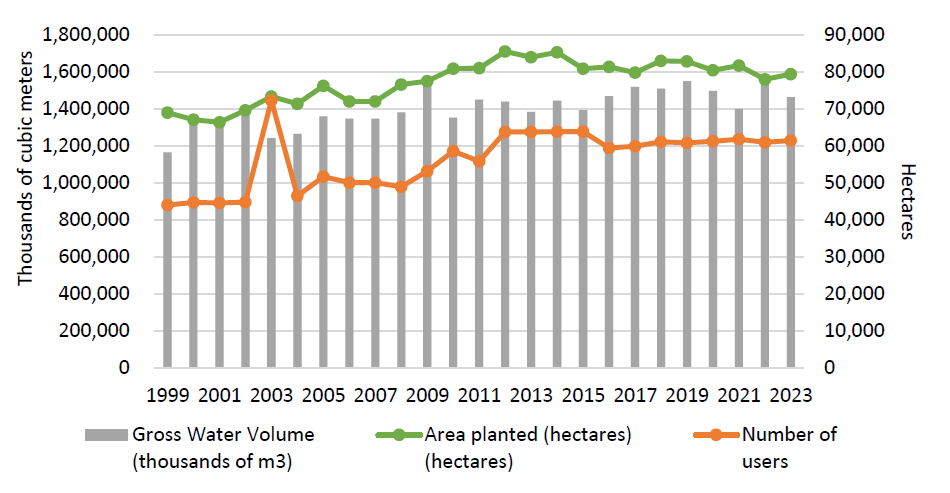
Fig. 4: Irrigation Districts in the Mezquital Valley, agricultural year 2022–2023. Note: Irrigation districts 003 Tula, 100 Alfajayucan, and 112 are included (Semarnat and Conagua, 2023)
Table 5: Characteristics of the irrigation districts of the Mezquital Valley, agricultural year 2022-2023
|
Irrigation District |
Area planted |
Number of users |
Gross Water (thousands of m3) |
|
|
Ejidal |
Small property |
|||
|
003 Tula |
44,414 |
21,472 |
15,794 |
916,388 |
|
100 Alfajayucan |
29,473 |
9,472 |
11,630 |
492,718 |
|
112 Ajacuba |
5,498 |
2,588 |
516 |
54,622 |
|
Total |
79,385 |
33,533 |
27,940 |
1,463,728 |
Table 6: Main irrigated crops in the Mezquital Valley, 2023
|
Cultivation |
Area planted (ha) |
Production (t) |
Performance (t/ha) |
|
Alfalfa |
42,575.50 |
4,375,416.90 |
102.8 |
|
Grain corn |
41,112.95 |
398,073.22 |
9.9 |
|
Bean |
3,909.39 |
7,065.87 |
1.8 |
|
Green fodder oats |
2,264.42 |
90,678.29 |
40.0 |
|
Zucchini |
1,617.77 |
29,663.30 |
18.6 |
|
Green chili |
1,220.00 |
14,482.41 |
11.9 |
|
Green tomato |
1,027.51 |
14,790.69 |
14.4 |
|
Other Crops |
2,864.67 |
82,647.74 |
28.9 |
|
Total |
96,592.21 |
Note: *Includes: avocado (1%), garlic (3%), broccoli (1%), barley grain (2%), onion (4%), cauliflower (20%), peach (3%), asparagus (0.1%), guava (2%), lettuce (5%), feed corn (12%), apple (1%), nopalitos (1%), walnut (6%), cucumber (3%), red tomato (25%) and wheat grain (11%). Source. Based on SIAP (2023) data.
The municipalities of Ixmiquilpan, Mixquiahuala de Juárez, Tezontepec de Aldama, Alfajayucan, and San Salvador account for 43% of agricultural production in the Mezquital Valley and make the most use of wastewater; however, between 48 and 55% of their populations are poor. Wastewater irrigation does not benefit all producers equally due to inequalities in access, distribution, and geographic location, which create differences in water quantity and quality. These limitations, combined with restricted investment capabilities, hinder productive growth. As a result, economic benefits are inconsistent, and rural poverty along with social vulnerability continues to persist and exist (García, 2019; Rosas and García, 2023). Although the Mezquital Valley region accounts for 84% of the total value of agricultural production in Hidalgo derived from wastewater use, the impact on the health of the population and the environment is also increasing. Tula is recognized as an area facing an environmental crisis and is among the most polluted locations globally, primarily due to the agricultural and industrial operations that define this region. Notably, 28% of its population lacks access to health services, 73% lack access to social security, and 27% lack access to food (Coneval, 2022). One solution to counteract the social and environmental impacts is the Atotonilco WWTP, located in the Valley region and considered one of the largest sanitation infrastructures in the world today. With a capacity to treat up to 35,000 litres per second, it processes approximately 60% of the total wastewater generated in MAVM before discharging into the Mezquital Valley (García, 2018). This facility spans approximately 160 ha and was established to alleviate the adverse effects of previous sewage application in agricultural practices within the region. The treatment process at the Atotonilco WWTP includes physical pretreatment, biological treatment using activated sludge, filtration, disinfection, and additional physicochemical treatment during the rainy season. The sludge generated is stabilized via anaerobic digestion, enabling the generation of biogas that contributes partially to the plant's energy needs (Semarnat and Conagua, 2012). The plant aims to deliver treated water with valuable nutrients for crops (such as nitrogen and phosphorus) to farmers, free of organic and microbiological contaminants, thereby benefiting more than 700,000 people in this area (García, 2018). Its implementation responded to the socio-environmental problems that have characterised the Mezquital Valley for over 100 years. Nonetheless, contemporary studies examining the ecological consequences of wastewater application reveal that wastewater remains in use (Landero et al., 2024; Espira et al., 2024; García et al., 2024). In the context of the Mezquital Valley, the utilization of wastewater for irrigation cannot be classified under the framework of strong sustainability. This is primarily since the introduction of wastewater into this region has led to the contamination of the Tula River and the Endhó dam, which predominantly receives rainwater from Mexico City. According to Borsato et al. (2020), the principles of strong sustainability necessitate the preservation of water reserves, including aquifers, lakes, and rivers. This requirement is not being met, as evidenced by the designation of the area as one of environmental emergency, and efforts to restore it have been ongoing since 2020. The type of remediation that has been carried out falls predominantly under the logic of weak sustainability, supported by environmental economics and by authors such as Pearce and Turner (1990) and Jiménez and Asano (2008), which justifies the continued use of untreated wastewater as a strategy of economic efficiency in the face of water scarcity, this is supported by the growth of agricultural production in the Mezquital Valley, which is representative of the state of Hidalgo. This, along with the understanding that within the discussions of the agricultural industry, these waters, referred to as "black gold", have enabled the local population to rise above poverty, nonetheless, this advantage has primarily favored those with closer access, leaving those further away at a disadvantage, as exemplified by the municipality of Nicolás Flores, where a significant portion of the population lives in poverty (68%). Its irrigated agriculture is one of the smallest (153 ha). The government's response, through the construction of the Atotonilco WWTP, falls within the weak sustainability perspective, characterized by high levels of infrastructure investment and intense energy use. Conversely, due to its upstream location, the water that agricultural producers receive is indirect, leading to downstream contamination, as noted by Espiral et al. (2024). Additionally, it can be said that what producers perceive as real, the treatment removes nutrients from the water, reducing its productivity and imposing a cost on them, as mentioned by García and Fuente (2021). This view is consistent with Drechsel et al. (2010) and Borsato et al. (2020), who argue that wastewater reuse can be sustainable if a functional balance is maintained between economic efficiency and environmental management. From a robust sustainability viewpoint, the conditions that need to be ensured include: the preservation of water reserves like aquifers, lakes, and rivers, which is currently occurring, albeit with uncertainties regarding the effects of artificial recharge using wastewater; whether the utilization of water for irrigation results in the degradation of aquatic habitats or biodiversity, and whether irrigation contributes to other forms of environmental harm such as soil erosion and pollution (Borsato et al., 2020). From this point of view, soil contamination, the infiltration of pollutants into aquifers, and impacts on human health in the Mezquital Valley cannot be considered "acceptable externalities" but rather evidence of a false substitution that compromises ecological resilience and the population's well-being. The application of untreated wastewater is at odds with the principles of the strong approach, as it breaches ecological limits and fundamental rights, such as the right to access clean water and a healthy environment. The contrast between the two approaches is reinforced by the findings of the bibliometric analysis, which show that most studies focus on the environmental and health risks of wastewater use without incorporating a normative assessment of the model's sustainability. Authors such as Mainardis et al. (2022) and Cecconet et al. (2017) have shown that, even with advanced technologies, untreated emerging pollutants persist, prompting us to reconsider whether current technical solutions are sufficient or whether structural changes are required in the productive logic and the management of water resources. Ultimately, the practice of wastewater irrigation frequently enhances short-term economic results by boosting crop yields, guaranteeing consistent water supply throughout the year, and lowering fertilizer expenses owing to its rich nutrient composition. In a scenario characterized by weak sustainability, these benefits lead to increased earnings and improved production stability for certain farmers as a result of water accessibility. However, from a strong sustainability perspective, the gains are uneven and often offset by long-term risk soil degradation, health costs, environmental pollution, and persistent social inequalities—that limit household resilience. In contrast to traditional or treated water sources, wastewater may enhance immediate productivity; however, it can jeopardize long-term socioeconomic and ecological sustainability.
CONCLUSION
The bibliometric analysis shows the type of research carried out on a topic that is currently of great importance for maintaining and even increasing agricultural production in regions experiencing water stress. The Mezquital Valley serves as a prominent illustration of how rural communities have embraced wastewater in their primary economic endeavor, which is agriculture. Wastewater has been part of the life of these communities for over a hundred years; however, it has been accompanied by environmental impacts that, to date, have been documented in research focused on analyzing soils, grains, surface water, and groundwater. These studies reveal considerable health and environmental dangers associated with irrigation techniques and the pollution of wastewater from a heavily populated and industrialized zone. Nevertheless, the bibliometric review also highlights the need for health studies that systematically monitor the evolution of diseases across the region, particularly in the most contaminated area, the Endhó dam. Studies on biodiversity loss in the area. Another missing research topic is the analysis of governance and public policies to guide government actions to address the problem, which could be bottom-up rather than top-down, as was the case with the decision to build the Atotonilco WWTP, which ultimately did not provide the expected response either socially or environmentally. To assist in governmental decision-making, it is crucial for public institutions to create systems for monitoring and gathering data regarding environmental impacts. Furthermore, it is important to note that statistical analysis shows that the use of wastewater has enabled the expansion of irrigated agriculture in the Mezquital Valley, benefiting more than 56,000 users across approximately 77,000 ha and with large annual water volumes. Nonetheless, these advantages are not uniformly distributed owing to variations in access, geographical location, water quality, and the restricted investment capacity of small-scale producers. Although the region generates 84% of the state’s agricultural production value, between 48% and 55% of the population in municipalities with the highest wastewater use lives in poverty. In addition, in areas such as Tula, 73% of the population lacks social security and 28% has no access to health services. Overall, the existing production model supports agricultural activities; however, it has not alleviated structural inequalities, poverty, and social vulnerability. Strong sustainability is far from being achieved in this area, as it would require agreements involving the treatment of wastewater from the ZMVM prior to discharge, monitoring of compliance with environmental regulations for industries in this region that discharge heavily contaminated water. This obligation should also encompass the industrial sector of the Mezquital Valley and its municipalities, since Mexican law stipulates that all municipalities must treat their wastewater, a requirement that is not being fulfilled. Agriculture ought to be regarded as a strategic sector rather than merely another economic sector. Until the necessary changes are made, the region will continue to accumulate environmental impacts that may become irreversible; the weak sustainability perspective, as we have seen, is not sufficient to solve the problem.
AUTHOR CONTRIBUTIONS
M. Rosas Baños conceptualization, funding acquisition, investigation, methodology, project administration, writing, original draft. E.M. García Salazar, the corresponding author, investigation, data curation, application of statistical analyzes, visualization, supervision, writing, review and editing.
ACKNOWLEDGEMENT
The authors would like to thank for providing the project numbers [SIP20253796 and SIP20260559], local environmental management based on strong sustainability and solidarity economy: wastewater, agriculture, waste prevention, and organization of productive projects by the National Polytechnic Institute.
CONFLICT OF INTEREST
The authors declare that there is no conflict of interest regarding the publication of this manuscript. In addition, ethical issues, including plagiarism, informed consent, misconduct, data fabrication and/or falsification, double publication and/or submission, and redundancy have been completely observed by the authors.
OPEN ACCESS
©2026 The author(s). This article is licensed under a Creative Commons Attribution 4.0 International License, which permits use, sharing, adaptation, distribution and reproduction in any medium or format, if you give appropriate credit to the original author(s) and the source, provide a link to the Creative Commons license, and indicate if changes were made. The images or other third-party material in this article are included in the article’s Creative Commons license, unless indicated otherwise in a credit line to the material. If material is not included in the article’s Creative Commons license and your intended use is not permitted by statutory regulation or exceeds the permitted use, you will need to obtain permission directly from the copyright holder. To view a copy of this license, visit: http://creativecommons.org/licenses/by/4.0/
PUBLISHER’S NOTE
GJESM Publisher remains neutral regarding jurisdictional claims in published maps and institutional afflictions.
Positive AI Statement
During the preparation of this work the author(s) have used Artificial Intelligence (AI) [Grammarly, Canva, and ChatGPT] to [Grammarly, to improve writing skills, given that it is not our native language, and Canva, ChatGPT to create icons and images for the graphical abstract]. After using this tool/service, the authors reviewed and edited the content as needed and took full responsibility for the content of the publication.
ABBREVIATIONS
|
% |
Percent |
|
oC |
Degree Celsius |
|
Conagua |
Comisión Nacional del Agua |
|
Coneval |
Consejo Nacional de Evaluación de la Política de Desarrollo Social |
|
km2 |
Square kilometer |
|
km3 |
Cubic kilometer |
|
m3 |
Cubic meter |
|
ha |
Hectare |
|
Inegi |
Instituto Nacional de Estadística y Geografía |
|
m |
Meter |
|
MAVM |
Metropolitan Area of the Valley of Mexico |
|
mm |
Millimetre |
|
Mt |
Million ton |
|
Semarnat |
Secretaría de Medio Ambiente y Recursos Naturales |
|
SIAP |
Servicio de Información Agroalimentaria y Pesquera |
|
t |
Ton |
|
UNAM |
Universidad Nacional Autónoma de México |
|
WWTPS |
Wastewater treatment plants |
OPEN ACCESS
©2026 The author(s). This article is licensed under a Creative Commons Attribution 4.0 International License, which permits use, sharing, adaptation, distribution and reproduction in any medium or format, as long as you give appropriate credit to the original author(s) and the source, provide a link to the Creative Commons license, and indicate if changes were made. The images or other third party material in this article are included in the article’s Creative Commons license, unless indicated otherwise in a credit line to the material. If material is not included in the article’s Creative Commons license and your intended use is not permitted by statutory regulation or exceeds the permitted use, you will need to obtain permission directly from the copyright holder. To view a copy of this license, visit: http://creativecommons.org/licenses/by/4.0/
PUBLISHER NOTE
GJESM Publisher remains neutral concerning jurisdictional claims in published maps and institutional affiliations.
MAJOR DATABASES, CITATION METRICS & CAPTURES
Google Scholar | Scopus - SJR | Web of Science | Biological Abstracts: Clarivate | Biosis Preview: Clarivate | PlumX Metrics | Altmetrics | Mendeley |
CURRENT PUBLISHER

| Article View | 2,874 |
| PDF Download | 818 |


Letters to Editor
[1] Letters that include statements of statistics, facts, research, or theories should include appropriate references, although more than three are discouraged.
[2] Letters that are personal attacks on an author rather than thoughtful criticism of the author’s ideas will not be considered for publication.
[3] Letters can be no more than 300 words in length.
[4] Letter writers should include a statement at the beginning of the letter stating that it is being submitted either for publication or not.
[5] Anonymous letters will not be considered.
[6] Letter writers must include their city and state of residence or work.
[7] Letters will be edited for clarity and length.