
5.2
CiteScore
2.9
Impact Factor
Document Type : RESEARCH ARTICLE
Authors
1 Department of Agricultural Engineering, Kalasalingam Academy of Research and Education, Krishnankoil 626126, Tamil Nadu, India
2 Department of Agricultural Engineering, Agricultural College and Research Institute, Tamil Nadu Agricultural University, Madurai 625104, Tamil Nadu, India
3 Department of Civil Engineering, Thiagarajar College of Engineering, Madurai 625015, Tamil Nadu, India
Graphical Abstract
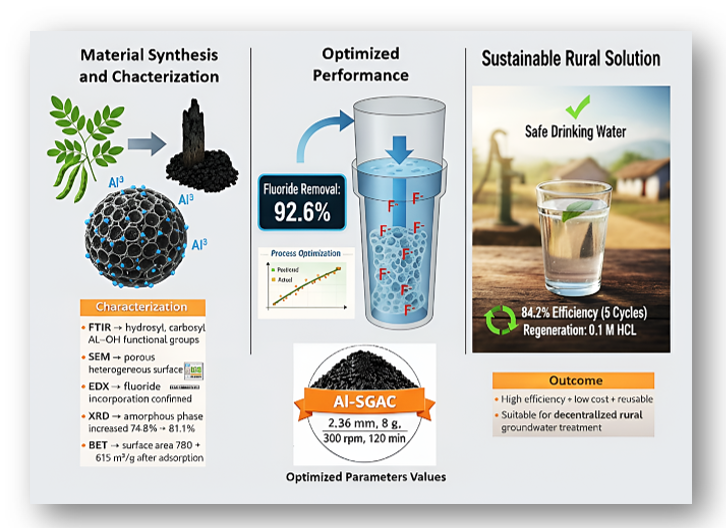
Highlights
Ø Al-SGAC achieved 92.6% fluoride removal under optimized conditions (2.36 mm, 8 g,
300 rpm, 120 min).
Ø Effectively removed various ions, including iron (93.8%), magnesium (89.3%), and TDS (85.6%), maintaining neutral pH.
Ø Retained 84.2% adsorption capacity after five cycles using 0.1 M HCl, ensuring reusability.
Ø ANN model predicted fluoride removal with R² = 0.9948 and a mean error of 2.87%, aiding process optimization.
Keywords
INTRODUCTION
Fluoride is a naturally occurring element present in water, soil, and rocks, commonly entering groundwater through geogenic processes and anthropogenic activities such as industrial discharge and phosphate fertilizer use (Ahmad et al., 2022). Although low concentrations of fluoride can help prevent dental caries, excessive intake is associated with serious health conditions, including dental and skeletal fluorosis (Dehnen et al., 2021). To prevent these adverse effects, the Bureau of Indian Standards (BIS) recommends a maximum permissible limit of 1.5 milligrams per litre (mg/L) of fluoride in drinking water (Ganyaglo et al., 2019). High fluoride concentrations have been reported across many regions, particularly in arid and semi-arid areas (Ghosh et al., 2022). These cumulative health risks, especially among rural populations reliant on untreated groundwater, reinforce the urgent need for efficient, cost-effective, and sustainable fluoride mitigation strategies (Jadhav et al., 2015). Fluoride's chemical properties, including its strong electronegativity and small ionic radius, make it difficult to remove from aqueous systems (Mishra et al., 2024). Over the years, several treatment methods have been developed, including precipitation, ion exchange, membrane filtration, and adsorption techniques (Rathi et al., 2024). Among these, adsorption is widely preferred due to its simplicity, cost-effectiveness, and suitability for rural and low-resource settings (Reza et al., 2020). Activated carbon (AC), particularly biomass-derived ACs, has proven effective because of its high surface area, porosity, and modifiability (Saeed et al., 2022). Materials like Sesbania grandiflora (SG) are abundant and high in carbon, making them ideal for adsorbent production (Skuse et al., 2021). Aluminium modification at an optimized loading concentration of 0.05 molarity (M) enhances fluoride adsorption by increasing active sites and surface reactivity while maintaining structural stability. Advanced characterization techniques such as Fourier transform infrared spectroscopy (FTIR), scanning electron microscopy (SEM), energy dispersive x-ray (EDX), X-ray diffraction (XRD), and Brunauer–Emmett–Teller (BET) surface area analysis play a crucial role in understanding the adsorbent's structural and surface properties (Wan et al., 2021). In many groundwater sources, fluoride does not occur in isolation. It is often accompanied by other pollutants, especially in areas affected by industrial discharge, such as the textile sector (Yadav and Jagadevan, 2021). These co-contaminants, including organic dyes and heavy metals, require a multi-functional adsorbent capable of removing a range of impurities to meet potable water standards (Selvakumar et al., 2023). Additionally, biomass-derived and modified adsorbents have demonstrated effective groundwater defluoridation, including AC from Catha edulis stems (Fito et al., 2019), calcium-modified dairy manure biochar (Wallace et al., 2020), and unmodified Sesbania grandiflora activated carbon (SGAC) integrated with Artificial Neural Network (ANN) modeling (Sivakumar et al., 2025a). However, SGAC has not been investigated with aluminium surface modification combined with systematic process optimization and validated machine learning modeling. The present study addresses this critical knowledge gap by integrating aluminium modification, defined co-ion removal assessment, and predictive ANN modeling, distinguishing it from previous work that only applied unmodified SGAC or ANN modeling without detailed material optimization. Despite these advancements, the prediction and optimization of adsorption processes remain a challenge, as traditional kinetic and isotherm models are often limited to ideal, single-contaminant conditions and fail to capture complex interactions involving multiple operational variables such as dosage, potential of hydrogen (pH), contact time, temperature, and competing ions (Sivakumar et al., 2025b). The nonlinear system dynamics and multivariate dependencies evident in real-world applications cannot be adequately described by traditional models, which are usually linear or simplistic. ANNs have drawn interest due to the ability to analyze multidimensional, nonlinear datasets and precisely forecast adsorption results across a range of operating conditions (Ergović Ravančić and Habuda-Stanić, 2024). Moreover, existing studies often treat adsorbent synthesis and predictive modeling as independent approaches, limiting comprehensive process optimization. Unmodified SGAC reported 86.3 percent (%) fluoride removal without surface metal modification (Sivakumar et al., 2025a). The present work improves SGAC performance through aluminium impregnation, integrates the modified adsorbent with a validated ANN-based optimization framework, and demonstrates competitive efficiency compared with state-of-the-art biomass-derived adsorbents under groundwater conditions. Accordingly, although aluminium-modified AC and ANN modeling have been previously reported in adsorption studies, this work advances the field by systematically integrating aluminium-impregnated Sesbania grandiflora activated carbon (Al-SGAC) synthesis, detailed material characterization, and validated ANN-based predictive modeling for fluoride removal from groundwater. Accordingly, this study aims to investigate i) To synthesize and characterize Al-SGAC and investigate its structural and surface modifications through FTIR, SEM, EDX, XRD, and BET analyses; ii) To optimize key operational parameters such as particle size, adsorbent dosage, agitation speed, and contact time for maximizing fluoride removal efficiency; iii) To evaluate the multi-contaminant removal performance of Al-SGAC and confirm treated water quality against BIS standards; iv) To assess the regeneration potential and reusability of Al-SGAC over multiple adsorption–desorption cycles using mild acid treatment; and v) To develop and validate an ANN model for accurate prediction and optimization of fluoride removal performance. Thus, the contribution lies in performance enhancement and comprehensive process integration rather than in the individual techniques themselves. This study was conducted at Kalasalingam Academy of Research and Education, Tamil Nadu in 2025.
MATERIALS AND METHODS
Al-SGAC preparation
The removal of fluoride from groundwater was studied in this research using Al-SGAC under different process parameters. SG wood was collected from the Theni district, Tamil Nadu, India, which was sun-dried for five days to remove initial moisture content, crushed into dust, and processed with slight modifications based on previous studies (Sivakumar et al., 2014), this study proceeded by carbonizing SGAC wood dust at 600 degrees Celsius (°C) in a muffle furnace for 2 hours (hr). The sawdust was sieved into five different sizes to analyze fluoride removal from groundwater. To modify the AC, 100 grams (g) of SGAC was refluxed with 250 millilitres (mL) of a 0.05 M aluminium chloride (AlCl₃) solution at pH 3.5 for 3 hr. The mixture was filtered and allowed to stand at room temperature for 24 hr. It was then washed several times with distilled water to remove excess ions. The Al-doped SGAC was dried at room temperature for 24 hours, stored in a desiccator to eliminate residual moisture, and subsequently used for fluoride removal from groundwater.
Characterization of Al-SGAC
To elucidate the structural, morphological, elemental, crystalline, and surface characteristics of the Al-SGAC, comprehensive physicochemical characterization was performed. Multiple complementary analytical techniques were employed to understand functional groups, surface texture, composition, crystallinity, and porosity that govern adsorption behavior and fluoride removal efficiency.
(i) FTIR: The accessibility of functional groups on the surface of Al-SGAC was determined by scanning the adsorbent sample using FTIR over a wavelength range of 400–4000 /cm (Yadav et al., 2022). Dry potassium bromide (KBr) was added in a 2:200 milligrams (mg) ratio after the adsorbent had been thoroughly ground.
(ii) SEM: One of the most useful tools for studying and evaluating the morphological and chemical composition properties of microstructures is the SEM (Muchunku et al., 2023b). The prepared AC was examined using a field-emission scanning electron microscope (FE-SEM, ZEISS 200) at an accelerating voltage of 500–2,000 volts (V), with a resolution of 3 nm and magnifications ranging from 250× to 65,000×. SEM images were captured to observe the surface morphology and porosity of the material.
(iii) EDX: The different elements and their relative quantities (atomic %) in a sample are ascertained using the elemental analysis technique known as EDX (Bonyadi et al., 2019). Each element's X-ray spectra, which have a different set of peaks because of their individual atomic structure, were recorded using BRUKER EDX's two-dimensional VANTEC-500 detector at a resolution of 128 channels.
(iv) XRD: XRD is a widely used method for determining a material’s crystalline structure and composition. It is especially effective for analyzing the atomic structure of macromolecules and inorganic compounds. Materials with very small crystal sizes can be analyzed by XRD to reveal phase purity, composition, and crystallinity (Tao et al., 2020). The technique involves directing X-ray photons at the sample. The X-ray wavelength, being comparable to the spacing between atoms, enables the detection of diffraction patterns that vary with atomic distances. This study collected XRD data using a D8 ADVANCE ECO instrument with Cu Kα radiation (λ = 1.54060 Å) in a coupled two-theta/theta configuration over a two-theta (θ) range of 0° to 80°.
(v) BET analysis: BET analysis is a standard technique for determining surface area, pore volume, and pore size distribution of porous adsorbents and catalysts by measuring nitrogen adsorption at liquid nitrogen temperature (Muchunku et al., 2023b). It effectively characterizes fine and complex pore structures. As shown in Table 2, SGAC exhibited a lower BET surface area, smaller average pore size, and reduced total pore volume, whereas Al-SGAC showed higher surface area, larger pore size, and greater pore volume before adsorption. BET surface area and pore structure examination verified that SGAC's poor surface features and adsorption capability caused it to be disqualified from future investigation. Instead, further analyses concentrated on Al-SGAC because of its higher textural qualities and fluoride removal effectiveness.
(vi) Zeta Potential and pHₚzc Measurements: The surface charge properties were evaluated to understand adsorption behavior under field-relevant conditions. Zeta potential measurements were performed using a Malvern Zetasizer on particle suspensions in deionized water, focusing on the naturally occurring groundwater pH range of 6.8–7.4. The point of zero charge (pHₚzc) was determined using the pH drift method, where a series of electrolyte solutions with different initial pH values were equilibrated with the material, and the final pH was recorded. The pH at which the zeta potential reached zero was identified as the pHₚzc. These measurements indicate the surface charge behavior under conditions relevant to groundwater fluoride adsorption.
Although X-ray Photoelectron Spectroscopy (XPS) can provide detailed information on the chemical states of surface elements, it was not performed in this study. The focus was on field-relevant fluoride adsorption under near-neutral groundwater conditions, and the combination of SEM, EDX, zeta potential, and pHₚzc measurements sufficiently characterized the surface properties influencing adsorption.
Study area
Groundwater samples were collected from five locations in Usilampatti, located in Madurai District, Tamil Nadu, India (Latitude: 9.9694° N, Longitude: 77.7862° E), using airtight containers and transported under cooled conditions (Fig. 1). Usilampatti experiences a tropical climate with an average annual temperature of 28.4 °C, reaching 30–31 °C during April to June and dropping to 25–26 °C from November to January. The region receives an average annual rainfall of 839 millimetres (mm). Elevated fluoride levels in groundwater in Usilampatti are primarily attributed to the natural weathering of fluoride-bearing minerals found in the area’s hard rock aquifers. Additionally, semi-arid conditions and high groundwater usage in Usilampatti contribute to increased fluoride concentrations, which can pose health risks such as dental and skeletal fluorosis.
Collection of groundwater samples
Groundwater samples were collected from five locations in Usilampatti, Tamil Nadu, India, then transported to the laboratory and stored at 5 °C to preserve their integrity for quality analysis. These five groundwater samples were subsequently used to evaluate fluoride removal efficiency, along with other water quality parameters such as pH, total dissolved solids (TDS), total hardness (TH), calcium (Ca), magnesium (Mg), sodium (Na), potassium (K), chloride (Cl₂), sulphate (SO₄), nitrate (NO₃), fluoride and iron (Fe) (Sivakumar et al., 2025a). All measurements were conducted in accordance with the standard procedures recommended by the American Public Health Association (APHA, 2017). The average characteristics of groundwater samples collected from five locations in Usilampatti are presented in Table 1. Among all the analyzed parameters, this study primarily focused on fluoride removal, as its concentration ranged between 2 and 3 mg/L across the five sampling sites. The average fluoride concentration (2.5 mg/L) was therefore considered for subsequent experimental investigations to represent regionally relevant groundwater conditions.
Sorption experiments
A Philip Bird jar test apparatus was used to treat 1000 mL of groundwater with Al-SGAC under varying experimental conditions, including particle sizes (0.425, 0.600, 1.180, 2.360, and 4.750 mm), adsorbent dosages (2, 4, 6, 8, and 10 g), stirring speeds (100, 200, 300, 400, and 500 revolutions per minute (rpm)), and contact times (60, 80, 100, 120, and 140 minutes (min)), to remove fluoride and other parameters. Experiments were conducted at room temperature (25 ± 2 °C), which was monitored but not actively controlled, to reflect typical field conditions. The concentration of fluoride, along with other pertinent parameters, was measured in the groundwater both before and after treatment with Al-SGAC, following the standard methodology outlined in APHA (2017). The percentage reduction (percent (%)) of each parameter was calculated using Eq. 1, and the adsorption capacity (qe) in milligrams per gram (mg/g) of Al-SGAC was calculated using Eq. 2 (Shankar et al., 2014; Durairaj, 2024).
% removal of each parameter = ((C1 - C2) / C1) × 100 (1)
Adsorption capacity qe = ((C1 - C2) × V) / m (2)
where C1 is the concentration (mg/L) of various parameters in the groundwater before treatment, C2 is the concentration (mg/L) of various parameters after treatment with Al-SGAC, V is the volume of the solution (L) and m is the mass of Al-SGAC (g).
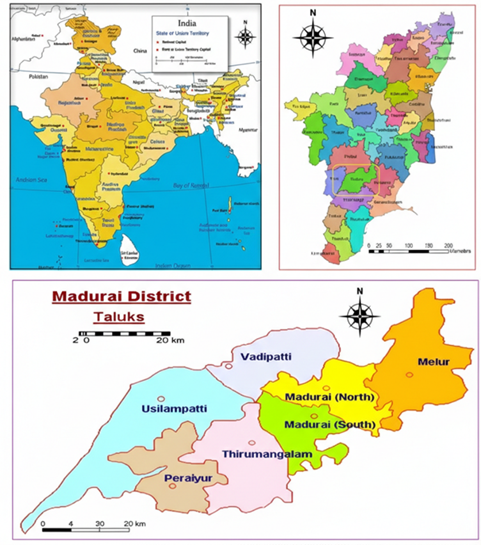
Fig. 1: Geographical location of the study area in Usilampatti, Madurai district, Tamil Nadu, India, showing sampling points and spatial distribution of groundwater sources selected to evaluate regional fluoride contamination and treatment performance.
Table. 1: Characteristics of the groundwater sample collected from Usilampatti
|
Sl. No. |
Parameters |
Observed value |
BIS (IS 10500:2012) |
|
1 |
pH |
6.92 |
6.5-8.5 |
|
2 |
TDS, mg/L |
285.31 |
500 |
|
3 |
TH, mg/L |
287.61 |
200 |
|
4 |
Ca, mg/L |
126.92 |
75 |
|
5 |
Mg, mg/L |
24.56 |
30 |
|
6 |
Na, mg/L |
125.64 |
200 |
|
7 |
K, mg/L |
9.62 |
12 |
|
8 |
Cl₂, mg/L |
345.21 |
250 |
|
9 |
SO₄, mg/L |
304.56 |
200 |
|
10 |
NO₃, mg/L |
24.21 |
45 |
|
11 |
Fluoride, mg/L |
2.5 |
1.0 |
|
12 |
Fe, mg/L |
0.45 |
0.3 |
The study focused on process optimization and predictive modeling under regionally relevant groundwater fluoride concentrations (2–3 mg/L). Experiments were conducted at an average field concentration of 2.5 mg/L and near-neutral pH (6.8–7.4) to replicate realistic groundwater conditions. Consequently, the multiple initial concentrations required for detailed Langmuir adsorption isotherm and Freundlich adsorption isotherm analyses, along with pseudo-first-order and pseudo-second-order kinetic modeling, were not examined. As experiments were performed at ambient groundwater temperature, temperature-dependent studies necessary to determine thermodynamic parameters (Gibbs free energy change (ΔG°), enthalpy change (ΔH°), and entropy change (ΔS°)) were beyond the scope. Adsorption efficacy was confirmed by physicochemical characterisation, regeneration analysis, and ANN-based predictive evaluation, while future research will include controlled temperature fluctuation to investigate thermodynamic feasibility and adsorption mechanisms.
ANN model
ANNs emulate biological neural systems to solve complex problems through pattern recognition. Unlike traditional rule-based models, ANNs employ parallel processing and adaptive learning without fixed procedural constraints. A dataset of 625 runs was generated using a full factorial design with four parameters, namely particle size, adsorbent dosage, agitation speed, and contact time, each at five levels (5×5×5×5). Experimental and interpolated data were combined for training and validation to enhance predictive accuracy while minimizing physical experiments. Inputs were normalized to a 0 to 1 range using min–max scaling, and missing values were addressed through interpolation. The dataset was divided into training (70%), validation (15%), and testing (15%) subsets, and multiple network structures with 7 to 10 hidden neurons were evaluated to prevent overfitting. Early stopping based on validation error was employed, and the final optimized model was trained through sufficient epochs until convergence, ensuring reliable and generalizable predictions. The overall architecture of the ANN model (Addar et al., 2023) is presented in Fig. 2. A standard ANN architecture consists of an input layer, one or more hidden layers, and an output layer, where data from the input layer is processed through the hidden layers and the results are transmitted to the external system via the output layer. The hidden layers comprise several nodes or neurons, and the number of these nodes can be determined using Eq. 3 (Liu et al., 2022):
H = 2(√(I+1)) (3)
where I represents the number of neurons in the input layer. Furthermore, as noted by an ANN is characterized by three fundamental parameters: the activation function, the updating of interconnection weights, and node-to-node connectivity. These interconnections are associated with both weights and biases. While biases represent numerical shifts, weights reflect the strength of input signals. The weights and transfer functions, such as linear, threshold, and sigmoid, play a critical role in determining the output of an ANN. Among various transfer functions, TANSIG is a widely used one and is mathematically represented in Eq. 4 (Liu et al., 2022):
f(x) = 1 / (1 + eˣ) (4)
The ANN workflow involves three main stages: training, testing, and validation. During the training phase, the input layer handles sample data and forwards it through the network for learning. Throughout this process, the weights are continuously updated to achieve the desired target outputs. Various training functions, specifically designed to minimize the difference between the predicted and actual results measured as Mean Squared Error (MSE), are employed. The MSE is defined mathematically in Eq. 5 (Reddy et al., 2023):
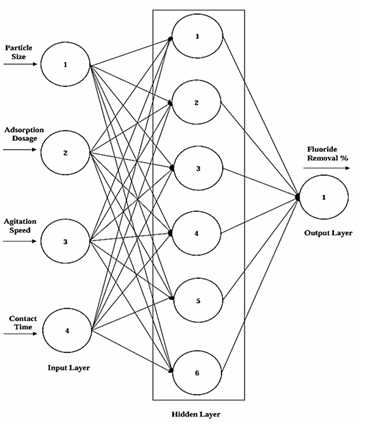
Fig. 2: ANN modeling framework showing input variables (adsorbent dose, contact time, particle size, and agitation speed), hidden layers, and output prediction of fluoride removal efficiency, employed to identify optimal treatment conditions and validate process reliability.
MSE = (1/m) ∑ᵢ₌₁ᵐ (yₚ − yₐ)² (5)
where yₐ and yₚ are the actual and anticipated output values, and m is a variable. The last step analyses several datasets to validate the proposed ANN model.
Statistical analysis
Statistical analysis was performed using the Statistical Package for the Social Sciences (SPSS) software (version 28). Data are presented as the mean of three independent experiments, each performed in triplicate, and precision was assessed through error analysis. Model performance was evaluated using the coefficient of determination (R²), MSE, root mean squared error (RMSE), and mean absolute error (MAE) to quantify accuracy and deviation. Cross-validation R² assessed robustness on unseen data, while the chi-square (χ²) goodness of fit test confirmed agreement between experimental and predicted results (Sivakumar et al., 2025b). Together, these statistical and computational approaches provide a rigorous and reliable framework for model validation, performance comparison, and trend interpretation.
RESULTS AND DISCUSSION
Characterization of Al-SGAC
FTIR analysis
Functional groups of Al-SGAC were characterized by FTIR, and the spectra before and after fluoride adsorption are presented in Figs. 3(a) and 3(b) over 400–4000/cm. Before treatment (Fig. 3(a)), key bands appeared at 3439.08/cm (O–H stretch of alcohols and phenols), 1687.71/cm (C=O), 1546.91/cm (N–O), 1020.34/cm (C–O/C–N), 875.68/cm, 810.10/cm, 742.59/cm, and 574.74/cm (=C–H, N–H, C–Cl, C–Br), with additional peaks at 1634/cm (C=C) and 1423/cm (–CH₂). After adsorption (Fig. 3(b)), reduced intensities and shifted peaks at 3439.08/cm, 1485.19/cm, 1433.11/cm, 1016.49/cm, 873.75/cm, 597.06/cm, and 567.07/cm may be due to interactions of fluoride with –OH, C–O, and aromatic groups, possibly forming ≡Al–F bonds influenced by fluoride’s high electronegativity and hydration. Similar involvement of functional groups was reported for bamboo carbon (BC), with 67.33% C and 32.67% O, activated bamboo carbon (ABC), with 68.42% C and 31.58% O, and magnetite bamboo activated carbon (MBAC), with 75.01% Fe, 21.56% O, and 3.43% C, where these surface functionalities enhanced fluoride adsorption (Bagbi et al., 2024), while comparable peak shifts were also observed for Ca-treated biochar (Yadav et al., 2022). These spectral shifts and intensity reductions conclusively confirm the active participation of surface functional groups and the successful adsorption of fluoride onto Al-SGAC.
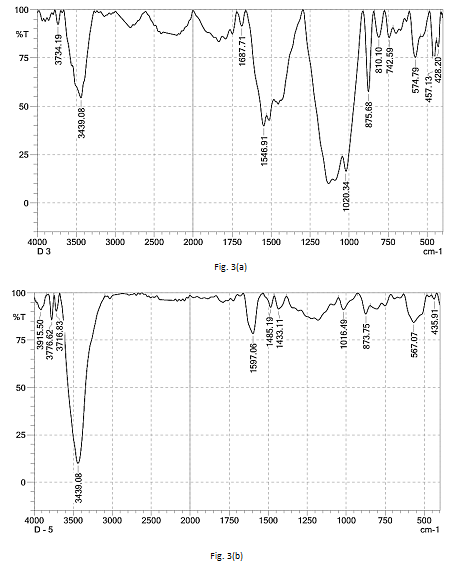
Fig. 3: FTIR spectra of Al-SGAC (a) before and (b) after fluoride treatment, showing shifts and intensity changes in hydroxyl and oxygenated functional groups that indicate their involvement in surface binding and confirm fluoride adsorption.
SEM analysis
The surface morphology of the AC was examined by SEM before and after fluoride removal using Al-SGAC, as shown in Fig. 4(a) and Fig. 4(b). Before treatment (Fig. 4(a)), the material exhibited a highly porous structure with well-developed pore networks, where grey regions represented the carbon matrix and dark areas indicated high porosity. After treatment (Fig. 4(b)), reduced dark regions and smaller pores confirmed pore coverage and fluoride deposition, along with the appearance of finer microparticles resulting from interactions with surface functional groups. Similar SEM-based surface alterations were observed for Aluminium Hydroxide–Coated Activated Carbon (AHAC) during fluoride adsorption, reported by Amalraj and Pius (2017), while Muchunku et al., (2023a) reported rough, heterogeneous pores and honeycomb-like cavities favorable for adsorption in water hyacinth activated carbon (WHAC), and enhanced adsorption performance was also associated with porous, irregular morphologies as described by Jayarathna et al. (2015). These distinct morphological transformations, including pore blockage, particle deposition, and reduced porosity, conclusively confirm the successful adsorption of fluoride onto the Al-SGAC surface.
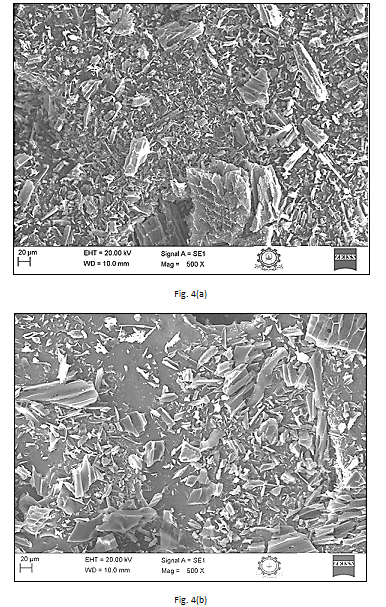
Fig. 4: SEM micrographs of Al-SGAC (a) before and (b) after fluoride treatment, showing a porous structure with subsequent pore coverage and particle deposition that confirm surface occupation and adsorption.
EDX analysis
Fig. 5(a) and Fig. 5(b) present the EDX spectra of Al-SGAC before and after fluoride exposure. In Fig. 5(a), untreated Al-SGAC shows 80.3% carbon and 14.8% oxygen, which changes to 76.9% carbon and 19.3% oxygen after treatment in Fig. 5(b), indicating the formation of oxygenated groups that enhance fluoride adsorption. Na decreases from 2.0% to 0.6% and Mg from 0.7% to 0.5%, suggesting ion exchange, while P appears at 0.4%. K increases from 0.3% to 0.9% and Ca from 0.6% to 1.4%, implying participation in fluoride capture. The observed surface compositional changes, with Al remaining constant at 0.3%, F appearing at 0.6%, and Si (0.3%) and Cl (0.7%) disappearing, indicate fluoride presence consistent with adsorption while confirming structural stability, even though EDX alone cannot definitively confirm ion exchange or chemical bonding. Similar EDX confirmations were reported for BC (67.33% C, 32.67% O), ABC (68.42% C, 31.58% O), and magnetite-grafted MABC (75.01% Fe, 21.56% O, 3.43% C) (Bagbi et al., 2024), AHAC showing fluoride and aluminium peaks (Bonyadi et al., 2019), and populus alba activated carbon (PAAC) (87.42% C, 12.52% O) with fluoride interaction (Tao et al., 2020). These compositional variations, particularly the emergence of fluorine and associated shifts attributed to ion exchange and surface complexation, confirm fluoride adsorption onto Al-SGAC.
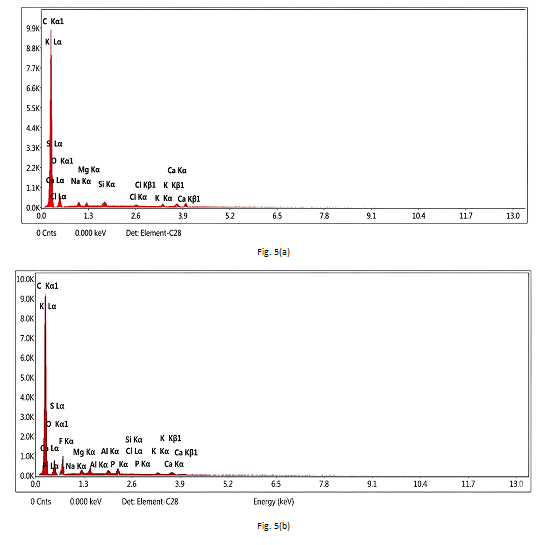
Fig. 5: EDX spectra of Al-SGAC (a) before and (b) after fluoride treatment, showing elemental shifts and fluoride appearance that indicate ion exchange, surface complexation, and successful adsorption.
XRD analysis
XRD analysis of Al-SGAC before and after fluoride removal from groundwater shows a predominantly amorphous structure that enhances adsorption by increasing surface area and active sites. As shown in Fig. 6(a), the untreated material exhibited 25.2% crystalline and 74.8% amorphous phases, calculated from the ratio of crystalline peak area (25.2 units) to total diffraction intensity (100 units), with peaks at 2θ = 24.839°, 29.071°, 31.539°, 32.877°, and 33.613°. After adsorption in Fig. 6(b), the crystalline fraction decreased to 18.9% (18.9/100 units), and the amorphous phase increased to 81.1%, with shifted peaks at 29.096°, 31.455°, 33.583°, 45.189°, and 74.750°. This structural transformation toward greater amorphous character enhances surface accessibility and active site density, thereby improving fluoride uptake. Similar adsorption enhancements due to increased amorphous character have been reported for oxalic acid-treated Ce-AlOOH (Jayarathna et al., 2021), low pH-synthesized AlOOH for fluoride removal (Bibi et al., 2015), and natural clay/Fe₃O₄/graphene oxide composites with improved surface area and reactivity (Muchunku et al., 2023b). In this study, crystallinity decreased from 25.2% to 18.9%, while amorphous content increased from 74.8% to 81.1%, confirming structural modifications that facilitate and verify successful fluoride adsorption onto Al-SGAC.
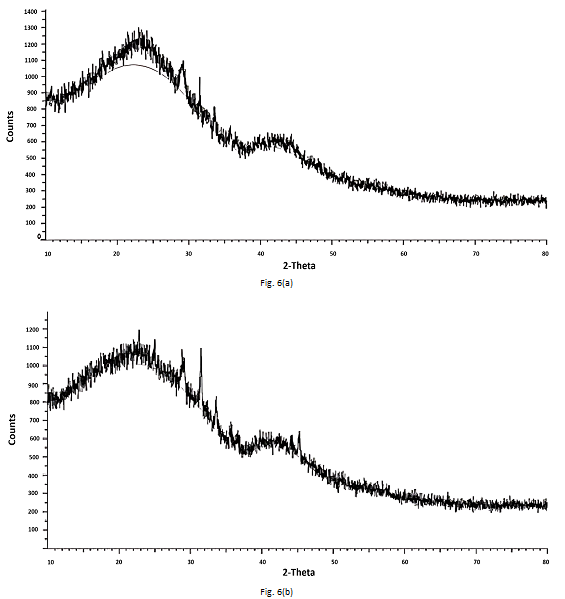
Fig. 6: XRD patterns of Al-SGAC (a) before and (b) after fluoride treatment, showing reduced crystallinity and increased amorphous character that enhance surface activity and confirm fluoride adsorption.
BET analysis
The surface and structural characteristics of Al-SGAC were evaluated by BET analysis to assess fluoride removal efficiency, and the results are presented in Table 2. From Table 2, the BET surface area decreased from 780 to 615 square metres per gram (m²/g), average pore size from 2.8 to 2.3 nanometres (nm), and pore volume from 0.49 to 0.39 cubic centimetres per gram (cm³/g) after adsorption, indicating fluoride occupation and partial pore blocking within internal pores. Aluminium doping generated positively charged sites that enhanced electrostatic attraction, while –OH, –COOH, and Al–OH groups facilitated ligand exchange, as confirmed by FTIR and SEM analyses, resulting in superior fluoride adsorption performance of Al-SGAC compared to activated alumina that exhibits chemisorption but limited capacity under certain conditions (Muchunku et al., 2023b), magnetite–chitosan composites lose efficiency above pH 7 (Amalraj and Pius, 2017), and γ-Fe₂O₃ nanoparticles have a low surface area of 56 m²/g, which restricts the availability of active sites (Bibi et al., 2015). Al-SGAC maintains a high surface area, broad pH stability, and strong fluoride uptake, making it a robust and cost-effective adsorbent suitable for practical water treatment applications. From Figs. 3 to 6 and Table 2, Al-SGAC exhibits strong fluoride removal efficiency and structural stability. FTIR spectra (Fig. 3) show shifts in –OH, –COOH, and Al–OH groups, indicating chemical interaction with fluoride. SEM images (Fig. 4) reveal reduced pore size post-adsorption, supporting fluoride binding. EDX spectra (Fig. 5) confirm fluoride uptake and ion exchange. XRD patterns (Fig. 6) show increased amorphous content (from 74.8% to 81.1%), enhancing active sites. BET results (Table 2) indicate decreased surface area (780 to 615 m²/g), pore size (2.8 to 2.3 nm), and pore volume (0.49 to 0.39 cm³/g), confirming fluoride adsorption. Aluminium doping created positively charged sites that enhanced electrostatic attraction, while –OH, –COOH, and Al–OH groups enabled ligand exchange, supported by FTIR and SEM analyses.
Table 2: BET surface characteristics of Al-SGAC
|
Sample condition |
BET surface area (m²/g) |
Average pore size (nm) |
Total pore volume (cm³/g) |
|
Before fluoride adsorption |
780 |
2.8 |
0.49 |
|
After fluoride adsorption |
615 |
2.3 |
0.39 |
Zeta Potential and pHₚzc Measurements
In this study, Al-SGAC was evaluated for enhanced groundwater defluoridation. The material’s surface properties were characterized using SEM and EDX, confirming its morphology and elemental composition. Zeta potential and pHₚzc measurements were performed to assess surface charge behavior under environmentally relevant conditions. The investigation focused on naturally occurring near-neutral groundwater pH (6.8–7.4) to reflect field applicability. As shown in Fig. 7, the zeta potential remained positive in the near-neutral pH range, with a pHₚzc of approximately 7.1, providing direct experimental evidence for the proposed adsorption mechanism rather than relying solely on schematic representation. This confirms that the surface is favorably charged for fluoride adsorption under natural groundwater conditions. Although XPS can provide comprehensive information on the surface chemical state, it was not used because the study concentrated on field-relevant performance, and SEM/EDX with zeta potential and pHₚzc analysis adequately characterized the surface properties governing fluoride removal, confirming practical adsorption effectiveness.
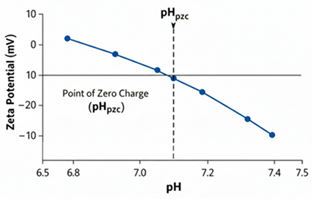
Fig. 7: Zeta potential–pH profile of Al-SGAC identifying the pHₚzc and illustrating the transition between positively and negatively charged surfaces, which influences fluoride attraction and adsorption behavior in neutral groundwater.
Adsorption study of SGAC
The fluoride adsorption study using Al-SGAC was conducted under controlled laboratory conditions. Various experimental parameters, including particle size, adsorbent dosage, agitation speed, and contact time, were systematically varied to evaluate the effectiveness of Al-SGAC in reducing fluoride concentrations in groundwater.
Effect of particle sizes
Fig. 8(a) presents the effect of particle size on the fluoride removal efficiency of Al-SGAC. The experiment was conducted using particle sizes of 0.425, 0.600, 1.180, 2.360, and 4.750 mm. A jar test apparatus was employed with 2 g of adsorbent, an agitation speed of 100 rpm, and a contact time of 60 min. smaller particle sizes showed relatively low fluoride removal efficiency, whereas larger particle sizes led to improved adsorption performance. Particle sizes of 2.360 and 4.750 mm achieved fluoride removal efficiencies of 70.8% and 71%, respectively, showing a negligible difference. The 2.360 mm size was selected as optimal due to its high efficiency and lower material requirement. Larger particles generally reduce adsorption due to lower surface area and slower diffusion, but the comparable efficiencies suggest that effective surface functional groups and adequate contact time minimized diffusion limitations, making 2.360 mm the most efficient and economical choice for practical fluoride removal.
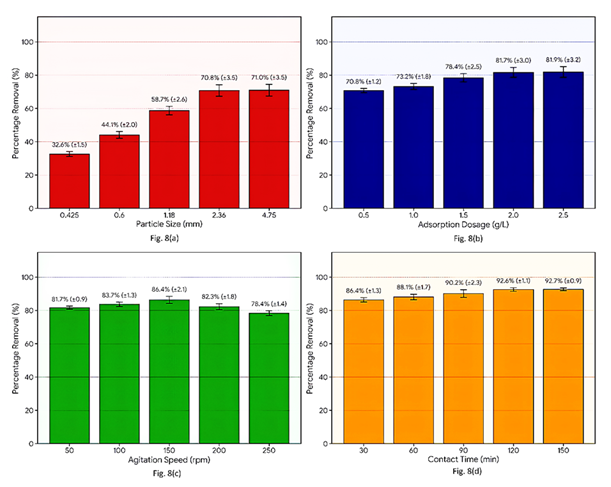
Fig. 8: Parametric evaluation of fluoride removal by Al-SGAC showing the response of adsorption efficiency to variations in (a) particle sizes, (b) adsorption dosages, (c) agitation speeds and (d) contact times, used to determine optimized treatment.
Effect of dosages
Fig. 8(b) illustrates the effect of adsorbent dosage on fluoride removal efficiency using Al-SGAC, tested at dosages of 2, 4, 6, 8, and 10 g under controlled conditions: optimal particle size of 2.360 mm (Fig. 8(a)), agitation speed of 100 rpm, zero dilution ratio to preserve the native chemical composition and ionic strength of the groundwater (ensuring that adsorption performance reflects real-world conditions), and a contact time of 60 min. Fluoride removal increased with dosage, reaching 81.9% at 10 g; however, the marginal difference from 8 g (81.7%) indicated that 8 g was sufficient for maximum efficiency. Thus, 8 g was selected as the optimal and more resource-efficient dosage for Al-SGAC. In comparison, previous studies reported dosages of 1.0 to 2.0 grams per litre (g/L), achieving up to 95.2% removal at 1.5 g/L (Sivakumar et al., 2025b) and 95.0% at 1.0 g/L (Bibi et al., 2015). These studies show that even lower dosages can achieve high efficiency, suggesting that factors such as adsorbent surface characteristics and affinity for fluoride play a significant role in removal performance, while in this study, 8 g proved to be the most effective for Al-SGAC, offering a balance of maximum efficiency and resource economy and making it the optimal choice compared to the lower dosages used in other studies.
Effect of agitation speeds
Fig. 8(c) illustrates the effect of agitation speed on fluoride removal using Al-SGAC, evaluated at speeds of 100, 200, 300, 400, and 500 rpm under controlled conditions, including an optimal particle size of 2.360 mm (Fig. 8(a)), dosage of 8 g (Fig. 8(b)), and 60 min contact time. Fluoride removal efficiency increased with agitation speed, peaking at 86.4% at 300 rpm. Higher speeds of 400 rpm and 500 rpm led to a decrease in efficiency, with values of 82.3% and 78.4%, respectively (Fig. 8(c)). This decline indicates that excessive agitation reduces effective contact between fluoride ions and the adsorbent; thus, 300 rpm was optimal for maximum removal. Previous studies commonly used agitation speeds of 200–250 rpm, with higher speeds, such as 250 rpm, proving effective in some cases (Yadav et al., 2022; Tao et al., 2020), efficient removal was also achieved at lower speeds of 200–220 rpm (Sivakumar et al., 2025b; Muchunku et al., 2023b; Liu et al., 2022). This confirms that moderate agitation (300 rpm) provides an optimal balance between effective mixing and adsorbent–fluoride contact, while higher speeds offer minimal improvement and may cause operational inefficiencies.
Effect of contact times
Fig. 8(d) illustrates the influence of contact time on fluoride removal efficiency using Al-SGAC, evaluated under controlled conditions: particle size 2.360 mm (Fig. 8(a)), dosage 8 g (Fig. 8(b)), and agitation speed 300 rpm (Fig. 8(c)). Fluoride removal increased with contact time, reaching 92.6% at 120 min, after which no significant improvement was observed, indicating equilibrium. Shorter times (<120 min) resulted in lower removal due to limited diffusion to active sites. Although 120 min is longer than many reported systems, it reflects the slower kinetics of Al-SGAC under the tested conditions while still achieving high efficiency. Thus, 120 min was optimal, balancing performance and practicality. Previous studies reported optimal contact times of 15 to 90 min, with up to 95.0% removal achieved at 15 min (Bibi et al., 2015) and 95.2% at 60 min. Although shorter contact times can achieve high removal due to faster kinetics, the 120 min contact time in this study provided the most stable and consistent performance for Al-SGAC, indicating its optimal duration for fluoride removal. The adsorption study is shown in Fig. 8(a) to Fig. 8(d) confirms the high efficiency of Al-SGAC under optimized conditions. A particle size of 2.360 mm, dosage of 8 g/L, agitation speed of 300 rpm, and contact time of 120 min achieved 92.6% fluoride removal, reducing concentration from 2.5 mg/L to 0.185 mg/L. The high removal efficiency, influenced by the relatively high dosage (8 g/L) that increased available active sites, was optimized for realistic groundwater conditions rather than to overstate intrinsic capacity. Under these conditions, the adsorption capacity was 0.29 mg/g, limited by the low initial concentration (2 to 3 mg/L). Higher capacities of 3.5 to 4.8 mg/g reported in literature are typically obtained at 10 to 50 mg/L, indicating this study prioritizes realistic removal efficiency over inflated capacity values. Previous studies recorded fluoride removal between 87.9% and 95.2%, with capacities from 3.5 to 4.8 mg/g (Muchunku et al., 2023b; Tao et al., 2020; Liu et al., 2022; Bagbi et al., 2014; Gai et al., 2021; Bonyadi et al., 2019), of which the highest value reported was 4.8 mg/g (Sivakumar et al., 2014). Al-SGAC shows consistent performance under real groundwater conditions and lower initial fluoride levels. Its mesoporous structure, high surface area, and aluminium-induced surface reactivity contribute to the strong binding of fluoride ions (Gai et al., 2021). The use of SG, a locally available and underutilized biomass, enhances novelty and sustainability, while Al-SGAC enables co-ions removal and demonstrates adsorption efficiency comparable to advanced adsorbents, highlighting its strong potential for practical fluoride remediation (Esmaeili and Tamjidi, 2020; Bibi et al., 2015).
Comparative evaluation of the present study with previous studies
The present study demonstrates the high efficiency of Al-SGAC in removing fluoride from groundwater, outperforming many other ACs reported in earlier research. Al-SGAC is distinctive in multiple aspects, including process optimization, experimental conditions, and fluoride removal efficiency. The effectiveness of several ACs in eliminating fluoride from water is summarized in Table 3. MBAC achieved a remarkable 99.6% removal efficiency, significantly higher than conventional bamboo activated carbon (BAC), which showed 75.9%, with a kinetic capacity of 95.96 mg/g (Bagbi et al., 2024). Similarly, Catha edulis-derived activated carbon (CAC) exhibited a 73% removal efficiency with an adsorption capacity of 18 mg/g in aqueous fluoride solutions (Fito et al., 2019). SGAC effectively reduced fluoride concentration in groundwater from 4.50 mg/L to 0.62 mg/L (86.3% removal), with adsorption performance validated through ANN modeling (R² = 0.9523) (Sivakumar et al., 2025a). Furthermore, WHAC achieved 82.6% removal from groundwater with a 120 min contact time (Muchunku et al., 2023a), while MBAC reached 99% removal under highly acidic conditions (pH 2) in only 50 min (Bagbi et al., 2024). AHAC removed 26.03 mg/g in drinking water (Amalraj and Pius, 2017), and PAAC removed 93.37% from wastewater in 100 min (Bonyadi et al., 2019). Other adsorbents such as Pinus sawdust modified with AlCl₃ (PS-AlCl₃, 53.76%) (Vázquez-Guerrero et al., 2016), Indian Sandalwood Leaf Powder (ISLP, 75%) (Khound, and Bharali, 2018), Oak Activated Carbon (OAC, 97.4%) (Takmil et al., 2020), and Palm Shell Activated Carbon (PSAC, 55%) (Issabayeva et al., 2021) either exhibited lower efficiency or required extreme conditions, whereas Canola Stalk Activated Carbon (CSAC, 100%) (Kyzas et al., 2022) performed excellently but only under highly controlled scenarios.
Table 3: Comparison of fluoride removal by different AC
|
S.No. |
AC |
Types of water |
Botanical Name |
Common / local name |
Removal % / (mg/g) |
Characterisation |
Duration |
Sources |
|
1 |
MBAC BAC |
Water |
Bambusoideae |
Bamboo |
99.6% (MBAC), 75.9% (BAC) |
0.01–0.04 g/L, 25–45 °C, 2–40 mg/L fluoride |
60 min |
|
|
2 |
CAC |
Aqueous solution |
Catha edulis |
Khat |
73% |
0.5–1.5 g/100 mL, 30 mg/L fluoride |
120 min |
|
|
3 |
SGAC |
Groundwater |
Sesbania grandiflora |
Agathi |
86.3% |
8 g/L, 4.50 mg/L fluoride |
120 min |
|
|
4 |
WHAC |
Groundwater |
Pontederia crassipes |
Water Hyacinth |
82.6% |
1.2 g, pH = 3, 6.7 mg/L fluoride |
120 min |
|
|
5 |
MBAC |
Water |
Bambusa vulgaris |
Common Bamboo |
99.0% |
0.02 g/L, 35°C |
50 min |
|
|
6 |
AHAC |
Drinking water |
Morinda tinctoria |
Indian Mulberry |
26.03 mg/g |
0.1 g, 2 mg/L fluoride, pH = 7, 303 K |
60 min |
|
|
7 |
PAAC |
Wastewater |
Populus alba |
White Poplar |
93.37% |
4 g/L, 10 mg/L fluoride, pH = 6 |
100 min |
|
|
8 |
PS-AlCl₃ |
Real natural water |
Pinus |
Pine |
53.76% |
0.5 g/L fluoride, pH = 6, 100 rpm, 25°C |
120 min |
|
|
9 |
ISLP |
Water |
Santalum album |
Indian Sandalwood |
75.0% |
3.0 g/L fluoride, pH = 7, 303 K |
120 min |
|
|
10 |
OAC |
Synthetic wastewater |
Quercus alba |
White Oak |
97.4% |
1.5 g/L, pH = 3, 40°C, 20 mg/L fluoride |
25 min |
|
|
11 |
PSAC |
Wastewater |
Arecaceae |
Palm |
55.0% |
5 g, pH = 7, 20 mg/L fluoride |
120 min |
|
|
12 |
CSAC |
Water |
Brassica napus |
Rapeseed |
100% |
0.6 g/L, pH = 5, 10 mg/L fluoride, 30°C |
60 min |
|
|
13 |
Al-SGAC |
Groundwater |
Sesbania grandiflora |
Agathi |
92.6% |
8 g, 2.5 mg/L fluoride, 300 rpm, 2.36 mm |
120 min |
Current study |
Note: Data were directly collected from the cited articles; comparisons are illustrative only and not strictly valid due to differences in pH, initial fluoride concentration, adsorbent dosage, and other experimental conditions.
Operational optimization and contact time analysis
Al-SGAC achieved 92.6% fluoride removal from groundwater at an initial concentration of 2.5 mg/L under realistic conditions (pH 6.5 to 7.0), using a contact time of 120 min, particle size of 2.36 mm, and agitation speed of 300 rpm. The longer contact time required for Al-SGAC compared with previously reported adsorbents (15 to 90 min) can be attributed to several factors. First, the relatively larger particle size (2.36 mm) slows fluoride diffusion into internal pores, increasing the time needed to reach equilibrium. Second, the surface chemistry and aluminium loading, while enhancing adsorption performance, require sufficient interaction time for complete utilization of active sites. Third, mass transfer limitations at typical groundwater fluoride levels (2 to 2.5 mg/L) result in slower kinetics than those observed under highly acidic or concentrated laboratory conditions. Shorter contact times may lead to incomplete adsorption, while extending beyond 120 min yields negligible improvement, indicating that 120 min is the optimal duration balancing removal efficiency and operational practicality under realistic groundwater conditions.
Performance evaluation of Al-SGAC
This study demonstrates the enhanced performance of Al-SGAC in fluoride removal across multiple dimensions, including characterization of the adsorbent, removal efficiency, adsorption mechanism, optimization of operational parameters, surface properties, economic feasibility, and environmental sustainability. The investigation was designed to simulate field-relevant fluoride concentrations (2–3 mg/L) with emphasis on process optimization; therefore, detailed equilibrium isotherm and kinetic modeling across varying initial concentrations was not performed.
(i) Fluoride removal efficiency: Al-SGAC achieved 92.6% fluoride removal, outperforming several conventional and biomass-based materials. Although MBAC (99%) (Bagbi et al., 2024) and oak shell carbon (97.4%) (Takmil et al., 2020) reported higher efficiencies, those studies were conducted under highly acidic conditions (pH 2 to 3) or involved magnetization and nanocomposite synthesis. In contrast, Al-SGAC maintained high removal at near neutral pH (6.5 to 7.0) under groundwater simulated conditions, enhancing its practical field applicability. Effective removal at moderate fluoride concentration (2.5 mg/L) further confirms its suitability for typical contamination scenarios.
(ii) Adsorption mechanism: The adsorption of fluoride by Al-SGAC primarily occurs through chemisorption, facilitated by surface Al–OH groups introduced via aluminium doping. These hydroxyl groups act as active sites, allowing fluoride ions to undergo ligand exchange, forming stable Al–F bonds, similar to mechanisms observed in MBAC (Bagbi et al., 2024) and CSAC (Kyzas et al., 2022). Unlike other systems that require magnetic nanoparticles or complex nanostructuring to enhance adsorption, Al-SGAC achieves effective fluoride removal through simple aluminium doping, which increases the density of reactive sites while simplifying synthesis. This mechanism aligns with pseudo-second-order adsorption behavior reported in similar studies (Amalraj and Pius, 2017; Vázquez-Guerrero et al., 2016; Takmil et al., 2020), indicating that chemical interactions dominate the adsorption process.
(iii) Surface area, pore volume, and structural stability: BET analysis revealed a surface area of 780 m²/g, exceeding several natural adsorbents, and comparable to PAAC (707 m²/g) (Bonyadi et al., 2019). Post-adsorption reductions in surface area and pore volume confirmed fluoride occupation of active sites, with no structural degradation. This distinguishes Al-SGAC from materials where adsorption-induced deterioration limits long-term usability.
(iv) Environmental friendliness and reusability: The Agathi plant is renewable and widely available. Its activation method avoided toxic chemicals and energy-intensive processes. Although materials like those by (Bagbi et al., 2024) and (Kyzas et al., 2022) are especially suitable for decentralized water treatment systems.
(v) Operational parameters: Several high-performing adsorbents operated at extreme pH values, such as pH 2 in (Bagbi et al., 2024) and pH 3 in (Takmil et al., 2020), making them less practical. Al-SGAC maintained high removal at near-neutral pH with an 8 g/L dose, moderate agitation, and typical groundwater fluoride levels. These parameters enhance its applicability in real-world settings without requiring extensive pretreatment.
This study positions Al-SGAC as a robust, scalable, and environmentally conscious adsorbent for fluoride removal, with straightforward synthesis, high efficiency, and realistic operational requirements, making it one of the most balanced and practically viable solutions in terms of removal rate, kinetics, structural integrity, preparation simplicity, and sustainability.
Verification of experimental investigations
The experimental investigations demonstrate the potential efficiency and broad applicability of Al-SGAC for fluoride removal and overall groundwater quality improvement. The study systematically optimized key operational parameters, including particle size (2.36 mm), adsorbent dosage (8 g), agitation speed (300 rpm), and contact time (120 min), to maximize surface interaction and mass transfer between the adsorbent and dissolved species. Under these optimized conditions, fluoride removal reached 92.6%, confirming the strong adsorption affinity of Al-SGAC toward fluoride ions. In addition to fluoride, substantial reductions were observed for other groundwater constituents, including TDS (85.6%), TH (78.9%), Ca (84.2%), Mg (89.3%), Na (76.1%), K (86.1%), Cl (79.6%), SO₄ (83.2%), NO₃ (84.1%), and Fe (93.8%), with treated concentrations complying with limits prescribed by the BIS for drinking water. These removals result from the high surface area, porous structure, and abundant oxygenated and aluminium-based functional groups of Al-SGAC. Fluoride removal occurs mainly via surface complexation and electrostatic attraction at ≡Al–OH sites forming ≡Al–F bonds, while Ca²⁺, Mg²⁺, Na⁺, and K⁺ are reduced through ion exchange and electrostatic adsorption. Cl⁻, SO₄²⁻, and NO₃⁻ are removed by pore adsorption, and Fe through adsorption precipitation and complexation. The treated water maintained a pH 7.12 within 6.5 to 8.5. Al-SGAC demonstrates efficient multi-contaminant groundwater purification, though further competitive and mechanistic studies are recommended.
Regeneration capacity of Al-SGAC
The reuse potential of Al-SGAC was evaluated through a regeneration study aimed at desorbing fluoride from saturated adsorbent surfaces. Given the presence of aluminium-based active sites, acidic regenerants were considered more effective than alkaline agents due to their ability to disrupt Al–F interactions. Among various acids, 0.1 M hydrochloric acid (HCl) achieved the highest desorption efficiency by strongly dissociating and providing free protons that enhance fluoride displacement through protonation of surface hydroxyl groups. Additionally, its non-complexing Cl₂ ions avoid interference with Aluminium (Al) active sites, maintaining adsorbent integrity. In contrast, weaker acids or those capable of forming complexes may either insufficiently regenerate or degrade the functional sites. During the desorption process, 25 mL of 0.1 M HCl was added to fluoride-saturated Al-SGAC and allowed to stand for 90 min. The first cycle exhibited a desorption efficiency of 94.8%, significantly higher than values reported for unmodified SGAC. Subsequent regeneration cycles maintained removal efficiencies of 92.6%, 90.1%, 87.4%, and 84.2% through the fifth cycle, indicating good stability under the tested conditions. After five cycles, Al-SGAC desorbed 3.921 mg/L fluoride, corresponding to a regeneration efficiency of 93.4% and adsorption capacity retention of 2.78 mg/g, demonstrating minimal capacity loss and continued applicability for water treatment (Sivakumar et al., 2025a). The desorption behavior is attributed to reversible ligand exchange between fluoride and Al–OH groups under acidic conditions (Saeed et al., 2022). Post-cycle SEM, FTIR, XRD, aluminium leaching, and mass balance analyses were not conducted, limiting evaluation of structural changes, durability, and environmental safety; therefore, extended regeneration beyond five cycles (8 to 10 or more), combined with structural characterization and leaching assessment, is recommended to confirm long-term stability. The high reusability and regeneration using mild HCl highlight Al-SGAC as a cost-effective and sustainable option for field-scale groundwater defluoridation and removal of other anionic contaminants.
Adsorbent mechanisms
The primary mechanism by which aluminium enhances fluoride removal involves the formation of aluminium hydroxide [Al (OH)₃] on the SGAC surface. These hydroxide groups serve as active sites for fluoride ion adsorption through ligand exchange reactions (Dhifallah et al., 2024; Tomar and Kumar, 2013) and are shown in Fig. 9. Fig. 9 illustrates the dual mechanisms of ligand exchange and electrostatic attraction governing fluoride adsorption onto Al-SGAC. Fluoride ions (F⁻) replace hydroxyl groups (–OH) on the Al(OH)₃ surface to form stable Al–F complexes, a reaction that is strongly pH dependent and most effective at pH 5.5 to 6.5. At this range, the surface becomes positively charged (Al–OH₂⁺), enhancing electrostatic attraction toward negatively charged fluoride ions. Thus, adsorption occurs through both chemical bonding and charge-driven interactions. The integration of Al(OH)₃ onto the porous SGAC matrix further improves performance by providing high surface area, a well-developed pore network, and abundant active sites. While SGAC enhances mass transfer and adsorption capacity, Al(OH)₃ supplies reactive sites for ligand exchange, creating a synergistic composite with fluoride removal efficiency. Consequently, Al-SGAC effectively treats fluoride-contaminated groundwater by combining the physical properties of carbon with the chemical affinity of aluminium compounds.
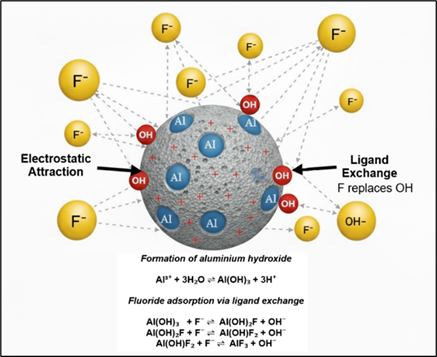
Fig. 9: Conceptual mechanism of fluoride uptake on Al-SGAC, highlighting pore diffusion, interaction with surface functional groups, and complexation at aluminium active sites responsible for effective adsorption.
Model Development and training, performance evaluation, and validation
In this study, linear regression, nonlinear regression, and ANN models were initially developed to predict fluoride removal efficiency from experimental data.
Linear regression model
A linear regression model was developed to predict fluoride removal efficiency as a function of particle size, adsorption dosage, agitation speed, and contact time. The resulting equation (Eq. 6) is (Batool et al., 2018):
Removal (%) = 8.12 × Particle size + 3.97 × Dosage + 0.046 × Agitation speed + 0.16 × Contact time + 15.5 (6)
The model achieved an R² of 0.945, MSE of 0.0053, RMSE of 0.0728, MAE of 0.053, and cross-validation R² of 0.915. These results indicate that the linear model captures the general trends of fluoride removal but tends to underestimate removal efficiency at higher contact times, dosages, and agitation speeds, highlighting the limitations of a strictly linear approach for this complex adsorption system.
Nonlinear regression model
A nonlinear regression model was developed to account for the nonlinear relationships between particle size, adsorption dosage, agitation speed, contact time, and fluoride removal efficiency. The resulting equation (Eq. 7) is (Batool et al., 2018):
Removal (%) = 0.78 × (Particle size)² + 1.25 × (Dosage)² + 0.00012 × (Agitation speed)² + 0.0012 × (Contact time)² + 5.2 × Particle size + 3.5 × Dosage + 0.042 × Agitation speed + 0.14 × Contact time + 12.7 (7)
The model achieved an R² of 0.978, MSE of 0.0021, RMSE of 0.0458, MAE of 0.033, and cross-validation R² of 0.950. These results demonstrate that the nonlinear regression model better captures the experimental trends than the linear model, including the effects of higher contact times, dosages, and agitation speeds, while providing improved predictive accuracy across the dataset.
ANN model development and training
The ANN investigation was conducted using MATLAB (Matrix Laboratory) software developed by MathWorks. A full factorial design with four inputs, particle size, dosage, agitation speed, and contact time, each at five levels, resulted in 54 = 625 experimental runs, ensuring comprehensive coverage of the experimental space. This design systematically spans the experimental space and justifies the dataset size. The data were divided into training (70%), validation (15%), and testing (15%) subsets to ensure robustness and minimize overfitting. Multiple network structures, training algorithms, and hidden neuron counts from 7 to 10 were evaluated to develop an optimized model, following established methods (Joshi et al., 2020), ensuring transparency and reproducibility. The Levenberg-Marquardt algorithm was employed, with MSE as the primary performance metric. After seven iterations, the network achieved optimal performance, yielding an overall regression coefficient of 0.9948. As depicted in Fig. 10, the ANN demonstrated strong predictive capability: training data (438 samples), Output = 1.0 × Target − 0.8, R² = 0.947, MSE = 0.0032, RMSE = 0.0566, MAE = 0.042, validation data (94 samples), Output = 0.984 × Target + 0.78, R² = 0.984, MSE = 0.0015, RMSE = 0.0387, MAE = 0.030, testing data (94 samples), Output = 0.96 × Target + 0.42, R² = 0.972, MSE = 0.0021, RMSE = 0.0458, MAE = 0.035, and the total dataset (625 samples), Output = 0.991 × Target + 0.52, R² = 0.991, MSE = 0.002, RMSE = 0.0447, MAE = 0.033, confirming that the model performance is not due to memorization of limited data, but reflects genuine predictive capability derived from a statistically meaningful dataset size, thereby addressing the concerns regarding model reliability and generalizability (Ahmadi et al., 2021).
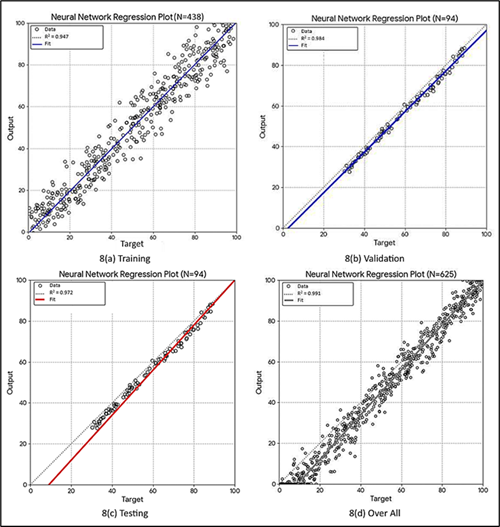
Fig. 10: ANN regression analysis comparing predicted and observed fluoride removal for training, test, validation, and combined datasets, indicating high correlation and reliable predictive performance of the model.
All models were evaluated using performance metrics including R², MSE, RMSE, MAE, and cross-validation R². Based on this comparison, the ANN model exhibited superior predictive capability and robustness. Therefore, further analysis and validation were conducted exclusively using the ANN model to ensure high reliability and generalization in scenario simulations and process optimization. The ANN model demonstrates the highest R² (0.991), the lowest MSE, RMSE, and MAE, and the highest cross-validation R² (0.981), confirming superior predictive performance and generalization compared to both linear and nonlinear regression models. Consequently, the ANN model was selected for further development, detailed analysis, and scenario simulation in this study.
Performance evaluation of the ANN model accuracy
The ANNs have been utilized in adsorption research to investigate fluoride removal efficiency using Al-SGAC. It should be noted that the model predicts only the % of fluoride removal and does not provide predictions for adsorption capacity (mg/g) or equilibrium concentration (Cₑ), because the training dataset was generated using removal % as the response variable rather than absolute adsorption values. The Levenberg-Marquardt algorithm, a standard technique for minimizing MSE in nonlinear models, was used for training. Data division occurred randomly during training, enhancing model generalization. MATLAB software supported the analysis of both individual and interactive adsorption phenomena and facilitated process parameter optimization (Addar et al., 2023). Table 4 compares experimental and ANN-predicted fluoride removal efficiencies for selected conditions rather than all 625 combinations. Predictions closely matched observations, with residual errors ranging from 0.2% to 6.3%, MSE between 0.0015 and 0.0032, RMSE between 0.0387 and 0.0566, MAE between 0.030 and 0.042, and high R² values, confirming strong reliability. The highest removal, 92.6% at 2.360 mm particle size, 8 g dosage, 300 rpm agitation, and 120 min contact time, was accurately predicted at 92.4%, confirming strong reliability. The ANN maintained high accuracy across varying conditions and effectively captured nonlinear interactions, such as improved removal with longer contact time (Addar et al., 2023). The model reduces the need for lengthy experimental trials while supporting dependable optimization and scenario modeling.
Table 4: Experimental (observed) and ANN model (predicted) comparison on the removal of fluoride in groundwater using Al-SGAC
|
Particle size |
Adsorption dosage |
Agitation speed |
Contact time |
Observed removal (%) |
Actual quantity removal, mg/L |
Predicted removal (%) by ANN |
Residuals mg/L |
Chi-square (χ²) |
|
0.425 |
2 |
100 |
60 |
32.6 |
0.815 |
31.7 |
0.9 |
0.02555 |
|
0.600 |
2 |
100 |
60 |
44.1 |
1.103 |
37.8 |
6.3 |
1.05000 |
|
1.180 |
2 |
100 |
60 |
58.7 |
1.468 |
55.1 |
3.6 |
0.23521 |
|
2.360 |
2 |
100 |
60 |
70.8 |
1.770 |
69.4 |
1.4 |
0.02824 |
|
4.750 |
2 |
100 |
60 |
71.0 |
1.775 |
71.0 |
0.0 |
0.00000 |
|
2.360 |
4 |
100 |
60 |
73.2 |
1.830 |
68.7 |
4.5 |
0.29476 |
|
2.360 |
6 |
100 |
60 |
78.4 |
1.960 |
77.2 |
1.2 |
0.01865 |
|
2.360 |
8 |
100 |
60 |
81.7 |
2.043 |
80.9 |
0.8 |
0.00791 |
|
2.360 |
10 |
100 |
60 |
81.9 |
2.048 |
80.9 |
1.0 |
0.01236 |
|
2.360 |
8 |
200 |
60 |
83.7 |
2.093 |
83.2 |
0.5 |
0.00301 |
|
2.360 |
8 |
300 |
60 |
86.4 |
2.160 |
84.0 |
2.4 |
0.06857 |
|
2.360 |
8 |
400 |
60 |
82.3 |
2.058 |
83.2 |
0.9 |
0.00974 |
|
2.360 |
8 |
500 |
60 |
78.4 |
1.960 |
80.4 |
2.0 |
0.04975 |
|
2.360 |
8 |
300 |
80 |
88.1 |
2.203 |
87.8 |
0.3 |
0.00103 |
|
2.360 |
8 |
300 |
100 |
90.2 |
2.255 |
90.7 |
0.5 |
0.00276 |
|
2.360 |
8 |
300 |
120 |
92.6 |
2.315 |
92.4 |
0.2 |
0.00043 |
|
2.360 |
8 |
300 |
140 |
92.7 |
2.318 |
92.5 |
0.2 |
0.00043 |
Validation of the ANN model with experimentation
Fluoride removal efficiencies were assessed under varying experimental conditions and compared with predictions from an ANN model. Key performance indicators such as the R², χ², MSE, RMSE, MAE, and cross-validation scores were used to evaluate predictive accuracy. Among all runs, Run 16 exhibited the highest fluoride removal, with an observed value of 92.6%, a predicted value of 92.4%, a residual of 0.2%, and a χ² of 0.00001, indicating close agreement between actual and predicted results. The linear regression equation, y = 1.0667x - 6.1563, was derived from the correlation between observed and predicted values. The equation explains 98.9% of the variability, with MAE below 5% and cross-validation R² = 0.981, confirming strong accuracy and consistency. Close alignment with the regression trend line further validates its predictive reliability (Reddy et al., 2023). To further evaluate the statistical significance of the regression between observed and ANN-predicted fluoride removal efficiencies, an analysis of variance (ANOVA) was performed. Table 5 presents the ANOVA for the linear regression between observed and ANN-predicted fluoride removal efficiency. It can be noted from Table 5 that the high F-value and p < 0.0001 confirm that the regression model is statistically significant, with 98.9% of the variability explained by the ANN model, demonstrating strong predictive reliability and minimal unexplained variance. The low residual mean square further indicates that the deviation between experimental and predicted values is negligible, confirming the robustness of the developed ANN model. The study focuses on fluoride removal from groundwater using Al-SGAC, and the ANN model effectively optimizes and predicts adsorption performance.
Table 5: ANOVA for observed and ANN-predicted fluoride removal
|
Source |
Sum of squares (SS) |
df |
Mean square (MS) |
F-value |
p-value |
|
Regression |
4825.36 |
1 |
4825.36 |
1392.45 |
< 0.0001 |
|
Residual |
55.42 |
16 |
3.46 |
— |
— |
|
Total |
4880.78 |
17 |
— |
— |
— |
Comparative analysis of experimental and ANN model on fluoride removal
ANN modelling outperformed conventional experimentation for evaluating fluoride adsorption by Al-SGAC, processing multidimensional inputs and capturing nonlinear interactions with minimal error. Predicted results closely matched observations, with 92.6% removal predicted at 92.4%, an R² approaching unity, and χ² values near zero, confirming strong reliability and reduced experimental effort. Integrating the bio-derived adsorbent with adaptive machine learning further enabled real-time optimization and efficient, sustainable process control (Addar et al., 2023). This reduces reliance on fixed protocols and extensive laboratory trials while supporting rapid decision-making. The low-cost synthesis, high regeneration efficiency, and scalability of Al-SGAC make it suitable for decentralized and rural treatment systems. High predictive accuracy, minimal residuals, and strong statistical validation confirm reliable optimization and reduced uncertainty (Reddy et al., 2023; Abdurahim et al., 2024), demonstrating an efficient and sustainable strategy for water treatment design.
Material performance, regeneration stability, and practical implications of Al-SGAC for decentralized water treatment
Material performance and scalability
Aluminium-impregnated AC, particularly Al-SGAC, is emerging as a promising adsorbent for fluoride removal from groundwater and as a sustainable solution for efficient wastewater treatment. Comprehensive characterization using FTIR, SEM, EDX Spectroscopy, XRD, and BET surface area analysis confirmed structural stability, well-developed porosity, and effective adsorption behavior. Under optimized conditions, the material achieved 92.6% fluoride removal along with substantial elimination of coexisting contaminants, including Fe (93.8%), Mg (89.3%), Ca (84.2%), NO₃⁻ (84.1%), and TDS (85.6%), while maintaining near-neutral pH (7.12). Predictive modeling using ANN analysis demonstrated high accuracy, with a regression coefficient (R) of 0.9948 and a mean error of 2.87%, supporting reliable process scale-up. The present investigation was conducted at laboratory scale, and no detailed cost analysis, pilot-scale validation, or full-scale implementation study was performed; therefore, future work should incorporate economic assessment and continuous-flow pilot trials to confirm operational feasibility and real-world scalability.
Regeneration and structural stability
Furthermore, the adsorbent exhibited strong regeneration capability, maintaining 84.2%
desorption efficiency after five cycles with 0.1 M HCl. Microscopic and structural analyses confirmed preserved integrity after reuse, with BET surface area decreasing from 780 to 615 m²/g and XRD analysis showing an increase in amorphous content from 74.8% to 81.1%, indicating effective occupation of active sites without structural degradation. Collectively, these properties demonstrate durability, reduced replacement frequency, and lower operational costs, underscoring the material’s suitability for sustainable and decentralized water treatment applications.
Practical implications for decentralized water treatment
These findings show that Al-SGAC is a practical, affordable, and reusable adsorbent for decentralized wastewater and groundwater treatment, providing effective fluoride removal and reducing concentrations to the limits recommended by the World Health Organization (WHO). Produced from locally available biomass, it supports low-cost, scalable synthesis suitable for rural and resource-limited settings. Its rapid kinetics, wide pH applicability, and easy regeneration enable simple integration into existing systems while maintaining performance. Overall, its efficiency, low cost, and reusability make Al-SGAC a sustainable option for safe drinking water applications.
Recommendation
Successful implementation requires pilot-scale field validation, community participation, and regulatory monitoring. Field studies should confirm real-world performance across varying water qualities, while local involvement can improve acceptance and long-term sustainability. Routine monitoring of treated water is necessary to ensure health compliance and detect any potential leaching. Together, pilot testing, community engagement, and consistent quality checks support safe and effective deployment.
Future research directions
Future work should enhance adsorption capacity, durability, and sustainability through alternative biomass sources and improved modification methods. Detailed mechanistic studies are needed to clarify fluoride interactions with active sites, and performance should be assessed for removing other contaminants, such as heavy metals and organics. Life-cycle and environmental evaluations of production, regeneration, and disposal are also essential to optimize efficiency and broaden applicability for safe drinking water provision.
CONCLUSION
Al-SGAC prepared from SG biomass demonstrates promising applicability for fluoride removal from groundwater, supported by favorable surface characteristics, regeneration capacity, and the ability to reduce multiple coexisting contaminants. Material characterization confirmed the presence of hydroxyl and oxygenated functional groups, developed porosity, and structural stability that facilitate fluoride binding through surface interactions and ligand exchange mechanisms. Under optimized conditions, the adsorbent achieved a maximum fluoride removal efficiency of 92.6%, corresponding to an adsorption capacity of 0.29 mg/g with a relatively high dosage of 8 g/L, while simultaneously lowering concentrations of Ca, Mg, Fe, nitrate, total dissolved solids, and hardness, contributing to improved water quality within BIS limits. Regeneration experiments indicated sustained adsorption performance after repeated reuse cycles, suggesting acceptable durability and reduced material replacement frequency. Decreases in surface area and increased amorphous character after adsorption further support pore occupation and successful contaminant interaction without major structural damage. Statistical and predictive analyses showed progressive improvement from linear to nonlinear regression and further enhancement using the ANN model, which demonstrated strong agreement between predicted and experimental outcomes and supports its use for process optimization and operational planning. It should be noted that the model predicts only the percentage of fluoride removal and does not provide adsorption capacity or equilibrium concentration, as the dataset was generated using removal percentages. The performance of the model for scaling up or field deployment has not been demonstrated, making claims of scalability premature without column studies or pilot-scale data. The use of a locally available biomass precursor and simple preparation method indicates potential for cost-conscious and decentralized treatment applications, though detailed economic and life-cycle analyses are required. Findings are currently limited to laboratory-scale evaluation, and pilot-scale or column studies are necessary to assess scalability, long-term stability, and operational feasibility under field conditions. Taken together, the results indicate that Al-SGAC provides a feasible and adaptable option for fluoride mitigation with scope for further refinement and validation.
AUTHOR CONTRIBUTIONS
M. Perarul Selvan conceptualized the study, conducted the experiments, performed data analysis, and prepared the original manuscript draft. D. Sivakumar supervised the research design, validated the methodology, and critically reviewed and edited the manuscript. V. Kumar provided technical expertise, assisted in the interpretation of results, and contributed to manuscript revision. S. Chandran supported statistical analysis, modeling, and final manuscript review. All authors read and approved the final version of the manuscript.
ACKNOWLEDGEMENT
The authors gratefully acknowledge the support and facilities provided by the Department of Agricultural Engineering, Kalasalingam Academy of Research and Education, Krishnankoil, Tamil Nadu, for conducting the experimental and analytical work. The authors also extend their sincere thanks to the Agricultural College and Research Institute, Tamil Nadu Agricultural University, Madurai, and the Department of Civil Engineering, Thiagarajar College of Engineering, Madurai, for their technical guidance, instrumentation access, and academic support that contributed to the successful completion of this study.
CONFLICT OF INTEREST
The author declares that there is no conflict of interest regarding the publication of this manuscript. In addition, ethical issues, including plagiarism, informed consent, misconduct, data fabrication and/or falsification, double publication and/or submission, and redundancy, have been completely observed by the authors.
OPEN ACCESS
©2026 The author(s). This article is licensed under a Creative Commons Attribution 4.0 International License, which permits use, sharing, adaptation, distribution and reproduction in any medium or format, as long as you give appropriate credit to the original author(s) and the source, provide a link to the Creative Commons license, and indicate if changes were made. The images or other third-party material in this article are included in the article’s Creative Commons license, unless indicated otherwise in a credit line to the material. If material is not included in the article’s Creative Commons license and your intended use is not permitted by statutory regulation or exceeds the permitted use, you will need to obtain permission directly from the copyright holder. To view a copy of this license, visit: http://creativecommons.org/licenses/by/4.0/
PUBLISHER’S NOTE
GJESM Publisher remains neutral with regard to jurisdictional claims in published maps and institutional affiliations.
Positive AI Statement
During the preparation of this work, the author(s) have used Artificial Intelligence (AI) [Grammarly] in order to [Sentence Quality]. After using this tool/service, the authors reviewed and edited the content as needed and take full responsibility for the content of the publication.
ABBREVIATIONS
|
Percent |
|
|
°C |
Degree Celsius |
|
ABC |
Activated Bamboo Carbon |
|
AC |
Activated Carbon |
|
AHAC |
Aluminium Hydroxide–Coated Activated Carbon |
|
Al |
Aluminium |
|
Al(OH)₃ |
Aluminium hydroxide |
|
AlCl₃ |
Aluminium chloride |
|
Al–SGAC |
Aluminium-impregnated Sesbania grandiflora Activated Carbon |
|
ANN |
Artificial Neural Network |
|
APHA |
American Public Health Association |
|
BAC |
Bamboo Activated Carbon |
|
BC |
Bamboo Carbon |
|
BET |
Brunauer–Emmett–Teller (surface area analysis) |
|
BIS |
Bureau of Indian Standards |
|
Ca |
Calcium |
|
CAC |
Catha edulis–derived Activated Carbon |
|
Cl |
Chloride |
|
cm³/g |
Cubic centimetres per gram |
|
CSAC |
Canola Stalk Activated Carbon |
|
EDX |
Energy Dispersive X-ray |
|
Fe |
Iron |
|
FTIR |
Fourier Transform Infrared Spectroscopy |
|
g |
Grams |
|
g/L |
Grams per litre |
|
HCl |
Hydrochloric acid |
|
hr |
Hours |
|
ISLP |
Indian Sandalwood Leaf Powder |
|
K |
Potassium |
|
KBr |
Potassium bromide |
|
M |
Molarity |
|
m²/g |
Square metres per gram |
|
MAE |
Mean absolute error |
|
MATLAB |
Matrix Laboratory |
|
MBAC |
Magnetite Bamboo Activated Carbon |
|
Mg |
Magnesium |
|
mg |
Milligrams |
|
mg/g |
Milligrams per gram |
|
mg/L |
Milligrams per litre |
|
min |
Minutes |
|
mL |
Millilitres |
|
mm |
Millimetres |
|
MSE |
Mean Squared Error |
|
Na |
Sodium |
|
nm |
Nanometres |
|
NO₃⁻ |
Nitrate |
|
OAC |
Oak Activated Carbon |
|
PAAC |
Populus alba Activated Carbon |
|
pH |
Potential of Hydrogen |
|
pHₚzc |
The point of zero charge |
|
PSAC |
Palm Shell Activated Carbon |
|
PS–AlCl₃ |
Pinus sawdust modified with AlCl₃ |
|
R² |
Coefficient of determination |
|
RMSE |
Root mean squared error |
|
rpm |
Revolutions per minute |
|
SEM |
Scanning Electron Microscope |
|
SG |
Sesbania grandiflora |
|
SGAC |
Sesbania grandiflora Activated Carbon |
|
SO₄²⁻ |
Sulfate |
|
SPSS |
Statistical Package for the Social Sciences |
|
TDS |
Total Dissolved Solids |
|
TH |
Total Hardness |
|
V |
Volt |
|
WHAC |
Water Hyacinth Activated Carbon |
|
WHO |
World Health Organization |
|
XPS |
X-ray Photoelectron Spectroscopy |
|
XRD |
X-Ray Diffraction |
|
ΔG° |
Gibbs free energy change |
|
ΔH° |
Enthalpy change |
|
ΔS° |
Entropy change |
|
θ |
Theta |
|
χ² |
Chi-square |
REFERENCES
Abdurahim, A.A.; Yahya, M.D.; Abdulkareem, A.S.; Garba, U.; Mustapha, L.S.; Zahir, A.; Obayomi, K.S., (2024). Insightful performance analysis of fluoride ion adsorption onto graphene-zinc oxide composite beads and its prediction by Artificial Neural Network (ANN) modelling. Nano-Struct. Nano-Objects, 39: 101288 (15 pages).
Addar, F.Z.; Farah, M.; Belfaquir, M.; Tahaikt, M.; Taky, M.; Elmidaoui, A., (2023). Comparison of response surface method and artificial neural network in predicting fluoride removal by nanofiltration. Desalination Water Treat., 297: 215–226 (12 pages).
Ahmad, S.; Singh, R.; Arfin, T.; Neeti, K., (2022). Fluoride contamination, consequences and removal techniques in water: a review. Environ. Sci. Adv., 1: 620–661 (42 pages).
Ahmadi, S.; Mesbah, M.; Igwegbe, C.A.; Ezeliora, C.D.; Osagie, C.; Khan, N.A.; Dotto, G.L.; Salari, M.; Dehghani, M.H., (2021). Sono electro-chemical synthesis of LaFeO₃ nanoparticles for the removal of fluoride: Optimization and modeling using RSM, ANN and GA tools. J. Environ. Chem. Eng., 9(4): 105320 (13 pages).
Amalraj, A.; Pius, A., (2017). Removal of fluoride from drinking water using aluminium hydroxide coated activated carbon prepared from bark of Morinda tinctoria. Appl. Water Sci., 7: 2653–2665 (13 pages).
American Public Health Association (2017). Standard methods for the examination of water and wastewater, 23rd edn., APHA Press, Washington, DC, USA.
Batool, F.; Akbar, J.; Iqbal, S.; Noreen, S.; Bukhari, S.N.A., (2018). Study of isothermal, kinetic, and thermodynamic parameters for adsorption of cadmium: an overview of linear and nonlinear approach and error analysis. Bioinorg. Chem. Appl., 2018(1):3463724 (11 pages).
Bagbi, Y.; Yomgam, P.; Libang, E.; Boruah, B.; Kaur, J.; Jayanthi, S.; Kumar, S.; Dhania, N.K., (2024). Waste bamboo-derived magnetically separable bamboo-activated carbon: from characterization to effective remediation of fluoride (F−) ions from water. RSC Adv., 14: 24952–24968 (17 pages).
Bibi, S.; Farooqi, A.; Hussain, K.; Haider, N., (2015). Evaluation of industrial based adsorbents for simultaneous removal of arsenic and fluoride from drinking water. J. Cleaner Prod., 87: 882-896 (15 pages).
Bonyadi, Z.; Kumar, P.S.; Foroutan, R.; Kafaei, R.; Arfaeinia, H.; Farjadfard, S.; Ramavandi, B., (2019). Ultrasonic-assisted synthesis of Populus alba activated carbon for water defluorination: application for real wastewater. Korean J. Chem. Eng. 36: 1595–1603 (9 pages).
Dehnen, S.; Schafer, L.L.; Lectka, T.; Togni, A., (2021). Fluorine: a very special element and its very special impacts on chemistry. Inorg. Chem., 60: 17419–17425 (7 pages).
Dhifallah, S.; Attour, A.; Vial, C.; Zagrouba, F.; Audonnet, F., (2024). Defluoridation of tap water by electrocoagulation and fluoride adsorption on aluminium hydroxide flocs, Water Supply., 24: 1409–1424 (16 pages).
Durairaj, S., (2024). Sorption capacity of Eichhornia crassipes (Mart.) Solms for zinc removal from electroplating industry wastewater. Environ. Sci. Pollut. Res., 31: 30849–30866 (18 pages).
Ergović Ravančić, M.; Habuda-Stanić, M., (2024). Fluoride Adsorption from Water Using Activated Carbon Modified with Nitric Acid and Hydrogen Peroxide. Water, 16: 3439 (13 pages).
Esmaeili, H.; Tamjidi, S., (2020). Ultrasonic-assisted synthesis of natural clay/Fe₃O₄/graphene oxide for enhanced removal of Cr(VI) from aqueous media. Environ. Sci. Pollut. Res., 27: 31652–31664 (13 pages).
Fito, J.; Said, H.; Feleke, S.; Worku, A., (2019). Fluoride removal from aqueous solution onto activated carbon of Catha edulis through the adsorption treatment technology. Environ. Syst. Res., 8: 1–10 (10 pages).
Gai, W.Z.; Zhang, S.H.; Yang, Y.; Zhang, X.; Deng, Z.Y., (2021). Separation of excess fluoride from water using amorphous and crystalline alooh adsorbents. ACS Omega., 6: 16488–16497 (10 pages).
Ganyaglo, S.Y.; Gibrilla, A.; Teye, E.M.; Owusu-Ansah, E.D.G.J.; Tettey, S.; Diabene, P.Y.; Asimah, S., (2019). Groundwater fluoride contamination and probabilistic health risk assessment in fluoride endemic areas of the Upper East Region, Ghana. Chemosphere., 233: 862–872 (11 pages).
Ghosh, S.; Malloum, A.; Igwegbe, C.A.; Ighalo, J.O.; Ahmadi, S.; Dehghani, M.H.; Othmani, A.; Gökkuş, O.; Mubarak, N.M., (2022). New generation adsorbents for the removal of fluoride from water and wastewater: A review. J. Mol. Liq., 346: 118257 (12 pages).
Issabayeva, G.; Wong, S.H.; Pang, C.Y.; Wong, M.C.; Aroua, M.K., (2021). Fluoride removal by low-cost palm shell activated carbon modified with prawn shell chitosan adsorbents. Int. J. Environ. Sci. Technol., 1–10 (10 pages).
Jadhav, S.V.; Bringas, E.; Yadav, G.D.; Rathod, V.K.; Ortiz, I.; Marathe, K.V., (2015). Arsenic and fluoride contaminated groundwaters: a review of current technologies for contaminants removal. J. Environ. Manage., 162: 306–325 (20 pages).
Jayarathna, L.; Bandara, A.; Ng, W.J.; Weerasooriya, R., (2015). Fluoride adsorption on γ − Fe2O3 nanoparticles. J Environ Health Sci Engineer 13(54): 1–10 (10 pages).
Joshi, S.; Bajpai, S.; Jana, S., (2020). Application of ANN and RSM on fluoride removal using chemically activated D. sissoo sawdust. Environ. Sci. Pollut. Res., 27: 17717–17729 (14 pages).
Khound, N.J.; Bharali, R.K., (2018). Biosorption of fluoride from aqueous medium by Indian sandalwood (Santalum Album) leaf powder. J. Environ. Chem. Eng., 6: 1726–1735 (9 pages).
Liu, Z.; Zheng, S.; Zhang, D., (2022). Al-impregnated granular activated carbon for removal of fluoride from aqueous solution: batch and fixed-bed column study. Water, 14: 3554 (14 pages).
Mishra, R.K.; Singh, B.; Acharya., (2024). A comprehensive review on activated carbon from pyrolysis of lignocellulosic biomass: An application for energy and the environment. Carbon Resour. Convers., 100228 (25 pages).
Muchunku, E.M.; Ndiba, P.K.; Omondi, E.A., (2023a). Defluoridation of groundwater by activated carbon derived from water hyacinth (Pontederia crassipes) by phosphoric acid activation. Am. J. Water Sci. Eng., 9: 97–107 (11 pages).
Muchunku, S.N.; Njogu, P.M.; Wambu, E.W., (2023b). Insight into Optimization, isotherm, kinetics, and thermodynamics of fluoride adsorption onto activated alumina. Environ. Prog. Sustainable Energy., 37: 766–776 (11 pages).
Rathi, B.S.; Kumar, P.S.; Rangasamy, G.; Badawi, M.; Aminabhavi, T.M., (2024). Membrane-based removal of fluoride from groundwater, Chem. Eng. J., 150880.
Reddy, B.S.; Maurya, A.K.; Hyeon‐A, H.; Lee, T.H.; Cho, K.K.; Reddy, N.S., (2023). Modeling the adsorption process for fluoride removal from groundwater by machine learning, Environ. Prog. Sustain. Energy, 42(6): 14221.
Reza, M.S.; Yun, C.S.; Afroze, S.; Radenahmad, N.; Bakar, M.S.A.; Saidur, R.; Taweekun, J.; Azad, A.K., (2020). Preparation of activated carbon from biomass and its’ applications in water and gas purification, a review. Arab J. Basic Appl. Sci., 27: 208–238 (32 pages).
Saeed, M.; Rehman, M.Y.A.; Farooqi, A.; Malik, R.N., (2022). Arsenic and fluoride co-exposure through drinking water and their impacts on intelligence and oxidative stress among rural school-aged children of Lahore and Kasur districts, Pakistan. Environ. Geochem. Health., 1–23 (23 pages).
Selvakumar, S.; Boomiraj, K.; Durairaj, S.; Veluswamy, K., (2023). Performance evaluation of a lab-scale subsurface flow–constructed wetland system for textile industry wastewater treatment. Environ. Sci. Pollut. Res., 30: 102708–102724 (17 pages).
Shankar, D.; Sivakumar, D.; Yuvashree, R., (2014). Chromium (VI) removal from tannery industry wastewater using fungi species. Pollut. Res., 33: 505–510 (6 pages).
Sivakumar, D.; Gayathri, G.; Nishanthi, R.; Vijayabharathi, V.; Das, S.; Kavitha, R., (2014). Role of fungi species in colour removal from textile industry wastewater. Int. J. Chem. Tech. Res., 6: 4366–4372 (8 pages).
Sivakumar, D.; Anand, R.; Selvan, M.P., (2025a). Fluoride removal from groundwater using Sesbania grandiflora activated carbon: optimization and ANN modelling. Int. J. Environ. Sci. Technol., 1–24 (24 pages).
Sivakumar, D.; Perarul Selvan, M.; Nouri, J.; Juhi Jabin, M.; Priyanka, S.; Madhubala, G., (2025b). Sesbania grandiflora activated carbon as a high-efficiency stable and reusable adsorbent for sustainable fluoride removal. Glob. J. Environ. Sci. Manag., 11: 653–676 (24 pages).
Skuse, C.; Gallego-Schmid, A.; Azapagic, A.; Gorgojo, P., (2021). Can emerging membrane-based desalination technologies replace reverse osmosis?. Desalin., 500: 114844 (19 pages).
Takmil, F.; Esmaeili, H.; Mousavi, S.M.; Hashemi, S.A., (2020). Nano-magnetically modified activated carbon prepared by oak shell for treatment of wastewater containing fluoride ion. Adv. Powder Technol., 31: 3236–3245 (10 pages).
Tao, W.; Zhong, H.; Pan, X.B.; Wang, P.; Wang, H.Y.; Huang, L., (2020). Removal of fluoride from wastewater solution using Ce-AlOOH with oxalic acid as modification. J. Hazard. Mater., 384: 121373 (10 pages).
Tomar, V.; Kumar, D., (2013). A critical study on efficiency of different materials for fluoride removal from aqueous media. Chem. Cent. J.,7 (15 pages).
Vázquez-Guerrero, A.; Alfaro-Cuevas-Villanueva, R.; Rutiaga-Quiñones, J.G.; Cortés-Martínez, R., (2016). Fluoride removal by aluminium-modified pine sawdust: effect of competitive ions. Ecol. Eng., 94: 365–379 (15 pages).
Wallace, A.R.; Su, C.; Choi, Y.K.; Kan, E.; Sun, W., (2020). Removal of fluoride from water using a calcium-modified dairy manure–derived biochar. J. Environ. Eng., 146 04020128 (26 pages).
Wan, K.; Huang, L.; Yan, J.; Ma, B.; Huang, X.; Luo, Z.; Zhang, H.; Xiao, T., (2021). Removal of fluoride from industrial wastewater by using different adsorbents: A review. Sci. Total Environ., 773: 145535 (20 pages).
Yadav, K.; Jagadevan, S., (2021). Effect of pyrolysis of rice husk–derived biochar on the fuel characteristics and adsorption of fluoride from aqueous solution. Bioenergy Res., 14: 964–977 (14 pages).
Yadav, T.K.; Prasad, B.; Singh, D.; Prasad, K.S., (2022). Calcium pretreated Pinus Roxburghii wood biochar for adsorptive removal of fluoride from aqueous solution. Bionterface Res. Appl. Chem., 12: 4307–4316 (10 pages).
OPEN ACCESS
©2026 The author(s). This article is licensed under a Creative Commons Attribution 4.0 International License, which permits use, sharing, adaptation, distribution and reproduction in any medium or format, as long as you give appropriate credit to the original author(s) and the source, provide a link to the Creative Commons license, and indicate if changes were made. The images or other third party material in this article are included in the article’s Creative Commons license, unless indicated otherwise in a credit line to the material. If material is not included in the article’s Creative Commons license and your intended use is not permitted by statutory regulation or exceeds the permitted use, you will need to obtain permission directly from the copyright holder. To view a copy of this license, visit: http://creativecommons.org/licenses/by/4.0/
PUBLISHER NOTE
GJESM Publisher remains neutral concerning jurisdictional claims in published maps and institutional affiliations.
MAJOR DATABASES, CITATION METRICS & CAPTURES
Google Scholar | Scopus - SJR | Web of Science | Biological Abstracts: Clarivate | Biosis Preview: Clarivate | PlumX Metrics | Altmetrics | Mendeley |
CURRENT PUBLISHER

| Article View | 3,345 |
| PDF Download | 968 |

Letters to Editor
[1] Letters that include statements of statistics, facts, research, or theories should include appropriate references, although more than three are discouraged.
[2] Letters that are personal attacks on an author rather than thoughtful criticism of the author’s ideas will not be considered for publication.
[3] Letters can be no more than 300 words in length.
[4] Letter writers should include a statement at the beginning of the letter stating that it is being submitted either for publication or not.
[5] Anonymous letters will not be considered.
[6] Letter writers must include their city and state of residence or work.
[7] Letters will be edited for clarity and length.