
5.2
CiteScore
2.9
Impact Factor
Document Type : REVIEW PAPER
Authors
1 Department of Bio-engineering, Saveetha School of Engineering, Saveetha Institute of Medical and Technical Sciences, Thandalam, Chennai - 602105, Tamil Nadu, India.
2 1137, Spectrum, Irvine California 92618 United States of America
Graphical Abstract
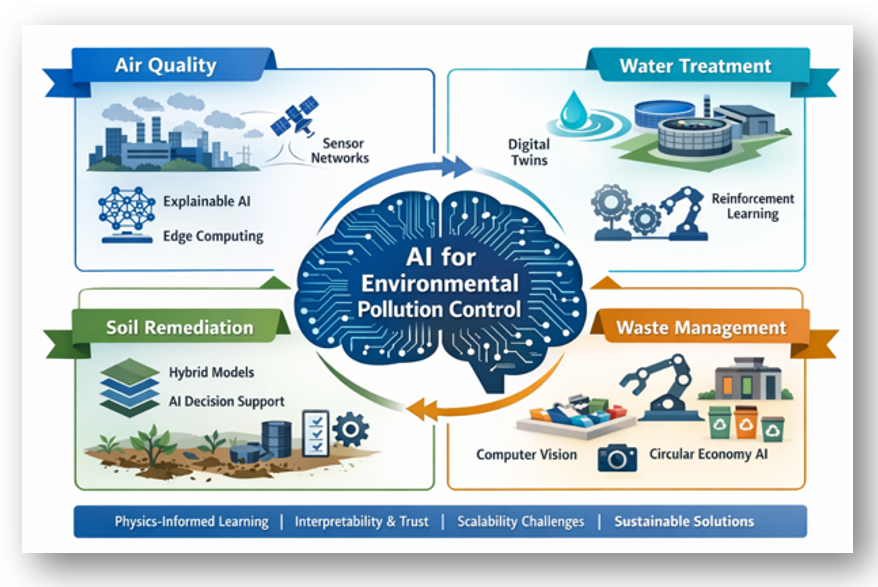
Highlights
Ø This study critically evaluates emerging artificial intelligence and machine learning paradigm
Ø s that are transforming environmental pollution control and abatement strategies;
Ø Next-generation AI approaches, including physics-informed modelling, explainable artificial intelligence, and digital twins, enable improved robustness, transparency, and system-level integration;
Ø Applications of advanced AI frameworks across air quality management, water and wastewater treatment, soil remediation, and solid waste management are systematically synthesized;
Ø Key technical, operational, and regulatory challenges limiting large-scale deployment of AI-driven pollution control systems are identified and discussed.
Keywords
INTRODUCTION
Environmental pollution remains a serious problem for the integrity of ecosystems, public health and sustainable development, both at the regional and at the global level. Rapid industrialization, urban growth, population, and intensifying anthropogenic activities have led to an increasing complexity in pollution profiles in air, water, soil, and solid waste systems. Despite decades of advancements in pollution monitoring, pollution treatment technologies, and pollution regulations, many environmental management strategies are reactive, site-specific, and limited in their ability to address dynamic and interconnected processes in pollution. Conventional methods for controlling pollution are grounded primarily in empiricism, mechanistic modeling, and rule-based decision-making methods. While these methods have been successful in controlled or well-characterized environments. They can often struggle with capturing nonlinear interactions, spatiotemporal variability, and uncertainty that are inherent in environmental systems of the real world. Furthermore, the growing data of environmental information generated by sensor networks, remote sensing platforms and smart infrastructure has outpaced the analytical capacity of traditional modeling techniques to cope with the increasing demand for more sophisticated data-driven tools (Sundas et al., 2024; Volf et al., 2024; Sridhar and Parimalarenganayaki, 2025; Hashir et al., 2025). It is in this regard that artificial intelligence (AI) and machine learning (ML) have proven to be powerful enablers in controlling environmental pollution. During the last decade, different types of AI-based schemes have been extensively implemented in several applications for the forecasting of pollutant concentration, estimation of emissions, optimization of processes, and environmental risk assessment. Applications cover a wide range of areas such as air quality prediction, optimization of wastewater treatment processes, mapping of soil contamination or waste management logistics. These early implementations have demonstrated the potential of AI in aiding the extraction of meaningful patterns from complex datasets and improving the predictive performance of AI over traditional approaches. However, the first generation of AI applications in environmental pollution control has been mostly prediction-based, usually of the black box type based on historical data. Such approaches often have poor interpretability, poor generalizability to other sites and reduced robustness in changing environmental conditions. These limitations have constrained their practical deployment, particularly in regulatory and operational contexts where transparency, reliability, and physical consistency are paramount (Mathaba and Banza, 2023; Popescu et al., 2024; Olawade et al., 2024). The recent development of sensing technologies, computational capabilities and artificial intelligence methodologies has introduced a shift towards more sophisticated and integrated artificial intelligence frameworks. Emerging paradigms emphasize the combination of physical and chemical knowledge in learning processes, increased model output explainability, integration of real-time systems, and adaptive decision-making. Concepts like physics-informed machine learning, explainable artificial intelligence, digital twins, edge intelligence, federated learning, and autonomous optimization systems are a step away from isolated data analytics to intelligent environmental management systems. Against this background, a comprehensive and critical synthesis of these new emerging paradigms of AI and ML is timely and needed. While many studies have been done in certain areas of the environment, a cohesive evaluation of the contributions of next-generation AI frameworks to pollution control and abatement in several environmental media is scarce. Moreover, challenges such as data quality, scalability, energy consumption, infrastructure compatibility, and regulatory acceptance still influence the speed of adoption in the real world (Sharma et al., 2022; Rashid and Kausik, 2024; Miller et al., 2025; Yan et al., 2025). This review aims to critically analyze the development and new paradigms for AI and ML in the field of environmental pollution control and abatement. The review combines recent developments in AI methodologies, discusses their application to air quality management, water and wastewater treatment, soil remediation, and solid waste management (SWM), and helps identify challenges and research needs. By offering a structured and forward-looking assessment, this work seeks to clarify the role of AI of the next generation as an enabling tool for more effective, transparent, and sustainable environmental pollution control strategies. In this context, the present review aims to provide a critical and integrative assessment of emerging AI and ML paradigms for environmental pollution control and abatement. Unlike previous studies that focus on individual methodologies, this work synthesizes multiple paradigms within a unified framework, emphasizing their interconnections, strengths, and limitations. The review further examines their applications across major environmental domains, including air, water, soil, and solid waste systems, while critically evaluating challenges related to scalability, interpretability, data requirements, and regulatory acceptance. By bridging the gap between methodological development and practical implementation, this study offers a forward-looking perspective on the role of next-generation AI in enabling adaptive, transparent, and sustainable environmental management. This review focuses on recent developments in AI paradigms for environmental pollution control, primarily covering studies from the last decade. Conventional statistical models and purely empirical approaches are not considered in detail, as the emphasis is on next-generation AI frameworks that integrate physical knowledge, interpretability, and system-level intelligence.
Evolution of artificial intelligence and machine learning in environmental pollution control
The use of artificial intelligence and machine learning tools in environmental pollution control has grown and developed over the last two decades in response mostly to greater data availability and computational capacity. Early attempts have mostly been based on statistical modeling and rule-based expert systems for environmental monitoring and decision-making. While these approaches offered valuable insights under controlled conditions, they were limited in the ability to handle nonlinear relationships, high-dimensional datasets, and complex interactions between environmental variables (Rautela et al., 2024; Ji et al., 2025; Le Goff, 2025). The adoption of conventional machine learning methods such as artificial neural networks, support vector machines, decision trees and ensemble approaches came next, which represented a huge change towards data-driven environmental modeling. These techniques provided a means of better predicting the concentration of pollutants, treatment efficiencies and emission patterns of pollutants from air, water, and soil systems. In wastewater treatment and air quality forecasting, for example, ML-based models proved to be better predictive models than traditional empirical models. However, their effectiveness was often limited because of site-specific training data, limited interpretability, and sensitivity to data quality and variability (Ladi et al., 2022; Supto, 2025; Anik et al., 2025). With the explosive proliferation of environmental datasets produced by sensor networks, satellite-based observations, and smart infrastructure, deep learning methods (e.g., convolutional neural networks and recurrent neural networks) came to the forefront. These methods have been especially successful in the processing of spatiotemporal data, image-based pollution mapping and time-series forecasting. Despite their success, deep learning models posed new challenges concerning the black box behavior of their models, the high computational requirements, and the integration of domain knowledge, thus limiting their acceptance in regulatory and operational settings. More recently, hybrid modeling approaches have emerged that combine both data-driven learning with process-based models and domain expertise. These approaches try to combine the strength of both physical modeling and machine learning to improve their robustness and lower the dependency on large datasets. At the same time, more focus has been put on model transparency, uncertainty quantification and real-time adaptability, which is also in line with the urgent need for trustworthy AI in environmental decision-making (Yuan et al., 2020; Mukonza and Chiang, 2023; Lian et al., 2025; Ekundayo and Ezugwu, 2025). In the context of environmental systems, interpretability extends beyond model transparency in a computational sense. It includes the ability to relate model outputs to physically meaningful variables, regulatory thresholds, and operational decisions. Unlike conventional machine learning contexts where interpretability may focus on feature importance or visualization, environmental applications require explanations that can support risk assessment, policy compliance, and process optimization. The lack of such domain-relevant interpretability has limited the adoption of many data-driven models in real-world environmental management. However, it is important to note that not all deep learning models are equally opaque. For instance, convolutional neural networks applied to satellite imagery and spatial pollution mapping can offer a degree of interpretability through activation maps and feature visualization techniques. Compared to earlier neural network models, such approaches can provide spatially explicit insights into pollution patterns. Nevertheless, these interpretations often remain qualitative and may not fully align with the quantitative and regulatory requirements of environmental decision-making, thereby limiting their practical adoption. The evolutionary path is characterized by a progressive movement from prediction-centric and isolated AI applications towards more integrated, interpretable, and system-oriented AI. Such developments have paved the way for the new generation of AI and ML paradigms that focus on physical consistency, explainability, scalability and operational relevance. These emerging paradigms discussed in the next section are a crucial step to the realization of the practical deployment of intelligent systems for effective environmental pollution control and abatement (Banad et al., 2025). Fig. 1 represents a schematic representation of the evolution of artificial intelligence applied to environmental pollution control. Despite significant advancements, earlier machine learning and deep learning approaches in environmental pollution control have often exhibited limited generalizability across different environmental contexts and this is largely due to their dependence on site-specific datasets, sensitivity to data quality, and lack of integration with governing physical and chemical processes. In many cases, insufficient reporting of model architectures, training procedures, and validation strategies has also limited reproducibility and comparability across studies. These limitations highlight the need for more robust, interpretable, and physically consistent modeling frameworks, which have driven the development of emerging AI paradigms discussed in the following section.
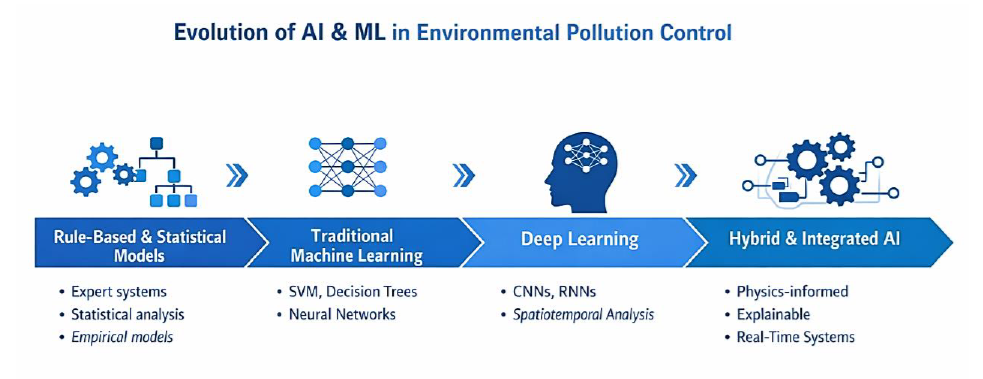
Fig. 1: Schematic representation of the evolution of artificial intelligence and machine learning methods applied to environmental pollution control
Emerging AI and machine learning paradigms for environmental pollution control and abatement
The use of AI and ML in environmental pollution control has moved away from traditional predictive modeling methods and has become more adaptive, interpretable, and system-integrated. Early applications of ML were mostly in regression and classification-based prediction of pollutant concentrations or process performance. While effective in controlled conditions, such approaches can often struggle with non-stationary environmental systems, poor data transferability and poor integration with physical processes. In response, some new AI and ML paradigms are reshaping the way smart systems are designed and implemented for pollution abatement (Peng et al., 2024; Campos et al., 2026; Rajesh et al., 2025). One of the most important developments is the development of physics-informed machine learning (PIML). Unlike purely data-driven models, PIML injects the governing physical, chemical or biological constraints in the learning process. This paradigm in particular is relevant for environmental systems, where the mass balance, the reaction kinetics, the transport phenomena and the thermodynamic principles are established. By incorporating such constraints, PIML models can improve generalizability and physical consistency compared to purely data-driven approaches. However, while PIML can reduce reliance on large datasets by embedding domain knowledge, its performance remains sensitive to data quality, noise, and the accuracy of governing equations. In practice, physics-informed neural networks often require careful tuning and may exhibit convergence challenges, particularly in sparse or highly heterogeneous environmental systems (Zhi et al., 2024; Sun et al., 2024; Ghareeb et al., 2025). Another crucial change is the increasing focus on explainable artificial intelligence (XAI). Conventional deep learning models are often "black boxes", which makes it hard for the models to be accepted in a regulatory and operational context. XAI techniques focus on enhancing the transparency of models by understanding the key input features, quantifying the uncertainty, and explaining the decision pathways. In pollution control applications, explainability is critical for regulatory compliance, risk assessment, and stakeholder trust, especially in air quality management, emission source apportionment and treatment process control (Hassija et al., 2024; Liu et al., 2025). The concept of digital twins has also gained momentum as a transformative AI-enabled paradigm. Digital twins combine real-time sensor data, process models and machine learning algorithms to produce dynamic virtual replicas of physical environmental systems. In the field of pollution abatement, digital twins facilitate scenario testing, predictive maintenance and adaptive control of treatment plants, air quality networks and waste management systems. Their ability to aid in real-time decision making is a shift from reactive to proactive environmental management (Zhang et al., 2025; Venkateswarlu and Sathiyamoorthy, 2025). It is important to distinguish between digital twins and conventional simulation models. A true digital twin involves bidirectional data exchange between the physical system and its virtual counterpart, enabling continuous updating and adaptive control. Many current implementations in environmental systems are still at the level of simulation-based or partially integrated models, rather than fully realized digital twins. In practice, digital twin architectures rely on real-time data acquisition from sensor networks, integration with process-based or data-driven models, and feedback mechanisms for system monitoring and control. The performance of such systems depends on sensor density, data quality, and computational infrastructure required for real-time data assimilation. Digital twins may also incorporate physics-informed models to ensure physical consistency, while reinforcement learning can be embedded within digital twin frameworks for adaptive control. Similarly, edge intelligence and federated learning can support the deployment of these systems in decentralized monitoring environments. These paradigms are therefore complementary rather than competing approaches. Advances in sensing technologies and distributed monitoring have also further incentivized the implementation of edge AI and federated learning frameworks. Traditional centralized AI models require a lot of data transfer and computational resources, which may not be feasible in the large-scale environmental monitoring case. Edge AI enables localized data processing at sensor or device levels, and federated learning, which enables models to be trained together without sharing raw data. These paradigms show significant potential for decentralized environmental monitoring, particularly in applications such as distributed air quality sensing and smart water networks. Recent studies have explored the use of federated learning for multi-location air quality prediction and edge AI for real-time on-device inference in sensor networks, demonstrating reduced data transmission requirements and improved scalability. However, the number of fully implemented environmental applications remains limited, and further validation in real-world systems is required to establish their broader applicability (Brecko et al., 2022; Sah et al., 2025). There is a gradual move towards autonomous and self-optimizing AI systems for pollution control. These systems take a combined approach of reinforcement learning, real-time feedback, and adaptive control strategies to optimise operational parameters with minimal human intervention continuously. Applications include intelligent aeration control in wastewater treatment, adaptive emission control strategies and autonomous remediation systems. While still in an early stage of deployment, such approaches represent a trend towards closed-loop, AI-controlled environmental control systems. Collectively, these emerging paradigms represent a broader trend from prediction-focused AI to integrated, interpretable, and adaptive AI as appropriate for the complexity of controlling environmental pollution. Their successful implementation, however, relies on careful integration into these systems, data quality assurance, and alignment with regulatory and sustainability goals (Parsoya et al., 2025; Hocaoglu et al., 2025; Zamfir et al., 2025). In environmental applications, the term "self-optimizing" may refer to the optimization of different objectives, including energy consumption, effluent quality, chemical usage, or a combination of these factors. In reinforcement learning frameworks, such objectives are encoded through reward functions, which often involve multi-objective trade-offs. Designing stable and physically meaningful reward functions that balance operational efficiency and regulatory compliance remains a significant challenge. Recent developments of physics-informed and hybrid artificial intelligence frameworks have proven to hold great potential for enhancing the reliability and generalizability of environmental pollution models. For example, physics-constrained recurrent neural networks have been created to explicitly enforce mass-conservation principles in water quality and salinization modeling, which improved predictive stability under unseen boundary conditions compared to conventional data-driven models (Raissi et al., 2019). Similarly, physics-informed neural networks (PINNs) have been used in riverine pollutant transport problems by incorporating the advection-dispersion equations into the learning process to provide a way to correctly reconstruct contaminant concentration fields under sparse monitoring conditions (Di Bella et al., 2026). These studies point to the benefits of incorporating physical laws in the architecture of AI to mitigate the limitations of data scarcity and to make models more robust in complex environmental systems. The growing use of digital twin systems is another significant paradigm shift in pollution control applications, especially in water and wastewater treatment systems. Recent implementations of wastewater treatment plant digital twins combine online sensor data, mechanistic process modeling and machine learning algorithms in modular software architectures to enable predictive maintenance, operational diagnostics and scenario analysis (Fuller et al., 2020). Comprehensive reviews of digital twin deployments in wastewater systems further illustrate their potential for enhancing system understanding and operational resiliency, while highlighting challenges around sensor reliability, data integration, and standardization across facilities (Zhang et al., 2025). These case studies suggest that digital twins are moving from the conceptual to the practical as decision support systems for pollution abatement. Autonomous optimization based on reinforcement learning is also of interest in environmental process control. In applications to wastewater treatment, reinforcement learning controllers trained in simulated environments have been shown to optimize the aeration and nutrient removal processes and reduce energy consumption compared to traditional control strategies (Bai et al., 2026; Croll et al., 2023b). Although these studies are mostly performed in simulation or pilot-scale systems, they show the feasibility of closed-loop and self-optimizing control strategies that are dynamic and adjust to the influent variability, presenting a way towards more intelligent and energy-efficient pollution control systems. Addressing issues of transparency and regulatory acceptance, explainable artificial intelligence (XAI) techniques have been increasingly coupled with air quality prediction models. Physics-informed models are typically suited for steady-state or slow-transient processes, whereas reinforcement learning and edge intelligence are more appropriate for real-time monitoring and control applications requiring rapid response. Studies employing explainable AI techniques such as Shapley additive explanations (SHAP) and local interpretable model-agnostic explanations (LIME) have demonstrated potential for identifying key drivers of air pollution and improving model transparency. However, many existing studies are limited in scope and vary in methodological rigor, highlighting the need for more standardized and high-quality evaluations in environmental applications (Sharma et al., 2024; Yenkikar et al., 2025). Such applications are just a few examples of how XAI can help bridge the gap between high-performance AI models and the need for transparent, policy-relevant environmental decision-making. Emerging paradigms centered on decentralized intelligence have further increased the scope of application of AI in environmental monitoring. Federated learning coupled with edge or multi-access computing has been suggested for air quality monitoring across distributed sensor networks, allowing the training of these models in a collaborative way without the need for centralized data sharing while maintaining the privacy of the data and alleviating the communication burdens (Syed et al., 2023). Complementary research on edge AI architectures based on low-power sensor networks shows the feasibility of real-time on-device inference for air pollution monitoring, which greatly lowers the latency as well as the data transmission requirements in an urban environment (Singh et al., 2023). Together, these approaches underscore the increased role of privacy-preserving and resource-efficient artificial intelligence (AI) systems in controlling environmental pollution on a large scale. These case studies demonstrate a distinct shift from isolated, prediction-centric AI models to integrated, physically consistent, explainable, and adaptive intelligence frameworks. Such emerging paradigms, increasingly, are becoming capable of supporting real-world environmental pollution control and abatement by meeting complex data processing methodologies with the operational, regulatory, and sustainability requirements of the environmental systems. The role of AI and ML in pollution control is listed in Table 1. While each paradigm offers distinct advantages, they are not mutually exclusive and are increasingly being integrated into hybrid frameworks. For instance, digital twins can incorporate physics-informed models for improved physical consistency, while edge intelligence and federated learning can enable decentralized and scalable implementations. The suitability of each paradigm also depends on temporal and spatial scales, with some approaches better suited for real-time control and others for long-term system modeling. Therefore, future research should focus on integrative frameworks that leverage the complementary strengths of these paradigms. In addition, uncertainty quantification remains a critical aspect of PIML applications in environmental systems. Approaches such as Bayesian neural networks, ensemble modeling, and probabilistic physics-informed frameworks can be employed to estimate predictive uncertainty, particularly under sparse data conditions or in highly dynamic environments. Furthermore, hybrid formulations combining partial physical knowledge with data-driven components offer flexibility in adapting PIML models to emerging pollutants or complex reaction pathways where governing equations are not fully defined.
Applications of new AI and machine learning paradigms in environmental pollution control
The application of emerging artificial intelligence (AI) and machine learning (ML) paradigms has moved from isolated predictive tools to integrated and adaptive systems in major areas of environmental pollution. In recent research, it has been shown that when combining physical knowledge, interpretability, decentralization and real-time intelligence, more reliable and deployable solutions for the control of pollution are achieved (Karniadakis et al., 2021; Wang et al., 2024). This section provides a review of representative applications and case studies in the areas of air quality management, water and wastewater treatment, soil remediation, and SWM.
Air quality management and control of atmospheric pollution
Air quality management has been one of the most active application areas for AI-based environmental modeling, especially for particulate matter forecasting and gaseous pollutant prediction (Reichstein et al., 2019). While deep learning models have shown high predictive performance, their limited interpretability has constrained their use in regulatory and policy-driven contexts (Samek et al., 2021). Explainable artificial intelligence (XAI) techniques have thus been increasingly incorporated into air quality prediction models to identify dominant meteorological and emission factors. Studies using SHAP and LIME frameworks have shown that variables such as boundary layer height, wind speed, temperature, and emission intensity significantly influence fine particulate matter (PM2.5) and air quality index variability (Chakraborty et al., 2024; Houdou et al., 2024; Agbehadji and Obagbuwa, 2025). However, such interpretability methods may be sensitive to correlated input variables, which are common in air quality datasets, potentially affecting the robustness of feature attribution. Decentralized A paradigms are also gaining attention. Federated learning methods for multi-station and multi-city air quality modeling have shown potential for improved generalization across diverse urban settings, while reducing reliance on centralized data storage (Alwabli, 2024). Complementary edge AI implementations based on low-power sensor networks and on-device inference have enabled near real-time monitoring while reducing data transmission and supporting deployment in resource-constrained environments (Singh et al., 2023). While these approaches demonstrate significant potential, many studies remain limited to specific urban contexts or controlled datasets, highlighting the need for broader validation under real-world conditions.
Table 1: Emerging AL and ML paradigms for environmental pollution control and abatement
|
Emerging AI/ML paradigm |
Core concept |
Environmental relevance |
Representative applications |
Key advantages |
Key limitations |
Sources |
|
Physics-informed machine learning (PIML) |
Integration of governing physical, chemical, or biological laws into data-driven models |
Improves physical consistency, generalizability, and robustness in complex environmental systems |
Air dispersion modeling; wastewater treatment optimization; contaminant transport in soils and aquifers |
Physically consistent predictions; improved extrapolation; reduced dependence on purely empirical data |
Sensitivity to noisy and sparse data; difficulty in defining accurate governing equations for complex systems; convergence instability in PINNs; high computational cost; challenges in scaling to multi-component environmental systems |
|
|
Explainable artificial intelligence (XAI) |
Techniques for interpreting model predictions and identifying key influencing factors |
Supports regulatory acceptance, risk assessment, and evidence-based environmental management |
Emission source apportionment; air quality prediction; process diagnostics in treatment systems |
Improved transparency; enhanced trust; supports policy and decision-making |
Trade-off between interpretability and predictive accuracy; instability of attribution methods (e.g., SHAP) under correlated variables; lack of standardized interpretability metrics; limited direct actionability for operational decisions |
|
|
Digital twins |
Dynamic virtual replicas of physical systems with bidirectional data exchange, integrating real-time data, models, and AI |
Enables adaptive, predictive, and proactive environmental system management |
Smart wastewater treatment plants, air quality monitoring networks, waste management systems |
Real-time optimization; predictive maintenance; scenario analysis and decision support |
High infrastructure and sensor requirements; challenges in real-time data integration and calibration; need for bidirectional coupling for true digital twin functionality; high computational and maintenance costs; lack of standardization |
|
|
Edge intelligence |
On-device or near-sensor AI processing for decentralized data analysis |
Enables real-time monitoring and decision-making in distributed environmental systems |
Distributed air quality monitoring; smart water networks; remote sensing systems |
Reduced data transmission; improved responsiveness; scalable decentralized monitoring |
Limited computational and memory resources; model simplification may reduce accuracy; vulnerability to noisy or intermittent sensor data; challenges in coordination across distributed nodes |
|
|
Federated learning |
Collaborative model training across distributed nodes without sharing raw data |
Enhances cross-regional learning and reduces reliance on centralized data systems |
Multi-city air pollution modeling; regional water quality prediction; distributed monitoring networks |
Improved generalization across heterogeneous datasets; reduced data transfer; enhanced scalability |
Model heterogeneity affecting convergence; challenges with non-IID environmental data; communication overhead; potential performance reduction compared to centralized models |
|
|
Autonomous optimization systems |
AI-driven closed-loop control systems using reinforcement learning and feedback mechanisms |
Enables adaptive and self-optimizing environmental control systems |
Intelligent aeration control in wastewater treatment; adaptive emission control; automated remediation systems |
Continuous optimization; reduced operational cost; adaptive response to dynamic conditions |
Dependence on simulation-based training; limited real-world validation; difficulty in defining multi-objective reward functions; safety and regulatory concerns, and high data and computational requirements |
Water and wastewater treatment systems
Water and wastewater treatment systems are one of the most subordinate fields for AI-powered pollution control because of well-instrumented infrastructure, as well as testing models of processes. Digital twin frameworks incorporating mechanistic models, real-time sensor data and ML modules have been developed to facilitate predictive maintenance, fault diagnosis and operational scenario analysis in wastewater treatment plants (Wang et al., 2024; Rodriguez-Alonso et al., 2024). These systems allow for virtual experimentation under different influent and operation conditions without interruption of plant operations. Autonomous optimization using reinforcement learning (RL) has also been widely studied with regard to wastewater process control. RL-based controllers based on benchmark simulation models have shown lower aeration energy use while ensuring regulatory effluent standards, outperforming traditional control strategies in simulation and pilot-scale studies (Hernandez-del-Olmo et al., 2023; Croll et al., 2023a; Alluhaidan et al., 2026). Although most implementations still fall into a pre-industrial stage, these results show the feasibility of closed-loop, self-optimizing treatment systems. Physics-informed machine learning methods further improve the modeling of water pollution by incorporating mass balance equations and reaction kinetics into learning architectures. Applications of physics-informed neural networks (PINNs) for contaminant transport and fate modeling are more robust and to require less data in the context of sparse monitoring requirements (Biazar et al., 2025). Collectively, these studies point to the potential of hybrid digital twin- physics-informed-RL frameworks for intelligent and energy-efficient water pollution control. It should be noted that many reinforcement studies in wastewater treatment are based on simulation environments with idealized influent conditions. In practice, wastewater systems are highly stochastic, with significant temporal variability in flow and pollutant load, which can affect model performance. The transfer of RL models from simulation to real-world systems therefore, remains a key challenge.
Soil pollution and contaminated site remediation
Soil pollution and subsurface contamination are serious problems because of high spatial heterogeneity, low sampling density, and complex physicochemical interactions in the processes of contaminant transport and transformation. Unlike air and water systems, where it is easier to constantly monitor the situation, soil systems are often prone to sparse and irregular datasets, making accurate prediction and remediation planning particularly difficult. Emerging AI paradigms have seen an incorporation into the problem of these challenges, with data-driven modeling of the problem coupled with information regarding the problem. Physics-informed machine learning (PIML) and hybrid modeling methods have proven especially promising in this regard. By incorporating governing equations, such as advection-dispersion transport, sorption kinetics and reaction mechanisms, into learning frameworks, these models can achieve better prediction accuracy under limited data conditions. For example, physics-informed neural networks have been used for the reconstruction of contaminant distributions and estimation of transport parameters in heterogeneous subsurface environments and have shown better generalization than purely data-driven methods (Keçeci et al., 2024; Ke et al., 2025; Rabbi, 2025). However, the performance of these models is still sensitive to the quality of the data and the reliability of the underlying physical assumptions, especially for very heterogeneous soils or multi-contaminant systems. Hybrid AI approaches using geospatial data, remote sensing and machine learning have also been used to map soil contamination and measure ecological risks. Techniques like random forest, support vector machines and deep learning models have been developed to predict heavy metal distribution and identify pollution hotspots. While these approaches can be used to capture nonlinear relationships between environmental variables, their transferability across sites is limited because of variations in soil properties, climatic conditions and pollution sources (Minasny et al., 2024). AI-driven decision support systems are also playing an increasing role in remediation planning and technology selection. By combining predictive models and optimization algorithms, these systems can examine remediation strategies based on various criteria, such as cost, efficiency, and environmental impact (Nie et al., 2024). Such approaches have the potential for more adaptive and site-specific remediation planning. However, their practical implementation is limited by uncertainties in model predictions, limited access to high-quality training data, and difficulty validating model outputs under real-world conditions. Despite these advancements, the use of AI in managing soil pollution is seen to be less advanced than in air and water systems. Key challenges include scarcity of data, high spatial variability, and complexity of subsurface processes, which affect the reliability and scalability of models. Future studies should be focused on combining the physics-informed models with geospatial intelligence, enhancing the quantification of uncertainties, and developing standardized validation frameworks to facilitate the practical implementation of AI-driven soil remediation strategies.
Solid waste management and circular economy applications
SWM has also benefited greatly from progress in computer vision and deep learning, specifically in automated waste sorting and material recovery. Deep convolutional neural networks have proven to be powerful for the classification of municipal and industrial waste streams with high classification accuracy, resulting in improved recycling efficiency and reduced contamination in sorting facilities. Recent industrial-scale studies have shown that AI-driven sorting systems, particularly those based on computer vision and deep learning, have demonstrated high accuracy in waste classification, contributing to improved sorting efficiency and reduced contamination in recycling streams. However, quantitative improvements in throughput and large-scale operational performance remain less well documented and require further validation (Sirimewan et al., 2024). Beyond sorting, AI-enabled optimization models and digital twins have been integrated in waste collection logistics and planning at the facility level to facilitate lessening fuel consumption, increased routing efficiency, and maximized resource recovery in line with circular economy goals (Niero et al., 2021). Table 2 represents the application of AI and ML in pollution control. Despite these advances, challenges remain in the areas of waste heterogeneity, sensor reliability and economic feasibility, especially in developing regions. Nevertheless, existing supporting evidence suggests that AI-assisted waste management systems can make a meaningful contribution towards sustainable waste management, provided it is supported by the right policy and infrastructure. While these applications demonstrate the potential of AI in environmental systems, many reported studies are based on controlled datasets, simulation environments, or pilot-scale implementations. Further validation under real-world conditions is required to assess scalability, robustness, and long-term performance. Despite their potential, these emerging paradigms must be critically evaluated in terms of scalability, reproducibility, and real-world applicability. Differences in temporal and spatial scales, data availability, and system dynamics may influence the suitability of specific AI approaches across environmental domains. Therefore, integrated frameworks that combine multiple paradigms, such as physics-informed digital twins or edge-enabled federated systems, are likely to play a crucial role in advancing intelligent and adaptive pollution control strategies.
Table 2: Applications of emerging AI and machine learning paradigms across major environmental pollution domains
|
Application domain |
Emerging AI/ML paradigm |
Target pollution problem |
Key outcomes and benefits |
Sources |
|
Air quality management |
Physics-informed ML |
Spatiotemporal prediction of PM₂.₅, NO₂, O₃ under complex meteorology |
Improved generalization; physically consistent forecasts |
|
|
Air pollution control |
Explainable AI |
Emission source identification and policy-relevant attribution |
Transparent decision support; regulatory trust |
|
|
Distributed air monitoring |
Edge AI & federated learning |
Real-time urban air quality monitoring |
Low latency; privacy-preserving learning |
|
|
Water and wastewater treatment |
Digital twins |
Process optimization and predictive maintenance in WWTPs |
Energy savings; improved effluent quality |
|
|
Wastewater process control |
Autonomous optimization (reinforcement learning) |
Aeration and nutrient removal control |
Continuous self-optimization; reduced operational cost |
|
|
Surface and groundwater |
Physics-informed ML |
Contaminant transport and fate prediction |
Reduced data demand; enhanced robustness |
|
|
Soil contamination |
Hybrid ML models |
Heavy metal distribution and risk assessment |
Improved spatial prediction accuracy |
|
|
Remediation planning |
AI-based decision support |
Selection and optimization of remediation strategies |
Cost-effective and adaptive remediation |
|
|
SWM |
Computer vision and ML |
Waste sorting and material recovery |
Improved recycling efficiency |
|
|
Circular economy systems |
Digital twins and system-level AI |
Waste-to-resource optimization |
Enhanced resource recovery and lifecycle efficiency |
WWTP: Wastewater treatment plant
Challenges and research gaps in environmental pollution control using AI
Among these challenges, data quality and model generalizability represent the most critical barriers to large-scale deployment, while issues such as computational cost and regulatory integration are emerging but increasingly important considerations. Despite great progress in artificial intelligence and machine learning for environmental pollution control and abatement, there are still several technical, operational and institutional challenges that constrain the large-scale deployment of AI and machine learning. Addressing these challenges is the key to moving promising methods based on AI from experimental studies to reliable real-world environmental applications (Li et al., 2025; Morain et al., 2025). One of the most persistent problems is the quality and availability of data. Environmental datasets are often heterogeneous, incomplete and subject to measurement uncertainty, sensor drift and spatial and temporal gaps. Many AI models require large and high-quality datasets for their training, which may not be available in developing regions or for emerging contaminants. This limitation works to limit the model transferability and raises the risk of biased or overfitted predictions (Koldasbayeva et al., 2024). Model generalizability and scalability are important research bottlenecks. AI models created for certain sites/conditions often don't perform well when applied to different environmental conditions. Variations in climate, source of pollutants, operational practices and regulatory standards can have a strong impact on model reliability. Developing the scalable frameworks that can be adapted to different environmental settings without extensive retraining remains an open problem (Alnafrah, 2025; Ukoba et al., 2025). The lack of interpretability and transparency in complex AI models is a major barrier to regulatory acceptance and trust for operations. Black-box models are often hard to validate, explain and justify in compliance-oriented environmental management. While explainable AI approaches provide promising solutions, there is currently little agreement on standardized measures of interpretability that can be used in environmental decision-making (Saeed and Oplin, 2023). Computational and energy requirements of advanced AI models are a new type of concern, especially in the sustainability context. Deep learning and real-time optimization frameworks may have significant computational resource needs that can lead to increased energy consumption and carbon footprints. Model complexity and environmental sustainability goals are still a major gap in research (Bolon-Canedo et al., 2024; Ariyanti et al., 2025). Integration of AI systems into the existing environmental infrastructure and governance frameworks is also challenging. Many pollution control facilities are based on legacy systems that are not designed for real-time data integration or for autonomous control. Furthermore, regulatory frameworks are often evolving more slowly than technological developments, which can lead to uncertainty about who is responsible for ensuring accountability, validation, and ethical deployment of AI-driven solutions (Koley et al., 2025). Ethical, social and equity considerations require more attention for AI-enabled environmental management. Data-driven systems will inadvertently perpetuate environmental inequalities if implemented without caution for regional disparities and stakeholder involvement. Future research should focus on inclusive data practices, transparent decision-making and human-in-the-loop approaches to ensure responsible and equitable use of AI in pollution control (Santos and Carvalho, 2025). Another important consideration is the environmental footprint of AI systems themselves. The computational and energy requirements of advanced machine learning models can contribute to increased carbon emissions, raising concerns regarding the sustainability of AI-driven solutions. Emerging concepts such as "Green AI" emphasize the development of energy-efficient algorithms and model architectures to minimize environmental impact. Furthermore, AI has the potential to support rapid decision-making during extreme environmental events, such as chemical spills, floods, or wildfires, by enabling real-time data assimilation and predictive analytics. The development of regulatory, ethical, and governance frameworks is essential to ensure the responsible, transparent, and equitable deployment of AI technologies in environmental management.
FUTURE DIRECTIONS AND OUTLOOK
The future of artificial intelligence and machine learning in environmental pollution management is anticipated to be driven by a gradual shift from isolated standalone applications that focus on prediction to integrated and adaptive systems, as well as decision-oriented. Rather than replacing conventional environmental engineering approaches, next-generation AI is likely to serve as an enabling layer to increase system understanding, operational efficiency and policy support (Santos and Carvalho, 2025). One important direction for the future is the further incorporation of domain knowledge and physical principles into the AI models. Physics-informed and hybrid modeling frameworks are likely to become more critical in determining how to improve the robustness, interpretability, and transferability of models in a range of environmental settings. Such approaches can help bridge the gap between data-oriented intelligence and process-oriented environmental science, especially in data-scarce or highly dynamic systems (Wu et al., 2024). The ongoing development of explainable and trustworthy AI will be critical for broader regulatory acceptance and operational adoption. Future research efforts could focus on the standardized development of interpretability metrics, uncertainty quantification approaches, and validation protocols specific to environmental applications. These efforts are critical in fostering confidence among regulators, practitioners and stakeholders who are relying on AI-assisted decision-making (Nastoska et al., 2025). Advances in sensing technologies, edge intelligence, and digital infrastructure are anticipated to provide system-level environmental management in real-time. Digital twins and decentralized AI frameworks may be useful for adaptive control of treatment plants, emission networks, and monitoring systems, enabling more proactive and resilient pollution abatement strategies. However, such systems should be designed with scalability, cybersecurity, and interoperability in mind (Afrazi et al., 2025). From a governance perspective, the alignment of solutions driven by artificial intelligence with policy, regulatory and sustainability goals will become more important. Future frameworks should focus on transparency, accountability, and human oversight, and ensure that AI systems are used to complement, not replace, expert judgment. Integrating AI tools with environmental governance may also aid in more responsive and evidence-based policymaking (Cordeiro et al., 2025). Overall, the successful implementation of new AI and ML paradigms for environmental pollution control is likely to rely on interdisciplinary partnerships among environmental scientists, engineers, data scientists, policy makers and stakeholders. By addressing current challenges and focusing on responsible innovation, AI-enabled systems have the potential to make a meaningful contribution to sustainable and resilient environmental pollution control strategies. From a practical perspective, the successful implementation of AI-driven pollution control systems requires a systematic approach that includes data acquisition and quality assurance, model selection and validation, integration with physical infrastructure, and continuous monitoring and updating. Pilot-scale studies and real-world case implementations are essential for evaluating system performance under dynamic environmental conditions. In addition, standardized benchmarking frameworks and performance metrics are needed to assess the effectiveness, scalability, and sustainability of different AI paradigms across environmental applications.
CONCLUSION
The growing complexity of environmental pollution and the inadequacy of standard monitoring and control methods have accelerated the use of artificial intelligence and machine learning in environmental management. This review has reviewed the development of AI-based methods and identified the rise of the next generation paradigms, which go beyond prediction-oriented modeling and towards more integrated, interpretable and adaptive systems. Among the emerging paradigms, physics-informed and hybrid machine learning approaches show excellent potential to enhance model reliability and generalizability by incorporating domain knowledge into data-driven frameworks. Explainable artificial intelligence plays a role in the improvement of transparency and the acceptance of regulation, although its utility is based on the development of stable and actionable interpretation methods. Digital twin frameworks and autonomous optimization systems provide exciting opportunities for real-time monitoring and adaptive control of environmental processes. Still, their implementation on a large scale is limited by data availability, infrastructure needs, and system integration challenges. Similarly, edge intelligence and federated learning offer a scalable solution for decentralized environmental monitoring, but there are issues associated with model consistency, computational issues, and coordination in distributed systems that need to be addressed. Despite these advancements, there are still several critical challenges that are limiting the practical deployment of AI-driven solutions in the control of environmental pollution. These include data heterogeneity and scarcity, non-transferability of models between different environmental conditions, high computational and energy demands, and the absence of standardized validation and benchmarking frameworks. In addition, regulatory acceptance, reproducibility of results and integrating AI systems into existing environmental governance structures are still significant barriers. Tackling these challenges demands moving from prediction-focused, siloed models to integrative and system-level approaches that employ a mix of physical knowledge, data-driven intelligence and domain expertise. Future research should be focused on the development of hybrid and multi-scale frameworks combining physics-informed modeling, real-time data assimilation and adaptive optimization. Greater emphasis is required on uncertainty quantification, reproducibility, and the development of standardized evaluation metrics to allow meaningful comparison between studies. In addition, new technologies like generative artificial intelligence and large language models could offer new capabilities for knowledge integration, decision support and human-ai interaction in environmental systems, albeit their role is yet to be fully explored. Overall, AI and ML should not be considered as a replacement for the traditional practices of environmental engineering, but rather as a complementary tool that will improve the understanding of the system, assist in the decision-making process, and facilitate more adaptive and resilient approaches to pollution control. The smooth transition from research to actual implementation will rely on interdisciplinary cooperation, strong validation and the creation of transparent, accountable and context-specific AI solutions that are compatible with environmental and societal objectives.
AUTHOR CONTRIBUTIONS
J. Aravind was responsible for searching the bibliography, selecting the relevant references, coding the references, writing the initial manuscript draft, synthesizing the manuscript, and revising the final manuscript version. J. Nouri was responsible for conceptualizing the draft, analyzing the 'references' coding, and reviewing the whole manuscript. S.M. Tehrani reviewed the manuscript draft and checked the references.
ACKNOWLEDGEMENT
Authors are thankful to their respective institutions.
CONFLICT OF INTEREST
The authors declare no potential conflict of interest regarding the publication of this work. In addition, the ethical issues including plagiarism, informed consent, misconduct, data fabrication and, or falsification, double publication and, or submission, and redundancy have been completely witnessed by the authors.
OPEN ACCESS
©2026 The author(s). This article is licensed under a Creative Commons Attribution 4.0 International License, which permits use, sharing, adaptation, distribution and reproduction in any medium or format, as long as you give appropriate credit to the original author(s) and the source, provide a link to the Creative Commons license, and indicate if changes were made. The images or other third-party material in this article are included in the ' 'article's Creative Commons license, unless indicated otherwise in a credit line to the material. If material is not included in the ' 'article's Creative Commons license and your intended use is not permitted by statutory regulation or exceeds the permitted use, you will need to obtain permission directly from the copyright holder. To view a copy of this license, visit: http://creativecommons.org/licenses/by/4.0/
PUBLISHER'S NOTE
GJESM Publisher remains neutral regarding jurisdictional claims in published maps and institutional afflictions.
Negative AI Statement
The author(s) declared that no AI tools or services were used or highly applied during the preparation of this work.
ABBREVIATIONS
|
% |
Percent |
|
AI |
Artificial Intelligence |
|
LIME |
Local interpretable model-agnostic explanations |
|
ML |
Machine learning |
|
PIML |
Physics-informed machine learning |
|
PINNs |
Physics-informed neural networks |
|
PM2.5 |
Fine particulate matter (2.5 micrometers or less in diameter) |
|
RL |
Reinforcement learning |
|
SHAP |
Shapley additive explanations |
|
SWM |
Solid waste management |
|
WWTPs |
Waste Water Treatment plants |
|
XAI |
Explainable artificial intelligence |
OPEN ACCESS
©2026 The author(s). This article is licensed under a Creative Commons Attribution 4.0 International License, which permits use, sharing, adaptation, distribution and reproduction in any medium or format, as long as you give appropriate credit to the original author(s) and the source, provide a link to the Creative Commons license, and indicate if changes were made. The images or other third party material in this article are included in the article’s Creative Commons license, unless indicated otherwise in a credit line to the material. If material is not included in the article’s Creative Commons license and your intended use is not permitted by statutory regulation or exceeds the permitted use, you will need to obtain permission directly from the copyright holder. To view a copy of this license, visit: http://creativecommons.org/licenses/by/4.0/
PUBLISHER NOTE
GJESM Publisher remains neutral concerning jurisdictional claims in published maps and institutional affiliations.
MAJOR DATABASES, CITATION METRICS & CAPTURES
Google Scholar | Scopus - SJR | Web of Science | Biological Abstracts: Clarivate | Biosis Preview: Clarivate | PlumX Metrics | Altmetrics | Mendeley |
CURRENT PUBLISHER

| Article View | 4,687 |
| PDF Download | 1,564 |


Letters to Editor
[1] Letters that include statements of statistics, facts, research, or theories should include appropriate references, although more than three are discouraged.
[2] Letters that are personal attacks on an author rather than thoughtful criticism of the author’s ideas will not be considered for publication.
[3] Letters can be no more than 300 words in length.
[4] Letter writers should include a statement at the beginning of the letter stating that it is being submitted either for publication or not.
[5] Anonymous letters will not be considered.
[6] Letter writers must include their city and state of residence or work.
[7] Letters will be edited for clarity and length.