
5.2
CiteScore
2.9
Impact Factor
Document Type : RESEARCH ARTICLE
Authors
1 Department of Midwifery, Aceh Polytechnic of Health, Ministry of Health, Aceh Besar, Indonesia
2 Research Center for Biomass and Bioproducts, National Research and Innovation Agency of Indonesia, Serpong, South Tanggerang, 15314, Indonesia
3 Research Center for Computing, National Research and Innovation Agency, Cibinong, Bogor, 16911, Indonesia
Graphical Abstract
Highlights
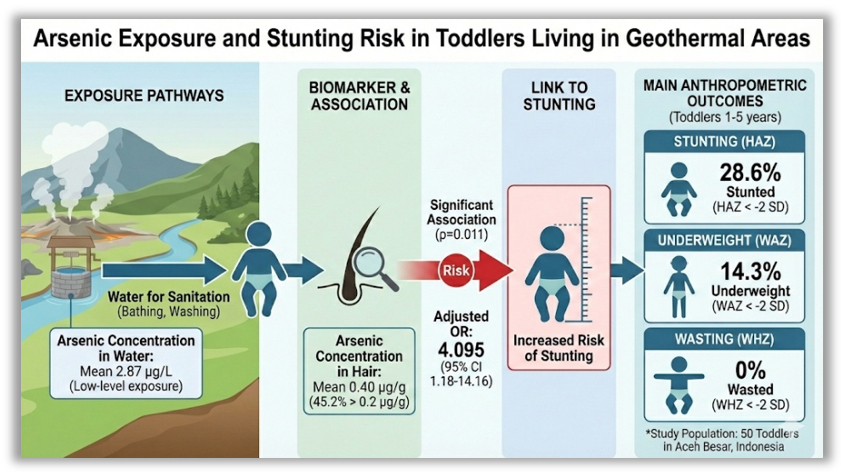
Ø 84.31 percent of groundwater samples exceeded World Health Organization arsenic limits (>10 microgram per liter);
Ø 96.08 percent of toddlers’ hair contained arsenic (mean = 17.90 microgram per liter);
Ø Hair arsenic levels correlated moderately with stunting (Spearman = 0.59);
Ø Each 1 µg/g increase in hair arsenic associated with 15.7% increase in the odds of stunting;
Ø First evidence linking geothermal arsenic exposure to toddler growth impairment in Aceh.
Keywords
INTRODUCTION
The Indian Ocean tsunami of 2004 has significantly changed the hydrogeological regime in the Aceh Province due to the intrusion of seawater into the land and groundwater systems, which has increased the salinity level and deteriorated the quality of water in the region, including the Aceh Besar Regency (McLeod et al., 2010). The geological characteristics of the Mesjid Raya District are defined by the impact of marine waters and volcanic activity, attributed to its position in the outflow zone of the active stratovolcano Seulawah Agam. Geothermal manifestations, such as the hot springs of Ie Seuum, occur along the fault segments of Aceh and Seulimeuen. This has enabled the ascent of magmatic fluids and the occurrence of significant water-rock interactions, which have elevated the concentration of primary cations including potassium, aluminum, iron, magnesium, and hydrogen ions as well as secondary minerals such as sulfates, pyrite, and carbonates. This has also increased the concentration of toxic trace elements such as arsenic (As), cadmium, mercury, lead, and aluminum. Arsenic is a major environmental and health risk due to its toxic properties and persistence in water. In the Ie seuum geothermal area, the concentration levels were reported to be 161 parts per billion (ppb) in 2021, which is beyond the World Health Organization and Indonesian regulations on the allowed concentration levels, which are 50 ppb for clean water and 10 ppb for drinking water (Irnawati et al., 2021; Kementerian Kesehatan, 2017). Prior studies have predominantly concentrated on the geochemical analysis of groundwater or the remediation of water contaminated with arsenic (Kapani et al., 2024; Nasher, 2022; Rahman et al., 2023; Rangasamy and Muniyandi, 2024), while there has been minimal incorporation of environmental and epidemiological methodologies. While drinking water remains the dominant exposure route, recent comprehensive risk assessments have challenged the “drinking-water-only” paradigm (Hu et al., 2024). Studies following the 2020 Taal volcanic eruption revealed that dietary intake (via crop irrigation) and dermal absorption (via bathing and sanitation) significantly contribute to total body burden (Luo et al., 2025). Recent toxicological reviews have emphasized dermal exposure as a significant yet often neglected route, wherein arsenic present in bathing water can circumvent first-pass metabolism, thereby threatening skin integrity and overall systemic health. This multi-pathway exposure is particularly concerning for toddlers, whose hand-to-mouth behaviors and higher surface-area-to-body-weight ratios amplify their vulnerability to contaminated sanitation water and soil (UNICEF, 2025; Patel et al., 2023). The locality functions as a residential and leisure area, where the inhabitants relying on accessible water for consumption, domestic activities, irrigation, and raising animals, which consequently puts them at risk of chronic arsenic poisoning. Biologically, the link between chronic arsenic exposure and growth impairment (stunting) is driven by complex molecular mechanisms. Previous studies from 2024 and 2025 indicate that arsenic induces systemic oxidative stress and mitochondrial dysfunction, which directly inhibit cellular proliferation in growth plates (Tian et al., 2025). Epigenetic studies further indicate that higher levels of arsenic exposure are positively correlated with deoxyribonucleic acid (DNA) methylation (Kile et al., 2012; Kim, 2024). Recent studies using animal models have provided additional confirmation that exposure to arsenic markedly elevates malondialdehyde levels while reducing the activity of superoxide dismutase in reproductive and developmental tissues (Irnawati et al., 2023). Epidemiological evidence reinforces these mechanistic findings. Recent birth cohort studies in South and Southeast Asia have significant associations of arsenic with epigenetic changes, DNA damage, abnormal birth outcomes, and elevated mortality (Su et al., 2025; Hu et al., 2024). The prevalence of stunting among the population in the Mesjid Raya District is 25.9 percent (%) compared to the national average (Al Rahmad, 2019). Past studies revealed that the level of geogenic arsenic contamination of water and sediments was severe, up to sixteen times the permissible limit, and the duration of exposure affected the growth of toddlers (probability (p) = 0.046) and development (p = 0.039) of 156 children below five years of age (Fitra et al., 2024). Nonetheless, a significant knowledge gap persists concerning the direct connection between environmental exposure pathways and these child health outcomes. Prior studies have not sufficiently measured the relationship between arsenic buildup in biological markers (such as hair) and anthropometric indicators of stunting, nor have they distinguished the effects of water utilized for sanitation compared to that used for consumption. Thus, this study investigates the relationship between arsenic exposure using water for daily use and the prevalence of stunting among children below five years of age. The study was conducted in the Suum, Aceh Besar Regency, Indonesia, in 2023.
MATERIALS AND METHODS
The study area
This study involved toddlers aged 1–5 years (y) from eight villages in Mesjid Raya District, Aceh Besar Regency, surrounding the Ie Seuum geothermal river (Ie Seuum, Meunasah Mon, Meunasah Kulam, Meunasah Keude, Berandeh, Paya Kameng, Ruyung, and Lamreh), selected by cluster random sampling with number (N) = 50; two-proportion hypothesis test). The criteria for inclusion specified that maternal residence should be ≥5 years before childbirth, current residence and the use of well or local water, refrain from using hair dyes or straighteners, no ongoing treatment for chronic diseases, and the necessity of obtaining parental informed consent. Sampling and data collection occurred during community health (Posyandu) activities in May–June 2023 with assistance from local health personnel. Arsenic concentrations in water and hair and toddler growth indicators were analyzed at the Research and Analytical Chemistry Laboratories, Faculty of Mathematics and Natural Sciences, Universitas Syiah Kuala, Aceh Province, Indonesia.
Water sampling technique
Water samples were collected with a plastic dipper and stored in nitric acid (HNO3) cleaned polyethylene bottles, pre-rinsed three times with sample water. Samples were taken at 3 different points. The measurements taken in the field included temperature, potential of hydrogen (pH), total dissolved solids (TDS), conductivity, salinity, and sampling coordinates, determined using portable digital thermometers, pH meters, TDS meters, conductometers, and a global positioning system (GPS). Samples for laboratory analysis were preserved with HNO3 to pH < 2 and stored at 4 ± 2 degree Celsius (°C). Aquadest is used as a blank (Irnawati et al., 2021).
Hair sampling and preparation techniques
Hair samples were obtained from five distinct areas of the scalp, cut to a length of 0.5 centimeters (cm) from the root with stainless steel scissors while ensuring dry, non-oily conditions (Vogliardi et al., 2015). A 0.2 grams (g) sample was washed with deionized water, shaken for 30 minutes, digested in a 100 milliliters (mL) Erlenmeyer flask with 4 mL sulfuric acid (H₂SO₄) and 3 mL HNO₃ concentrated, then heated with incremental HNO₃ until a brown–black color formed. Addition of 2 mL perchloric acid (HClO₄) and reheating produced a clear yellow solution, which was diluted to 100 mL with deionized water (Irnawati et al., 2021).
Arsenic analysis with graphite furnace- atomic absorption spectrometry (GF-AAS)
Arsenic concentration in the sample was determined utilizing an atomic absorption spectrophotometer (AAS), graphite furnace (THGA), autosampler (AS900). The prepared sample was injected as much as 20 microliters (μL) with Ausampler into furnace tube and atomized. Sample measurements were made at a wavelength of 193.70 nanometer (nm). Each sample was measured 3 times (EPA, 1998). Method validation including calibration curves, Limit of Detection, and Limit of Quantification has been done in previous studies (Irnawati et al., 2021).
Measurement of growth and development of children under five
Growth measurement using a calibrated Xiaomi Mi Smart Scale digital weight scale. Height measurement using a microtomies staturameter height measuring instrument. Growth gauges use weight-for-age, height-for-age, and weight-for-height indicators. Development measurement is performed utilizing early stimulation, detection, and intervention in growth and development (SDIGD) kits and forms.
Statistical analysis of arsenic exposure and growth outcomes
Arsenic concentrations in both water and hair were examined as continuous variables. Height-for-age was recorded as an ordinal categorical variable (normal, stunted, severely stunted) and encoded as ordered ranks for analysis. Associations between continuous variables were assessed using both Pearson (r) and Spearman (ρ) correlation coefficients, while associations involving ordinal height-for-age were evaluated using Spearman's rank correlation. Stunting was defined as height-for-age classified as Stunted or Severely Stunted. The correlation between hair arsenic levels and stunting was analyzed through logistic regression, with findings expressed as odds ratios (OR) and 95% confidence intervals (CI). Differences in hair arsenic concentrations between stunted and non-stunted children were assessed using the Mann–Whitney U test. Statistical significance was set at p < 0.05. All statistical evaluations were executed utilizing a programming and numeric computing platform (MATLAB); R2021a (version 9.10.0.1602886).
RESULTS AND DISCUSSION
Water Sampling Location and arsenic Levels in each sample
Fig. 1 integrates hydrogeological and arsenic data, revealing a spatial gradient in Mesjid Raya District linked to Ie Seuum geothermal spring proximity. Arsenic concentrations decreased with increasing distance from the Ie Seuum geothermal spring, indicating dilution and attenuation during groundwater flow, but Meunasah Keude Village along the coast showed anomalously high levels. The intrusion of seawater and the presence of sulfide-rich marine sediments probably facilitated the release of arsenic, as reducing conditions promote arsenic mobilization through reductive dissolution of iron oxyhydroxides (Mensah et al., 2022). The spatial pattern in Fig. 1 matches the chloride-type hydrothermal system of Ie Seuum, characterized by a reservoir temperature of ~168 °C and high natrium and chloride concentrations that enhance arsenic solubility via ion exchange and complexation (Idroes et al., 2019). The reduction of arsenic concentrations away from the spring demonstrates the mixing of deep geothermal fluids and shallow groundwater that is lower in mineral content. Spatial analysis, therefore identifies two dominant geogenic factors influencing arsenic distribution: hydrothermal upflow from the Seulawah Agam system and coastal aquifer processes driven by saline intrusion and redox reactions, which elucidate the differing concentrations observed inland and along the coast in the Mesjid Raya District.
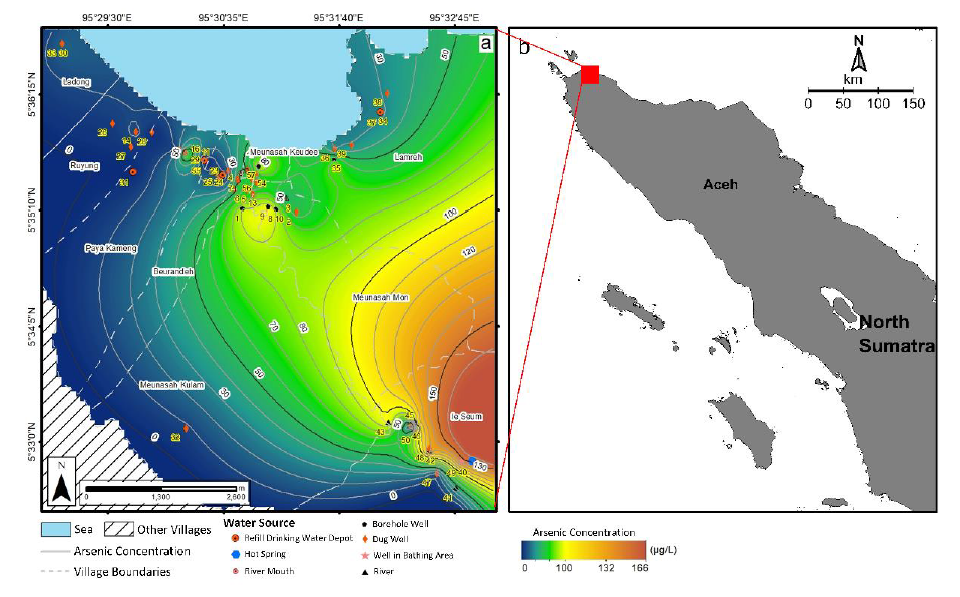
Fig. 1: Geographical location of the study area of arsenic content distribution in Mesjid Raya District, Aceh Besar Regency, Indonesia
Water characteristic data
In conjunction with sampling, data analysis was performed in situ in fields such as pH, TDS, Electrical Conductivity (EC), temperature, and salinity with standard deviations (SD). The findings are illustrated in Fig. 2 and Table 1. All water samples met pH standards (6.5–8.5) (Kementerian Kesehatan, 2010). However, eight locations exceeded World Health Organization (WHO) TDS thresholds (500 and 1000 milligrams per liter (mg/L) (WHO, 2011). Meunasah Keude exhibited the highest TDS, attributed to coastal saline intrusion and enrichment with sodium (Na⁺), chloride (Cl⁻), magnesium (Mg²⁺), and sulfate (SO₄²⁻) (Adjovu et al., 2023). Similarly, Ie Seuum samples surpassed the <0.5% freshwater salinity limit, reflecting hydrothermal influence. Characterized as a chloride-type system (Cl⁻) 2656.99 mg/L; Na⁺ 2630.03 mg/L) with reservoir and surface temperatures of ~168 °C and 84.2 °C, respectively, and pH 6.61. The origin of this deep reservoir, which experiences minimal meteoric mixing, elucidates the increased geogenic salinity and TDS (Idroes et al., 2019).
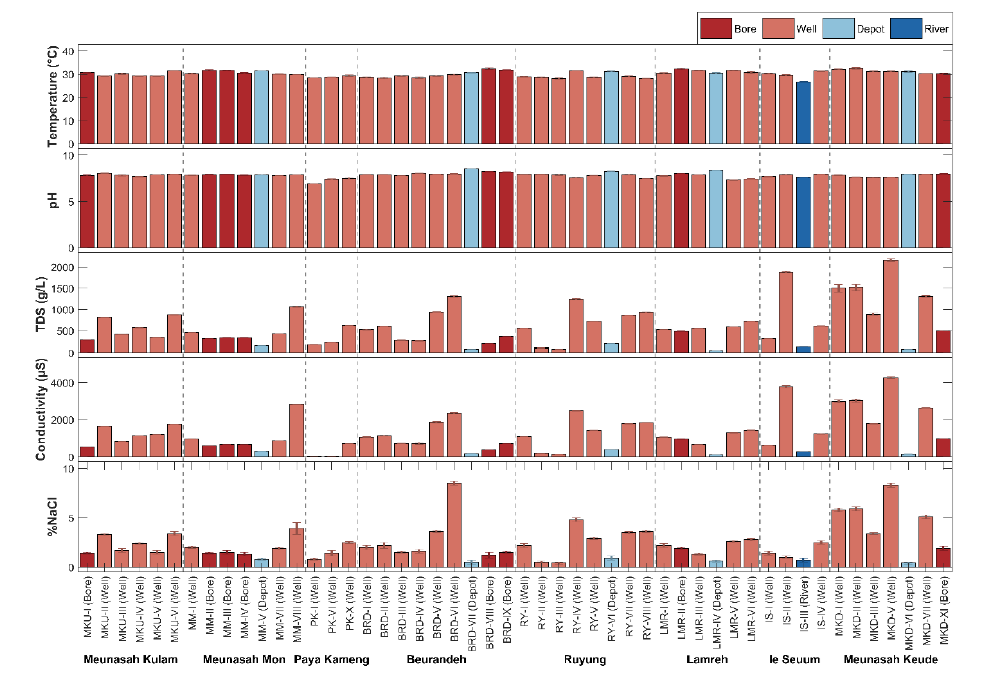
Fig. 2: Distribution of water physicochemical characteristics across eight villages. Each panel shows mean ± SD for temperature, pH, TDS, conductivity, and Sodium Chlorida (NaCl) percentage, illustrating variability among sampling locations and water types
Table 1: In situ data on water samples of dug wells, boreholes and rivers in the District of Mesjid Raya in Aceh Besar Regency in 2023
|
Village name |
Sample code and water type |
Characteristics |
|
||||
|
Temperature ± SD (ᵒC) |
pH ± SD |
TDS ± SD (gram per liter) |
Conductivity ± SD (microsecond) |
NaCl ± SD (%) |
|||
|
Meunasah Kulam (MKU)
|
MKU-I (Bore) |
30.7 ± 0.2 |
7.80 ± 0.05 |
275.7 ± 4.2 |
543.7 ± 3.2 |
1.4 ± 0.1 |
|
|
MKU-II (Well) |
29.2 ± 0.1 |
8.03 ± 0.03 |
815.7 ± 5.9 |
1638.7 ± 13.8 |
3.3 ± 0.1 |
||
|
MKU-III (Well) |
30.2 ± 0.3 |
7.81 ± 0.07 |
417.7 ± 2.5 |
833.0 ± 3.6 |
1.7 ± 0.2 |
||
|
MKU-IV (Well) |
29.2 ± 0.1 |
7.68 ± 0.03 |
571.0 ± 7.7 |
1128.7 ± 11.5 |
2.4 ± 0.1 |
||
|
MKU-V (Well) |
29.2 ± 0.1 |
7.86 ± 0.01 |
340.0 ± 2.9 |
1200.0 ± 12.5 |
1.5 ± 0.2 |
||
|
MKU-VI (Well) |
31.5 ± 0.1 |
7.92 ± 0.03 |
878.0 ± 2.6 |
1754.7 ± 12.9 |
3.4 ± 0.2 |
||
|
Meunasah Mon (MM) |
MM-I (Well) |
30.3 ± 0.2 |
7.81 ± 0.02 |
463.3 ± 2.5 |
959.0 ± 1.0 |
2.0 ± 0.1 |
|
|
MM-II (Bore) |
31.6 ± 0.3 |
7.87 ± 0.04 |
309.7 ± 1.5 |
614.0 ± 1.0 |
1.4 ± 0.1 |
||
|
MM-III (Bore) |
31.6 ± 0.2 |
7.89 ± 0.02 |
335.0 ± 4.4 |
680.0 ± 2.0 |
1.5 ± 0.2 |
||
|
MM-IV (Bore) |
30.6 ± 0.2 |
7.81 ± 0.04 |
336.7 ± 1.5 |
662.7 ± 3.6 |
1.3 ± 0.2 |
||
|
MM-V (Depot) |
31.4 ± 0.1 |
7.85 ± 0.03 |
152.3 ± 2.1 |
306.3 ± 2.1 |
0.8 ± 0.1 |
||
|
MM-VII (Well) |
30.1 ± 0.1 |
7.78 ± 0.02 |
430.0 ± 1.5 |
860.0 ± 1.8 |
1.9 ± 0.1 |
||
|
MM-VIII (Well) |
29.9 ± 0.1 |
7.86 ± 0.02 |
1071.3 ± 15.7 |
2826.7 ± 18.6 |
3.9 ± 0.6 |
||
|
Paya Kameng (PK) |
PK-I (Well) |
28.4 ± 0.1 |
6.87 ± 0.02 |
173.7 ± 1.5 |
28.6 ± 2.3 |
0.8 ± 0.1 |
|
|
PK-VI (Well) |
28.8 ± 0.1 |
7.41 ± 0.04 |
235.3 ± 1.7 |
46.9 ± 2.4 |
1.4 ± 0.3 |
||
|
PK-X (Well) |
29.4 ± 0.4 |
7.51 ± 0.07 |
623.0 ± 1.4 |
703.7 ± 4.9 |
2.5 ± 0.1 |
||
|
Beurandeh (BRD) |
BRD-I (Well) |
28.7 ± 0.2 |
7.87 ± 0.02 |
522.3 ± 8.7 |
1062.7 ± 11.5 |
2.0 ± 0.2 |
|
|
BRD-II (Well) |
28.3 ± 0.3 |
7.88 ± 0.02 |
603.7 ± 4.2 |
1124.0 ± 17.9 |
2.2 ± 0.3 |
||
|
BRD-III (Well) |
29.3 ± 0.2 |
7.77 ± 0.02 |
270.7 ± 9.1 |
727.7 ± 6.5 |
1.5 ± 0.1 |
||
|
BRD-IV (Well) |
28.5 ± 0.4 |
8.03 ± 0.02 |
259.3 ± 5.5 |
723.7 ± 41.6 |
1.6 ± 0.2 |
||
|
BRD-V (Well) |
29.3 ± 0.2 |
7.92 ± 0.02 |
938.7 ± 5.4 |
1863.7 ± 47.4 |
3.6 ± 0.1 |
||
|
BRD-VI (Well) |
29.9 ± 0.2 |
7.95 ± 0.04 |
1310.0 ± 12.6 |
2350.7 ± 45.3 |
8.5 ± 0.2 |
||
|
BRD-VII (Depot) |
30.7 ± 0.2 |
8.53 ± 0.02 |
87.1 ± 0.1 |
174.2 ± 2.9 |
0.5 ± 0.2 |
||
|
BRD-VIII (Bore) |
32.4 ± 0.4 |
8.21 ± 0.03 |
196.3 ± 1.5 |
370.7 ± 3.9 |
1.2 ± 0.3 |
||
|
BRD-IX (Bore) |
31.8 ± 0.1 |
8.18 ± 0.02 |
366.0 ± 1.0 |
713.3 ± 7.2 |
1.5 ± 0.1 |
||
|
Ruyung (RY) |
RY-I (Well) |
28.9 ± 0.2 |
7.89 ± 0.01 |
560.3 ± 1.5 |
1084.3 ± 14.2 |
2.2 ± 0.2 |
|
|
RY-II (Well) |
28.7 ± 0.2 |
7.90 ± 0.02 |
102.6 ± 1.2 |
203.7 ± 0.4 |
0.5 ± 0.1 |
||
|
RY-III (Well) |
28.1 ± 0.3 |
7.84 ± 0.06 |
77.9 ± 2.8 |
156.0 ± 0.6 |
0.4 ± 0.1 |
||
|
RY-IV (Well) |
31.5 ± 0.1 |
7.56 ± 0.04 |
1249.3 ± 15.5 |
2489.7 ± 13.8 |
4.8 ± 0.2 |
||
|
RY-V (Well) |
28.7 ± 0.2 |
7.79 ± 0.02 |
714.3 ± 2.1 |
1433.0 ± 11.4 |
2.9 ± 0.1 |
||
|
RY-VI (Depot) |
31.2 ± 0.2 |
8.24 ± 0.03 |
194.3 ± 2.1 |
392.3 ± 2.1 |
0.9 ± 0.2 |
||
|
RY-VII (Well) |
29.1 ± 0.2 |
7.85 ± 0.04 |
870.7 ± 3.8 |
1783.7 ± 16.8 |
3.5 ± 0.1 |
||
|
RY-VIII (Well) |
28.2 ± 0.1 |
7.48 ± 0.03 |
933.7 ± 8.5 |
1845.0 ± 11.1 |
3.6 ± 0.1 |
||
|
Lamreh (LMR) |
LMR-I (Well) |
30.5 ± 0.2 |
7.75 ± 0.03 |
529.7 ± 2.6 |
1062.0 ± 11.4 |
2.2 ± 0.2 |
|
|
LMR-II (Bore) |
32.2 ± 0.3 |
8.00 ± 0.01 |
485.3 ± 4.5 |
955.0 ± 4.4 |
1.9 ± 0.1 |
||
|
LMR-III (Well) |
31.6 ± 0.2 |
7.84 ± 0.03 |
552.3 ± 3.1 |
663.7 ± 3.8 |
1.3 ± 0.1 |
||
|
LMR-IV (Depot) |
30.6 ± 0.3 |
8.38 ± 0.02 |
52.0 ± 1.1 |
104.4 ± 1.4 |
0.6 ± 0.1 |
||
|
LMR-V (Well) |
31.6 ± 0.2 |
7.31 ± 0.03 |
590.0 ± 2.6 |
1291.0 ± 15.6 |
2.6 ± 0.1 |
||
|
LMR-VI (Well) |
30.7 ± 0.5 |
7.44 ± 0.02 |
723.3 ± 2.1 |
1437.3 ± 14.9 |
2.8 ± 0.1 |
||
|
Ie Seuum (IS) |
IS-I (Well) |
30.3 ± 0.2 |
7.68 ± 0.03 |
313.3 ± 3.1 |
644.3 ± 3.8 |
1.4 ± 0.2 |
|
|
IS-II (Well) |
29.6 ± 0.3 |
7.86 ± 0.04 |
1887.0 ± 18.4 |
3781.3 ± 62.7 |
1.0 ± 0.1 |
||
|
IS-III (River) |
26.8 ± 0.2 |
7.63 ± 0.02 |
124.0 ± 2.6 |
251.7 ± 3.1 |
0.7 ± 0.2 |
||
|
IS-IV (Well) |
31.3 ± 0.2 |
7.93 ± 0.02 |
614.3 ± 2.5 |
1227.7 ± 16.4 |
2.5 ± 0.2 |
||
|
Meunasah Keude (MKD) |
MKD-I (Well) |
32.1 ± 0.2 |
7.81 ± 0.04 |
1499.7 ± 89.6 |
2988.3 ± 82.2 |
5.8 ± 0.2 |
|
|
MKD-II (Well) |
32.5 ± 0.4 |
7.65 ± 0.02 |
1518.3 ± 76.4 |
3031.7 ± 76.4 |
5.9 ± 0.2 |
||
|
MKD-III (Well) |
31.2 ± 0.2 |
7.61 ± 0.05 |
889.3 ± 22.1 |
1784.0 ± 17.8 |
3.4 ± 0.1 |
||
|
MKD-V (Well) |
31.2 ± 0.2 |
7.63 ± 0.02 |
2161.7 ± 28.9 |
4270.0 ± 50.5 |
8.3 ± 0.2 |
||
|
MKD-VI (Depot) |
31.1 ± 0.3 |
7.93 ± 0.02 |
82.7 ± 1.1 |
166.1 ± 4.4 |
0.4 ± 0.1 |
||
|
MKD-VII (Well) |
30.3 ± 0.1 |
7.92 ± 0.03 |
1312.7 ± 15.3 |
2630.7 ± 13.8 |
5.1 ± 0.2 |
||
|
MKD-XI (Bore) |
30.3 ± 0.2 |
7.95 ± 0.04 |
492.0 ± 4.6 |
980.3 ± 5.9 |
1.9 ± 0.2 |
||
Relationship between sanitation water source and arsenic level in water
Table 2 illustrates the correlation between public sanitation water sources and arsenic concentrations. The results show that 84.31% of the analyzed water samples exceeded the permissible quality standards for arsenic concentration, while only 15.69% met the standard limits. Of the different water sources examined, well samples demonstrated the highest rate of arsenic contamination, recorded at 60.78%, with borehole water at 19.61% and river water at 3.92%.
Table 2: The relationship between sanitation water sources and arsenic levels in water
|
Water sources |
Arsenic water content |
N |
% |
|||
|
≤ quality standards |
% |
> quality standards |
% |
|||
|
Well dug |
7 |
13.73 |
31 |
60.78 |
38 |
100 |
|
Borehole |
0 |
0.00 |
10 |
19.61 |
10 |
|
|
River |
1 |
1.96 |
2 |
3.92 |
3 |
|
|
Total |
8 |
15.69 |
43 |
84.31 |
51 |
|
Arsenic levels in consumption water
A vast majority of participants (99%) obtain drinking water from commercially obtained refillable treatment drinking water depots. There are 5 refillable drinking water depots serving eight research location villages. Table 3 and Fig. 3 illustrate the outcomes of the arsenic level testing conducted on water samples. Analysis confirmed 100% of treatment depots produced arsenic-free water, as managers source raw water from mountain springs outside the geothermal zone via tanker trucks. While toddlers are provided with safe drinking water, budgetary restrictions limit its utilization to drinking and cooking. Community members utilize arsenic-contaminated groundwater for the purposes of washing food, cleaning utensils, personal hygiene, and agricultural endeavors, thus ensuring continuous exposure to environmental hazards. Additionally, local vegetation such as Chromolaena odorata bioaccumulates geogenic heavy metals, acting as a secondary contamination vector. Consequently, indirect exposure through domestic water usage and local food chains drives chronic arsenic accumulation (Abubakar, 2023).
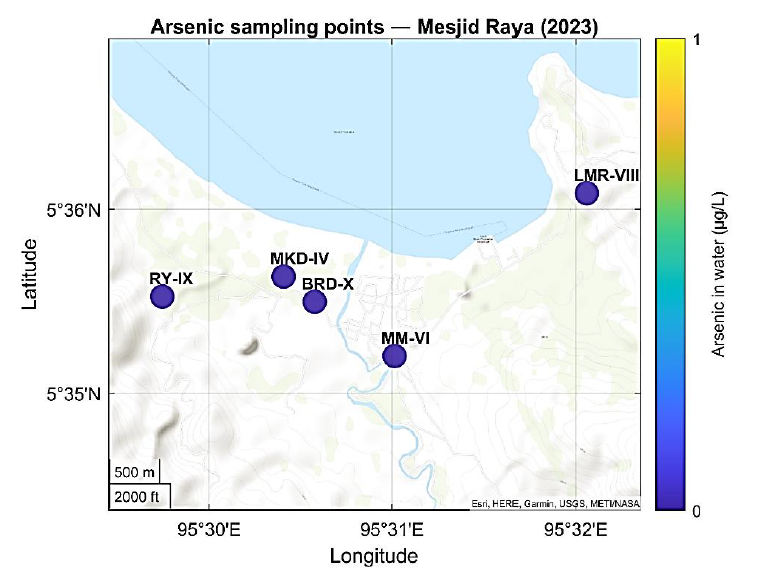
Fig. 3: Spatial distribution of arsenic concentration in drinking water sources across surveyed villages - the colors indicate concentration levels relative to the water quality standard (10 µg/L)
Table 3: Source of drinking water, location, and arsenic levels in the District of Mesjid Raya in Aceh Besar Regency in 2023
|
No |
Sample code |
Drinking water sources |
Coordinate |
Arsenic level in water |
|
|
Latitude (ᵒ) |
Longitude (ᵒ) |
||||
|
1 |
MM-VI |
Treatment drinking water depot |
5.593904ᵒ |
95.506788ᵒ |
0 |
|
2 |
BRD-X |
Treatment drinking water depot |
5.591618ᵒ |
95.50962ᵒ |
0 |
|
3 |
RY-IX |
Treatment drinking water depot |
5.592085ᵒ |
95.49573ᵒ |
0 |
|
4 |
LMR-VIII |
Treatment drinking water depot |
5.60146ᵒ |
95.534324ᵒ |
0 |
|
5 |
MKD-IV |
Treatment drinking water depot |
5.593904ᵒ |
95.506788ᵒ |
0 |
Analysis of arsenic levels in water and hair, and results of toddler growth measurement
The results of anthropometric measurements and environmental sampling are presented to describe the relationship between arsenic exposure and growth outcomes among toddlers living in the geothermal area. Table 4 offers an in-depth analysis of the frequency distribution of water sources, arsenic concentrations in both water and hair samples, and their correlation with the nutritional status indicators of the children in the study area. Fig. 4 depicts the distribution of nutritional status among children, categorized by the three primary anthropometric indicators, namely height-for-age (stunting), weight-for-height (wasting), and weight-for-age (underweight). Households primarily utilize dug wells (74.51%) for domestic needs, alongside boreholes and river water. Arsenic contamination exceeded the 10 microgram per liter (μg/L) (WHO, 2017) threshold in 84.31% of samples, with mean and maximum concentrations of 44.67 μg/L and 107.81 μg/L, respectively. Biological monitoring detected arsenic in 96.08% of toddler hair samples, indicating widespread chronic exposure Hair arsenic concentrations showed a mean of 17.90 μg/g and a maximum of 39.78 μg/g. Anthropometric analysis classified 35.29% of toddlers as stunted and 7.84% as severely stunted based on height-for-age. Furthermore, 19.61% were underweight and 1.96% were severely underweight, while 92.16% maintained normal weight-for-height.
Table 4: Frequency distribution of water sources, arsenic levels in water and hair, weight-for-age, height-for-age and weight-for-height in the District of the Mesjid Raya in Aceh Besar Regency in 2023
|
No |
Variable |
N |
% |
|
1 |
Water sources |
|
|
|
Well |
38 |
74.51 |
|
|
Bore |
10 |
19.61 |
|
|
River |
3 |
5.88 |
|
|
Total |
51 |
100 |
|
|
2 |
Arsenic level in water |
|
|
|
≤ Quality standards |
8 |
15.69 |
|
|
> Quality standards |
43 |
84.31 |
|
|
Total |
51 |
100 |
|
|
Std Dev |
32.17 |
|
|
|
Median |
45.27 |
|
|
|
Minimum |
0.84 |
|
|
|
Maximum |
107.81 |
|
|
|
3 |
Arsenic levels in hair |
|
|
|
≤0 μg/g |
2 |
3.92 |
|
|
>0 |
49 |
96.08 |
|
|
Total |
51 |
100 |
|
|
Mean |
17.90 |
|
|
|
Std Dev |
10.70 |
|
|
|
Median |
17.17 |
|
|
|
Minimum |
0 |
|
|
|
Maximum |
39.78 |
|
|
|
4 |
Height-for-age |
|
|
|
Normal |
29 |
56.86 |
|
|
Stunted |
18 |
35.29 |
|
|
Severely Stunted |
4 |
7.84 |
|
|
Total |
51 |
100 |
|
|
5 |
Weight-for-height |
|
|
|
Normal |
47 |
92.16 |
|
|
Wasted |
4 |
7.84 |
|
|
Total |
51 |
100.00 |
|
|
6 |
Weight-for-age |
|
|
|
Normal |
40 |
78.43 |
|
|
Underweight |
10 |
19.61 |
|
|
Severely Underweight |
1 |
1.96 |
|
|
Total |
51 |
100 |
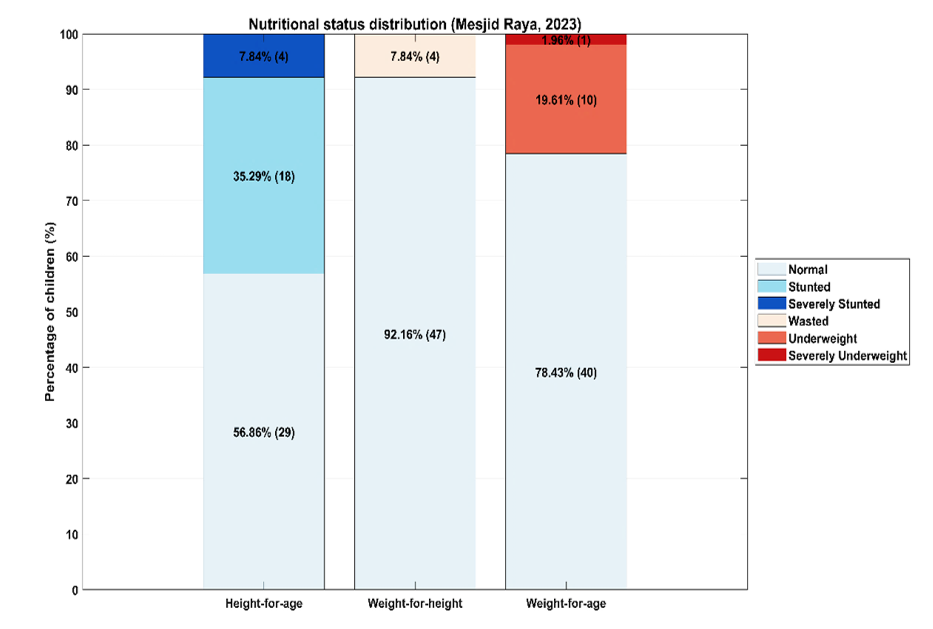
Fig. 4: Nutritional status of children in the study area based on anthropometric indicators. Stacked bar charts represent the percentage and frequency (in parentheses) of each category for height-for-age, weight-for-height, and weight-for-age indices
The effect of arsenic contamination in water on arsenic levels in hair
Hair served as a stable, non-invasive biomarker for chronic arsenic accumulation (Ramly et al., 2023). Arsenic in hair samples was detected in 84.31% of individuals who used non-compliant water sources, whereas only 11.76% of those utilizing compliant water showed similar results (Fig. 5 and Table 5). This discrepancy highlights secondary environmental pathways, including soil and plants, where high-concentration metal translocation damages organs (Abubakar et al., 2023). The safe limit of arsenic levels in hair has not been officially set. However, levels exceeding 0.02 μg/g correlate with systemic oxidative stress (Pan et al., 2020), while concentrations <1 μg/g typically indicate no arsenicosis (Ramly et al., 2023; Vidosavljevic et al., 2022). Normal values fall below 3 milligram per kilogram (mg/kg), contrasting with contaminated populations (<100 mg/kg) and lethal thresholds (210 mg/kg). Hair analysis quantifies 6–12-month exposure durations but poorly predicts specific health outcomes (Mayo Clinic Laboratories, 2020). Fig. 5 and Table 6 demonstrate the correlation between stunting (height-for-age) and arsenic exposure, highlighting that individuals who are unexposed typically have levels <1 μg/g. The analysis revealed a significant association between hair arsenic levels and stunting incidence, with 35.29% of toddlers exhibiting stunting and 7.84% severe stunting, where this figure is higher than in the 2019 study (Al Rahmad, 2019). During keratinization, arsenic is incorporated into the hair's protein structure, effectively sealing the metalloid within the shaft, where it can remain for decades (Katz, 2019). Chronic high-dose exposure damages cells, induces inflammation, and depletes tissue antioxidants (Irnawati et al., 2023). This type of toxicity hinders growth by obstructing the absorption of micronutrients such as Fe and Zn, causing harm to organs including the liver, kidneys, and bones, and disrupting vital growth hormones like insulin (Moody et al., 2020). Additionally, arsenic-induced immunotoxicity increases susceptibility to infections, further inhibiting growth. Interviews revealed that a few residents are consuming groundwater, probably unaware of the dangers posed by geothermal heavy metal. Arsenic toxicity remains insidious; dermal symptoms require 1200 μg/L concentrations over 6 months to 3 years, while weight impact manifests after 4 months in 1800 μg/L (Fatoki and Badmus, 2022). Although daily intake remains below the lethal dose of 2 milligrams per kilogram per day (mg/kg/day) (UNL-EHS, 2007), the lack of immediate symptoms necessitates preventive measures.
Table 5: The effect of arsenic levels in water on arsenic levels in hair
|
Arsenic levels in water |
Arsenic levels in hair |
N |
% |
|||
|
≤0 μg/g |
% |
>0 μg/g |
% |
|||
|
≤ Quality standards (≤10 μg/L) |
2 |
3.92 |
6 |
11.76 |
8 |
100 |
|
> Quality standards (>0 μg/L) |
0 |
0 |
43 |
84.31 |
43 |
|
|
Total |
2 |
3.92 |
49 |
96.08 |
51 |
|
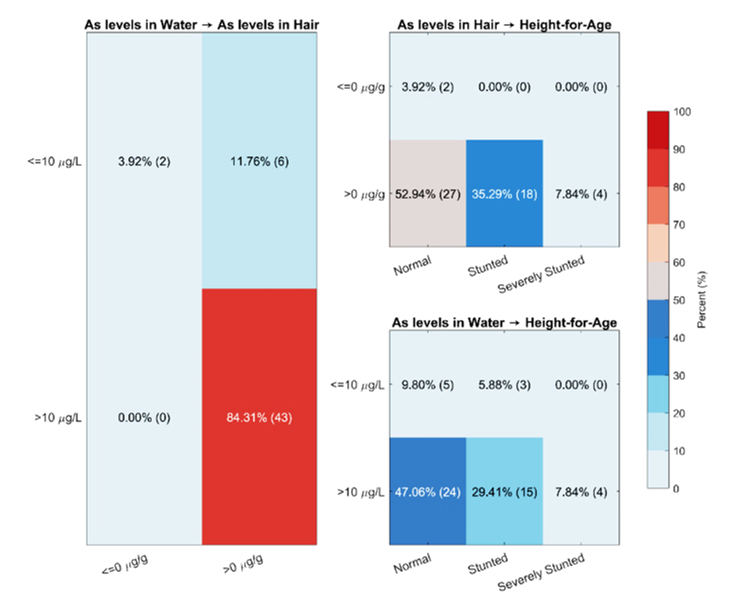
Fig. 5: Relationship between arsenic exposure and nutritional outcomes. Heatmaps summarize associations among arsenic levels in water, arsenic accumulation in hair, and stunting categories (normal, stunted, severely stunted). Cell values denote within-row percentages and frequencies, highlighting stronger nutritional impacts at higher exposure levels
Table 6. The effect of arsenic levels in water and hair on the incidence of stunting
|
As levels in hair |
Height-for-age |
% |
N |
% |
||||
|
Normal |
% |
Stunted |
% |
Severely stunted |
||||
|
≤ 0 μg/g |
2 |
3.92 |
0 |
0 |
0 |
0 |
2 |
100 |
|
> 0 |
27 |
52.94 |
18 |
35.29 |
4 |
7.84 |
49 |
|
|
Total |
29 |
56.86 |
18 |
35.29 |
4 |
7.84 |
51 |
|
|
As levels in water |
||||||||
|
≤ quality standards (≤ 10 μg/L) |
5 |
9,80 |
3 |
5,88 |
0 |
0,00 |
8 |
100 |
|
> quality standards (> 0 μg/L) |
24 |
47.06 |
15 |
29.41 |
4 |
7.84 |
43 |
|
|
Total |
29 |
56.86 |
18 |
35.29 |
4 |
7.84 |
51 |
|
Integrated Analysis of Correlation and Stunting Outcomes
Based on Table 7, Water arsenic concentration was moderately correlated with hair arsenic levels (Pearson r = 0.41, p = 0.003; Spearman ρ = 0.47, p < 0.001), indicating that arsenic exposure from water was reflected in biological accumulation. Hair arsenic showed a strong positive association with ordinal height-for-age status (Spearman ρ = 0.59, p < 0.001), whereas water arsenic concentration was not significantly associated with height-for-age (ρ = 0.16, p = 0.25). Consistent with these correlations, logistic regression analysis demonstrated that higher hair arsenic concentration was significantly associated with increased odds of stunting (OR = 1.157, 95%, CI: 1.06–1.26, p < 0.001), corresponding to a 15.7% increase in the odds of stunting for each 1 µg/g increase in hair arsenic. The identified relationship between arsenic levels in hair and stunting is categorized as a moderate correlation, based on widely accepted interpretation standards for correlation coefficients (Schober et al., 2018). Non-parametric group comparison further showed that hair arsenic levels were significantly higher in stunted children compared with non-stunted children (Mann–Whitney U test, Z-statistic = 4.07, p < 0.001).
Table 7. Summary of correlation, logistic regression, and group comparison analyses assessing associations between arsenic exposure (water and hair) and child growth outcomes (N = 51)
|
Analysis type |
Comparison / Outcome |
N |
Statistic |
Effect Size |
p-value |
|
Correlation (Pearson) |
Water As vs Hair As |
51 |
r |
0.407 |
0.003 |
|
Correlation (Spearman) |
Water As vs Hair As |
51 |
ρ |
0.469 |
< 0.001 |
|
Correlation (Spearman) |
Hair As vs Height-for-age |
51 |
ρ |
0.594 |
< 0.001 |
|
Correlation (Spearman) |
Water As vs Height-for-age |
51 |
ρ |
0.163 |
0.252 |
|
Logistic regression |
Hair As → Stunting |
51 |
OR |
1.157 |
< 0.001 |
CONCLUSION
This study identifies the Mesjid Raya District, particularly the Ie Seuum hydrothermal area, as a high-risk zone for geogenic arsenic contamination. Hydrogeochemical evidence confirms the area as an outflow zone of the Seulawah Agam volcanic system characterized by chloride-type hydrothermal fluids. Interaction between volcanic processes and post-tsunami seawater intrusion generated a complex groundwater regime, with 84.31% of water sources exceeding the national safety threshold of 10 μg/L and concentrations reaching 107.81 μg/L. Dug wells, which serve 74.51% of households with water, demonstrated the most significant contamination, allowing arsenic to migrate from deep magmatic reservoirs into shallow aquifers used for daily domestic activities. A notable inconsistency was observed regarding the safety of drinking water in relation to biological arsenic buildup. Although all commercial refill drinking-water depots were arsenic-free, 96.08% of toddlers exhibited detectable hair arsenic with a mean concentration of 17.90 μg/g, indicating persistent chronic exposure from non-drinking pathways. Water arsenic concentrations correlated moderately with hair arsenic levels (Pearson r = 0.41, p = 0.003; Spearman ρ = 0.47, p < 0.001), demonstrating that household water contamination translated into biological accumulation. Exposure to the skin while bathing, the use of polluted water for food preparation, and indirect dietary intake probably constitute the main exposure pathways that have not been adequately addressed. Bioaccumulated arsenic showed a clear association with impaired linear growth. Hair arsenic concentrations correlated strongly with ordinal height-for-age status (Spearman ρ = 0.59, p < 0.001), while water arsenic levels did not demonstrate a significant relationship with height-for-age (ρ = 0.16, p = 0.25). Logistic regression analysis further demonstrated that each 1 μg/g increase in hair arsenic increased the odds of stunting by 15.7% (OR = 1.157; 95% CI: 1.06–1.26; p < 0.001). Non-parametric comparison confirmed significantly higher hair arsenic levels among stunted children than non-stunted children (Mann–Whitney U test, Z = 4.07, p < 0.001). Overall, stunting affected 35.29% of toddlers, including 7.84% classified as severely stunted. These observations demonstrate that hair arsenic is a more trustworthy biomarker of chronic exposure and a superior predictor of stunting compared to arsenic levels found in household water alone. Mitigation strategies focused exclusively on drinking-water quality therefore underestimate health risks in geothermal settings. To achieve effective intervention in Aceh Besar Regency, it is essential to implement a holistic treatment of water for all domestic applications, restore contaminated dug wells, and provide specific public education that focuses on dermal and indirect oral exposure to geogenic contaminants. This study provides a reference framework for communities living in the volcanic Ring of Fire, where geogenic contamination may discreetly jeopardize child development despite access to safe drinking water. Interpretation of these results must consider the limited sample size and single-season sampling. Subsequent studies ought to incorporate larger cohorts, sampling over multiple seasons, evaluations of multimedia exposure, and longitudinal frameworks to strengthen reliability and investigate the persistence or reversibility of growth impairment due to arsenic exposure.
AUTHOR CONTRIBUTIONS
I. Irnawati, as the corresponding author, contributed to the conceptualization, formal analysis, funding acquisition, methodology development, project administration, resource management, supervision, and preparation of the original draft. I. Seriana was responsible for data curation, methodology, resource provision, software development, and validation. G. Gustiana contributed to resources, validation, and methodological support. U. Zulfiani contributed to writing, reviewing, and editing, as well as data visualization. M.N. Hidayat contributed to writing, review, editing, and visualization.
ACKNOWLEDGMENTS
This study was supported by research funding from the Indonesian Ministry of Health, Aceh Polytechnic of Health (address: Jl Soekarno-Hatta, Kampus Terpadu Poltekkes Kemenkes Aceh, Indonesia; ministerial decision letter: Number [LB.02.01/855/2023].
CONFLICT OF INTERESTS
The authors declare no conflict of interest and affirm compliance with ethical standards, including plagiarism, informed consent, misconduct, data fabrication, double submission, and redundancy. The Health Research Ethics Committee of the Aceh Polytechnic of Health, Ministry of Health, approved the study protocol [No. LB.02.03/025/2023; May 17, 2023]. Guardians provided written informed consent for the use of clinical information and images, understanding that names and initials remain unpublished to ensure anonymity.
OPEN ACCESS
©2026 The author(s). This article is licensed under a Creative Commons Attribution 4.0 International License, which permits use, sharing, adaptation, distribution and reproduction in any medium or format, if you give appropriate credit to the original author(s) and the source, provide a link to the Creative Commons license, and indicate if changes were made. The images or other third-party material in this article are included in the article’s Creative Commons license, unless indicated otherwise in a credit line to the material. If material is not included in the article’s Creative Commons license and your intended use is not permitted by statutory regulation or exceeds the permitted use, you will need to obtain permission directly from the copyright holder. To view a copy of this license, visit: http://creativecommons.org/licenses/by/4.0/
PUBLISHER’S NOTE
GJESM Publisher remains neutral regarding jurisdictional claims in published maps and institutional afflictions.
Negative AI Statement
The author(s) declared that no AI tools or services were used or not highly applied during the preparation of this work.
ABBREVIATIONS
|
% |
Percent |
|
oC |
Degree Celsius |
|
μL |
Microliters |
|
μg/L |
Microgram per liter |
|
μg/g |
Microgram per gram |
|
As |
Arsenic |
|
ρ |
Spearman coefficient correlation |
|
BRD |
Beurandeh |
|
Cl⁻ |
Chloride |
|
CI |
Confidence intervals |
|
cm |
Centimeters |
|
DNA |
Deoxyribonucleic acid |
|
EC |
Electrical conductivity |
|
g |
Grams |
|
GPS |
Global positioning system |
|
GF-AAS |
Graphite furnace- atomic absorption spectrometry |
|
H₂SO₄ |
Sulfuric acid |
|
HClO₄ |
Perchloric acid |
|
HNO3 |
Nitric acid |
|
IS |
Ie Seuum |
|
LMR |
Lamreh |
|
MATLAB |
A programming and numeric computing platform |
|
mg/kg |
Milligram per kilogram |
|
mg/kg/day |
Milligrams per kilogram per day |
|
mg/L |
Milligrams per liter |
|
Mg²⁺ |
Magnesium |
|
MKD |
Meunasah Keude |
|
MKU |
Meunasah Kulam |
|
mL |
Milliliters |
|
MM |
Meunasah Mon |
|
N |
Number |
|
Na⁺ |
Sodium |
|
NaCl |
Sodium Chloride |
|
nm |
Nanometer |
|
OR |
Odd ratio |
|
p |
Probability |
|
pH |
Potential of hydrogen |
|
PK |
Paya Kameng |
|
ppb |
Parts per billion |
|
r |
Pearson coefficient correlation |
|
RY |
Ruyung |
|
SD |
Standard deviations |
|
SDIGD |
Stimulation, detection, and intervention in growth and development |
|
SO₄²⁻ |
Sulfate |
|
TDS |
Total dissolved solids |
|
WHO |
World Health Organization |
OPEN ACCESS
©2026 The author(s). This article is licensed under a Creative Commons Attribution 4.0 International License, which permits use, sharing, adaptation, distribution and reproduction in any medium or format, as long as you give appropriate credit to the original author(s) and the source, provide a link to the Creative Commons license, and indicate if changes were made. The images or other third party material in this article are included in the article’s Creative Commons license, unless indicated otherwise in a credit line to the material. If material is not included in the article’s Creative Commons license and your intended use is not permitted by statutory regulation or exceeds the permitted use, you will need to obtain permission directly from the copyright holder. To view a copy of this license, visit: http://creativecommons.org/licenses/by/4.0/
PUBLISHER NOTE
GJESM Publisher remains neutral concerning jurisdictional claims in published maps and institutional affiliations.
MAJOR DATABASES, CITATION METRICS & CAPTURES
Google Scholar | Scopus - SJR | Web of Science | Biological Abstracts: Clarivate | Biosis Preview: Clarivate | PlumX Metrics | Altmetrics | Mendeley |
CURRENT PUBLISHER

| Article View | 3,000 |
| PDF Download | 572 |


Letters to Editor
[1] Letters that include statements of statistics, facts, research, or theories should include appropriate references, although more than three are discouraged.
[2] Letters that are personal attacks on an author rather than thoughtful criticism of the author’s ideas will not be considered for publication.
[3] Letters can be no more than 300 words in length.
[4] Letter writers should include a statement at the beginning of the letter stating that it is being submitted either for publication or not.
[5] Anonymous letters will not be considered.
[6] Letter writers must include their city and state of residence or work.
[7] Letters will be edited for clarity and length.